

New Farm Machinery Prices 2025: Powerful Trends & Technology
Meta Description: Explore new farm machinery prices in 2025 with trends and technology innovations. Learn how advances in farm machinery boost efficiency, sustainability, and optimize your investment decisions.
“In 2025, smart tractors with AI features are projected to reduce fuel costs by up to 15% for farmers.”
- Summary: The Changing Landscape of New Farm Machinery Prices
- Current Trends in New Farm Machinery Prices: Key Influencers
- Technology & Its Impact on Farm Machinery Prices and Productivity
- 2025 Farm Machinery Price & Feature Comparative Table
- Forestry Machinery Prices 2025: Sustainability and Technological Advancement
- Financing Options, Incentives, and Market Access
- 2025 Innovations and Game-Changing Farm Machinery Technology
- How Farmonaut Empowers Sustainable Decisions with Data-Driven Innovation
- Market Outlook: The Future of New Farm Machinery Prices
- FAQs – New Farm Machinery Prices, Technologies, and More
- Conclusion: Smart Investment in Farm Machinery for 2025 and Beyond
Summary: The Changing Landscape of New Farm Machinery Prices
The year 2025 marks a transformative period for the global agriculture and forestry sectors, reshaped by evolving new farm machinery prices, rapid adoption of breakthrough technologies, and rising demands for sustainability.
After a decade of supply chain volatility, technological advancement, and policy shifts, farmers and stakeholders find the machinery market both more sophisticated and more complex. Understanding the dynamics of farm machinery pricing—from tractors to harvesters, combines to autonomous AI-driven equipment—is essential for informed investment decisions.
This comprehensive guide explores key trends influencing 2025 farm machinery prices, the impact of advanced technologies, and reveals actionable insights that help farmers, agribusinesses, and decision-makers navigate the evolving agricultural landscape.
Current Trends in New Farm Machinery Prices: Key Influencers
New farm machinery prices in 2025 are the product of a sophisticated global ecosystem. Several factors drive farm machinery prices, making it crucial for stakeholders to keep abreast of influential market trends.
1. Technological Advancement
- Precision technologies such as AI-powered tractors, GPS navigation, smart sensors, and integrated IoT systems increase efficiency and productivity but elevate initial costs.
- Advanced models and modular machinery offer upgrade flexibility and greater longevity, justifying their higher price points for many farmers.
2. Raw Material & Supply Chain Volatility
- The lingering impact of global supply chain disruptions (notably the early 2020s) is fading, but raw material costs such as steel and electronics remain at a generally higher baseline than a decade ago.
- This leads to increased base machinery pricing that is being accepted as the “new normal.”
3. Government Policies & Incentives
- Government policies worldwide offer incentives—notably for smart, sustainable machinery adoption—that may offset upfront costs, especially for environmentally beneficial models.
- These incentives vary by country and region, and often apply to equipment featuring emissions reduction, electric/hybrid drives, or precision input control.
4. Product Sophistication & Model Variation
- Farm machinery pricing now varies widely depending on size, capacity, technology sophistication, and features.
- For instance, conventional tractors with basic functionalities may range from $30,000 to $70,000, while high-end, autonomous or AI-integrated tractors can exceed $150,000.
- Combine harvesters—now equipped with real-time yield mapping, moisture sensors, and GPS—command prices between $200,000 and $400,000 depending on model and technology integration.
5. Growing Demand for Sustainability
- Sustainable and energy-efficient machine models with emissions reduction and better field management are priced higher, yet deliver longer-term environmental and economic benefits.
6. Market Stabilization after Early 2020s Disruptions
- While a period of volatility characterized the early 2020s, prices started stabilizing from 2024 onward, albeit still at elevated levels compared to ten years ago. This reflects the integration of cutting-edge technologies.
7. Increasing Adoption Across Sectors
- Adoption rates of precision agriculture and high-tech forestry machinery are increasing globally, driving demand and nudging average prices upward for all new equipment categories.
“Over 60% of new farm machinery in 2025 will feature precision technology, enhancing crop yields and resource efficiency.”
For detailed new farm machinery prices by category and the innovations shaping these trends, see our comparative feature and price table below.

Technology & Its Impact on New Farm Machinery Prices and Productivity
The rise of new farming machinery—equipped with smart, digital, and autonomous technologies—is both a driver of higher initial prices and a gateway to remarkable productivity and cost savings. Understanding these dynamics is crucial for any investment decision in 2025 and beyond.
Smart Technology Raises Upfront Costs, But Offsets Over Time
- AI-powered tractors, yield mapping harvesters, and autonomous drones feature higher initial farm machinery prices.
- However, higher upfront investment leads to long-term savings by minimizing labor input, optimizing resource use, and maximizing yields.
- For example, GPS-guided seeders and sprayers precisely apply inputs—reducing chemical and fertilizer waste by over 20% in some cases.
Increased Efficiency and Lower Operational Expenses
- Smart machinery reduces fuel and input costs via better path planning, variable rate technology (VRT), and remote crop monitoring systems.
- AI-optimized engines and transmissions can cut fuel consumption by 10-15% compared to older models.
- More reliable sensors produce actionable data, helping farmers make informed, data-driven decisions that improve productivity and crop quality.
- Downtimes are significantly reduced through predictive maintenance and remote diagnostics.
Sustainability: Environmental and Compliance Benefits
- Precision farming technologies intervene without excess waste, lowering the environmental impact and ensuring compliance with stricter emission standards.
- Examples include electric-powered and hybrid machinery, low-compaction tires for soil preservation, and digital management tools that monitor carbon footprints.
Modular Design and Upgradability
- Many manufacturers now offer modular machines—farmers can upgrade components as needed (sensors, cameras, control units) without replacing the entire machine.
- This stretches the lifespan of investments and supports scalable adoption for farms of varying sizes and capacities.

2025 Farm Machinery Price & Feature Comparative Table
This table gives a concise, SEO-optimized comparison of categories, estimated new farm machinery prices, key innovations, efficiency gains, sustainability features, and popular models for 2025:
| Machinery Category | Estimated Price Range (2025) | Key Innovations | Efficiency Gains | Sustainability Features | Popular Models/Brands |
|---|---|---|---|---|---|
| Smart Tractors (AI/Autonomous) | $100,000–$180,000 | AI navigation, GPS, IoT, remote diagnostics, VRT | 10–15% fuel saved; 20% less labor |
Electric/hybrid options; Low-emission engines; Carbon tracking integrations (view carbon footprinting) |
John Deere 8R, Case IH Magnum AFS Connect, Mahindra SmartTrac |
| Advanced Combine Harvesters | $220,000–$450,000 | Yield mapping, moisture sensors, AI crop analysis, auto header adjustment | 15% higher yield, 25% better grain quality |
Fuel-efficient engines; Soil compaction minimization |
Claas Lexion 8800, New Holland CR, John Deere S700 |
| Precision Seeders/Planters | $35,000–$90,000 | Variable rate control, GPS, singulation, auto row shut-off | 10–20% seed saving, 15% better emergence |
Reduced overapplication; Data connectivity for input optimization |
Kinze 5000 Series, Precision Planting 20/20, Väderstad Tempo |
| AI-Powered Sprayers | $40,000–$120,000 | Computer vision, camera-guided arms, VRT, drone-assisted spot spraying | Up to 25% reduction in agrochemical input |
Water-saving jets; Drift minimization technology |
Jacto Uniport 3030, DJI Agras T30, Hardi Saritor 7000 MDA |
| Autonomous Drones | $12,000–$50,000 | AI mapping, multispectral imaging, automated scouting, variable spraying | Cover 4x more area/hour vs manual methods |
Fewer field passes reduce compaction; Optimized pesticide delivery (see traceability benefits) |
DJI Agras, SenseFly eBee, Yamaha FAZER R G2 |
| Forestry Harvesters | $290,000–$600,000 | Automated felling heads, GPS, remote ops, data cloud connection | 30% faster harvest, less operator fatigue |
Emission reduction tech; Soil protection treads |
Ponsse Scorpion King, John Deere 1270G, Komatsu 931XC |
All new farm machinery prices above are indicative for 2025 and may vary based on market region, options, and dealer incentives.

Forestry Machinery Prices 2025: Sustainability and Technological Advancement
The forestry sector continues to see upward pricing trends similar to conventional agriculture. The convergence of sustainable harvesting demands, environmental regulations, and advanced automation define the price farm machinery landscape for forestry in 2025.
Key Price Ranges in Forestry Machinery (2025)
- Compact forwarders & mulchers: $100,000–$200,000
- Large harvesters w/ automation: $300,000–$600,000+
- Remote-controlled & hybrid machines: typically command a 15–30% price premium
Drivers of Higher Forestry Machine Pricing
- AI-enhanced systems for automated timber measurement, allocation, and logistics
- Enhanced GPS and navigation tools for all-terrain stability and emission control
- Low soil-compaction frames, and electric or hybrid drives for sustainable forestry compliance
Sustainability and Compliance
- Countries now require machinery with lower emissions, traceable logging, and reduced field damage.
- These requirements generally lead to higher machinery prices, but offer significant long-term ecological and operational benefits.
- Data tracking (see blockchain-based product traceability) is increasingly part of compliance regimes.

Financing Options, Incentives, and Market Access for Farm Machinery
Acquiring new farm machinery in 2025 doesn’t have to mean absorbing massive upfront costs. Flexible financing options and robust government incentives now underpin the global market for farm and forestry equipment.
Accessible Financing Solutions
- Operating and capital leases—Lower upfront capital requirement; typically includes maintenance.
- Manufacturer-backed installment plans—Fixed or variable interest; direct from OEM.
- Equipment loans—Customizable to farm operation size; can have favorable rates with government guarantees (explore satellite-backed crop loans in Farmonaut).
Subsidies & Tax Incentives
- Many governments offer tax deductions for acquiring green, smart, or precision machinery.
- Grants, rebates, and incentive programs are available for electric machinery, AI crop monitoring, and emission-compliant equipment.
- Farmers can often stack incentives, reducing effective upfront price farm machinery levels by 10–30% in priority sectors.
Farmonaut’s Data-Driven Role in Financing
- We at Farmonaut partner with financial institutions by providing satellite-based farm verification and AI-backed crop yield data. This improves loan and insurance access and reduces fraud risk for all parties.
- Access satellite-backed insurance and loan services in the Farmonaut app
Choosing the Right Investment
- The key to smart investment is balancing upfront machinery expenses against potential for productivity and sustainability gains.
- Using data-driven advisory and digital monitoring tools (large-scale management tools from Farmonaut) supports confident, informed machinery acquisition decisions.

2025 Innovations and Game-Changing Farm Machinery Technology
Let’s explore the technologies that are accelerating 2025 farm machinery prices while setting new benchmarks for efficiency, yield, and sustainability:
1. Autonomous Vehicles and Robots
- Self-driving tractors, harvesters, and sprayers navigate fields using AI and machine vision, reducing labor costs and improving operational reliability.
- Autonomous drones for mapping, scouting, and variable input application allow for high-precision and low-cost coverage of large fields—see video insights below.
2. Satellite & Sensor-Supported Precision Farming
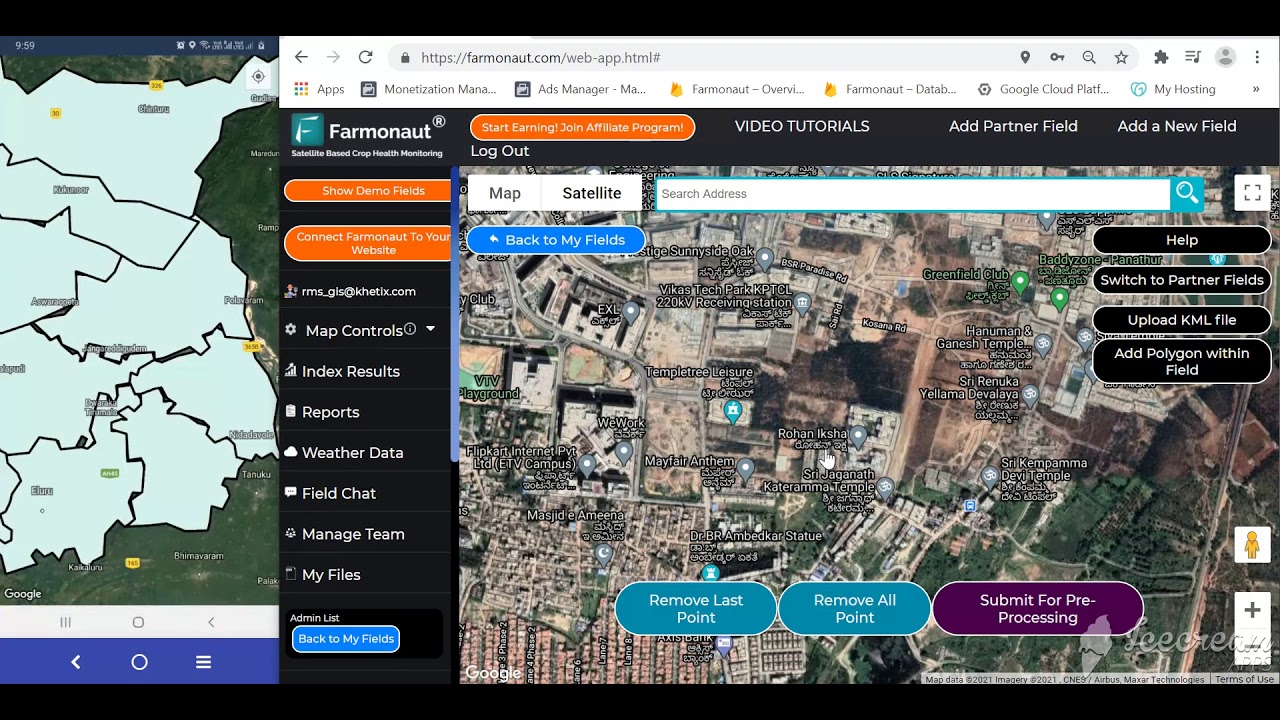
- Integrating multispectral satellite imagery, AI-advisory systems, and agro-machinery (like you’ll find in Farmonaut’s platform) offers unmatched field monitoring and resource control.
- Soil moisture sensors, crop health NDVI, and automatic yield mapping guide timely fertilization, irrigation, and harvest, improving both yields and input savings.

3. Machine Learning & Predictive Analytics
- AI-based crop health models and predictive analytics forecast pest, disease, or weather-driven threats, allowing pre-emptive action and yield preservation.
- Integrated data sharing (via API, see Farmonaut API here or developer docs at Dev Docs) gives agribusinesses and research teams direct access to field insights.
4. Sustainable Power & Green Technologies
- Electric and hybrid powertrains in tractors and harvesters promise lower emissions, less field noise, and eligibility for green incentives.
- Low-compaction, bio-based tire technologies preserve soil health while supporting higher machine weights.
Farm Management—Anytime, Anywhere
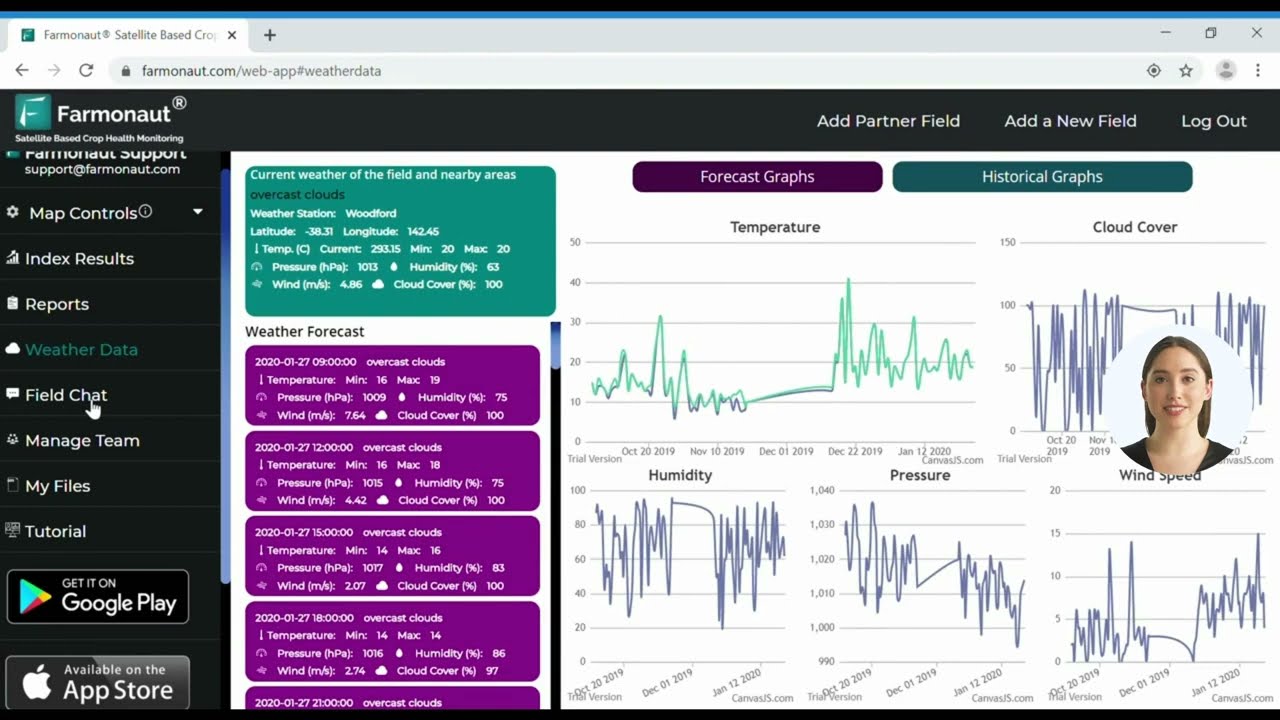
- All these innovations become actionable using comprehensive platforms—Farmonaut’s Android, iOS, web—providing real-time crop health, resource tracking, fleet management, and blockchain-based traceability.
- Farmers can scale up as needed—see the Fleet Management module for operational efficiency and reduced costs.
How Farmonaut Empowers Sustainable Decisions with Data-Driven Innovation
We at Farmonaut believe that access to actionable, real-time data is essential for making informed machinery investment decisions and achieving sustainable, profitable operations. Our mission is to make advanced precision agriculture accessible and affordable for every farmer and agribusiness worldwide.
- Crop Health Monitoring: Multispectral satellite data tracks vegetation index (NDVI), soil moisture, and crop health for precise intervention and input savings.
- Jeevn AI Advisory: Personalized, AI-based farm advisory—giving timely recommendations to enhance productivity and lower operational costs.
- Resource, Fleet & Emission Management: Track machinery usage, fuel consumption, and ensure optimal fleet deployment for reduced costs and environmental impact. (Learn more about reducing fleet costs & increasing efficiency)
- Blockchain Traceability: Ensure transparency and secure records from farm to table, providing confidence to downstream buyers and regulators. (See traceability use cases)
- API Access: Direct integrations for large-scale agribusinesses and tech developers via REST API and developer documentation.



Farmonaut is your partner in digital transformation for agriculture—improving your ROI, building resilience, and creating a sustainable future for farms both large and small.
Market Outlook: The Future of New Farm Machinery Prices (2025 & Beyond)
The global market for new farm machinery is poised for continued expansion. Key trends shaping 2025 prices and beyond include:
1. Continued Pressure for Smart, AI-Based Equipment
- As precision agriculture becomes standard, machines featuring on-board AI and real-time connectivity will command premium prices but deliver unmatched productivity, input efficiency, and resource savings.
2. Electrification and Renewable Integration
- Expect a noticeable rise in electric and hybrid-powered tractors, harvesters, and drones—reflecting growing government mandates and incentive programs for carbon-neutral operations.
3. Wider Adoption of Modular, Upgradeable Designs
- Upgradeable, modular machine designs will allow farmers to incrementally add new features as available, supporting variable budgets and flexible technology rollout.
4. Increased Accessibility to Financing and Digital Advisory
- Greater access to digital platforms (like Farmonaut) and more competitive financial solutions will help smaller, resource-limited farmers join the technology revolution.
- Transparency tools (blockchain, traceability) will become standard for compliance and export market access, influencing machinery investments even further.
5. Dynamic Demand & Regional Variations
- The supply-demand dynamics for new farm machinery will vary widely by region, crop type, and scale of operation. Global food security, bioenergy targets, and sustainable forestry—each influence machinery price levels and product focus.
FAQs – New Farm Machinery Prices, Technologies, and More
Q: What’s driving the increase in new farm machinery prices for 2025?
A: The price rise is driven by advanced technology integration (AI, IoT, precision sensors), higher raw material costs, sustainable/green mandates, and lingering impacts of the early 2020s supply chain disruptions. However, technology delivers significant long-term savings through improved yields and resource efficiency.
Q: Are high-tech farm machines worth the higher upfront investment?
A: In most cases, yes. Premium-priced machinery equipped with smart navigation, AI analytics, and remote monitoring enhances yields, reduces input and labor expenses, and supports environmental compliance—often paying for itself within a few years via cost recovery and productivity gains.
Q: How can I finance new farm machinery purchases?
A: Farmers can access operating and capital leases, manufacturer-backed installment plans, equipment loans, and even satellite-backed insurance and loan verification via platforms like the Farmonaut app. Incentives and grants may reduce total costs even further.
Q: What are the advantages of modular machinery systems?
A: Modular designs let farmers upgrade components (AI units, sensors) without having to replace the entire machine. This reduces long-term costs and allows phased adoption of new features as budget permits.
Q: How can Farmonaut help me make better machinery investment decisions?
A: Farmonaut provides real-time satellite-based crop health monitoring, AI-driven advisory, resource and fleet management, as well as blockchain-based supply chain traceability. These tools empower users to optimize input spend, choose suitable machinery, and track ROI for sustainable farm productivity. View carbon footprinting and fleet management solutions for enhanced decision-making.
Conclusion: Smart Investment in Farm Machinery for 2025 and Beyond
The landscape of new farm machinery prices in 2025 reflects a dynamic interplay of technological advancement, evolving market factors, and sustainability priorities. While higher initial prices are now the norm—especially for AI-integrated, smart, and sustainable machines—the benefits they deliver are transformative:
- Enhanced yield and crop quality, thanks to precision tools and real-time monitoring.
- Reduced operational costs stemming from better resource usage, labor savings, and input optimization.
- Greater compliance with regulatory and market-driven sustainability demands, future-proofing your farm or forestry business.
- Powerful insights and risk reduction using digital farm management solutions like those from Farmonaut.
The key to thriving in this era is staying informed, making data-driven purchase decisions, and embracing the digital transformation of agriculture. With the right machinery, technology, and advisory partner, farmers and businesses can expect to unlock greater profitability, ecological stewardship, and resilience to global market shifts—today and for many seasons to come.

 WeMe Global
 Pixxel
 Sapoznick Farms
 Agrotoken
 Blue BearX
 Insignito
 Croptimum
 DnCubed
 Field Capacity
 Indosistim Teknologi
 Liquify Digital
 CU Foods
 BeyondTech Global
 Rouge VC
 AgroGreen Dynamics
 AgroRisk
 Oath Inc
 Reddane Farming
 Esri North East Africa
