

Profitable Urban & Vertical Farming: 2026 Guide — Unlocking Efficiency, Tech, and Premium Revenue
Table of Contents
- Introduction: Profitable Urban & Vertical Farming in 2026
- Profitability Trivia
- Understanding Profitable Urban Farming: The 2026 Context
- Three Pillars of Urban Farming Profitability: Location, Technology, Product Mix
- Urban & Vertical Farming Profitability Matrix 2025–2026
- Vertical Farming Profitability: Models for 2026 Urban Success
- Profitable Organic Farming: Premiums, Certification & Market Access
- Is Organic Farming Profitable? Exploring the Economics in 2026
- Profitable Dairy Farming in Urban & Peri-Urban Contexts
- Technology & Innovation: Automation, CEA, and AI-Driven Farms
- How Farmonaut Satellite Solutions Supercharge Urban Farming Profitability
- Cross-Cutting Considerations: Regulation, Branding, Productivity, and Supply Chains
- Bullet Points: Key Advantages of Urban & Vertical Farming
- Visual Lists: Quick Insights at a Glance
- Top Strategies for Profitable Urban Farming in 2026
- Frequently Asked Questions
- Conclusion: The Intersection of Sustainability, Tech & Profit
“By 2025, urban vertical farms can yield up to 10 times more produce per square meter than traditional agriculture.”
Introduction: Profitable Urban & Vertical Farming in 2026
The business of profitable urban farming has become an anchor of modern cities and dense supply chains, now sitting at the intersection of consumer demand, technology, and the drive for sustainable profitability. With rapid urbanization and shifting climate, 2026 presents new challenges—and unprecedented opportunities—for efficient resource use, short supply chains, and premium pricing signals. In this comprehensive 3500+ word guide, we deeply explore:
- How location, tech, and product strategy drive profitable urban farming—creating high-value, resilient operations
- The realities of vertical farming profitability—lean, modular systems, automation, and their market advantages
- Organic farming’s profit equation—premiums, certification, and how urban and vertical models capture the organic consumer
- Cross-market opportunities: from niche dairy to forestry, mining, infrastructure, and even defence
- The smartest strategies—tech, traceability, and streamlined channels—for 2026’s evolving urban food landscape
By using industry benchmarks, technology insights, and actionable strategies, this guide functions as a definitive roadmap for forward-thinking growers, investors, and urban planners interested in profitable urban farming, profitable organic farming, vertical farming profitable models, and related themes across 2025–2026.
Let’s navigate the future of sustainable, high-tech farming—and see how data-driven approaches, such as those offered by Farmonaut, will empower urban agriculture to scale efficiently, profitably, and sustainably.

As profitable urban farming and vertical farming profitable models surge forward, urban agriculture’s full capacity lies in quickly meeting fresh food demand locally—delivering quality, sustainability, and cost control. This is increasingly relevant for agriculture, forestry, mining, minerals, gemstones, and even defence sectors seeking resilient local supply.
As 2026 approaches, only operations that master location, technology (automation, CEA, data), and agile product mix will capture the strongest profitability signals—especially through lean operations and premium pricing in urban markets.
“Premium organic urban produce commands up to 30% higher prices in tech-driven city markets by 2026.”
Understanding Profitable Urban Farming: The 2026 Context
Urban environments have always been prime real estate for food entrepreneurs. But in 2026, profitable urban farming is more than just local growing—it is a high-efficiency intersection of agriculture and technology.
Short, direct supply chains mean fresher produce, reduced waste and costs, and access to a consumer base willing to pay premium prices for quality, sustainability, and authentic branding.
Compared to rural or peri-urban farming, the advantages in city-based operations include:
- Faster access to demand: Locally-grown, organic, and specialty foods delivered within hours to urban buyers
- Ability to capture higher price points: Short supply chains enable higher margins due to perceived freshness, transparency, and branding
- Lower logistics costs: Reducing time, packaging, and risk during delivery
- Reduced post-harvest losses: On-site or within-city processing shrinks spoilage, increases product turnover, and maximizes profit per square meter
In the years ahead, the strongest profitability signals will come from urban farming models that are technology-forward, resource-efficient, and built for direct-to-consumer channels (restaurants, specialty shops, CSA subscriptions, and home delivery).
In 2026, agile urban farmers who can combine vertical, organic, and data-driven production with direct market access will capture the highest ROIs and the strongest market presence.
Three Pillars of Urban Farming Profitability: Location, Technology, Product Mix
The economics of profitable urban farming hinge on mastering three foundational pillars:
1. Location: The Revenue Engine
- Direct proximity to city markets enables rapid, reliable supply of fresher produce to retailers and consumers, minimizing spoilage and shipping expense.
- Premium pricing is easiest to achieve when you can deliver better value—taste, nutrition, sustainability, and traceability within the city’s high-density consumer base.
- Urban settings drive access to premium B2B and B2C channels (specialty grocers, restaurants, hospitals, schools).
2. Technology: Reducing Costs, Maximizing Yield
- Urban farming profitability rises with automation for irrigation, climate and humidity control, lighting, and harvest scheduling—this reduces labor costs and increases consistency.
- Using systems like hydroponics, aquaponics, and controlled-environment agriculture (CEA) ramps up crop velocity & efficiency, especially with integrated data analytics for precision crop planning and monitoring.
- Energy costs are a top concern—lean operations with energy-efficient LEDs, modular infrastructure, and robust resource management are critical to sustaining margins.
3. Product Mix: Revenue and Risk Optimization
- A mixed-product strategy—salad greens, herbs, microgreens, high-value mushrooms, and specialty crops—helps optimize space and revenue, especially in modular, vertical farms.
- Paired with CSA subscriptions, local partnerships with fine-dining restaurants, and direct-to-home channels, this diversified mix meets varied consumer demand while hedging crop or supply chain risks.
- Continual crop and schedule rotation, using data-driven planning, helps urban farmers maintain competitive supplies no matter the season or market shocks.

Urban & Vertical Farming Profitability Matrix 2025–2026
Compare the profitability, investment needs, and sustainability impact of leading urban & vertical farming models for 2025–2026:
| Farming System Type | Estimated Yield per Sq Ft (kg/year) | Initial Investment Cost (USD) | Estimated ROI (%) | Premium Market Price Potential (USD/kg) | Tech Adoption Level | Sustainability Score (1–5) |
|---|---|---|---|---|---|---|
| Hydroponics | 6–16 | $35–$65/sq ft | 35–55% | $6–$16 | High | 4 |
| Aeroponics | 8–20 | $45–$90/sq ft | 40–65% | $8–$18 | High | 5 |
| Soil-based Urban Farms | 1–3 | $10–$25/sq ft | 15–30% | $4–$10 | Low | 3 |
| Container Farms | 10–25 | $80–$140/sq ft | 50–70% | $10–$22 | High | 4 |
| Rooftop Farms (Soil/Hybrid) | 2–7 | $18–$45/sq ft | 25–45% | $6–$14 | Medium | 5 |
*Values above are estimates for 2025–2026, actuals will vary by city, market, and operator efficiency.
Hydroponic and aeroponic systems deliver the fastest crop cycles and highest price per square foot—but require high initial tech and energy investments. Scale gradually, prioritize premium crops like microgreens, and balance with energy-saving LED tech to maximize ROI.
Vertical Farming Profitability: Models for 2026 Urban Success
Vertical farming profitable models are transforming city landscapes into vertically stacked food factories—optimized for land scarcity, premium pricing, and sustainability.
But what hinges the profitability for urban vertical farms in 2026?
- High-density, quick-turnover crops: Crops like salad greens, herbs, microgreens, and premium mushrooms maximize yield per square meter, with turnover as fast as 7-21 days.
- Automation: Reach profitability faster by automating irrigation, nutrient dosing, climate control, lighting, and even harvest/packing scheduling. Savings in labor and increases in consistency pay off quickly.
- Energy and Tech: Energy-efficient LED lighting, smart HVAC, and modular racking systems drive costs down and output up. Monitor fixed vs. variable costs closely to maintain margins, especially factoring volatile city energy rates.
- Direct Channels & Partnerships: Secure year-round demand through contracts with restaurants, schools, CSAs—balancing high-margin retail sales with steady B2B outlets.
- Branding & Traceability: Premium urban vertical farms win by combining ultra-freshness, transparent sourcing, organic certification, and health/sustainability storytelling in their consumer branding.

For maximum vertical farming profitable outcomes in 2026, most operators will use:
- Compact, modular design: For scalable capacity & cost control in limited city spaces
- Advanced scheduling software & data analysis: To optimize harvest time, labor deployment, and market supply
- Energy management tools: To reduce lighting and climate control costs—often the #1 OPEX for vertical farms
- Strategic product selection: Targeting markets willing to pay for freshness, certifications, and traceable authenticity
Vertical farming in 2026 rewards investments in energy efficiency and modular scaling. Monitor payback on capex and energy rates—favor crops with premium demand in your target city and secure direct-to-restaurant contracts early for steady cash flow.
Profitable Organic Farming: Premiums, Certification & Market Access
Consumer appetite for safe, organic, and sustainably grown food has never been stronger. In urban contexts, profitable organic farming unlocks premium pricing—often up to 30% above conventional produce—as urban buyers value freshness, transparency, and ecological certifications.
But higher prices come with unique cost structures and compliance burdens:
- Certification Costs: While essential for accessing organic markets, certification is expensive—requiring records, audits, and sometimes consultants. Streamlined, transparent certifications are a must for scale.
- Soil & Resource Management: Yields may be lower than conventional (especially when newly converting), but price premiums often offset the variance. For hydroponics, focus on certified organic nutrients and compliance processes.
- Pest & Disease Biocontrols: Use of biofertilizers, biocontrols, compost teas, and climate/sanitation routines to meet organic standards and maintain quality.
- Transparency to Customers: Leveraging data and digital traceability systems (like blockchain) to prove organic status, build trust, and justify premium pricing in competitive urban markets.
Pairing profitable organic farming with urban or vertical models amplifies both supply chain speed and consumer willingness to pay. To maintain profitability, operators should:
- Concentrate on specialty organic greens, herbs, and high-value crops for fast, direct market sales (CSAs, high-end markets, farm-to-table restaurants).
- Use tech (automation, apps, satellite-driven analytics) to reduce labor, optimize inputs, and provide transparent compliance documentation.
- Leverage on-site, rapid processing and custom packaging to reduce post-harvest losses and deliver on freshness promises.
- Ensure supply consistency to maintain B2B and retail relationships—interruption can result in supply penalties or lost market share.

Overlooking certification timelines and ongoing compliance costs can erode profitability for urban organic farms. Plan costs, documentation, and input sources from the start—and use traceability tools to make compliance a market advantage, not a headache!
Is Organic Farming Profitable? Exploring the Economics in 2026
The question: is organic farming profitable? The answer: It can be highly profitable with the right mix of scale, process efficiency, and market access. For urban and peri-urban models, where labor and real estate are at a premium, premium pricing is crucial.
- Premiums Offset Yields: Reward comes from high-value crops, diversified product lines, and supply chains close to urban markets.
- Direct-to-Consumer & B2B Channels: Consistency, branding, and trust are paramount—use direct delivery and tech-driven traceability to build customer loyalty and repeat sales.
- Scale & Certification: Profit margins increase with streamlined certifications, efficient operations, and the ability to supply at a consistent quality and volume expected by city retailers and large buyers.
To further boost revenue, urban operations can add value-added processing (fresh-cut packs, live herbs, mushroom grow kits) and sustainability branding (carbon-neutral, water-efficient operations).

Profitable Dairy Farming in Urban & Peri-Urban Contexts
While profitable dairy farming is less common in dense city centers, niche models are emerging in peri-urban and urbanized edges. Compact, micro-dairy operations leverage space-saving feeding, automated milking, and on-site processing to deliver fresh products directly to city consumers—especially for artisanal cheeses, yogurts, or organic creams.
- Compact milking systems and improved feed conversion: These drive profitability in tight spaces with high herd health and productivity.
- Value-added products: Directly selling cheese, yogurt, butter, and specialty milks to urban buyers yields much higher margins than raw milk shipped to processors.
- Regulatory compliance: Odor control, waste management, traceability, and animal health all require meticulous daily practices and transparent customer communication for premium pricing.
Urban and peri-urban dairies can further boost sustainability and cost efficiency by integrating agroforestry, practicing circular resource use, and using renewable energy for milking and refrigeration.
The regulatory, traceability, and real-time monitoring frameworks now enabling urban agriculture profit are highly relevant for forestry, mining, minerals, and infrastructure—where data-driven compliance, rapid response, and premium market “proof” will drive not only profitability but also long-term access to tightly regulated city markets.

Technology & Innovation: Automation, CEA, and AI-Driven Farms
Technology is the thread that links profitable urban farming, profitable organic farming, and vertical farming profitable models in 2026. Advances in sensor-based monitoring, IoT systems, modular hardware, and satellite-driven insights are expected to supercharge efficiency, consistency, and traceability.
- Automation: Drip irrigation, fertigation, nutrient mixing, dynamic lighting (LEDs with variable spectrum), and robotic harvesting all reduce labor needs and increase supply chain reliability.
- Data Analytics: Digital platforms analyze planting, harvest, and market data, optimizing crop scheduling, input application, and cost management down to the square foot or meter.
- AI & Satellite Monitoring: Used for real-time diagnostics of crop health, yield prediction, and environmental compliance, allowing urban farms to adapt quickly and secure premium branding (e.g., “zero pesticides,” “carbon-neutral”).
- Blockchain Traceability: Ensures transparent, verifiable routes from seed to sale—especially powerful for organic and high-value crops.
Looking to track your environmental impact and carbon savings? We offer carbon footprint monitoring tools that enable urban farms and agri-businesses to meet local regulatory guidelines, track CO2 emissions, and showcase climate-smart performance to premium city buyers—a strong value for urban vertical operations in 2026 and beyond.

We at Farmonaut harness satellite imaging, AI, and blockchain technology to provide growers, businesses, and governments with cost-effective, actionable insights into crop health, environmental compliance, and maximum operational efficiency—directly supporting profitable urban farming, vertical farming profitable scale-ups, and more. Our platform offers:
- Real-time remote monitoring across cities or multiple sites
- AI-driven yield predictions and advisory via Jeevn AI Advisory
- End-to-end blockchain traceability (Traceability Platform) to enable transparent organic or premium branding
- Full suite of large-scale farm management tools for both small and enterprise-scale urban farms
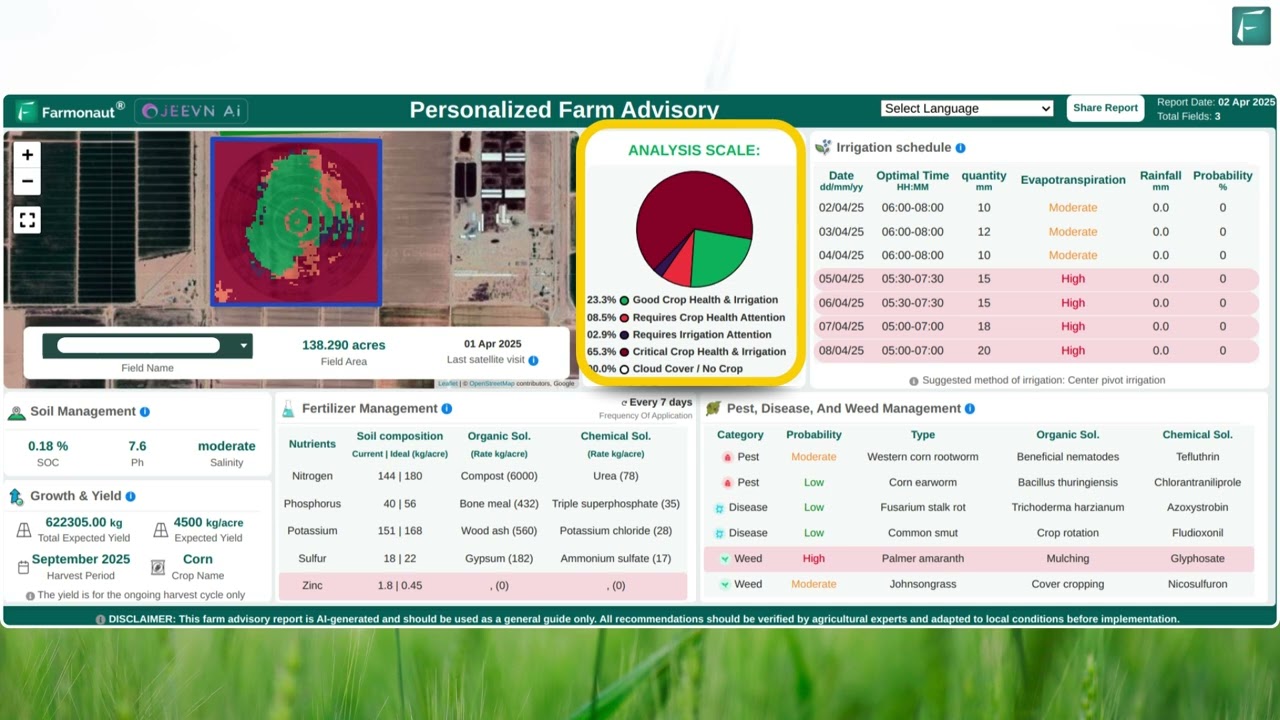



Ready to upgrade your farm’s digital operations?
Explore modular subscription packages tailored for urban & vertical farming, mining, infrastructure, and defence sectors. All with seamless satellite imaging, AI, and traceability tools:
Cross-Cutting Considerations: Regulation, Branding, Productivity, and Supply Chains
- Regulatory Compliance: Urban, vertical, and organic farms must meet evolving city/state rules for organic labeling, food safety, waste management, and energy use—automated compliance digital tools can help.
- Branding and Traceability: Use blockchain and supply chain platforms (Farmonaut Traceability) to give customers real proof, not just promises—especially valuable in premium and export-driven urban markets.
- Labor Productivity and Safety: Automation replaces repetitive labor and increases safety. Tech-driven SOPs and digital recordkeeping reduce HR costs and regulatory risks.
- Revenue Diversification: Urban farmers can diversify income by offering composting, on-farm agtech services, or by leasing managed vertical systems to partner restaurants or schools.
- Financing and Scalability: Modular systems and SaaS platforms make it possible to start small and scale fast—especially in cities where leasing land or rooftops is more cost-effective than purchasing.
Bullet Points: Key Advantages of Urban & Vertical Farming
- ✔ Ultra-Fresh Produce: Harvested hours before delivery, maximizing taste, nutrition & market price
- 📊 Data-Driven Efficiency: Lowered costs, improved scheduling, and proactive problem solving with tech/AI
- ⚠ Controlled Risks: Enclosed systems, automation, and data analytics reduce seasonality, pests, and weather loss
- ♻ Sustainability Score: Water use reduction (up to 70%), minimal land impact, lower emissions vs. conventional supply chains
- 💡 Branding Premium: Transparency, sustainability, and city-local positioning command top-tier urban market pricing
Top 7 High-Profit Crops for Urban Vertical Systems in 2026
- Microgreens—compact, rapid, high-value
- Salad greens—lettuce, arugula, spinach
- Herbs—basil, mint, cilantro, specialty varieties
- Mushrooms—oyster, shiitake; require little space but fetch high premium
- Strawberries & Berries—demand in cities outpaces local supply at all times
- Specialty Tomatoes—cherry, heirloom, premium snack types
- Edible Flowers & Niche Leaves—for culinary, wellness & foodie markets
Key Tech Features for Maximizing Urban Farm Profitability
- LED Grow Lighting with Spectrum Control
- Sensors for Humidity, CO2, Temp, and Nutrient Levels
- Automated Irrigation and Fertigation Systems
- AI-powered Crop Health Detection
- Blockchain & Digital Traceability Platforms
- Modular Racks for Space Optimization
- Remote Monitoring Dashboards & Mobile Apps
Top Strategies for Profitable Urban Farming in 2026
- Secure Prime Location: Lease rooftops, containers, or underutilized buildings close to high-demand neighborhoods.
- Adopt Automation Early: Invest in automation for watering, climate, and harvesting—even at small scale, it boosts labor efficiency and supply consistency.
- Plan for Energy Volatility: Choose crops and production schedules that allow profit even with rising city power costs; investigate renewable energy add-ons.
- Diversify Product Mix: Pair high-volume microgreens/herbs with value-added specialty goods and health-focused branded packs.
- Build Direct Market Relationships: Partner with restaurants, schools, and CSAs to stabilize demand and capture premium pricing.
- Pursue Certification & Traceability: Use blockchain tools for trusted organic or specialty claims; make compliance a marketing tool.
- Leverage Real-Time Data: Use platforms like Farmonaut for continuous monitoring, adaptive scheduling, and remote troubleshooting— scalable from a microfarm to full city block!
Frequently Asked Questions: Profitable Urban & Vertical Farming 2026
Q1: Which vertical farming crops are most profitable in city markets for 2026?
Answer: Microgreens, salad greens, herbs, mushrooms, and specialty berries fetch the highest prices per square meter, particularly with organic or premium branding and fast delivery to restaurants or gourmet retailers.
Q2: Can a small urban or rooftop farm really compete with rural large-scale suppliers?
Answer: Yes. Urban farms outcompete in freshness, speed, premium quality branding, and direct consumer trust. Vertical and modular setups further level the playing field by maximizing crop value per unit of land or energy.
Q3: Does organic certification kill profitability for urban farmers?
Answer: Not if managed efficiently. While there are certification costs, streamlined digital processes and blockchain traceability platforms (such as those available from Farmonaut) help spread costs, reduce errors, and amplify price premiums—making organics not just viable but highly competitive in city markets.
Q4: How important is tech automation for small urban farms?
Answer: Essential. Even modest automation—such as automated irrigation, sensors, or simple climate control—delivers disproportionately large time and cost savings, increases output, and reduces risk of supply interruption.
Q5: What are the biggest risks for urban farms in 2026?
Answer: Energy cost volatility, regulatory changes, certification delays, and losing direct market contracts due to inconsistent supply. Mitigate these risks with real-time monitoring, diversified channels, and robust compliance tools.
Conclusion: The Intersection of Sustainability, Tech & Profit
The path to profitable urban farming in 2026 is paved by:
- Prime urban location and rapid supply chain
- Smart crop mix and direct market access
- Technology-driven efficiency—automation, data analytics, modular infrastructure
- Compliance, certification, and traceability—turning regulatory needs into revenue opportunities
- Sustainability and branding—from carbon monitoring to organic and specialty product differentiation
Urban agriculture is no longer just about growing food—it sits at the dynamic interface of agricultural technology, market innovation, and sustainability. For those who leverage today’s cutting-edge tools and strategies (including advanced satellite monitoring and AI platforms), the potential to meet both city demand and profitability goals has never been clearer.
Whether optimizing for vertical farming profitable returns, launching the next profitable organic farming microenterprise, or scaling direct urban supply chains—even into mining or infrastructure sectors as cities expand—the future belongs to agile, digitally enabled, and eco-conscious producers.
We at Farmonaut are committed to equipping businesses, growers, and governments worldwide for this future—combining affordable, scalable satellite technology with AI, blockchain, and data-driven operations. Together, let’s build profitable, resilient, and sustainable urban and vertical farming landscapes for 2026 and beyond!

 Vizexec Transformation
 GalaxEye Space
 Sun Palm Australia
 Grandstream Algérie
 XOS Realty
 Geospatial Lab Africa
 Agro La Gándara
 HIPSAC
 ZOL Zimbabwe
 Juligerm
 AdBio
AdBio MISE Maroc
 NWNS
NWNS Red August Group
 Farm Inc
 WeMe Global
 Agrotoken
 Blue BearX
 Insignito
 DnCubed
