

Seaweed Aquaculture 2026: Transforming Global Marine Farming
Meta Description: Seaweed aquaculture is revolutionizing sustainable marine farming in 2025–2026, delivering exponential growth, ecological benefits, and economic resilience for global coastal economies.
“Seaweed aquaculture is projected to reach a global market value of $26 billion by 2026, up from $15 billion in 2020.”
“Over 35 million metric tons of seaweed are expected to be harvested worldwide annually by 2026, transforming marine agriculture.”
Introduction: Revolutionizing Marine Farming with Seaweed Aquaculture in 2026
The world aquaculture industry is on the brink of a pivotal transformation, with seaweed aquaculture standing at the forefront. As environmental concerns intensify and the demand for renewable, sustainable resources escalates, the cultivation of seaweed is revolutionizing how we approach marine farming sustainability in 2025 and beyond.
In 2026, this multifaceted sector is not only delivering benefits to agriculture, fisheries, and food production but is also actively improving ecosystems, supporting coastal economies, and serving as a key pillar for climate-smart infrastructure and carbon sequestration efforts. With an exponential rise in global interest, seaweed aquaculture has emerged as a pivotal sector for worldwide food security, sustainability, and blue economy growth.

Key Insight
By embracing seaweed aquaculture today, nations secure a vital component of the blue economy, drastically reducing environmental footprints and creating new income streams for millions of coastal residents by 2026.
What is Seaweed Aquaculture?
Seaweed aquaculture, sometimes referred to as marine macroalgae farming, involves the cultivation of diverse seaweed species in controlled aquatic environments. This industry primarily meets growing demands for food, pharmaceuticals, cosmetics, fertilizers, and biofuels.
- ✔ Food Security: Nutritious, rapidly renewable protein and micronutrient source.
- ✔ Agricultural Fertilizers: Source of liquid seaweed extracts, known to improve soil health and yield.
- ✔ Cosmetics & Pharmaceuticals: Demand for natural, sustainable ingredients is surging.
- ✔ Biofuels & Bioplastics: Seaweed is a promising raw material for next-generation energy and environmental solutions.
- ✔ Climate Mitigation: Robust carbon sink, helping to reduce atmospheric carbon dioxide and ocean acidification.
Asia has been historically dominating seaweed aquaculture (notably China, Indonesia, South Korea), but new regions in Europe, the Americas, and Africa are expanding trade and sea & reef aquaculture techniques, fostering resilience and technological innovation everywhere.
- 🟢 Kelp (Laminaria spp.): Leading food and biofuel source
- 🔴 Nori (Porphyra spp.): Essential in Asian cuisine, especially sushi
- 🟠 Gracilaria: Used for agar extraction in food and biotech
- 🟣 Eucheuma: Main source of carrageenan (thickener for foods, cosmetics)
- 🔵 Ulva (Sea Lettuce): Rich in protein, vital for future food security

Pro Tip
For sustainable and data-driven seaweed farming, real-time, satellite-based platform access can optimize both environmental and economic outcomes. Leverage advanced digital advisory platforms for up-to-date climate and crop recommendations.
Key Modalities: Sea & Reef Aquaculture vs. Land-Based Aquaculture
Seaweed aquaculture draws strength from its adaptive modalities. Both sea & reef aquaculture and land-based aquaculture are rapidly evolving, each offering unique solutions to address global sustainability goals.
Sea & Reef Aquaculture
- 🌊 How it Works: Seaweed is grown on ropes, nets, or frames suspended directly in nutrient-rich coastal or open ocean waters, maximizing natural water movement and sunlight.
- 🌏 Regions: Particularly successful in Asia, now adopted in Europe (Norway, Ireland, France), the Americas (USA: Maine, Alaska; Chile; Canada), and Africa (Tanzania, Zanzibar).
- 🪸 Benefits: Low freshwater use, absorbs excess nutrients, mitigates acidification & eutrophication, enhances marine biodiversity, and provides vital habitat for fish, crustaceans, and mollusks.
Land-Based Aquaculture Systems
- 🏭 How it Works: Seaweeds and co-cultivated species (like sea cucumbers) grow in tanks or ponds, allowing precise control over light, temperature, nutrients, and quality monitoring.
- ⛲ Advantages: Protects wild populations from accidental introduction; easier to integrate with other aquaculture species (IMTA – Integrated Multi-Trophic Aquaculture).
- 🔗 Integration: Facilitates zero-waste practices, linking land-based crops (via liquid seaweed fertilizer reuse) and livestock for circular economies.
BOTH methods help reduce negative impacts in the global marine farming sector, supporting sustainable production across varying geographies and environmental conditions.

Sustainable Benefits and Environmental Impact
Seaweed aquaculture is emerging as one of the world’s most sustainable seafood systems, owing to its ecological symbiosis, resource efficiency, and potential to tackle major challenges:
- ✔ Minimizes Chemical Inputs: Unlike terrestrial agriculture, seaweed farming doesn’t require pesticides or synthetic fertilizers, reducing environmental waste runoff into oceans.
- ✔ Enhances Biodiversity: Seaweed farms become vibrant habitats, boosting populations of fish, invertebrates, and birds, enriching local oceanic biodiversity.
- ✔ Carbon Sequestration: Seaweed absorbs and stores significant amounts of carbon dioxide, reducing acidification and fighting climate change.
- ✔ Nutrient Cycling: Seaweed uptakes nutrients, especially nitrogen and phosphorus, preventing eutrophication (dangerous algae blooms) in coastal zones.
- ✔ Water Quality Improvement: Clean water results from the seaweed’s natural filtering action, also benefiting co-farmed fish and shellfish.
- 🌿 Reduces land use for protein and fertilizer production
- 💧 Lowers water usage compared to conventional crops
- 🦞 Restores marine life by providing habitat structures
- 🌎 Sequesters carbon to help stabilize the climate
Common Mistake
Overlooking local ecosystem compatibility can reduce farm efficiency and threaten marine biodiversity. Always use region-specific species and tailor practices to local water quality parameters.

Integration: Circular Economies and Liquid Seaweed in Global Agriculture
Seaweed aquaculture is not just about marine farming—its ripple effects extend onto land, revolutionizing agriculture, and creating robust circular economies. By 2026, the global practice of using liquid seaweed extracts as agricultural fertilizers is booming, providing the following unique advantages:
- ✔ Biostimulant Properties: Liquid seaweed boosts plant growth, stress tolerance, and root development, helping farmers improve crop resilience to climate volatility.
- ✔ Sustainable Inputs: Reduces dependence on synthetic chemicals, aligning with organic farming trends and global sustainability targets.
- ✔ Resource Recycling: Seaweed by-products from one sector fuel growth in another, minimizing waste across the value chain.
- ✔ Ecosystem Balance: Integrated systems (such as co-cultivation with sea cucumber aquaculture) redistribute nutrients and promote overall farm productivity and health.
- ✔ Soil Health: Maintains and restores soil organic matter, benefiting both large commercial and smallholder farms worldwide.
Investor Note
The liquid seaweed fertilizer industry is projected to grow at double-digit annual rates through 2026. Investors should monitor agri-biotech, digital farm management, and seaweed-based product verticals for promising ROI opportunities.
Economic Impact and Coastal Community Growth
The economic contribution of seaweed aquaculture to coastal economies is revolutionary. In 2026, this sector:
- ✔ Generates Employment: Provides jobs in harvesting, processing, R&D, logistics, and product development—directly supporting rural and coastal livelihoods worldwide.
- ✔ Boosts Exports: Expands international trade for emerging producers in Europe, Americas, and Africa, diversifying economic supply chains.
- ✔ Drives Value-Addition: Encourages innovation in high-value markets (functional foods, nutraceuticals, fertilizer blends, eco-cosmetics).
- ✔ Enhances Local Resilience: Seaweed farms offer resilient incomes where fisheries are declining due to climate pressures or overfishing.




Economic Highlight
With rising demand from food, fertilizer, and green-tech industries, seaweed aquaculture is outpacing growth rates of traditional aquaculture sectors—unlocking sustainable prosperity for developing regions.
Technological Innovation & Farmonaut’s Role in Marine Monitoring
Digital innovation is radically transforming seaweed aquaculture. Real-time monitoring, AI-driven advisory systems, and integrated digital workflows help maximize farm productivity and ecological health. Organizations worldwide—including coastal communities, enterprises, and governments—seek scalable platforms that can foster better decisions, ensure regulatory compliance, and maintain sustainable practices.
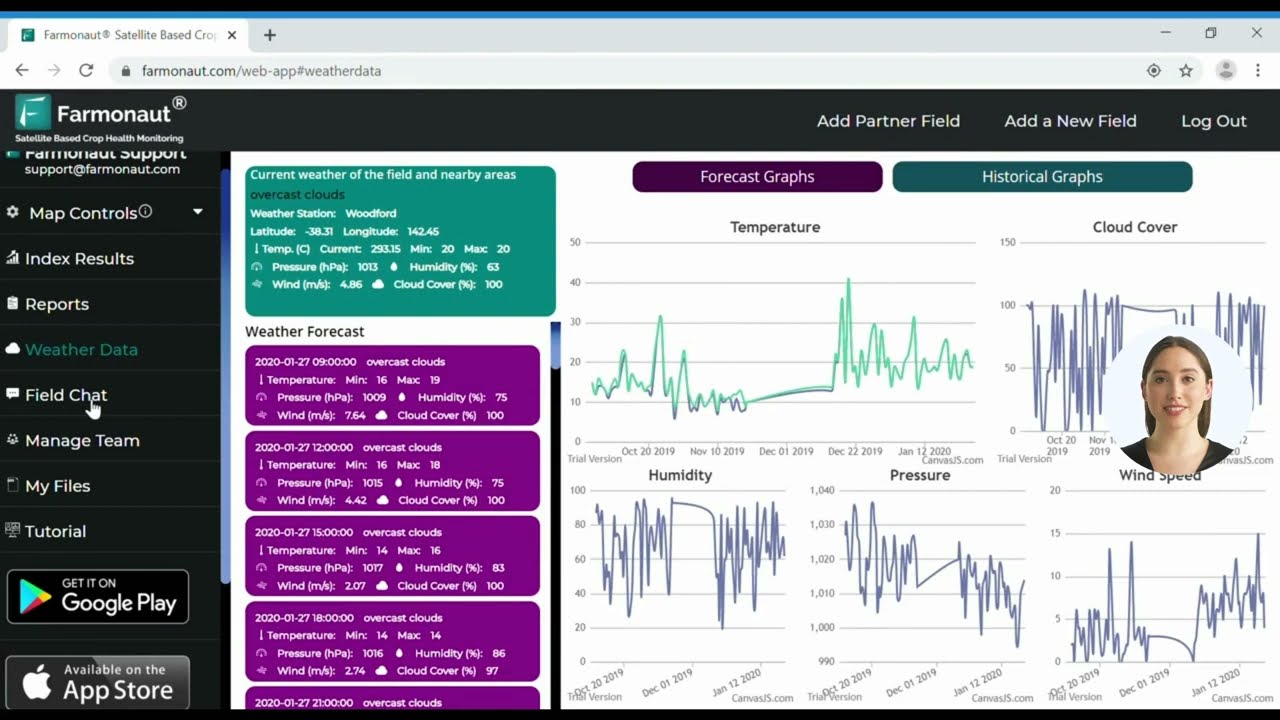
Satellite monitoring, fleet management, and API-driven integrations for resource tracking, help operators optimize logistics, monitor carbon footprints, and automate crop growth analysis—critical for seaweed aquaculture’s global expansion.
At Farmonaut, we provide advanced, satellite-based solutions tailored to the unique challenges of the aquaculture sector, including real-time environmental impact monitoring and AI-based advisories to ensure farms remain highly productive and environmentally resilient. Our platform’s carbon footprint monitoring tools are vital for quantifying ecological performance, while our blockchain traceability solutions ensure supply chain transparency across the sector.
Modern seaweed aquaculture also benefits from:
- ✔ Remote Sensing: Multispectral imagery for growth rate analysis and water quality monitoring.
- ✔ Automated Seeding & Harvesting: Robotics and machine learning for efficient, low-labor operations.
- ✔ Smart Farm Management: Integrated AI for predicting productivity, timing harvests, and monitoring disease outbreaks.
- ✔ Platform Scalability: APIs for seamless integration across regional and national monitoring networks.
See API Docs
Discover our farm management platform for large-scale, enterprise-grade marine and land farming support.

Tech Trend
Satellite-driven analytics and blockchain traceability are rapidly becoming standard in global aquaculture monitoring. These tools empower operators to achieve transparent, sustainable, and compliant marine production in 2026 and beyond.
Comparative Benefits Table for Seaweed Aquaculture (2025–2026)
| Benefit Type | Estimated Impact Value (2025–2026) | Description |
|---|---|---|
| Carbon Sequestration | 7–12 tons CO₂/hectare/year | Seaweed rapidly absorbs CO₂, rivaling terrestrial forests in carbon removal per cultivated area. |
| Biodiversity Boost | +40% Marine Biodiversity | Seaweed farms enhance habitat structure, supporting fish, invertebrates, and coastal wildlife recovery. |
| Coastal Economy Impact | $26B Global Market +12% Revenue Growth/yr (coastal communities) |
Job creation and value-added product markets spur resilient growth for local and regional economies. |
| Water Quality Improvement | Up to 60% Reduction in Local Nutrient Pollution | Nutrient and pollutant uptake by seaweed prevents algal blooms and maintains clean marine environments. |
| Fishery Productivity | +15–30% Fish/Shellfish Recruitment Rate | Seaweed farms provide nursery grounds and feeding habitats for commercially important species. |
| Climate Resilience | 30–50% Soil Moisture Retention (via Liquid Seaweed Fertilizers) | Improved plant and soil health supports resilience to drought/crop stress in both land and marine systems. |
| Social Impact | Millions of Jobs Created | Seaweed aquaculture boosts employment, strengthens rural infrastructure, and supports inclusive growth. |
“Seaweed aquaculture is projected to reach a global market value of $26 billion by 2026, up from $15 billion in 2020.”
Sustainability Benchmark
Unlike many aquafeed-based sectors, seaweed aquaculture requires no feed and no land conversion, positioning it as the gold standard for eco-friendly marine farming in the decade ahead.
Future Trends in Seaweed Aquaculture: 2026 and Beyond
- 🌍 Geographical Diversification: Seaweed aquaculture is exponentially expanding from Asia to Africa, Latin America, Europe, and North America—fostering new blue economies and resilient food systems.
- 💡 Innovative Products: Surge in novel seaweed-based proteins, superfoods, pharmaceuticals, and biodegradable packaging solutions.
- 🌳 Carbon Markets: Verified carbon sequestering from seaweed is opening lucrative global carbon credit avenues for sustainable aquaculturists.
- 🛰️ Satellite and AI Integration: Digital transformation is optimizing every aspect of marine farming, from real-time weather monitoring to resource allocation and risk mitigation.
- 🌱 Regenerative Farming: Focus on circular economy, land-sea integration, and closed-loop nutrient cycles with seaweed, shellfish, and sea cucumber aquaculture systems.
- 📈 Data-Driven Farms: AI and satellite tech are standard on every large-scale farm
- 💳 Blue Financing: More banks and insurers adopting satellite verification for loans and risk
- 🧪 Bioactives: R&D into seaweed extracts for medicine and nutrition is surging
- 🌊 Climate-Buffering: Farms positioned to directly reduce ocean acidification and coastal damage
Regulatory Note
Compliance frameworks and digital auditing are maturing, with traceability, blockchain, and transparent reporting becoming baseline requirements in many countries by 2026.
Frequently Asked Questions – Seaweed Aquaculture in 2025–2026
A: Seaweed aquaculture requires no freshwater, no fertilizers or pesticides, absorbs excess nutrients from the sea, sequesters carbon, and promotes marine biodiversity—all with lower resource inputs than most agriculture systems.
A: The risk is low when native species are cultivated, and with proper farm siting and monitoring. Emerging digital tools, like real-time satellite monitoring, further mitigate these risks.
A: Digital platforms enable precise monitoring of environmental conditions, resource management, traceability, and regulatory compliance—all of which raise productivity and drive sustainability.
A: Seaweed-derived biostimulants and fertilizers boost crop yield, soil health, and climate resilience—closing nutrient loops between ocean and land sectors.
A: Start by analyzing local ocean parameters, partnering with governments for site licensing, and adopting robust monitoring and farm management solutions. Access data resources, funding, and training via digital platforms to ensure sustainable, profitable operation.
Farmonaut Subscriptions & Global Monitoring Solutions
At Farmonaut, we offer tiered subscription packages that empower farmers, businesses, and governments to monitor land-based and marine farms using real-time satellite and AI-driven insights. Whether tracking carbon footprint, managing fleet, or optimizing crop health, our platform ensures affordable, accessible, and scalable services to suit every operation.
For developers, our API enables seamless integration with your existing systems, and our API developer docs help you get started instantly.
Explore carbon footprinting for aquaculture, traceability for supply chains, crop loan/insurance for financing, and fleet management—all tailored to the marine farming revolution.
- ✔ Seaweed aquaculture is rapidly expanding, with new markets and technologies driving sustainability.
- ✔ Liquid seaweed fertilizers are empowering climate-smart agriculture and reducing chemical inputs globally.
- ✔ Economic impact is evident through rising jobs, exports, and resilient coastal growth, especially in developing regions.
- ✔ Technological innovations like satellite and AI are optimizing farms and enabling regulatory compliance at scale.
- ✔ Farmonaut delivers the digital backbone for data-driven, sustainable marine farming worldwide.
Conclusion: Embracing Sustainability for the Future of Global Aquaculture
As seaweed aquaculture continues its exponential ascent in 2026 and beyond, it embodies the essence of sustainable, productive, and resilient marine farming. By integrating technology, ecological stewardship, and circular economics, the sector stands at the front line of solving global challenges—offering climate mitigation, food security, livelihoods, and environmental revival.
With rising support for digital monitoring, traceability, carbon tracking, and ecosystem integration, seaweed is no longer just an ocean plant—it’s a foundation for a prosperous, low-impact blue economy across Asia, Europe, Africa, and the Americas.
At Farmonaut, we remain dedicated to empowering the marine, land-based, and integrated aquaculture industries through cost-effective, satellite-driven insights, driving efficiency, trust, and sustainability for every stakeholder.
Explore the richest seam of the sea—seaweed aquaculture—for a future where our planet’s health and prosperity grow together.

 Godrej Agrovet
 Hayleys Agriculture
 Linx Agritech
 Adinet
 Save Your Soils
 GalaxEye Space
 Grandstream Algérie
 XOS Realty
 Geospatial Lab Africa
 Agro La Gándara
 HIPSAC
 ZOL Zimbabwe
 Juligerm
 AdBio
AdBio MISE Maroc
 NWNS
NWNS Red August Group
 Farm Inc
 WeMe Global
 Agrotoken
 Blue BearX
 Insignito
 DnCubed
 Indosistim Teknologi
 Liquify Digital
 CU Foods
 BeyondTech Global
 Rouge VC
 AgroRisk
 Oath Inc
 Esri North East Africa
 MDCV UK
 Etech Consulting Madagascar
 Vestlandsforsking
 WB Dev
 Sama Premium
 Tres Valles
 Blickwinkel
 Agricultural Credit Policy Council
 eKGIS
eKGIS Mostas Tech
 Andex
Andex Deluxe Conseil
 WICO
WICO Chimera Innovation
 SkyHarvest
 Teledarbas
 Exurbia Geospatial
 FieldZero
