

Solar on Farmland: 7 Powerful Ways to Boost Yields & Income
“Solar panels on farmland can increase land productivity by up to 70% through dual energy and crop production.”
Introduction
Land faces unprecedented pressure as regions worldwide contend with rising energy demand, climate resilience challenges, and the need to preserve agricultural productivity. Solar on farmland—also known as solar farmland or solar on agricultural land—is reshaping agricultural landscapes by pairing sustainable energy production with ongoing crop and livestock farming. This innovative approach is especially appealing in regions with abundant sun, a growing appetite for renewable energy, and the imperative to sustain yields on limited arable land.
At its core, the idea is simple yet powerful: solar photovoltaic (PV) installations and farming activities can co-exist on the same plot. By elevating panels to allow cultivation beneath and between rows, or integrating solar canopies above crops and pasture, we unlock dual-use land and maximize productivity—producing both food and clean electricity.
This article explores seven powerful ways that solar on farmland boosts yields and income, delivers ecosystem services, and sustains agricultural practices—all while answering critical questions such as “Did Italy ban solar panels on farmland?” and diving into the technical, economic, and policy dimensions of this transformative approach.
“Integrating solar reduces farm water use by up to 17%, supporting sustainable agriculture and climate resilience.”
What Is Solar on Farmland?
Solar on farmland refers to the practice of installing photovoltaic (PV panels) on agricultural land in a way that enables the continued cultivation of crops, pasture, or livestock beneath or adjacent to the solar installations. Unlike traditional solar farms that often replace farming altogether, solar on agricultural land strives for compatibility: balancing energy production without sacrificing agricultural yields.
- Ground-Mounted Solar Farms with elevated racking allow crop rows or pasture beneath the panels.
- Agrovoltaics: A core synergy, where crops or pasture actively grow under solar canopies, optimizing land use by balancing light interception, shading, and microclimate effects. (Focus Keyword: agrovoltaics)
- Thin-Film or Bifacial Panels: These modern panels can capture diffuse light reflected from the soil or crops beneath, potentially increasing overall solar electricity generation while reducing direct heat stress compared to conventional panels.
- Solar Roofs & Pergola-Style Installations in forestry and agroforestry contexts can blend with shade-tolerant crops and shelterbelts, diversifying income streams for forest farmers.
Agrovoltaics is not just about stacking technologies. By optimizing panel height, row spacing, and design, farmers can generate energy and crops on the same land without compromising yields.
Impact of Solar Integration on Farmland: Key Benefits & Estimated Outcomes
| Benefit | Conventional Farming (Estimated Value/Outcome) |
Solar-Integrated Farming (Estimated Value/Outcome) |
% Improvement with Solar |
|---|---|---|---|
| Increased Yield | Baseline crop yield per hectare | Up to 70% higher land productivity (food + energy) | +70% |
| Water Savings | 100% of conventional irrigation needs | Up to 17% reduction in water use | -17% |
| Energy Income | None or minimal (from fossil fuels) | $250–$1000/acre/y (solar leases or power sales, varies by region) | +New Revenue |
| Crop Resilience | Moderate (vulnerable to heat/drought) | Improved microclimate, reduced heat stress | ++ |
| Reduced Carbon Footprint | 0% energy from renewables | Up to 100% energy from renewables, lowers farm emissions | Up to 100% |
| Biodiversity Support | Limited (mono-cropping) | Pollinator habitats, native vegetation under arrays | ++ |
Diversifying into solar farmland unlocks new revenue even in high-yielding agricultural regions. Solar leases and power purchase agreements provide predictable, year-over-year income streams; an attractive proposition for landowners and investors alike—especially as clean energy demand grows.
7 Powerful Ways Solar on Farmland Boosts Yields & Income
1. Dual-Use Farming (Agrovoltaics)
Agrovoltaics represents the core value proposition of solar on farmland: dual-use land, where energy production and crop cultivation happen simultaneously. Unlike ground-mounted solar farms displacing agriculture, agrovoltaic systems elevate panels just enough to allow continued farming beneath and between the rows.
- ✔ Optimizes Land Productivity: Land produces both electricity and food. Studies show up to 70% increase in overall productivity when fields serve dual functions.
- ✔ Sustains Yields in regions under pressure from urbanization or reduced arable land.
- ✔ Improves Crop Resilience: Crops grown under solar arrays experience less heat stress and reduced risk of sunburn or drought stress.
Not all crops are suited for the same degree of shading. Root vegetables, leafy greens, and forage have high compatibility, while sun-loving crops like maize may need careful design (spacing, tilt, bifacial panels) to balance light capture and crop yields.
2. Elevated Panels & Machinery Access
Modern solar farmland systems employ elevated racking and adaptive configurations so that farm machinery and livestock can pass beneath the panels without obstruction. This innovation:
- ✔ Enables Traditional Tillage & Harvest: Tractors can operate between panel rows because of increased clearance.
- ✔ Allows Livestock Grazing directly under panels—delivering pasture productivity plus shade for animal welfare (key in hot climates).
- ✔ Reduces Compaction & Improves Maintenance: Well-designed access paths ensure safe movement and easy cleaning, reducing maintenance costs.
How Designs Must Balance Multiple Needs
- 📊 Span and Height: Higher racks (above 2.5m) allow full-size equipment and support diversified farm activities.
- 📊 Spacing: Wider alleys are vital for both equipment access and crop light penetration.
- 📊 Shading Patterns: Row orientation and adjustable racking help adapt to crop cycles, maximizing sunlight at critical growth phases.
3. Water Savings & Irrigation Efficiency
A major advantage of solar panel installations on farmland is lowering water demand without limiting yields. Partial shading beneath arrays reduces solar heating on the ground, significantly lowering evapotranspiration rates in hot regions.
Studies indicate integrating solar on agricultural land can save irrigation water by up to 17%—especially valuable in drought-prone regions or where water scarcity limits agricultural expansion.
- ✔ Better Water Use: Shading conserves soil moisture and increases efficiency of drip or precision irrigation.
- ✔ Reduces Heat Stress during peak summer—less water lost to evaporation.
- ✔ Allows Growth of Shade-Tolerant Species which require less irrigation.

4. Climate Resilience & Crop Protection
Solar on farmland is a strategic ally in climate adaptation. Panels act as both energy generators and protective canopies, buffering crops and livestock from harsh weather extremes.
- ✔ Microclimate Management: Arrays reduce direct sunlight, wind, and sudden temperature swings—increasing resilience to heatwaves and storms.
- ✔ Lower Crop Losses: By mitigating heat and wind stress, panels support gentle, predictable growth patterns and reduce yield fluctuations.
- ✔ Fosters Carbon Farming: Lower stress on crops and improved soil moisture translate to greater carbon sequestration and healthier soil organic matter.
Over-shading reduces yields for photosynthetically demanding crops. It’s critical to design shading levels to crop selection—e.g., give wheat or maize more sunlight, while lettuces or pastures can tolerate more shade.

5. Diversifying Revenue Streams
For today’s farmers, resiliency comes not just from higher yields but predictable, diversified income. Solar farmland innovations deliver:
- ✔ Solar Leases: Fixed annual payments from energy developers for using farmland for solar panels—ensuring ongoing income even if crop yields are down.
- ✔ Power Purchase Agreements: Farms sell energy back to the grid or nearby facilities, gaining extra financial flexibility.
- ✔ Diversification Cushion: Combining crops, livestock, and energy shields growers against market or climate shocks.
Smart Resource Management
Multiple income sources (energy, crops, leasing) are especially important when farming operations face uncertainty from pests, drought, or volatile prices. Solar integration also increases farm value for potential buyers or can be collateral for crop loan and insurance products—enhancing financial security.
Solar on farmland often delivers stable, inflation-resistant lease payments—valuable for risk-averse investors and family farms transitioning to the next generation.

6. Enhancing Biodiversity & Ecosystem Services
Beyond economics, solar on farmland improves ecosystem services—the benefits nature provides agriculture. Biodiversity-rich buffer zones beneath and around arrays can vitalize pollinators, foster wildlife, and protect soils and waterways.
- ✔ Pollinator Habitat: Solar installations are increasingly designed to encourage native plants and flowers, fostering local bee and butterfly populations.
- ✔ Soil Health: Partial shading and perennial ground covers reduce erosion, preserve organic matter, and increase long-term fertility.
- ✔ Reduced Inputs: Lower wind and sun exposure mean fewer pesticides and less irrigation—directly reducing costs and environmental impact.
Integrating solar into farmland helps protect pollinators and native species—an ecological service that fuels crop pollination and raises yields on adjacent lands.

7. Data-Driven Management & Digital Agriculture
Maximizing the benefits of solar on agricultural land relies on precision management—and that’s where digital agriculture, AI and satellite insights become key.
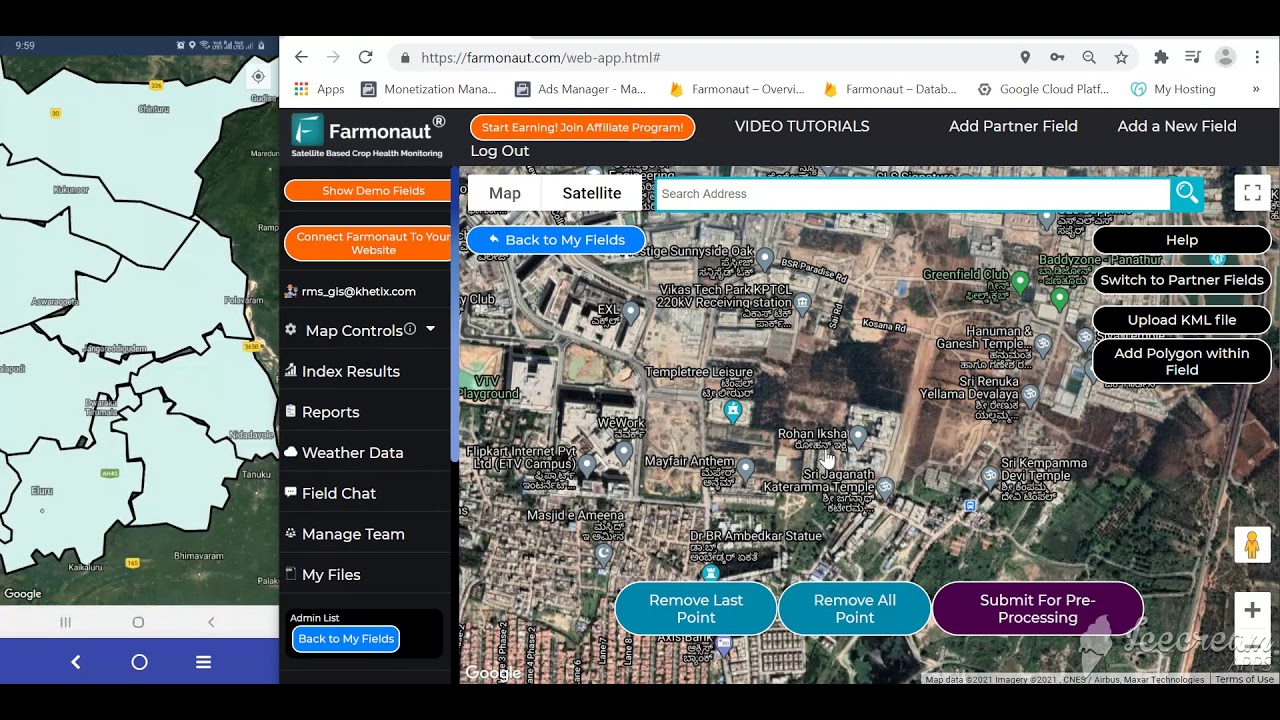
- ✔ Satellite Monitoring: Enables real-time tracking of soil moisture, vegetation health, and infrastructure performance—empowering farmers to respond quickly to changing conditions.
- ✔ AI-Based Advisory: Our Jeevn AI system provides actionable, site-specific recommendations for smart resource allocation across crops, water, and energy.
- ✔ Traceability: Blockchain-based traceability bolsters supply chain transparency, reassuring buyers and regulators that food from solar-integrated farms meets high standards for sustainability.

Digital tools—especially satellite monitoring—are vital for optimizing solar on farmland design, ongoing maintenance, and resource allocation.
“Integrating solar reduces farm water use by up to 17%, supporting sustainable agriculture and climate resilience.”
Design & Practices for Maximizing Solar on Farmland Benefits
The true potential of solar farmland is realized only when systems are carefully designed to align with local soil, climate, and crop practices. Every element—panel type, tilt, height, row spacing, water management—impacts both yields and energy output.
Key Design Considerations (Visual List):
- ✔ Panel Height & Orientation: Higher, adjustable racking facilitates both sunlight for crops and access for machinery.
- ✔ Crop Compatibility: Select shade-tolerant species for areas with denser panel coverage and high-yielding crops where sunlight naturally concentrates.
- ✔ Water Management: Use sensors and precision irrigation beneath arrays to harness water savings and prevent fungal diseases.
- ✔ Biodiversity Planning: Integrate native wildflowers, grasslands, or buffer strips beneath and around installations to aid pollinators and soil health.
- ✔ Maintenance Pathways: Keep access routes free for both farm and energy teams—crucial for safety and system longevity.
Neglecting ongoing soil health leads to compaction or reduced organic matter beneath panel rows. Ongoing maintenance and adaptive management are critical for long-term productivity.
Technological Enhancements (Visual List):
- 📡 Monitoring Systems: Integrate IoT-enabled moisture, light, and weather sensors for rapid incident detection and precision interventions.
- ☀️ Solar Performance Monitoring: Solar performance AI tracks panel output and detects underperforming arrays in real time, ensuring solar installations deliver their full return alongside crop operations.
- 📈 Adjustable Panel Racks: Seasonal tilt adjustments maximize solar yield during low-sun winter months and optimize shading for crops in summer.
- 📊 Bifacial Panels: These can capture diffuse light reflected from crops and soils, increasing overall electricity generation under varied weather patterns.
- 🌱 Agroforestry Contexts: Consider integrating panels with shade-tolerant overstory species for shelterbelts and carbon farming.
High-resolution satellite imagery and AI-driven analytics—such as those provided by our solutions at Farmonaut—empower farmers to balance solar on farmland efficiency with ecosystem and crop health monitoring for maximum returns.
Policy, Environmental & Social Considerations
Policy & Regulation
- ✔ Incentives: Some countries offer financial or tax incentives for dual-use solar installations on agricultural land.
- ✔ Zoning & Land Use: Local policies may either restrict or promote solar on farmland. As queried, “Did Italy ban solar panels on farmland?” — Policies vary, with some regions imposing restrictions to protect core crop-producing zones, while others explicitly encourage agrovoltaic integration where it does not harm productivity.
- ✔ Grid Connection: Ease of connecting to the power grid can make or break the economics of farm-scale solar projects. Fast-track permits and grid upgrades are essential for scaling adoption.
Ignoring local policy risks costly delays or denied permits. Engage stakeholders early and advocate for clear regulations supporting agricultural compatibility and environmental safeguards.
Environmental Safeguards
- ✔ Soil Protection: Projects must preserve soil structure and organic matter—often via reduced tillage, perennial covers, and smart water management.
- ✔ Pollinators & Native Vegetation: Biodiversity plans will soon be included in most solar farmland development standards.
- ✔ Visual & Landscape Impacts: Designs should minimize visual and land fragmentation effects, integrating with local farm traditions and minimizing loss of productive acreage.
Social & Economic Context
Community buy-in and long-term stewardship are vital. Transparent impact assessments, fair lease terms, and active engagement with local farming communities build lasting acceptance—and prevent rural conflict. The best outcomes arise when solar integration aligns with rural economic development, sustainable food production, and land stewardship.
Policy frameworks that recognize the compatibility of clean energy infrastructure with ongoing farm operations accelerate the green transition and rural revitalization.
Farmonaut’s Tools for Solar Farmland Integration
At Farmonaut, we believe the future of agriculture is data-driven, transparent, and sustainable. Our satellite technology platform supports solar farmland projects and ongoing farm management by offering farmers, landowners, and agribusinesses:
- ✔ Satellite Monitoring: Real-time insights into crop health, soil moisture, and the performance of solar installations via browser, Android or iOS Apps (access


 )
) - ✔ AI-Based Advisory (Jeevn AI): Customized guidance for crop selection, resource management, irrigation scheduling, and weather risk mitigation on dual-use farmland.
- ✔ Blockchain Traceability: Full supply chain traceability from field to fork for food, energy, and carbon credits via our traceability platform.
- ✔ Environmental Impact Tracking: Precise carbon footprinting for farm enterprises practicing agrovoltaics or pioneering solar on agricultural land.
- ✔ API & Developer Access: Integrate our data streams and farm insights into any agritech or infrastructure platform (API | Docs).
- ✔ Fleet & Resource Management: Streamline logistics for farm, energy, and forestry assets—especially during multi-sector operations (Fleet Management Solution).
- ✔ Large Scale Agro-Admin: Administer and monitor large territories with ease, supporting big farm and solar infrastructure projects (Large Scale Farm Management App).
- ✔ Forestry & Plantation Advisory: Guidance for shade-tolerant crops and biodiversity in agroforestry or solar-pergola settings (Crop, Plantation, Forest Advisory).
Our mission is to make satellite-driven, AI-enabled insights affordable and accessible to all, accelerating sustainable and profitable land use worldwide.
Frequently Asked Questions
What crops can be grown beneath solar panels?
Shade-tolerant crops (lettuce, spinach, potatoes, forage, berries), native grasses and wildflowers, and grazing pasture are highly compatible with solar on agricultural land. Crop selection depends on intended shading patterns and local conditions.
Does using farmland for solar panels reduce food production?
When designed for compatibility, solar-integrated farms can maintain or sometimes even increase food production per hectare by using partial shade and microclimate benefits to their advantage—while producing renewable energy on the same land.
What about water management under solar panels?
Solar panels can reduce evaporation, lower heat stress, and potentially conserve water. Precision drip irrigation below solar PV enables efficient water use even in dry regions.
Did Italy ban solar panels on farmland?
Italy has not issued a blanket ban, but certain regions restrict new ground-mounted solar installations on high-value or irrigated farmland to protect staple crop production—while actively supporting agrovoltaic systems that ensure continued agricultural productivity.
Is solar farmland profitable?
Yes! Solar leases, energy sales, reduced irrigation costs, and resilience to weather shocks all contribute to improved profitability—especially in regions where energy prices or land costs are high.
Conclusion
Solar on farmland represents a strategic evolution in sustainable agricultural practice. By pairing energy production with ongoing crop, livestock, or forestry systems, this approach sustains farm yields, diversifies income streams, boosts water and resource efficiency, and reinforces rural resilience—while preserving the productivity and ecological value of our most precious landscapes.
With thoughtful design, informed by satellite insights and AI-driven advice from technology partners like us at Farmonaut, solar farmland can deliver on its promise: a future where every hectare provides healthy food, clean energy, and robust ecosystem services.
- ✔ Boost yields, protect the environment, and secure income
- ✔ Embrace dual-use land as a core practice for climate-smart agriculture
- ✔ Leverage satellite technology for efficient, adaptive, and transparent farm management
- ✔ Balance water, energy, crops, and biodiversity for true sustainability
- ✔ Pave the way for rural prosperity with forward-thinking policy and design
Need to monitor, trace, or manage your solar-integrated farm remotely and affordably?
Discussion
Questions, corrections or field experience? Share them below. First-time comments are reviewed before they appear, and your email is never published.
No comments yet. Be the first to add a question or your experience.

 Rallis India
 Wild Oak Farm
 SFX
SFX BACF Africa
 Doodlakine
 Exurbia Geospatial
 FieldZero
 Indico Company
 Kubota
 FFBS
FFBS Jontra
 Tucor
Tucor
 Licence holder · Niger · Gold
 Licence holder · Nigeria · Gold + lithium










