

Tamarisk Tree & Farm Risk: Powerful Strategies for 2026
“Tamarisk trees can consume up to 200 gallons of water per day, intensifying water scarcity for farms by 2025.”
Introduction: Tamarisk Tree, Farm Risk & Sustainability in 2026
The tamarisk tree—also known as saltcedar—has become a household name among environmental scientists, farmers, and policy makers. This invasive species, primarily including tamarix chinensis and tamarix gallica within the Tamarix genus, is garnered considerable attention due to the substantial risks it poses to agricultural productivity, water security, and ecological integrity—especially as we move into 2026 and beyond.
Understanding how tamarisk threatens water availability, disrupts farm ecosystems, and accelerates environmental degradation is crucial for building effective management strategies. As arid and semi-arid regions in locations like the western United States, Australia, and Mediterranean climates face intensifying water scarcity, the need for sustainable practices and innovative solutions becomes even more pressing.
In this comprehensive guide, we’ll examine:
- The biology and distribution of tamarisk tree species in agricultural and forestry landscapes
- How tamarisk invasion drives water loss, ecosystem disruption, and increased farm risk
- Integrated management strategies—mechanical, chemical, and biological
- The crucial role of technology—especially geospatial and satellite platforms, like those offered by Farmonaut
- The positive roles of agricultural diversity, with examples like the tamarind plant and tamarack farms dairy
- Opportunities, FAQs, and resources to help your farm thrive amid invasive species challenges in 2026
Tamarisk Tree Species Overview in Agriculture & Forestry
The tamarisk tree—or saltcedar—primarily refers to species within the Tamarix genus, such as tamarix chinensis and tamarix gallica. These species have become widely distributed in various parts of the world, originally introduced for ornamental purposes and erosion control. While their adaptability to saline and drought-prone soils made them seem like a good idea, their aggressive growth habits have proven problematic.
- They outcompete native vegetation, including crucial riparian grasses and trees like willows and cottonwoods.
- Their dense thickets choke irrigation canals, fire-prone pasturelands, and riparian zones.
- Tamarisk serves as a classic example of an invasive species whose negative impacts were not anticipated in its original introduction.
The risk associated with tamarisk trees extends into several agricultural contexts, manifesting as water scarcity, infrastructure disruption, crop loss, and a troubling reduction in biodiversity—especially as we near 2026.
Distribution of Tamarisk Trees Globally
- Western United States: Massive stands invade riverways—e.g., the Colorado River and its tributaries.
- Australia: Tamarix species are spread along arid and semi-arid watercourses, impacting pasturelands and ecosystems.
- Mediterranean climates (southern Europe and North Africa): Tamarisk is particularly adept at surviving droughts and brief floods, taking over riparian areas.
The presence of tamarisk tree in irrigated agricultural zones is now threatening native plants, water infrastructure, and the entire farm risk paradigm.

Explore how regenerative agriculture and soil health intersect with sustainable management practices against invasive species like tamarisk.
Water Scarcity, Farm Risk & Ecological Disruption – How Tamarisk Poses a Challenge
One of the most significant risks posed by tamarisk invasion is water scarcity—a problem poised to only worsen by 2026. Tamarisk trees are remarkably thirsty: mature plants can consume up to 200 gallons of water per day, drawing aggressively from groundwater resources that are already limited and dependent for farms.
- Large root systems allow tamarisk to access groundwater reserves inaccessible to crops and native plants.
- Dense stands in river basins, canals, and irrigation ditches reduce water flow and availability downstream.
- Leaf litter increases soil salinity over time, degrading soil health and crop productivity.
Ecosystem Disruption & Downstream Impacts (2025–2026 and Beyond)
Tamarisk trees have substantial impact beyond just soils and water:
- Displacement of native species—like willows and cottonwoods
- Reduction in biodiversity index (species count in riparian habitats)
- Increased fire risk, especially from accumulated leaf litter
- Hindrance in access to riverbanks, grazing, and irrigation infrastructure for farm operations
In the western United States alone, over 1 million acres of farmland are fighting tamarisk invasion risks as we approach 2026—a number projected to rise if left unchecked.
- Loss of pollinator-friendly habitats and increase in soil degradation
- Cumulative disruption of agricultural and ecological cycles essential for sustainable productivity
As a result, effective management practices are not just essential—they are critical for safeguarding water and the long-term health of farm and natural systems.

Discover the ways advanced satellite analytics and AI-powered NDWI indices increase water management precision—valuable for tamarisk risk zones.
Comparative Impact Table: Tamarisk Invasion & Sustainable Management
The following table summarizes the quantifiable changes that tamarisk presence brings to farm and environmental systems, illustrating the value of sustainable management strategies to restore agricultural productivity and water security by 2026.
| Aspect | Estimated Impact of Tamarisk Presence (2025) | Sustainable Management Strategy | Expected Outcome by 2026 |
|---|---|---|---|
| Water Availability (liters/ha/year) |
Down by 30–60% in dense tamarisk areas, up to 150,000+ liters/ha lost to deep root extraction | Mechanical and biological removal, targeted irrigation redesign, satellite monitoring | Water losses reduced by up to 40%; restored flow for farm operations and native plants |
| Crop Yield Reduction (% loss) |
Yields down by 15–35% in farms adjacent to heavy tamarisk stands | Herbicide control, rapid regrowth scouting with drones/satellites, habitat restoration | Yield rebounds of 10-25% over pre-management levels |
| Biodiversity Index (species count) |
Up to 40% decline in riparian and aquatic species (plants & insects) | Biological control (e.g., tamarisk beetle), native vegetation reintroduction | Index improvements of 15–30% as habitat complexity returns |
| Cost of Management (USD/acre, est.) |
$150–$700/acre/year for reactive, piecemeal control or unchecked invasion | Integrated management using remote sensing, scheduled interventions, coordinated community action | Long-term costs halved to $80–$350/acre with improved resource targeting |
Key takeaway: Early, integrated, and data-driven management dramatically outperforms ad-hoc or reactive measures, both economically and ecologically for sustainable agriculture as we approach 2026.
“Over 1 million acres of U.S. farmland face tamarisk invasion risks, threatening local ecosystems and agricultural sustainability in 2026.”
Management Strategies for Tamarisk Control in 2025 and Beyond
Facing the risks described above, farmers and land managers have evolved a suite of strategies to control tamarisk, preserve water resources, and restore farm productivity. Here’s a detailed look at what works—and what emerging innovations offer new hope as we move into 2026:
1. Mechanical Control: Cutting, Excavation & Thicket Removal
- Physically removing tamarisk stands (cutting, root grinding, excavation) is effective for initial clearance.
- Best suited to large-scale farm recovery efforts or after major flooding events.
- Requires follow-up, as tamarisk regrows from root fragments and disturbed soil spots.
2. Chemical Control: Responsible Herbicide Application
- Chemical herbicides (e.g., imazapyr, glyphosate) suppress tamarisk regrowth when applied to fresh stumps, foliage, or basal bark.
- Follow-up monitoring is essential to detect new seedlings and minimize non-target impacts.
- Integration with remote sensing and AI-powered regrowth detection can reduce herbicide use and target interventions precisely.
3. Biological Control: Tamarisk Beetle (*Diorhabda* spp.)
- The tamarisk beetle is an integrated management innovation, providing sustainable, low-impact suppression of tamarisk growth.
- Biological control avoids introducing further chemical loads into ecosystems and supports long-term balance.
- Continuous monitoring is crucial (beetle populations can sometimes impact non-target species if unchecked).
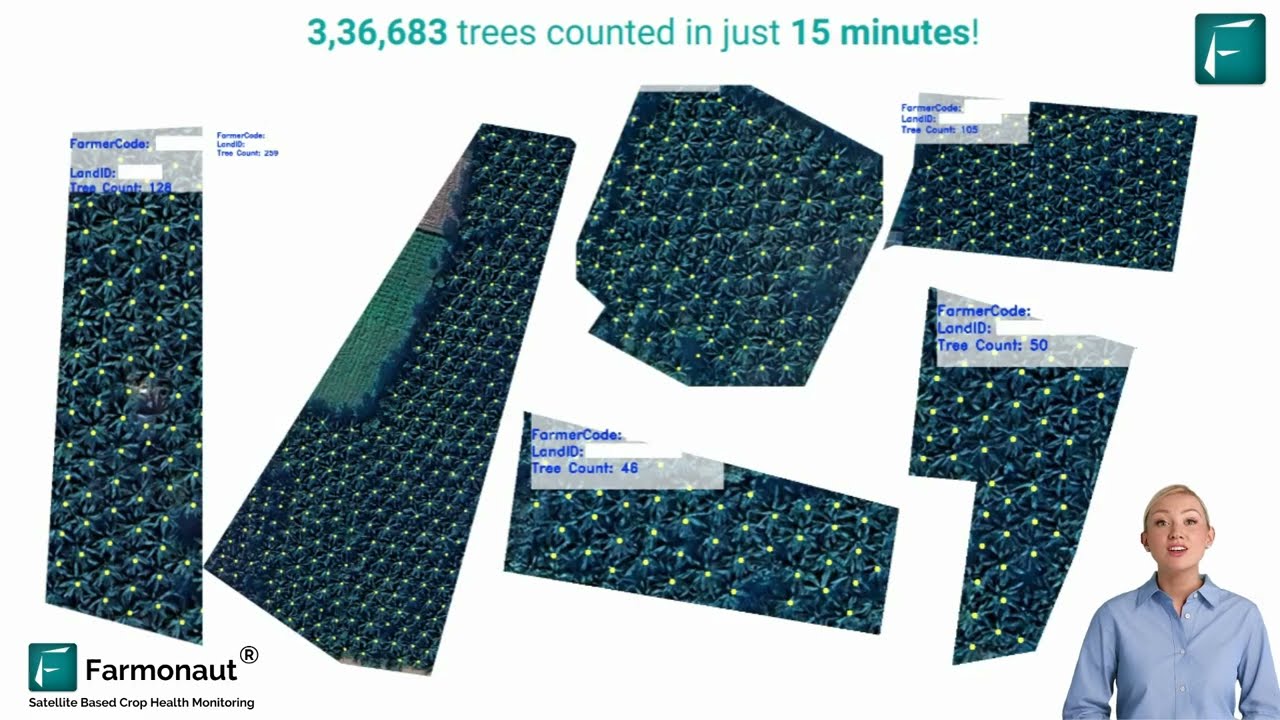
Learn how advanced satellite and AI tools revolutionize detection, mapping, and management of trees in agricultural landscapes—critical for tamarisk control.
4. Community-Based, Integrated Pest Management (IPM)
- Direct involvement of farmers, local community members, and land managers in scheduling, execution, and long-term vigilance is vital.
- Combining all three methods above, guided by real-time mapping and collaborative action, yields superior results.
5. Technological Innovations: Satellite, GIS & AI
- Remote sensing platforms—such as those provided by Farmonaut—enable precise mapping of tamarisk invasion zones, supporting farm risk reduction, cost-effective action, and water management.
- Utilizing AI-based advisory systems, drought and regrowth can be predicted and managed proactively.

See how GIS and remote sensing transform pest and invasive species control for smart, sustainable agriculture and forestry.
Sustainable Practices: Critical Elements for 2026
To win against tamarisk by 2026, sustainable practices must prioritize:
- Water conservation, reestablishment of native vegetation
- Minimization of chemical inputs—leveraging technology for targeted, minimal intervention
- Continuous assessment and adaptation based on satellite data and AI forecasts



Large Scale Farm Management: Use the Farmonaut platform to monitor, map, and plan interventions across big farmlands at risk of tamarisk invasion. The app provides comprehensive remote sensing and analytics, transforming response times and cost efficiency.
Fleet Management Tools: Optimize your resource allocation and equipment uptime for tamarisk management and restoration initiatives. Farmonaut’s fleet module offers route optimization, asset tracking, and cost control at scale.
Carbon Footprinting: Track the environmental outcomes of tamarisk management or restoration and contribute to your farm’s sustainability reporting for 2026 and beyond.
Blockchain-Based Traceability: Boost transparency and sustainability in your supply chain—particularly important if your crops or restoration projects are subject to eco-certification, consumer oversight, or sustainability audits.

Get hands-on with the Farmonaut platform and learn step-by-step how satellite and AI can make your farm operations more resilient in the face of risk.
Farmonaut’s Role in Monitoring & Managing Agricultural Risk
As the stakes for sustainable water use grow, leveraging advanced technologies becomes imperative. At Farmonaut, we believe that data-driven insights and real-time monitoring form the core of effective farm risk management strategies—especially in regions affected by invasive trees like tamarisk.
How Farmonaut Empowers Modern Agricultural Management:
- Satellite-Based Monitoring: We utilize multispectral imagery to monitor vegetation health, soil conditions, and resource use across vast landscapes at risk from tamarisk.
- AI-Powered Advisory Systems: Our Jeevn AI delivers customized recommendations for farm interventions, irrigation strategies, and pest management—enabling precise, timely decisions.
- Blockchain Traceability: We ensure farming operations meet consumer and regulatory demands for transparency by tracking product and resource provenance from field to market.
- Environmental Impact Tracking: We offer tools to help measure water use, monitor carbon outcomes, and encourage resilient, sustainable farming practices even in challenging environments.
- Accessible API Integration: Our satellite data API enables developers and institutions to integrate powerful analytics directly into their own management systems. See API developer docs for more details.

Find out how real-time health monitoring powered by satellites and AI supports farmers facing drought, infestation, and invasive trees like tamarisk.
Farmonaut Subscription Plans
Our subscription packages are designed for every scale—from smallholder farms to enterprise operations and government agencies—ensuring data-driven, sustainable management is accessible and cost-effective for all.
To explore features, demo on your farm, or learn how Farmonaut can protect your water and future, use the buttons above to try our web, Android, or iOS apps.
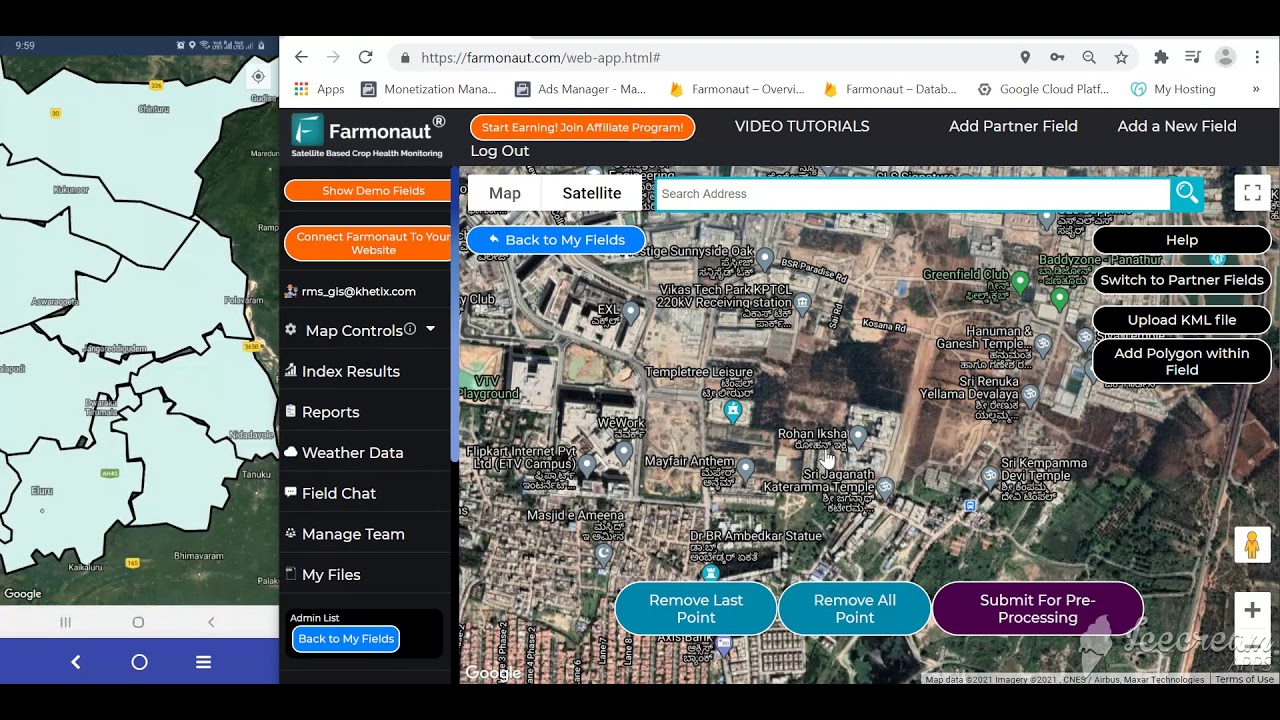
Learn about scalable field mapping—perfect for restoring regions affected by invasive trees like tamarisk using data, not guesswork.
Tamarind Plant, Tamarack Farms Dairy & Agricultural Diversity
While tamarisk trees pose a risk, not all similarly named species bring destruction. Tamarind plant (Tamarindus indica) is an example of profitable, resilient agriculture for 2026:
- Drought-tolerant, well-suited to semi-arid zones where other fruit crops struggle
- Supports diversification and income for smallholder and commercial farms
- Improves soil coverage, offers shade, and can be integrated into agroforestry practices
- Fruits are valuable in global food, beverage, and health products industries
Similarly, Tamarack Farms Dairy represents modern, diversified farming—with the agility to cope with a range of environmental, market, and biosecurity risks. Such diverse operations illustrate the benefit of not relying on a single species or production system, especially as climates shift and invasive species like tamarisk threaten monocultures.
Building resilience means combining risk management (through monitoring and intervention) with agricultural diversification (through plants and farming operations well-matched to local conditions).

See how smart irrigation and leak detection strategies—using satellites and AI—provide a model for managing water in tamarisk-threatened regions.
Opportunities: Building Resilient, Sustainable Farming in Invasive Species Contexts
The spread of invasive trees like tamarisk is a challenge, but also presents opportunities for farms and communities willing to innovate. By focusing on integrated, sustainable management, producers can:
- Restore water availability and optimize resource use
- Protect and enhance biodiversity—even drawing pollinators and wildlife back to restored habitats
- Reduce long-term costs and dependence on chemical intervention
- Improve yields, quality, and reliability for both food crops and grazing systems
- Build public trust and market access through transparent, demonstrable sustainability practices
- Capitalize on emerging support frameworks—including crop loans, insurance, and traceability solutions enabled by advanced satellite monitoring (see Farmonaut Crop Loan & Insurance)
Frequently Asked Questions (FAQ)
Q1: What makes the tamarisk tree so invasive and harmful for farms?
A: Tamarisk trees (saltcedar) are highly adaptive to saline, drought-prone soils. Their aggressive growth and deep roots allow them to extract vast amounts of groundwater, outcompete native species, and form dense thickets. This leads to worsened water scarcity, ecological disruption, and increased farm risk—especially in arid and semi-arid regions approaching 2026.
Q2: How does tamarisk invasion impact water availability and crop yields?
A: Each mature tamarisk can use up to 200 gallons of water per day, substantially reducing water availability for crops and native vegetation. Farm yields can decrease by 15–35% where tamarisk dominates, and overall water flow is disrupted in canals and rivers crucial for irrigation.
Q3: What are the most effective sustainable management strategies for controlling tamarisk?
A: Integrated approaches involving mechanical removal, targeted herbicide application, and biological control (tamarisk beetle) are most effective. Emerging technologies, such as satellite monitoring and AI-based advisories (powered by Farmonaut), allow for real-time detection, precise intervention, and cost-effective management.
Q4: How can farmers and land managers monitor tamarisk invasion efficiently?
A: Remote sensing via satellites and GIS mapping provides accurate, up-to-date information on tamarisk spread. Platforms like Farmonaut offer multispectral crop health monitoring, resource mapping, and environmental tracking delivered via apps and API integration.
Q5: Are there benefits to agricultural diversification in tamarisk-prone regions?
A: Yes, incorporating crops like the tamarind plant or diverse operations like Tamarack Farms Dairy builds resilience against monoculture failure, water risk, and pest or invasive species threats. Diversified agriculture supports ecosystem health and market flexibility.
Q6: How does Farmonaut support sustainable management against invasive species like tamarisk?
A: We deliver actionable satellite-based insights, environmental monitoring, blockchain traceability, and AI-driven advisory solutions that help farms, businesses, and governments improve water use, respond to invasive risks, and adopt truly sustainable practices—available via our web, mobile apps, and API.
Conclusion: Securing Water & Productivity by 2026
The tamarisk tree—particularly tamarix chinensis and tamarix gallica—continues to pose significant risk to water resources, agricultural productivity, and native ecosystems in 2025 and as we move toward 2026. Management strategies must integrate mechanical, chemical, and biological controls, underpinned by robust technological monitoring. Farmonaut’s affordable, data-driven platform empowers every stakeholder to act with precision and transparency.
Beyond risk reduction, embracing agricultural diversity—through robust crops like tamarind plant and forward-thinking operations like Tamarack Farms Dairy—offers a pathway to resilience amid changing climates and biological challenges.
- Invest early: Data-guided, integrated management averts costly water and yield losses.
- Empower communities: Active engagement wires together farmers, technology, and policy for lasting success.
- Innovate for sustainability: The future of farming lies in coupling restoration with monitoring and transparency—securing productivity for generations to come.
The challenge of tamarisk tree invasion is daunting, but data, diversity, and community action yield hope—and powerful strategies—for farms in 2026 and beyond.

 Shaurya Technosoft
 Polaris Digitech
 Teledarbas
 Wild Oak Farm
 SFX
SFX BACF Africa
 Doodlakine
 Exurbia Geospatial
 FieldZero
 Indico Company
 Kubota
 FFBS
FFBS Jontra
 Tucor
Tucor
