

Table of Contents
- Introduction
- Eye-Opening Climate-Smart Trivia
- Summary – The Silent Transformation
- Comparison Table of Climate-Smart Strategies
- Top 10 Climate-Smart Ways to Boost Agriculture Resilience
- 1. Precision Farming & Data-Driven Management
- 2. Drought-Tolerant Crop Varieties & Diversified Cropping Systems
- 3. Agroforestry & Integrated Farming Systems
- 4. Smart Water Management & Efficient Irrigation
- 5. Soil Health & Organic Matter Management
- 6. Biodiversity & Ecosystem Service Enhancement
- 7. Forest Management for Climate Resilience
- 8. Landscape Restoration & Rehabilitation of Degraded Lands
- 9. Responsible Mining & Land Reclamation Strategies
- 10. Integrated Risk Assessment & Proactive Adaptation Infrastructure
- Key Strategies: Bullet & Visual Lists
- How Farmonaut Empowers Climate-Smart Agriculture
- Expert Callouts
- Frequently Asked Questions (FAQ)
- Conclusion
Top 10 Climate-Smart Ways to Boost Agriculture Resilience
Climate change is no longer just a distant threat—it’s a daily reality, reshaping the backbone of global landscapes, from farmlands and forests to mineral-rich regions. The core challenge we face is how to secure food, fiber, and ecosystem services amidst increasing variability in temperature, rainfall, and extreme events. At the heart of this transformation lies climate-smart practices—innovative, practical, and scalable strategies that empower agriculture, forestry, and mining to not just survive, but thrive, in a changing climate.
This blog post is your comprehensive guide to the top 10 climate-smart ways to boost agriculture resilience—solutions that blend productivity, risk reduction, resilience, and sustainable ecosystem management. You’ll discover how the integration of advanced technologies, nature-based solutions, and responsible land stewardship can dramatically reduce emissions, conserve resources, and ensure livelihoods for generations to come.
Title: The Silent Transformation: How Climate-Smart Practices Redesign Agriculture and Forestry
There is a silent transformation underway—one that’s gradually redesigning agriculture, forestry, and land management across the world. Conventional methods are giving way to adaptive, resilient, and integrated approaches that blend traditional wisdom with cutting-edge technologies such as carbon footprint tracking.
At its core, the climate-smart revolution is about:
- Protecting yields from climate uncertainty
- Forging synergistic links between productivity & conservation
- Making “resilience” the new currency of security and sustainability
This blog explores practical adaptations, proven methods, and the innovative tools—like Farmonaut’s satellite-based monitoring—that are enabling this silent transformation.
Comparison Table of Climate-Smart Strategies
Top 10 Climate-Smart Ways to Boost Agriculture Resilience
Climate-smart strategies enable us to create an integrated, resilient, and productive agriculture and forestry sector. Let’s explore each approach in detail, highlighting best-fit practices and real-world applications.
1. Precision Farming & Data-Driven Management: Unlocking Resilience with Technology
Precision farming is revolutionizing how we use inputs, manage resources, and track productivity under variable climate conditions. By leveraging satellite-based sensors, weather data, and AI-driven analytics, operators can apply water, fertilizers, and crop protection agents exactly where and when they’re most needed.
This approach does more than just increase yield; it also minimizes waste, reduces leaching and runoff, cuts emissions from machinery, and increases the resilience of both farms and forests to climate extremes.
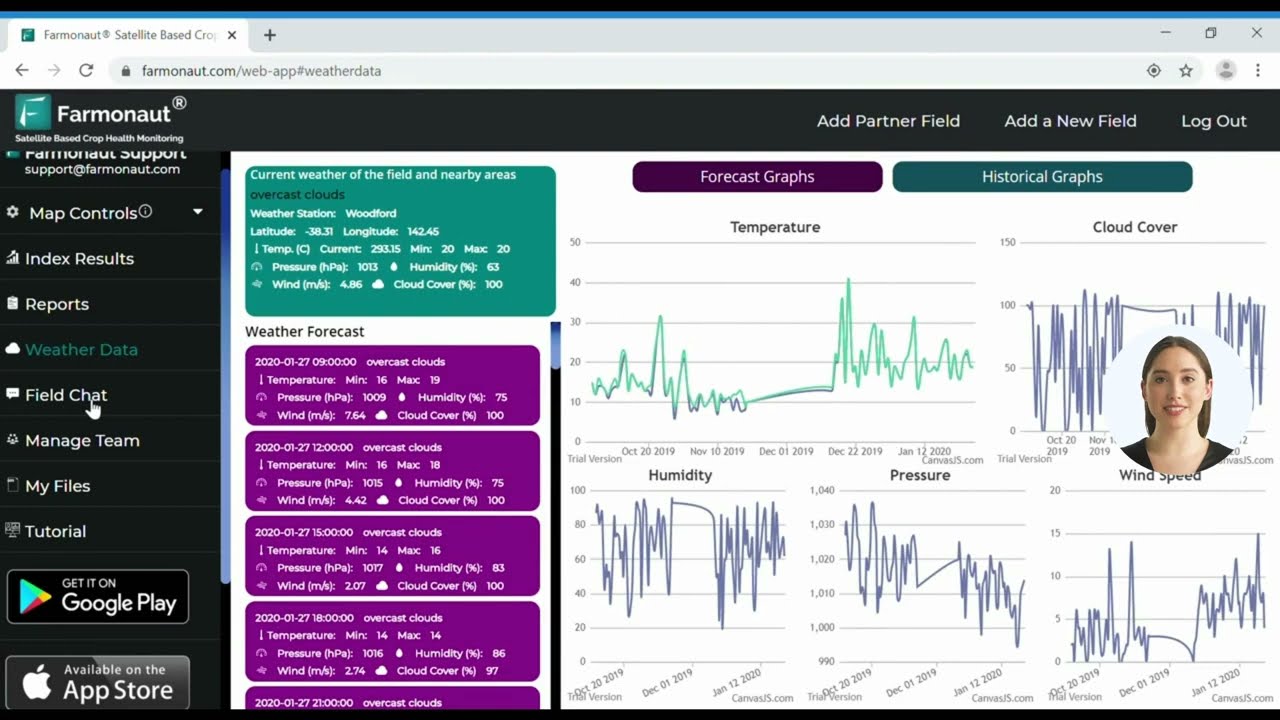
- ✔ Real-time data: Sensors in the field—paired with satellite imagery—enable instant detection of stress, nutrient needs, and irrigation schedules.
- 📊 Data insight: Weather analytics and field mapping reduce risk and optimize labor and input costs.
- ⚠ Risk or limitation: Adaptation requires digital adoption and access to reliable connectivity for seamless data transfers.
For seamless monitoring, we recommend tools like Farmonaut’s Large Scale Farm Management app, which enables real-time tracking, analytics, and satellite-based visualizations for farms and forests.
2. Drought-Tolerant Crop Varieties & Diversified Cropping Systems
As rainfall patterns become less predictable and temperatures rise, the selection and cultivation of resilient crop varieties is vital. Intercropping, crop rotation, and the use of cover crops create microclimates that conserve soil moisture and reduce pest risks.

- ✔ Key benefit: Drought-tolerant seeds (e.g., sorghum, millet, or improved wheat) can provide a buffer in dry years, while diversified fields prevent total crop loss during extreme events.
- 🌿 Biodiversity boost: Intercropping with legumes enhances soil nitrogen and supports beneficial insects.
- ⚠ Limitation: Some markets may lack access to the latest resilient varieties or require new agronomic practices.
3. Agroforestry & Integrated Farming Systems: Merging Trees, Crops, and Livestock
Agroforestry involves the deliberate integration of trees, crops, and/or livestock within the same land area. This creates diversified systems where trees provide shade, windbreaks, and valuable biomass, while root structures stabilize soils and improve carbon sequestration.
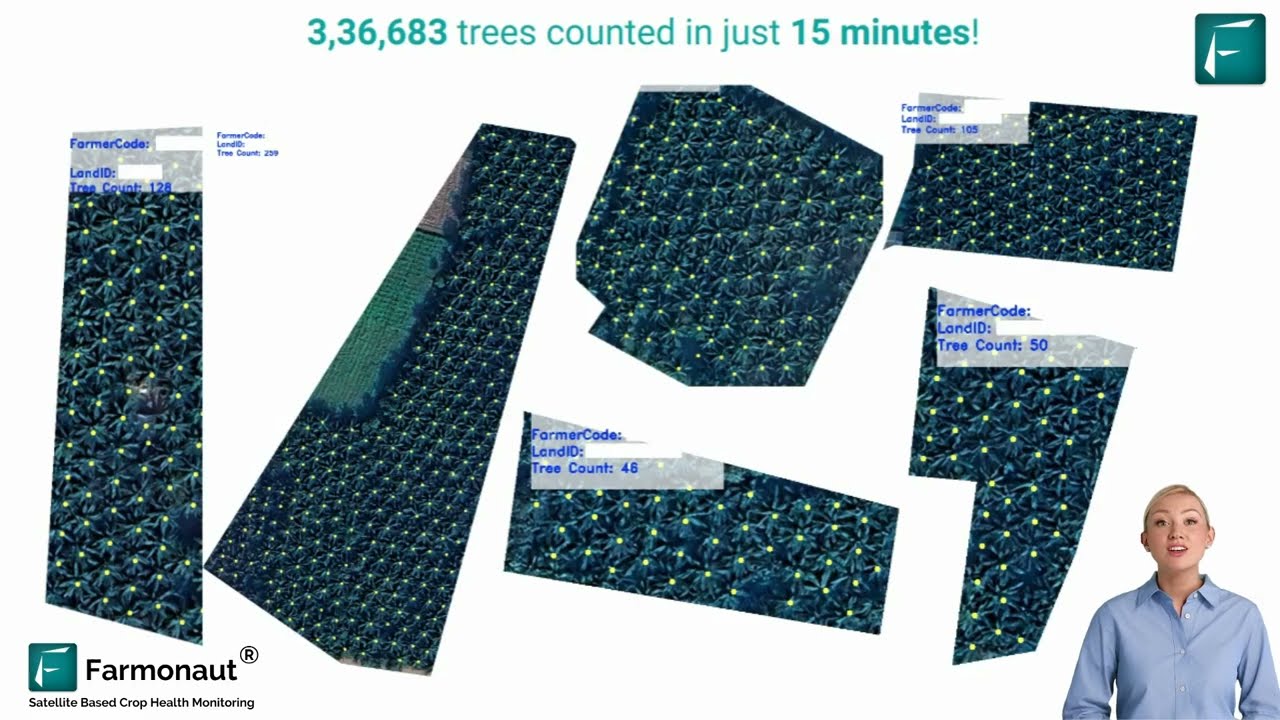
- ✔ Key benefit: Silvopasture improves grazing conditions and supports livestock health, while trees produce timber, fruits, or resins for additional income.
- 🌳 Ecosystem service: Agroforestry boosts biodiversity, regulates water, and reduces runoff—conserving vital resources for communities.
- ⚠ Risk: Upfront costs can be higher, with returns realized over the long term. Careful planning and species selection are pivotal.
Farmonaut’s Crop Plantation & Forest Advisory tools enable users to design, monitor, and optimize diversified agroforestry systems using real-time satellite insights.
4. Smart Water Management & Efficient Irrigation
With agriculture consuming over 70% of freshwater resources worldwide, optimizing water use is central for resilience. Drip irrigation, automated scheduling, and rainwater harvesting drastically improve efficiency, reduce waste, and preserve water tables.
- ✔ Key benefit: Targeted irrigation systems reduce water use by up to 30%, saving energy and supporting consistent yields.
- 💧 Soil health: Water management combats salinization and enables sustainable production especially in arid regions.
- ⚠ Limitation: Requires upskilling and periodic recalibration with changing weather conditions.
Apps like Farmonaut’s Fleet & Resource Management can further optimize resource allocation for machinery and irrigation infrastructure, streamlining operations and lowering costs.
5. Soil Health & Organic Matter Management: Foundations for Resilient Yields
Soil is the backbone of productivity and ecosystem health. No-till practices, organic amendments (such as compost or green manure), and strategic cover cropping are fundamental.
These methods protect soil structure, increase carbon storage, boost microbial activity, and enhance the overall resilience of agricultural lands.

- ✔ Key benefit: Higher organic matter enhances water retention and protects against drought.
- 🌱 Carbon focus: Healthy soils sequester carbon and reduce GHG emissions, amplifying climate adaptation and mitigation.
- ⚠ Limitation: Results build gradually; benefits often require several seasons of consistent implementation.
Interested in tracking field-level soil changes and carbon impact? Try Farmonaut’s Carbon Footprinting Service for accurate, remote monitoring and environmental compliance.

6. Biodiversity & Ecosystem Service Enhancement
Biodiversity is the insurance policy for agriculture and forestry resilience. Maintaining hedgerows, buffer strips, pollinator habitats, and shelterbelts supports beneficial insects, birds, and microbes that provide critical ecosystem services: pollination, pest regulation, and disease suppression.
- 🌻 Key benefit: Ecosystem diversity helps maintain yield stability in the face of fluctuating pest and weather risk.
- 🦋 Service: Richer systems also improve nutrient cycling, water regulation, and long-term carbon sequestration.
- ⚠ Common Mistake: Removing these “non-productive” zones for short-term gain increases vulnerability and long-term loss.
7. Forest Management for Climate Resilience: Beyond Timber Production
Forests and forestry operators face parallel climate adaptation imperatives. Adaptive management blends resilient species selection, mixed-species stands, and strategic thinning to reduce fire risk, increase pest resistance, and maintain ecosystem functions such as water regulation and carbon storage.
Assisted migration and genetic diversity preservation buffer forests against unforeseen threats, ensuring sustainable fiber, habitat, and landscape-level resilience.

- 🌲 Resilience boost: Strategic thinning and mixed stands reduce catastrophic losses from pests and fires.
- 🌎 Ecosystem core: Prioritizing soil and water health maintains core regulatory functions and buffers nearby agricultural areas from climate extremes.
8. Landscape Restoration & Rehabilitation of Degraded Lands
Restoration is essential wherever land, water, or forests have been degraded by overuse, mining, or unsustainable practices. By planting native species, employing erosion control (e.g., terracing, check dams), and reconnecting fragmented habitats, we rebuild functional ecosystems and secure long-term productivity.
- 🌿 Key benefit: Restored lands sequester more carbon, buffer floods, and provide wildlife corridors critical to landscape resilience.
- 🛠 Pro Tip: Focus on native species for lower input needs and greater climate adaptation.
9. Responsible Mining & Land Reclamation Strategies
Mining operators intersect with agriculture and forestry via land, water, and soil impacts. Responsible mining emphasizes minimal disturbance, continuous monitoring, and climate-resilient reclamation—including tailoring post-extraction landscapes for agriculture or natural regeneration.
Water stewardship, soil stabilization, and phased rehabilitation ensure that ecosystem and land functions are preserved or restored for community benefit.

- 🛑 Investor Note: Effective reclamation lowers future environmental liability and secures social license to operate.
- 🌍 Environmental benefit: Reclaimed sites offer new habitats, support sustainable livelihoods, and reduce water contamination risk.
For responsible resource verification, the Farmonaut Traceability Service provides blockchain-based transparency across agriculture and mining supply chains, reducing fraud and building trust.
10. Integrated Risk Assessment & Proactive Adaptation Infrastructure
Turning climate risk into manageable risk means using real-time data (weather, soil, hydrology) to guide infrastructure investments: soil-friendly irrigation systems, windbreaks, firebreaks, and emergency water or shelter resources.
Farmonaut’s satellite monitoring API can integrate flexible, data-driven planning across diverse regions, helping governments, financial institutions, and communities proactively sustain yields and livelihoods amid climate volatility.
Key Climate-Smart Strategies: Bullet Points & Visual Lists
- 🌾 Precision in input application: Targeted use of water, fertilizers, and inputs cuts emissions and prevents waste.
- 🌱 Soil health focus: Organic matter and microbial activity are foundation stones of resilience.
- 🌳 Agroforestry adoption: Diversified systems hedge against market and climate risks while preserving biodiversity.
- 💧 Efficient water regulation: Modern irrigation and water reuse conserve this critical resource.
- 🛰 Real-time monitoring solutions: AI-powered satellite tools deliver insights for adaptation and carbon footprint reduction.
🌟 Visual List: Integration Steps for Climate-Smart Systems
- Assess local climate risks—use regional data and stakeholder consultations
- Select adaptive crop/forest/livestock varieties suited for the region
- Implement blends of traditional & precision farming methods
- Monitor system responses with real-time satellite tools
- Review, adapt, and scale successful practices across fields or operations
🔍 Visual Checklist: Farmonaut Capabilities for Resilient Land Management
- ✔ Satellite-based NDVI vegetation & soil monitoring for agriculture & forestry
- ✔ Satellite-driven verification for crop loans and insurance—reducing administrative risks
- ✔ Blockchain traceability to enhance transparency in crop/mineral supply chains
- ✔ Real-time environmental impact and carbon emissions tracking
- ✔ Seamless integration with fleet/resource management for energy and water savings



🌐 Explore Farmonaut’s Satellite Monitoring API
🚀 Developer Docs: Integrate real-time field, water, and carbon data in your app or business.
How Farmonaut Empowers Climate-Smart Agriculture
At Farmonaut, we empower farmers, mining operators, and governments to succeed in a rapidly changing environment by offering:
- Satellites-driven crop & forest health monitoring for early detection of stress, enabling precision resilience strategies.
- AI-powered advisory—the Jeevn AI System—delivers customized adaptation recommendations and weather planning for every field.
- Blockchain-based product and resource traceability—ensures transparency, prevents fraud, and supports sustainable supply chains. Learn more about traceability
- Resource optimization for water, machinery, and inputs via Fleet & Resource Management.
- Environmental impact monitoring: Track and report carbon footprints and emissions compliance, supporting accountability and climate goals.
Expert Callouts & Highlight Boxes
Soil, water, and biodiversity stewardship are the “triple pillars” of agriculture and forestry resilience. Their integrated management unlocks scalable, practical adaptations for every operator, from the field to the forest and beyond.
Leverage satellite and AI-driven data (like Farmonaut) to customize irrigation schedules and input applications—ensuring each field or forest receives precisely what’s needed, when it’s needed.
Focusing solely on yield maximization without investing in restoration, biodiversity, or risk reduction strategies leaves farms and forests vulnerable to the next extreme event.
Sustainable land management and post-extraction reclamation drive long-term value for mining companies by reducing environmental liabilities and regulatory compliance costs.
Sustainable, climate-smart adaptation is not only good for the planet, but also makes economic sense—leading to lower input costs, higher market value, and robust community livelihoods.
Frequently Asked Questions (FAQ) on Climate-Smart Agriculture & Resilience
What is climate-smart agriculture (CSA), and how does it help?
Climate-smart agriculture is a set of integrated practices—ranging from precision input management and drought-adaptive cropping to ecosystem restoration—that aim to increase food and fiber production while improving resilience and reducing environmental harm (like emissions and soil erosion).
Does precision farming really boost resilience against climate-driven risks?
Yes! Precision farming, through satellite, sensor, and data analytics, allows for real-time responses to weather events, soil stress, and resource constraints. This targeted approach reduces vulnerability and optimizes productivity.
How does water management intersect with climate-smart agriculture?
Efficient irrigation, rainwater harvesting, and water reuse are critical for reducing freshwater consumption (agriculture uses up to 70% globally) and protecting aquifers and rivers for future use.
Can smallholder farmers benefit from climate-smart practices?
Absolutely. Practices like crop rotation, organic amendments, cover cropping, and mobile-based climate advisory are highly scalable and cost-effective for small farms. Satellite platforms like Farmonaut democratize access to these insights.
How do I get started with Farmonaut’s services?
Choose the Farmonaut web or mobile app to monitor your fields, forests, or mining sites. Businesses and developers can explore our API to integrate satellite and climate risk data.
Which is the most cost-effective adaptation strategy?
Soil health management and diversified cropping deliver strong yield and resilience boosts at relatively low cost. For the highest efficiency, combining digital monitoring with nature-based solutions is optimal.
What role does biodiversity play in resilient agriculture?
Biodiversity stabilizes yields, improves pest control, and supports pollination. Enhanced ecosystem health underpins sustainable productivity and mitigates the effects of climate variability.
Conclusion: Integrated Strategies for a Climate-Smart Future
Resilience is the new watchword for agriculture, forestry, and land-based industries. By combining technology, soil and water stewardship, biodiversity, and stakeholder knowledge, we create fields, forests, and post-mining landscapes that are not only productive but prepared for the uncertainties of climate change.
The top 10 climate-smart strategies outlined above are more than theoretical—they’re already transforming operations and livelihoods worldwide.
In this silent transformation, Farmonaut is dedicated to providing access to affordable, scalable, and user-friendly technology, ensuring every operator—from smallholders to governments—can participate in a more resilient, equitable, and sustainable future for food, fiber, and ecosystem services.
Let’s make every hectare resilient, every watershed protected, and every yield sustainable—together.

 Godrej Agrovet
 Hayleys Agriculture
 Linx Agritech
 Adinet
 Save Your Soils
 GalaxEye Space
 Grandstream Algérie
 XOS Realty
 Geospatial Lab Africa
 Agro La Gándara
 HIPSAC
 ZOL Zimbabwe
 Juligerm
 AdBio
AdBio MISE Maroc
 NWNS
NWNS Red August Group
 Farm Inc
 WeMe Global
 Agrotoken
 Blue BearX
 Insignito
 DnCubed
 Indosistim Teknologi
 Liquify Digital
 CU Foods
 BeyondTech Global
 Rouge VC
 AgroRisk
 Oath Inc
 Esri North East Africa
 MDCV UK
 Etech Consulting Madagascar
 Vestlandsforsking
 WB Dev
 Sama Premium
 Tres Valles
 Blickwinkel
 Agricultural Credit Policy Council
 eKGIS
eKGIS Mostas Tech
 Andex
Andex Deluxe Conseil
 WICO
WICO Chimera Innovation
 SkyHarvest
 Teledarbas
 Exurbia Geospatial
 FieldZero
