

Used Farm Equipment Near Me: Values, Loans & Where to Buy
Reviewed February 2026 against University of Illinois Farmdoc Daily and USDA NASS.
Try it: Run your own numbers →
Used farm equipment near you is easiest to find through dealer networks, auction houses, and online marketplaces that list by ZIP code or county—start local before searching wider. Values run 40–75% below new-equipment prices depending on category and hours, tractor financing is available through equipment dealers, banks, and USDA-adjacent farm credit lenders, and selling your own used equipment works best through the same channels buyers already search. The market underneath all three of those decisions has shifted hard: new tractor sales fell from 217,279 units in 2024 to 195,857 units in 2025, and 67.5% of equipment dealers reported declining new-equipment sales in 2025, according to University of Illinois Farmdoc Daily. That single fact reshapes every used-equipment decision below—when new sales slow, used inventory, used values, and financing terms all move with it.
On This Page
- Used Farm Equipment Values: What the Data Actually Shows
- Used Farm Equipment Loans: How Financing Works Right Now
- Used Farm Equipment Near Me: Where Listings Actually Are
- Selling Used Farm Equipment: Pricing It to Move
- Used Hay Equipment: A Seasonal Market of Its Own
- Comparison Table: Used Equipment by Category
- Calculator: Estimate Your Equipment’s Depreciated Value
- Planning Equipment Purchases with Satellite Data
- FAQ
- Conclusion
Used Farm Equipment Values: What the Data Actually Shows
Two forces set used-equipment values right now: how fast machines depreciate, and how much it costs to run them per acre. On depreciation, Mississippi State University Extension puts the average annual depreciation rate for farm tractors at 8.3%, a figure used in standard tax and asset-planning worksheets (Mississippi State University Extension). Applied straight-line to a tractor’s purchase price, that rate lets you sanity-check a listing: a machine bought new eight years ago has shed roughly two-thirds of its original value on depreciation alone, before condition, hours, or market softness are even factored in.
On operating cost, USDA NASS reports farm machinery operating costs—depreciation, fuel, repairs, labor, and interest combined—averaged $171 per acre in 2024, up from $136 per acre in 2021 (USDA NASS). That 26% rise over three years is the backdrop against which used equipment’s lower upfront cost matters most: a buyer facing $171/acre in running costs has less room to absorb a large new-equipment payment on top of it, which is exactly why used inventory has become the pressure valve for many operations.
Inventory tells the same story from the supply side. Seasonally adjusted manufacturer inventories of US farm equipment fell from $7.23 billion in October 2022 to $5.72 billion in December 2025, a 21% drawdown (Farmdoc Daily). Manufacturers built down stock as new sales slowed rather than flooding dealer lots—which is part of why used values have held up better than some buyers expect, even as new-unit sales dropped. Longer term, the US Agriculture Equipment Market Analysis projects the overall farm equipment market to grow at a 4.9% compound annual rate from 2024 through 2032, meaning the used segment is not a shrinking niche but a stable, recurring channel (US Agriculture Equipment Market Analysis).
Combine sales fell faster than tractor sales in percentage terms—from 7,349 units in 2023 to 3,579 units in 2025, a 51% drop, versus tractors’ 10% decline from 2024 to 2025 (Farmdoc Daily). If you’re shopping used combines specifically, that steeper contraction in new sales means fewer trade-ins are entering the used channel, which can keep used combine prices firmer than the tractor market.
What isn’t published, and what no source in this brief covers, is a per-unit average resale price broken out by horsepower class or model year for tractors, combines, balers, or planters. If you need a number for a specific machine, the reliable path is: (1) pull recent completed-sale listings for that exact model and hour range from a dealer network or auction platform covering your region, (2) cross-check against Farm-Equipment.com’s monthly market reports, which track dealer inventory and pricing trends by equipment type and horsepower class, and (3) apply the 8.3% annual depreciation rate above to the original MSRP as a floor check. Regional variation in used prices by state is also not published in aggregate; the same three-step method is the practical way to establish a local baseline, since no national dataset breaks prices out by geography.
Used Farm Equipment Loans: How Financing Works Right Now
Used farm equipment loans typically come from three sources: the dealer’s own financing arm (often tied to the manufacturer, such as Deere Financial or CNH Capital), a local or regional bank with an ag-lending desk, or a Farm Credit System association. None of the sources in this brief publish current APR ranges or the percentage of used-equipment sales financed through each channel—that data sits with individual lenders and isn’t centrally reported. To get an actual rate quote, the working method is to request financing terms from at least two channels (your dealer and a Farm Credit association covering your county) for the same used machine, since dealer-arranged financing and bank financing can price the same loan differently depending on the manufacturer’s current incentive programs.
The market context matters for loan negotiations even without a published rate table. With 67.5% of dealers reporting new-equipment sales declines in 2025 (Farmdoc Daily), dealers have direct incentive to move used trade-in inventory, and used-equipment financing promotions tend to follow soft new-sales periods. When you’re shopping a loan, ask specifically whether the dealer has a used-equipment financing promotion tied to trade-in inventory—that’s the lever the current sales environment creates, and it’s worth asking for by name rather than waiting to be offered it.
One more number worth bringing into a loan conversation: at $171 per acre in 2024 operating costs versus $136 per acre in 2021 (USDA NASS), a lender evaluating your loan application is likely already pricing in that 26% cost inflation when assessing your operation’s debt capacity. Walking into a financing discussion with your own per-acre cost figures—pulled from your own records or from USDA NASS QuickStats for your state—puts you in a stronger position than relying on the lender’s generic assumptions.
Used Farm Equipment Near Me: Where Listings Actually Are
“Near me” searches resolve fastest through four channels, each suited to a different buying style:
- 🏬 Dealer networks: Most equipment dealers now list used and certified pre-owned inventory online with location filters, and many offer refurbishment or short warranty coverage on certified units—ask specifically what’s covered and for how long before assuming “certified” means anything beyond a wash and inspection.
- 🔨 Auction houses: Regional ag auction companies run both live and online-bidding sales, and many publish past sale-result archives, which double as a free price-check tool for a specific make and model before you bid on the next one.
- 🤝 Owner-to-owner listings: Classified boards and farm-specific marketplaces carry direct seller-to-buyer listings, often at lower prices than dealer lots because there’s no reconditioning markup—but with no dealer-backed inspection or warranty.
- 📱 Digital marketplaces with GPS/ZIP filtering: Location-based apps let you set a radius and get notified of new listings, which matters most for high-demand categories like compact utility tractors where inventory turns over quickly.
Buying directly from an owner (“used farm equipment for sale by owner near me”) skips dealer markup but shifts due diligence entirely onto you. Before committing to a private sale:
- Request maintenance logs and repair receipts—gaps in the record are a bigger red flag than any single repair.
- Run the machine under actual working load, not just idle, before agreeing to a price.
- Hire an independent mechanic for a pre-purchase inspection on any machine over $10,000, the same way you’d get a home inspection.
- Confirm clear title and that any attached liens are released in writing before funds change hands.
Skipping the load test. A tractor or baler can idle smoothly and still fail under field draft or PTO load—the failure modes that cost the most to repair only show up when the machine is actually working, not sitting in a yard.

Selling Used Farm Equipment: Pricing It to Move
If you’re selling rather than buying, the same inventory data cuts the other way. With manufacturer inventories down 21% from their October 2022 peak of $7.23 billion to $5.72 billion in December 2025 (Farmdoc Daily), dealers are carrying leaner stock and are often more willing to take a good used trade-in than they were when lots were fuller. That’s a real advantage for sellers right now, but it doesn’t mean any price gets accepted—buyers researching “used farm equipment values” are cross-checking your listing against auction result archives and dealer comps before they call.
Price a used machine for sale using the same method a careful buyer would use to check it: start from the original MSRP, apply the 8.3% annual depreciation rate as a baseline (Mississippi State University Extension), then adjust for documented hours, recent repairs, and any completed sales of the same model you can find in regional auction archives. Machines with complete maintenance logs consistently draw more serious inquiries than equivalent machines sold with no documentation—not because buyers can quantify the difference precisely, but because undocumented machines carry inspection costs the buyer has to price in themselves, which shows up as a lower offer.
List across more than one channel. A private classified listing reaches owner-to-owner buyers looking to avoid dealer markup, while a consignment listing through a dealer or auction house reaches buyers who specifically want the inspection and paperwork support a dealer channel provides. These are largely non-overlapping buyer pools.

Used Hay Equipment: A Seasonal Market of Its Own
Hay production machinery—mowers, rakes, balers, tedders—sits apart from row-crop equipment because usage is concentrated in a short seasonal window, which makes both used purchase and rental more common than for equipment used year-round. A baler that sits idle nine months of the year still depreciates on the calendar, which is part of why the same 8.3% annual depreciation figure from Mississippi State University Extension applies to hay equipment ownership-cost math even though the machine logs far fewer annual hours than a row-crop tractor.
That seasonality is exactly why rental and used-purchase both make more financial sense than new-purchase for many hay operations: renting a baler for a six-week haying window avoids carrying a depreciating asset eleven months of the year for no operational benefit, and buying used shifts the same depreciation curve onto a unit that’s already absorbed its steepest early-year value loss.

Before buying a used baler or mower, ask for hours logged per season, not just total hours—a five-year-old baler used only six weeks a year has a very different remaining service life than a five-year-old baler run on a custom-hire schedule across three states.


Comparison Table: Used Equipment by Category
National average sales prices by horsepower class and model year are not published in any source in this brief—treat the ranges below as a framework built from the depreciation and operating-cost figures above, not a market quote. Verify actual asking prices for any specific model against current dealer listings or recent auction results in your area before making an offer.
| Equipment Category | 2023–2025 New Unit Sales Trend | Depreciation Basis | Best Acquisition Route | Seasonal Rental Demand |
|---|---|---|---|---|
| Tractors | 217,279 units (2024) → 195,857 units (2025), −10% | 8.3%/year (MSU Extension) | Dealer certified pre-owned or auction | Low—used year-round |
| Combines | 7,349 units (2023) → 3,579 units (2025), −51% | 8.3%/year applied as baseline | Dealer trade-in or regional auction | Moderate—harvest window only |
| Hay Balers/Mowers | Not separately reported in this brief | 8.3%/year applied as baseline | Owner-to-owner or short-term rental | High—6–8 week haying season |
| Planters/Seed Drills | Not separately reported in this brief | 8.3%/year applied as baseline | Dealer certified or auction | Low—planting-window use only |
Calculator: Estimate Your Equipment’s Depreciated Value
This tool applies the 8.3% annual depreciation rate reported by Mississippi State University Extension to your own purchase price and machine age, so you can sanity-check a used listing or a trade-in offer before you negotiate.
Run your own numbers
Assumptions: applies straight-line compounding depreciation only (value × (1 − rate)^age), then a flat condition multiplier. It excludes market demand shifts, regional price variation, attachment/implement value, and repair costs needed to bring the machine to sale-ready condition. Treat the output as a starting reference point for negotiation, not an appraisal.

Planning Equipment Purchases with Satellite Data
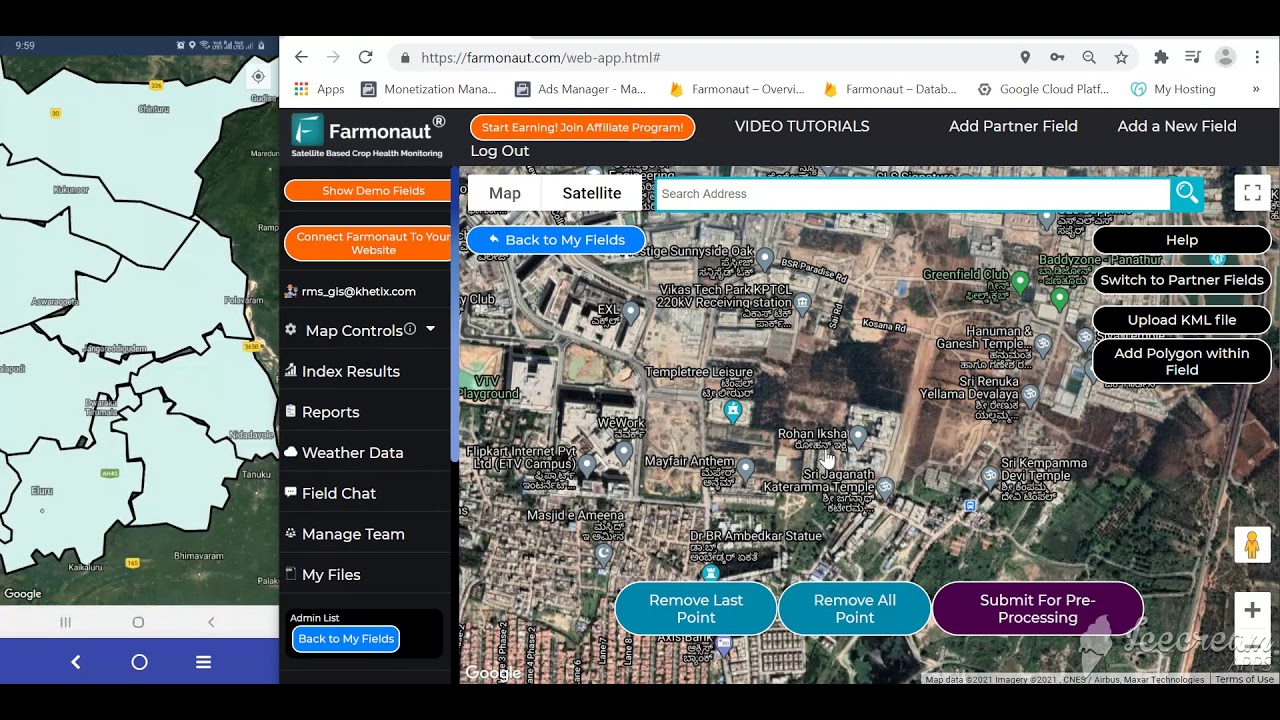
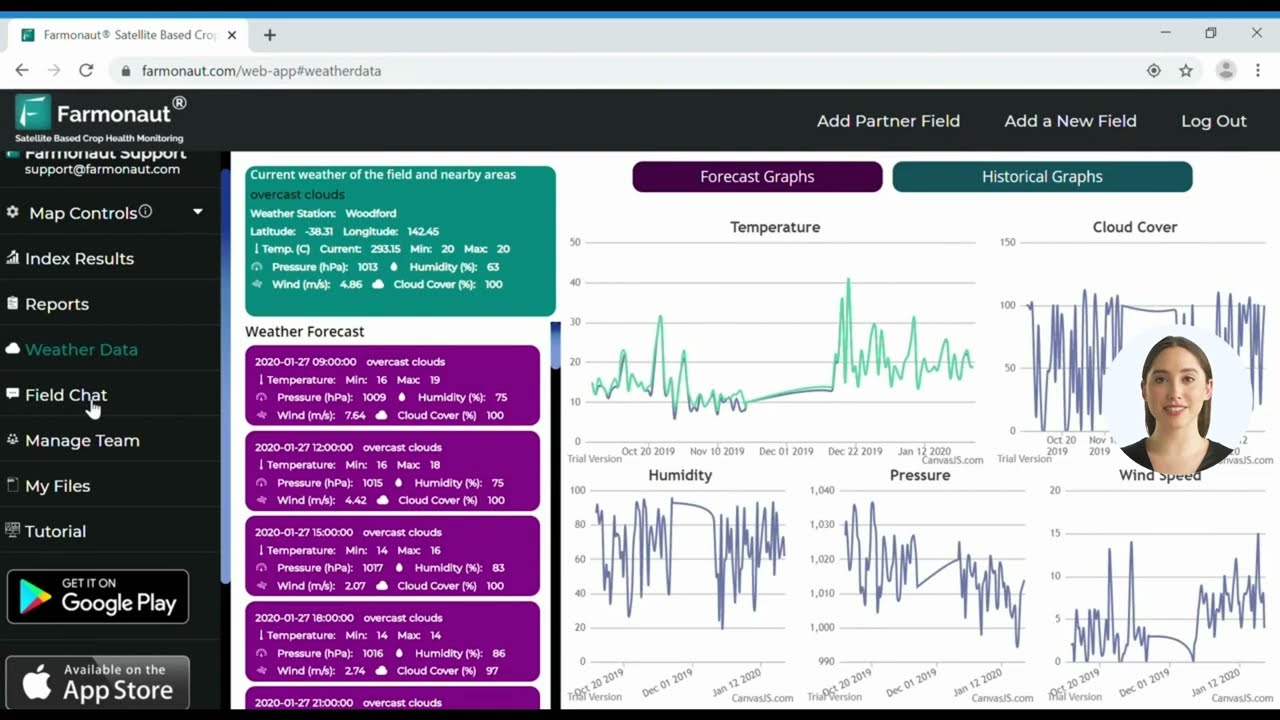
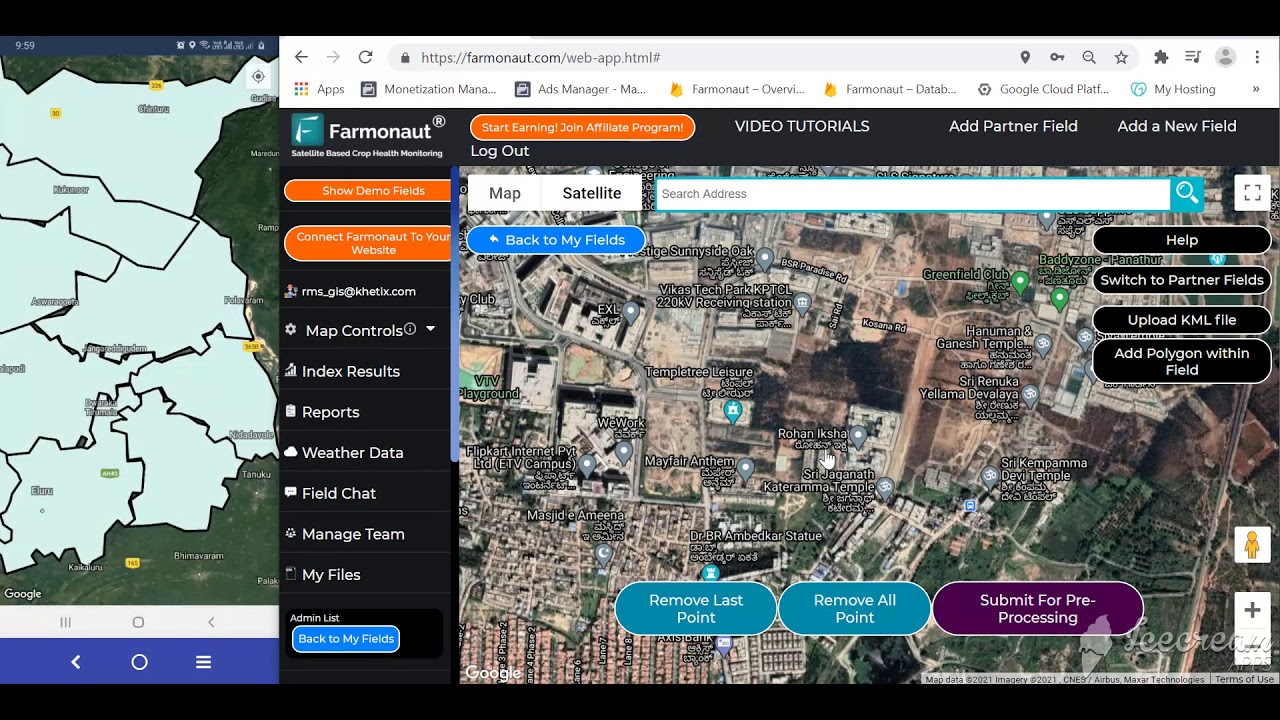
A used-equipment decision is easier to get right when it's driven by what your fields actually need rather than a general sense that "it's time to upgrade." Farmonaut's satellite monitoring tools give operations real-time, multispectral crop health data that can inform whether a used sprayer, planter, or tractor upgrade will actually pay back in yield or efficiency terms before you commit capital to it.
- 🛰️ Satellite-Based Monitoring: Field-level crop health and resource-use data to help decide where added or upgraded equipment capacity actually pays off.
- 🔗 Blockchain Traceability: Supply-chain transparency tools relevant to operations selling into markets that require documented input and equipment provenance. Learn about Farmonaut Traceability here.
- 🚚 Fleet & Resource Management: Track vehicle and equipment logistics across an operation, useful when weighing a used-fleet expansion against rental. Explore the Fleet Management platform.
- 🌳 Carbon Footprint Tracking: Monitor emissions impact of equipment and field operations. Access Farmonaut Carbon Footprinting tools.
These tools are available through Farmonaut's web app, Android and iOS apps, and a developer API, with full documentation here. For larger operations managing multiple equipment purchases or a distributed fleet, Farmonaut's Large Scale Farm Management solution adds mapping, monitoring, and fleet tools built for high-volume operations.



FAQ
Where can I find used farm equipment near me?
Four channels cover most listings: dealer networks with certified pre-owned inventory, regional auction houses (many with searchable past-sale archives), owner-to-owner classified listings, and location-filtered digital marketplaces. Start with dealers if you want inspection and warranty support; go direct-from-owner if you're prioritizing price over paperwork support.
What are used farm equipment values based on?
Mississippi State University Extension reports an average annual depreciation rate of 8.3% for farm tractors, which is the standard baseline for estimating current value from original purchase price and age. No source publishes a national average resale price by horsepower class or model year—check recent auction results and dealer listings for your specific model to establish current asking prices.
How do used farm equipment loans work?
Financing typically comes from dealer-affiliated lenders, banks with ag-lending programs, or Farm Credit System associations. Current APR ranges and financing-share data aren't centrally published; get quotes from at least two channels for the same machine, since terms vary by lender and by manufacturer incentive programs tied to trade-in inventory.
Is now a good time to sell used farm equipment?
Manufacturer inventories fell 21%, from $7.23 billion in October 2022 to $5.72 billion in December 2025 (Farmdoc Daily), meaning dealers are carrying leaner stock and are often receptive to good used trade-ins. Price competitively against auction-result comps and dealer listings for your model rather than assuming lean inventory alone guarantees a premium price.
What should I check before buying used farm equipment for sale by owner near me?
Request maintenance logs and repair receipts, run the machine under working load rather than just idling it, get an independent mechanic's inspection on any purchase over $10,000, and confirm clear title with any liens released in writing before paying.
Is renting hay equipment near me cheaper than buying used?
For equipment used only during a 6–8 week haying window, renting avoids carrying a depreciating asset for the other 44–46 weeks of the year. Buying used works better when you need the equipment across a longer season or across multiple cuttings where rental availability may be limited during peak demand.






Conclusion
The used equipment market right now sits downstream of a clear structural shift: new tractor sales down 10% year-over-year, new combine sales down 51% since 2023, dealer inventories down 21% from their 2022 peak, and two-thirds of dealers reporting weaker new-equipment sales (Farmdoc Daily). None of that is a forecast—it's what already happened, and it's the reason used values, loan terms, and dealer willingness to deal are all moving the way they are. Whether you're buying, selling, or financing, the durable method doesn't change even as these figures do: check current inventory and price comps for your specific model and region, apply the 8.3% depreciation baseline as a floor check, and get at least two financing quotes before signing.
For help deciding whether an equipment upgrade will actually pay off in your fields, explore how Farmonaut's satellite tools support that decision here.
Next Steps
- ✔️ Pull recent auction results and dealer listings for your specific model before setting a target price.
- 📊 Get financing quotes from at least two lenders—dealer-affiliated and Farm Credit—for the same machine.
- 📝 Request full maintenance logs before any private-party purchase, and test under working load.
- 🔎 Check USDA NASS QuickStats for your state's current per-acre machinery operating costs before budgeting a purchase.
- 🔄 Re-check Farmdoc Daily's market updates periodically—new-sales trends move used values with a lag of a few months.

 UCAL Fuel Systems
 Kubota
 FFBS
FFBS Jontra
 Kalustyan
 Tucor
Tucor Geno
Geno Hayleys Agriculture
 Linx Agritech
 Adinet
 Save Your Soils
 Grandstream Algérie
 XOS Realty
 Geospatial Lab Africa
 Agro La Gándara
