

Vanilla Tree: 7 Sustainable Cultivation Ways 2026
“Vanilla farming can boost rural incomes by up to 30% when sustainable methods are adopted.”
Vanilla Tree: A Botanical & Agricultural Overview
Vanilla, derived from the seed pods of the vanilla orchid (genus Vanilla), ranks among the world’s most valuable spices—and it’s not a “tree” as often referred, but a climbing, perennial vine. This unique crop thrives in tropical agricultural environments, characterized by warm temperatures (21–32°C), high humidity, and fertile, well-drained soils. The vanilla plant’s native region is Mexico, yet it is now cultivated in diverse locations, including Madagascar (the undisputed production leader), Indonesia, Tahiti, and Uganda.
Vanilla cultivation is a specialty segment within agriculture, requiring a strong trellis or living tree structure to support the vine as it grows and climbs. Each aspect of vanilla production—from planting to curing—demands patience and precision, which is why vanilla remains a high-value, labor-intensive crop within the global market.
- ✔ Vanilla thrives in carefully controlled environments—requiring meticulous management for robust growth.
- 📊 80% of the world’s vanilla beans are grown in Madagascar, supporting millions of rural livelihoods globally.
- ⚠ Pollination is manual in most regions—since the Melipona bee (the native pollinator) is absent outside Mexico.
- ✔ The vanilla “tree” term is a common misnomer; the plant is an orchid vine rather than a true tree.
- 🔥 The slow 3-year growth cycle until first harvest is a major factor driving vanilla’s high market value and price.
Economic Importance of Vanilla Cultivation
The economic significance of the vanilla tree cultivation in 2025 and 2026 cannot be overstated. As demand rises in global industries (food, beverage, cosmetics, pharmaceuticals), vanilla remains a top-earning crop for smallholder farmers in rural, tropical countries. Madagascar alone supplies about 80% of the world’s vanilla, making vanilla a significant source of income and rural development in producing countries.
Vanilla’s price is heavily influenced by supply fluctuations, climatic extremes, diseases, and even geopolitical factors. While synthetic vanillin exists, natural vanilla beans—owing to their complex flavor and aroma—remain in high demand globally. The trade in genuine vanilla beans continues to be lucrative but challenging, especially due to labor requirements, price volatility, and pest pressures.
- ✔ Vanilla farming creates jobs in rural areas across harvesting, processing, and packaging.
- ⚠ Price volatility can threaten the stability of farmer incomes, accentuating the need for sustainable practices.
- 📊 Cooperatives and fair trade initiatives are increasingly key to stabilizing the vanilla market and improving farmer access.

Use Farmonaut’s satellite-powered app to monitor crop health, track vanilla plantation development, and optimize traceability for reliable market access.
“Sustainable vanilla cultivation enhances biodiversity, with up to 25 native plant species supported per farm.”
7 Sustainable Vanilla Cultivation Ways for 2026
Adopting sustainable practices in vanilla tree cultivation ensures biodiversity conservation, resilience to climatic extremes, and ongoing economic importance for rural farmers. Here are the seven most promising, sustainable vanilla cultivation methods for the future:
- Agroforestry Integration: Combining vanilla with native trees and diversified crops to enhance biodiversity, maintain soil health, and buffer climatic fluctuations.
- Organic Farming: Eliminating synthetic chemicals and promoting natural pest and disease control—preserving the ecosystem and meeting organic market demand.
- Integrated Pest Management (IPM): Using a multi-faceted approach to pest, disease, and weed control that reduces chemical use and increases resilience.
- Shade Management Systems: Strategically using living or artificial shade, optimizing the light balance for vanilla growth and microclimate regulation.
- Soil Health Enhancement: Leveraging compost, mulches, and cover crops to nurture soil fertility, structure, and carbon content—mitigating erosion and run-off.
- Water Conservation and Smart Irrigation: Implementing efficient irrigation (drip or rainwater harvesting systems) for consistent, sustainable production even in drier climates.
- Blockchain Traceability and Digital Monitoring: Employing satellite platforms (like Farmonaut), traceability solutions, and AI-driven analytics to improve decision-making, market access, and transparency in the vanilla value chain.
Comparison of 7 Sustainable Vanilla Cultivation Methods
| Method Name | Key Sustainable Practices | Biodiversity Impact | Yield Increase (%) by 2025 |
Effect on Rural Livelihoods | Primary Challenges |
|---|---|---|---|---|---|
| Agroforestry Integration | Vanilla intercropped with timber/fruit trees, ground covers; minimal land clearing | High | 20–25% | Greater job creation, diversified income, improved food security | Shade balance, higher initial setup costs |
| Organic Farming | Natural fertilizers, biopesticides, cover crops; avoid synthetics | Medium–High | 15–20% | Premium pricing, health benefits, stronger market resilience | Certification costs, pest control complexity |
| Integrated Pest Management (IPM) | Cultural controls, biocontrol agents, pest monitoring, minimal pesticide input | Medium | 12–18% | Reduced input costs, safer working conditions | Requires expert knowledge, timely monitoring |
| Shade Management | Mix of natural/living shade from trees and artificial structures | High | 10–15% | Better working environment, stable yields | Shade optimization, competition for resources |
| Soil Health Enhancement | Mulching, compost, green manure, crop rotation | Medium | 8–13% | Improved nutrition, reduces input dependency | Labor intensive, availability of organic matter |
| Water Conservation/Smart Irrigation | Drip irrigation, rainwater harvesting, moisture sensors | Medium | 6–12% | Reduces costs, sustains production during dry seasons | Installation costs, system management |
| Blockchain Traceability / Digital Monitoring | Satellite crop monitoring, blockchain records for each batch, AI analytics | Medium–High | 15–22% | Boosts farmer credibility, improves market access, attracts premium buyers | Tech adoption barriers, digital literacy, infrastructure limits |
Role of Vanilla Tree Cultivation in Biodiversity & Conservation
Vanilla cultivation—especially when based on sustainable agroforestry and organic farming methods—plays a pivotal role in conserving biodiversity. Its climbing vine nature makes it ideal for intercropping and for growing alongside native tree species. Every well-managed vanilla farm can host up to 25 native species, fostering a balanced ecosystem.
Sustainable vanilla cultivation:
- ✔ Enhances soil fertility and reduces erosion, especially on tropical slopes.
- 📊 Conserves native flora and fauna—critical as agricultural expansion threatens forest habitats.
- ✔ Acts as a wildlife corridor by linking forest patches in vanilla regions, especially in Madagascar and Indonesia.
- 📊 Improves water retention and carbon sequestration via tree canopy cover and organic mulching.

Agroforestry vanilla systems can increase yield by up to 25% while strengthening ecosystem resilience and offsetting risks from climate extremes and disease outbreaks.
Natural shade trees not only protect vanilla vines but also enhance biomass and serve as host plants for beneficial pollinators and pest predators.
Monoculture vanilla farming without shade or crop rotation increases pest pressure and soil degradation, undermining long-term profitability.
Sustainable vanilla cultivation offers steady long-term returns—especially when traceability is managed with modern tech for specialty export markets.
Supporting vanilla biodiversity not only benefits nature but also increases farm resilience to climatic extremes—key to withstanding global warming effects.
How Farmonaut Empowers Sustainable Vanilla Cultivation
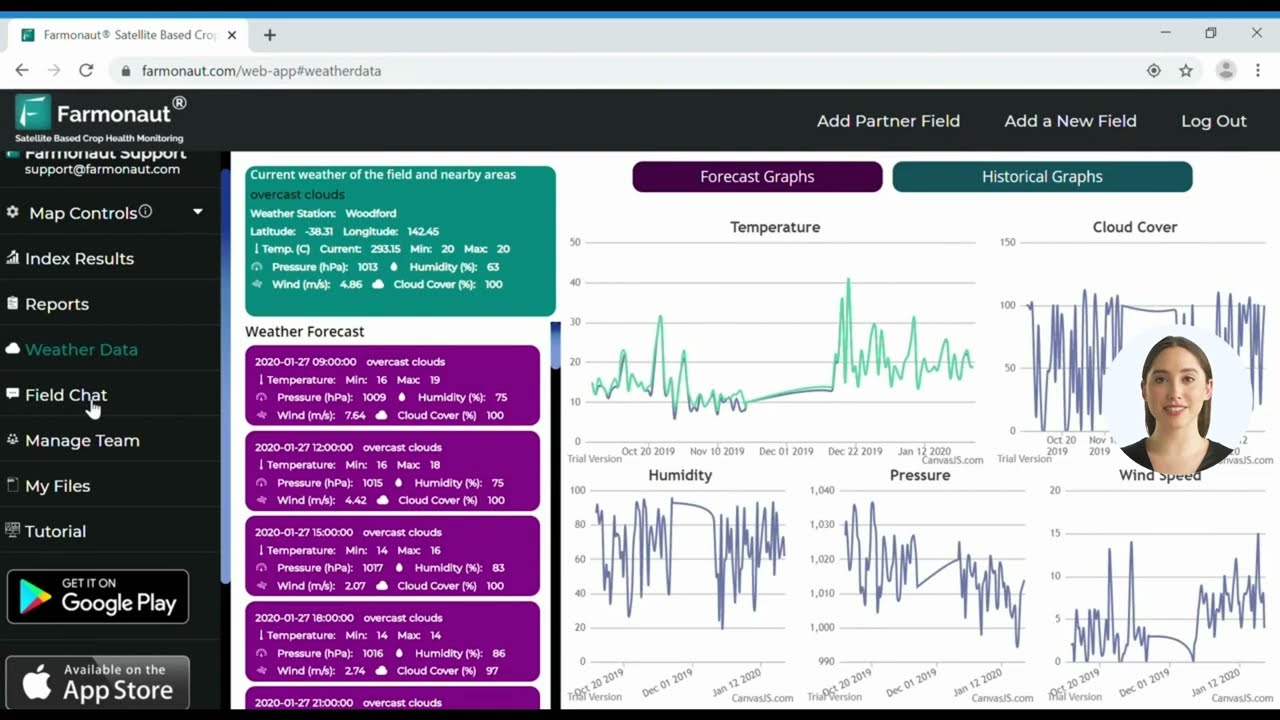
Digital innovation is transforming vanilla tree agriculture, and platforms like Farmonaut are at the forefront. We provide farmers, businesses, and institutions with advanced, accessible satellite-based monitoring and AI-driven advisory to optimize vanilla growth, detect pests, monitor disease resistance, and track atmospheric and soil conditions in real time.
- ✔ Satellite crop health monitoring – Receive instant field health (NDVI), soil condition, and disease stress alerts.
- ✔ AI-based remote advisory (through the Jeevn AI System) – For customized, plot-level, actionable insights.
- ✔ Blockchain traceability systems – Secure, transparent, digital tracking of each batch from seed pod harvest to curing, helping vanilla farmers command premium prices in global specialty markets.
- ✔ Real-time environmental impact and carbon monitoring – Supporting sustainable certification for vanilla growing projects (see our Carbon Footprinting solution).
- 📊 API Access – Integrate satellite insights with your vanilla monitoring or supply systems using our API and explore the developer docs.



Key Challenges in Vanilla Tree Cultivation: 2025–2026 & Beyond
- ⚠ Labor-Intensive Methods: Hand pollination and careful pod processing are time-consuming, raising costs and limiting scale.
- ⚠ Pest and Disease Outbreaks: Pathogens like root rot and fungal diseases remain persistent threats, especially in humid tropical regions.
- ⚠ Climate Change: Unpredictable climatic extremes and fluctuating rainfall patterns challenge vanilla crop resilience.
- ⚠ Market Volatility: Shifts in global supply, price fluctuations, and crop theft can disrupt rural incomes.
- ⚠ Barrier to Premium Markets: Absence of traceability and sustainability certification can block access to high-value buyers.
- ⚠ Resource Access: Many rural vanilla farmers lack affordable tech, financing, and infrastructure—issues digital platforms and AI aim to solve.
✔ Key Benefits of Sustainable Vanilla Cultivation
- 🌱 Boosted Biodiversity: Vanilla agroforestry systems create habitats for birds, reptiles, and pollinators.
- 💰 Increased Rural Incomes: Farmers adopting sustainable methods may see income gains of up to 30%.
- 🔒 Resilience to Climate Shocks: Tree-shaded systems reduce temperature and moisture extremes.
- 🥬 Premium Market Positioning: Organic, traceable vanilla beans command higher prices in global specialty markets.
- 🔗 Value-Added Processing: On-farm curing and processing ensure quality and retain profits locally.
⚠ Main Risks & Limitations for Vanilla Cultivation
- 🚧 Theft & Security: High vanilla bean prices increase crop theft in rural communities.
- 🤖 Tech Adoption Barriers: Digital literacy and lack of infrastructure hinder tech-based monitoring in remote areas.
- 🥀 Disease Spread: Planting non-resistant vanilla varieties leaves plantations vulnerable.
- 💦 Water Scarcity: Rainfall dependency in tropical regions adds unpredictability to output.
- ⚡ Certification Complexity: Navigating organic/traceable certifications can be costly for smallholders.
Future Prospects & Innovation in Vanilla Agriculture
The future of vanilla tree cultivation in 2026 and beyond is dynamic, shaped by innovation in genetics, digital technology, and sustainable agricultural practices. Advances will foster resilience, open new markets, and bolster rural livelihoods.
1. Improved Vanilla Genetics
Biologists are developing new vanilla varieties with built-in disease resistance and higher climate tolerance—boosting yield and reducing pesticide dependence.
2. Smart Farm Technology & Monitoring
Utilizing AI, satellite imagery, and IoT sensors (environmental monitoring)—farmers can now:
- Detect pests, water stress, and disease earlier
- Monitor carbon sequestration, supporting green certification
- Optimize shade, soil, and microclimate for each portion of the farm
3. Digital Traceability & Fair Trade Access
Blockchain-powered traceability (Product Traceability) assures buyers of ethical, authentic vanilla, while AI-grade sorting and digital records unlock premium, niche markets for rural farmers.
4. Smarter Financial Services
Through satellite-based insurance and crop loan verification, vanilla farmers can access fair financing and faster payouts, empowering investment in sustainable cultivation.
5. Rural Development & Value Addition
On-farm curing, packaging, and direct exports ensure value remains local. The rise in specialty and single-origin vanilla beans, especially from Uganda, Madagascar, and Indonesia, brings new opportunities for rural job creation and economic growth.
6. Expanding Eco-Labels and Sustainability Certifications
Growing consumer demand for sustainability is driving the adoption of certifications. Vanilla producers who document sustainable practices using satellite and digital tools are primed for higher-value markets.
Farmonaut Subscription Plans for Vanilla Growers
Interested in affordable, advanced vanilla monitoring? Select a Farmonaut subscription to unlock AI-driven vanilla growth advice, traceability, and environmental compliance:
Conclusion: Vanilla’s Integral Role in Sustainable Agriculture
The vanilla “tree”—more accurately, the vanilla orchid vine—stands at the intersection of agricultural specialty, rural development, and biodiversity conservation. In 2026 and beyond, the future of vanilla cultivation will be shaped by how effectively we employ sustainable methods, harness innovation, and enable farmers with digital tools. Satellite-based platforms—notably Farmonaut—are making game-changing support affordable for all, and digital traceability is raising standards for authenticity and value world-wide.
By blending traditional growing wisdom with cutting-edge technology, the vanilla value chain can continue to generate rural income, protect ecosystems, and supply the world’s demand for this unique flavor. Vanilla’s story showcases the future of globally-connected, resilient, and environmentally-conscious agriculture.
Frequently Asked Questions: Vanilla Tree & Sustainable Cultivation
🌱 Is the vanilla “tree” a real tree?
No, the “vanilla tree” is a common misnomer. The vanilla plant is a climbing orchid vine, not a true tree.
🌱 Why is hand pollination required for vanilla?
Outside its native Mexico, vanilla’s natural pollinator (the Melipona bee) is absent, so farmers must hand-pollinate flowers for pod production.
🌱 How long does it take to harvest vanilla after planting?
It takes approximately 3 years from planting until the first vanilla pod harvest.
🌱 What is the impact of vanilla cultivation on biodiversity?
Sustainable vanilla cultivation, especially in agroforestry systems, can support up to 25 native plant species per farm, greatly enhancing biodiversity.
🌱 How can Farmonaut support vanilla growers?
We provide satellite-based monitoring, AI-powered field advisories, blockchain traceability, and environmental impact tools. These solutions help farmers manage risks, document sustainability, and improve market access.
🌱 What are the top challenges facing vanilla farming in 2026?
Labor needs, pest/disease pressure, climate extremes, price volatility, and limited access to modern farm tech remain pressing challenges for rural vanilla farmers.
Ready to transform your vanilla cultivation with modern technology?
Discussion
Questions, corrections or field experience? Share them below. First-time comments are reviewed before they appear, and your email is never published.
No comments yet. Be the first to add a question or your experience.

 Polaris Digitech
 ASQI
ASQI Teledarbas
 Wild Oak Farm
 SFX
SFX BACF Africa
 Doodlakine
 Exurbia Geospatial
 FieldZero
 Indico Company
 Kubota
 FFBS
FFBS Jontra
 Tucor
Tucor
 Licence holder · Niger · Gold










