

Vegetables That Grow Vertically: Hydroponic Farming 2026
“By 2026, vertical hydroponic farms can produce up to 90% more yield per square meter than traditional farms.”
“Hydroponic systems use up to 95% less water than conventional soil farming, making them highly sustainable for vegetable production.”
Table of Contents
- Introduction: The Vertical Revolution in Vegetable Production
- The Evolution of Vertical Farming and Controlled Environment Agriculture (CEA)
- How Vertical Farming Works: From Stacked Layers to Automation
- Growing Plants Hydroponically: The Backbone of Modern Vertical Farms
- Top Vegetables That Grow Vertically: The 2026 Outlook
- Comparative Table: Vegetables for Vertical Hydroponic Farming
- Vertical Farming Daily: Monitoring, Automation, and Data Integration
- Sustainability, Efficiency, and Environmental Impact
- Urban Food Security and Peri-Urban Potential
- Challenges, Limitations, and the 2026+ Innovation Pipeline
- Farmonaut and the Satellite-Driven Change in Agriculture
- Frequently Asked Questions
Introduction: The Vertical Revolution in Vegetable Production
The vegetables that grow vertically have become a symbol of 21st-century farming innovation. Fueled by the challenges of urbanization, climate change, and land scarcity, the last few years have seen vertical farming daily operations transform our approach to food production. With hydroponic, soilless cultivation as a backbone, this revolution maximizes productivity per square meter, leverages advanced lighting, data analytics, and automation, and ensures the freshest, most nutritious vegetables and herbs reach our tables.
In urban and peri-urban settings, growing vegetables vertically is a sustainable solution addressing critical food security and resource efficiency challenges.
In this comprehensive guide, we delve into the innovative methodologies redefining agriculture by 2026: from stacked layers and climate-controlled CEA systems to the technological synergy of sensors, AI, and satellite monitoring.

The Evolution of Vertical Farming and Controlled Environment Agriculture (CEA)
Over recent years, agricultural practices have rapidly evolved to combat land shortages, urbanization, unreliable weather, and environmental degradation. Vertical farming and hydroponics together have revolutionized the way we approach vegetable production by offering sustainable, scalable, and resource-efficient alternatives to traditional agriculture.
- ✔ Resource Efficiency: Innovative vertical farming daily maximizes productivity while minimizing water and land use
- 📊 Data Insight: CEA technologies (Controlled Environment Agriculture) enable consistent crop cycles year-round, irrespective of climate
- ⚠ Limitation: Initial infrastructural costs can be high, but operational savings and higher yields balance investments for large-scale urban farms
- 🌿 Environmental Impact: Hydroponics and vertical systems lead to minimal chemical dependency and reduce waste
- 🌎 Scalability: Modular farm designs allow for both urban rooftop setups and large peri-urban food factories
The economic viability of vertical hydroponic farms in both urban and mining-reclaimed land settings makes them prime areas for long-term agri-investment as markets anticipate a $15B+ industry by 2026.
The core technologies—from LED lighting and climate control to robotics and automation—enable the daily operation of climate-optimized crop production that drastically reduces failure rates compared to traditional outdoor farming.
How Vertical Farming Works: From Stacked Layers to Automation
At the heart of the vertical farming daily revolution are stacked layers or inclined surfaces engineered to maximize the number of plants per square meter. These layers are fitted with controlled irrigation, nutrient delivery systems, and specialized LED lighting to tailor temperature, humidity, and light for optimal growth.
- 🔄 Integration: Automation minimizes labor costs and reduces damage during harvesting
- 🌡️ Precise Control: Sensors monitor environment and adjust light, temperature, and humidity based on real-time plant needs
Always monitor nutrient levels and environment parameters frequently to prevent growth failures, especially in high-density stacked setups.
The use of multispectral LED lights enables us to fine-tune spectral compositions for every plant stage—stimulating root development in the vegetative phase or fruiting in the blooming cycle. Automated systems, often powered by AI and IoT-enabled sensors, gather data to optimize parameters for yield, disease resistance, and taste.
Growing Plants Hydroponically: The Backbone of Modern Vertical Farms
Why Hydroponics is Integral for Vertical Vegetable Production
Hydroponics is a soilless cultivation technique where plant roots are fed using a nutrient-rich water solution. This system eliminates the need for soil, reducing dependency on arable land, and brings unique advantages to vertical farm environments:
- 💧 Minimal Water Usage: Up to 90%–95% less water is used compared to soil-based farming
- 🌱 Disease Prevention: No soil-borne diseases, thus less chemical pesticide usage
- 🎯 Efficiency: Direct delivery of essential minerals to roots, optimizing plant growth
- 🔗 Flexibility: Adaptable systems including Nutrient Film Technique (NFT), Deep Water Culture (DWC), Aeroponics, and more
- ⚡ Reduced Environmental Impact: Near-zero fertilizer and pesticide runoff
Hydroponic and vertical systems enable precision farming, leading to nutrient-dense, high-yield crops right in the heart of cities by 2026.
Hydroponic systems are often employed in urban vertical farming centers worldwide, grown within controlled environments optimizing each square meter for maximum yield—making them a cornerstone of 2025 and beyond urban food security.
For stakeholders seeking blockchain-enabled crop traceability and assured supply chain transparency for these high-value vegetables, see our traceability solutions.

Top Vegetables That Grow Vertically: The 2026 Outlook
Leading Crops and Herbs for Vertical Hydroponic Farming
Not all vegetables are suited for vertical hydroponics. Avoid attempting heavy or deep-root crops without robust support and nutrient plans.
Most economically viable choices:
- Leafy greens: Lettuce, spinach, kale, arugula – fast to grow, high-value, and compact per plant
- Herbs: Basil, mint, parsley, oregano – popular for culinary and medicinal uses
- Vine crops: Tomatoes, cucumbers, peppers – thrive vertically on trellis & support systems
- Specialty microgreens & Asian greens: Like pak choi or mizuna
- Strawberries: Emerging as a favorite for hydroponic vertical cropping
- ✔ High turnover: These crops mature quickly, allowing multiple cycles per year
- 📊 Yield Data: Lettuce and basil can be harvested 12–15 times per year in hydroponic layers
- ⚠ Risk: Tomatoes and cucumbers require strict climate controls and robust trellising, increasing system complexity

Comparative Table: Vegetables for Vertical Hydroponic Farming
| Vegetable | Preferred Hydroponic System | Estimated Water Use (liters per kg) |
Space Needed (cm² per plant) |
Average Yield (kg/m²/year) |
Growth Cycle (days) |
|---|---|---|---|---|---|
| Lettuce | NFT / DWC | 15–25 | 150 | 50–60 | 30–40 |
| Spinach | NFT / DWC | 18–26 | 120 | 45–55 | 28–35 |
| Basil | NFT / Aero | 16–22 | 100 | 55–65 | 25–30 |
| Tomato (Cherry) | DWC / Aero | 35–50 | 250 | 60–80 | 70–90 |
| Cucumber | DWC / NFT | 30–45 | 200 | 55–70 | 50–70 |
| Peppers | NFT / Aero | 28–33 | 200 | 42–60 | 65–90 |
| Strawberry | Aero / NFT | 18–30 | 110 | 45–55 | 35–55 |
| Kale | NFT / DWC | 15–22 | 120 | 45–50 | 28–35 |
Leafy greens and herbs offer the highest yield per square meter with the lowest water consumption—ideal for dense vertical systems in cities.
Farmonaut Platform: Satellite-Driven Insights for Smart Vertical Growth
For real-time monitoring and resource management in urban hydroponic systems or mining-repurposed farmland, the Farmonaut mobile and web app provides satellite-driven decision support. Explore:


API Developers: Integrate vertical farming insights in your application using our API and detailed API Documentation.
Vertical Farming Daily: Monitoring, Automation, and Data Integration
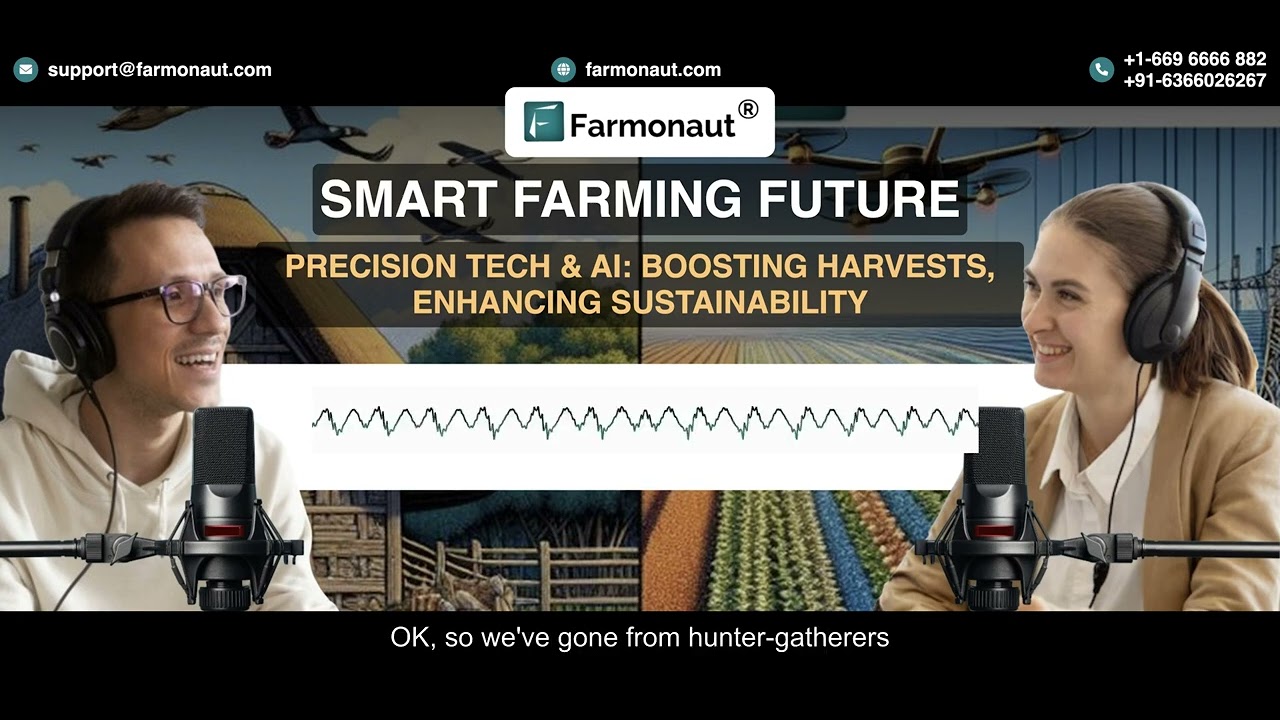
Day-to-day, high-tech vertical farming centers rely on sensors, data analytics, and AI-powered controls to orchestrate perfect crop growth environments. Precision monitoring ensures plants always receive ideal nutrient concentrations, temperature, humidity, and light — dramatically reducing crop failures and enhancing yield consistency.
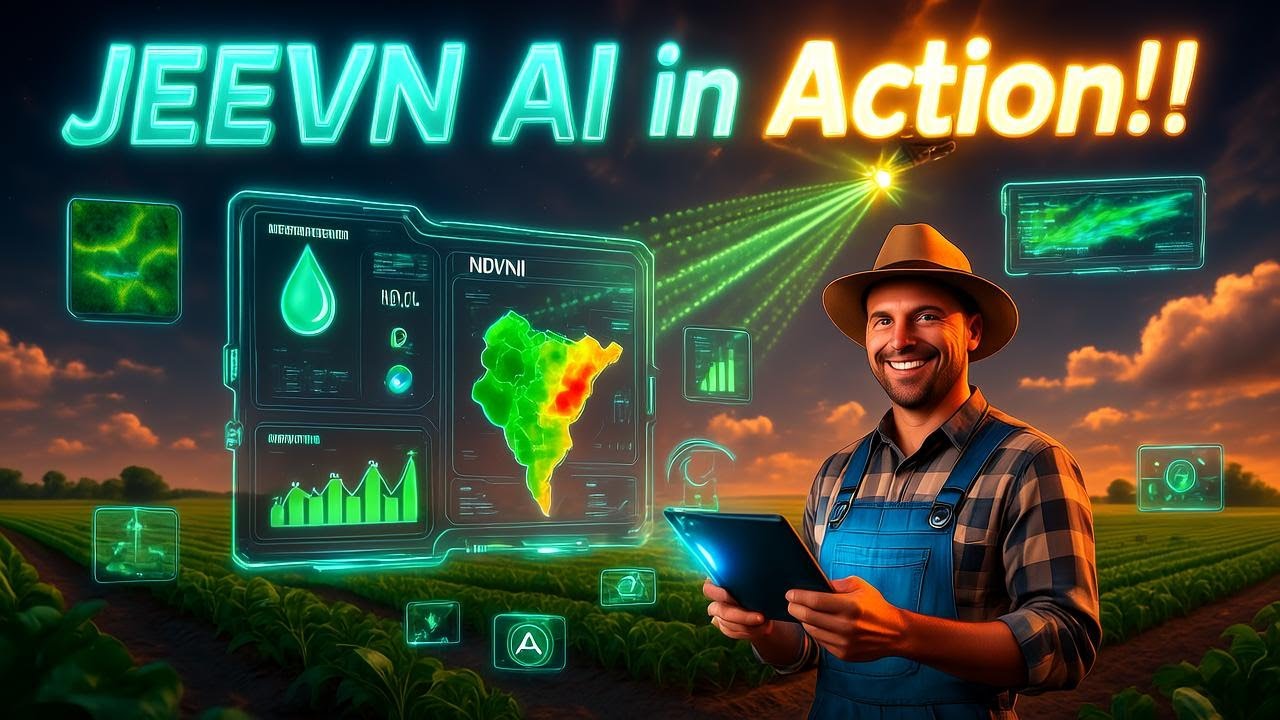
- 🛰️ Satellite-based monitoring (Farmonaut): Track plant health, climate, and resource usage remotely
- 🤖 Automated nutrient delivery: Computer-controlled dosing adjusts minerals per plant needs
- 🚜 Robotic harvesting: Reduces labor cost, avoids plant damage and keeps consistency
- 🌿 Real-time alerts: Prevents disease outbreaks or system breakdowns
- 🧠 Predictive Analytics: AI forecasts harvest times and potential failures, streamlining farm management
Data-driven daily operations ensure vertical hydroponic farms surpass traditional yields—feeding more people with less land and water.
- ⚡ Fast Data Loop: Farmonaut’s platform delivers AI-based field advisory, irrigation, and real-time plant health trends for CEA farms
- 🔒 Traceability: Blockchain tracks crops from seed to harvest, ensuring food safety compliance
- 🌍 CO2 Monitoring: Carbon management tools help sustain low-emission farm environments

Sustainability, Efficiency, and Environmental Impact
Why Vertical Hydroponics is a Game-Changer for 2026
Vertical hydroponic farms are fundamentally sustainable by design:
- ♻️ Resource Conservation: Up to 95% less water and 90% land saving compared to traditional farming
- 🏙️ Urban Footprint: Rooftop, basement or modular urban farms drastically cut food transportation emissions
- 👣 Minimal Carbon Footprint: On-site production reduces CO2 from transport; carbon tech like Farmonaut Carbon Footprinting monitors environmental impact
- 🛡️ Pest and Disease Control: Closed-loop systems prevent outbreaks and need fewer pesticides
- 🌱 Waste Reduction: Zero pesticide runoff and near-zero food waste due to rapid distribution channels
Integrate environmental monitoring technology with your farm to easily track and report resource efficiency goals—enhancing your sustainability reporting for regulators and investors.
These benefits are especially relevant for developing regions, mining land reclamation, and areas facing water scarcity or climate stress, helping communities restore economic utility and establishing new standards for sustainable urban agriculture.
Urban Food Security and Peri-Urban Potential
Vertical and hydroponic systems are at the forefront of tackling urban food deserts and strengthening peri-urban food production in 2026 and beyond.
- 🏢 Urban Integration: Vertical farming maximizes production per minimal urban space
- 🚚 Supply Chain Resilience: Localized production reduces transport delays and ensures fresh produce
- 💼 Job Creation: Smart farms in cities and mining-repurposed land offer new green employment
- 🌳 Community Engagement: Urban hydroponics fosters community-supported agriculture (CSA) models
With sustainable production and transparent supply chains, vertical hydroponics is positioned to address global food security while strengthening urban resilience to shocks—making it a strategic pillar for both developed and emerging economies.
“By 2026, vertical hydroponic farms can produce up to 90% more yield per square meter than traditional farms.”
“Hydroponic systems use up to 95% less water than conventional soil farming, making them highly sustainable for vegetable production.”
Challenges, Limitations, and the 2026+ Innovation Pipeline
What’s Next for Vegetables That Grow Vertically?
Underestimating the learning curve for automation, nutrient management, or vertical system maintenance often leads to yield issues during scaling. Invest in training and robust maintenance plans.
- ⚠ Initial Investment: Setting up high-tech vertical farms can be capital intensive, but modular, scalable systems and decreasing LED/pricing trends are mitigating this.
- ⚠ Energy Demand: LED lighting and environmental controls require stable, efficient energy sources—driving industry investment into renewables and energy optimization.
- ⚠ Database & AI Reliance: Automated farms need reliable real-time data; poor calibration or downtime can create bottlenecks, impacting production.
- ⚠ Crop Selection: Not every crop is appropriate for vertical systems —strawberries, leafy greens, and select herbs remain the best performers.
- 🔥 Innovation Pipeline: Look for continued advances in AI, crop varietal development, robotics, and biotechnologies over the coming years—driving even higher efficiency and accessibility.
Enhanced vertical greenhouses, self-learning AI controllers, and advanced blockchain supply chain tracking will define the leading farms of 2026 and beyond.
- Machine-Learning Optimization: Automated “smart” farms continually self-improve for water, light, and nutrient efficiency across seasons.
- Energy-Efficient LEDs: Ongoing developments in tailored spectrum LED arrays cut costs and boost growth.
- Advanced Sensors & Sat-Tech: Satellite and IoT data for micro-climate and disease risk predictions.
- Specialty Crops for Urban Markets: Biotech-driven super crops tailored for vertical, hydroponic systems.
- Modular Designs: Plug-and-play units for smallholder or mobile urban farming, bringing food to every city block.
From data analytics to blockchain-based crop verification, the convergence of agri-tech makes vertical hydroponic farming a key future-proof investment for urban, mining, and peri-urban environments.
🌱 The 5 Pillars of Vertical Hydroponic Success:
- 🔦 Advanced Lighting
Multispectral LEDs stimulate optimum growth in stacked layers - 🌡️ Precision Environment Control
Stable temperature and humidity via CEA - 💧 Efficient Nutrient Delivery
Hydroponic & automated irrigation avoid waste & disease - 🧑🔬 Continuous Data Monitoring
AI & sensors track & optimize cycles, yield, and plant health - 🔗 Traceability and Transparency
Blockchain data ensures food safety and supply chain trust
Farmonaut and the Satellite-Driven Change in Agriculture
Empowering Smart, Sustainable, and Transparent Food Production
At Farmonaut, we believe that satellite, AI, and blockchain technologies are essential for the next-generation of vertical farming daily systems. Our platform enables businesses, farmers, and governments to:
- 🛰️ Monitor crop health, land, and water use in vertical and hydroponic farms in real time
- 🔋 Optimize resources—from LED lighting to irrigation—for maximum efficiency and minimal environmental footprint
- 🧠 Receive predictive AI advisories for plant health, climate cycle optimization, and risk avoidance
- 🔗 Integrate blockchain-based traceability for produce transparency and compliance
- 📦 Enable digital resource management and fleet tracking for large-scale farms, peri-urban, and mining settings
Through affordable, advanced satellite insights and AI-based analytics, we make it simple for any vertical farm, mining site, or peri-urban farming enterprise to optimize everything from lighting schedules to environmental impact monitoring.
See our large-scale farm management tools for administrative oversight, API automation, resource allocation, and food traceability.
Get Started with Farmonaut
Our platform is available via web app, Android, and iOS for direct access from the field to central management.
APIs for developers: Integrate real-time vertical farming analytics into your applications—see documentation here.
Farmonaut Subscription Options
By utilizing tech-driven platforms like Farmonaut, investors and growers gain not only productivity boosts, but proof of sustainability metrics critical for green financing and ESG compliance in 2026 and beyond.
🌐 Use Scenarios for Satellite-Driven Vertical Farms:
-
🏙️
Urban Food Factories
Multi-layered hubs using Farmonaut data for real-time resource management -
🏜️
Mining Land Reclamation
Grow fresh produce on previously unusable land with remote monitoring -
🌳
Peri-Urban Community Farms
Satellite-assisted management boosts food security and local nutrition -
🚚
Mobile Urban Farming Fleets
Real-time fleet tracking for food-on-the-go setups, powered by satellite insights -
💼
Institutional ESG Compliance
Carbon tracking and blockchain reporting for investors, banks, and insurers
Frequently Asked Questions – Hydroponic Vertical Farming 2026
Which vegetables are best for vertical hydroponic farming?
Leafy greens (lettuce, spinach, kale), herbs (basil, mint, parsley), vine crops (cherry tomato, cucumber, pepper), and strawberries are top performers due to their rapid growth cycles, space efficiency, and adaptability to vertical and hydroponic systems.
How much water does vertical hydroponics save compared to traditional farming?
On average, hydroponic systems use up to 95% less water than soil-based operations, thanks to closed-loop recirculation and reduced evaporation.
Are hydroponic leafy greens safer than those grown in soil?
Yes. Hydroponics minimizes soil-borne diseases, reduces chemical pesticide usage, and often results in cleaner, more consistent produce with longer shelf life.
What is the role of satellite data in managing vertical farms?
Satellite platforms like Farmonaut provide real-time monitoring of crop health, resource use, and environmental impact, enabling precision agriculture and sustainable urban farming practices.
Can vertical farms be established on degraded or mining land?
Absolutely. The soilless, closed-loop nature of hydroponic systems allows vertical farms to repurpose mining and contaminated land, restoring economic potential and improving food access.
Ready for the Future of Vertical Vegetable Farming?
The potential for vegetables that grow vertically with hydroponic and CEA systems is limitless for urban centers, peri-urban zones, and land-reclaimed mining sites. Adopt data-driven approaches, ensure transparency and traceability, and build your sustainable, high-yield farming business with Farmonaut.


 Godrej Agrovet
 Hayleys Agriculture
 Linx Agritech
 Adinet
 Save Your Soils
 GalaxEye Space
 Grandstream Algérie
 XOS Realty
 Geospatial Lab Africa
 Agro La Gándara
 HIPSAC
 ZOL Zimbabwe
 Juligerm
 AdBio
AdBio MISE Maroc
 NWNS
NWNS Red August Group
 Farm Inc
 WeMe Global
 Agrotoken
 Blue BearX
 Insignito
 DnCubed
 Indosistim Teknologi
 Liquify Digital
 CU Foods
 BeyondTech Global
 Rouge VC
 AgroRisk
 Oath Inc
 Esri North East Africa
 MDCV UK
 Etech Consulting Madagascar
 Vestlandsforsking
 WB Dev
 Sama Premium
 Tres Valles
 Blickwinkel
 Agricultural Credit Policy Council
 eKGIS
eKGIS Mostas Tech
 Andex
Andex Deluxe Conseil
 WICO
WICO Chimera Innovation
 SkyHarvest
 Teledarbas
 Exurbia Geospatial
 FieldZero
