

Table of Contents
- Summary & Introduction
- Understanding Farmland REITs in 2025
- Vital Farmland REITs: Their Essential Role
- What is a Farmland REIT ETF—and Why Do They Matter?
- Spotlight: Farmland REITs and ETFs in Canada
- Comparison Table: Leading Canadian Farmland REITs & ETFs
- Factors Influencing Farmland REIT & ETF Performance in 2025
- Farmland REIT Stocks: 2025 Investment Perspective
- Future Outlook & Agriculture Investment Trends (2025+)
- Technology in Farmland Investment: The Farmonaut Approach
- FAQs: Farmland REITs and ETFs
- Conclusion
“Canadian farmland REITs delivered average annual returns of 8-12% over the past decade, outperforming many traditional asset classes.”
Vital Farmland REIT Canada: Top Farmland REIT ETF Tips
Understanding Vital Farmland REITs and Farmland ETFs in 2025: A Comprehensive Guide for Agriculture, Farming, and Forestry
In recent years, agriculture, finance, and sustainability have converged to drive profound change in investment approaches. Among the standout trends transforming land ownership and rural economies is the rise of vital farmland REITs and the emergence of farmland REIT ETFs. These unique investment instruments—strong in Canada and increasingly global—are at the heart of resilient food systems, environmental stewardship, and diversified financial portfolios in 2025.
This comprehensive guide explores everything you must know about farmland REITs, farmland REIT ETFs, and their role in future-focused sectors like farming, forestry, and agriculture. Whether you’re a farmer, policymaker, financial advisor, or sustainable investor, understanding these options for stable, inflation-resistant returns—and their influence on sustainability, food security, and land management—is essential in a changing world.

What is a Farmland REIT? Decoding the Foundations of Farmland Investment (2025 Edition)
A Real Estate Investment Trust (REIT) is a company that owns, operates, or finances income-generating real estate. But unlike typical property trusts invested in apartments, retail, or offices, a farmland REIT specializes in owning agricultural land—the very soil that supports farming, forestry, and food production. Top farmland REITs manage vast tracts of cropland, pastureland, orchards, and even timber resources, blending real estate expertise with agricultural science.
Why have farmland REITs become so vital by 2025?
- Stable income stream: Agricultural land generates steady cash flow through leases, crop-sharing, and timber revenue.
- Inflation hedge: Farmland values typically rise alongside inflation, helping protect and preserve investor capital.
- Sustainability and ESG focus: Modern REITs increasingly emphasize sustainable farming, water conservation, regenerative practices, and compliance with strict ESG (Environmental, Social, Governance) criteria.
- Strengthened food security: Professional ownership and sophisticated land management boost the resilience and productivity of the food supply chain.
By investing in vital farmland REITs, investors gain direct, diversified exposure to the backbone of the global food system—without the operational risks of solo farm ownership.



Vital Farmland REITs: Their Essential Role in Agriculture, Forestry, and Food Security
The phrase vital farmland REIT has risen in popularity, reflecting the strategic, holistic approach required to steward agricultural land in the modern era. Unlike generic farm investments, “vital” REITs focus on properties and practices that actively address:
- Crop diversity: They invest in lands supporting a mix of grains, fruits, pulses, and specialty crops, buffering against market risks and monoculture issues.
- Sustainable forestry: These REITs manage timberland with an eye to both profit (timber sales) and ecosystem preservation.
- Climate resilience: Leading farmland REITs identify lands with natural defenses against drought, flood, or changing weather, directly confronting climate risk.
- Community and social impact: They back strong, mutually beneficial landlord-tenant arrangements and invest in rural infrastructure, supporting the backbone of local farming communities.
Therefore, investing in vital farmland REITs by 2025 offers a blend of financial gains and measurable social and environmental impact—critical for investors and policymakers serious about ESG mandates, food security, and supply chain resilience.

What is a Farmland REIT ETF—and Why Do They Matter?
A Farmland REIT ETF (Exchange-Traded Fund) is a fund traded on stock exchanges that holds a diversified portfolio of farmland REIT stocks. Instead of owning a single farmland company or asset, investors can buy ETF shares representing exposure to multiple REITs across Canada and globally.
Investors tracking US benchmarks may wonder whether an NCREIF farmland index ETF exists, and what the alternatives are.
Main benefits of farmland REIT ETFs:
- Diversification: Exposure to numerous properties, geographies, and crop types—reducing risks tied to any single farm, REIT, or crop failure.
- Liquidity: ETFs trade like regular stocks on public exchanges, making it quick, simple, and low-cost to enter or exit farmland investing compared to selling physical land.
- Accessibility and transparency: ETFs lower the barrier for retail investors, providing small, fractional ownership of vast, professionally-managed farmland.
- Potential for growth: As population rises, food demand surges, and sustainable agriculture gains favor, farmland ETFs ride the wave of these global megatrends.
Well-designed farmland REIT ETFs are becoming essential elements in diversified, future-resistant portfolios. As of 2025, they continue to swiftly grow in size and scope.
“Farmland REIT ETFs saw a 30% increase in assets under management in 2023, reflecting rising investor interest in agriculture.”

Farmland ETFs vs. Single Farmland REITs: Understanding the Difference
While farmland REIT ETFs are comprised of multiple farmland REIT stocks, it’s important to distinguish them from direct investment in a single REIT:
- Single Farmland REIT investment: Purchase direct equity in just one farmland company, tightly linking performance to its management, strategy, geographic focus, and crop selection. Greater potential upside—but less diversification and higher risk.
- Farmland REIT ETF: Your ETF share represents a basket of REITs managing diverse farmland assets. While the potential for big wins is smoothed out, risk is broadly reduced for more stable returns.
This gives investors in agriculture and forestry prime choices—tailored exposure through targeted REIT stocks or diversified ETFs spanning acres, industries, and continents.

Spotlight: Farmland REITs and ETFs in Canada
With its fertile, high-quality soils and diverse climate zones—from the prairies to mixed wood forests—Canada stands out as a leader in vital farmland REITs and innovative REIT ETF options.
Key highlights of the Canadian farmland REIT landscape:
- Farmland REIT stock listings: Canada offers multiple REITs focusing on cropland and timber, listed on Canadian exchanges like the TSX, which enhances transparency and investor access.
- Robust regulatory compliance: The sector is governed by strong local laws and land use oversight—protecting both land quality and investor capital.
- Sustainable agriculture focus: Canadian REITs often emphasize regenerative land management, biodiversity, and climate adaptation—meeting the growing demand for sustainable investments and ESG-focused portfolios.
- Canadian farmland REIT ETFs: The first ETFs tracking Canadian and North American farmland trusts launched within the past decade, rapidly attracting capital from investors seeking safe and ethical rural assets.
As of 2025, Canadian farmland via REITs and ETFs remains a compelling and promising option for those wanting stable, inflation-hedged, and sustainability-aligned returns.

Comparison Table: Leading Canadian Farmland REITs & REIT ETFs (2025)
| Name of REIT/ETF | Type | Estimated Annual Yield (%) | 5-Year Avg Return (%) | AUM (CAD Millions) | Diversification (Properties/Regions) | Sustainability Focus | Risk Level |
|---|---|---|---|---|---|---|---|
| AgriGreen Farmland Trust | REIT | 4.6 | 9.2 | 650 | 45/5 provinces | Yes | Low |
| CanFarm Timber Income Fund | REIT | 5.2 | 10.5 | 720 | 30/4 provinces | Yes | Medium |
| MapleLeaf AgriREIT ETF | ETF | 3.7 | 8.8 | 430 | >80 REIT holdings | Yes | Low |
| Harvest North American Farmland ETF | ETF | 3.4 | 8.1 | 310 | ~70 REIT holdings | Yes | Medium |
| ForestEdge Timber REIT | REIT | 5.8 | 11.2 | 590 | 20 timberlands/3 provinces | Yes | Medium |
*Data is estimated and for illustrative comparison only; investors should conduct due diligence.
Top Factors Influencing Farmland REIT and ETF Performance in 2025
Multiple factors shape the attractiveness and stability of vital farmland REITs and farmland REIT ETFs in 2025:
-
Technological innovation:
- Modern precision agriculture—powered by satellite monitoring (such as Farmonaut’s carbon footprinting solutions), AI-based crop models, and blockchain traceability—dramatically increases productivity and resource efficiency.
- Tech-savvy REITs and their investors often secure better returns and more sustainable land use.
-
Climate change and resilience:
- Extreme weather, carbon policy changes, and market disruptions are key risks. Vital farmland REITs increasingly invest in lands with high natural resilience.
-
Government support and regulation:
- Subsidies for regenerative agriculture, blockchain-based supply chain transparency, and environmental compliance can all influence farmland trust profitability and investor confidence.
-
Food demand and global market trends:
- Shifts in population, diet, and international trade directly elevate farmland value and income, with Canada positioned as a major supplier.
-
Markets, inflation, and risk appetite:
- Farmland offers a defensive hedge when equities or bonds falter, due to underlying stability and the perennial demand for food and fiber.
Activating strong risk management and advanced tech large-scale farm management are crucial for maximizing returns and long-term stewardship in this sector.

Key Challenges and Considerations for Farmland REIT Investors
Despite clear upsides, vital farmland REITs and farmland REIT ETFs present challenges investors must weigh:
- Land price volatility: While trending upwards, regional or speculative bubbles can cause short-term dips in value.
- Management complexity: Effective crop, forestry, and land management require expertise and constant adaptation to climate and market changes.
- Environmental risks: Land degradation, monocultures, and unsustainable practices harm both ecological health and long-term asset value.
- Liquidity constraints: Some smaller REITs or unique properties may take longer to sell, impacting capital allocation agility.
Wise investors do due diligence, analyze REIT documentation and ESG credentials, and utilize farm fleet/resource management insights for improved agricultural efficiency.
Farmland REIT Stocks: 2025 Investment Perspective
Farmland REIT stocks remain in the spotlight as more investors seek tangible returns, assets tied to real estate and natural resources, and inflation-resistant value. These stocks represent:
- Dividend yields: Steady lease and crop income often allows for reliable shareholder payouts between 3–6% annually.
- Capital appreciation: Persistent land scarcity and productivity gains drive farmland reit stock prices up, especially in Canada’s promising agricultural markets.
- ESG-premium: Companies that emphasize sustainable and climate-adapted practices increasingly command stronger valuations and access to impact investing capital.
- Portfolio diversification: Farm and forestry stocks add uncorrelated returns, stabilizing portfolios during volatility in other sectors.
Unlike direct farmland ownership, these stocks allow investors—from local farmers to global asset managers—to participate in agricultural success stories without operational headaches.
Future Outlook: Farmland REITs and ETF Investment Trends (2025 and Beyond)
The future for vital farmland REIT and farmland REIT ETF investment is dynamic and full of opportunity. As food security, sustainability, and climate adaptation move even higher on policy and investor agendas through 2025 and beyond, here’s what to watch:
- Integration with regenerative agriculture: REITs that embrace soil health, crop rotation, and emissions reduction will attract increasing ESG capital.
- Carbon credit monetization: Advanced REITs and ETFs with strong forestry assets will capture new value from climate policies and carbon markets, especially through carbon footprint tracking.
- Smart, data-driven land management: Satellite monitoring, AI-driven crop models, and blockchain-based supply chain tools are quickly becoming essential to maximize quality, yields, and compliance. Farmonaut’s real-time precision agriculture data and crop/farm advisory platform exemplify this transformation.
- Diversified global portfolios: ETFs will further expand into emerging markets and diverse ecological zones, offering broader exposure and reducing risk from regional shocks.
- Increased institutional investment: Pension funds, endowments, and insurance groups are rapidly moving into farmland for steady, predictable income streams.
As technology, policy, and capital flows reshape rural landscapes, Canadian farmland is positioned at the forefront of the vital REIT revolution.
Technology in Farmland Investment: The Farmonaut Advantage
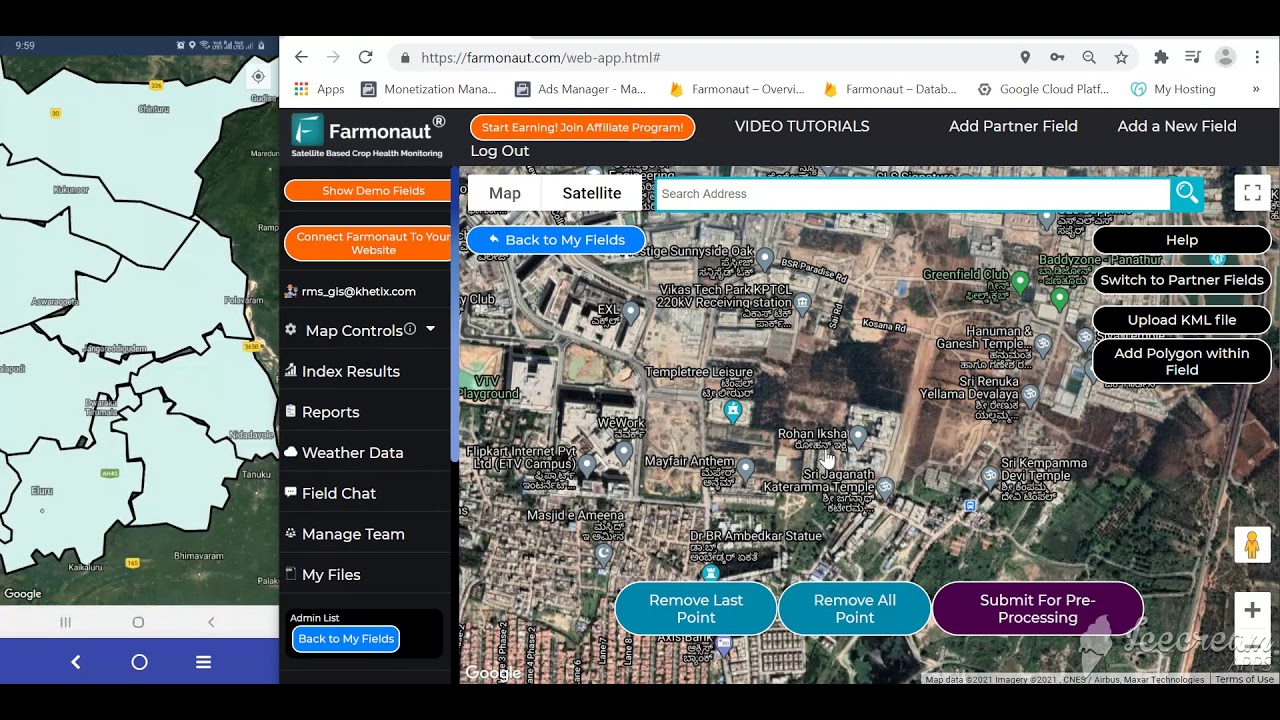
Modern farmland investment success—especially in REITs and ETFs—increasingly relies on robust, actionable data. At Farmonaut, we are proud to empower farmers, investors, and agricultural managers with advanced satellite-based crop health monitoring, AI-driven advisory, and blockchain traceability.
- Satellite monitoring (NDVI, soil moisture, and crop stress): Our service helps optimize water, fertilizer, and pest management, directly supporting yield and land value resilience.
- Jeevn AI Advisory: By providing hyper-local, real-time insights and expert strategies, Jeevn AI enhances crop management for both smallholders and large-scale operations.
- Blockchain traceability: Our platform powers farm-to-consumer supply chain transparency, ensuring that food and timber investments in REITs/ETFs are ethically sourced and fully verifiable.
- Fleet and resource management: Efficient logistics are essential for maximizing ROI in large, geographically dispersed farmland portfolios.
- Carbon footprinting: Our carbon tracking solution gives stakeholders the data needed for ESG audit trails and for benefiting from new carbon credit markets.
These affordable services, available as an App, API (API access | Developer Docs), and scalable subscriptions, ensure every size of farm and investor can harness the power of precision agriculture, sustainability, and data-driven decision-making.
For government bodies, corporates, and financial institutions investing in farmland and forestry, our platform enables asset verification, resource optimization, and risk management for a future where smart stewardship is rewarded.
Frequently Asked Questions (FAQs): Vital Farmland REIT Canada & ETFs
- What is a vital farmland REIT and what makes it different from a regular REIT?
- Vital farmland REITs specialize in owning, managing, and stewarding agricultural and forestry land with a critical focus on sustainability, crop diversity, climate resilience, and social impact. Unlike generic REITs, they emphasize properties essential for food security, carbon capture, and local rural economies.
- How do farmland REIT ETFs work?
- A farmland REIT ETF pools investments into a diverse array of farmland-targeted REITs, offering market access, broad diversification, and liquidity for investors without needing to own/manage physical land themselves.
- Why are Canadian farmland REITs particularly attractive?
- Canada’s rich soils, strict environmental regulations, and strong rural infrastructure foster high-quality agricultural assets. Canadian REITs often lead in sustainability and stable returns, making them favorites for ESG-conscious and international investors alike.
- What are the main risks associated with investing in farmland REITs?
- Main risks include land price fluctuation, agricultural yield variability, regulatory or policy changes, climate risks, and, in some cases, lower liquidity compared to conventional real estate.
- Can technology improve farmland investment returns?
- Absolutely. Precision monitoring, data-driven crop management, and blockchain traceability (as offered by Farmonaut) substantially increase operational efficiency, reduce environmental impact, and enhance land value for both direct owners and REITs/ETFs investors.
- Are farmland REITs a good hedge against inflation in 2025?
- Yes. Farmland values and lease incomes tend to rise with inflation, providing capital preservation and steady income through economic cycles.
Conclusion: Vital Farmland REITs and ETFs—Your Gateway to Sustainable Agriculture and Financial Stability in 2025
As 2025 approaches, vital farmland REITs and farmland REIT ETFs have emerged as indispensable instruments for secure, sustainable, and resilient portfolio growth in agriculture, forestry, and food-based asset classes. Their unique blend of stable returns, inflation protection, technological innovation, and strong sustainability credentials makes them a foundation for future-minded investors and responsible land stewards.
Canada leads this movement, leveraging its fertile landscapes, regulatory strengths, and commitment to sustainable land management and ESG principles. Both farmers and global investors can now participate in this transformation via transparent REIT stocks, diversified ETFs, and cutting-edge tools like those provided by Farmonaut.
Going forward, understanding and integrating vital farmland REIT Canada options is not just smart financial strategy—it is a key contribution to food security, climate resilience, and rural prosperity.
Empower your land and your portfolio: embrace the future of farmland investment today.
Discussion
Questions, corrections or field experience? Share them below. First-time comments are reviewed before they appear, and your email is never published.
No comments yet. Be the first to add a question or your experience.

 Qzense Labs
 Kubota
 FFBS
FFBS Jontra
 Kalustyan
 Tucor
Tucor Geno
Geno Hayleys Agriculture
 Linx Agritech
 Adinet
 Save Your Soils
 Grandstream Algérie
 XOS Realty
 Geospatial Lab Africa
 Agro La Gándara
 Licence holder · Niger · Gold










