

Satellite Plantation Crop Advisory: Oil Palm & Areca

Vamsi farms a six-acre holding in Vutlapalli, Telangana, carrying two palms side by side — oil palm on one plot, areca nut on the other. Same soil, same rainfall, same week. We opened the advisory the grower was reading and found two schedules, two nutrient prescriptions and two entirely separate pest lists.
Plantation crops are the case where a farm-level average fails most obviously, because a plantation is a twenty-year commitment made on a one-week decision cycle. This holding in Vutlapalli, Telangana, runs two plots totalling six acres: 3.06 acres of oil palm and 2.96 acres of areca nut. Both are young, both are drip-irrigated, both sit on soil the advisory reads at pH 6.2 with 0.19% organic carbon. By every measure a whole-farm summary would use, they are the same field.
They are not the same field. In June 2026 the grower completed the feedback form attached to his satellite plantation crop advisory and reported that the reports had helped optimise his irrigation, optimise his fertiliser application, and take action on pest, disease and weed pressure. By that point the account had received 64 plot advisories across 32 satellite acquisition dates, at a median revisit of five days. This article opens that week and puts the two plots side by side.
On 9 June both plots were told not to irrigate — for completely different reasons. The oil palm plot was on a fixed alternate-day rhythm with no rain forecast at all. The areca plot was skipped because 15 mm of rain was forecast at 85% probability. Two zeros on the same day on adjacent plots, arrived at by two different routes.
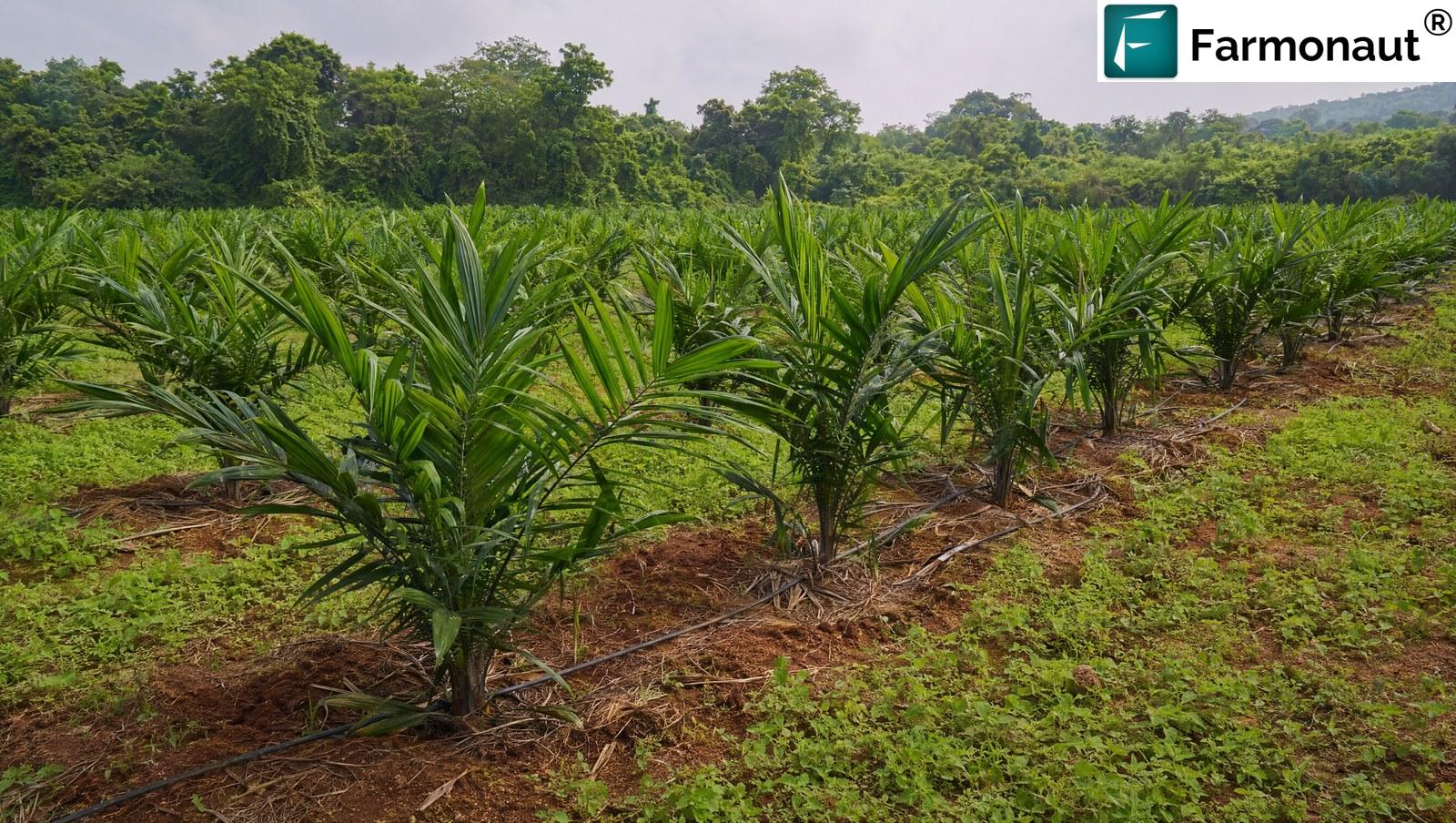

Two palms, six acres, one week
Both plots were at a juvenile vegetative stage in the week analysed — the oil palm at its juvenile/vegetative phase, the areca in vegetative growth. That is the phase where a plantation is built rather than harvested, and where getting water and nutrition wrong is expensive precisely because the mistake compounds for years.
| Oil palm | Areca nut | |
|---|---|---|
| Area | 3.06 acres | 2.96 acres |
| Stage | Juvenile / vegetative | Vegetative growth (juvenile) |
| Irrigation days that week | 4 of 7 | 6 of 7 |
| Per-event quantity | 6.5–6.8 mm | 4.2–4.8 mm |
| Method recommended | Drip (6.5) over micro-sprinkler (7.2), basin (9.5) | Drip (4.5) over micro-sprinkler (5.2), basin (6.5) |
| Nitrogen | 21.4 kg/acre | 17.3 kg/acre |
| Sulphur | 38.4 kg/acre | 18.9 kg/acre |
| Top pest | Rhinoceros beetle 92% | Mahali (Koleroga) 92% |
| Expected yield | 7,100 kg/acre | 820 kg/acre |
| Harvest window | Year-round | Nov 2026 – Mar 2027 |
Same soil reading. Same rainfall. Adjacent plots. Almost nothing in the two advisories matches.

What the satellite plantation crop advisory delivers per plot
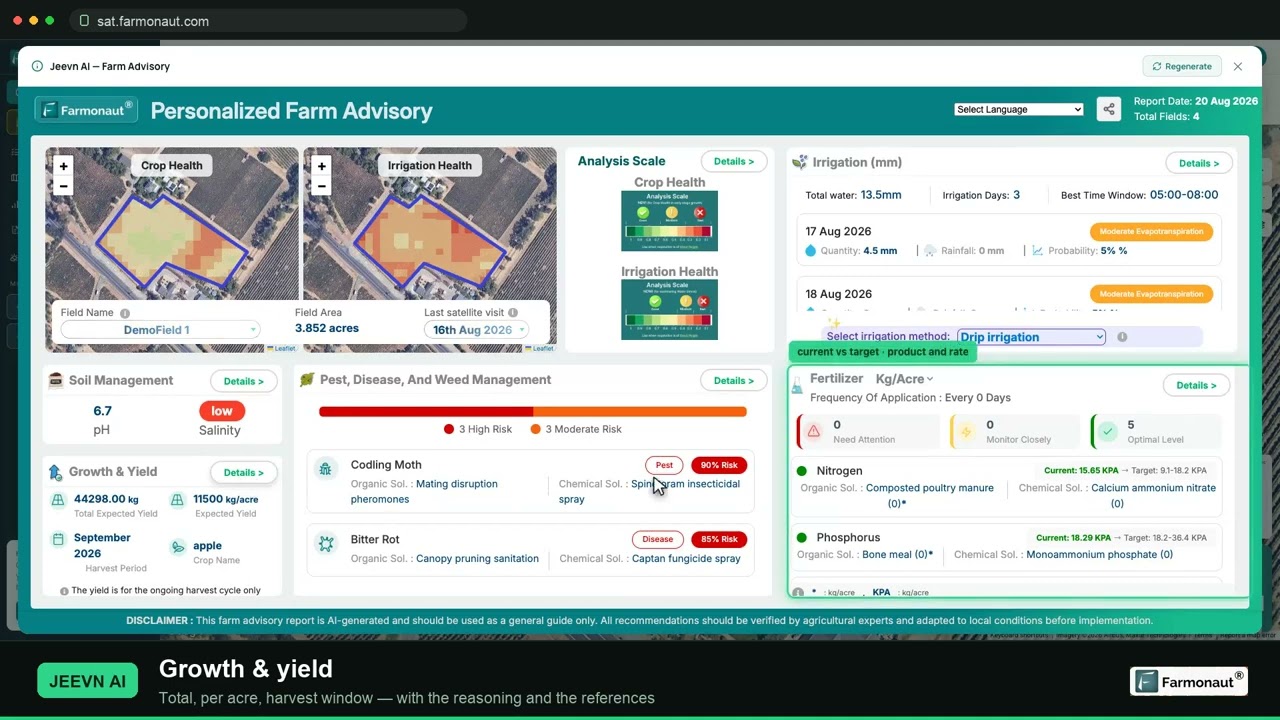
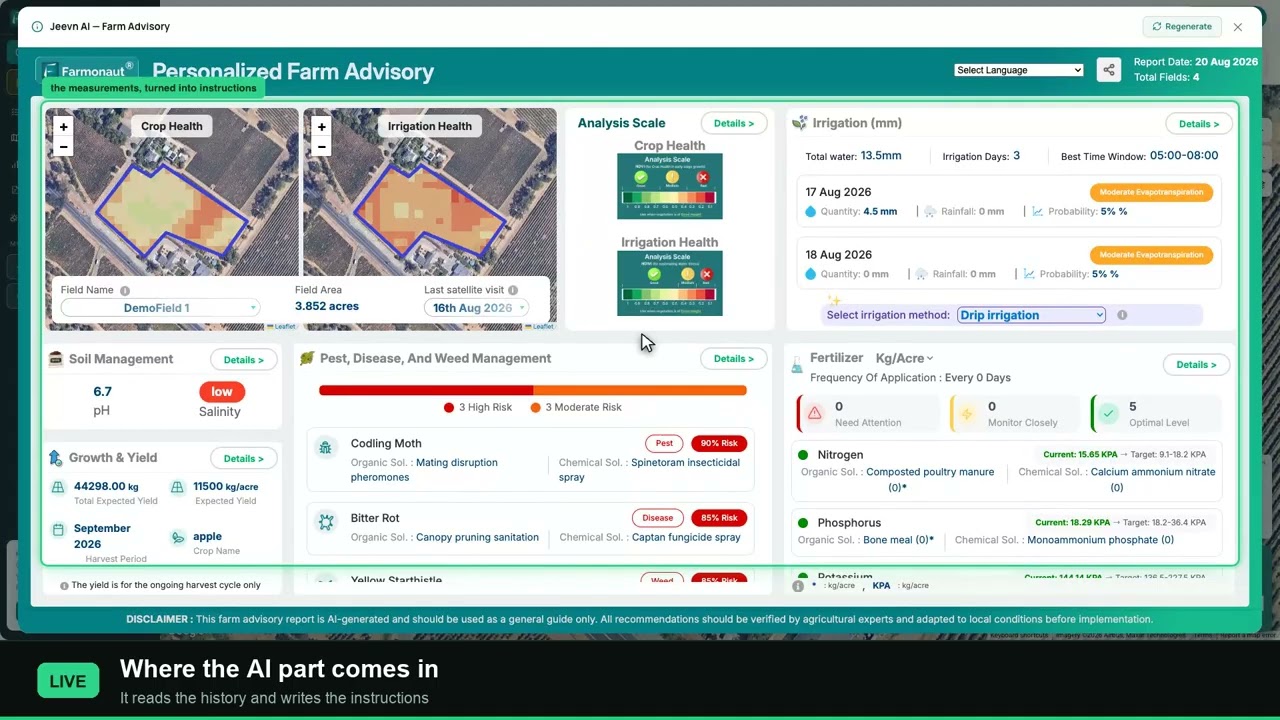
Each plot receives its own report per satellite pass: a day-by-day irrigation schedule with a recommended delivery method, per-nutrient fertiliser rates with named sources, pest and disease risk with control options, weed pressure, soil chemistry, and a yield estimate with a harvest window.
Irrigation: one plot on rhythm, one on the forecast
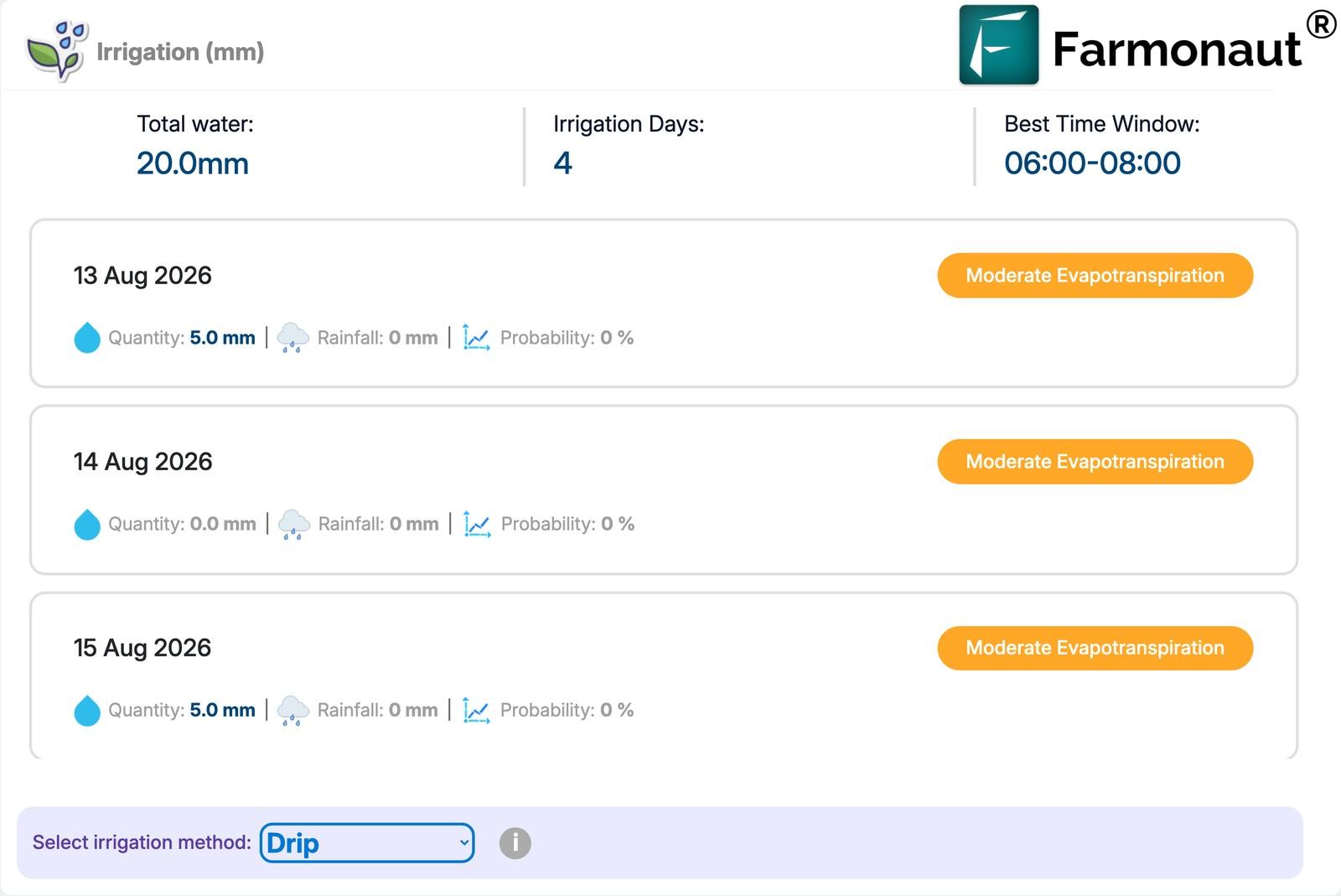
The oil palm plot ran a clean alternate-day pattern — 6.5 mm, zero, 6.5 mm, zero, 6.8 mm, zero, 6.8 mm — with evapotranspiration flagged high on every day and no rain in the forecast at all. Four irrigation events in seven days, at the highest per-event depth on the holding, because a juvenile oil palm has a deep, thirsty root zone and the advisory is filling it deliberately rather than little-and-often.
The areca plot did the opposite. It irrigated on six of seven days at 4.2–4.8 mm — shallower, more frequent, which suits areca’s finer surface root mat. And its single zero was earned rather than scheduled: on 9 June the forecast carried 15 mm of rain at 85% probability, and the recommendation dropped to nothing.
On both plots drip was the recommended method, and on both the report quantified the alternatives: basin irrigation would have needed 9.5 mm on the oil palm against drip’s 6.5, and 6.5 mm on the areca against drip’s 4.5. Basin flooding is still common in Indian plantation crops, and the advisory puts a number on what switching away from it is worth — roughly a third less water on the oil palm plot.
Fertiliser: the same soil, two prescriptions
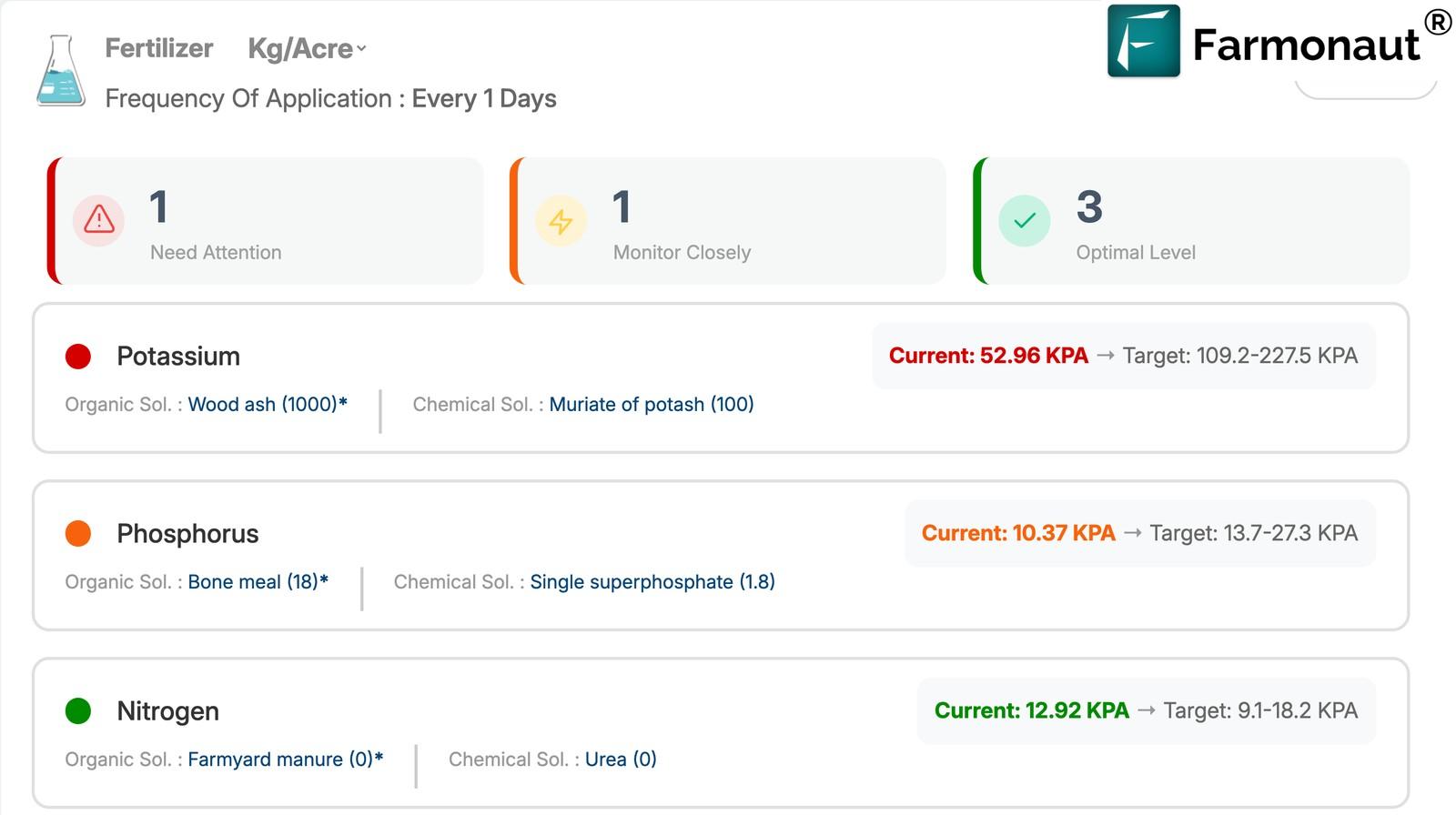
Both plots were fed, which is correct — both are juvenile and actively building frond and trunk. What differs is how much of each element, and the gaps are not small. Nitrogen ran 21.4 kg/acre on the oil palm against 17.3 on the areca; phosphorus 48.4 against 39.7; potassium 57.0 against 52.5. Sulphur ran 38.4 against 18.9 — more than double.
That is the point worth dwelling on. The soil section returned identical figures for both plots — pH 6.2, organic carbon 0.19%, salinity low. Any prescription driven by soil alone would have been the same on both. The difference comes entirely from crop demand: oil palm is a heavy potassium and sulphur feeder with a different uptake curve from areca, and the advisory prices that in.
On a mixed-plantation holding, resist the urge to buy one blend for the whole property. These two plots are 100 metres apart and one needs twice the sulphur of the other. A single blend gets one plot right and quietly underfeeds or overfeeds the other for a whole season.
Pest and disease: two palms, two problem lists
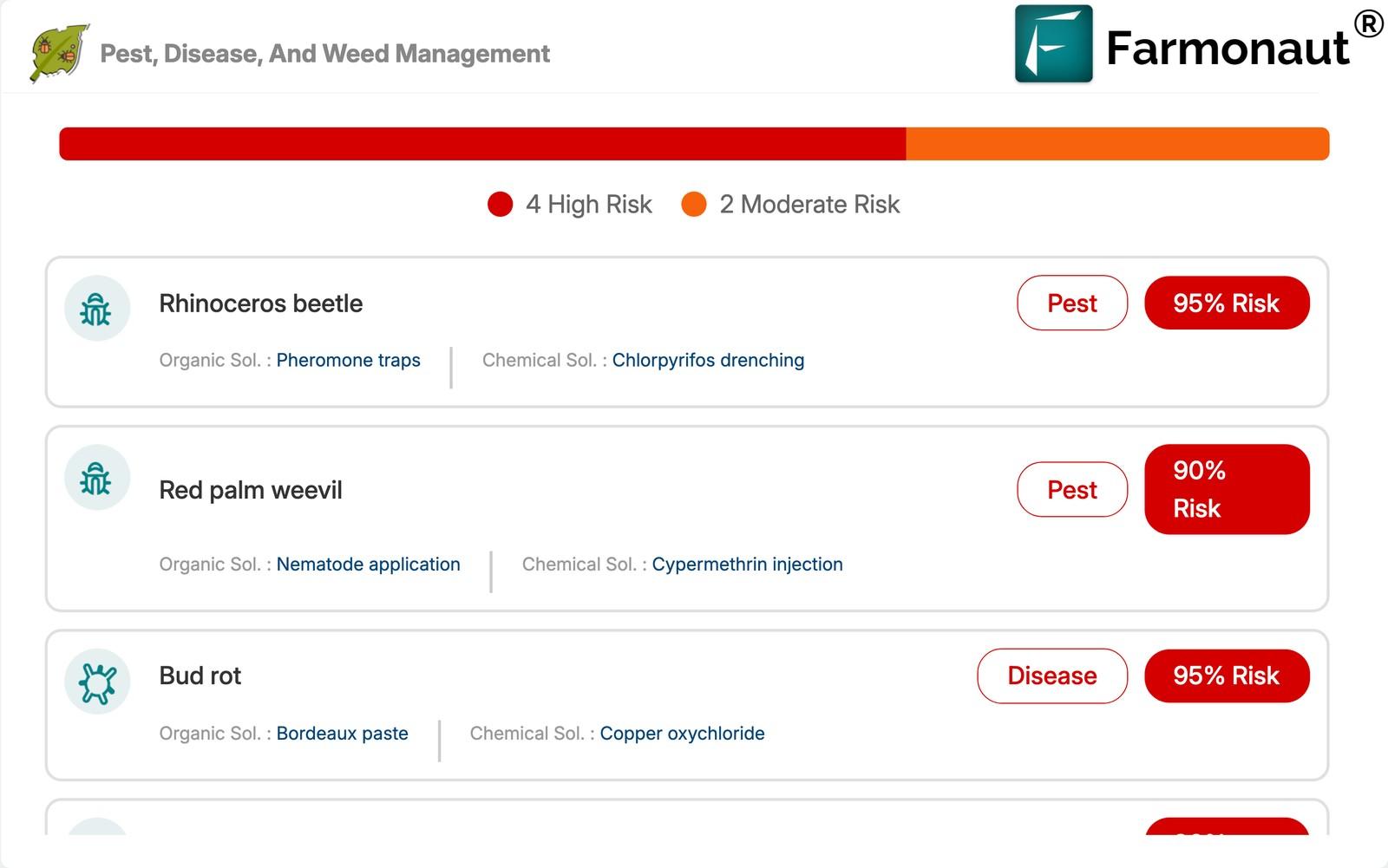
This is where the two plots separate most sharply. The oil palm plot led with Rhinoceros beetle at 92% and Red palm weevil at 85% — the two boring pests that kill young oil palms outright by destroying the growing point. The areca plot led with Mahali, also called Koleroga or fruit rot, at 92% and Spindle bug (Carvalhoia arecae) at 82%, which is an areca-specific sap feeder that deforms the emerging spindle leaf.
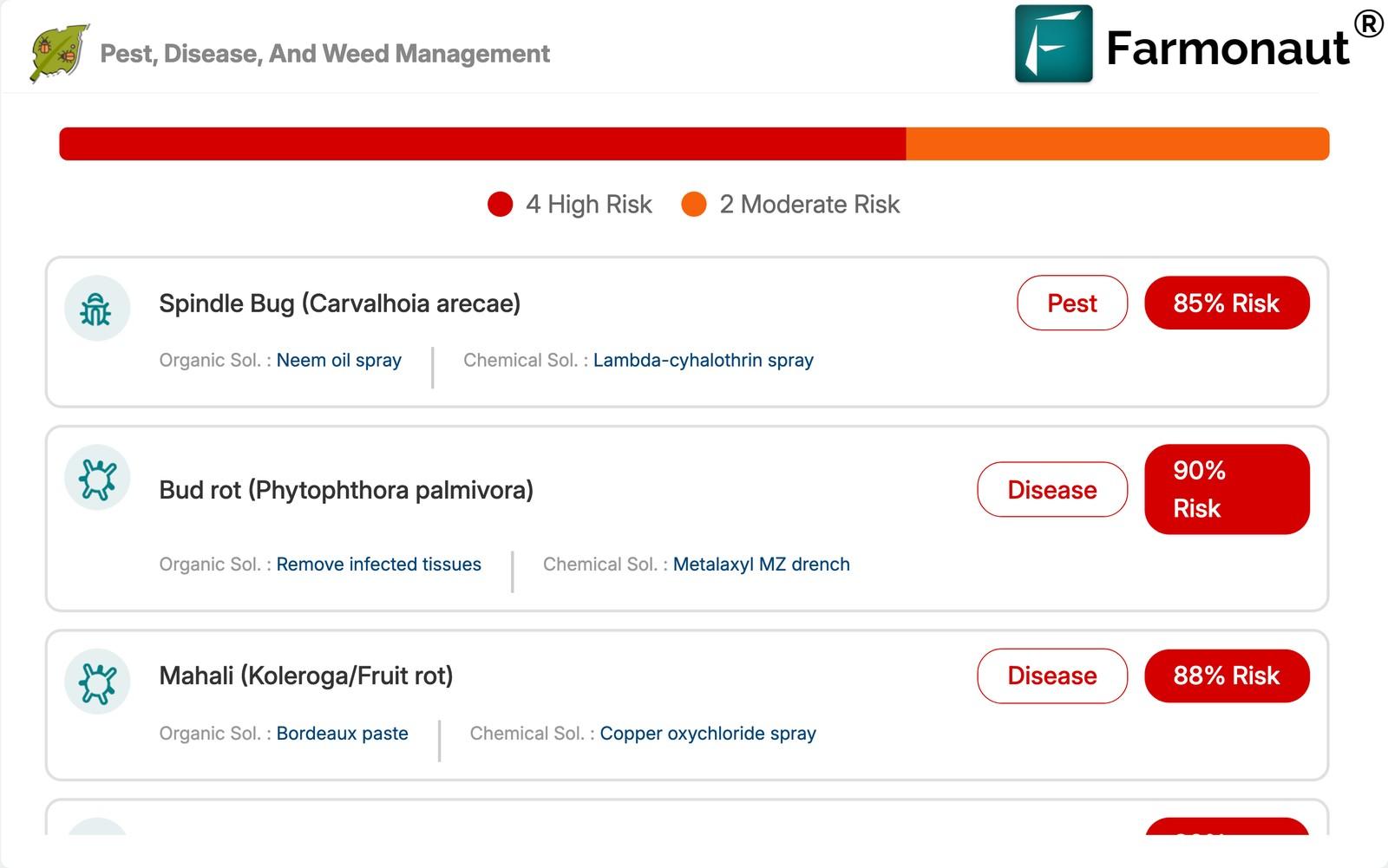
The sophisticated part is what the two lists share. Both plots were flagged for bud rot, and on the areca plot it was named to species: Phytophthora palmivora. Bud rot genuinely affects both palms — it is one of the few pathogens that crosses between them — so the model separating rhinoceros beetle from spindle bug while keeping bud rot on both is not a coincidence of vocabulary. It is host range being handled correctly.
Weed pressure split too. The oil palm plot was flagged for Imperata cylindrica — cogongrass — at 88%, a rhizomatous grass that is genuinely serious in young palm because it competes at the root zone and is hard to remove once established. The areca plot led instead with Cynodon dactylon at 86%. Both carried Chromolaena odorata, Siam weed, the invasive shrub that colonises plantation gaps across south India.

Weed pressure is worth one more note, because on a juvenile plantation it is a water and nutrient question rather than a cosmetic one. Cogongrass and Siam weed both compete directly in the wetted zone the drip emitter creates — which on a drip system is exactly the volume the palm is relying on. Clearing an 88% cogongrass flag is not tidying; it is removing a competitor from the only irrigated soil on the plot. That is also why the advisory pairs each weed with a physical option alongside the chemical one: on a young palm, mulching and manual removal around the base are often both cheaper and safer than a herbicide applied close to a shallow root mat.
What the numbers add up to
Every figure below is read directly from the two advisories.
| Mechanism in the advisory | What it delivers on this holding |
|---|---|
| Per-plot irrigation rhythm — deep and alternate-day on oil palm, shallow and near-daily on areca | Two schedules matched to two root systems on the same soil |
| Rainfall-gated skip on the areca plot when 15 mm was forecast at 85% probability | An irrigation event avoided that the rain would have supplied anyway |
| Drip quantified against basin irrigation on both plots | Roughly a third less water than basin on the oil palm (6.5 mm vs 9.5 mm) |
| Nutrient rates set by crop demand rather than the shared soil reading | Sulphur at 38.4 vs 18.9 kg/acre — a 2× difference a single blend cannot deliver |
| Separate pest lists with shared pathogens kept shared | Rhinoceros beetle and red palm weevil on one plot, Mahali and spindle bug on the other, bud rot on both |
Plantation crops reward this kind of precision more than annuals do, because the decisions are compounding. A juvenile palm underfed on sulphur for one season carries that into every year of its bearing life — and the cost of finding out from the yield curve four years later is far higher than the cost of reading it per plot now.

One plot needs twice the sulphur of the plot beside it. No blended fertiliser can deliver that.
Treating a plantation as a single management unit because it is a single property. These two plots share a gate, a water source, a soil type and a pump — and share almost nothing else. The oil palm wants deep, infrequent water and heavy sulphur; the areca wants shallow, frequent water and half the sulphur, and the pests that threaten each will not cross to the other.
Grower-reported outcomes, as submitted
The cards below reproduce Vamsi’s answers to our in-app feedback questionnaire for the advisory dated 3 June 2026, exactly as recorded.
The percentages are the grower’s own estimates from a structured form, not metered volumes. What the advisory data shows independently is that the guidance he was acting on was genuinely resolved per plot — which is the mechanism by which a two-crop holding saves anything at all.
There is a timing argument here that annual crops never face. Oil palm begins bearing at roughly three to four years and stays productive for two decades or more; areca takes longer still. Every week of the juvenile phase is therefore a week of building the asset rather than harvesting it, and the compounding runs in both directions — a well-fed juvenile palm carries that advantage through its whole bearing life, and an underfed one carries the deficit just as far. Sixty-four advisories across thirty-two acquisition dates is what keeps that phase on track rather than reviewed in hindsight.
Building soil under young palms
The soil reading is the same on both plots and worth reading carefully: pH 6.2, organic carbon 0.19%, salinity low. The pH is comfortable for both palms — mildly acidic is where oil palm and areca both prefer to sit — and low salinity on a drip-irrigated holding in a humid zone is a genuinely good result.
Organic carbon at 0.19% is the number that shapes strategy. Under drip, wetting is confined to a small volume around each palm, so the organic fraction in that volume determines how much of an applied nutrient stays available rather than draining past the root mat. On a plantation being established for a twenty-year life, building that fraction early is worth more than any single season’s fertiliser rate.
Both palms here are irrigated from a pumped source in a district where groundwater is the constraint. The areca plot’s rainfall-gated skip is the cheapest water saving available — it costs nothing to implement, requires no equipment, and the crop does not notice, because the rain arrived.


Why per-plot beats per-farm on a mixed plantation
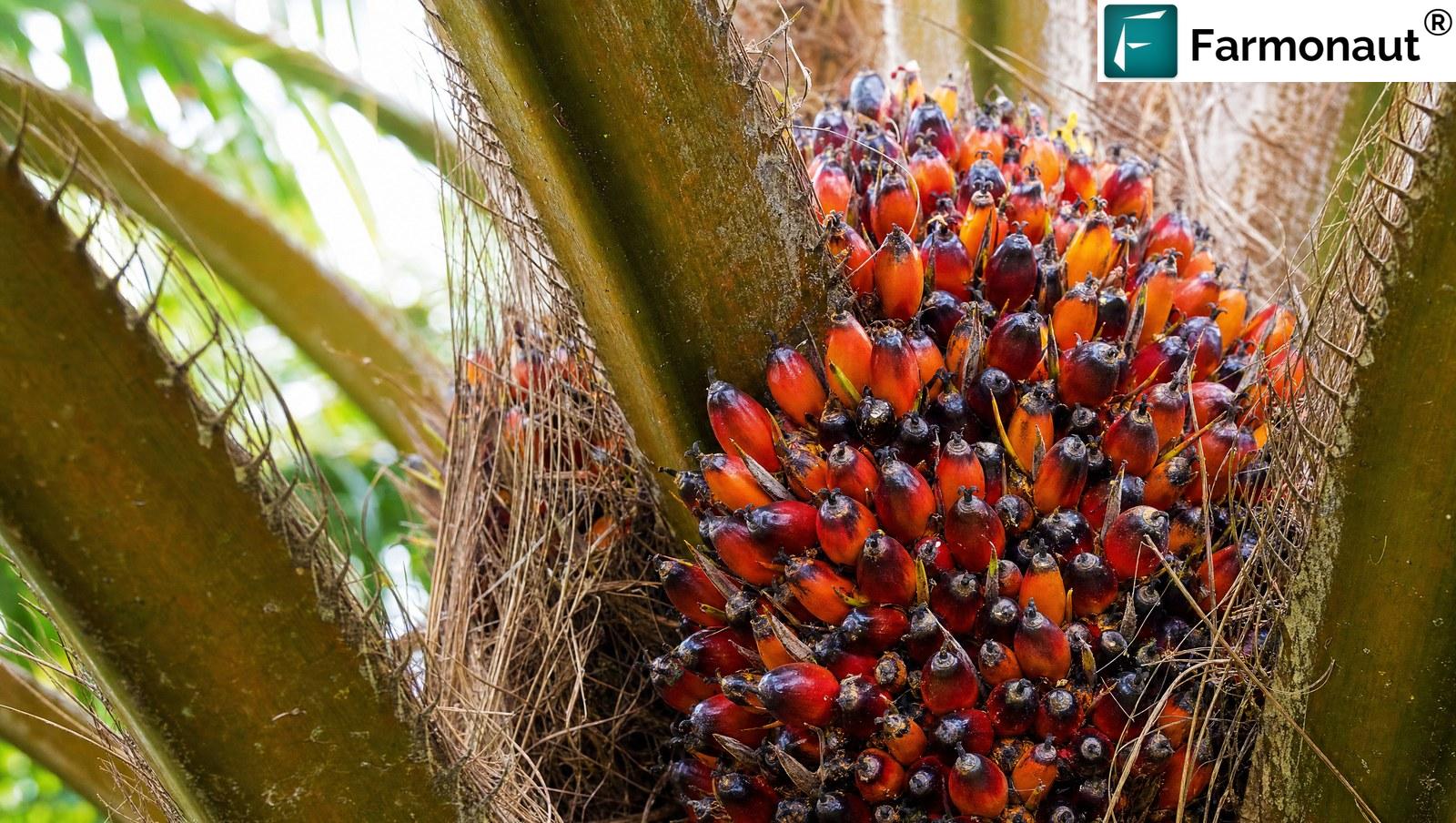
The yield estimates close the argument. The oil palm plot projects 7,100 kg/acre of fresh fruit bunches, picked year-round; the areca plot 820 kg/acre of dry nuts across a five-month window. That is an 8.7-fold gap between two products with different units, different prices and different harvest logistics.
Underneath both sits a per-pixel read of each plot from satellite, resolved through crop coefficients and regional pest models into instructions for that specific palm at that specific stage. Sixty-four advisories over thirty-two acquisition dates is not a report the grower reads once — it is a rolling instruction set that stays in step with two crops moving at different speeds.

Running this on your own plantation
- Map each crop as its own plot, even if they adjoin. Two palms on one holding are two problems; one boundary produces one answer and it will be wrong for at least one of them.
- Set the crop and planting date accurately. Everything here — the water rhythm, the sulphur gap, the pest split — follows from the crop and stage being right.
- Read the method comparison. Basin irrigation needed 9.5 mm where drip needed 6.5. If you are still flooding basins, that gap is the case for converting.
- Do not buy one blend for a mixed holding. A 2× sulphur difference between adjoining plots cannot be served by a single product.
- Act on the boring pests early. Rhinoceros beetle and red palm weevil kill young palms outright; a 92% flag is a same-week instruction, not a monthly one.
Explore the platform at sat.farmonaut.com, read more about our satellite and AI-based farm advisory in the JEEVN AI overview, or talk to our team about monitoring a plantation holding. JEEVN AI is a paid product; plan detail is on the platform.
Two crops, two schedules, one dashboard
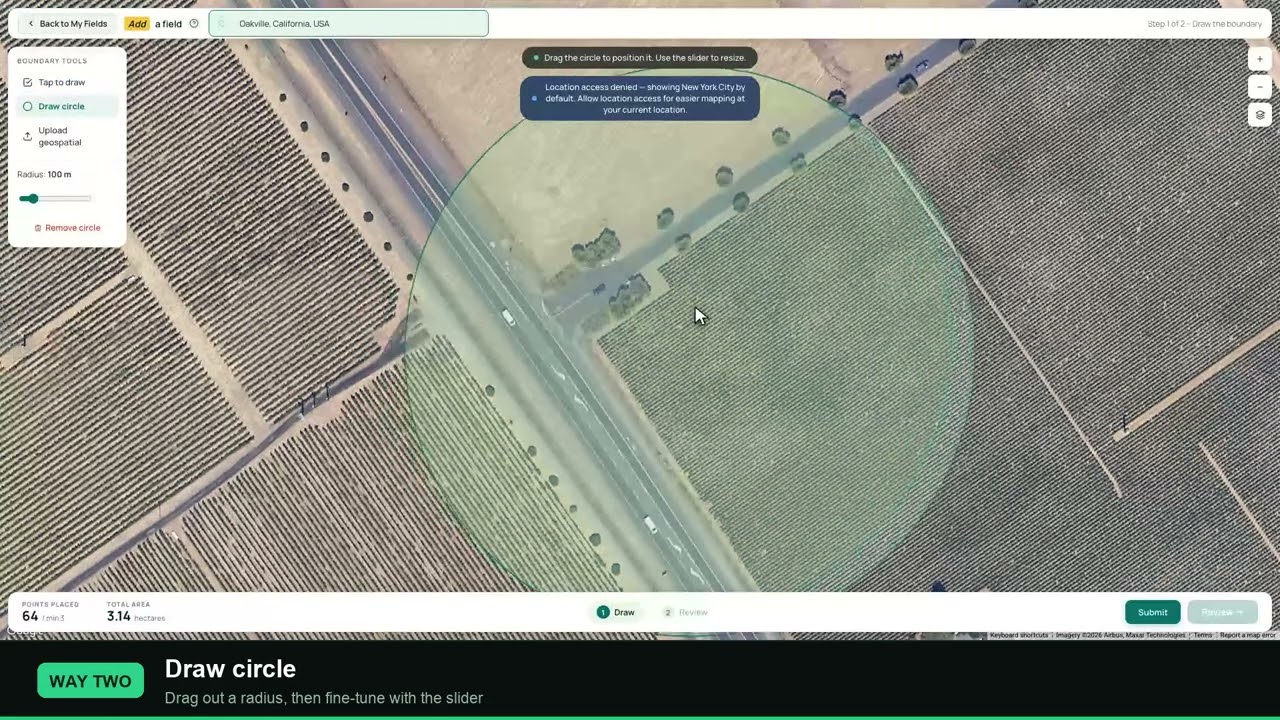
Map each plot, set its crop, and get per-plot irrigation, nutrient and pest guidance from satellite passes over your own ground.
Frequently asked questions
What is a satellite plantation crop advisory and what does it deliver?
It is a per-plot report generated from a satellite pass over that plot’s own boundary, covering a day-by-day irrigation schedule with a recommended delivery method, per-nutrient fertiliser rates with named sources, pest and disease risk with organic and chemical control options, weed pressure, soil pH, organic carbon and salinity, and a yield estimate with a harvest window. On this holding two plots each received their own, producing 64 advisories over 32 acquisition dates.
Why did two adjacent plots on the same soil get different water schedules?
Because the crops differ, not the soil. The oil palm plot was scheduled deep and alternate-day at 6.5–6.8 mm to fill a deeper root zone; the areca plot shallow and near-daily at 4.2–4.8 mm to suit its finer surface root mat. Both plots read pH 6.2 with 0.19% organic carbon, so a soil-driven recommendation alone would have produced the same answer for both.
How much water does drip save over basin irrigation on a plantation?
On these plots the advisory listed both. The oil palm needed 6.5 mm by drip against 9.5 mm by basin — roughly a third less — and the areca 4.5 mm against 6.5 mm. Drip was the recommended method on both, but the basin figure is published alongside so a grower still flooding basins can see what conversion is worth.
Can one account handle oil palm and areca nut together?
Yes, and this holding is the demonstration. The two plots received separate irrigation rhythms, separate nutrient rates — sulphur at 38.4 against 18.9 kg/acre — separate pest lists and separate harvest windows, from a single account monitored on the same satellite passes.
Does it recognise regional pest names like Mahali or Koleroga?
On this account it did. The areca fruit rot was presented as “Mahali (Koleroga/Fruit rot)” — the local vernacular term alongside the standard name — with Bordeaux paste offered as the organic control and copper oxychloride as the chemical option, which is what an areca grower in this region would actually reach for.
Are the pest probabilities confirmed infestations?
No — they are modelled risk scores from satellite indices, weather and regional pest pressure, working as a scouting priority list. Their value here is host specificity: rhinoceros beetle and red palm weevil on the oil palm, Mahali and spindle bug (Carvalhoia arecae) on the areca, and bud rot (Phytophthora palmivora) on both — because bud rot genuinely crosses between the two palms.
Why does the advisory matter more for plantation crops than annuals?
Because the decisions compound. Both plots here are juvenile, in the phase where trunk and frond are being built, and a nutrient shortfall in that phase carries into every year of bearing life afterwards. An annual crop lets you correct next season; a palm does not.
Glossary
- Fresh fruit bunch (FFB)
- The harvested unit of oil palm — a dense cluster of oil-bearing fruitlets weighing up to tens of kilograms. Picked year-round, which is why the oil palm plot has no dormant phase.
- Mahali / Koleroga
- Local names for areca nut fruit rot, a Phytophthora disease that drops developing nuts during the monsoon. Managed preventively with copper, which is why an early probability flag matters.
- Spindle bug (Carvalhoia arecae)
- An areca-specific sap-feeding bug that attacks the unopened spindle leaf, deforming the emerging frond. Does not affect oil palm.
- Rhinoceros beetle
- A boring beetle whose adults tunnel into the palm crown and can destroy the growing point of a young palm outright. One of the two headline oil palm pests on this holding.
- Cogongrass (Imperata cylindrica)
- An aggressive rhizomatous grass that competes with young palms at the root zone and becomes very difficult to remove once it forms a mat. Flagged at 88% on the oil palm plot.
Case-study basis: JEEVN AI plot advisories for a single Farmonaut account, taking each plot’s most recent advisory as of the grower’s feedback submission (portfolio state at 3 June 2026, two plots), plus the account’s in-app feedback submission for the advisory dated 3 June 2026. Crops, region, plot count and area are reported from the account’s own records on the platform; the account holder is named as recorded on his Farmonaut account and precise plot locations are withheld. The reported percentages are the grower’s own estimates from a structured feedback form, not metered or invoiced measurements; the irrigation, nutrient, pest and yield figures quoted are read directly from the two advisories, and the drip-versus-basin comparison uses the alternative quantities the advisory itself lists. Pest, disease and weed percentages are modelled probabilities, not confirmed infestations. Yield figures are estimates, not guarantees. Imagery: the four platform screenshots are genuine captures of this account’s own advisory data; the five wider field photographs are AI-generated illustrative imagery, each labelled as such in its caption, and do not depict the grower or his plots. JEEVN AI is a paid product.
Discussion
Questions, corrections or field experience? Share them below. First-time comments are reviewed before they appear, and your email is never published.
No comments yet. Be the first to add a question or your experience.

 eKGIS
eKGIS Mostas Tech
 AgroStar
 Native Seeds
 Andex
Andex FCF India
 Unifrutti Gulf
 Deluxe Conseil
 TVS Electronics
 BW Pipelines
 WICO
WICO Chimera Innovation
 SkyHarvest
 Polaris Digitech
 Teledarbas
 Licence holder · Niger · Gold










