

Reviewed August 2026 against MarketsandMarkets, FAO AQUASTAT, and USDA FAS.
Agriculture in Japan and Europe: The State of Irrigation Right Now
Japan’s smart irrigation market was valued at $26.6 million in 2025 and is projected to reach $44.5 million by 2030, according to MarketsandMarkets — a compound growth rate driven by a shrinking, aging farm workforce rather than expanding farmland. Europe’s story is different in scale: its drip irrigation market alone was worth $2.2 billion in 2025 and is projected to reach $9.5 billion by 2035, with Southern Europe (Spain, Italy, southern France) accounting for 56.5% of that market, per Business Market Insights and OpenPR. Both regions are converging on the same tool set — soil sensors, variable rate delivery, and satellite-based monitoring — for very different reasons: Japan to offset labor loss on fragmented plots, Europe to comply with water-efficiency rules under drought stress.
This article tracks three things worth checking back on: Japan’s irrigation systems market (growing at 18.70% annually between 2025 and 2033, per IMARC), Europe’s drip irrigation expansion concentrated in its driest regions, and what “targeted irrigation technology” concretely refers to when a supplier or a policy document uses the phrase. Global context matters too — FAO’s AQUASTAT programme puts average global agricultural water use efficiency at $0.69 per cubic metre against an overall global water use efficiency of $21.50 per cubic metre in 2022, and reports a 23% improvement in global water use efficiency between 2015 and 2022. None of these figures are static; each section below names the source and how to pull a fresher number.
Japan’s Agriculture: Why Smart Irrigation Is Growing Fast
A Land-Constrained, Labor-Constrained Sector
Japan’s agriculture in 2026 remains defined by two hard constraints: cultivable land is scarce, and the workforce is aging out. USDA’s Foreign Agricultural Service puts Japan’s rice harvested area at 1.46 million hectares and average annual production at 10.4 million metric tons (five-year average through 2024); wheat harvested area runs about 214,000 hectares over the same period. That is a small, fragmented base to farm efficiently by hand, which is exactly why irrigation automation shows up disproportionately in Japan’s agriculture technology headlines relative to its market size.
The commercial numbers back this up. Japan’s smart irrigation market — sensors, controllers, automated valves — was $26.6 million in 2025, rising to a projected $44.5 million in 2030 (MarketsandMarkets). The broader Japan irrigation systems market, which includes non-smart hardware, is forecast to grow 18.70% per year from 2025 to 2033 (IMARC). A narrower segment, center pivot irrigation systems, was valued at $84.9 million in 2025 and is projected to reach $219.4 million by 2033 (Transpire Insight) — a faster absolute climb than the smart-irrigation segment, suggesting Japanese farms are investing in mechanized delivery hardware alongside sensor layers, not instead of them.
On yield, one figure gets cited more than any other in this space: a 2025 study projection that smart irrigation systems in Japan can lift rice yields by up to 18% compared with traditional flood-and-drain methods (cited via MarketsandMarkets’ Japan smart irrigation report). Treat this as a study projection tied to specific trial conditions, not a guaranteed farm-level result — the report does not specify soil type, cultivar, or region, so the honest use of this number is as an upper bound worth testing against your own plot data rather than a number to plan a budget around.
What’s Actually Deployed on Japanese Farms
- Soil moisture and nutrient sensors feeding real-time irrigation and fertilization decisions, reducing the need for daily manual field checks.
- Centralized scheduling platforms that let a single operator manage water timing across scattered, small plots — Japan’s average farm size is a fraction of the US or EU average, making per-plot manual scheduling impractical at scale.
- Center pivot and drip hardware, the fastest-growing hardware segment by dollar value per the Transpire Insight forecast above.
- Renewable-powered pumps (solar, wind) reducing the diesel and grid-electricity cost of running irrigation on remote or terraced plots.

Watch this tutorial on satellite and AI-driven crop monitoring — the same NDVI/soil-moisture data underlying Japan’s sensor-driven irrigation model is available through Farmonaut’s own platform, accessible via  .
.
For your smartphone, download our 

How to Check Whether These Figures Still Hold
Japan’s rice and wheat harvested-area figures come from USDA FAS’s annual Japan grain reports; the smart irrigation and center pivot market figures are refreshed on a rolling basis by MarketsandMarkets and Transpire Insight respectively. Neither the harvested-area data nor the irrigated-hectare share of that area was available in current published sources at the time of writing — Japan’s Ministry of Agriculture, Forestry and Fisheries publishes irrigation infrastructure statistics separately from the crop-area data cited here, so a reader who needs the exact irrigated share of cultivated land should query MAFF’s statistics portal directly rather than infer it from the market-size figures above, which measure equipment spend, not land coverage.
Europe’s Agriculture Technology News: Drip Irrigation and Water Rules
A Market Concentrated in the South
Europe’s agriculture technology story in irrigation is, in dollar terms, a Southern European story. The European drip irrigation market was worth $2.2 billion in 2025, with a projected climb to $9.5 billion by 2035 (Business Market Insights; OpenPR). Southern Europe — Spain, Italy, and southern France — holds 56.5% of that 2025 market, a concentration that tracks directly with drought exposure: these are the regions where flood irrigation wastes the most water fastest under Mediterranean summer heat, so drip conversion pays back quickest.
Southern Europe’s 56.5% share means the remaining 43.5% is split across Northern, Eastern, and Central Europe — regions where drip adoption is growing off a smaller base as EU water-efficiency reporting requirements extend beyond the traditionally drought-prone south. A farm operator anywhere in the EU applying for sustainability-linked funding increasingly needs to document water usage, soil health, and input levels regardless of region, which is pulling non-Mediterranean farms toward the same sensor and scheduling tools.
Curious how AI powers smart farming in Europe? Watch:

The Jeevn AI Advisory System from Farmonaut offers a similar recommendation layer for farmers adopting these technologies — large-scale farm management tools are available for operations managing multiple fields or client farms across a region.
Solar-Powered Drip and Water Accountability
- Drip systems powered by solar pumps cut both diesel/grid costs and the carbon footprint of irrigation on off-grid or remote plots.
- Digital scheduling reduces the overwatering and runoff that drives fertilizer leaching into waterways — a documented concern along Mediterranean coastlines where nutrient runoff affects coastal lagoon ecosystems.
- Mobile dashboards let a single farm manager act on sensor and weather data without a daily physical field walk.
Documentation matters as much as the hardware here: blockchain traceability tools are increasingly used to record irrigation schedules and input usage as part of the compliance trail EU sustainability funding and export markets expect.
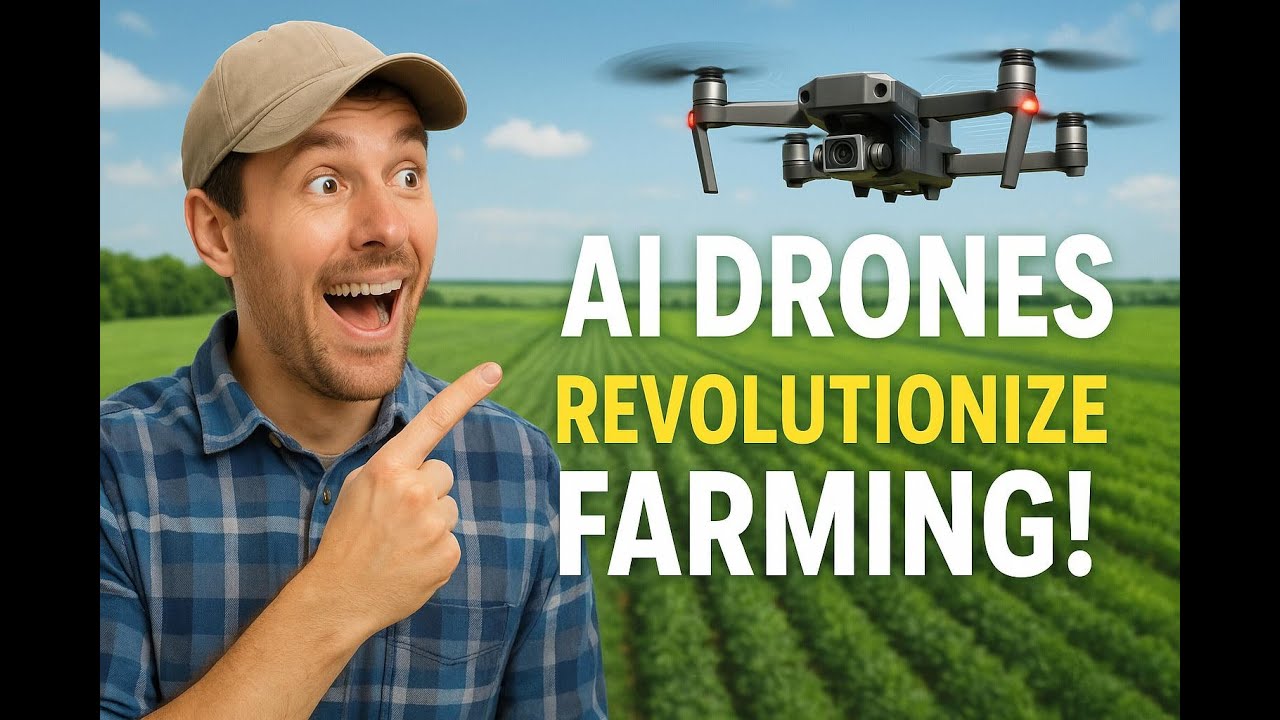
Drone-based scouting reduces the labor cost of monitoring irrigation performance across large or scattered fields — relevant in both European and Japanese contexts, where the underlying constraint (labor availability relative to field count) is the same even though the climate driver differs.
Japan vs Europe: Irrigation Market Size Compared
The two regions are not directly comparable in absolute dollars — Europe’s agricultural land base is vastly larger than Japan’s — but the growth trajectories and drivers are informative side by side. The table below uses only published market-size figures; adoption-rate percentages by individual technology were not found in current sources and are not included here to avoid inventing precision that does not exist.
| Metric | Japan | Europe | Source |
|---|---|---|---|
| Relevant irrigation market, 2025 | $26.6 million (smart irrigation) | $2.2 billion (drip irrigation) | MarketsandMarkets; Business Market Insights |
| Projected market size, later year | $44.5 million by 2030 | $9.5 billion by 2035 | MarketsandMarkets; OpenPR |
| Fastest-growing hardware segment | Center pivot systems: $84.9M (2025) → $219.4M (2033) | Drip irrigation, concentrated in Southern Europe (56.5% share) | Transpire Insight; OpenPR |
| Primary adoption driver | Aging workforce, fragmented small plots | Drought exposure, EU water-efficiency compliance | Sector context, MarketsandMarkets / OpenPR reporting |
| Reported yield/efficiency claim | Up to 18% rice yield increase vs. traditional methods (2025 study projection) | Not published in current sources; verify via national ag ministries | MarketsandMarkets Japan report |
Because Japan’s figures are in millions and Europe’s are in billions, growth rate is the fairer comparison than absolute size: Japan’s irrigation systems market is forecast to grow 18.70% annually (IMARC, 2025–2033), while Europe’s drip segment implies a compound annual growth rate consistent with roughly 15% cited in industry coverage of the same $2.2 billion to $9.5 billion, 2025–2035 trajectory (OpenPR).
Targeted Irrigation Technology: What It Actually Means
“Targeted irrigation technology” is a search term with a precise technical answer: it refers to systems that vary water application by zone within a single field rather than applying a uniform rate across the whole plot. In practice this means Variable Rate Irrigation (VRI) controllers on center pivots or drip lines, driven by soil-moisture sensor grids, satellite-derived vegetation and moisture indices (NDVI, NDWI), or a combination of both feeding a scheduling algorithm.
The economic logic is water-use efficiency, and FAO’s AQUASTAT programme quantifies the gap that targeting is meant to close: global agricultural water use efficiency averaged $0.69 per cubic metre in 2022, well below the $21.50 per cubic metre figure for overall global water use efficiency across all sectors. FAO also reports a 23% improvement in global water use efficiency between 2015 and 2022 — evidence that efficiency gains are happening, but from a base low enough that further targeted-delivery investment has a clear payback case in both Japan and Europe.
Concretely, targeted irrigation technology in a US, UK, or EU farm context usually means one or more of the following layered together:
- Soil-moisture probe networks at multiple depths and field positions, feeding a controller rather than a single farm-wide timer.
- Satellite or drone-derived NDWI to flag under-irrigated zones before visible plant stress — see our guide to irrigation systems for varying terrains for how delivery hardware choice interacts with zone-level targeting on sloped or mixed-soil fields.
- Variable Rate Irrigation controllers on pivots or drip manifolds that adjust flow per zone in real time based on sensor or satellite input.
- Weather-linked scheduling that suspends irrigation ahead of forecast rainfall, reducing both water waste and runoff-driven nutrient loss.
None of this requires guessing at yield outcomes: the 18% rice-yield figure cited in the Japan section above is one study’s projection for one crop under one delivery method, not a universal number for targeted irrigation generally — a US corn or wheat grower evaluating VRI should look for trial data specific to their crop and region rather than applying Japan’s rice figure directly.
Irrigation News Today: How to Track This Story Yourself
Because this article cannot browse the web after publication, here is exactly where the underlying numbers get refreshed and how often, so a reader checking back in six or twelve months can pull a current figure instead of relying on the ones printed here going stale:
- FAO AQUASTAT updates its Core Database annually, typically in the March–April window, covering irrigation water withdrawal, water use efficiency, and irrigated area by country and region. Methodology and access are documented at FAO’s AQUASTAT site.
- Commercial market reports (MarketsandMarkets, IMARC, Transpire Insight, Business Market Insights) publish quarterly updates to smart irrigation and drip irrigation market sizing — search by region and crop segment for the current figure rather than reusing a prior-year forecast.
- USDA FAS publishes Japan grain and oilseed reports covering rice and wheat harvested area and production on a recurring schedule tied to Japan’s planting and harvest calendar.
Two gaps are worth naming plainly rather than papering over: current published sources do not give Japan’s irrigated hectares as a percentage of cultivated area (only total crop-harvested area is available above), and Europe’s total irrigation area equipped in hectares, broken out by country, was not found in the market-size sources used for this article — those sources measure equipment market value, not land coverage. A reader needing either figure should query Japan’s MAFF statistics portal or Eurostat’s agri-environmental indicators directly.
Solar-pump irrigation economics shown here are broadly transferable to the off-grid European farms discussed above, even though the case study itself is outside this article’s US/Europe/Japan scope. Our crop loan and insurance verification technology applies the same satellite-monitoring principle to financing decisions, using field-level data instead of self-reported condition.

France’s drought-response measures are a useful illustration of the Southern Europe drip-irrigation demand this article’s market figures describe — the $2.2 billion 2025 European drip market and its projected path to $9.5 billion by 2035 is, in large part, farms like these converting from flood or sprinkler systems.

Spain sits inside the 56.5% Southern Europe share of the drip irrigation market cited above; nitrate runoff reduction is the secondary environmental benefit that follows from replacing flood irrigation with targeted delivery, alongside the primary water-savings case.
Calculator: Estimate Your Drip Irrigation Water Savings
Use your own field size and current irrigation method to estimate how much water a switch to targeted drip delivery could save, based on the efficiency gap FAO AQUASTAT reports between typical agricultural water use and best-practice delivery.
Assumptions: savings rates (40% from flood, 25% from sprinkler, 12% from poorly-scheduled drip) are illustrative reductions consistent with the efficiency gap FAO AQUASTAT describes between typical and best-practice agricultural water delivery, not a guarantee for any specific field. Excludes installation cost, energy cost of pumps, crop-specific water requirements, and soil type. Use it to compare scenarios, not to size equipment purchases.
Satellite Tools for Irrigation Monitoring: Where Farmonaut Fits
Turning Sensor and Satellite Data Into Irrigation Decisions
The technologies described above — VRI, soil sensors, NDWI-based targeting — all depend on getting field-level data to a decision-maker fast enough to act on it. That is the layer Farmonaut’s platform operates in, for farmers, agribusinesses, governments, and financial institutions:
- Satellite-Based Agricultural Monitoring — multispectral imagery and field data combine to track crop health, soil moisture, and irrigation effectiveness across every field in a portfolio, not just the ones a manager can drive to.
- Jeevn AI Advisory System — plot-level irrigation, fertilization, and weather alerts, the same category of tool referenced in the Japan and Europe sections above.
- Blockchain Traceability — documents the journey of agricultural products; see how traceability improves transparency, sustainability, and trust.
- Fleet and Resource Management — satellite-based fleet management tools help operations optimize field equipment routing and reduce fuel spend.
- Environmental Monitoring — track carbon emissions, water utilization, and ecosystem impacts via the carbon footprinting dashboard.
- APIs for Developers and Enterprises — integrate satellite and environmental data directly: Farmonaut API Portal | Developer Documentation.
For landowners focused on forest advisory or plantation improvement, the same app delivers tailored strategies — explore our forest advisory features.
Real-Time Water Management: Detection to Decision
- NDVI and NDWI indices from satellite imagery pinpoint under-irrigated or stressed fields before a physical walk would catch them.
- Smart irrigation scheduling delivered via mobile dashboard, translating sensor and satellite signals into a specific watering recommendation per zone.
- Blockchain traceability keeps irrigation records tamper-proof for food safety and export compliance documentation.

Large-scale irrigation investment of this kind sits outside Japan and Europe, but the underlying pattern — data-driven scheduling reducing water waste at scale — is the same mechanism described throughout this article.

Satellite-derived NDWI is the common thread linking Japan’s sensor-driven irrigation, Europe’s drip conversion, and the general concept of targeted irrigation technology covered above.
Pricing
Farmonaut’s subscription and API models are built for smallholders, corporates, and government agencies alike. See current plans below:
Frequently Asked Questions
-
What is driving smart irrigation growth in Japan’s agriculture?
Limited arable land and an aging farm workforce. Japan’s rice harvested area is 1.46 million hectares against a five-year average production of 10.4 million metric tons (USDA FAS), a base too fragmented to manage efficiently with manual labor alone. The smart irrigation market response was valued at $26.6 million in 2025, projected to reach $44.5 million by 2030 (MarketsandMarkets).
-
How big is Europe’s drip irrigation market, and where is it concentrated?
$2.2 billion in 2025, projected to reach $9.5 billion by 2035 (Business Market Insights; OpenPR). Southern Europe — Spain, Italy, southern France — holds 56.5% of that market, tracking directly with drought exposure.
-
What does “targeted irrigation technology” mean in practice?
Systems that vary water delivery by zone within a field — Variable Rate Irrigation controllers driven by soil-moisture sensors or satellite indices like NDWI — rather than applying a flat rate across the whole plot. See the dedicated section above for the layered components typically involved.
-
Can smart irrigation really increase crop yields by 18%?
That figure is a 2025 study projection specific to rice grown in Japan under smart irrigation versus traditional flood methods (MarketsandMarkets). It is not a universal figure for all crops or regions — a US or EU grower should look for trial data specific to their own crop before budgeting around it.
-
How does water use efficiency in agriculture compare to the rest of the economy?
FAO AQUASTAT reports global agricultural water use efficiency at $0.69 per cubic metre in 2022, versus $21.50 per cubic metre for overall global water use efficiency — a gap that explains why targeted delivery technology has strong payback potential in farming specifically. Global agricultural water use efficiency improved 23% between 2015 and 2022.
-
Where can I find updated figures after this article was published?
FAO AQUASTAT’s Core Database refreshes annually (typically March–April) at fao.org/aquastat. MarketsandMarkets, IMARC, and Transpire Insight update their Japan and Europe irrigation market reports on a rolling quarterly basis. USDA FAS publishes Japan grain reports on its own recurring schedule.
-
What role does Farmonaut play in irrigation management?
Farmonaut aggregates satellite imagery, AI analytics, and blockchain traceability into one platform so farmers, agribusinesses, and governments can monitor crops, manage irrigation, verify compliance, and document supply chain transparency. Access it via:
.
Enterprise and API access: API portal and developer documentation.
The throughline: Japan’s agriculture is scaling smart irrigation off a small but fast-growing base ($26.6M to a projected $44.5M by 2030) to offset labor scarcity on fragmented plots; Europe’s drip irrigation market is scaling off a much larger base ($2.2B to a projected $9.5B by 2035) concentrated in its driest south. Both trends point to the same underlying tool: zone-level, sensor- or satellite-driven targeted irrigation. For the latest agriculture technology news connecting these regional stories, and for the irrigation hardware choices that interact with terrain, see our guide to irrigation systems for varying terrains.

 Godrej Agrovet
 Hayleys Agriculture
 Linx Agritech
 Adinet
 Save Your Soils
 GalaxEye Space
 Grandstream Algérie
 XOS Realty
 Geospatial Lab Africa
 Agro La Gándara
 HIPSAC
 ZOL Zimbabwe
 Juligerm
 AdBio
AdBio MISE Maroc
 NWNS
NWNS Red August Group
 Farm Inc
 WeMe Global
 Agrotoken
 Blue BearX
 Insignito
 DnCubed
 Indosistim Teknologi
 Liquify Digital
 CU Foods
 BeyondTech Global
 Rouge VC
 AgroRisk
 Oath Inc
 Esri North East Africa
 MDCV UK
 Etech Consulting Madagascar
 Vestlandsforsking
 WB Dev
 Sama Premium
 Tres Valles
 Blickwinkel
 Agricultural Credit Policy Council
 eKGIS
eKGIS Mostas Tech
 Andex
Andex Deluxe Conseil
 WICO
WICO Chimera Innovation
 SkyHarvest
 Teledarbas
 Exurbia Geospatial
 FieldZero
