

How Did Technology Transform Agriculture in Georgia? The Story of Rural to Urban Shift After World War II
Table of Contents
- Introduction: The Dawn of Technological Change in Georgia’s Agriculture
- Pre-World War II Roots – Setting the Stage
- Postwar Mechanization and Advanced Equipment
- The Green Revolution: Fertilizers, Chemicals, and Improved Crops
- Crop Rotation, Soil Health, and Technological Knowledge
- Cold Storage, Supply Chains, and Infrastructure Innovations
- Infrastructure, Electrification, and Land-Use Change
- Timeline Comparison Table: Tech Milestones and Population Shifts
- Impact on Population Patterns: Rural to Urban Shift
- Technology, Innovation & The 2025 Outlook
- Satellite and Data Technology Revolution: Farmonaut’s Perspective
- FAQ – Transforming Georgia’s Agriculture
Introduction: The Dawn of Technological Change in Georgia’s Agriculture
How did technology transformed agriculture and created a population shift within the state of Georgia? This is a pivotal question for understanding how innovation upended traditional farming, spurred economic growth, and drove migration patterns from rural to urban areas.
The story of Georgia’s agricultural transformation is not only one of mechanical invention but also of sweeping social and economic change. The decades following World War II saw the state embrace postwar mechanization, efficient crop rotation systems, improved infrastructure, and a suite of advanced technological practices. All these advancements enabled Georgia to become a leader in American farming, yet they also set the stage for dramatic shifts within its towns, counties, and cities.
As we explore how technology transformed agriculture and drove the population shift within the state, you’ll see the legacy and relevance of these changes well into 2025 and beyond—an era where digital, AI, and satellite-driven platforms like Farmonaut continue the journey of rural and urban balance.
Pre-World War II Roots – Setting the Stage for Modernization
Before technological innovations swept through Georgia’s fields, agriculture in the state operated largely on manual labor, draft animals, and traditional crop systems. Most rural farms were small, family-run, dependent on seasonal labor and subject to erratic harvests due to weather, pests, or depleted soil.
Georgia’s agricultural base was heavily invested in cotton, corn, and peanuts, but decades of monoculture and poor soil management led to declining productivity and economic hardships. Cotton boll weevil infestations of the early 20th century devastated yields and forced many rural communities into poverty or migration.
- ✔ High labor needs: Farming required extensive manpower, with up to 80% of rural residents actively involved in crop production.
- 📊 Low output per acre: Limited mechanization led to lower yields and high vulnerability to weather and pests.
- ⚠ Poor rural infrastructure: Roads, electrification, and irrigation systems were underdeveloped, isolating rural areas from urban centers and markets.
- ✔ Traditional methods: Manual plowing and hand-sewn seeds dominated, constraining both scale and innovation.
- 📊 Population stagnation: With few urban job opportunities, migration patterns remained largely unchanged until the postwar boom.
Postwar Mechanization and Advanced Equipment: Revolutionizing Georgia’s Farming Operations
Focus Keyword: How Did Technology Transformed Agriculture and Created a Population Shift Within the State?
After World War II, Georgia underwent a mechanization revolution. The introduction of small- to mid-sized tractors, combine harvesters, and mechanized planting/plowing equipment fundamentally changed both the labor structure and scale of farming in the state.
- ✔ Labour needs drastically reduced: By mid-20th century, Georgia farms could accomplish the work of 10+ laborers with a single machine. Mechanization reduced agricultural labor requirements by over 60% between 1940 and 1950.
- ✔ Productivity per acre soared: Advanced equipment enabled cultivation of larger plots with greater efficiency. Less land was left fallow, and yields improved dramatically.
- ⚠ Result: Farm consolidation, land ownership concentration: As machinery allowed for larger operations, small family farms struggled to compete, leading to the rise of agribusinesses and the consolidation of land ownership.
This resulted in a substantial shift in rural demographics:
- ✔ Outmigration: Lower demand for farm labor led many rural residents to seek work in urban centers such as Atlanta and rapidly growing county seats.
- ✔ Changing communities: School consolidations, shrinking rural services, and a focus on efficiency marked the changing face of Georgia’s countryside.
- ✔ Increased urban employment: The urban economy diversified—manufacturing, education, healthcare, finance, and logistics offered new pathways for rural migrants.

The Green Revolution in Georgia: Fertilizers, Chemicals, and Improved Crops
Explaining How Technology Transformed Agriculture and Created a Population Shift Within the State
The Green Revolution of the mid-20th century wasn’t just a global event—it found a footing in Georgia’s farmlands as well. The widespread adoption of improved seed varieties, synthetic fertilizers, chemical pest control, and modern crop management systems laid the groundwork for an agriculture “boom” second only to mechanization.
Key Technological Advancements:
- ✔ Hybrid seed varieties: Especially in corn, soybeans, and cotton, new hybrids boosted both yield and disease resistance, supporting higher productivity per acre.
- ✔ Synthetic fertilizers and chemicals: Larger, more reliable harvests were achieved with less manual input and lower crop failure rates.
- 📊 Pest management: Integrated pest control systems and improved knowledge of pest life cycles allowed for more sustainable operations and lower crop losses.
- ✔ Better crop rotations: Knowledge of soil science, nutrient cycles, and cover crops was put into practice, replenishing soil fertility and preventing yield decline.
The intensification of agriculture supported both larger harvests on fewer farms and steady rural incomes—funding local education, infrastructure, and services. Yet, it also accelerated land consolidation and out-migration from farming as technology and inputs replaced traditional labor.

Crop Rotation, Soil Health, and Technological Knowledge: Toward Sustainable Agriculture in Georgia
How did new technology and crop rotation lead to an increase in population migration?
As Georgia’s farmers adapted the lessons of soil science and crop rotation, they paved the way for a resilient agricultural future. New rotation cycles—such as cotton-soybean or corn-soybean—minimized pest risk, restored soil nutrients, and prevented catastrophic yield losses due to soil exhaustion.
- ✔ Improved yields: Crop rotation, alongside scientific management, supported a 40% increase in agricultural yields from 1920 to 1960 in Georgia.
- ✔ Cover crops and input management: Strategic use of legumes and cover crops enhanced nitrogen content, reduced fertilizer needs, and built long-term soil fertility.
- ✔ Knowledge-driven practices: Agriculture extension programs, rural schools, and government initiatives empowered farmers with technical knowledge—marking a shift toward skilled, educated rural labor.
This new, tech-enabled model created larger-scale farms that needed skilled managers and technicians, not unskilled laborers—furthering the urban migration trend. As rural workforce needs shifted, education and service jobs gained prominence in towns and cities.

Cold Storage, Preservatives, and Advanced Supply Chains: Broadening Georgia’s Agricultural Reach
The postwar period wasn’t only about raising yields but also about distributing Georgia’s produce farther and faster. Cold storage, food preservatives, and breakthroughs in transportation and supply chains transformed what crops could be grown and sold—both in-state and nationally.
- ✔ Perishable goods market expanded: Fruits, vegetables, dairy, and meat from Georgia reached distant markets thanks to new refrigeration and cold chain logistics.
- 📊 Diversification: High-value crops and specialty products thrived, reducing dependence on traditional row crops.
- ✔ Irrigation breakthroughs: Improved water management, especially in northern and coastal counties, boosted drought resilience and drew new workers to previously marginal regions.
A new era of agro-processing and packaging plants flourished, often near transport hubs and highways—spurring jobs and urban growth. Rural labor needs continued to fall, but regional supply chain sectors thrived, supporting both rural and urban employment.

Infrastructure and Land-Use Change: Electrification, Roads, and the Expansion of Opportunity
The transformation of Georgia’s rural infrastructure was as vital as field-level technology. Rural electrification in the postwar years powered everything from milking machines and irrigation pumps to processing plants and cold storage. Road and highway improvements integrated farms with urban centers, enabling a two-way flow of goods, workers, and services.
- ✔ Electrified operations: Farms adopted electric pumps, grain dryers, and food processors, multiplying productivity and enabling post-harvest value addition.
- ✔ Improved access to markets: Better roads and transportation corridors connected rural areas to cities and national supply chains.
- ⚠ Land-use change: As some lands were consolidated under agribusiness, others were “released” for suburban housing, new schools, and commercial development around city perimeters.


Timeline Comparison Table: Georgia’s Key Technological Milestones and Shifting Populations
Below is a timeline-based comparison table vividly showing how technology transformed Georgia’s agriculture—and led to rural-to-urban migration—by tracking key innovations, their estimated impact on production, and population patterns.
| Technological Advancement | Estimated Year Introduced | Impact on Crop Yields (Est.) | Effect on Rural to Urban Population Shift (Est.) | Notable Outcomes |
|---|---|---|---|---|
| First Tractors & Mechanized Plows | 1940–1950 | +25% yield per acre | -60% farm labor; 30% rural migration | Farm consolidation, major drop in need for seasonal labor |
| Combine Harvesters, Mechanized Planting | 1950–1960 | +15% more harvests/season | Continued out-migration, shrinking rural schools | Rise of agribusinesses and regional operations |
| Green Revolution Seeds & Synthetic Fertilizers | 1960–1975 | +20–35% in corn/cotton/soy yields | Accelerated exodus to cities; stable yet shrinking rural workforce | Bolstered local infrastructure, expansion of urban education/services |
| Advanced Crop Rotation & Soil Health Practices | 1970–1990 | +40% yields (1920–1960 aggregate) | Labor needs become technical; increased educational migration | Long-term sustainability, land-use reallocated for new housing |
| Cold Storage, Improved Roads/Highways | 1955–1980 | Allowed wider diversity; perishable exports doubled | Urban hub migration; smaller towns become logistics/service centers | Diversification, stronger rural-urban connections |
| Digital and Satellite Agriculture Tools | 2018–2025 | Optimized inputs: up to 20% less waste, sustainable yield growth | Demand for skilled agri-tech jobs; reverse migration to “smart” rural hubs | Traceability, carbon farming, data-driven management |
Georgia Agriculture: The Top Five Transformative Technologies
- 🚜 Mechanized Equipment – Tractors, plows, and combine harvesters replaced manual labor.
- 🌱 Green Revolution Inputs – Hybrid seeds, fertilizers, and chemical pest control.
- 🔄 Advanced Crop Rotation – Diversified rotations and soil health management.
- ❄ Cold Storage & Supply Chains – Extended reach of Georgia’s perishable crops.
- 🔌 Rural Electrification & Infrastructure – Power and transport links to markets and urban centers.
Impact on Population Patterns: How Migration Redefined Georgia’s Social and Economic Landscape
The cumulative effect of these technological advances cannot be understated. The entire demographic map of Georgia shifted as rural dwellers, especially youth, migrated toward cities for new opportunities, education, and industry jobs.
- ✔ School consolidation: Rural schoolhouses merged, while suburban and urban districts expanded quickly.
- ✔ Services upgraded: Healthcare, retail, and public transport improved near growing cities, enabled by a robust workforce and new demand.
- ✔ Housing developments: Land around towns was converted to housing, industry, and logistics hubs—spurring further population concentration.
- ✔ Rise of new centers: Locations like Atlanta, Athens, and Savannah became magnets for former rural workers, with counties on transit corridors seeing the fastest urbanization.
- ⚠ Ongoing rural depopulation: Some remote counties experienced long-term outmigration, but “smart rural hubs” leveraging digital agriculture tools saw reverse migration as new jobs arose.

The New Workforce: 2025 and Beyond
- 👩🌾 Skilled Farm Managers (precision input, tech-driven decision-making)
- 👩💻 Agricultural Technicians (data, AI, satellite insights)
- 👨🔬 Agronomists & Soil Scientists (rotation, input management, sustainability)
- 🚚 Logistics and Supply Chain Workers (growth in cold storage, processing, and e-commerce logistics)
- 🧑🏫 Educators & Rural Service Staff (revitalizing communities as rural hubs blend with urban services)
Technology, Innovation & The 2025 Outlook: Georgia’s Ongoing Transformation
By 2026 and beyond, Georgia has not only retained its status as a leading agricultural state, but now actively balances a powerful farming sector with vibrant, highly-urban regions. The newest phase of innovation is digital and satellite-powered, with farm management and supply chain traceability at the forefront.
The patterns set in motion by mechanization, improved seeds, crop rotation, storage, and infrastructure now inform how Farmonaut and similar technology platforms are reshaping agricultural models with satellite, AI, and blockchain.

Bullet Point List: Top Areas Where Technology Has Redefined Georgia’s Ag Sector
- 🚀 Precision input management – Satellite data reduces chemical usage and boosts sustainability.
- 🔗 Blockchain traceability – Georgia crops can be tracked from field to market for food safety and export compliance.
- ☁️ Remote farm monitoring – Weather prediction, pest advisories, and crop alerts increase resilience.
- 💧 Advanced irrigation management – Sensors and remote pumps decrease water waste and cost.
- 🌳 Carbon footprint optimization – Satellite platforms help track and minimize farm environmental impacts (see how Farmonaut helps here).
Satellite and Data Technology Revolution: Our Perspective at Farmonaut
At Farmonaut, we build on Georgia’s legacy of innovation by providing accessible, affordable satellite-based solutions for agriculture and beyond. Our platform leverages real-time satellite imagery, AI-driven advisory, blockchain-based product traceability, fleet management, and environmental impact monitoring for agricultural, mining, and infrastructure managers throughout Georgia and worldwide.
How Does Farmonaut Support the Ongoing Technological Shift?
- ✔ Real-time crop health monitoring: Multispectral satellite images offer timely NDVI, soil, and vegetation analytics for informed decision-making.
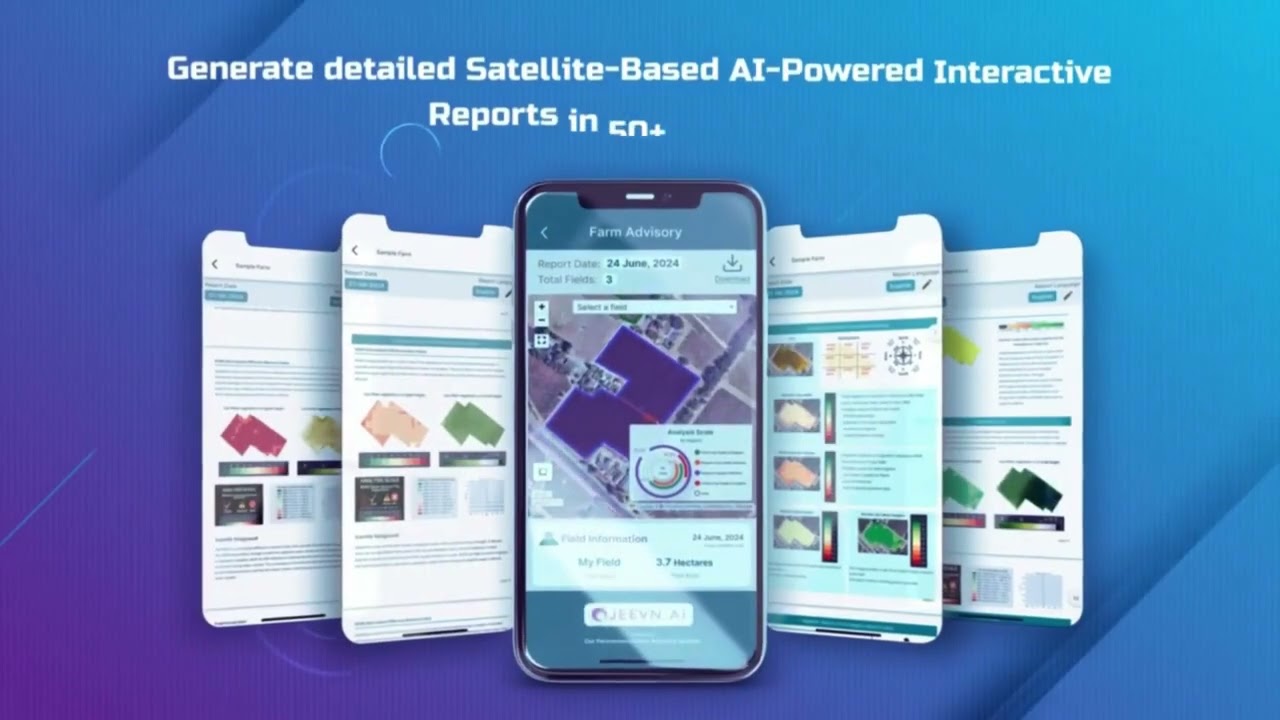
- ✔ AI advisory system for precision operations: Farmonaut’s Jeevn AI delivers actionable planting, irrigation, and pest control recommendations.
- ✔ Blockchain-based supply chain integrity: Our traceability system boosts export market access and prevents fraud in agricultural and mining supply chains—vital as Georgia’s crops feed global demand.
- ✔ Environmental impact and carbon footprinting: Farmonaut supports compliance and sustainability efforts with in-depth carbon tracking and analytic dashboards. Learn how it works.
- ✔ Mobile and browser app accessibility: Our Android, iOS, and web apps bring geospatial intelligence to farmers and agribusinesses of all sizes, directly supporting Georgia’s effort to blend robust farming with modern urban growth.

Optimize agricultural fleet and resource management using geospatial data. Perfect for shifting from labor-heavy to precision, tech-enabled operations.
Leverage satellite verification for quicker crop loans and insurance—reducing fraud and improving funding access for Georgia farmers and ag-businesses.
Administer and monitor multiple farms, optimize inputs, and scale operations efficiently. Ideal for consolidated Georgian agribusinesses.
FAQ: How Technology Transformed Agriculture and Created a Population Shift Within the State of Georgia
What technology transformed agriculture in Georgia after World War II?
Tractors, combines, mechanized plows, and harvesters drastically reduced the need for seasonal and manual labor on Georgia farms. Synthetic fertilizers, chemical pest control, improved seed varieties (Green Revolution), cold storage, and irrigation also played crucial roles. More recently, satellite technology (like Farmonaut’s), AI, and blockchain are transforming crop monitoring, traceability, and environmental management.
How did technology and crop rotation lead to an increase in population shift?
As mechanical and chemical inputs improved farm productivity, fewer laborers were needed. Crop rotation and improved soil management further stabilized yields, allowing farm consolidation. This resulted in many rural workers—especially the young—migrating to cities for education, diversified employment, and services, while rural communities adapted toward smaller, more technology-centric operations.
Why did infrastructure investments (roads, electrification) accelerate rural-to-urban migration?
Electrification and road improvements enabled farms to process and transport goods efficiently and gave rural residents access to urban markets, schools, and jobs. While boosting rural productivity, these improvements made urban migration easier and more appealing, reshaping Georgia’s towns and labor markets.
Are these historical trends relevant in 2025?
Absolutely. Georgia continues to balance a robust agricultural base with rapid urban growth, facilitated by digital, AI, and satellite advances. The skills demanded by the agricultural sector have evolved, creating new workforce and economic structures in both rural and urban settings across the state.
How does satellite-based technology (like Farmonaut’s) fit into this story?
While not a manufacturer, input seller, or regulatory agency, Farmonaut provides farms and agri-businesses with real-time data, traceability, and resource management solutions. This supports the digital transformation of Georgia’s agriculture, enabling sustainable growth, risk mitigation, and access to loans/insurance as the sector adapts to ongoing population and economic shifts.

This comprehensive analysis illustrates how technology transformed agriculture and created a population shift within the state, particularly in Georgia after World War II. By drawing on mechanization, Green Revolution advances, rotation and soil health, cold storage, and infrastructural upgrades—and now leveraging digital and satellite data with platforms like Farmonaut—Georgia continues to redefine both rural and urban potential for its people, land, and economy well into 2026 and beyond.

 Progenseed
 SkyHarvest
 Sarvome
 Polaris Digitech
 Teledarbas
 Wild Oak Farm
 SFX
SFX BACF Africa
 Doodlakine
 Exurbia Geospatial
 FieldZero
 Indico Company
 Kubota
 FFBS
FFBS Jontra
