

How Modern Farming Technology Affects European Agriculture: Precision, Productivity & Sustainability in 2026 and Beyond
“Modern biotechnology has increased European wheat yields by up to 20% in the past decade.”
“Over 60% of European farms now use precision agriculture tools for data-driven crop management.”
Introduction: The New Era of European Agriculture
How does modern farming technology affect European agriculture? The question is at the heart of ongoing transformation in what was once traditional farmland, now a vibrant ecosystem powered by precision, automation, and biotechnology. Today, we see an unprecedented convergence of digital tools, satellite data, smart sensors, robotics, and innovative biological inputs reshaping agriculture across the continent—from the fertile soils of Central Europe to sunny Mediterranean orchards and the vast fields of Northern plains.
Modern farming technology, including biotechnology, drives productivity, resilience, and sustainability, aligning with ambitious EU policy targets and ever-increasing consumer expectations. This shift is not just about producing more—it’s about producing better: less waste, lower input costs, smarter land and water management, and healthier communities and environments in 2026 and beyond.
Key Insight
Modern farming technologies integrate data, AI, blockchain, and sensor networks, giving farmers unprecedented control and foresight over every field, orchard, and livestock operation across Europe.

Why Is The European Context Special?
- ✔ Rich Variety: Diverse landscapes, cropping systems and environmental risks
- ✔ Stringent Policy: The EU Green Deal and Farm to Fork initiatives are global leaders in sustainable agriculture
- ✔ Consumer Focus: High sensitivity to traceability, labeling, food quality, and environmental impact
- ✔ Advanced Infrastructure: Widespread adoption of digital platforms and agtech startups
Pro Tip
If you’re planning to launch or upgrade your farm management system, ensure it integrates with leading satellite platforms and advisory tools to keep up with EU requirements and market access needs.
Focus Keyword Framing
- How does modern farming technology affect European agriculture? By transforming data collection, environmental management, and input efficiency across sectors.
- How does technology affect farming? It streamlines decision making, increases yields, and reduces climate and policy risks for farms large and small.
- How does biotechnology affect agriculture? Modern biotech accelerates breeding, disease resistance, and sustainability—core innovations for 2026.
Precision Agriculture & Digital Farming: Data-Driven Change
One of the most dramatic ways modern farming technology affects European agriculture is through precision agriculture. Digital transformation, driven by satellite and drone imaging, advanced sensors, and farm management platforms is now central from wheat and maize belt to Mediterranean fruit orchards.
The Digital Toolbox
- 📊 Satellite Imaging: Delivers real-time field variability for soil nutrients, moisture, and crop health.
- 📈 Soil Sensors: Measure moisture, nutrients, and pH—enabling precise irrigation and fertilization.
- 🌦 Weather Data Integration: Predicts optimal spraying, planting, and harvest windows to minimize risk.
- 🔗 Integrated Dashboards: Farm advisory networks and agtech startups offer real-time recommendations.
The effect? Variable-rate input application (fertilizers, pesticides, irrigation) reduces overuse while optimizing yield, slashing costs, and protecting rivers and aquifers—especially in vulnerable regions like the Po Valley, the Danube Plains, and groundwater-dependent southern Spain.
- 📊 Data Insight: In 2026, an estimated 80% of European arable farms will be linked to digital management platforms.
- ⚡ Efficiency: Precision technologies deliver up to 25% reduction in fertilizer use and similar declines in pesticide application.
- 🌱 Sustainability: Minimizing input leaching preserves fragile water sources—crucial for satisfying EU water directives.

Visual List: Precision Technologies at Work
- 🛰️ Satellite-guided tractors and sprayers
- 📡 Drone crop scouting and imaging
- 💻 AI-powered dashboards for variable rate mapping
- 🌾 Yield prediction algorithms updated with live sensor data
Common Mistake
Overlooking soil variability: Not all fields respond equally. Precision tools must be calibrated regionally—especially important for staple crops like wheat, maize, and rapeseed to really boost yields and protect soil quality.

How does modern farming technology affect european agriculture? Ultimately, by making every hectare “knowable”, it empowers farmers to make data-driven, sustainable decisions for each crop and season—not just for wheat in France or maize in Hungary, but for fruit and vegetables from Poland to Italy.
Automation & Robotics: Addressing Labor and Efficiency in European Fields
Automation and robotics are at the forefront in addressing persistent labor constraints, increasing consistency, and driving cost reductions across Europe. How does technology affect farming in practical terms? Here’s a snapshot:
Robots at Work: What’s Happening on European Farms?
- Autonomous Weeding Robots: Target weeds with mechanical or micro-dose herbicide application, directly reducing pesticide use and reliance.
- Harvest Facilitators: Robotic arms and pickers work alongside humans to extend harvest windows for delicate fruits—like berries and apples—minimizing waste and spoilage.
- Automated Greenhouses: In Central and Mediterranean Europe, protected cropping now relies on LED lighting, smart HVAC (heating, ventilation, air conditioning), and climate sensors to stabilize fruit and vegetable production, extend growing seasons, and optimize input use.
- 🤖 Labor-saving: Robotics offset growing rural workforce shortages.
- 🎯 Selective Application: Precision robotics limit soil compaction and avoid over-treatment of pests, benefiting both crop health and sustainability targets.
- 🚜 Large Acreage Tools: Mechanized pruning, planting, and weeding are now coordinated by AI for variable-depth, soil-friendly fieldwork.

Investor Note
The automation boom is strongest in the fruit and vegetable segments, with investment pouring into smart greenhouses and field robotics. Watch for Central and Southern Europe leading implementation in 2026–2028.
Visual List: Key Automations in European Farming
- 🤖 Weeding and spraying robots for cereals (wheat, maize, rapeseed)
- 🍓 Harvest robots in berry/fruit orchards
- 🌡️ Automated climate control in Mediterranean greenhouses
- 🚜 AI-based tractor navigation for reduced soil compaction

How does modern farming technology affect european agriculture? Automation doesn’t just save labor—it strengthens Europe’s resilience, ensuring stable food supplies and higher-quality farm produce, regardless of labor market disruptions or unpredictable growing conditions.
Biotechnologies & Data-Driven Breeding: Building Resilience for Climate and Disease
Let’s delve deeper into how does biotechnology affect agriculture—especially as Europe confronts climate volatility, emerging diseases, and shifting consumer expectations.
The Genetics Revolution on European Farms
- 🧬 Genomic Selection: Pinpoints genes for drought, heat, and disease tolerance, accelerating breeding cycles for wheat, maize, and specialty crops.
- 🔬 Marker-Assisted Selection: Shortens the path from crossbreeding to commercial seed, introducing resilience faster across European regions.
- 🧑🔬 Gene Editing (CRISPR, etc.): *Where aligned with policy*, selective editing introduces traits with surgical precision, though adoption is shaped by strict EU governance and consumer vigilance.
In livestock, genomic tools enhance fertility, trace disease outbreaks, and improve feed efficiency—all while supporting animal welfare objectives and policy compliance.
Common Mistake
Assuming all biotech methods are accepted: The EU enforces transparency, labeling, and safety-first frameworks, so only selected vetted technologies reach farms. Traceability and public engagement are key to successful adoption.
- ✔ Shorter Breeding Cycles: New wheat and maize lines in as little as 4–5 years.
- 🌱 More Adapted Varieties: Each microclimate receives crops tailored for resilience and sustainability.
- 🚜 Improved Livestock Health: Genomics support precision animal management and food quality assurance.
How does modern farming technology affect european agriculture? In one word: Resilience. Biotech and genomics help Europe future-proof its fields, orchards, and livestock while ensuring compliance and traceability that retail markets and policy demand.
Biologicals & Sustainable Inputs: Redefining Crop Protection
A profound change in how technology affects agriculture is the pivot from chemical-based to biological crop protection and soil health solutions—meeting both policy targets and consumer labeling expectations.
Sustainable Inputs in 2026: The Biological Toolbox
- 🦠 Beneficial Microbes & Biofertilizers: Improve nutrient cycling, root health, and resilience to soil-borne pathogens. Key for organic and low-input production.
- 🪰 Biopesticides & Pheromone Traps: Target pests without harming beneficial insects, reducing environmental and water risks.
- 🕸️ Integrated Pest Management (IPM): Combines digital scouting with biologicals and targeted chemical use—aligning perfectly with EU pesticide reduction policies.
Key Insight
Connecting digital platforms with biological and climate-smart inputs is essential to meet sustainability labeling and carbon footprint targets across European value chains.
- 🌿 Protected Cropping Sectors: Tomatoes, soft fruit, and leafy vegetables in greenhouses benefit hugely from climate-controlled, biological IPM approaches.
- 🌾 Open-Field Adoption: Precision banding, micro-dosing, and biological blends are increasingly standard on large grain and rapeseed farms.

How does modern farming technology affect european agriculture? By reducing input volumes, decreasing environmental burdens, and differentiating products in the supermarket—especially in high-value, sustainability-labeled segments across Northern and Mediterranean Europe.
Water Management & Soil Health: Core to Sustainable European Farming
Soil and water are the lifeblood of European agriculture. With increasing climate extremes and more stringent EU regulation, smart solutions for soil and water management are central to success.
How does technology affect farming in soils and water?
- 📡 Soil Sensors: Map water holding, nutrient profiles, and organic matter, supporting smarter input use.
- 💧 Smart Irrigation: Drip, sensor-led, and AI-driven irrigation aligns water withdrawals with real-time crop needs and the EU Water Framework Directive.
- 🌱 Conservation Practices: Cover cropping, reduced/no-till, and carbon farming stabilize soils, buffer against drought, and contribute to carbon footprinting goals.
- 📦 Data Platforms: Connect individual farm decisions to catchment, regional, and national targets, uniting field-level action with wider EU policy on sustainability, biodiversity, and water quality.

Pro Tip
Adopt real-time soil and water monitoring—a key advantage for grant schemes and verification of sustainable farm practices in European policy frameworks for 2026 and beyond.
5 Bullet Points: Smart Water & Soil in Action
- ✔ Data-driven decisions for irrigation, fertilization, and conservation align with climate targets
- 📊 Catchment-scale management protects rivers, aquifers, and ecosystems
- 🌱 Soil health tools reinforce carbon storage and long-term fertility
- 🌐 Cloud-based integration links field measurements to policy reporting
- 🔍 Regenerative practices ensure compliance and brand value for European produce
Infrastructure, Value Chains & Traceability: The Digital Backbone
Infrastructure is the silent enabler. How does modern farming technology affect european agriculture? By allowing cloud-based platforms to connect farmers, suppliers, processors, and retailers—seamlessly orchestrating production, quality, and certification across the food value chain.
Digital Traceability & Certification
- 🪪 Blockchain Traceability: From field to retail shelf, product traceability guarantees origin, authenticity, and compliance—crucial for exports, specialty, and organic labeling.
- 🖥️ Cloud Platforms: Enable just-in-time logistics, quality tracking, and real-time certification for sustainable, animal welfare, or geographic indicators.
- 🏬 Logistics Integration: Predicts and coordinates harvest, storage, and delivery windows—especially vital for perishable products like fruit, vegetables, and dairy.
- 📋 Consumer Information: Digital platforms facilitate sustainability labeling, enhancing trust and market access for high-value producers.
Europe’s market dynamics and public policy increasingly require data transparency and digital certification—giving a clear advantage to those embracing these platforms.



Investor Note
The explosion of digital infrastructure in European farming is fuelled by export markets and retail. Tools that verify origin, carbon footprint, and welfare will remain top investments through to 2030.
“Modern biotechnology has increased European wheat yields by up to 20% in the past decade.”
Comparative Impact Table: Technologies Shaping European Farms
| Technology | Estimated Yield Increase (%) | Estimated Reduction in Input Use (%) | Sustainability Impact | Adoption Rate in Europe (%) |
|---|---|---|---|---|
| Precision Agriculture | 10–20 | 15–30 | High | 65 |
| Drones & Satellite Imaging | 8–15 | 10–25 | Medium–High | 55 |
| Biotechnology (Breeding/GM/Genome Editing) | 15–25 | 10–20 | High | 35 |
| Farm Management Software | 5–12 | 12–18 | High | 60 |
| Robotics (Weeding, Harvest, Planting) | 5–10 | 14–22 | Medium–High | 22 |
| Biologicals & IPM | 6–13 | 15–28 | High | 47 |
Regulation & Policy: Navigating Change in Modern European Agriculture
No overview of how does modern farming technology affect european agriculture is complete without policy context. The European Green Deal, Farm to Fork Strategy, and Common Agricultural Policy (CAP) guide every investment—putting sustainability, productivity, and digital modernization at the heart of European agriculture in 2026 and beyond.
Core Features of European Policy Framework
- ✔ Investment Support: Subsidies and incentives for precision farming equipment, digital platforms, and climate-smart practices.
- 📊 Monitoring & Reporting: Farms must document input use, environmental practices, and sustainability progress—literally putting data-driven compliance at the center.
- 🌳 Climate Action: Carbon footprint tools and regenerative agriculture (cover crops, conservation tillage) are increasingly mandatory and rewarded.
- 🛡️ Risk Adaptation: Insurance and satellite-based crop loan and insurance verification use modern technology for efficient payouts and policy design.
- 🔍 Transparency with Consumers: Digital traceability and sustainability labeling answers retail and public demands for food origin and environmental impact.
Key Insight
Modern farming technology is not optional in Europe—for compliance, market access, and profitability, digital and sustainable solutions are now essential for every farm and farmer.
Satellite-Based Solutions by Farmonaut & Their Relevance
At Farmonaut, we believe affordable, accessible, and real-time satellite-driven data is transforming every field, orchard, and livestock operation across Europe. Here’s how our solutions empower farming and allied sectors in line with the European technological revolution:
What Does Farmonaut Bring to European Agriculture?
- ✔ Satellite-Based Monitoring: We provide multispectral imaging to uncover hidden field variability, optimize inputs, and combat crop risks, supporting better management of wheat, maize, rapeseed, and specialty crops at every growth stage.
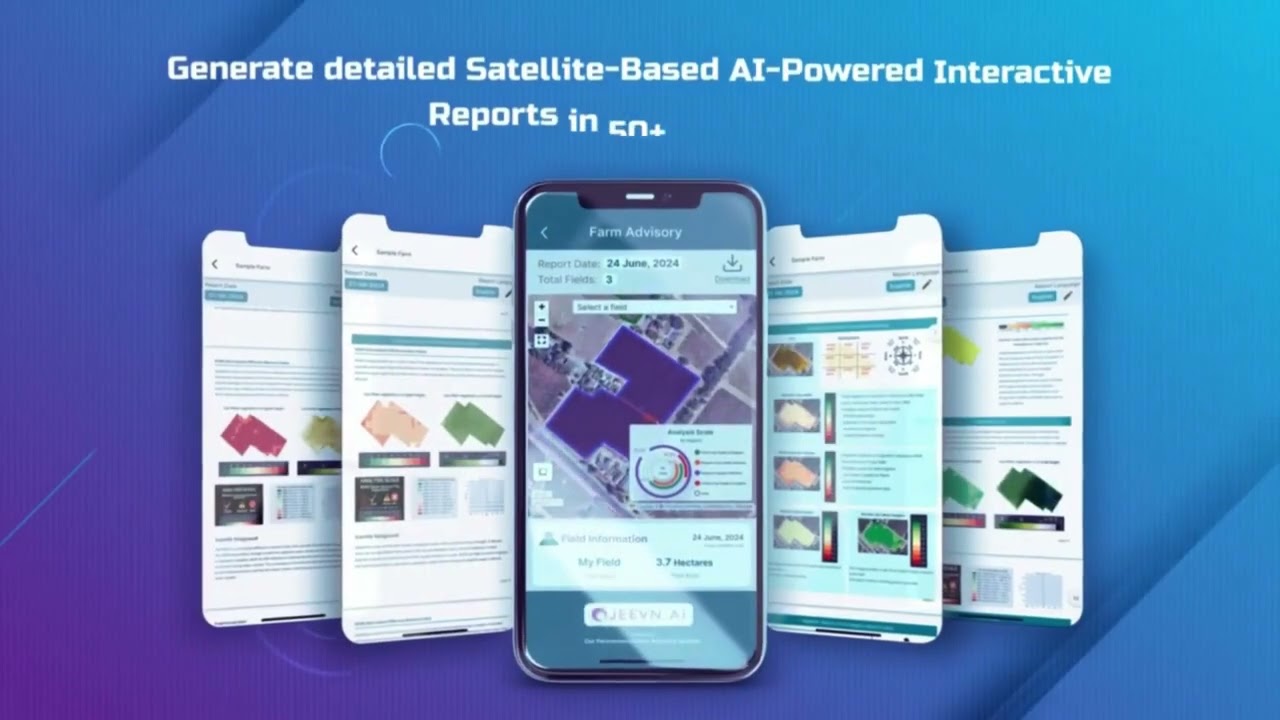
- 📊 AI-Powered Advisory: Our Jeevn AI System integrates real-time weather, NDVI, and crop modeling for up-to-the-minute decision support through web and mobile apps (launch app | Android | iOS).
- 🔗 Blockchain Traceability: We offer secure, transparent farm-to-consumer blockchain traceability tools—aligning with EU expectations for transparency and sustainability labeling.
- 🚛 Fleet & Resource Management: Optimizing farm logistics and machinery use for reduced operational costs and verified sustainability.
- 🌍 Environmental Impact Monitoring: Real-time carbon footprinting and resource impact data help farms comply with climate and sustainability targets.
Pro Tip
Leverage satellite API or integration (see Farmonaut’s API and developer docs) for seamless satellite data in your farming dashboards or agtech products.
- ✔ Scalability: From smallholders to large, multi-regional operations thanks to modular, subscription-based access.
- 🌱 Farm Management, Fleet, and Loan Integration: Farmonaut platforms support fleet management (tractors, harvesters, logistics) and large-scale farm management for coherent, cost-saving operations.
- 💶 Access to Financing: Satellite-based verification streamlines crop loan and insurance qualification and fraud reduction for both farmers and financial institutions.
Key Insight
Satellite platforms democratize access to big data for every farm in Europe—leveling the playing field for sustainability, compliance, and profitability.
Frequently Asked Questions
How does modern farming technology affect European agriculture most significantly?
Precision, data-driven management, and traceable, sustainable production—all enabled by satellite, robotics, and digital platforms—mean more food, better quality, and lower environmental impact.
What are the main technologies used on European farms in 2026?
Precision agriculture (satellite/drones, sensors, robotics), biotechnology (genomics, marker-assisted breeding), biologicals (biofertilizers, IPM), digital traceability tools, and farm management apps/platforms.
How do new policies affect technology adoption?
EU policies like the Green Deal and Farm to Fork Strategy link access to subsidies, markets, and grants to verifiable use of sustainable, digital tools and traceability systems.
Is there resistance to biotechnology in Europe?
Yes—adoption is strictly regulated, especially for gene editing and GMOs. However, proven, safe biotechnologies that support resilience and sustainability continue to expand, guided by transparency and traceability.
Are Farmonaut’s tools suitable for any farm size?
Absolutely. The modular, subscription-based platform is used by smallholders, corporate farms, and governments alike—tailored to diverse needs and scalable as operations grow. Explore more on our main website.
Conclusion: The Future of European Agriculture Is Here
Modern farming technology is transforming European agriculture—across wide fields of wheat and maize, protected greenhouses along the Mediterranean, fruit orchards in Central Europe, and livestock in every region. Technology now empowers farmers to produce sustainably, increase yields, reduce costs, and deliver exactly what policy and the consumer demand: transparency, traceability, and environmental stewardship, all while ensuring resilience against climate and economic risks.
As we move into 2026 and beyond, the question is no longer how does modern farming technology affect European agriculture?—the evidence is clear. The new question is: How quickly will all of us embrace, optimize, and innovate with these tools to shape food futures, environmental targets, and rural prosperity for a changing Europe?
Investor Note
Adopting and scaling digital platforms, satellite solutions, and biotechnology will remain the critical strategic frontier for those seeking long-term profitability, resilience, and regulatory alignment in European agriculture through 2030.
For further insights and actionable tools supporting modern, sustainable, and data-driven European farming, visit Farmonaut’s official website today.

 Godrej Agrovet
 Hayleys Agriculture
 Linx Agritech
 Adinet
 Save Your Soils
 GalaxEye Space
 Grandstream Algérie
 XOS Realty
 Geospatial Lab Africa
 Agro La Gándara
 HIPSAC
 ZOL Zimbabwe
 Juligerm
 AdBio
AdBio MISE Maroc
 NWNS
NWNS Red August Group
 Farm Inc
 WeMe Global
 Agrotoken
 Blue BearX
 Insignito
 DnCubed
 Indosistim Teknologi
 Liquify Digital
 CU Foods
 BeyondTech Global
 Rouge VC
 AgroRisk
 Oath Inc
 Esri North East Africa
 MDCV UK
 Etech Consulting Madagascar
 Vestlandsforsking
 WB Dev
 Sama Premium
 Tres Valles
 Blickwinkel
 Agricultural Credit Policy Council
 eKGIS
eKGIS Mostas Tech
 Andex
Andex Deluxe Conseil
 WICO
WICO Chimera Innovation
 SkyHarvest
 Teledarbas
 Exurbia Geospatial
 FieldZero
