

Copper Raw Material: Key to 2025 Infrastructure Growth
Copper Raw Material: A Critical Resource for Infrastructure and Industry in 2025
“By 2025, global copper demand for renewable energy is expected to rise by 21% compared to 2020 levels.”
- Introduction to Copper Raw Material: The Metal of the Future
- Unique Properties of Copper Making It Indispensable
- Rising Copper Demand in 2025
- Copper in Infrastructure Development
- Copper’s Growth in Energy and Renewable Sectors
- Copper Recycling: A Sustainable Cornerstone
- Sustainable Mining and Environmental Management
- Technology, Innovation, and Copper Raw Material
- Copper Demand and Supply Trends: 2020 vs. 2025
- Copper Across Sectors: Industrial Applications Beyond Infrastructure
- Future Outlook: Copper as a Critical Resource Beyond 2025
- Farmonaut and the Satellite Edge in Copper, Infrastructure, and Mining
- Farmonaut Subscription Plans
- Frequently Asked Questions
- Conclusion
Introduction to Copper Raw Material: The Metal of the Future
Copper, referred to as “the metal of the future,” is a critical raw material influencing numerous sectors globally. Its presence dominates the fabric of infrastructure, energy, and industrial technologies, with 2025 positioned as a pivotal year for its accelerated integration and growth in development projects. As urbanization and technological advancements intensify, copper’s role in ensuring the efficient, smart, and sustainable progress of society remains unquestioned.
In this comprehensive overview, we’ll examine copper’s demand and application landscape in 2025. We’ll explore its irreplaceable properties, expanding use in renewable energy and smart city systems, trends in global supply and recycling, as well as innovations and sustainable mining efforts vital for a resilient future.

Unique Properties of Copper Making It Indispensable
The unique properties of copper make it unmatched among raw materials for infrastructure and industrial applications:
- Electrical Conductivity: Copper tops the charts for electrical conductivity among non-precious metals. This ability allows for minimal energy loss, making copper a prime choice for wiring, grids, and power transmission lines.
- Thermal Conductivity: Copper dissipates heat efficiently, crucial in power generation, renewable energy systems, and electronics.
- Corrosion Resistance: Its resilience against environmental factors ensures long-lasting performance in plumbing, building construction, and outdoor electrical components.
- Malleability and Ductility: Easily shaped without breaking, copper can be formed into wires, sheets, and tubes to fit a variety of industrial and infrastructure applications.
- Recyclability: Copper retains full properties when recycled—making it a linchpin in sustainable material management.
These properties explain why copper is not just present but vital across electric grids, renewable power networks, high-speed communication lines, reliable transportation systems, and modern building construction.
Rising Copper Demand in 2025: A Global Perspective
2025 will escalate copper’s importance as ongoing urbanization, infrastructure expansion, and renewable energy deployment push worldwide demand higher. The International Energy Agency and copper industry reports agree on several driving forces:
- Smart Grid Technologies and city projects expand copper use for enhanced power efficiency, reliable energy flows, and improved telecommunications.
- Electric vehicle (EV) expansion amplifies copper consumption due to greater wiring, motor, and battery needs compared to conventional combustion engines.
- Renewable Energy Technologies such as wind, solar, and hydroelectric systems rely heavily on copper’s conductivity and thermal management.
- Global infrastructure upgrades—especially in rapidly urbanizing economies—continue to utilize copper as a fundamental building material.
- Sustainable recycling and responsible mining practices are increasingly supported by policies to stabilize supply and reduce environmental impact.

Key Growth Statistics for 2025
- Global copper demand is projected to grow by over 3% annually through 2025.
- Renewables and EVs together could account for nearly 50% of new incremental copper demand in major markets.
- Infrastructure projects, especially in Asia, Africa, and the Americas, continue to drive global consumption and mining expansion.
Copper in Infrastructure Development: Building the Future
Copper’s longstanding reputation as a fundamental component in infrastructure development is anchored in its multitude of applications:
- Electrical Wiring & Cabling: Nearly every structure, from high-rise buildings to homes, uses copper wires for efficient, safe energy distribution.
- Power Generation & Distribution Networks: Copper is central to transformers, generators, and transmission systems, supporting stable grids and integrating renewable energy sources.
- Efficient Plumbing Systems: Its corrosion resistance makes copper ideal for drinking water lines, heating pipes, and sanitary infrastructure.
- Telecommunications: Reliable and high-speed copper cables facilitate the expansion of smart infrastructure—from fiber optic networks to data centers and IoT connectivity.
- Transportation: Copper is used in railway electrification, signal systems, charging infrastructure for electric public transit, and smart traffic management.
Copper is the cornerstone for modern, resilient city projects. Smart cities rely on copper-based technologies—sensors, automated controls, and high bandwidth grid networks—to enable safer, more efficient, and more connected living.

Smart Grids and Upgraded Infrastructure
- Smart power grids equipped with advanced copper cabling support stable and optimized energy flows.
- Integrated copper solutions improve load management and peak shaving and enable dynamic integration of intermittent renewable sources.
- Sensor-equipped infrastructure enables predictive maintenance and resource management, key to cost savings and sustainability.
To explore real-time monitoring and integration of satellite-driven infrastructure advisory services, explore Farmonaut’s Fleet Management product—helping optimize logistics, operational efficiency, and equipment safety across infrastructure and construction projects.
“Recycled copper will supply nearly 35% of total raw copper used in infrastructure projects by 2025.”
Copper’s Growth in Energy and Renewable Sectors
Copper’s role as a critical resource for an energy transition is more prominent than ever. As countries intensify global efforts to reduce carbon emissions, copper is central in powering the shift to renewable energy and electrified transportation systems.
- Solar Panels: Copper is used in wiring, inverters, and panel frames. An average solar farm contains hundreds of kilometers of copper wiring.
- Wind Turbines: From turbine generators to high-voltage transmission lines, copper is integral due to its conductivity and mechanical resistance.
- Energy Storage: Batteries and grid-level storage rely on efficient copper conductivity to ensure fast charging and discharging cycles.
- Electric Vehicles (EVs) and Charging Stations: On average, an EV contains up to four times more copper than an internal combustion engine vehicle. Charging infrastructure expansion similarly amplifies copper demand.
With these extensive applications, copper consumption in renewables and electric vehicles is set to accelerate sharply through 2025. Making the copper supply chain more sustainable—via recycling, urban mining, and advanced ore processing—becomes a definitive challenge and opportunity.
Copper Recycling: A Sustainable Cornerstone
In the pursuit of sustainable development, recycling copper raw material emerges as a backbone of the green economy. Thanks to copper’s unique property of being fully recyclable without quality loss, secondary copper now comprises a growing share of total supply. By 2025, recycling is estimated to provide nearly 35% of copper used in infrastructure and industrial projects.
- Urban Recycling: Decommissioned electrical systems, old buildings, and outdated transportation networks provide valuable copper for reclamation and reuse.
- Industrial Scrap: Manufacturing by-products, faulty products, and end-of-life machinery are key sources for high-purity scrap copper recovery.
- Environmental Impact: Recycling copper requires up to 85% less energy than processing raw ore, drastically lowering emissions and environmental footprint.
An emerging best practice is circular economy integration: maximizing copper life cycles through robust collection, processing, and traceability. For insights into supply chain traceability and how satellite and blockchain together promote transparency, visit Farmonaut’s Traceability product page.
Sustainable Mining and Environmental Management
Rising demand for copper places greater scrutiny on the mining industry and the sustainability of raw material extraction. By 2025, the industry is adopting advanced methods to improve ecological outcomes—and Farmonaut’s real-time environmental impact monitoring tools are becoming crucial in this transformation.
- Geopolitical and Environmental Challenges: Issues such as water scarcity, stricter emissions regulations, and land use disputes impact mining operations, particularly in copper-rich regions.
- Sustainable Ore Processing: New hydrometallurgical processes, enhanced ore sorting techniques, and automation reduce waste and limit energy usage.
- Monitoring and Compliance: Environmental monitoring (such as carbon footprint tracking and land remediation) ensures that mining operations align with global best practices.
To discover tools for carbon footprint monitoring and how satellite data enhances sustainable mining decision-making, see Farmonaut’s Carbon Footprinting product overview.
Technology, Innovation, and Copper Raw Material in 2025
The intersection of technology and copper is powering transformational change in industries and infrastructure worldwide. In 2025 and beyond:
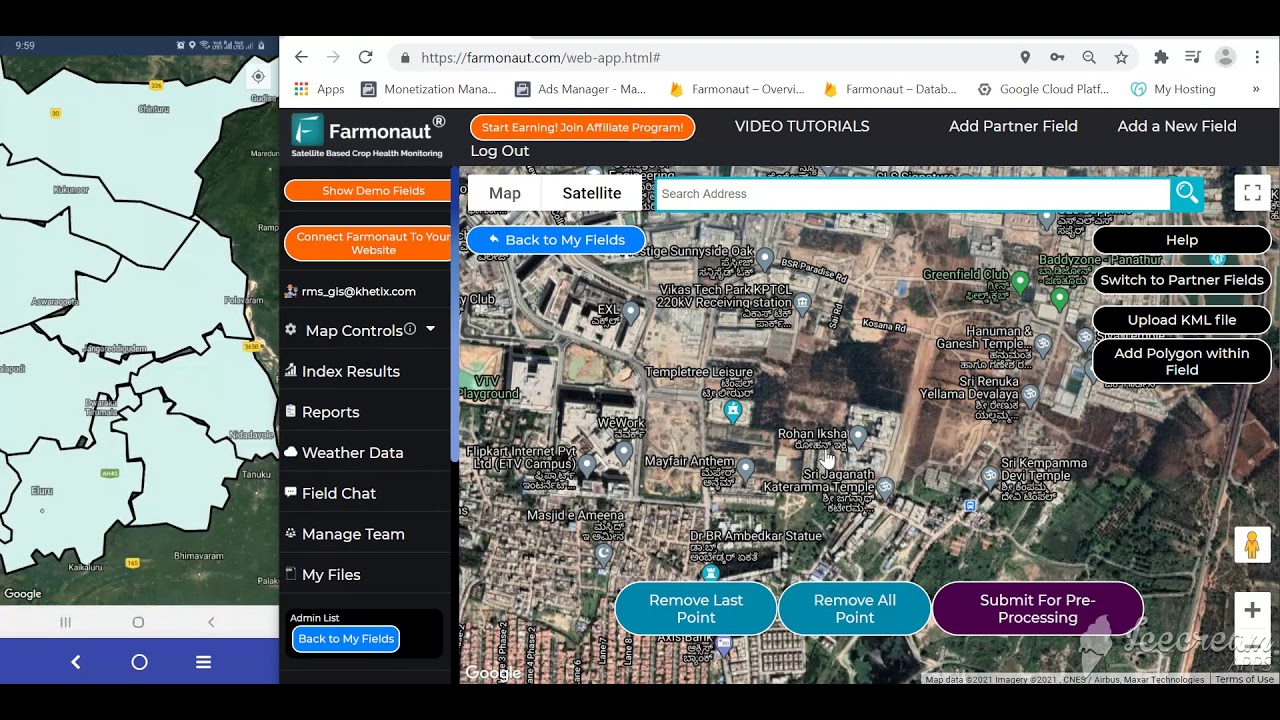
- Satellite & Hyperspectral Monitoring: Advanced satellite platforms (like those utilized by Farmonaut) enable detailed site mapping, operational efficiency, and early detection of environmental impacts at mining locations.
- AI-driven Processing: Machine learning models optimize copper ore extraction, maximizing yields while reducing waste.
- Grid Automation: AI-based smart grid solutions automate energy flow management and grid resilience, further embedding copper’s importance in modern infrastructure.
- Blockchain for Material Traceability: Ensures provenance and ethical sourcing in copper supply chains, building stakeholder trust and regulatory compliance.
Emerging innovations continue to push copper’s applications even further—into sectors like defense, aerospace, and precision agriculture.
Copper Demand and Supply Trends: 2020 vs. 2025 (Estimated)
| Year | Global Copper Raw Material Demand (million tonnes) | Global Supply (million tonnes) | Major Usage Sectors | Infrastructure Share (%) | Recycling Share (Est. %) | Innovations in Use |
|---|---|---|---|---|---|---|
| 2020 | 24.0 | 23.5 | Infrastructure, Electronics, Industrial, Automotive | 30% | 29% | Early adoption of smart grids and moderate recycling technology |
| 2025 (Est.) | 28.9 | 27.4 | Infrastructure, Renewable Energy, EVs, Industrial Tech | 34% | 35% | Widespread EV/RE adoption, AI/ML-driven mining & processing, blockchain traceability, advanced recycling |
| Asia-Pacific | 13.5 (2025 est.) | 13.0 (2025 est.) | Infrastructure, Urbanization, Renewable Energy | 38% | 30% | Smart city grids, large-scale recycling, satellite-enabled monitoring |
| Americas | 8.1 (2025 est.) | 7.9 (2025 est.) | Infrastructure, EVs, Mining Equipment | 35% | 38% | AI-driven exploration, ESG monitoring, urban mining, sustainable processing |
| EMEA | 7.3 (2025 est.) | 6.5 (2025 est.) | Renewables, Industrial Tech, Infrastructure | 28% | 40% | Renewable integration, advanced recycling and AI-powered logistics |
These trends highlight the accelerated growth in copper demand and innovations in supply chain management, mining, and recycling across leading economic regions.

Copper Across Sectors: Industrial Applications Beyond Infrastructure
Copper’s influence as a critical resource extends far beyond infrastructure—it is deeply woven into multiple sectors:
Agriculture & Forestry
- Equipment Manufacturing: Copper alloys are used to produce robust, corrosion-resistant machinery and irrigation systems.
- Soil Management: Copper-based fungicides protect crops while requiring precise management to avoid environmental toxicity.
Mining & Resource Management
- Mining sites themselves depend on copper: from heavy machinery to processing plant wiring and electronic controls.
- Automation and advanced electronics are fueling the demand for high-quality copper across internal mining operations.
Advanced Industrial Technology
- Electronics, Sensors, and AI Systems: Copper is fundamental to semiconductors, printed circuits, and advanced sensors used in manufacturing, defense, and smart city projects.
- Communication Systems: High-speed data transmission relies on copper cabling for low-latency and high-bandwidth performance.
Urban Living and Smart Cities
- Copper-based equipment ensures efficient building management—with smart HVAC, automated lighting, and security systems all using copper wiring and electronics.
- Smart traffic and mass transportation infrastructure use copper for stable signal transmission and vehicle electrification.
To see how modern tech enables smarter management of large areas for agriculture and forestry, check out Farmonaut’s Large-Scale Farm Management App, or access custom crop and forest advisory via Farmonaut’s Crop Plantation & Forest Advisory platform.



For seamless API integration of satellite and environmental insights in mining, agriculture, or infrastructure platforms, use Farmonaut’s API. Development resources are available at our API Developer Documentation.
Future Outlook: Copper as a Critical Resource Beyond 2025
Copper, beyond 2025, will remain not only a critical material for continued development but also a strategic asset in meeting the dual aims of economic growth and global sustainability. The momentum behind infrastructure, renewables, digital technologies, and the electrification of transportation will keep copper consumption high, while innovations in mining, circularity, and environmental monitoring expand opportunity and responsibility.
- Integrated “smart infrastructure” and new energy paradigms mean copper’s role is continuously evolving.
- Technology adoption (AI, IoT, blockchain) ensures supply chain traceability and resource optimization.
- Recycling, eco-design, and advanced materials management will further decouple growth from raw material extraction, supporting a true circular economy in copper.
- Stakeholders—from miners and engineers to policymakers and sustainability officers—must collaborate for ethical sourcing, regulatory compliance, and resilient supply chains.
For satellite-driven environmental monitoring, carbon management, and digital traceability tools supporting sustainable resource development, review Farmonaut’s Product Traceability page.
Farmonaut and the Satellite Edge in Copper, Infrastructure, and Mining
At Farmonaut, we believe technology will shape the future of copper, infrastructure, and resource management. Our satellite solutions deliver:
- Satellite-based monitoring of mining and infrastructure sites using AI and multispectral imagery for resource optimization and risk management.
- Real-time advisory for environmental compliance and operational efficiency.
- Blockchain-based traceability to ensure raw material authenticity and sustainable supply chains.
- Fleet and equipment management for mining, construction, and agricultural businesses seeking efficiency and safety improvements.
- Cost-effective, scalable services—accessible via web, Android, iOS, and API platforms—to democratize insights across sectors.
Our subscription-based plans support government, business, and individual users aiming to harness advanced monitoring, carbon footprint tracking, and circular economy practices for copper and other vital commodities.
Frequently Asked Questions
-
Why is copper considered a critical raw material for 2025?
Copper’s unmatched electrical conductivity, corrosion resistance, and recyclability make it vital for infrastructure, renewable energy systems, smart grids, electric vehicles, and advanced industrial technologies—sectors that will see unprecedented growth and innovation by 2025. -
What drives the rising demand for copper raw material?
Key drivers are infrastructure upgrades, renewable energy expansion, EV and battery growth, urbanization, and the ongoing push toward smart, connected systems globally. -
How does copper recycling contribute to sustainability in infrastructure?
Recycled copper maintains its properties, reducing the need for virgin mining. Recycling uses significantly less energy and helps lower the environmental footprint of infrastructure projects. -
Can new technologies ensure sustainable copper supply?
Yes—AI-driven exploration, remote satellite and hyperspectral monitoring, smart mining practices, and blockchain traceability all boost efficiency, environmental management, and transparency in copper sourcing and use. -
How is copper used in smart grid and city projects?
Copper enables efficient power transmission, advanced sensor networks, and reliable communication lines, supporting optimized energy flows and system integration required for smart urban living. -
Does Farmonaut sell copper or industrial equipment?
No. Farmonaut is a satellite technology provider offering monitoring, advisory, and resource management solutions across various sectors including agriculture, mining, and infrastructure. We do not manufacture or sell physical commodities or machinery. -
Where can I monitor carbon emissions and promote sustainable mining practices?
You can leverage Farmonaut’s carbon footprint monitoring platform for actionable, satellite-driven emissions data and reporting. -
What apps or APIs are available for copper mining or infrastructure monitoring?
Farmonaut provides mobile and web apps, as well as developer APIs for integrating satellite insights into operational systems. See links above for app downloads and API access.
Conclusion: Copper Raw Material – The Cornerstone for 2025 Infrastructure Growth
Copper’s importance as a raw material will only intensify through 2025 and beyond. The infrastructure and energy transition require resilient, efficient, and smart solutions—requirements copper uniquely fulfills. Its applications in wiring, transportation, power networks, and industrial technology make it the bedrock of modern development.
Ensuring ethical, sustainable supply—via advanced mining, recycling, and material management innovation—will help balance economic growth with environmental stewardship. Technology—satellite monitoring, AI advisory, and blockchain traceability—will support progress for all stakeholders pursuing resilient and sustainable development.
As we move forward, integrating robust resource management solutions like those from Farmonaut ensures a smarter, more efficient, and responsible future for copper and infrastructure worldwide.

 Berks Gold Limited
 Mwerezi Minerals Company Limited
 Congo Mining Solutions
 Mining SARL
 SenGold Invest SAS
 Sania Corporation
 Sean Mining Limited
 NTS Group (Pty) Ltd
 Mine4Africa
 Lithspo Minerals Limited
 Tintina Mining Group
 Dalgety Minerals Pty Ltd
 Vortex Minerals Pty Ltd
 Faith At Work (Pty) Ltd
 Geotech Mining Solutions plc
 Vulcan International Limited
 Kidepo Associates
 GKY Mining
 Alkimy SARL
 Double A Trading
 GemSprout Metals Limited
 Qader Group
 Ileys General Trading
 SG Gold Mining LLC
 VRV Global Pte Ltd
 Omsri International FZE
 G.I.T.T.
 Jaunita Erss Ltd
