

2023 Global Copper Demand Million Metric Tons Trends: Insights for 2025 and Beyond
“In 2023, world refined copper usage reached about 26.6 million metric tons, fueled mainly by infrastructure, energy, and industrial expansion.”
Table of Contents
- 2023 Global Copper Demand Overview
- Key Drivers of Copper Demand
- Regional Patterns in Copper Demand
- Sectoral Trends: 2023 Global Copper Demand Million Metric Tons
- Comparative Table: Year-wise Sectoral Global Copper Demand (2022–2025)
- Implications for 2025 and Beyond
- Technological Innovations & the Copper Industry
- Satellite Technology & Resource Management: Farmonaut’s Role
- Supply Dynamics & Emerging Challenges
- Sustainability & Green Copper Initiatives
- Conclusion: The Ongoing Relevance of Copper in Modern Industry
- Frequently Asked Questions (FAQ)
2023 Global Copper Demand Million Metric Tons: Overview
The 2023 global copper demand million metric tons became a focal point for industry analysts, policymakers, and resource managers worldwide. According to leading industry reports, world refined copper usage in 2023 was about 26.6 million metric tons, according to the International Copper Study Group. This sustained and robust demand reflects copper’s critical role in infrastructure, energy, defence, mining, and smart technology sectors.
- Copper stands out for its exceptional electrical conductivity, corrosion resistance, and versatility—qualities making it indispensable for modern applications.
- The metal is fundamental in infrastructure modernization, renewable energy, telecommunication networks, manufacturing, and national defence capabilities.
- Economies leading in copper consumption include China (the world’s single largest consumer), the United States, and the European Union. These regions accounted for a significant share of the total million metric tons consumed.
Understanding the dynamics of copper demand in 2023 offers vital insights for forecasting its role in 2025—especially for sectors such as infrastructure, strategic industries, mining, and renewable energy.

Key Drivers of 2023 Global Copper Demand Million Metric Tons
The expansion of copper use in 2023 was driven by multiple, interlinked forces that are shaping the global economy and industrial priorities. Let’s explore the most significant contributors.
Worth reading next: USGS 2024 Copper Mine Production: 22M Tons Explained
1. Infrastructure Modernization and Expansion
- Nations worldwide have prioritized upgrading infrastructure—with a focus on urbanization, sustainable growth, and resiliency in the face of climate and technological shifts.
- Copper plays an indispensable role:
- Used in electrical wiring, plumbing, telecommunication networks, power grids, and transformer systems, copper’s exceptional conductivity and longevity make it the preferred material for these applications.
- Infrastructure modernization initiatives, particularly in burgeoning urban centers of China, India, Brazil, and Southeast Asia, led to a robust rise in copper demand.
- Governments and utilities heavily invested in upgrading and expanding distribution networks to enhance efficiency—driving the need for large volumes of copper cables and components.
2. Renewable Energy Transition & Demand
- The global energy sector’s swift pivot towards renewable sources like solar power, wind, and energy storage has propelled copper demand to new heights.
-
Why copper is indispensable for renewables:
- Solar panels, wind turbines, inverters, energy storage systems, EV charging infrastructure—all require substantial copper content to assure conductivity, reliability, and sustainability.
- The push for green infrastructure and global net-zero commitments have amplified the strategic importance of copper as an industrial metal.

3. Defence and Telecommunications
- Defence sectors rely on copper for mission-critical systems: advanced radar, missile guidance, secure communication networks, and resilient military hardware.
- Given heightened geopolitical risks and increasing defence budgets across major economies, copper demand in these strategic sectors remains robust and sustained.
4. Electric Vehicle (EV) Expansion and Charging Infrastructure
- The electrification of transportation—from private EVs to mass transit—accounts for a fast-growing share of planetary copper consumption.
- EVs contain three to four times as much copper as ICE vehicles, primarily for batteries, wiring, and power electronics.
- Infrastructure deployment for EV charging networks intensifies copper use across urban, suburban, and rural projects alike.
5. Ongoing Industrial Growth and Manufacturing
- Global industrial manufacturing—spanning construction, consumer electronics, automation, robotics, and more—has seen a steady surge in copper demand.
- As developing economies mature and urbanize, their appetite for copper-intensive appliances, electronics, and industrial machinery continues to grow.

Regional Patterns: Global Copper Demand, Consumption, and Expansion
The 2023 global copper demand million metric tons was distributed unevenly across key regions, mirroring stages of industrialization, population growth, and policy initiatives.
- China: With apparent refined usage of more than 15.5 million metric tons in 2023, China was the world’s single largest copper consumer. Its persistent infrastructure expansion, urbanization projects, industrial manufacturing growth, and renewable energy installations accounted for more than half the global copper demand.
-
United States & European Union: Both are large but far smaller users than China, driven by:
- Modernizing ageing infrastructure (bridges, transportation networks, tunnels, smart grids, water systems).
- Accelerated renewable energy deployment (solar farms, wind parks, grid-scale storage), as governments increased investment in sustainable projects.
- Strategic sectors: Including defence, advanced manufacturing, and technology innovation.
-
Other Developing Economies:
- Nations across South America (notably Chile and Peru), Africa, and Southeast Asia enhanced copper usage to power infrastructure development, mining sector expansion, and energy system upgrades.
- An emerging trend is the increasing investment in refining and smelting capacities to capture more value locally.

Summary: China remains the leader in copper consumption, but developed economies and fast-growing regions now compete for future supply.
“By 2025, global copper consumption is projected to further rise, reflecting ongoing trends in construction and renewable energy sectors.”
Sectoral Trends: 2023 Global Copper Demand Million Metric Tons
The demand dynamics for copper in 2023 varied by application segment, portfolio of projects, and market maturity. Let’s break down the key sectors accounting for significant copper use:
-
Infrastructure, Smart Grids, and Transportation Networks
- In 2023, infrastructure modernization and expansion remained the largest driver of copper demand globally.
- Use cases: Power distribution grids, metro and high-speed rail, bridges, smart buildings, underground cabling, airports, and data centers.
- Key characteristic: High volumes of copper wire, pipes, cables, and connectors due to superior conductivity and corrosion resistance.
-
Renewable Energy, Storage, and Green Technologies
- Renewables—including wind, solar, and storage—propelled copper use as decarbonization efforts escalated.
- A single utility-scale solar farm or wind installation can consume thousands of tons of copper for wiring, transformers, inverters, and associated systems.
-
Electronics, Information Technology, and Smart Devices
- PCs, smartphones, data centers, IoT infrastructure, 5G networks, industrial automation—all rely on copper components for advanced electrical conductivity.
-
Automotive and EV Sectors
- EV deployment, battery manufacturing, and broader automotive electrification further escalated the global copper demand in 2023.
-
Other Sectors
- Machinery, plumbing, construction, defence, and specialized industrial applications round out the copper demand portfolio.

Comparative Table: Year-wise Sectoral Global Copper Demand (2022–2025)
The following table offers a clear, at-a-glance comparison of global copper demand by key sector for 2022, 2023, and 2025 (estimated). With focus on infrastructure, energy, electronics, automotive, and other sectors, this format highlights the evolution of global consumption patterns and spotlights 2023 sectoral figures, crucial for industry and investor insights.




Enhance your resource management and project monitoring with Farmonaut’s web and mobile satellite platforms: Real-time monitoring, AI-powered analysis, and blockchain-based traceability for agriculture, mining, energy, and infrastructure projects worldwide.
Global copper supply and demand in numbers
The International Copper Study Group (ICSG) publishes the standard world balance. Its latest table (preliminary data through July 2026) shows use rising every year since 2022 (ICSG, World Refined Copper Production and Usage Trends).
| Thousand tonnes copper | 2022 | 2023 | 2024 | 2025 |
|---|---|---|---|---|
| Mine production | 21,904 | 22,346 | 22,955 | 23,205 |
| Refined production | 25,278 | 26,508 | 27,414 | 28,663 |
| Refined usage | 25,857 | 26,642 | 27,420 | 28,200 |
| Refined balance | -579 | -134 | -6 | +463 |
| LME price, average (US$/t) | 8,797 | 8,478 | 9,147 | 9,945 |
In January to July 2026, refined usage was 2.5% higher than a year earlier, and the LME cash price averaged US$13,152 a tonne. Secondary copper made from scrap reached 18.7% of refined output in 2025.
China is the largest user by far. ICSG put its 2023 apparent refined usage at more than 15.5 million tonnes, over half of world demand (ICSG World Copper Factbook, via ScrapMonster).
Implications for 2025 and Beyond: The Future Role of Copper
The trends revealed in 2023 are more than just current facts—they signal the direction of copper’s global relevance and resource dynamics out to 2025 and beyond.
Key Drivers Shaping Copper Demand Through 2025:
-
Sustained Infrastructure Investment:
Major economies and emerging markets are scaling up their commitment to resilient and sustainable infrastructure, from smart cities and airports to next-generation energy and data networks. This sustained investment will further boost demand for copper in utility grids, public transportation, and communication sectors. -
Growth in Renewable Energy and Electrification:
- The expansion of solar, wind, battery, and EV deployment is expected to accelerate, requiring even greater volumes of copper for system cabling, transformers, connectors, and storage installations.
-
Defence and Critical Applications:
As nations address geopolitical uncertainty and strive to secure high-performance military and communication systems, copper remains strategically critical. -
Technological & Digital Transformation:
Breakthroughs in smart devices, Cloud/Edge computing, IoT, and industry digitalization mean more copper-intensive hardware, driving further demand from electronics and IT sectors. -
Urbanization in Developing Economies:
- Rapid urban growth in Africa, Southeast Asia, and Latin America will drive metallurgical investment, large-scale infrastructure, and housing projects, each dependent on copper wiring, plumbing, and power components.
-
Supply-side Constraints:
- Due to resource nationalism, regulatory evolution, and ESG-driven mining practices, supply may at times lag behind demand, influencing price volatility.

2025 projection: ICSG preliminary data put world refined copper usage at about 28.2 million metric tons in 2025—with infrastructure, renewables, and electrification as leading sectors. Sustaining this growth requires innovative approaches to resource management, extraction efficiency, and recycling initiatives.
Global copper demand forecast
Near term. In its 2026 forecast (reported June 2026), ICSG expects world refined copper usage to grow 1.6% in 2026 and 2% in 2027. It sees Chinese demand up 1.9% in 2026 and the rest of the world up 1.3%. Refined output is forecast to rise only 0.4% in 2026, because concentrate supply is tight, then 3% in 2027. Mine output is forecast to grow 1.6% in 2026 and 2.3% in 2027. On those numbers the market shows small surpluses: 96,000 tonnes in 2026 and 377,000 tonnes in 2027 (ICSG forecast, via IndexBox).
Long term. The International Energy Agency is more cautious about supply. Its Global Critical Minerals Outlook 2025 says the current mine project pipeline points to a possible 30% copper supply shortfall by 2035. It cites falling ore grades, rising capital costs, few new discoveries and long lead times (IEA).
So the two views are consistent. Supply roughly keeps pace through 2027, but the gap opens later if new mines are not built in time.
Technological Innovations & the Copper Industry: Trends and Efforts
The future of global copper demand will be shaped by technological advancements in extraction, processing, sustainability, and data-driven resource management:
- AI and Satellite Monitoring: Precision mapping of mineral deposits and infrastructure integrity—leveraging space-based analytics—enables optimized exploration and operational risk mitigation.
- Blockchain-Based Traceability: Ensures authenticity and transparency in copper supply chains—from the mine to refineries to end-users. This builds trust among buyers and supports responsible sourcing mandates for electronics, automotive, and green energy industries.
- Advanced Metallurgy: Novel smelting and recycling processes increase copper recovery, reduce waste, and lower emissions—vital for meeting ESG goals.
- Resource Management Platforms: Satellite-driven tools help mining operators monitor environmental impact, track resource depletion, and guide sustainable extraction (see more below in Farmonaut’s Role).
Integrate real-time satellite and resource data into your industry workflows with the Farmonaut Satellite API.
For developers: Get started with detailed technical guidance at Farmonaut API Developer Docs.
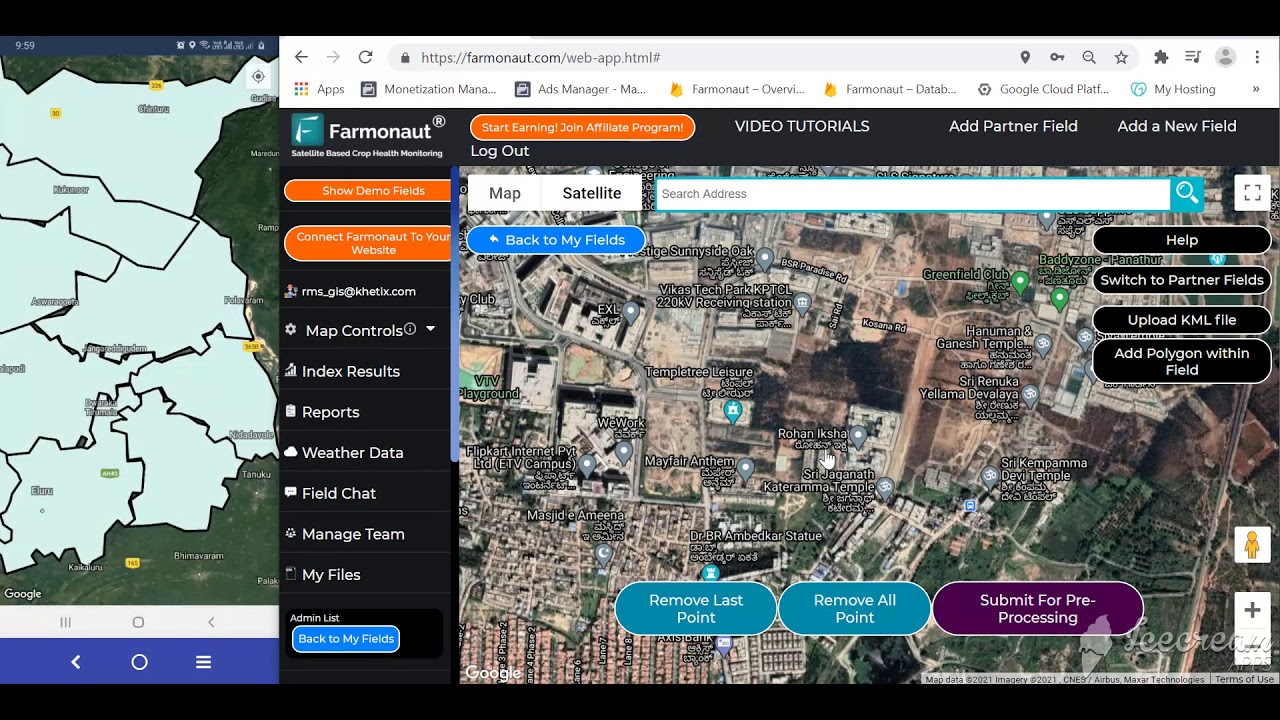
Satellite Technology & Resource Management: Farmonaut’s Role in Mining, Infrastructure & Defence
As global copper demand continues to climb, real-time insights, traceability, and environmental stewardship are crucial for industry leaders and policymakers. At Farmonaut, we offer transformative, satellite-based solutions to support sustainable mining, infrastructure, and defence strategies worldwide.
- Satellite-Based Monitoring: Our multispectral satellite imagery unlocks detailed monitoring of mining zones, infrastructure projects, and agricultural lands. Mining operators and government agencies use these insights for resource allocation, environmental risk management, and operational efficiency—supporting responsible copper extraction and infrastructure modernization.
- AI and Jeevn Advisory System: By integrating AI-driven analytics, we provide real-time, actionable intelligence for mining operations, defence logistics, and infrastructure health monitoring.
- Blockchain-Based Traceability: Our traceability platform secures the authenticity of mining supply chains, ensuring regulatory compliance and minimizing fraud—a vital concern in the copper industry, where provenance matters for global buyers.
- Environmental Impact Tracking: Using satellite data, we help mining and infrastructure stakeholders monitor carbon footprint and environmental compliance—advancing their sustainable development goals.
- Fleet and Resource Management: Our fleet management tools optimize logistics for mining and infrastructure operations, reducing costs and boosting project timelines.
- Loan and Insurance Verification: With the crop loan and insurance module, satellite-based verification is available for mining sites, improving access to finance and lowering fraud risk for financial institutions.
Our core mission: To provide affordable, scalable, and innovative satellite solutions to make informed decisions on resource management and industry modernization—supporting the world’s critical copper supply chains.
Supply Dynamics & Emerging Challenges
While copper demand forecasts to 2025 are broadly positive, several challenges may shape both supply and pricing:
- Geopolitical Risks: Political instability, sanctions, and trade policy shifts in major mining countries (e.g., Chile, Peru, DRC) can disrupt global production flows.
- Resource Nationalism: Governments are increasingly seeking to maximize domestic value and regulate copper exports, impacting global supply chain fluidity.
- Environmental Regulation: Heightened environmental and safety standards affect mining project timelines, permitting, and operational costs—sometimes limiting new capacity coming online.
- Price Volatility: Fluctuations in global demand, speculative investment, and supply chain blockages contribute to sharp price changes—making long-term planning and investment riskier.
- Technical Limitations: As mines mature, ore grades often decline, raising extraction costs and requiring technological innovation.
- Substitution & Recycling: While recycling rates are rising and alternatives like aluminum are considered for some uses, copper’s unique conductivity and durability mean total demand is unlikely to decrease substantially.
Sustainability & Green Copper Initiatives
The need for sustainable copper production spans all sectors:
- Green Mining Principles: Emphasis on reducing energy use, water consumption, and environmental footprint across copper supply chains.
- Recycling and Secondary Supply: Increasing the use of secondary, recycled copper material helps meet demand while conserving resources.
- Traceability and ESG Compliance: Traceability solutions (like Farmonaut’s) address regulatory and consumer pressure for responsible sourcing, especially in electronics, renewable, and automotive industries.
- Efficient Project Monitoring: Using large scale field management apps such as Farmonaut’s, companies and governments can monitor and manage mining and infrastructure projects with less cost and greater compliance.
- Climate and Impact Tracking: Carbon footprint data supports the push for greener manufacturing and construction practices—reducing the climate impact per ton of copper produced or consumed.
Conclusion: The Ongoing Relevance of Copper in Modern Industry
Copper’s role as a foundational metal remains central to the world’s modernization and industrial ambitions. The 2023 global copper demand million metric tons milestone reveals both the scale and scope of copper’s relevance in infrastructure, mining, defence, and energy sectors. As we advance toward 2025 and beyond:
- Infrastructure, renewable energy, and technology applications are set to lead further increases in copper demand, which reached about 28.2 million metric tons of refined usage in 2025 (ICSG).
- Supply chain resilience, sustainability, and transparency must remain top priorities for governments and industry leaders.
- Technological innovation—such as satellite-based monitoring, AI analytics, and blockchain traceability—will continue to transform copper extraction, consumption, and end-to-end value chains.
- Companies and countries embracing new digital and green tools will be best positioned to manage the opportunities and risks presented by the world’s accelerating copper appetite.
At Farmonaut, we are committed to empowering stakeholders with affordable, advanced, and accessible satellite-driven solutions to ensure the efficient, transparent, and sustainable management of critical resources like copper across all major industries.
Frequently Asked Questions: 2023 Global Copper Demand Million Metric Tons & Industry Trends
Q1: What was the estimated global copper demand in 2023?
World refined copper usage in 2023 was about 26.6 million metric tons, according to the International Copper Study Group. This was driven predominantly by growth in infrastructure, energy (especially renewables), industrial manufacturing, and strategic sectors like defence and telecommunications.
Q2: Which industries accounted for most of the 2023 copper demand?
- Infrastructure and transport (including power grids and urban upgrades)
- Renewable energy (solar, wind, and storage projects)
- Electronics and technology (devices, networks, data centers)
- Automotive and EV (expansion of electric vehicles and charging infrastructure)
- Defence and telecommunications
Q3: How is copper indispensable in the renewable energy transition?
Copper is prized for its superior electrical conductivity, longevity, and corrosion resistance. Solar, wind, and energy storage technologies each require large quantities of copper in cabling, transformers, inverters, and battery systems, making the metal indispensable for global green energy deployment.
Q4: What are projections for copper demand in 2025?
ICSG preliminary data put world refined copper usage at about 28.2 million metric tons in 2025, and its 2026 forecast expects growth of 1.6% in 2026 and 2% in 2027. The key contributors are anticipated to be infrastructure modernization, renewable energy transition, further electrification (especially EVs), and digital sector growth.
Q5: What challenges threaten global copper supply?
- Geopolitical tensions, resource nationalism, new environmental regulations, and supply chain bottlenecks may periodically impact both global copper production and pricing.
- Fluctuating ore grades and technical complexities at older mines further complicate supply dynamics.
Q6: How does Farmonaut’s technology support copper industry stakeholders?
At Farmonaut, we deliver real-time satellite-based insights, AI advisory, blockchain traceability, and fleet management tools to help mining, infrastructure, and resource companies:
- Monitor and optimize mining operations
- Validate supply chain authenticity
- Track and minimize environmental impact
- Enhance efficiency and resource allocation
Our solutions support informed, efficient, and sustainable decision-making for the world’s most critical metal supply chains.
Discussion
Questions, corrections or field experience? Share them below. First-time comments are reviewed before they appear, and your email is never published.
No comments yet. Be the first to add a question or your experience.

 Vortex Minerals Pty Ltd
 Faith At Work (Pty) Ltd
 Geotech Mining Solutions plc
 Vulcan International Limited
 Kidepo Associates
 GKY Mining
 Alkimy SARL
 Double A Trading
 GemSprout Metals Limited
 Qader Group
 Ileys General Trading
 SG Gold Mining LLC
 VRV Global Pte Ltd
 Omsri International FZE
 G.I.T.T.
 Jaunita Erss Ltd
 Almosi SARL
 SRK Consulting
 Berks Gold Limited
 Mwerezi Minerals Company Limited
 Mining SARL
 SenGold Invest SAS
 Exploration consultancy · South Africa · Gold










