

Mining claims · US buyer guide
Abandoned Mining Claims for Sale: Costs, Risks, Checks
In the US, an abandoned claim is usually a lapsed claim you can restake for $274 in federal fees per lode claim (BLM, 2026), or an idle claim bought by quitclaim deed. Old workings and waste can come with it, so check status, title and liability first.
Key takeaways
- A forfeited federal claim cannot be reinstated or sold. A new claim gets a new serial number, and another locator may stake the ground first (BLM, 2025).
- Restaking costs $274 per lode claim in year one: $25 processing, $49 location and $200 maintenance. Later years cost $200 per claim, due by September 1 (BLM, 2026).
- BLM’s closed-claims layer held 78,647 case records updated in the past year when queried on 15 October 2026 (BLM MLRS data).
- Claimants stay liable for obligations that accrued while they held a claim, and forfeiture does not erase them (43 CFR 3809.116).
- MSHA counts about 500,000 abandoned mines in the US against about 14,000 active ones. Stay out of old workings (MSHA).
In this article
- Abandoned mining claims for sale: what you can actually buy
- How to tell if a claim is really abandoned
- Buying an idle claim from its owner
- Restaking a forfeited claim: steps and federal fees
- What abandoned claims cost to hold
- Who is liable for old workings, tailings and spills
- Due diligence checklist before you pay
- Patented claims and private mine land
- Screening an old district from space
- Frequently asked questions
In the United States, an “abandoned” claim is rarely one thing. It is usually a claim the owner let lapse, which anyone can restake for $274 in federal fees per lode claim (BLM, 2026), or a claim that is still alive on paper whose owner will sell it by quitclaim deed. Both can sit on top of old shafts, waste piles and water problems that become the next holder’s concern. This guide shows how to tell the two apart, what each route costs, and which checks to finish before any money moves.
It is written for licence owners and small operators who look at idle US ground. Spelling and units follow US practice: license, acres, short tons. Rules outside the US differ, so confirm them with the national regulator.
Abandoned mining claims for sale: what you can actually buy
A mining claim on federal land is a right to look for and develop minerals. It is not ownership of the land. BLM says a claim does not give exclusive rights to the surface (BLM, mining claims). That one fact shapes everything that follows. When a seller advertises an old claim, you will meet one of four situations.
| Route | What you get | Federal cost | Main risk |
|---|---|---|---|
| Restake a forfeited claim | A new claim with a new serial number and no history | $274 per lode claim in year one, $200 a year after (BLM, 2026) | Someone may have staked it first; old workings may still be yours to manage |
| Buy an idle claim from its owner | The owner’s rights and position, by quitclaim deed | $15 per claim per transferee to record the transfer, plus the yearly fee | A quitclaim carries no warranty that the claim is valid |
| Buy a patented claim | Title to the minerals and, in most cases, the surface | The federal yearly claim fee applies to unpatented claims; local taxes apply | Full ownership of any contamination on the land |
| Take over private mine land | A normal land purchase | None from BLM | Cleanup liability can come with the title |
The sections below cover each route in turn. If your interest is a working gold claim rather than an idle one, the checks in our gold claims buyer checks apply as well.
How to tell if a claim is really abandoned
Do not trust a listing, a forum post or a rusted sign. Federal claim status is public, and the answer is in BLM’s Mineral and Land Records System (MLRS). A claim has a case record with a disposition. BLM defines “closed” as a claim that has been abandoned, rejected, relinquished or forfeited, including by a missed annual payment or waiver (BLM MLRS reports guide, 2024). Any claim not marked closed is still on BLM’s books, but check the case record for pending actions.
Chart
Closed claim records by state
BLM closed-claims layer, records updated in the past year, the eight states with the most records
Failure to pay is final by statute: it “shall conclusively constitute a forfeiture” and the claim is “null and void by operation of law” (30 U.S.C. 28i). The yearly payment, or a small-miner waiver, is due on or before September 1. BLM says there is no grace period and no cure for a missed date (BLM guidance for locators, 2025).
BLM also publishes closed claims as a map layer. When we queried it on 15 October 2026, the layer held 78,647 closed case records updated or modified in the past year, about 52,500 lode claims and 25,700 placer claims. The layer for all other claims held 593,251 records (BLM, MLRS closed claims dataset). The chart below splits the closed layer by state. Alaska and Nevada top the list. The layer counts records changed in the past year, so it shows where activity happened and is not a failure rate by state.
Two limits matter. First, BLM identifies claims only to the quarter section, so a map polygon is a search area and not a boundary. The staked boundary is in the filed Notice or Certificate of Location. Second, some cases cannot be mapped at all. Read the case file, not just the polygon.
What a closed record does not tell you
A closed federal record says the claim rights are gone. It does not say the land is open. The ground may sit inside a withdrawal, a wilderness study area or private land that was crossed by the old survey. BLM warns that a claim filed over withdrawn or private land is declared null and void. A closed record also says nothing about what the previous holder left behind.
Buying an idle claim from its owner
Many “abandoned” listings are not abandoned. The owner has simply stopped working the claim and wants to sell. This is the route where a buyer can lose money without any filing mistake, because the paper trail is the product. Work through these steps in order.
- Get the BLM serial number. Search it in MLRS and confirm the disposition is not closed. A lapsed claim cannot be sold, whatever the seller says.
- Confirm the last payment. The maintenance fee for each assessment year is due by September 1. Ask for the receipt or the waiver certification. A claim bought in October after a missed September payment is already void.
- Read the chain of title. Check the county recorder for the original location notice, later amendments and every transfer. Every co-owner should sign the deed.
- Check for overlaps. BLM must accept overlapping filings, so a junior claim can sit on the same ground and lead to a civil dispute.
- Record the transfer. Record the quitclaim deed with the state or county recorder first, then file it with BLM. The BLM transfer fee is $15 per claim per transferee (BLM, mining claim fees).
A quitclaim deed passes whatever rights the seller has, and no more. It does not promise that the claim is valid, that the discovery exists or that the corners were staked. For that reason, a site visit that finds the corner posts and the discovery workings is part of the price. A claim with no posts on the ground was never properly located, and BLM describes such a “paper claim” as possibly void.
Claim size also affects price. A lode claim is limited to 1,500 feet by 600 feet. A placer claim is limited to 20 acres per locator, and an association placer can reach 160 acres when eight or more people join (BLM, mining claims). Ask which type you are buying before you compare prices. For examples of how small claims are marketed in a real district, see our note on small gold claims near Nome.
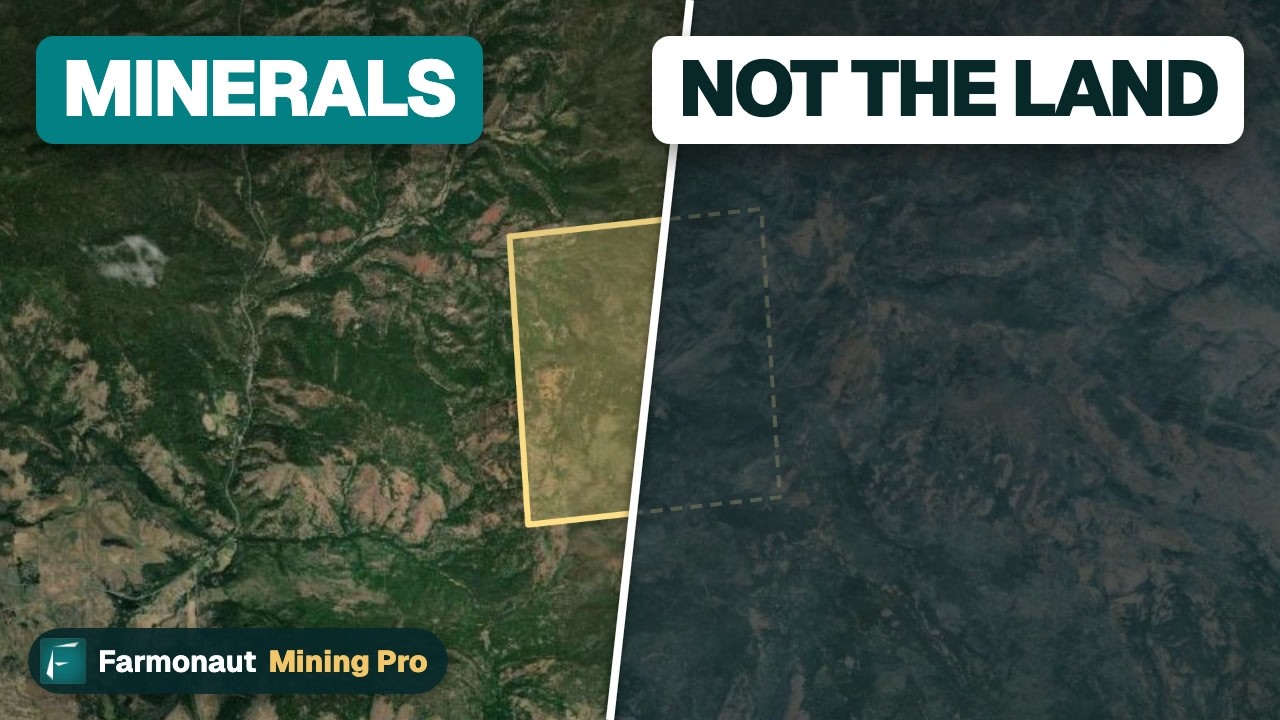
▶ Explains that a mining claim is a right to the minerals rather than ownership of the land, and how to check the ground before buying. · 3:19
Restaking a forfeited claim: steps and federal fees
If the claim is closed, you do not buy anything. You locate a new claim. BLM states plainly that a forfeited claim cannot be reinstated and that a new claim receives a new serial number, a new date and no link to the old assessment work or waiver history (BLM guidance, 2025). The steps follow BLM’s guidance for locators, written for Colorado but based on federal rules. Some deadlines, such as the county recording window, come from state law and vary.
Chart
First-year federal cost by placer size
US$ per placer claim: $74 in fees plus $200 for each 20 acres or part
- Confirm the land is open. Check MLRS and the BLM land status maps. Ground that is withdrawn, private or already claimed cannot be located.
- Stake the claim. Mark the corners with posts or monuments and post a new Certificate of Location. State law sets the exact marking rules.
- Prepare a new Certificate of Location. It needs the claim name and type, the legal description, the names and addresses of all locators and the location date. You cannot reuse or alter an old form.
- Record it with the county. In Colorado the window is 30 days for placers and 90 days for lode claims. Other states differ.
- File with BLM within 90 days. Send the recorded copy, a map and the fees. For a lode claim that is $25 processing, $49 location and $200 first-year maintenance, $274 in total. A placer claim pays the same $74 plus $200 for each 20 acres or part (BLM, fee schedule updated 9 February 2026).
The fee rose from $165 to $200 a year, and the location fee from $40 to $49, from 1 September 2024. Federal law requires BLM to adjust these amounts for inflation every five years (BLM, fee adjustment announcement, June 2024). The September 2026 payment cycle kept the same $200 (BLM, 2027 mining season notice), but BLM’s schedule warns that fees may change, so read the live fee page on the day you file.
Timing is the trap. BLM says another party may stake the same ground even one day after a lapse, and that claim would be senior to yours. Rights are decided first come, first served by location date and filing time. If you restake a lapsed claim and find someone got there first, you have a dispute that only a civil court can settle. State courts also apply their own rules about notices for relocated ground, so a local attorney is worth the fee.
What abandoned claims cost to hold
The purchase price is the small part of the cost. Holding the ground, checking it and dealing with what is on it add up faster. Here are the figures that are fixed by rule, all from the BLM fee schedule above.
Chart
Federal cost of holding lode claims
Cumulative US$ over 10 years at $274 in year one and $200 after
- Year one for a lode claim: $274, made up of $25 processing, $49 location and $200 maintenance.
- Each later year: $200 per lode claim, or $200 per 20 acres of placer, due by September 1.
- Small-miner waiver: a claimant who, with related parties, holds 10 or fewer claims nationwide can file Form 3830-2 instead of paying the $200, if $100 of assessment work was done on each claim. The waiver itself costs nothing to file, but an affidavit of assessment work (or, in the first waiver year, a notice of intent to hold) costs $15 per claim and is due by December 30. The waiver form needs original signatures and cannot be filed online.
- Transfers: $15 per claim per transferee. An amended notice of location costs $15 per claim.
- County recording: set by each county. BLM tells locators to check local fees, so treat any figure you see in an article, including this one, as an example.
The chart shows how the first-year federal cost grows with placer size. A 160-acre association placer costs $1,674 in year one, more than six times a single 20-acre claim. The calculator below adds your own county fee and checking budget to the federal cost over a holding period.
Calculator
What would it cost to hold these claims?
Enter your own number of claims, term, county fee and checking budget.
- Federal fees, year one: $1,570
- Federal fees, each later year: $1,200
- Average cost per claim per year: $340
Example values only, not a benchmark or a quote. Fixed constants from BLM (fee schedule, 2026): US$274 for a lode claim in year one, US$200 per later year, US$74 of fees plus US$200 per 20 acres for a placer in year one. County recording fees and your checking budget are your inputs. It assumes the fees do not change and no small-miner waiver. Confirm the rules with the regulator.
Who is liable for old workings, tailings and spills
This is the question that should come before the price. There are three separate layers.
Chart
Abandoned and active US mines
Approximate number of mines, nationwide
Claim-holder duties. BLM’s surface rules say claimants and operators are liable for obligations that accrue while they hold their interests, and that abandoning or forfeiting a claim does not erase obligations that already accrued (43 CFR 3809.116). Exploration that disturbs 5 acres or less needs a notice, while more than 5 acres, or a bulk sample of 1,000 tons or more, needs a plan of operations. BLM also requires a financial guarantee (bond) for operations, under its 3809 rules (BLM, surface management).
Cleanup law. If the site holds hazardous substances, Superfund law can place cleanup duties on owners, and All Appropriate Inquiries is how buyers seek protection. The All Appropriate Inquiries rule is the standard investigation that supports protection for innocent landowners, contiguous owners and bona fide prospective purchasers. It must be done before you acquire the property. EPA recognizes ASTM E1527-21 for a Phase I environmental site assessment, which must be conducted or updated within one year before purchase, with interviews, records review, the site visit and lien searches done within 180 days (EPA, All Appropriate Inquiries). Whether those protections fit an unpatented claim on federal land is a legal question. Put it to an environmental attorney before closing.
Third-party cleanup. The Good Samaritan Remediation of Abandoned Hardrock Mines Act, signed on 17 December 2024, lets EPA issue up to 15 permits to groups that clean up old mine sites without taking on Superfund or Clean Water Act liability. The first permit went to Trout Unlimited for the Bodie Mine in Okanogan County, Washington, announced on 9 September 2026 (EPA, Good Samaritan program). A Good Samaritan must not be a past or current owner or operator of the site. In practice, buying the claim usually closes that door for you.
Physical hazards come first
Before money, think about people. MSHA counts about 14,000 active mines and about 500,000 abandoned mines in the US. It lists unstable explosives, lost explorers in unlit tunnels, deep water in pits, decayed timber supports, hidden gas and vertical shafts that can be hundreds of feet deep and hidden by brush or debris (MSHA, Stay Out Stay Alive). BLM’s own estimate is as many as half a million abandoned mines, with many locations still unknown (BLM, abandoned mine lands). Do not enter old workings to inspect a claim. Use a qualified mine-safety professional and keep to the surface.
A note on old uranium sites
Uranium sites carry a separate set of questions because of radioactive waste and groundwater. EPA notes that nearly 30 million tons of uranium ore were extracted from Navajo lands between 1944 and 1986, and cleanup there is still under way (EPA, Navajo Nation uranium cleanup). No reliable figure exists for how many of the claims on the market are uranium sites, so treat any such percentage with suspicion. If a claim sits on a legacy uranium district, read our overview of US uranium mine trends and get a radiation survey before you commit.
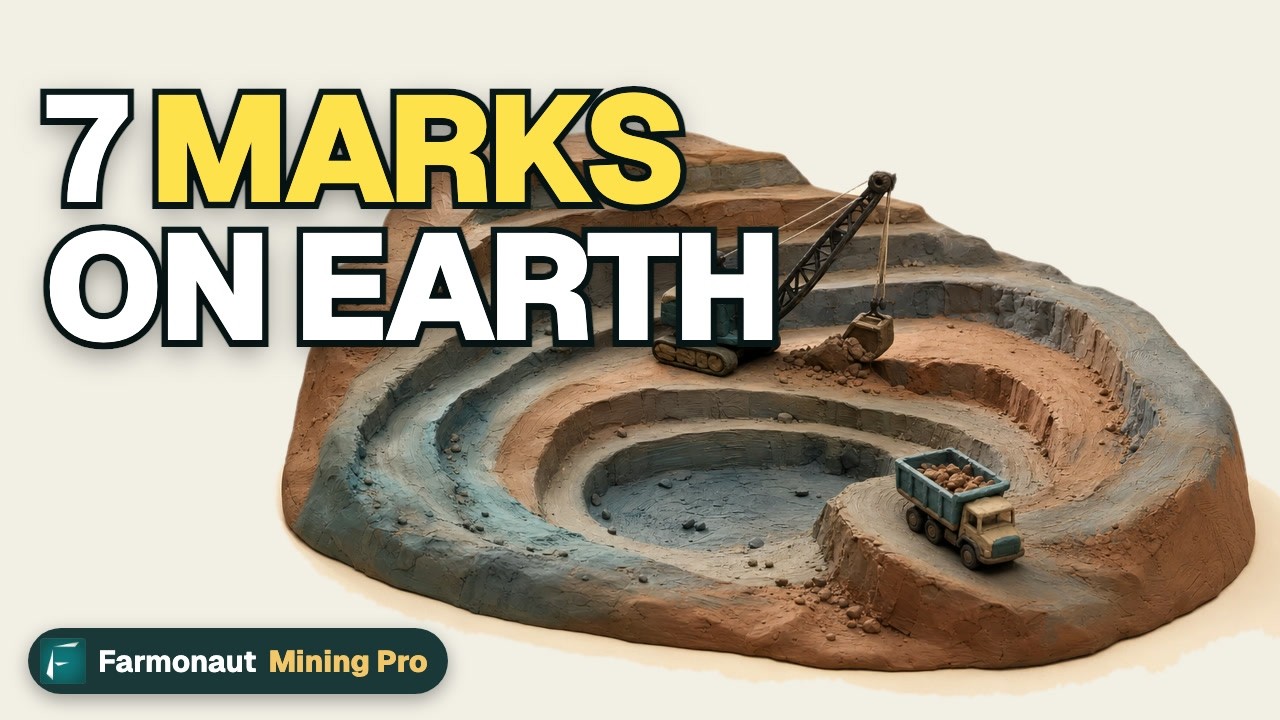
▶ Explains the seven environmental impacts of mining, background for the legacy workings, tailings and spills buyers may inherit. · 2:31
Due diligence checklist before you pay
Use this list in order. It stops the most expensive mistakes first.
Infographic
Check an old claim in 5 steps
- 1Check statusSearch the serial number in MLRS and confirm the claim is not closed.
- 2Check the landConfirm the ground is open to mineral entry and not private or withdrawn.
- 3Check titleRead the county recorder file and match every owner to the deed.
- 4Check the groundFind the corner posts and map old pits, dumps and shafts from the surface.
- 5Check liabilityOrder a site assessment and take legal advice before you pay.
- Status. Search the serial number in MLRS. Confirm the disposition and the last paid assessment year.
- Land. Check land status for withdrawals, private inholdings and protected areas. A claim on land that is closed to mineral entry is void.
- Title. Pull the county recorder file. Match every name in the chain to the deed.
- Ground truth. Walk the claim, find the corner posts and the discovery point, and photograph them with the date.
- Disturbance. Map the old pits, dumps, roads and shafts. The area of disturbance decides whether future work needs a notice or a plan.
- Environment. Commission a Phase I site assessment for any claim with mill sites, tailings or chemical use. Add sampling where the history suggests metals or radiation.
- Neighbors and access. Check road access, water rights and who owns the surface around the claim.
- Money. Add the federal fee, county fees, assessment work or waiver filings, and your survey and legal costs for the holding period. The calculator below does the fee part.
- Advice. Ask a mining attorney to read the deed and a lender or insurer whether the site is insurable.
State rules add more steps. Our guide to mining claims in Idaho shows how county and state steps layer on top of the federal ones, and our BLM fee and filing guide covers the forms.
Patented claims and private mine land
A patented claim is different in law. BLM says the government has passed its title to the claimant, who then holds the locatable minerals and in most cases the surface (BLM, patents). Since 1 October 1994, a congressional spending bar has meant BLM does not accept new patent applications, so only existing patents are on the market. Patented claims and the private land around old mines are bought like real estate, with a title search, a survey and a county tax record. The owner carries every cleanup duty that comes with the land.
If you are looking at a patented claim, our guide to patented mining claims in Colorado goes through the title checks. For mineral rights sold apart from the land, see land and mineral rights for sale. A short primer on claim types is in what is a mining claim.
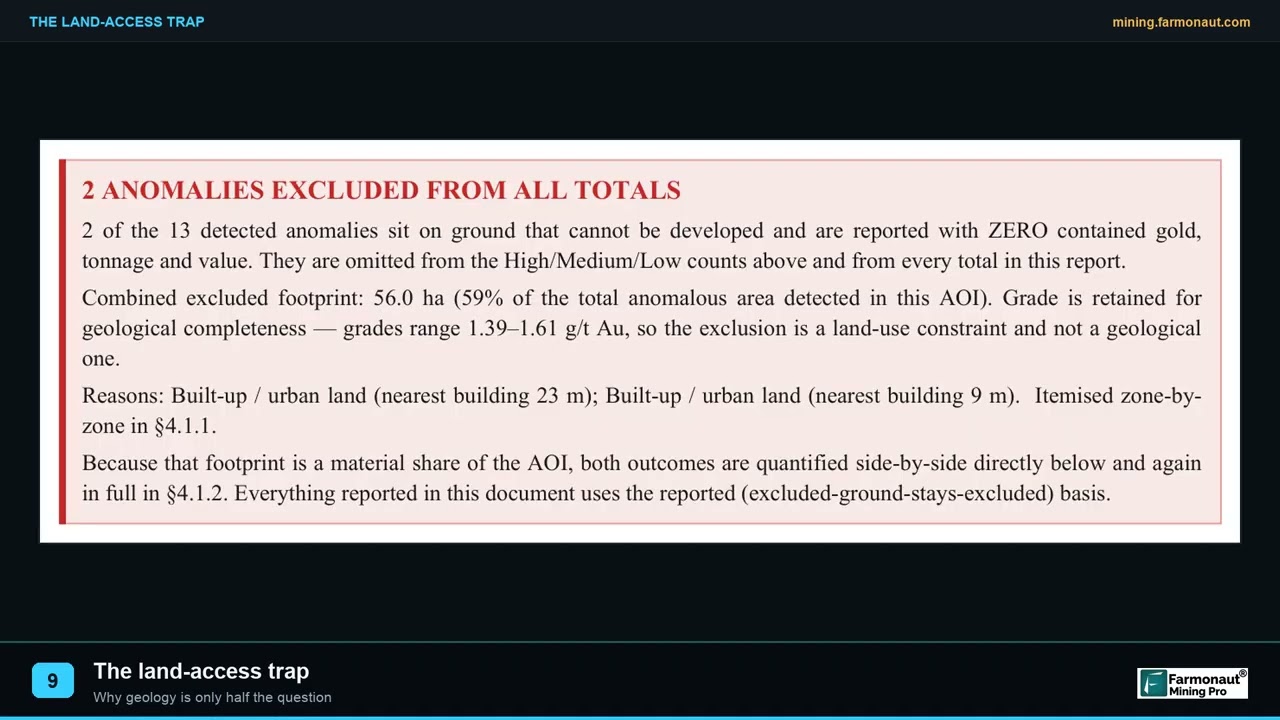
▶ Shows how good ground can still be unmineable when land access is blocked, as with claims near towns or on private land. · 2:05
Screening an old district from space
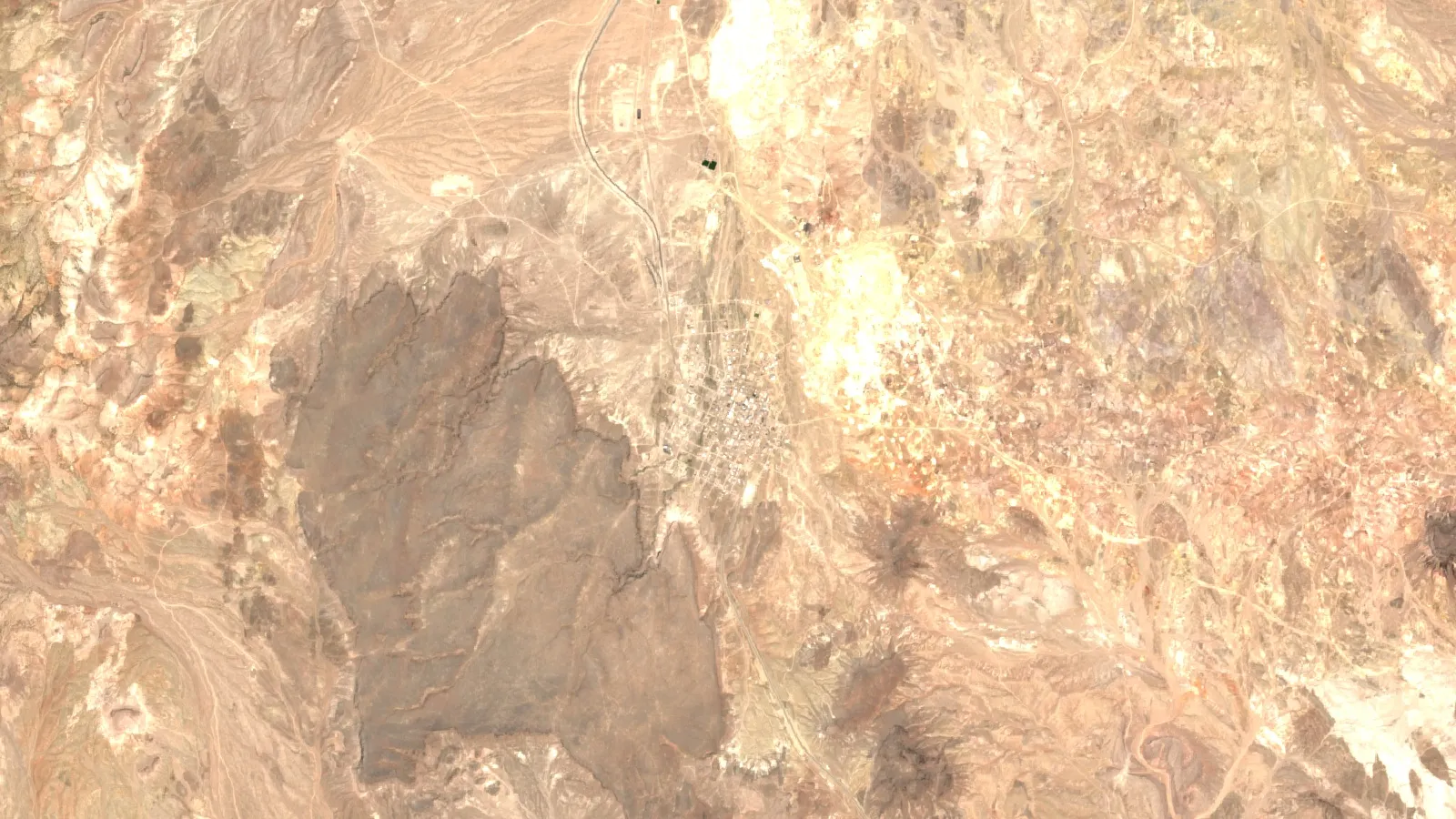
Satellite images cannot replace a title search or a Phase I assessment, but they can speed up the first look at old ground. Farmonaut is a US-based satellite data-analytics company that applies Earth observation and AI to mineral exploration. A satellite view can show bare dumps, old roads, pits and vegetation recovery. The image at the top of this page is a Sentinel-2 view of Goldfield, Nevada, a historic gold district. Results are exploration targets that sit ahead of any resource estimate. They are not environmental or social clearance, and they do not tell you who owns the ground.
Frequently asked questions
Can I buy an abandoned mining claim?
Only if it is not forfeited. A forfeited federal claim cannot be sold or reinstated, because it is void by law. You can stake a new claim on the same ground if the land is open, or buy a claim whose owner is still current on the yearly payment.
What happens if a mining claim owner does not pay the yearly fee?
The claim is forfeited. The fee, or a small-miner waiver, is due on or before September 1 each year, and the statute treats a missed date as a forfeiture with no grace period (30 U.S.C. 28i; BLM, 2025).
How much does it cost to restake a forfeited lode claim?
The federal cost is $274 in year one: $25 processing, $49 location and $200 maintenance (BLM, 2026). County recording fees are extra and vary by county.
How do I find closed or forfeited claims?
Search MLRS by serial number, township and range, or use BLM’s closed-claims dataset. Closed means abandoned, rejected, relinquished or forfeited. Always check the case record, because the map shows only the quarter section.
Can I just take over an old mine for nothing?
No. Ground that is open to location still costs the fees above, and old workings, waste and water can leave the holder with duties. Get legal advice before you take title or stake the ground.
Who is responsible for cleanup on an abandoned claim?
Claimants and operators are liable for obligations that accrue while they hold the claim, and forfeiture does not erase earlier obligations (43 CFR 3809.116). Superfund can also reach current owners and operators of contaminated sites, so the facts of each site matter.
Can I enter an old mine to look at the claim?
No. MSHA’s message is to stay out and stay alive. Old shafts can be hundreds of feet deep and hidden, and tunnels can have bad air, loose rock and unstable explosives.
What is the small-miner waiver?
A claimant with 10 or fewer claims nationwide, counting related parties, can file Form 3830-2 by September 1 instead of paying the $200, if $100 of assessment work was done on each claim. An affidavit of assessment work (or, in the first waiver year, a notice of intent to hold), $15 per claim, is due by December 30.
Are patented claims cheaper to hold?
The federal yearly claim fee applies to unpatented claims, and patented ground is private land. The owner pays local taxes and is responsible for the land. BLM has accepted no new patent applications since the moratorium began on 1 October 1994.
Can satellite imagery show if a claim is worth buying?
It can help screen the surface of an old district, such as dumps, roads and vegetation recovery. It cannot confirm title, grade or contamination, so use it alongside records, sampling and a site visit.
Do these rules apply outside the United States?
No. This guide covers US federal claims. Other countries use licences, leases and cadastre systems with their own fees and forfeiture rules, so ask the national mining regulator.
This page is for information only. It is not legal advice. Confirm the rules with the regulator. Get the landowner’s or agency’s permission before you visit or stake any ground, never use mercury, and stay out of old mine workings, which can collapse, hold bad air or hide deep shafts.
Farmonaut mining
Get a quote to map your project area from space
Send us your claim or licence boundary and we will quote a satellite screening of the ground, delivered as exploration targets.
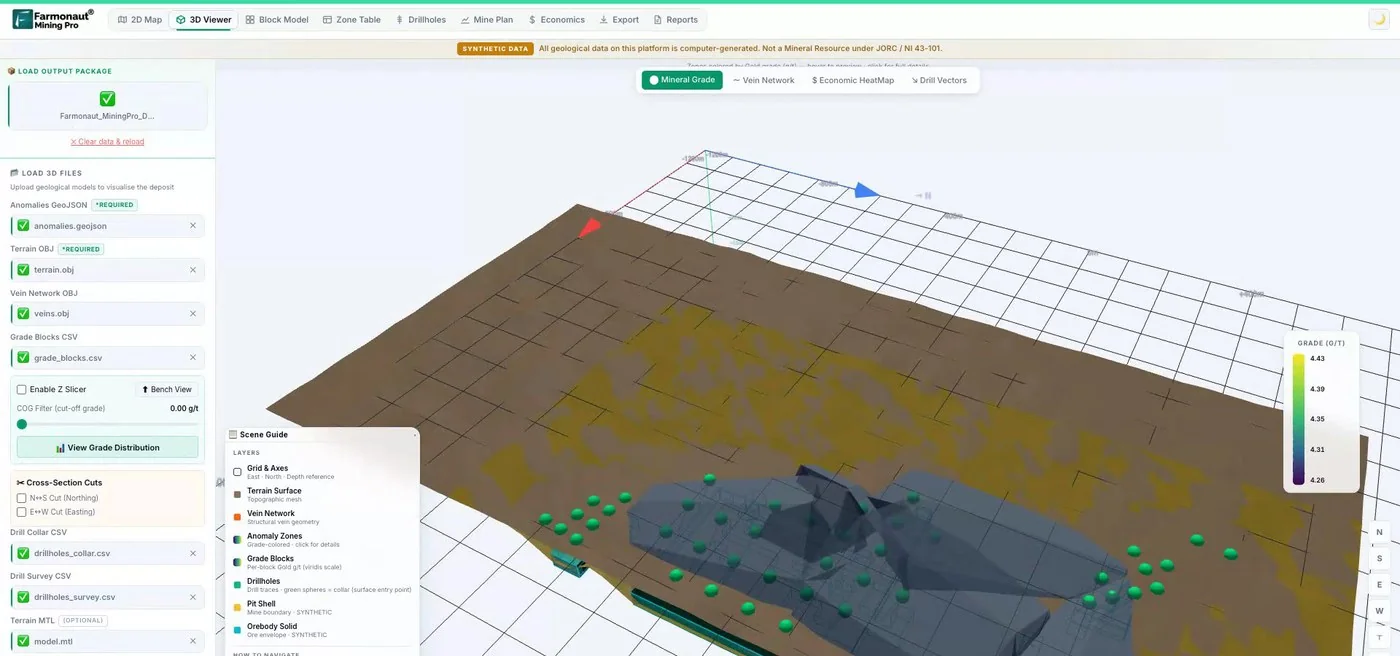
Mining Pro sample view, synthetic data
Keep reading
Sources
- BLM, Mining claims: blm.gov
- BLM, Mining claim fees: blm.gov
- BLM, Mining claim fee schedule updated 9 February 2026: blm.gov
- BLM California, 2027 mining season filing notice (March 2026): blm.gov
- BLM, Filing a new claim after closure: guidance for locators (September 2025): blm.gov
- BLM, Adjustments to mining location and maintenance fees (June 2024): blm.gov
- BLM, Surface management of locatable minerals: blm.gov
- BLM, Patents: blm.gov
- BLM, Abandoned mine lands: blm.gov
- BLM via data.gov, MLRS Mining Claims – Closed: catalog.data.gov
- BLM GIS service, Mining Claims – Closed layer (queried 15 October 2026): gis.blm.gov
- BLM GIS service, Mining Claims – Not Closed layer (queried 15 October 2026): gis.blm.gov
- BLM, MLRS reports guide (2024), hosted by Nevada Division of Minerals: minerals.nv.gov
- Cornell Law School, 30 U.S.C. 28i: Failure to pay: law.cornell.edu
- Cornell Law School, 43 CFR 3809.116: obligations of claimants and operators: law.cornell.edu
- MSHA, Stay Out Stay Alive: msha.gov
- EPA, All Appropriate Inquiries: epa.gov
- EPA, Good Samaritan Remediation of Abandoned Hardrock Mines program: epa.gov
- EPA, First Good Samaritan permit for the Bodie Mine (9 September 2026): epa.gov
- EPA, Navajo Nation uranium cleanup: epa.gov
Discussion
Questions, corrections or field experience? Share them below. First-time comments are reviewed before they appear, and your email is never published.
No comments yet. Be the first to add a question or your experience.

 Mineral Gulf Transhipment DMCC
 G.I.T.T.
 Jaunita Erss Ltd
 Almosi SARL
 SRK Consulting
 Berks Gold Limited
 Mwerezi Minerals Company Limited
 Mining SARL
 SenGold Invest SAS
 Sean Mining Limited
 NTS Group (Pty) Ltd
 Mine4Africa
 Lithspo Minerals Limited
 Tintina Mining Group
 Dalgety Minerals Pty Ltd
 Vortex Minerals Pty Ltd
 Licence holder · Nigeria · Gold + lithium










