

Table of Contents
- Afghanistan’s Rich Stone Heritage: Lapis Lazuli Jewelry & Marble – A 2025-2026 Overview
- Why Afghanistan Holds a Unique Place on the Mineral Map
- Afghanistan Lapis Lazuli Jewelry: The Azure Treasure
- Afghanistan Marble Sector: Untapped Infrastructure Potential
- Estimated Economic and Environmental Impact of Afghanistan Lapis Lazuli Jewelry & Marble Industry (2023–2026)
- Sustainable Mining Practices: Shaping a Greener Future
- Cultural Heritage and Artisanal Craftsmanship
- Rural Growth & Livelihood Impact: 2025–2026
- Global Market Reach and International Demand
- Challenges, Obstacles, and the Road Ahead
- Farmonaut Satellite Solutions for Mining, Sustainability & Rural Prosperity
- FAQ: Afghanistan Lapis Lazuli Jewelry & Marble Industries
- Final Thoughts: A Sustainable Stone Heritage Beyond 2026
“Afghanistan’s lapis lazuli jewelry exports are projected to grow by 22% by 2026, fueling sustainable rural economies.”
Afghanistan’s Rich Stone Heritage: Lapis Lazuli Jewelry and Marble in 2025–2026
Afghanistan holds a unique place on the mineral map, renowned worldwide for its extraordinary natural mineral wealth. This is especially apparent in its lapis lazuli jewelry and marble sectors, which intertwine cultural heritage, economic growth, and emerging sustainable mining practices. Both industries are vital pillars for rural livelihoods and infrastructural development in 2025 and well into 2026, bringing new opportunities to local communities while fueling Afghanistan’s international reputation.
As market demands for ethically sourced stones and authentic craftsmanship grow globally, Afghanistan’s artisans and entrepreneurs are reshaping their approach. This involves blending traditional extraction techniques with modern value-addition, engaging in sustainable and environmentally responsible practices, and creating pathways for export-driven economic resilience. The result is a remarkable combination of ancient legacy, contemporary adaptation, and promising potential for the decades ahead.



Why Afghanistan Holds a Unique Place on the World’s Mineral Map
Afghanistan stands as a rich source of mineral resources with unique stone deposits that have fascinated geologists, artisans, and traders for centuries. From the azure treasure of lapis lazuli quarried in Badakhshan to the luminous marble blocks extracted from Herat, the country is blessed with geological wonders that significantly contribute to both its cultural narrative and economic growth.
These natural deposits are not only an economic asset but have also shaped Afghanistan’s historical civilizations. The Silk Road—the ancient trade route—once made Afghanistan a principal supplier of precious stones, intertwining its mineral wealth with global commerce, artistry, and diplomatic exchanges.

Afghanistan Lapis Lazuli Jewelry: The Azure Treasure of Badakhshan
For over 6,000 years, the province of Badakhshan in Afghanistan has been internationally renowned for producing the finest lapis lazuli—its deep-blue allure earning it the title of azure treasure. The significance of Afghan lapis lazuli transcends aesthetics, deeply embedded in both ancient narratives and contemporary artisanal practices.
- Cultural Heritage: Lapis lazuli is woven into the cultural heritage of Afghanistan, used in everything from ancient jewelry to intricate mosaics and ceremonial regalia.
- Artisanal Livelihoods: In 2025–2026, it remains a vital sector for rural communities, providing non-agricultural income by diversifying beyond subsistence farming and livestock rearing.
- Products & Export: Afghan artisans produce dazzling necklaces, bracelets, rings, and inlaid decorative items that are increasingly in demand on the international market, especially as ethical sourcing and cultural authenticity gain prominence.
- Mining Techniques: Sustainable mining techniques prioritize environmental stewardship, worker safety, and the preservation of local resources.
As global interest surges for culturally sourced authentic gemstones and ethical jewelry, Afghan lapis lazuli offering stands out. With renewed interest in sustainable mining practices and collaboration with fair-trade organizations, Afghanistan lapis lazuli jewelry is reshaping its presence within the global jewelry landscape in 2026.

- Afghan lapis lazuli stones were a coveted luxury in ancient Egypt, Persia, and among European royalty.
- The blue pigment from lapis—ultramarine—was prized by Renaissance painters for its unmatched depth and luminosity.
- Artisans in Badakhshan often cut, polish, and create lapis jewelry directly at the source, maintaining authenticity and income within local communities.
“By 2025, marble mining in Afghanistan may support 7,000 rural jobs thanks to sustainable practices and cultural heritage.”
Afghanistan Marble Sector: An Untapped Resource for Infrastructure Growth
Afghanistan’s marble sector is fast emerging as a cornerstone of infrastructural development. Wealthy marble deposits in Herat, Nangarhar, Wardak, and Helmand provinces are propelling the country’s economic and construction ambitions. The elegant stones are prized for their durability, color, and unique veining, making them ideal for both modern architecture and traditional decorative art.
- Infrastructure Integration: Afghan marble is increasingly integrated into roads, bridges, irrigation, and market infrastructure—a boost for agricultural productivity and rural connectivity.
- Employment & Economic Impact: The quarrying and processing industries offer jobs and income for regions dependent on agriculture, promoting economic diversification.
- Sustainable Extraction: Advances in extraction technologies and environmental guidance are leading to more sustainable practices and reduced waste in marble mines.

Herat marble in particular is emerging as a sought-after brand in regional and international stone markets. Recent years have seen heightened government attention and international development support, facilitating improved road access, quarry safety, and environmental monitoring for the sector.

Estimated Economic and Environmental Impact of Afghanistan Lapis Lazuli Jewelry & Marble Industry (2023–2026)
| Year | Industry | Export Value (USD Million, est.) | Jobs Created (est.) | Rural Households Supported (est.) | % Sustainable Mining Operations (est.) | Contribution to Cultural Heritage |
|---|---|---|---|---|---|---|
| 2023 | Lapis Lazuli Jewelry | 12 | 3,100 | 2,600 | 32% | High |
| Marble | 27 | 5,050 | 4,000 | 25% | Medium | |
| 2024 | Lapis Lazuli Jewelry | 14 | 3,450 | 2,745 | 37% | High |
| Marble | 32 | 5,900 | 4,600 | 30% | Medium | |
| 2025 | Lapis Lazuli Jewelry | 16 | 3,900 | 2,980 | 41% | High |
| Marble | 37 | 7,000 | 5,200 | 36% | High | |
| 2026 | Lapis Lazuli Jewelry | 19 | 4,300 | 3,350 | 46% | High |
| Marble | 44 | 8,450 | 6,100 | 42% | High |
Key Insights: Both the Afghanistan lapis lazuli jewelry and marble industries display a positive trajectory regarding export value, rural job creation, and the adoption of sustainable mining practices into 2026. Investments in sustainability directly enhance contributions to cultural heritage, which remains consistently “High” for lapis and increases for marble.
Easily integrate up-to-date data on mining sites, agricultural fields, and infrastructure projects with the Farmonaut API. For developers and data analysts, detailed documentation is available at the API Developer Docs.
Sustainable Mining Practices: Shaping a Greener Future for Afghan Stones
A sustainable approach lies at the core of Afghanistan’s mineral sector growth. The urgency for mining operations to prioritize environmental stewardship and worker safety is both an international demand and a growing domestic expectation. As the lapis lazuli and marble industries mature, focus intensifies on:
- Reducing Mining Footprint: Limiting the environmental impact by employing modern quarrying techniques and reclamation protocols.
- Ethical Sourcing & Traceability: With tools such as Farmonaut Blockchain Traceability, it’s possible to authenticate the origins of stones, ensure transparency, and reassure global markets of ethical product supply chains.
- Worker Safety & Community Health: Enforcing safety regulations minimizes occupational hazards and supports healthy livelihoods for local communities.
- Waste & Resource Management: Satellite monitoring solutions and data-driven approaches optimize extraction while protecting surrounding ecosystems.

Adherence to these practices is vital for Afghanistan to maintain competitiveness on the global market and to foster the trust of international buyers and organizations.
Cultural Heritage and Artisanal Craftsmanship: Afghanistan’s Living Legacy
The rich narrative of Afghanistan’s lapis lazuli and marble is not only about minerals, but also about living traditions and artisanal craftsmanship preserved over generations. In the rural heartlands of Badakhshan, Herat, and beyond, families continue to pass down techniques and artistic motifs that date back to ancient civilizations.
- Craft Guilds: Afghanistan’s artisans are often organized into guilds or family workshops specializing in stone carving, inlaid work, and jewelry design.
- Traditional Motifs: Decorative themes used in lapis jewelry and marble art reflect Afghanistan’s multi-ethnic heritage—from Persian calligraphy patterns to tribal geometric shapes.
- Modern Adaptation: As market demands shift, Afghan artisans adapt traditional motifs, blending them with contemporary styles aimed at global buyers seeking authenticity.
Rural Growth & Livelihood Impact: Afghanistan Lapis Lazuli Jewelry & Marble (2025–2026)
The impact of these industries reaches deep into rural Afghanistan. In provinces such as Badakhshan, Herat, and Nangarhar, stone resources empower local communities by:
- Providing alternative income streams to agriculture-dependent families.
- Supporting women’s involvement—women often participate in jewelry assembly, small-scale stone processing, and market distribution.
- Fostering skills training that blend traditional craftsmanship with modern processing and export logistics.
- Encouraging economic diversification in regions prone to climate-affected farming and livestock rearing.

With further government and community investment, especially in worker safety, mining efficiency, and market cooperatives, both lapis lazuli and marble sectors are poised to amplify their positive impact on rural prosperity in 2026 and beyond.
Global Market Reach and International Demand: Afghanistan’s Ascendancy
Afghanistan’s lapis lazuli jewelry and marble are not only local economic drivers—they are also coveted commodities on the global stage. Recent years have seen:
- Rising international demand for ethically sourced gemstones and traceable marble for high-profile construction and luxury brands.
- Export growth through improved policies, new digital platforms, and blockchain traceability—as offered by Farmonaut’s traceability tools.
- Participation in international expos and trade fairs, elevating Afghanistan’s status as a prime stone export country.
In 2026, the positive trajectory in export value (as outlined in the impact table) rewards not only Afghan mining communities but also responds to consumer enthusiasm for sustainability, fair-trade, and authentic stone products.
Challenges, Obstacles, and the Road Ahead for Afghanistan Stone Industries
Despite immense potential, Afghanistan’s lapis lazuli jewelry and marble sectors face a variety of challenges:
- Security Concerns: Ongoing local conflicts and instability disrupt mining operations and export logistics.
- Infrastructure Hotspots: Limited road networks and processing facilities inhibit value addition and market reach.
- Informal Mining Practices: Unregulated extraction and lack of professional training threaten sustainable development and resource longevity.
- Technology Gaps: There is a pressing need for modern extraction techniques and environmental impact monitoring—services where we at Farmonaut can make a difference via carbon footprinting and satellite-based advisory tools.
- Access to Finance: Restrictions limit capital for upgrading mines, processing plants, and equipping small-scale artisans for global competition.
Addressing these challenges is crucial if Afghanistan is to realize the full potential of its rich mineral heritage. The path forward lies in capacity building, technological investment, transparent governance, and international partnerships.
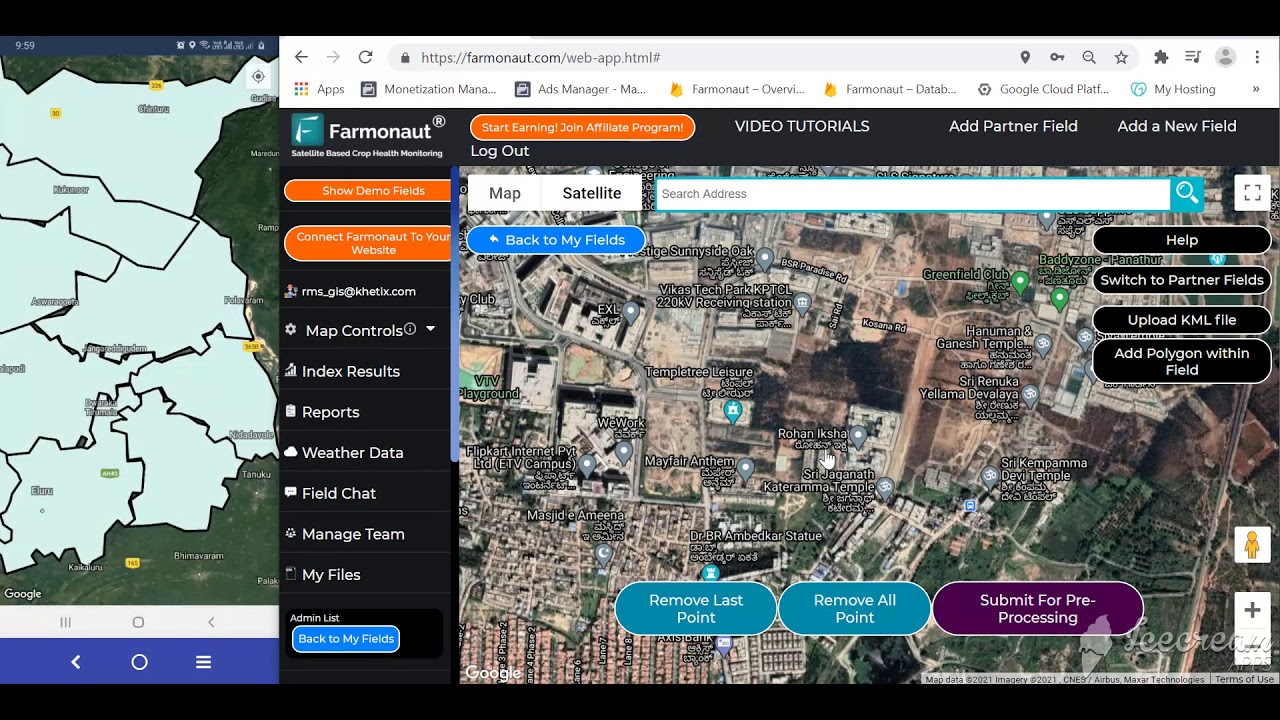
For efficient management of extensive mining and stone quarrying operations, our Large Scale Farm Management Platform enables instant monitoring, real-time satellite analytics, and actionable reporting for decision-makers in both agriculture and mining.
Farmonaut Satellite Solutions: Fostering Sustainability in Mining & Rural Prosperity
As a satellite technology company, we at Farmonaut are devoted to democratizing data-driven insights for industries like agriculture and mining. Our suite of advanced solutions empowers users to address the core challenges of the Afghanistan lapis lazuli jewelry and marble sectors:
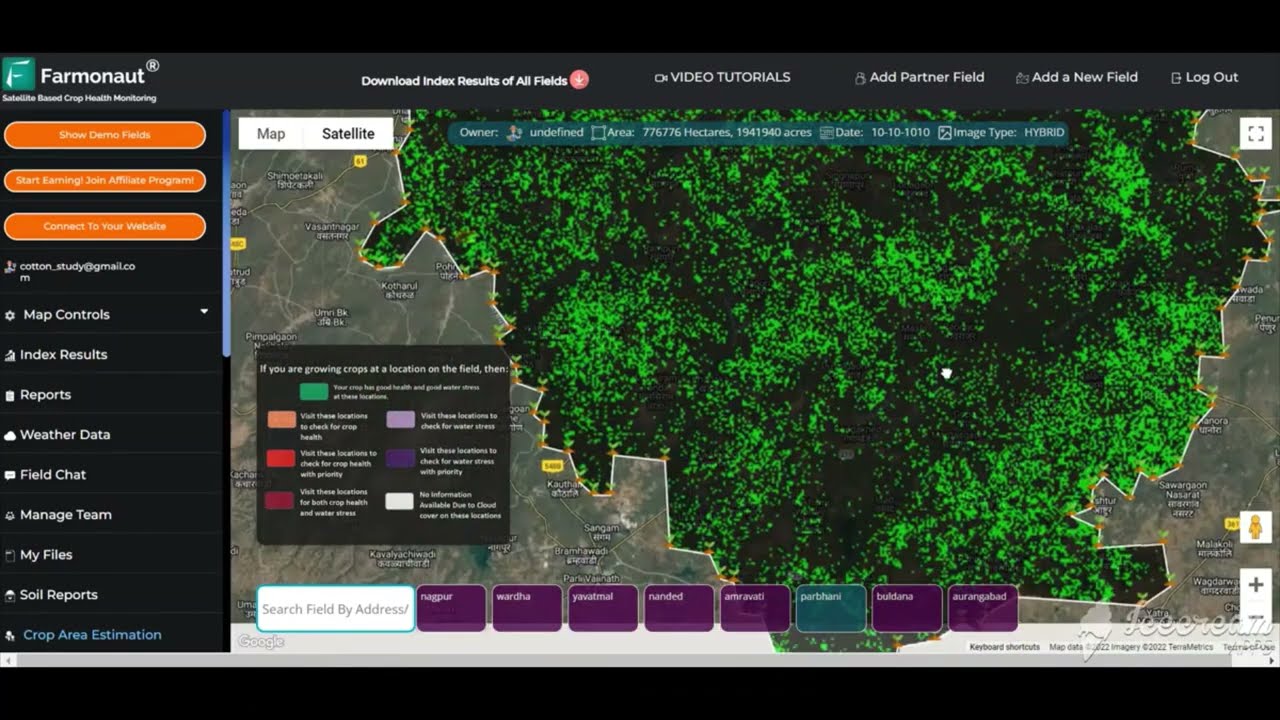
- Satellite-Based Mining Monitoring: Our satellite imagery platform provides real-time observation of quarry expansion, resource use, and environmental impact—enhancing both operational efficiency and sustainability goals.
- AI & Traceability: The Jeevn AI advisory system delivers actionable insights for resource management, while blockchain traceability tools build transparency from mine to export.
- Environmental Intelligence: Our carbon footprinting solution helps measure and manage emissions—making sustainability not just a principle, but a measurable outcome.
- Resource & Fleet Management: Our Fleet Management tools optimize the logistics of stone transport, machinery, and workforce—reducing operational costs in demanding terrains of rural Afghanistan.
Farmonaut’s affordable subscription tiers, available via web or mobile app, ensure accessibility for local artisans, large businesses, and government stakeholders alike.
- Financial Institutions: Using our satellite-based crop loan and insurance verification tools, banks and insurers can efficiently underwrite financing for mining, crop, and infrastructure ventures in rural Afghanistan.
Our ultimate mission is to enable rural communities and businesses to prosper sustainably, leveraging resource data and digital platforms in a way that brings Afghanistan’s precious stone heritage—and its rural economy—into a new era of accountability and growth.
FAQ: Afghanistan Lapis Lazuli Jewelry & Marble Industries
- What makes Afghanistan lapis lazuli jewelry unique in the global market?
- Afghanistan’s lapis lazuli, mainly from Badakhshan, is prized for its deep blue color and historical significance. It is among the oldest quarried gems globally, retaining cultural, aesthetic, and artisanal value that is unmatched elsewhere.
- How does marble mining contribute to rural economic development?
- The marble sector provides substantial rural employment, supports diversification away from agriculture, and is a critical material for infrastructure projects such as markets, irrigation, and community centers.
- Are there initiatives promoting sustainable mining in Afghanistan?
- Yes, there is a visible uptick in sustainable practices, supported by both domestic priorities and global markets emphasizing ethical sourcing and traceability. The adoption of advanced extraction technologies and blockchain-based traceability are key trends.
- What role does Farmonaut play in the context of Afghanistan’s stone industries?
- We at Farmonaut deliver satellite monitoring, AI advisory systems, environmental tracking, and blockchain traceability. Our mission is to help Afghan stakeholders manage mineral extraction and processing efficiently, transparently, and sustainably.
- How can satellite technology improve the mining sector in Afghanistan?
- Satellite technology provides real-time insights into quarry conditions, environmental degradation, and logistics, improving operational efficiency and compliance with global best practices.
- Is there support for small-scale or artisanal miners and jewelers?
- Empowerment programs, skill development initiatives, and the introduction of affordable technology (including our platform) are enhancing the capabilities and global reach of Afghanistan’s artisans and small-scale miners.
- How can buyers verify the authenticity and ethical sourcing of Afghan lapis lazuli and marble?
- Through blockchain-enabled traceability tools, buyers can track the journey of stones from mine to market, ensuring ethical sourcing and transparency.
Final Thoughts: Sustaining Afghanistan’s Stone Heritage Beyond 2026
The future of Afghanistan lapis lazuli jewelry and marble rests on a foundation of tradition, cultural heritage, and a commitment to sustainable development. As demand for ethically sourced and authentic products grows worldwide, these industries are poised for continued growth, innovation, and global recognition.
Addressing challenges—from security and capacity gaps to environmental preservation—will be pivotal. Embracing technological solutions such as ours at Farmonaut, and building robust policy frameworks, can transform Afghanistan’s stone industries into enduring assets for rural prosperity.
With sustainable mining practices, advanced monitoring tools, and an ongoing dedication to artisanal excellence, Afghanistan will continue to contribute magnificently to the world’s cultural and economic tapestry well into 2026 and beyond.
Note: This blog is fully mobile responsive. All videos and tables adjust for readability on every device.
Discussion
Questions, corrections or field experience? Share them below. First-time comments are reviewed before they appear, and your email is never published.
No comments yet. Be the first to add a question or your experience.

 Mwerezi Minerals Company Limited
 Congo Mining Solutions
 Mining SARL
 SenGold Invest SAS
 Sania Corporation
 Sean Mining Limited
 NTS Group (Pty) Ltd
 Mine4Africa
 Lithspo Minerals Limited
 Tintina Mining Group
 Dalgety Minerals Pty Ltd
 Vortex Minerals Pty Ltd
 Faith At Work (Pty) Ltd
 Geotech Mining Solutions plc
 Vulcan International Limited
 Kidepo Associates
 GKY Mining
 Alkimy SARL
 Double A Trading
