
African uranium · Mines ranked
African Uranium Mines Ranked by Output and Resources
Namibia leads Africa in uranium output (7,333 tU in 2024) and in identified resources (504,500 tU); Niger is second on both counts. Five mines produced in recent years, and eleven projects could add more.
Key takeaways
- Namibia mined 7,333 tonnes of uranium (tU) in 2024, about 12% of world supply, against 962 tU from Niger and an estimated 200 tU from South Africa (World Nuclear Association).
- Identified resources recoverable at up to US$130/kgU: Namibia 504,500 tU, Niger 412,500 tU, South Africa 405,700 tU and Tanzania 75,000 tU (World Nuclear Association, Red Book basis, 2025). Resources are not reserves.
- Husab (4,437 tU) and Rössing (2,205 tU) in Namibia were the two largest African mines in 2024; Niger’s Somair mined 959 tU and was nationalised in June 2025.
- Niger’s output fell from 4,116 tU in 2015 to 962 tU in 2024, after the Cominak closure and the 2023 coup.
- Cameco’s month-end averages for 30 September 2026 were US$89.63/lb spot and US$96.50/lb long-term; Langer Heinrich sold at an average US$70.0/lb against a US$43.3/lb cost in the year to June 2026 (Paladin).
In this article
- Which country has the most uranium in Africa?
- How we ranked African uranium mines
- African uranium mines ranked by output
- Why Niger's uranium output has fallen
- Uranium projects that could add African supply
- What happened to GoviEx Uranium?
- Gabon, Zimbabwe, DRC and other African countries with uranium
- Uranium price and what an African mine earns
- What to check before exploring or investing in African uranium
- Safeguards at African uranium mines
- Frequently asked questions
Namibia is the African country with the most uranium mined and the most uranium in the ground. Its mines produced 7,333 tonnes of uranium (tU) in 2024, about 12% of world supply, against 962 tU from Niger and an estimated 200 tU from South Africa. Its identified resources of 504,500 tU also rank first on the continent, ahead of Niger (412,500 tU) and South Africa (405,700 tU) (World Nuclear Association, updated October 2026). This page ranks the five African mines that produced uranium in recent years, lists the projects that could add to them, and answers the questions people ask about Gabon, Zimbabwe, GoviEx and the other names that come up.
Which country has the most uranium in Africa?
Namibia, on both measures. Niger is second for resources and second for output, but its production has fallen sharply since 2023 (see the Niger section below). South Africa holds almost as much uranium in the ground as Niger, yet it mines only a small amount. Tanzania is fourth, with 75,000 tU, and has no producing mine yet.
Chart
Identified uranium resources in four African countries
Tonnes of uranium (tU), reasonably assured plus inferred, recoverable at up to US$130/kgU, 2025 Red Book basis
| Country | Identified resources (tU) | Share of world | Mined in 2024 (tU) |
|---|---|---|---|
| Namibia | 504,500 | 6% | 7,333 |
| Niger | 412,500 | 5% | 962 |
| South Africa | 405,700 | 5% | 200 (estimate) |
| Tanzania | 75,000 | 1% | none |
Resources here are the Red Book figures for 2025: reasonably assured plus inferred resources recoverable at up to US$130 per kilogram of uranium, roughly US$50 per pound of U3O8 (uranium concentrate, called yellowcake). A resource is mineralisation with reasonable prospects of being mined. A reserve is the part of a resource that a feasibility study shows to be economic. So these are resources, not reserves, and they are larger than what any mine plan will recover. Across the whole world, the OECD Nuclear Energy Agency counts more than 8.1 million tU of identified resources at costs below US$260/kgU, with a data date of 1 January 2025 (OECD NEA and IAEA, Red Book, September 2026).
Quote the edition and the cost class with any resource number, because they change the total. The World Nuclear Association’s Niger profile, for example, gives a lower figure of about 289,600 tU identified at under US$130/kgU as of January 2025 (WNA, Niger); its Namibia profile likewise gives Namibia 392,800 tU at the same cost class, because the two pages follow different Red Book editions.. Namibia, Niger and South Africa together mined 8,495 tU in 2024, about 14% of the 60,213 tU mined worldwide.
How we ranked African uranium mines
The ranking uses one metric: tonnes of uranium mined in calendar 2024, from the World Nuclear Association production tables, the latest full-year figures for every country. A mine is included if it produced uranium in 2024 or has restarted since. Reserves, resources and company guidance are shown as context, not used to rank. For mines that report by financial year, such as Langer Heinrich, the latest year is shown separately and clearly labelled. Pounds of U3O8 are converted at 0.3846 kg of uranium per pound (1 million lb is about 385 tU).
South Africa’s estimated 200 tU a year is not attributed to a single mine in the production tables, so it is not ranked below. Orano’s Cominak mine in Niger closed in March 2021 and Azelik has been on care and maintenance since 2015, so neither is listed.
Chart
Output of four African mines, 2023 against 2024
Tonnes of uranium (tU) mined per calendar year
African uranium mines ranked by output
1. Husab, Namibia: 4,437 tU
Husab is an open-pit hard-rock mine 45 km northeast of Walvis Bay, run by Swakop Uranium. It started production at the end of 2016 and was the largest African producer in 2024, about 7% of world supply. Output was about 4,600 tU in 2025 against a design capacity near 5,100 tU a year. Swakop Uranium is 90% owned by Taurus Minerals (60% CGN-Uranium Resources, 40% China-Africa Development Fund) and 10% by Namibia’s state company Epangelo. Most uranium goes to China, and up to 20% is marketed internationally (WNA, Namibia).
Why it ranks first: the largest tonnage and the biggest resource of any operating African mine, with a heap-leach pilot plant running since July 2024. Watch: water. A new 20 million cubic metre a year desalination plant, a joint venture between Namibia Water and Swakop Uranium, was finalised in late 2025.
2. Rössing, Namibia: 2,205 tU
Rössing, 65 km inland from Swakopmund, has mined a very hard, low-grade granite orebody in a large open pit since 1976. China National Uranium Corporation (CNUC) bought Rio Tinto’s 68.6% stake in 2019. Output was 2,476 tU in 2023 and 2,205 tU in 2024, against a nominal capacity of 4,000 tU a year. The board approved extending the mine’s life to 2036, with the Phase 4 pushback due to finish in 2026 and a 13-year contract-mining deal with Beifang Mining running to 2036 (WNA, Namibia).
Why it ranks second: the longest-running of Namibia’s mines, with a 50-year record and a life extension already approved. Watch: grade. Its last published reserve, at the end of 2018, averaged 0.033% uranium, so waste stripping and power costs matter more than at richer deposits.
3. Somair (Arlit), Niger: 959 tU
Somair mines the Arlit area in northern Niger, close to the Sahara, and has produced since 1971. Until the state takeover it was 63.4% owned by Orano and 36.6% by the state company Sopamin. Its output fell from 2,020 tU in 2022 to 1,130 tU in 2023 and 959 tU in 2024. After the July 2023 coup, Orano said it lost operational control in December 2024 and began arbitration at the World Bank’s ICSID in January 2025. The Niger government nationalised Somair in June 2025. In November 2025 Orano called a shipment from the site illegal, and Niger said it would put its uranium on the international market (WNA, Niger).
Why it ranks third: it is still the only large operating mine in Niger. Watch: ownership and logistics. The old export route to the port of Cotonou through Benin has been unavailable since the border closed in July 2023, and buyers face an unresolved legal dispute over title.
4. Langer Heinrich, Namibia: 691 tU
Langer Heinrich, 80 km inland from Walvis Bay, mines uranium-vanadium carnotite in a palaeochannel (an ancient buried river bed) with a conventional alkaline-leach mill. Paladin Energy owns 75% and a CNNC subsidiary 25%. Paladin put it on care and maintenance in 2018 and restarted it in March 2024, which is why its 2024 total is only 691 tU. In the year to June 2026 it produced 4.82 million lb (100% basis) U3O8 (about 1,850 tU) at a cost of production of US$43.3/lb, from ore averaging 488 ppm U3O8 in the June 2026 quarter (Paladin quarterly report, 22 July 2026).
Why it ranks fourth: calendar 2024 includes only part-year output after the restart, and the ramp-up was completed at the end of June 2026, so its place will rise in later tables. Watch: the quarterly cost figure rose to US$51.6/lb in the June 2026 quarter from US$40.3/lb in the March quarter, so cost control is the number to follow.
5. Kayelekera, Malawi: restarted
Kayelekera is a sandstone-hosted open-pit mine in the Karonga District in northern Malawi. Paladin opened it in 2009 and closed it in February 2014 after about 11 million lb of U3O8. Lotus Resources bought it in 2020 and announced the first yellowcake of the restart on 1 September 2025. In the year to June 2026 it produced 332,100 lb (128 tU), short of its steady-state target. Processing was suspended in June 2026 because of disrupted sulphuric acid supply and delays commissioning the mine’s own acid plant, and resumed in August 2026. Malawi’s government owns 15% (WNA, Uranium in Africa).
Why it is listed: it is the only newly restarted African mine outside Namibia and Niger. Watch: acid supply and the pace of the ramp-up, which determine whether it reaches the planned 2.4 million lb a year for the first seven years.
For a world view of the same ranking, see our guide to the map of uranium deposits, top countries and mines.
Why Niger’s uranium output has fallen
Niger mined 4,116 tU in 2015 and 962 tU in 2024, a fall of about three-quarters. The main events behind the fall are these. Cominak’s Akouta mine ran out of reserves and closed in March 2021 after 75,000 tU. Azelik, a Chinese-backed mine, stopped in 2015 because of cash shortages. Orano’s large Imouraren project never started, and its operating permit was withdrawn in June 2024. Since the July 2023 coup, the Somair dispute described above has cut shipments (WNA, Niger).
The state is now reshaping the sector. In May 2026 the Council of Ministers adopted draft decrees to cancel the 1968 Arlit concession and to create a new state company, TSUMCO, in place of Somair. In February 2025 a small-scale permit was granted for the shallow Moradi deposit, estimated at about 2,000 tU, with output of around 300 tU a year for five years. The next large addition would be Dasa, covered in the projects section below.
Chart
Uranium mined in Namibia and Niger, 2015 to 2024
Tonnes of uranium (tU) per calendar year
Uranium projects that could add African supply
Only one new large African mine has reached a final investment decision so far, Etango in Namibia, and it is not due to produce until 2028. Several other projects have permits, studies or financing under way. Their status below is as reported by the World Nuclear Association and the companies in October 2026.
Infographic
From licence to first yellowcake in six steps
- 1Exploration licenceIn Namibia, new uranium exploration licences go to the state company Epangelo, and other firms farm in.
- 2Drilling and resourceLetlhakane in Botswana reported a JORC resource of 43,730 tU in December 2024.
- 3Feasibility studyTumas in Namibia completed its definitive feasibility study in February 2023.
- 4Mining licence and approvalsEtango received its mining licence in December 2023.
- 5Financing and decisionEtango’s joint venture took its final investment decision in October 2026.
- 6Construction and ramp-upLanger Heinrich restarted in March 2024 and completed its ramp-up in June 2026.
| Project | Country | Developer | Size reported | Status |
|---|---|---|---|---|
| Etango | Namibia | Bannerman Energy, with a CNNC subsidiary | 207 million lb U3O8 resource; 1,350 tU a year planned | Final investment decision October 2026; production targeted 2028 |
| Tumas | Namibia | Deep Yellow | 137 million lb resource, 79.5 million lb reserve; 1,385 tU a year | Mining licence late 2023; final decision deferred beyond the end of 2026 |
| Trekkopje | Namibia | Orano | 26,000 tU inferred | Studying whether conditions allow production |
| Dasa | Niger | Global Atomic (80%) | 73 million lb probable reserves | First production scheduled for the second half of 2028, subject to financing |
| Madaouela | Niger | Atomic Eagle (owner of GoviEx Uranium) | About 100 million lb measured and indicated (2022 feasibility study); Atomic Eagle cites 116.5 million lb as a non-JORC foreign estimate | Mining rights removed July 2024; new mining convention agreed August 2026 (Atomic Eagle 60%, Niger 40%) |
| Imouraren | Niger | Orano | Design rate 5,000 tU a year | Operating permit withdrawn June 2024 |
| Mkuju River (Nyota) | Tanzania | Uranium One (Rosatom) | Main plant planned at 3,000 tU a year | Pilot plant running since 2025; main plant construction scheduled 2026, commissioning targeted 2029 |
| Muntanga and Chirundu | Zambia | Atomic Eagle | 15,400 tU measured and indicated, 7,200 tU inferred; 2.2 million lb a year over 12 years | Environmental approval June 2026; construction awaits financing |
| Tiris | Mauritania | Aura Energy | 91.3 million lb resource; about 2 million lb a year over 25 years | Permits in place; investment decision targeted end of 2026 |
| Letlhakane | Botswana | Lotus Resources | 43,730 tU resource | Pre-feasibility study expected in the first half of 2027 |
| Saraya | Senegal | Haranga Resources (70%) | 17.6 million lb at 550 ppm | Exploration permit renewed for three years in July 2025 |
The Namibian pair shows how fast things are moving. Etango’s joint venture took a final investment decision in October 2026 on a 1,350 tU a year mine, after a CNNC subsidiary bought 45% of the joint venture company and Bannerman raised A$124 million in a share placement (WNA, Namibia; Bannerman, Etango). Deep Yellow, which holds 125 km of prospective palaeochannels at Tumas, deferred its decision in October 2026, citing weak equity markets (WNA, Namibia; resource and reserve figures from Deep Yellow, Tumas).
In Mauritania, Aura Energy’s Tiris project has a 30-year mining convention and a front-end engineering design with development capital of US$230 million and an all-in sustaining cost (AISC, the full yearly cost including sustaining capital) of US$35.70/lb (Aura Energy, Tiris). Aura signed its first utility offtake in August 2025 and targets first production around the start of 2029.
Chart
Reported mineral resources at five African projects
Million lb U3O8, company-reported; resource categories differ
What happened to GoviEx Uranium?
GoviEx Uranium, the company behind the Madaouela project in Niger, no longer trades under that name. It was acquired in a reverse takeover and became a wholly owned subsidiary of Atomic Eagle Limited, which listed on the Australian Securities Exchange in November 2025. Atomic Eagle also holds the Muntanga uranium project in Zambia, where a March 2026 resource update reported 15,400 tU measured and indicated at 0.030% U plus 7,200 tU inferred (WNA, Uranium in Africa).
The Niger government removed the Madaouela mining rights in July 2024. GoviEx filed for ICSID arbitration in December 2024, and in February 2025 both sides agreed a roadmap that suspended the arbitration while they negotiated. In August 2026 Atomic Eagle agreed a new mining convention with Niger: it holds 60% of Madaouela Mining Company with operational control, Niger holds 40%, and a new exploitation permit was granted (Miningmx, 24 August 2026). Atomic Eagle expects a JORC resource for Madaouela in 2026. The project’s 2022 feasibility study showed about 100 million lb of measured and indicated resources and a mine producing an average of 2.67 million lb a year over 19 years (WNA, Niger). GoviEx’s Falea project in Mali lapsed when its main licence expired in August 2023.
Gabon, Zimbabwe, DRC and other African countries with uranium
Several other countries have uranium on record but no producing mine. The table shows the basis of each figure, because resource classes and cost limits differ between countries and the numbers cannot be added together.
| Country | Figure reported | Basis | Status |
|---|---|---|---|
| Malawi | 18,600 tU | Total identified recoverable (Kayelekera 14,400, Livingstonia 1,500, Kanyika 2,700) | Kayelekera restarted 2025 |
| Algeria | 26,000 tU | Reasonably assured, to US$260/kgU | No mine; Tahaggart deposit |
| Central African Republic | 36,500 tU | Inferred, to US$260/kgU | Bakouma project undeveloped |
| Mauritania | 12,300 tU | Reasonably assured, to US$130/kgU | Tiris permitted |
| Mali | 6,700 tU | Identified recoverable, to US$130/kgU | Falea licence expired |
| Gabon | 4,800 tU | Identified recoverable, to US$130/kgU | No mining; exploration continues |
| Zimbabwe | 2,000 tU, plus 25,000 tU speculative | Reasonably assured, to US$260/kgU | No mine; Kanyemba deposit |
| DR Congo | 1,400 tU | Reasonably assured, to US$260/kgU | Shinkolobwe sealed since 1960 |
Source for the table: WNA, Uranium in Africa, citing the 2026 Red Book.
Gabon. No uranium is mined in Gabon today. The Mounana district in the southeast was found in 1956 and mined from 1960 to 1999 by the Franceville Uranium Mines Company (COMUF), producing nearly 28,000 tU. Oklo, discovered in 1968, gave over 14,000 tU and is famous for natural reactors that ran in its sandstone about two billion years ago. Mining stopped in mid-1999 because of a lack of economic reserves, and COMUF, an Orano subsidiary, still monitors the rehabilitated sites. So there are no current Gabonese production or export figures, only the Red Book estimate of 4,800 tU (WNA, Uranium in Africa).
Zimbabwe. The known deposit is Kanyemba in the Zambezi Valley, and the Red Book lists 2,000 tU of reasonably assured resources and 25,000 tU of speculative resources. Zimbabwe has been drafting a policy for peaceful uranium use and signed nuclear cooperation agreements with Russia in 2021 and 2023, but it does not appear in the World Nuclear Association’s production table.
DR Congo. Shinkolobwe in Katanga supplied much of the uranium for the Manhattan Project and produced about 25,600 tU until independence in 1960, when the shafts were sealed. It has been mined unofficially for cobalt since 1997, which has worried the IAEA. Orano holds an exploration agreement but says it will not mine while the country remains unstable.

▶ Does Zimbabwe have uranium? A short explainer on Kanyemba and uranium in Africa. · 4:27
Uranium price and what an African mine earns
Uranium is sold mostly under private contracts, so there is no single open market price. Cameco publishes industry averages of the month-end spot and long-term prices quoted by UxC and TradeTech. At the end of September 2026 the spot average was US$89.63 per pound of U3O8 and the long-term (term contract) average was US$96.50 per pound, equal to August 2026 and the highest month-end term price in Cameco’s series, which starts in 1996. Spot is what a buyer pays for near-term delivery; the term price is what utilities agree for deliveries years ahead (Cameco, uranium price series, month-end 30 September 2026). Check UxC or TradeTech for the price on the day you read this.
What a mine receives can sit well below those averages, because it depends on the mix of old and new contracts. Paladin’s Langer Heinrich sold 4.35 million lb in the year to June 2026 at an average realised price of US$70.0/lb, against a cost of production of US$43.3/lb (Paladin quarterly report, 22 July 2026). Projects still on paper quote their own cost: US$35.70/lb AISC for Tiris, and US$47.30/lb AISC for Muntanga in its January 2025 feasibility study. The calculator below turns grade, tonnage, recovery and your own price assumption into pounds and dollars.
Calculator
What is the uranium in your ore worth?
Enter your own tonnage, grade, recovery, price and cost to see pounds of U3O8, tonnes of uranium and the margin.
- Recovered uranium: 1,081 tU
- Revenue at your price: $224,871,240
- Royalty: $11,243,562
- Margin after royalty and cost: $87,137,606
Example values only, not a benchmark or a forecast. The price default is an example: use today’s price from UxC or TradeTech. For scale, Langer Heinrich’s ore feed averaged 488 ppm in the June 2026 quarter, its FY2026 cost of production was US$43.3/lb and its average realised price US$70.0/lb (Paladin, 22 July 2026). The formula uses 2,204.62 lb per tonne and 0.848 for the uranium share of U3O8. Royalties are set by law or contract: confirm yours. Money lines are in US dollars.
What to check before exploring or investing in African uranium
- Who may hold the ground. In Namibia, new exploration licences for uranium go to the state company Epangelo, and outside companies enter by farm-in agreements, according to the World Nuclear Association. Search the national mining cadastre first; our guide to mining cadastre portals by country lists the portals.
- Which resource category. Measured, indicated and inferred resources are not the same as a reserve. Many projects above report all three, and some include only inferred tonnes.
- Deposit type and grade. Namibian hard-rock and calcrete deposits are low grade, from about 100 to 480 parts per million uranium in the World Nuclear Association’s Namibia resource table, so economics rest on large tonnages and cheap mining. Dasa in Niger is far richer, with a 2023 resource at 0.49% U3O8, but it is underground.
- Water, power and acid. Desalinated water supplies Namibia’s mines, and acid supply stopped Kayelekera for part of 2026.
- Export route and political risk. Niger’s uranium has had no open export route since July 2023, and the ownership of Somair is disputed.
- Permits. Zambia approved the Muntanga environmental and social impact assessment in June 2026, nine months after the assessment was filed in September 2025.
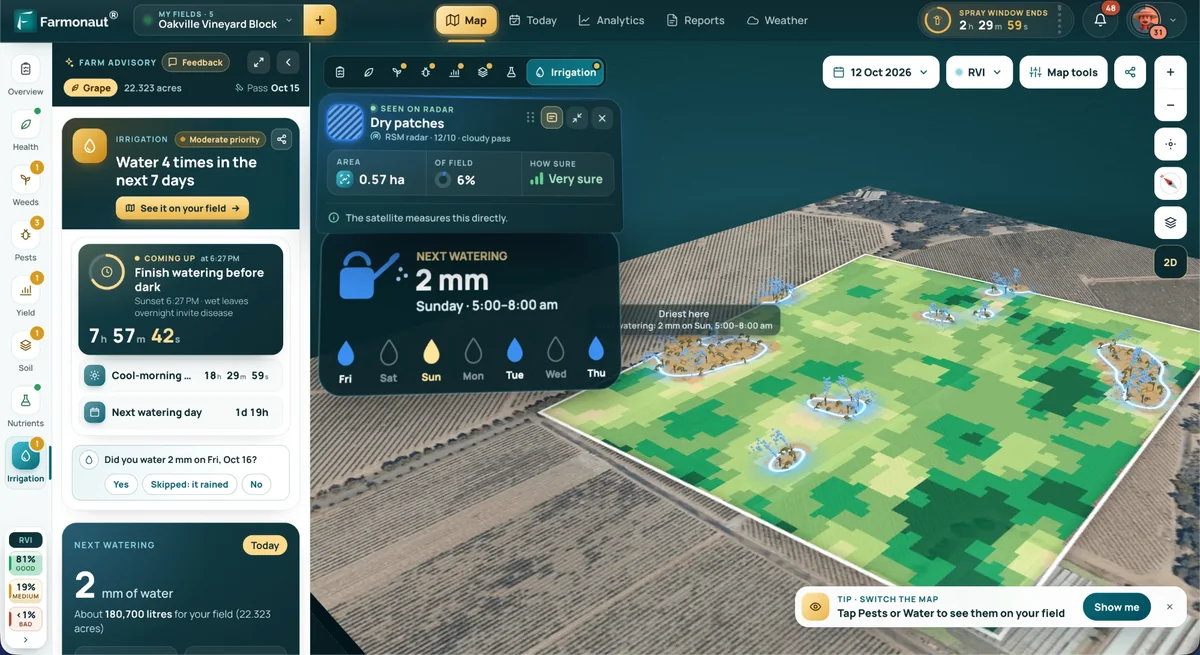
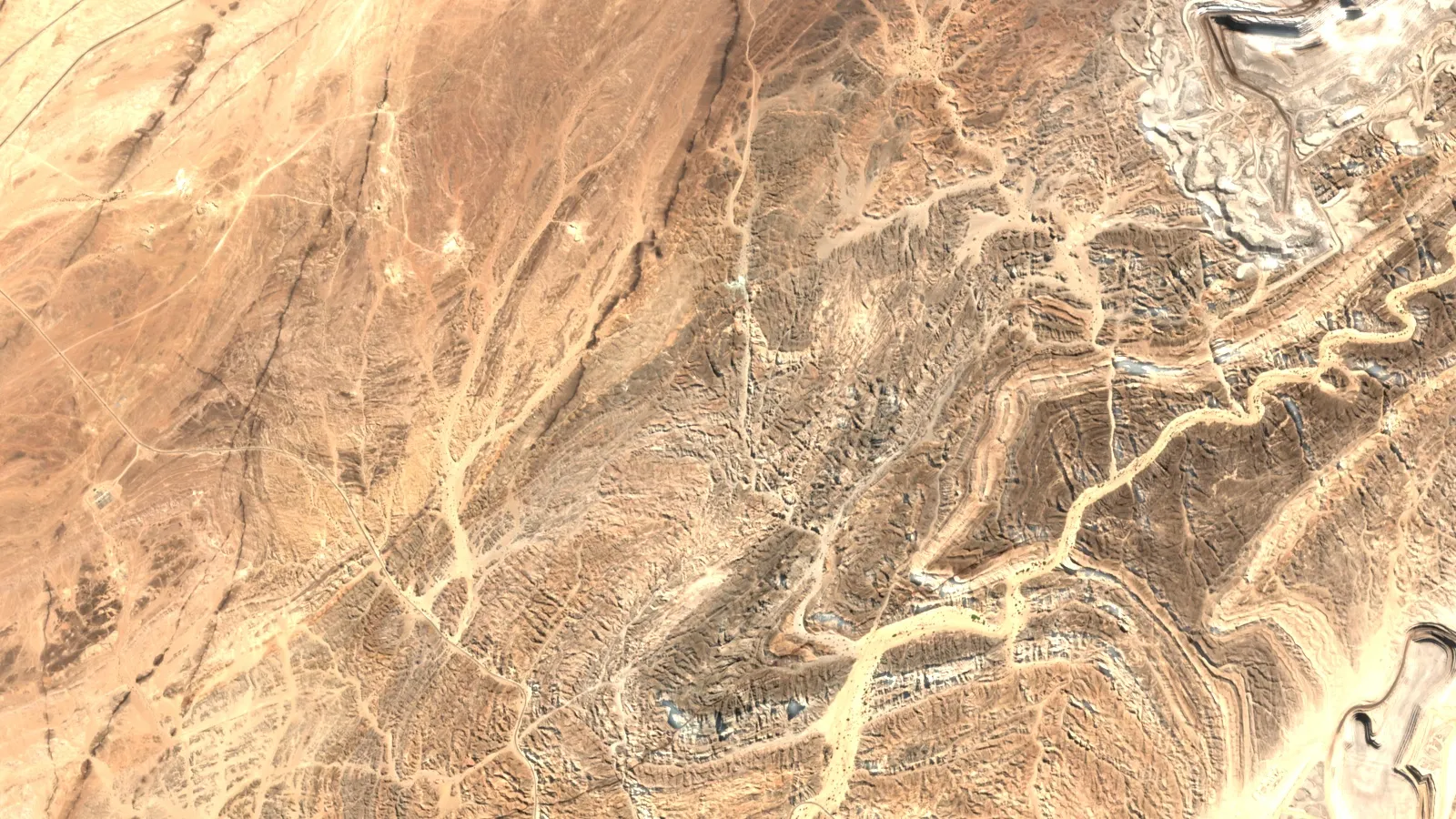
Satellite imagery cannot measure uranium grade, but it can map surface clues that guide a field team: clay and iron alteration, drainage and palaeochannels, rock units and structure. Farmonaut lists uranium among the minerals its satellite detection reports cover; results are exploration targets that sit ahead of any resource estimate. If you hold or are weighing ground in one of these countries, you can request a quote, read how satellite-based mineral detection works, or contact the team with an area of interest. Many of the same countries are also gold producers; see our table of gold production by country in Africa.
▶ Remote sensing for mining in three minutes: the six instrument families and why agreement between them matters. · 2:01
Safeguards at African uranium mines
Uranium mining brings radiation, dust and water risks that need monitoring and closure planning. The clearest African example is Gabon. At Mounana, about two million tonnes of tailings were released into local creeks before 1975, four million tonnes were then placed in the mined-out pit, and the tailings in the pit and along the creek were covered with rock and laterite soil. The rehabilitation was completed in July 2004 at a cost of €10.7 million, of which €7 million came from EU funds (WNA, Uranium in Africa).
In Namibia, a strategic environmental assessment of the whole uranium province inland from Swakopmund and Walvis Bay was carried out in 2007 to 2010, and it led to a management plan adopted in 2011 by the government and the mining companies (WNA, Namibia). Rössing’s 15 MWe solar plant, under construction, will supply most of its daytime power. Ask any operator for its tailings design, its water source and its closure bond before relying on its production plan.
Frequently asked questions
Which country has the most uranium in Africa?
Namibia, with 504,500 tU of identified resources on the 2025 Red Book basis, ahead of Niger (412,500 tU), South Africa (405,700 tU) and Tanzania (75,000 tU). These are resources recoverable at up to US$130/kgU, not reserves (World Nuclear Association).
Which African country produces the most uranium?
Namibia, with 7,333 tU in 2024, about 12% of world mine supply and the third-largest producer after Kazakhstan and Canada. Niger produced 962 tU that year and South Africa an estimated 200 tU.
Does Africa have uranium?
Yes. Namibia, Niger and South Africa together mined about 14% of the world’s uranium in 2024, and Malawi restarted its Kayelekera mine in 2025. Many more countries, from Tanzania and Zambia to Mauritania and Botswana, hold deposits that are not yet in production.
Which African countries have uranium mines?
Namibia (Husab, Rössing, Langer Heinrich), Niger (Somair at Arlit), Malawi (Kayelekera) and South Africa, where the World Nuclear Association estimates 200 tU a year. Other countries have deposits and projects but no operating mine.
What is the largest uranium mine in Africa?
Husab in Namibia. It produced 4,437 tU in 2024, about 7% of world supply, and ranks third among all mines worldwide behind McArthur River/Key Lake and Cigar Lake in Canada.
Does Gabon produce or export uranium?
No. Gabon mined about 28,000 tU at Mounana between 1960 and 1999 and has not produced since. Exploration continues, and the Red Book lists 4,800 tU of identified resources.
Does Zimbabwe have uranium?
It has a known deposit at Kanyemba in the Zambezi Valley and 2,000 tU of reasonably assured resources in the Red Book, but no operating uranium mine.
What happened to GoviEx Uranium?
GoviEx became a wholly owned subsidiary of Atomic Eagle Limited, which listed on the ASX in November 2025. Its Madaouela project in Niger lost its mining rights in July 2024; in August 2026 Atomic Eagle agreed a new mining convention with Niger and holds 60% of the project company, with Niger holding 40%.
Is Nexus Uranium an African company?
No. Nexus Uranium Corp. is a Canadian explorer, not an African producer. It held an option on the Cree East project in the Athabasca Basin of northern Saskatchewan, Canada, but CanAlaska, the owner, ended that option agreement in September 2025 (CanAlaska release, September 2025). It does not belong in a list of African producers.
Why has Niger’s uranium production fallen?
Because the Cominak mine closed in 2021, Azelik stopped in 2015, Imouraren never started, and Somair’s exports and ownership have been disrupted since the July 2023 coup. Niger mined 962 tU in 2024 against 4,116 tU in 2015.
What is the uranium price per pound?
Cameco’s month-end averages for 30 September 2026 were US$89.63 per pound spot and US$96.50 long-term. Prices change daily, so check UxC or TradeTech before using them.
Not investment advice.
This page is for information only. It is not investment advice, and no company named here is recommended. It is not legal advice: confirm licence and permit rules with the regulator in each country. Farmonaut results are exploration targets, not mineral resources or reserves. If you prospect in the field, get the licence and the landowner’s permission first, follow radiation and safety rules, and never use mercury.
Farmonaut mining
Screen African ground from space
Send a KML, KMZ or polygon and request a quote for a satellite mineral detection report on your licence area.
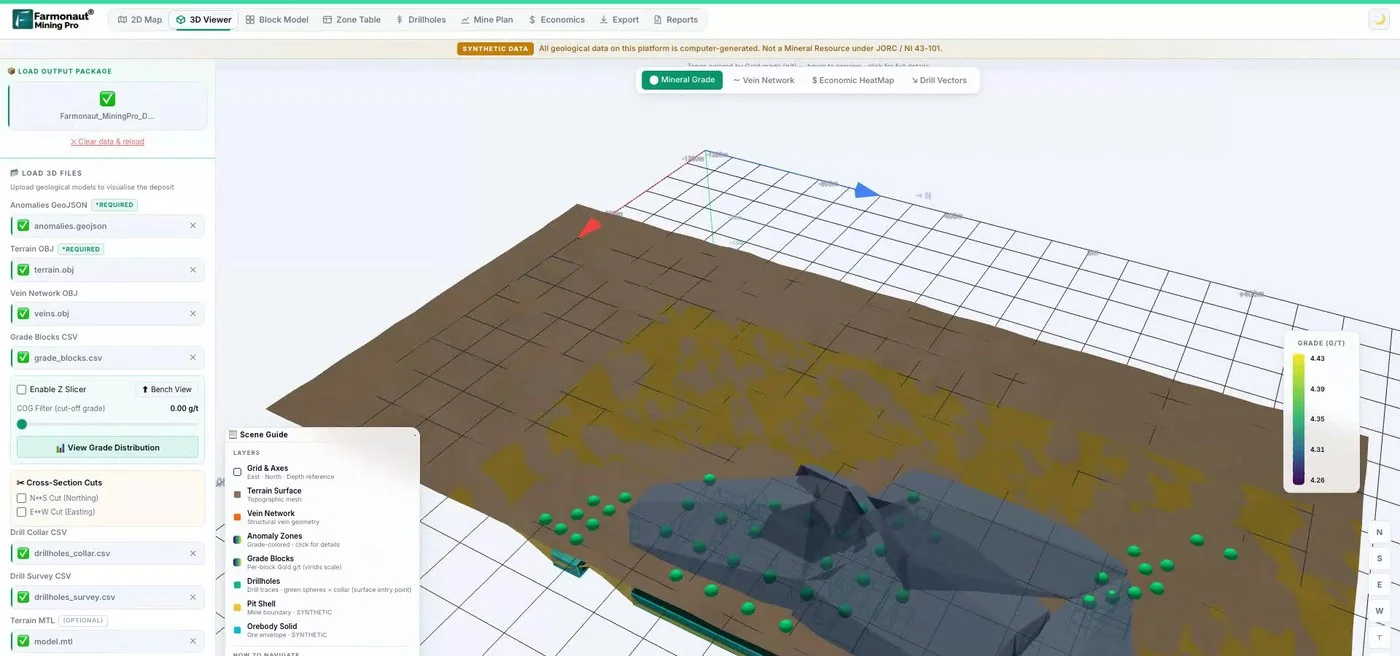
Mining Pro sample view, synthetic data
Keep reading
Sources
- World Nuclear Association, World Uranium Mining Production (updated October 2026): world-nuclear.org
- World Nuclear Association, Uranium in Africa (updated 23 October 2026): world-nuclear.org
- World Nuclear Association, Uranium in Namibia (updated 27 October 2026): world-nuclear.org
- World Nuclear Association, Uranium in Niger (updated 24 August 2026): world-nuclear.org
- Cameco, Uranium Price (month-end series to 30 September 2026): cameco.com
- Paladin Energy, Quarterly Report for the period ending 30 June 2026 (ASX, 22 July 2026): announcements.asx.com.au
- Bannerman Energy, Etango Project: bannermanenergy.com
- Aura Energy, Tiris Uranium Project: auraenergy.com.au
- Deep Yellow, Tumas Project: deepyellow.com.au
- OECD Nuclear Energy Agency and IAEA, Uranium 2026 Red Book press release (14 September 2026): oecd-nea.org
- CanAlaska Uranium, Cree East option agreement ended (newsfile, September 2025): newsfilecorp.com
- Mining MX, Atomic Eagle returns to Niger’s Madaouela uranium project (24 August 2026): miningmx.com
Discussion
Questions, corrections or field experience? Share them below. First-time comments are reviewed before they appear, and your email is never published.
No comments yet. Be the first to add a question or your experience.

 G.I.T.T.
 Jaunita Erss Ltd
 Almosi SARL
 SRK Consulting
 Berks Gold Limited
 Mwerezi Minerals Company Limited
 Mining SARL
 SenGold Invest SAS
 Sean Mining Limited
 NTS Group (Pty) Ltd
 Mine4Africa
 Lithspo Minerals Limited
 Tintina Mining Group
 Dalgety Minerals Pty Ltd
 Vortex Minerals Pty Ltd
 Licence holder · Nigeria · Gold + lithium