

Copper mining · Software comparison
Copper Mining Software: 12 Tools Compared by Job
Copper mining software splits into modelling, planning, fleet, monitoring, process and screening tools. This page compares 12 by job and owner, separates AI evidence from sales claims, and lets you test a recovery gain against a licence cost.
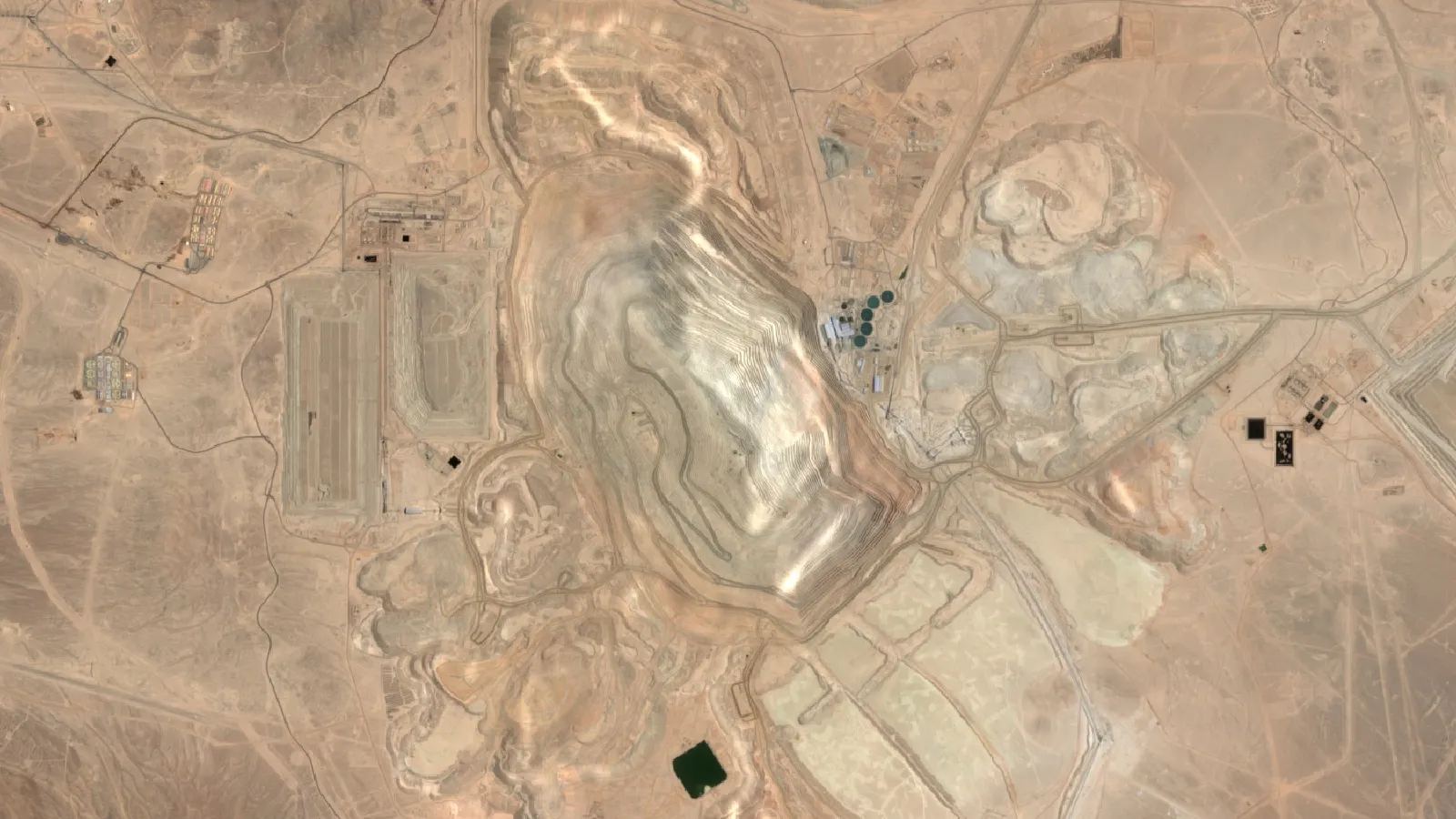
Key takeaways
- Copper mining software is a set of single-job tools; this page compares 12 across modelling, planning, fleet, monitoring, process simulation and satellite screening.
- Ownership has moved: Seequent (Leapfrog) joined Bentley in 2021, Sandvik completed its Deswik purchase on 4 April 2022 and Caterpillar completed its RPMGlobal acquisition in 2026.
- Komatsu reports 1,000 autonomous ultra-class trucks (April 2026); Cat’s published 1-billion-tonne result is from an iron ore site, not copper.
- AI prospectivity models for porphyry-skarn copper in southern Peru scored 0.89 to 0.912 AUC (SRK), but results varied by region in a published Americas study.
- Chile, the DRC and Peru produced about half of world mine copper in 2025 (USGS estimate: 11.2 of 23 million tonnes).
In this article
- Copper mining software at a glance: 12 tools by job
- How we chose these 12 tools
- Exploration and geological modelling software
- Mine planning and scheduling software
- Fleet management and autonomous haulage
- Monitoring, process simulation and satellite screening
- Where AI helps in a copper mine, and where it is a claim
- Which copper countries use this software most
- Which copper producers are growing or shrinking
- What copper mining software costs and how to value it
- How to choose copper mining software: a 6-point checklist
- Frequently asked questions
Copper mining software is not one product. It is a set of tools that each do one job: build a 3D model of the orebody, plan the pit or the stopes, dispatch the trucks, watch the slopes, simulate the plant, and screen new ground before anyone drills. This page compares 12 named tools across those jobs, shows who owns each one today, and gives a calculator to test what a small gain in recovery is worth against a licence fee. AI features appear in several of them, so the page also separates what is proven from what is a sales claim.
Terms used below. Grade is the share of copper in the rock, written as % Cu. Recovery is the share of that copper the plant actually captures. A block model is a 3D grid of small blocks, each with an estimated grade, that mine plans are built on. Implicit modelling means the software fits a smooth 3D surface through the drill data instead of a geologist drawing every outline by hand. Vendor pages are marketing, so claims quoted from them are marked as the vendor’s own.
Copper mining software at a glance: 12 tools by job
The table lists each tool, the job it does, who owns it according to the vendor or a filing we opened, and the reader it suits best. Vendors in this market do not publish list prices on the pages we read, so none are quoted here; you get a quote after a demo.
| Tool | Main job | Owner (checked) | Best for |
|---|---|---|---|
| Leapfrog Geo | 3D geological modelling | Seequent, part of Bentley Systems | Explorers building a model from drill holes |
| Maptek Vulcan | Geology and mine planning | Maptek | Sites that want modelling and planning in one family |
| GEOVIA Surpac | Geology and mine planning | Dassault Systèmes | Open pit and underground resource modelling |
| Micromine Origin | Exploration, modelling, resource estimation | Micromine, a Weir company | Juniors and mid-size teams |
| Deswik | Mine design and scheduling | Sandvik | Open pit and underground metal mines |
| Hexagon MinePlan | Block models, planning, scheduling | Hexagon | Teams sharing one block model across roles |
| RPMGlobal software | Simulation, planning, asset management | Caterpillar (since 2026) | Mines already on Caterpillar equipment |
| Cat MineStar Command | Autonomous haulage | Caterpillar | Large truck fleets |
| Komatsu FrontRunner | Autonomous haulage | Komatsu | Large truck fleets |
| Maptek Sentry | Slope and wall monitoring | Maptek | Open pits with wall stability risk |
| HSC Chemistry (HSC Sim) | Process simulation | Metso | Metallurgists testing flowsheets |
| Farmonaut Mining Pro | Satellite screening of licence areas | Farmonaut | Owners and explorers before drilling |
How we chose these 12 tools
This is a comparison by job, not a ranking, and no vendor paid to be on it. Each tool is here because its vendor page or a company filing shows a current product, a named owner, and a job that applies to a copper operation. We left out tools whose current owner or product status we could not confirm. Several names that appear in older lists of copper software are missing for that reason, and one popular surveying app that older lists attached to a mine-planning vendor does not belong to it. The 12 are spread across the mine life, so you can see where each fits. Our guide to the 7 stages of the mining process shows the full sequence from prospecting to closure.
Exploration and geological modelling software
This group turns drill holes, assays and maps into a model of where the copper is. Its output feeds every later step, because a mine plan is only as good as the block model under it. Our comparison of 3D geological modelling software goes deeper on this group alone.
1. Leapfrog Geo
Leapfrog Geo builds implicit 3D models. Seequent says it lets teams skip time-consuming wireframing and update models as new data arrives. Seequent has been part of Bentley Systems since 2021. For a full walk-through see our Leapfrog geology software guide.
Best for: exploration teams that need models rebuilt quickly after each drill programme. Pros: Seequent says it removes manual wireframing. Cons: it is a geology tool, so pit design and scheduling need other software.
2. Maptek Vulcan
Maptek lists Vulcan as its 3D mine planning and geological modelling product. The same family includes DomainMCF, which Maptek describes as machine learning assisted domain modelling (a domain is a zone of rock with similar grade behaviour).
Best for: sites that want geology, design and scheduling from one vendor. Pros: broad family that also covers laser scanning and drill and blast. Cons: the machine learning tool is a separate product to evaluate, and the vendor page gives no accuracy figures.
3. GEOVIA Surpac
Dassault Systèmes sells GEOVIA Surpac for drill hole data management, geostatistics, resource models, and mine designs for open pit or underground operations. It is organised by role, with separate modules for block modelling and sectional geology.
Best for: geologists and engineers who want one tool from drill data to a resource model. Pros: role-based modules, covers open pit and underground. Cons: the vendor page gives no speed or accuracy figures.
4. Micromine Origin
Micromine sells exploration, modelling and resource estimation tools, plus separate planning and operations products. Its site names Origin as the geo-modelling product in a Gold Candle exploration case study, and Pitram for underground fleet management and mine control. In a Micromine case study, Çayeli Bakır İşletmeleri in Turkey reported that Pitram doubled target-hitting activities and raised productivity by 18% (the vendor’s own figure, not an independent test).
Best for: juniors and mid-size teams that want exploration and underground control from one vendor. Pros: covers the path from first drill hole to production. Cons: case-study results come from the vendor and are for one mine.
Mine planning and scheduling software
Planning software takes the block model and decides what to mine, in what order, and when. It sets the pit shape, the stripping ratio (waste moved per tonne of ore) and the cash-flow profile that investors look at. Each tool below expects a trusted block model as its input, and our guide to ore reserve estimation methods explains how those estimates are made.
5. Deswik
Deswik offers CAD design (Spatial), scheduling (Planning), spatial data management (MDM), weekly planning (OPS) and optimization tools, with integrated solutions for open pit and underground metals. Sandvik completed its purchase of Deswik on 4 April 2022 and reported Deswik’s trailing revenue at A$79 million as of October 2021.
Best for: teams that want design and scheduling linked, so a design change updates the schedule. Pros: a full chain from design to weekly plan. Cons: owned by an equipment maker, so check how data moves to and from other makers’ fleets.
6. Hexagon MinePlan
Hexagon describes MinePlan 3D as a single connected platform for geologists and engineers, covering drill hole management, geomodelling, resource estimation, scheduling and optimization. The 2025 Release 1 added a Block Model Manager, aimed at version control and access to block models.
Best for: sites where geology and planning teams must work on the same block model. Pros: shared model management. Cons: the vendor post is a release note, so benefits are claims, not measured results.
7. RPMGlobal software
Caterpillar completed its acquisition of RPMGlobal in 2026 after announcing it in October 2025. RPMGlobal says its products and support continue under the same brand, and that it works across simulation, planning and asset management. Mining Technology reported that the price was not disclosed.
Best for: mines that run Caterpillar equipment and want planning data tied to it. Pros: RPMGlobal cites nearly 50 years of mining domain experience. Cons: the integration plans are new, so check what stays vendor-neutral.
Fleet management and autonomous haulage
Haul trucks are the largest moving cost on most open pits, so dispatch and automation software gets the most attention. Both big makers sell it, and both report their own totals.
Chart
Komatsu autonomous trucks by model
Approximate trucks out of 1,000 commissioned (April 2026), from Komatsu’s stated shares
8. Cat MineStar Command
Cat’s autonomous haulage system is Command for hauling. In 2019 Caterpillar and Fortescue reported 1 billion tonnes moved with it at an iron ore operation, and said productivity at the site improved by 30%. That is an iron ore result reported by the miner and the maker, not a copper benchmark.
Best for: large fleets on well-surveyed haul roads. Pros: a published result from a large operating fleet. Cons: that result is from iron ore, so a copper site should ask for its own trial data.
9. Komatsu FrontRunner
Komatsu says it commissioned its 1,000th autonomous ultra-class haul truck with FrontRunner in April 2026, a 930E-5AT at Nevada Gold Mines, and says it was first to market in 2008. About 52% of the 1,000 are 930E models and 24% each are 830E and 980E (Komatsu, via International Mining).
Best for: large fleets of electric-drive ultra-class trucks. Pros: Komatsu says it is the first maker to reach 1,000 autonomous ultra-class trucks. Cons: the totals are Komatsu’s own and there is no independent audit in the sources we read.
Monitoring, process simulation and satellite screening
10. Maptek Sentry
Maptek Sentry is a LiDAR-based system for stability and convergence monitoring. LiDAR is a laser scanner that measures distance, so small wall movements show up as changes between scans.
Best for: open pits and underground openings where ground movement is a safety issue. Pros: measures movement directly. Cons: it covers the area the scanner can see, so it does not replace a slope design.
11. HSC Chemistry (HSC Sim)
Metso’s HSC Chemistry includes HSC Sim, a module where each process unit is an Excel file and the flowsheet is drawn graphically. It supports particle, reaction and distribution models. Metallurgists use this kind of model to test how a change in grind size or reagents affects recovery before trying it in the plant. For the downstream steps see our page on copper concentrate refining.
Best for: metallurgists and process engineers. Pros: spreadsheet-based units are easy to inspect. Cons: it needs real test data to be useful, and it is not a scheduling tool.
12. Farmonaut Mining Pro
Farmonaut applies satellite imagery and AI to screen a licence area before drilling. You supply a polygon or KML/KMZ file and the mineral, and the report comes back in 5 to 20 business days with target zones and, in the higher tier, drilling guidance. We state up to 80-85% lower early-exploration cost than a traditional ground programme. The output is an exploration target, not a resource estimate, and it does not replace sampling. For an example of how satellite imagery is applied, see our post on satellite imagery applications in Brazilian mining.
Best for: licence owners and consultants deciding where to sample first. Pros: no ground disturbance in the screening stage. Cons: targets must still be confirmed with field work and drilling.
Where AI helps in a copper mine, and where it is a claim
AI appears in three places: finding places to look, planning the mine, and running equipment. The evidence is strongest where there is a lot of labelled data and a clear measure of success.
Finding places to look. Machine learning can rank ground by how much it resembles known deposits. A study by SRK Peru in the Andahuaylas-Yauri belt compared four models and reported scores (area under the ROC curve, where 1.0 is perfect) of 0.89 for random forest, 0.912 for a multilayer perceptron, 0.901 for a convolutional network and 0.907 for a graph network. SRK picked the graph network because its maps made more geological sense, even though the perceptron scored highest. A paper in GSA Bulletin (summarised by EarthByte) found good scores for North America but poorer ones for South America, so a model that works in one belt can fail in another. The best-known example in practice is KoBold Metals, which says it used AI to identify a high-grade copper resource at Mingomba in Zambia after buying the project in December 2022. Miningmx reported in May 2026 that it broke ground on a US$2.3 billion mine planned for more than 300,000 tonnes of copper a year, and that KoBold has yet to bring a mine into production anywhere.
Planning the mine. Optimization software searches many pit and schedule options for the best value. This is mathematics more than learning, and Deswik describes its tools that way. Treat any claim of a percentage gain as a vendor figure until a customer confirms it on a named mine.
Running equipment. Autonomous haulage is the clearest working case, with Komatsu reporting 1,000 trucks. Predictive maintenance is also sold widely, but we found no independent copper-mine data set to quote, so we give no figure.
Our guide to big data analytics in mining covers how sensor and drill data are collected for these models.

▶ Six kinds of AI geology tools, what each one does, and three questions to ask before choosing one. · 3:18
Which copper countries use this software most
Chile, the Democratic Republic of the Congo and Peru together produce about half of world mine output. The USGS estimates 2025 mine production at 5.3 million tonnes for Chile, 3.2 million for the DRC and 2.7 million for Peru, out of a rounded world total of 23 million tonnes (USGS, 2026). The United States produced about 1.0 million tonnes, and Arizona accounted for roughly 70% of it. See our pages on the largest copper producers, where copper is found in the United States and the Kamoa-Kakula copper mine in the DRC.
Chart
Copper mine production, top seven countries
Thousand tonnes of recoverable copper, 2025 estimate
Mingomba shows the kind of problem these tools face: the deposit lies about 1,700 metres below surface in a region known for wet underground conditions that need large-scale pumping (Miningmx, May 2026). At that depth an error in the 3D model is costly to fix, which is why modelling and ground monitoring matter.
Which copper producers are growing or shrinking
The USGS table also gives 2024 figures, so you can see who is changing. In its estimates, the DRC rose from 2.99 to 3.2 million tonnes, Russia from 1.02 to 1.3 million and Zambia from 823,000 to 940,000 tonnes. Indonesia fell from 1.01 million to 710,000 tonnes and Chile from 5.51 to 5.3 million. The USGS does not give a cause for each move.
Chart
Copper mine output, 2024 against 2025 estimate
Thousand tonnes, selected countries
What copper mining software costs and how to value it
Vendors quote per seat, per module, per site or by subscription, and the pages we read show no list prices, so expect to request quotes and compare like for like: same number of users, same modules, same support level. A better question than “what does it cost” is “how much copper must it save or recover to pay for itself”.
Chart
Annual average copper price, 2021 to 2025
US cents per pound; 2025 is an estimate
Copper’s price changes that sum. The USGS reports the annual average COMEX price at 424.3 cents a pound in 2021, 400.7 in 2022, 385.7 in 2023, 421.6 in 2024 and an estimated 480 in 2025. On 15 October 2026 Trading Economics showed copper at 6.52 US dollars a pound, up about 32% on a year earlier, and an all-time high of 6.85 in September 2026. At higher prices, each extra point of recovery is worth more, so the break-even for a software licence drops. Use today’s price, not these.
The calculator below works from your own ore tonnes, grade, recovery and price. Enter a realistic gain in recovery, such as a half point from better process control, and the annual cost of the software. It shows the extra copper, the extra revenue, the net after the licence cost, and the smallest gain that covers the cost.
Calculator
What is a small recovery gain worth against a licence cost?
Enter your own ore, grade, recovery gain, copper price and software cost.
- Extra copper recovered per year (tonnes): 250
- Extra revenue minus software cost (US$ million): 1.3
- Smallest recovery gain that covers the cost (points): 0.30
Example values only, not a benchmark or a forecast. The copper price is an input: example, use today’s price (US$ per pound). Revenue is before smelter charges, royalties, tax and operating cost. Fixed constant: 1 tonne = 2,204.62 pounds.
How to choose copper mining software: a 6-point checklist
- What job do you need done? Match the tool to the job in the table. A junior with a drill programme needs modelling first; a producer with a fleet needs dispatch.
- Which file formats must it read? Ask for a test with your own drill hole and survey files, not a demo data set.
- Who owns the vendor now? Several vendors changed owners between 2021 and 2026. Ask about data export if the owner also sells equipment.
- Can your team run it? Check training, local support and how many people on your team already know it.
- What is the full cost? Include modules, extra seats, training, hardware and cloud fees.
- What would prove it worked? Agree one number up front, such as reconciliation error between the model and the mill, and measure it after six months.
Copper is also sold on its colour, ore type and use, which affects how it is processed; our page on copper metal, ore colour and uses explains the basics, and our guide to copper deposits and where to explore covers the deposit types these tools model.
▶ Explains the three jobs an AI mining app can do: find places to look, plan the mine and run it. · 3:52
Frequently asked questions
What is the best software for copper mine planning?
No single tool is best. Deswik, Hexagon MinePlan, GEOVIA Surpac, Maptek Vulcan and Micromine all cover design and scheduling for metal mines according to their own pages. Pick by your file formats, your team’s skills and a test on your own data.
What software do copper explorers use to build a 3D model?
Leapfrog Geo, Micromine Origin, GEOVIA Surpac and Maptek Vulcan are four tools whose vendors describe geological modelling from drill data. Leapfrog uses implicit modelling, which fits surfaces through the data.
Does AI really find copper?
It can rank ground for follow-up. The SRK Peru study scored four models between 0.89 and 0.912, but a published North and South America study showed results vary by region. A discovery still needs drilling to confirm it.
How many autonomous trucks are working in mines?
Komatsu reported its 1,000th FrontRunner truck in April 2026. We did not find a current Caterpillar total, so no combined number is given.
How much does copper mining software cost?
The vendor pages we read give no prices. Request quotes for the same modules and user numbers, and use the calculator on this page to see the recovery gain needed to cover the cost.
Who owns Deswik, Leapfrog and RPMGlobal now?
Sandvik completed its Deswik purchase in April 2022. Seequent, which makes Leapfrog, joined Bentley Systems in 2021. Caterpillar completed its RPMGlobal acquisition in 2026.
Can software replace drilling in copper exploration?
No. Models and satellite screening narrow the search and rank targets. Only samples and drill holes measure grade and thickness. Satellite results are exploration targets that sit ahead of a resource estimate.
What copper mining software suits a small or early-stage project?
Early projects usually need modelling and screening, not fleet automation. A modelling package plus satellite screening of the licence area is a common starting set; add planning software when you have a resource to plan.
Which software monitors slope stability in a pit?
LiDAR systems such as Maptek Sentry measure wall movement over time. Geotechnical engineers combine them with sensors and a slope design.
What tools does a copper mine use besides software?
Software sits alongside the physical plant: drills, shovels, haul trucks, crushers and flotation circuits that concentrate the copper. The software plans, models and controls them.
This page is for information only. It is not investment advice or a product recommendation. Vendor claims are the vendors’ own. Check each product with the vendor and test it on your own data before you buy.
Farmonaut mining
Get a quote to screen your copper licence from space
Send your licence polygon and we quote a satellite screening report that ranks exploration targets ahead of drilling.

Mining Pro sample view, synthetic data
Keep reading
Sources
- USGS, Mineral Commodity Summaries 2026: Copper (2026): pubs.usgs.gov
- Seequent, Leapfrog Geo (vendor page): seequent.com
- Seequent, About us: joined Bentley Systems in 2021: seequent.com
- Maptek, Vulcan (vendor page): maptek.com
- Maptek, Sentry (vendor page): maptek.com
- Dassault Systemes, GEOVIA Surpac (vendor page): 3ds.com
- Micromine, mining software and case studies (vendor page): micromine.com
- Deswik, home page (vendor): deswik.com
- Sandvik, completes the acquisition of Deswik (4 April 2022): home.sandvik
- Hexagon Mining blog, MinePlan 2025 Release 1 (16 July 2025): blog.hexagonmining.com
- RPMGlobal, Caterpillar completes acquisition of RPMGlobal (2026): rpmglobal.com
- Mining Technology, Caterpillar acquires RPMGlobal (2026): mining-technology.com
- MINING.COM, Caterpillar moves a billion tonnes autonomously at Fortescue (13 November 2019): mining.com
- International Mining, Komatsu commissions 1,000 autonomous ultra-class trucks (21 April 2026): im-mining.com
- Metso, HSC Chemistry process simulation module: metso.com
- SRK, Porphyry-skarn copper prospectivity mapping with machine learning models: srk.com
- EarthByte, Alfonso et al., GSA Bulletin (2024): copper prospectivity by positive-unlabeled machine learning: earthbyte.org
- Miningmx, KoBold breaks ground on giant Zambia copper mine (5 May 2026): miningmx.com
- Trading Economics, Copper (15 October 2026): tradingeconomics.com
- Alfonso et al., GSA Bulletin (2024), doi 10.1130/B37614.1: doi.org
Discussion
Questions, corrections or field experience? Share them below. First-time comments are reviewed before they appear, and your email is never published.
No comments yet. Be the first to add a question or your experience.

 Almosi SARL
 SRK Consulting
 Berks Gold Limited
 Mwerezi Minerals Company Limited
 Mining SARL
 SenGold Invest SAS
 Sean Mining Limited
 NTS Group (Pty) Ltd
 Mine4Africa
 Lithspo Minerals Limited
 Tintina Mining Group
 Dalgety Minerals Pty Ltd
 Vortex Minerals Pty Ltd
 Faith At Work (Pty) Ltd
 Geotech Mining Solutions plc

 Licence holder · Nigeria · Gold + lithium










