

US copper geography · Mine guide
Where Is Copper Found in the US? Mines by State
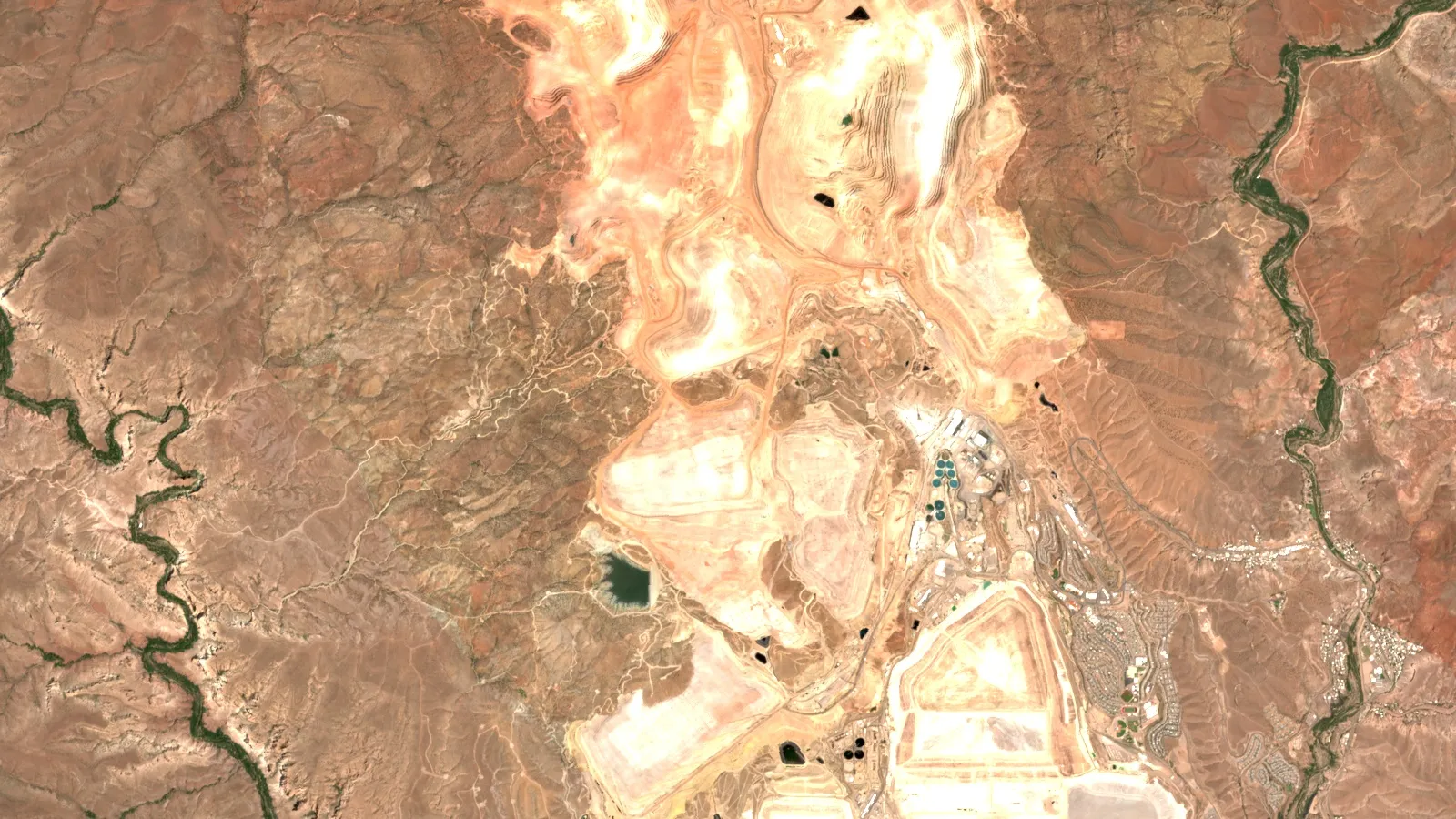
Arizona produced about 70% of the 1.0 million tonnes of copper the US mined in 2025 (USGS estimate). Most of it comes from porphyry mines owned by Freeport-McMoRan, Rio Tinto, Capstone and Asarco.
Key takeaways
- Arizona made about 70% of US mine copper in 2025; Utah, New Mexico, Nevada, Montana, Michigan, Missouri and Alaska supplied the rest (USGS, 2025 estimate).
- Morenci is the biggest mine at about 0.7 billion lb in 2025; Bingham Canyon in Utah made 125,100 t (Freeport-McMoRan and Rio Tinto, 2025).
- US mine output fell 5% to 1.0 million t in 2025, and net import reliance was 57% (USGS).
- Copper World (approved 21 October 2026) and Florence (first cathode March 2026) are the newest Arizona projects.
- Most US deposits are porphyry; Michigan has native copper and Alaska has volcanogenic massive sulfide projects.
In this article
- Where is copper found in the US? Output by state
- US copper mines ranked by company-reported output
- Arizona: the porphyry belt behind most US copper
- Utah, New Mexico, Nevada and Montana
- Michigan and Alaska: native copper and frontier projects
- Copper deposit types found in the US
- New US copper mines and projects to watch
- How much copper does the US mine, and how much does it import?
- Methods, water and land use at US copper mines
- Calculator: how much copper is in a deposit
- How satellite imagery helps screen copper ground
- Frequently asked questions
Where is copper found in the United States? Mostly in Arizona. The USGS says Arizona produced about 70% of the 1.0 million tonnes of copper the country mined in 2025 (estimate), and the rest came from Utah, New Mexico, Nevada, Montana, Michigan, Missouri and Alaska. Most of it comes from porphyry deposits, which are large, low-grade bodies of rock where hot fluids from a cooling magma chamber left copper minerals. Below you will find the state-by-state picture, a ranking of the biggest mines with their owners and output, the deposit types, the new projects coming on, and a calculator that turns tonnes and grade into pounds of copper (USGS Mineral Commodity Summaries 2026).
For the global picture, including Chile, DR Congo and Peru, read our guide to where copper is found on Earth. This page stays inside the United States.
Where is copper found in the US? Output by state
The USGS counts 26 US mines that recovered or processed copper in 2025, and 17 of them made more than 99% of mine output. The country also has 2 primary smelters, which turn concentrate into metal, and 14 plants that make cathode by solvent extraction and electrowinning (SX/EW, a leach-and-plate process that skips the smelter). The table lists the states the USGS names, with the main operations and the best published figure for each. Figures are for the year shown and are not all on the same basis, so do not add them up.
| State | Main copper operations | Operator or owner | Main deposit type | Published output |
|---|---|---|---|---|
| Arizona | Morenci, Safford, Sierrita, Bagdad, Miami, Pinto Valley, Ray, Mission, Silver Bell, Florence | Freeport-McMoRan, Capstone Copper, Asarco (Grupo México), Taseko | Porphyry | About 70% of US mine output (USGS, 2025 estimate) |
| Utah | Bingham Canyon (Kennecott) | Rio Tinto | Porphyry and skarn | 125,100 t of copper in concentrate (Rio Tinto, 2025) |
| New Mexico | Chino, Tyrone | Freeport-McMoRan | Porphyry and skarn | 150 and 32 million lb (FCX, 2025) |
| Nevada | Robinson (Ely) | KGHM | Porphyry | Three open pits (Liberty, Tripp-Veteran, Ruth); no 2025 output figure used here |
| Montana | Continental Pit, Butte | Montana Resources (Washington Companies) | Porphyry | About 54 million lb (2024, company) |
| Michigan | Eagle (nickel-copper); Copperwood project | Talon Metals (bought from Lundin Mining, completed 9 January 2026); Highland Copper | Magmatic sulfide; sediment-hosted | Eagle: over 185,000 t of copper since 2014 |
| Alaska | Arctic and Bornite (Ambler district); Pebble | Ambler Metals; Northern Dynasty | Volcanogenic massive sulfide (Arctic) | Projects, no mine output yet |
The USGS also lists Missouri among the producing states, but it gives no mine-level figures for it. For a map of every active mine by state, use our US mining map.
US copper mines ranked by company-reported output
This ranking uses each operator’s own 2025 report. Freeport-McMoRan (FCX) reports in million pounds, Rio Tinto and Capstone in tonnes; the chart converts tonnes to pounds at 2,204.6 lb per tonne so that all eight bars share one unit. Morenci is shown at 100%, which includes the 28% held by Sumitomo partners. The ranking covers only mines whose 2025 output is published in a company filing. Asarco’s Ray, Mission and Silver Bell, KGHM’s Robinson and Montana Resources’ Continental Pit are not ranked because their 2025 mine-level totals were not available in the filings cited here, so the chart is not a full league table of every US mine.
Chart
US copper mines with reported 2025 output
Copper produced in 2025, million pounds (Morenci at 100%; tonnes converted at 2,204.6 lb per tonne)
- Morenci, Arizona (Freeport-McMoRan 72%, Sumitomo companies 28%). Open pit in Greenlee County, running since 1939, with 0.7 billion lb of copper in 2025 (FCX annual report). It is a porphyry deposit with oxide, secondary sulfide and primary sulfide ore.
- Safford and Lone Star, Arizona (Freeport-McMoRan). Graham County leach operation: 287 million lb in 2025, up from 249 million lb in 2024.
- Bingham Canyon, Utah (Rio Tinto Kennecott). 125,100 t of copper in concentrate in 2025 (Rio Tinto, fourth quarter 2025 review). The pit is more than 0.75 miles deep and 2.5 miles wide and was named a National Historic Landmark in 1972 (Kennecott).
- Sierrita, Arizona (Freeport-McMoRan). Pima County, about 20 miles southwest of Tucson: 184 million lb of copper in 2025.
- Chino, New Mexico (Freeport-McMoRan). Grant County, east of Silver City, mining since 1910: 150 million lb in 2025. A porphyry deposit with adjacent skarn.
- Bagdad, Arizona (Freeport-McMoRan). Yavapai County: 149 million lb in 2025. FCX has defined an option to more than double the concentrator capacity.
- Pinto Valley, Arizona (Capstone Copper). Gila County: 42,382 t in 2025, down from 57,272 t in 2024 because of lower mill throughput (Capstone, fourth quarter 2025).
- Tyrone, New Mexico (Freeport-McMoRan). A leach operation near Silver City: 32 million lb in 2025, down from 43 million lb in 2024.
Arizona: the porphyry belt behind most US copper
Arizona’s mines follow a belt of porphyry deposits that runs through the south and east of the state. The USGS says porphyry deposits supply more than 60% of annual world copper, and its deposit model reports that the altered rock around Ray, Arizona, covers about 82 square kilometres, the largest area of any deposit it compared (USGS Scientific Investigations Report 2010-5070-B). The clusters are easy to place on a map:
Chart
Freeport-McMoRan mines, 2024 versus 2025
Copper production, million pounds
- Greenlee and Graham counties (east): Morenci and Safford, both Freeport-McMoRan, with Morenci about 50 miles northeast of Safford on U.S. Highway 191.
- Globe-Miami district (Gila County): Miami and Pinto Valley, with the Resolution deposit near Superior just to the west (in Pinal County).
- Ray and Hayden: Asarco’s Ray mine and the Hayden smelter, which Grupo México is evaluating for reopening.
- Around Tucson (Pima County): Sierrita, Asarco’s Mission and Silver Bell, and Hudbay’s Copper World project.
- Bagdad (Yavapai County, west-central): a single large pit and concentrator.
Most Arizona ore is turned into concentrate at a mill (a plant that grinds ore and floats the copper minerals), then sent to a smelter. FCX runs the Miami smelter, one of only 2 primary smelters in the country, which is why the USGS can report so few. Leach ore at Safford, Morenci, Miami and Tyrone goes straight to cathode instead.
Grupo México, which owns Asarco, reports that its Ray concentrator makes about 36,000 t of copper in concentrate a year and could reach 94,000 t with a US$1.8 billion expansion over roughly three years. It also studies a US$1.9 billion concentrator at Silver Bell that would add 65,000 t a year (Grupo México, fourth quarter 2025 results). Both are feasibility-stage plans, not approved projects.
Utah, New Mexico, Nevada and Montana
Utah. Bingham Canyon, southwest of Salt Lake City in the Oquirrh Mountains, is the only large producer. Rio Tinto’s Kennecott also runs a smelter and refinery. Ore grade at the pit averaged 0.40% copper in 2025, with gold, silver and molybdenum as by-products (Rio Tinto, 2025). Rio Tinto reports that stripping for the open pit extension continues through 2027.
New Mexico. Chino and Tyrone, both Freeport-McMoRan, sit a short drive from Silver City in Grant County. Chino has a concentrator (36,000 t of ore a day design capacity) and an SX/EW plant; Tyrone is leach only, with a capacity of about 100 million lb of cathode a year.
Nevada. Robinson, near Ely in White Pine County, is owned by Polish miner KGHM. Its three pits (Liberty, Tripp-Veteran and Ruth) feed a concentrator that makes a copper-gold concentrate and a molybdenum concentrate (Mining Outlook).
Montana. Butte is the state’s copper centre. Montana Resources, part of the Washington Companies, runs the Continental Pit and says it has produced over 2.5 billion lb of copper since 1985 (Montana Resources). It moved about 54 million lb in 2024 and expected more than 70 million lb once it reached a higher-grade zone (KBZK). For the history of the Berkeley and Continental pits, see our Butte copper mine guide.
Michigan and Alaska: native copper and frontier projects
Michigan. The Keweenaw Peninsula holds the country’s most unusual copper. The metal there occurs as native copper, meaning pure metal rather than a sulfide mineral, in basalt lava flows created when the Midcontinent Rift began pulling North America apart about 1.1 billion years ago (National Park Service). Today Michigan’s copper output comes from one operating mine. The Eagle mine in Marquette County, an underground nickel-copper mine, has produced over 185,000 t of copper since it started production (to late 2025) and is owned by Talon Metals, which completed its purchase from Lundin Mining on 9 January 2026 (Mining.com). Highland Copper is developing the Copperwood project in Wakefield Township, Gogebic County (Highland Copper).
Alaska. Alaska has projects rather than copper mines. In the Ambler district of the northwest, Ambler Metals (owned 50/50 by Trilogy Metals and South32) holds the Arctic volcanogenic massive sulfide deposit and the Bornite copper-cobalt deposit. The Army Corps of Engineers published its notice of intent to prepare an environmental impact statement for Arctic in September 2026, and the federal permitting schedule targets a Record of Decision in September 2028 (Trilogy Metals, October 2026). The Pebble project in the southwest remains tied up in court: Northern Dynasty reported that oral argument on the EPA veto was held on 25 June 2026 and that the matter was ready for decision.
Copper deposit types found in the US
Knowing the deposit type tells you what to look for on the ground and in satellite imagery.
- Porphyry copper. Large, low-grade bodies tied to intrusions, with copper in veins and specks through altered rock. Morenci, Bagdad, Sierrita, Bingham Canyon, Robinson and Resolution are examples. Bingham ore averaged 0.40% copper in 2025.
- Skarn. Copper formed where an intrusion meets limestone. Chino has skarn deposits beside its porphyry, and Bingham has a skarn component at its North Rim.
- Sediment-hosted. Copper laid down in layered sedimentary rock, the type targeted at Copperwood in Michigan.
- Native copper. Pure metal in basalt, the Keweenaw type. Mined on the Keweenaw Peninsula from the 1840s, it is no longer a significant source.
- Volcanogenic massive sulfide (VMS). Copper-zinc-lead lenses formed on an ancient seafloor, as at Arctic in Alaska.
- Magmatic nickel-copper sulfide. Sulfides that separated from a mafic magma, as at Eagle in Michigan.
Within a porphyry, the copper minerals change with depth. Near the surface, weathering turns sulfides into oxides such as chrysocolla that acid can dissolve (the leach ore at Tyrone). Below that, a zone of secondary sulfides such as chalcocite is richer, and deeper still is primary chalcopyrite, which goes to the mill.
New US copper mines and projects to watch
US mine output has been flat to falling, so the projects below matter. Status is as reported by each company on the date shown.
- Copper World, Arizona (Hudbay 70%, Mitsubishi 30%). Hudbay and Mitsubishi approved construction on 21 October 2026. The definitive feasibility study sets annual output at 102,000 t of copper over the first 10 years, with first production targeted for the second half of 2029 (Hudbay). Read the detail in our Copper World guide.
- Resolution, Arizona (Rio Tinto 55%, BHP 45%). The land exchange was completed on 16 March 2026 and the Ninth Circuit declined to rehear the case on 29 September 2026 (Resolution Copper, Chamber Business News). Opponents including the San Carlos Apache Tribe still object to the project (KJZZ).
- Florence Copper, Arizona (Taseko). An in-situ operation that leaches copper in place through wells. It harvested its first cathode in March 2026, the first greenfield US copper since 2008, with a nameplate capacity of 85 million lb a year (Mining.com).
- Ray and Silver Bell expansions, Arizona (Asarco). Feasibility stage, described above.
- Arctic, Alaska; Copperwood, Michigan; Pebble, Alaska. Permitting or financing stage, described above.
For listed companies behind these mines, see our overview of US copper mining companies. It gives facts about the companies and is not investment advice.
How much copper does the US mine, and how much does it import?
US mine output was an estimated 1.0 million t in 2025, down 5% from 2024 and worth about US$11 billion (USGS). Apparent consumption of refined copper and old scrap was 2.2 million t in the same year, and net import reliance was 57% of consumption. Refined imports jumped to 1.7 million t in 2025 from 903,000 t in 2024, while the US exported 340,000 t of ore and concentrate. So part of the copper dug in the US is smelted abroad.
Chart
US copper: mined versus used
Thousand tonnes of copper, 2021 to 2025 (2025 estimated)
Copper use in the US breaks down as building construction 42%, electrical and electronic products 23%, transportation 18%, consumer and general products 10% and industrial machinery 7% (Copper Development Association, quoted by the USGS). The USGS puts US copper reserves at 47 million t, against 180 million t in Chile.
Methods, water and land use at US copper mines
Most US copper comes from open pits, where benches are blasted and hauled out by trucks. Ore is then either crushed, ground and floated at a concentrator, or stacked and leached with dilute sulfuric acid, with the copper recovered from the solution by SX/EW. Bagdad finished converting its haul-truck fleet to autonomous haulage in 2025, according to FCX.
Water is the main constraint in Arizona. Rainfall at the mines runs from about 10 inches a year at Safford to 18 inches at Miami, and FCX discloses litigation over water supply at Sierrita. Tailings (the ground rock left after the copper is floated) must be stored in engineered impoundments, and the Resolution plan, an underground block-cave mine, went through a federal final environmental impact statement. Closure and land reclamation are written into permits before mining starts.

▶ The environmental impacts of mining, explained in clay. · 2:31
Calculator: how much copper is in a deposit
Use the calculator below to turn an ore tonnage and grade into tonnes and pounds of copper. Enter a deposit’s reported tonnage and grade, a recovery rate, and a price. The price is only an input: look up today’s COMEX or LME quote. On 28 October 2026 COMEX copper traded at about US$6.64 per pound and the LME three-month contract at US$14,484 per tonne (Devere Group copper price page).
Calculator
How much copper is in my ore?
Enter your own tonnage, grade, recovery and price.
- Contained copper (tonnes): 400,000
- Recovered copper (million lb): 749.6
- Value of recovered copper (US$): $4,497,424,800
Example values only, not a benchmark. Excludes mining, processing, smelter charges and transport. Price is an input in US$ per pound: use today’s COMEX or LME quote (the 2,204.62 lb per tonne factor is the standard conversion).
How satellite imagery helps screen copper ground
Porphyry systems leave marks that satellites can see. Iron-oxide stained caps and clay-mica alteration zones show up in multispectral and shortwave-infrared bands, and the USGS porphyry model lists visible, near-infrared and thermal remote sensing among the tools used on these deposits. A consultant or claim owner can use that to rank ground before paying for drilling. Farmonaut’s mining service screens a licence boundary from satellite data and returns a map of anomalies, which are exploration targets and not a resource estimate. See our page on satellite-based mineral detection.
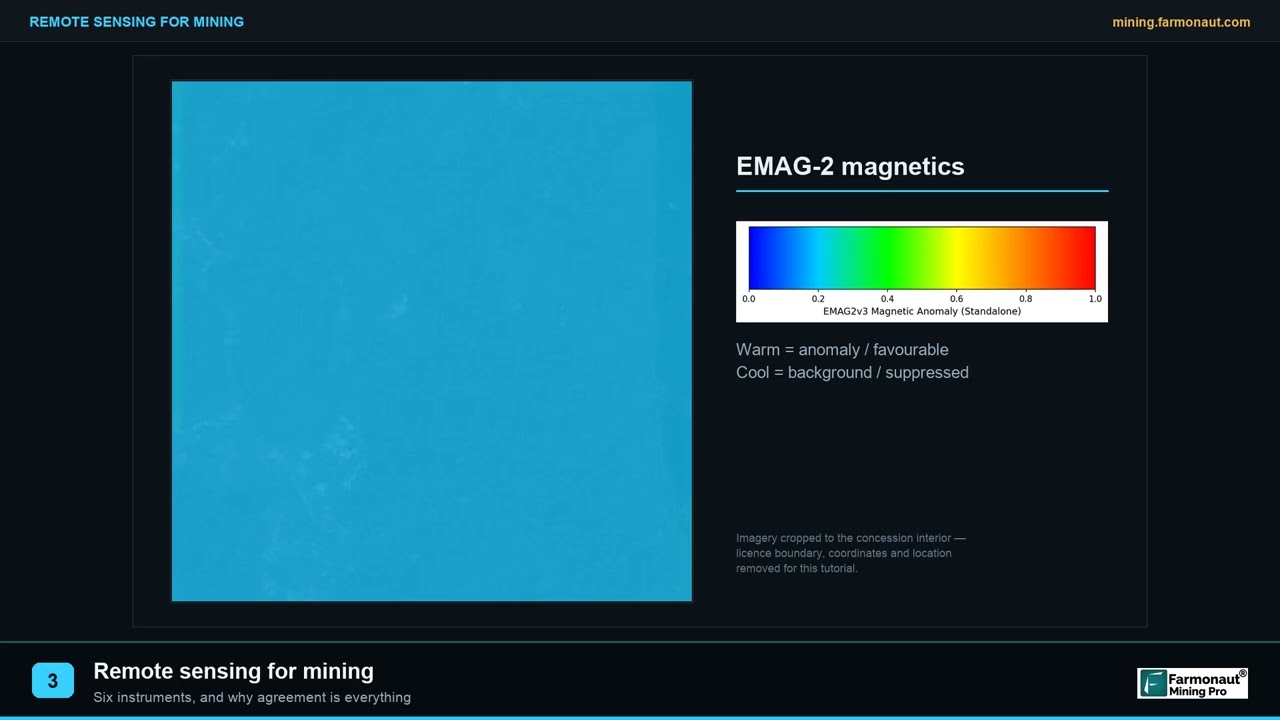
▶ Remote sensing for mining explained in three minutes. · 2:01
Frequently asked questions
What state has the most copper?
Arizona. It produced about 70% of US mine copper in 2025, according to the USGS. The USGS names Alaska, Michigan, Missouri, Montana, Nevada, New Mexico and Utah as the other producing states but does not rank them.
Where is copper found in the US?
Mainly in the western states: Arizona, Utah, New Mexico, Nevada and Montana, with smaller output from Michigan, Missouri and Alaska. Most deposits are porphyry copper.
Which state produces the most copper?
Arizona, by a wide margin. Morenci alone made about 0.7 billion lb in 2025, more than any other US mine.
Where are the copper mines in the US?
The largest are Morenci, Safford, Sierrita and Bagdad in Arizona, Bingham Canyon in Utah, Chino and Tyrone in New Mexico, Robinson in Nevada and the Continental Pit in Montana. The table and ranking above give owners and output.
What is the biggest copper mine in the US?
By 2025 output, Morenci in Arizona, owned 72% by Freeport-McMoRan. Bingham Canyon in Utah is described by Kennecott as the largest open pit mine in the world, over 0.75 miles deep.
Who owns the big US copper mines?
Freeport-McMoRan operates Morenci, Bagdad, Safford, Sierrita, Miami, Chino and Tyrone. Rio Tinto owns Kennecott in Utah, Capstone Copper owns Pinto Valley, Asarco (Grupo México) owns Ray, Mission and Silver Bell, KGHM owns Robinson and Montana Resources runs the Butte pit.
Where was copper first found in the US?
The best-known early source is the Keweenaw Peninsula of Michigan, where native copper in basalt was mined. The National Park Service dates the rift that hosts it to about 1.1 billion years ago. Commercial mining there began in the 1840s.
Where are the copper mills and smelters in the US?
Concentrators sit at the mines: Morenci, Bagdad, Sierrita, Chino, Pinto Valley, Bingham Canyon, Robinson and Butte among them. The USGS counts 2 primary smelters, at Miami, Arizona and at Kennecott in Utah.
Is the US a net importer of copper?
Yes. The USGS puts net import reliance at 57% of apparent consumption for 2025 (estimate).
What is the best place to find copper on your own?
Copper stains such as green malachite and blue azurite are common near old workings in Arizona and the Southwest, but nearly all promising ground is already claimed or privately owned. Check the claim records with the Bureau of Land Management and get the owner’s permission before you enter or sample. Never use mercury or other hazardous chemicals.
Is there a copper mine near me?
Check your state geological survey’s mine map, or our US mining map, which lists active mines by state.
This page is for information only. It is not investment advice. Production figures are company reports and USGS estimates; check the latest release before relying on them. If you prospect, get the landowner’s permission, check claim status with the Bureau of Land Management, and never use mercury.
Farmonaut mining
Map your mining site from space
Send a licence boundary and get a satellite screen of copper exploration targets ahead of drilling.

Mining Pro sample view, synthetic data
Keep reading
Sources
- USGS, Mineral Commodity Summaries 2026: Copper: pubs.usgs.gov
- Freeport-McMoRan, Annual Report on Form 10-K for 2025: s22.q4cdn.com
- Rio Tinto, Fourth Quarter Operations Review (January 2026): announcements.asx.com.au
- Capstone Copper, Record Fourth Quarter 2025 Results: announcements.asx.com.au
- Grupo México, Fourth Quarter 2025 Results: gmexico.com
- Hudbay and Mitsubishi approve Copper World (21 October 2026): s23.q4cdn.com
- Resolution Copper, Land Exchange: resolutioncopper.com
- Chamber Business News, Resolution Copper after Ninth Circuit decision (2 October 2026): chamberbusinessnews.com
- KJZZ, Ownership of Oak Flat transferred to Resolution Copper (16 March 2026): kjzz.org
- Mining.com, Taseko’s Florence mine delivers first new US copper: mining.com
- Mining.com, Lundin to sell Eagle mine to Talon: mining.com
- Mining Outlook, Robinson Mine profile: mining-outlook.com
- Montana Resources (Washington Companies): washingtoncompanies.com
- KBZK, Montana Resources expects high-grade copper in 2025: kbzk.com
- National Park Service, The Midcontinent Rift: nps.gov
- Highland Copper, Copperwood project update: highlandcopper.com
- Trilogy Metals, Third Quarter Fiscal 2026 Results: morningstar.com
- USGS, Porphyry copper deposit model (SIR 2010-5070-B): pubs.usgs.gov
- Kennecott, The Bingham Mine National Historic Landmark: kennecott-groundbreakers.com
- Resolution Copper Final Environmental Impact Statement, Volume 1: resolutionmineeis.us
- Devere Group, copper price page (28 October 2026): devere-group.com
- Northern Dynasty, oral arguments held on Pebble veto case (June 2026): northerndynastyminerals.com
- Resolution Copper, About us: resolutioncopper.com
Discussion
Questions, corrections or field experience? Share them below. First-time comments are reviewed before they appear, and your email is never published.
No comments yet. Be the first to add a question or your experience.

 Geotech Mining Solutions plc
 Vulcan International Limited
 Kidepo Associates
 GKY Mining
 Alkimy SARL
 Double A Trading
 GemSprout Metals Limited
 Qader Group
 Ileys General Trading
 SG Gold Mining LLC
 VRV Global Pte Ltd
 Omsri International FZE
 G.I.T.T.
 Jaunita Erss Ltd
 Almosi SARL
 SRK Consulting
 Berks Gold Limited
 Mwerezi Minerals Company Limited
 Mining SARL
 SenGold Invest SAS

 Exploration consultancy · South Africa · Gold










