

Appalachian gold and gems · Visitor and land guide
Appalachian Gem and Gold Mine: Reviews Guide and Options
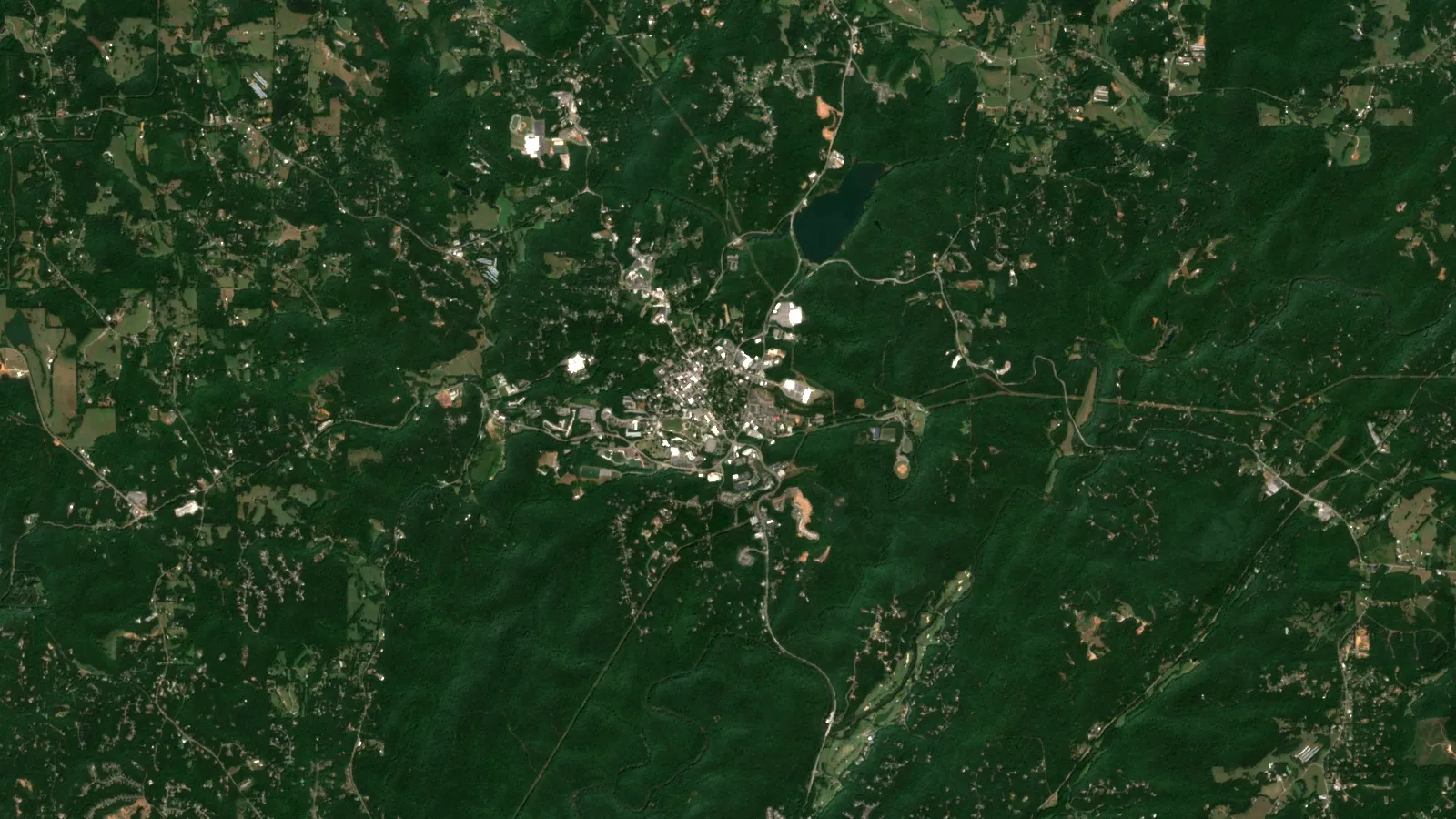
Confirm the address before you travel: this name is not on the Franklin Chamber’s active mine list. Here is how to test reviews and photos, where to go instead, and what the gold record shows.
Key takeaways
- Most Franklin-area mines sell gem dirt by the bucket or bag, and few allow digging (Franklin Chamber).
- North Carolina produced an estimated 1,168,000 oz of gold from 1799 through 1960 (USGS).
- Commercial mining continues: Haile in South Carolina produced 101,100 oz in the first half of 2026 (OceanaGold).
- Nevada made about 64% and Alaska about 22% of US mine gold in 2025 (USGS, 2026).
- In North Carolina, prospecting is not allowed in national parks or state parks and forests (state survey).
In this article
- Appalachian Gem and Gold Mine reviews: what to look for
- Appalachian Gem and Gold Mine photos: how to judge them
- Gem and gold mines you can check today
- What a day at a gem mine might cost
- Is there gold in the Appalachian Mountains?
- Gold mining methods in the Appalachian Mountains
- Gemstone mining in Appalachia: sapphires, rubies, garnets and quartz
- Appalachian Mountains minerals beyond gold
- Can you pan for gold on your own in the Appalachians?
- Verify any Appalachian mine in 7 steps
- Appalachian gold then and now
- If you own land or a license in the Appalachians
- Frequently asked questions
Appalachian Gem and Gold Mine is best treated as a search name to confirm before you drive: the Franklin Chamber of Commerce list of active gem mines in the North Carolina mountains does not use it, so get a street address and a working phone number first. The gold behind the name is real. North Carolina alone produced an estimated 1,168,000 troy ounces from 1799 through 1960, according to the U.S. Geological Survey.
This guide shows how to read reviews and photos for any pay-to-dig site with this name, names places you can check today, and sets out the gold and gem record for the region. It also has a trip cost calculator and a section for readers who are looking at land or a license rather than a day out.
Appalachian Gem and Gold Mine reviews: what to look for
A review is only useful if it belongs to the business you plan to visit. Start by matching the address, phone number and website on the listing. Attractions in this trade can have similar names, and an old thread may describe a different owner or site.
Read at least two review platforms and sort by newest. Then look for details that a star average hides:
- What you actually buy. The Franklin Chamber explains that most area mines sell gem dirt by the bucket or bag, that few allow digging, and that some also charge a day admission. A review should tell you which model applies.
- Help at the flume. A flume is a trough of running water with a bench beside it, where you wash dirt through a screen. Good reviews say whether staff helped with technique and with telling a garnet from a piece of quartz.
- Where the material comes from. Some sites sell local dirt and others may add stones from elsewhere, a practice often called salting or enrichment. Ask the operator which applies, because it changes what a find tells you about the local geology.
- Cover and comfort. Look for comments on shade, rain cover, seating and access for anyone who cannot walk on gravel.
- What finds were worth. Treat a report of one big stone as one visit, not as an average. Ask who valued it and whether the value is for rough stone or a finished piece.
Be careful with any review or advert that promises a result. A pay-to-dig bucket is a paid activity. It is not a mineral assay, which is a laboratory test of how much metal a sample holds, and it says little about what the ground around it contains.
Appalachian Gem and Gold Mine photos: how to judge them
Photos can confirm the setup. The typical layout described by the Franklin Chamber is a flume with a bench along its length, screens for washing and, at many mines, a covered place to work and eat. Compare what you see against four simple questions:
- Is it the same place? Match signs and buildings to the listing’s address, using street imagery where it exists.
- Is it recent? Check the upload date. A price board in a photo from several years ago is not a price today.
- Is the work area covered? Many mines provide cover, but not every seat may have it.
- Are the stones shown from the site? A display of cut gems in a shop does not show what comes out of the bucket. Ask what was found on site.
If the photos raise doubts, phone before you leave. Most mines in the Franklin area open from spring through autumn, so an off-season trip needs extra care.
Gem and gold mines you can check today
If you came here looking for a place to go, these are named by a public body or a local chamber. The table gives the type of visit, and the source to confirm it. Hours and prices change, so call first.
| Place | Area | What you can do | Listed by |
|---|---|---|---|
| Reed Gold Mine State Historic Site | Midland, North Carolina | Underground tour and gold panning | NC Historic Sites |
| Cherokee Ruby & Sapphire Mine | Franklin, North Carolina | Gem mining | Franklin Chamber |
| Gold City Gem Mine | Franklin, North Carolina | Gem mining | Franklin Chamber |
| Mason Mountain Mine & Cowee Gift Shop | Franklin, North Carolina | Gem mining | Franklin Chamber |
| Rose Creek Mine & Rock Shop | Franklin, North Carolina | Gem mining | Franklin Chamber |
| Sheffield Mine | Franklin, North Carolina | Gem mining | Franklin Chamber |
| Highlands Road Gem Mine | Franklin, North Carolina | Gem mining | Franklin Chamber |
| Jackson Hole Gem Mine | Highlands, North Carolina | Gem mining | Franklin Chamber |
| Nantahala River Gem Mine | Swain County, North Carolina | Gem mining | Franklin Chamber |
| Crisson Mine and Consolidated Mine | Dahlonega, Georgia | Tours and panning | Digital Library of Georgia |
Reed Gold Mine publishes its terms. On its page read in November 2026, admission carried no charge, panning was US$5 per person plus tax, and guided tours were US$5 for adults, US$4 for seniors and military, and US$1 for children aged 3 to 17. Panning closes for lightning, moderate or heavy rain, and a heat index above 103 degrees. The site opened Tuesday to Saturday, 9 a.m. to 5 p.m.
For more options, see our guides to gem mines open to the public, gold mine tours and US diamond mines open to the public.
What a day at a gem mine might cost
Costs vary by mine and by how many buckets you buy, so build your own number instead of relying on an average. Enter the prices the mine quotes you by phone, and your own driving distance. The calculator below adds them up for your group.
Calculator
What will your gem mine trip cost?
Enter the mine’s quoted prices and your own driving distance.
- Mine charges (US$): $60
- Fuel (US$): $24
- Per person (US$): $21
Example values only, not a benchmark or any mine’s price. All prices are inputs: example, use today’s price.
Is there gold in the Appalachian Mountains?
Yes. Gold occurs in the mountains and, in larger amounts, in the lower Piedmont country to their east. The USGS describes the southeastern deposits as a zone about 700 miles long and 150 miles wide, east of the Appalachian Mountains. It ranks North Carolina first in output, followed by Georgia, South Carolina, Virginia and Alabama. So “Appalachian gold” often comes from foothills, not high peaks.
Chart
Gold produced at Haile, South Carolina
thousand troy ounces per quarter
Chart
North Carolina gold output in selected years
troy ounces; selected years, not every year
The American story starts in 1799, when a 12-year-old boy found a 17-pound nugget in a creek on his family’s Cabarrus County farm, according to the North Carolina Geological Survey. The survey adds that North Carolina was the only gold-producing state from 1803 to 1828 and led the country until California’s discovery in 1848. At the height of the rush, more than 250 mines worked the Piedmont.
Georgia followed. Popular stories date its first find to 1828, but the New Georgia Encyclopedia says the first documented evidence is a newspaper notice of August 1, 1829. Federal branch mints then opened at Charlotte and Dahlonega. Charlotte, opened in 1837, coined nearly US$5 million of southern gold by 1861. Dahlonega, opened in 1838, struck almost 1.5 million coins with a face value above US$6 million by the same year.
How North Carolina’s output changed
The state’s own production table shows two early peaks and a long fall. Figures before 1880 rest on Mint returns and estimates, as the state circular on gold in North Carolina explains. It estimates total production through 1991 at about 1.1 million ounces. That is lower than the USGS estimate above for an earlier end date, because the two sources use different methods, so treat both as approximate. The last major output, from 1954 to 1963, was a byproduct of copper mining at the Ore Knob Mine in Ashe County.
Is Appalachian gold still mined?
Yes, on a commercial scale, though not in the high mountains. South Carolina’s Haile mine, in the Carolina slate belt, is operated by OceanaGold. The company reported 59,500 ounces from Haile in the second quarter of 2026, up from 47,700 ounces a year earlier. The slate belt is a band of old volcanic and sedimentary rock running through Virginia, the Carolinas and Georgia. This corrects a common idea that gold mining in the region is only a tourist activity.
Scale still favors the West. The USGS estimates US mine production at 160 metric tons in 2025, worth about US$17 billion, with Nevada at about 64% and Alaska at about 22%. Gold came from more than 40 lode mines in 12 states.

▶ How gold forms and gathers in veins · 4:16
Gold mining methods in the Appalachian Mountains
Two kinds of deposit shaped the region, and they explain why a panning trip and a real mine are very different things.
Chart
Large historic southeastern gold deposits
approximate million troy ounces of gold
- Placer gold. A placer is loose gold that has weathered out of rock and settled in stream gravel. It is recovered with a pan, sluice or similar gear, because gold is heavier than the sand around it. The Georgia record describes early miners working this way with pans, rockers and sluice boxes. North Carolina’s early production was mostly placer too.
- Lode gold. A lode is gold still held in rock, such as a quartz vein or a broader mineralized zone. By 1830, the leading North Carolina mines were hard-rock mines, according to the state survey. This work needs shafts or pits, crushing and a processing plant.
Read more in our explainer on placer gold deposits. Modern operations are a different scale again. The USGS lists four large historic southeastern deposits: Haile, Ridgeway, Barite Hill and Brewer.
Gemstone mining in Appalachia: sapphires, rubies, garnets and quartz
Western North Carolina is the center of this activity. Geology.com says North Carolina has more pay-to-dig mines than any other state, and lists aquamarine, beryl, citrine, emerald, garnet, moonstone, rose quartz, ruby, sapphire, smoky quartz, staurolite, topaz and tourmaline among its gem materials.
Macon County’s history begins with industry, not tourism. The Franklin Chamber says ruby and sapphire mining began there in 1870, when corundum was dug for abrasives. Corundum is the mineral family that includes ruby and sapphire. Companies later searched for the source of the rubies, then gave up in the early 1900s, leaving the area to rock hunters.
Emerald has its own story. The Crabtree Emerald Mine was the first commercial emerald source in the United States, Geology.com reports. Mining ran from the 1890s until the early 1990s, and much of the output was emerald-bearing rock for slabbing rather than clear crystals. For the rock type involved, see our guide to pegmatite deposits.
How to spot stones at the flume
The chamber’s guide offers a simple test: color, clarity and crystal shape. Garnets look glassy red, pink or reddish brown. Rubies are silky red, sapphires come in other colors, and both form six-sided crystals. Moonstones are pearly with a flat, box-like shape. If a stone matters to you, get it checked by an independent gemologist before you pay for cutting.
▶ How commercial gold is mined and refined, step by step · 5:27
Appalachian Mountains minerals beyond gold
The region’s value was never only gold. The USGS handout on the Carolina slate belt says it may hold undiscovered gold and silver, as well as copper, lead, zinc, molybdenum and tin. A later USGS report notes a porphyry-style gold-copper-molybdenum occurrence at Deep River, North Carolina. A porphyry is a large, usually low-grade deposit tied to an igneous intrusion. Occurrence here means minerals were found, not that a mine could be built.
Corundum, mica and kaolin were all shipped out of Macon County in quantity, the Franklin Chamber records. For nearby state detail, see our pages on gold mining in North Carolina and gold deposits in Tennessee.
Can you pan for gold on your own in the Appalachians?
Sometimes, with permission. The rules below are for North Carolina. Other states differ, so ask their own agencies.
- Private land: most property in the state is private. Get the landowner’s permission before you enter.
- National parks: the state survey says prospecting is not permitted.
- State parks and forests: prospecting is not allowed.
- National forests: contact the district ranger first. The state circular warns that minerals are privately owned in some forest areas, and written permission from the owner is then needed.
The state circular says streams draining known gold areas are the logical places to try, and names Little Buffalo Creek, Dutch Buffalo Creek, Cabin Creek and the Uwharrie River. It also says these streams hold only small amounts, so expect colors, the tiny flakes prospectors see in a pan. To tell gold from its look-alikes, remember that it is soft and heavy. Pyrite is harder and shatters when struck, and mica splits into flakes. For scale, OceanaGold’s realized price of US$4,433 per ounce in the second quarter of 2026 works out to about US$14 for a tenth of a gram.
Verify any Appalachian mine in 7 steps
- Get the street address, phone number and website, and confirm that all three match.
- Phone during business hours and ask for this season’s opening days.
- Check the owner or current trading name if older reviews use another name.
- Read recent reviews on at least two platforms.
- Ask what the bucket price includes and whether there is a separate admission charge.
- Ask whether the material is local or enriched.
- Check any history on its website against a state survey or USGS publication.
Infographic
The short version: from a search name to a safe booking
- 1Match detailsAddress, phone and website agree.
- 2CallConfirm days, prices and rules.
- 3Read reviewsUse two platforms, newest first.
- 4Ask about materialLocal or enriched.
- 5Go or walk awayBook only if the answers hold up.
Appalachian gold then and now
Put side by side, the old and new figures show how differently the two eras should be read.
| Measure | Figure | Source |
|---|---|---|
| North Carolina total, 1799 to 1960 | 1,168,000 oz (estimate) | USGS Professional Paper 610 |
| Georgia gold and silver before 1900 | US$16 million to US$17 million (estimate, in money of the time) | USGS Professional Paper 610 |
| Haile historic deposit size | About 4.2 million oz | USGS Open-File Report 2012-1179 |
| Haile production, first half of 2026 | 101,100 oz | OceanaGold |
| All US mine production, 2025 | 160 metric tons (estimate) | USGS Mineral Commodity Summaries 2026 |
The historic deposit figure is the USGS’s approximate size for each deposit, and it is not a reserve statement. Do not add it to state production totals, because the sources use different dates and methods.
If you own land or a license in the Appalachians
A tourist bucket tells you nothing about your ground. If you hold land or are weighing a purchase, start with title. In North Carolina, deeds are recorded at the county seat, and the state survey says mineral rights normally stay with the landowner unless they were sold separately. A lease or a purchase of those rights is the usual route to serious work.
Next, check the mining law. Under the North Carolina Mining Act of 1971, a mine affecting more than one acre needs a permit, a bond and a reclamation plan. Federal and state safety rules also apply. Older districts can bring their own questions, including reclamation and water care, so involve a qualified geologist and a lawyer before you commit money.
Satellite imagery can help at the screening stage by mapping surface signs such as altered rock and past disturbance, ahead of field sampling. It does not prove a deposit. Farmonaut offers this kind of screening, and its Kenya alluvial gold case study shows one example. Other Farmonaut pages cover fleet management, carbon footprinting, product traceability, loan and insurance verification and its API documentation.

▶ How satellites map the rocks around gold rather than the gold itself · 4:25
Frequently asked questions
Where is Appalachian Gem and Gold Mine?
Confirm this directly with the business. The name is not on the Franklin Chamber’s active mine list, so ask for a street address before you travel.
Are Appalachian Gem and Gold Mine reviews reliable?
Only once the listing matches the business you plan to visit. Check the address and phone number, read the newest reviews on two platforms, and treat single big finds as anecdotes.
Where can I see Appalachian Gem and Gold Mine photos?
Look at the business’s own website and map listing, and check upload dates. Compare signs and buildings with the address you were given.
Is there gold in the Appalachian Mountains?
Yes. North Carolina’s estimated output was 1,168,000 ounces from 1799 through 1960 (USGS), and Georgia, South Carolina, Virginia and Alabama also produced gold. Much of the belt lies east of the mountains.
Where was gold first found in the Appalachian region?
The first documented US find was on the Reed farm in Cabarrus County, North Carolina, in 1799, according to the state survey.
Is anyone still mining gold in the region?
Yes. OceanaGold reported 101,100 ounces from Haile in South Carolina in the first half of 2026. Pay-to-dig sites are a separate, recreational trade.
Can I keep what I find at a pay-to-dig mine?
Geology.com describes North Carolina sites where visitors keep what they find. Confirm the house rules with your mine, especially on any larger stone.
Do I need a permit to pan for gold in North Carolina?
You need the landowner’s permission on private land. In national forests, contact the district ranger first. Prospecting is not allowed in national parks or in state parks and forests.
What gems can I find in western North Carolina?
Listed gem materials include ruby, sapphire, garnet, emerald, moonstone, topaz and several forms of quartz. What you find depends on the site and its material.
When should I visit a gem mine?
Most mines around Franklin open from spring through autumn. Call first, because days and hours vary.
This page is for information only. It is not legal or investment advice. Confirm the rules with the regulator. Get permission where required, prospect safely and never use mercury.
Farmonaut mining
Assessing Appalachian ground?
Request a quote to screen a license or land parcel for exploration targets before planning ground sampling.

Mining Pro sample view, synthetic data
Keep reading
Sources
- USGS, Principal Gold-Producing Districts of the United States, Professional Paper 610 (1968): pubs.usgs.gov
- USGS, Mineral Commodity Summaries 2026: Gold: pubs.usgs.gov
- USGS, Carolina Slate Belt Gold Deposits handout (1998): pubs.usgs.gov
- USGS, Gold deposits of the Carolina Slate Belt, Open-File Report 2012-1179: pubs.usgs.gov
- North Carolina Geological Survey, North Carolina Gold: deq.nc.gov
- North Carolina Geological Survey, Information Circular 29, Gold in North Carolina: files.nc.gov
- NC Historic Sites, Reed Gold Mine: historicsites.nc.gov
- Franklin Chamber of Commerce, Gem Mines: franklin-chamber.com
- Digital Library of Georgia, Georgia Gold History: dlg.usg.edu
- New Georgia Encyclopedia, Gold Rush: georgiaencyclopedia.org
- Geology.com, North Carolina Gemstone Mining: geology.com
- OceanaGold, Second Quarter 2026 Results: finviz.com
Discussion
Questions, corrections or field experience? Share them below. First-time comments are reviewed before they appear, and your email is never published.
No comments yet. Be the first to add a question or your experience.

 Vortex Minerals Pty Ltd
 Faith At Work (Pty) Ltd
 Geotech Mining Solutions plc
 Vulcan International Limited
 Kidepo Associates
 GKY Mining
 Alkimy SARL
 Double A Trading
 GemSprout Metals Limited
 Qader Group
 Ileys General Trading
 SG Gold Mining LLC
 VRV Global Pte Ltd
 Omsri International FZE
 G.I.T.T.
 Jaunita Erss Ltd
 Almosi SARL
 SRK Consulting
 Berks Gold Limited
 Mwerezi Minerals Company Limited
 Mining SARL
 SenGold Invest SAS

 Exploration consultancy · South Africa · Gold
 Client · Oregon, USA · Gold










