

Arizona claims · Buyer's guide
Arizona Placer Gold Claims for Sale: Buyer's Guide
Placer claim land stays federal: you buy a right to loose minerals, not the land. Arizona asking prices we checked in autumn 2026 ran about US$485 to US$900 per acre, plus US$200 a year per 20 acres.
Key takeaways
- An unpatented placer claim is a mineral right on federal land, not title to the land (CRS).
- Arizona listings checked in autumn 2026 asked about US$485 to US$900 per acre; these are asking prices from a small sample.
- BLM’s maintenance fee is US$200 per 20 acres or part of 20 acres; a 70-acre placer claim owes US$800 (BLM notice for 2027).
- A missed fee or waiver forfeits the claim by operation of law, so see the BLM record and receipt before paying.
- Water rights and mining permits are separate from the claim (Arizona Mining Permitting Guide, 2017).
In this article
- What is placer claim land?
- How much Arizona placer gold claims cost
- Where Arizona placer gold was found
- What holding a placer claim costs each year
- Check a claim before you buy: 8 steps
- Buy a claim or stake your own?
- Permits and water rules for placer mining in Arizona
- Where satellite screening fits
- Frequently asked questions
Placer claim land is federal ground on which someone holds the right to mine loose minerals, such as gold in sand and gravel; the land itself stays public. That is what Arizona placer gold claims for sale really offer: a mineral right you must keep alive each year, not a deed. In autumn 2026 the Arizona asking prices we checked ran from about US$485 to US$900 per acre, and BLM charges US$200 per year for each 20 acres or part of 20 acres. This guide shows how to check a claim before you pay.
A listing can be genuine and still be a poor purchase. The checks below take a few hours and cost little, so do them before any deposit. Most of them use public records that anyone can open.
What is placer claim land?
A placer claim covers minerals that are not in solid rock but loose, as in gold in gravel, according to the Arizona Mining Permitting Guide (2017). A lode claim covers minerals in place, in solid rock. In Arizona a placer claim may not exceed 20 acres per locator, with up to eight locators, so the largest association placer claim is 160 acres. A locator is the person who stakes the claim.
Most claims on the market are unpatented. The holder has the right to develop the minerals, while the government keeps title. A patent would convey title to both surface and minerals, but Congress has blocked new patents through a yearly moratorium since fiscal year 1995, as the Congressional Research Service explains. So a seller cannot promise that you will turn an unpatented claim into private land.
What a placer claim gives you and what it does not
| Question | Unpatented placer claim | What to do |
|---|---|---|
| Do I own the land? | No. You hold a mineral right on federal land. | Do not plan a home or a private fence around it. |
| Can I sell it? | Yes. It can be transferred by a recorded deed. | Use a notarized, recordable transfer document. |
| Does it include water? | No. Water for mining needs its own right. | Ask the Arizona Department of Water Resources. |
| Can I dig right away? | Only at casual-use level, with no or negligible disturbance. | File with the land manager before larger work. |
| Does it prove gold is there? | No. Past output in a district says nothing about one claim. | Ask for test results and sample it yourself. |
Patented, unpatented and State Trust ground
A patented claim is private land, so county title and tax records apply. State Trust land works differently again: Arizona issues 20-year mineral leases for locatable minerals under A.R.S. sections 27-231 to 27-256, through the State Land Department. A federal claim does not give rights on that ground, and tribal land needs its own agreements with the tribe. Check which of these applies before you compare prices.
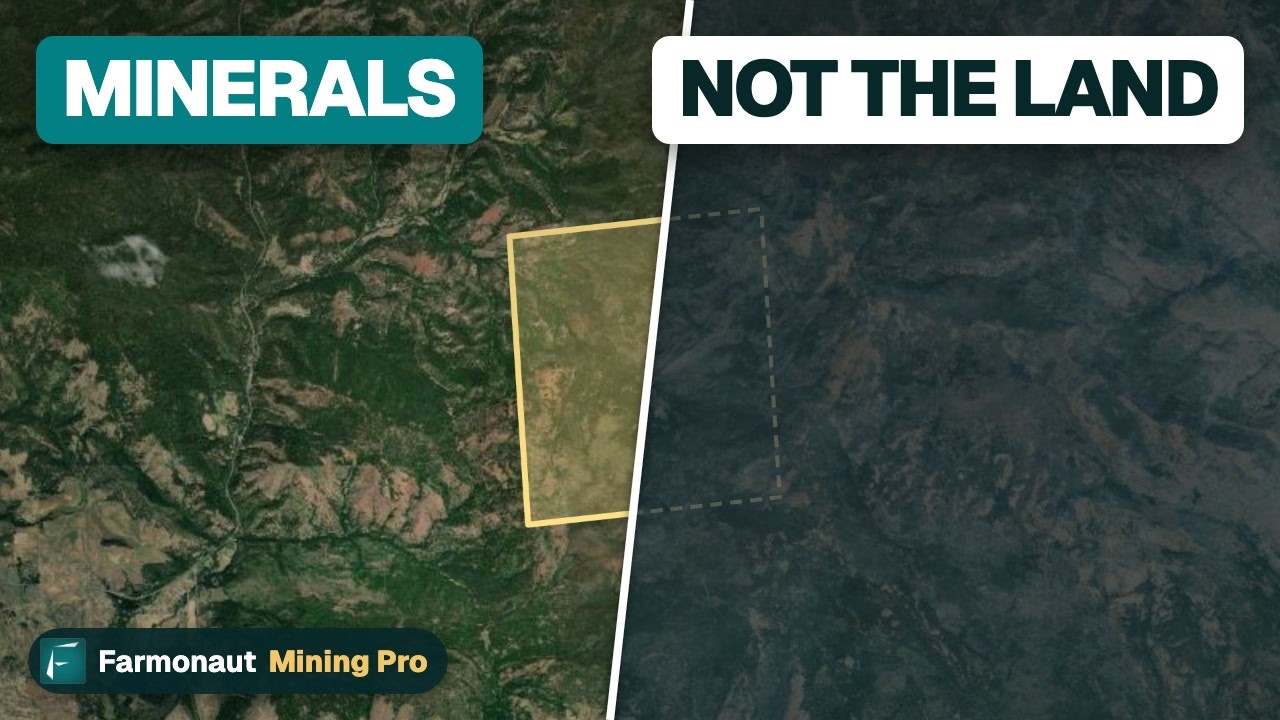
▶ Why owning a gold claim is not owning the land, and how to buy one safely · 3:19
How much Arizona placer gold claims cost
There are two prices: what the seller asks and what the government charges to keep the claim. No public index tracks claim prices, so treat each listing as one asking price, not a market value. Here are the Arizona listings we opened in autumn 2026.
Chart
Asking price per acre in three Arizona listings
US$ per acre, autumn 2026, asking prices only
| Listing | Type and size | Asking price | Per acre | Seen |
|---|---|---|---|---|
| Sedona Legend & Sunrise, Yavapai County | Unpatented placer, one 20-acre claim of four | US$17,995, filing fees included | US$900 | Updated 30 Sep 2026 |
| Bradshaw Mountains listing | 20 acres; filed under placer, though the title says lode | US$9,700 | US$485 | 15 Oct 2026 |
| Wickenburg desert listing, same site | Placer; no acreage shown on the results page | US$6,500 | Not shown | 15 Oct 2026 |
| Arizona seven-claim listing, same site | Lode, 145 acres, for comparison | US$70,000 | About US$483 | 15 Oct 2026 |
These are asking prices from sellers, not completed sales. They are a small sample and they will change. For a wider view of the state’s market, see our Arizona gold claims market overview. Buyers comparing other states can read our guides to Oregon placer claims and California claim compliance.
Government fees to budget for
| Item | Amount | When | Who it applies to |
|---|---|---|---|
| Annual maintenance fee | US$200 per 20 acres or part of 20 acres | By 1 September for the next assessment year | Every holder not on a waiver |
| Small miner waiver | No filing charge, but US$100 of work per claim | Same deadline as the fee | Holders of 10 or fewer claims and sites nationwide |
| Affidavit of Assessment Work | US$15 per claim | By 30 December | Waiver holders, filed with BLM and the county recorder; the US$15 is BLM’s processing fee |
| Transfer document at BLM | US$15 per claim, per grantee | When the claim changes hands | Buyers and sellers |
| New claim only | US$25 processing + US$49 location + US$200 maintenance = US$274 | Within 90 days of location | People staking new ground, not buyers of existing claims |
The figures come from the BLM Arizona mining page, the BLM notice for the 2027 assessment year and the BLM claims packet of February 2026. The notice is from the California office and the packet from the Montana-Dakotas office, so confirm the Arizona details with the Phoenix office on 602-417-9528. Fees can change.
A common listing error is to quote US$200 per claim whatever its size. The BLM notice gives a clear example: a 70-acre placer claim owes US$800, because the last 10 acres count as a full block. Add recording costs at the county, which vary by office.
Why spot gold does not price a claim
Some listings multiply an assumed number of ounces by the gold price. The Wickenburg listing above says in its title that it costs less than 1.5 ounces of gold, and one Arizona lode listing claims 500,000 to 1 million ounces of potential. A statement like that is not a measured resource. Ask where the ounce figure came from. If no sample locations, weights and assay results back it up, leave it out of your valuation. Assay means a laboratory test of how much gold a sample holds.
Where Arizona placer gold was found
Arizona produced about 13,321,000 ounces of gold from 1860 through 1965, according to USGS Professional Paper 610. Sellers often quote that total, but the same report says most output from 1900 onward was a by-product of large copper mines. It is not a placer figure. Yavapai County alone recorded 266,804 ounces of placer gold through 1959.
Chart
Recorded placer gold in selected Arizona districts
Troy ounces, recorded through 1959
The history also shows how early the best ground went. La Paz yielded about 100,000 ounces from placers, yet its higher-grade gravels were exhausted by 1864. At Greaterville most of the richer placers were mined out in the rush after 1874, and only 4,146 ounces came from the district from 1903 through 1959. A famous district name is therefore a place to start, not evidence of what is left on one claim. For more on how these deposits form, see our guide to types of gold deposits, and for producing operations see the US mining map.
What holding a placer claim costs each year
Your yearly cost depends on the claim’s size and whether you qualify for the waiver. The fee rises in steps of 20 acres, so a large association claim can cost several times as much to hold as a single 20-acre claim.
Chart
Five-year cost of holding one 20-acre claim
Cumulative US$; waiver line counts US$100 of work plus US$15 filing
Chart
Yearly BLM fee by placer claim size
US$ per year, at US$200 per 20 acres or part of 20 acres
Fee or small miner waiver?
The waiver suits a holder who will truly do the work. You must own 10 or fewer claims and sites nationwide for the whole assessment year and perform US$100 of work per claim. Original signatures are required, and BLM Arizona does not accept waivers online. Paying the fee is simpler: there is no labor to record, and you avoid the risk of a defective affidavit.
Check one trap when you buy. BLM says a waiver becomes void if the claim is transferred to someone who does not qualify. If you already hold other claims, this purchase could take you over the limit of 10. If the seller filed a waiver on 1 September 2026, also ask who will do the work and file the affidavit by 30 December 2026.
Calculator
What will this claim cost you over the years you hold it?
Enter the seller’s price and the claim’s details.
- Yearly BLM fee (US$): $200
- Total on a small miner waiver (US$): $12,090
- Holding cost per claim, per year (US$): $200
Example values only, not a benchmark. Constants from BLM (2026): US$200 per 20-acre block, US$100 of work plus US$15 filing per claim on a waiver, US$15 per claim transfer filing. Assumes fees stay unchanged. Excludes permits, water, equipment, labor and county recording charges.
Check a claim before you buy: 8 steps
- Get the identifiers. Ask for the claim name, the serial number, the county, the legal description and a map. Do not rely on a dropped pin alone.
- Pull the BLM record. Search the BLM Mineral & Land Records System reports by serial number or by township, range and section. The older LR2000 database no longer serves this purpose: Western Mining History notes it was renamed as this system in early 2021. Confirm that the case is active and that the seller is the claimant of record.
- Check the current assessment year. Non-payment or a missed waiver means the claim is forfeited by operation of law, with no extensions. Ask for the fee receipt, or for the filed waiver, and compare them with the BLM record.
- Search the county recorder. Look for the location notice, past affidavits, earlier deeds, liens and any disputes. Each co-owner can only sell their own share, so count the names and make sure all of them sign.
- Walk the ground. Find the location monument and corner monuments and check them against the map. Overlapping claims and misplaced corners are easier to see in person.
- Check who manages the surface. It may be BLM, the Forest Service or another agency. The Sedona listing above, for example, sits on Coconino National Forest. Note roads, grazing use, camping limits and any withdrawal from mineral entry.
- Test the gravel. Take your own samples, record the location and volume of each, and have them assayed if the sums justify it. Keep to casual-use limits, or file first. Sample only with the holder’s written permission, and never use mercury.
- Close correctly. Use a notarized deed that states the claim details, then record it with the county and BLM. The BLM packet treats the date of signing and notarizing as the effective date. Hold back payment through an escrow or attorney if you can, and ask a mining attorney to review any purchase of real size.
Red flags in a claim listing
- The seller will not give a serial number before asking for a deposit.
- The name on the BLM record differs from the seller’s name, and there is no recorded deed linking them.
- The listing gives ounces or dollar values with no sample data.
- The ad says you are buying land, a deed to the surface, or a right to live on site.
- The claim needs urgent payment because a fee deadline is near. Missing a deadline is the seller’s risk, and it can end the claim you are paying for.
Sellers can use the same list in reverse. Our guide on how to sell a mine covers the records that buyers expect.
Buy a claim or stake your own?
A buyer pays for convenience: an existing position, a paper trail and perhaps some access or sampling work. Someone staking new ground pays far less to government, but must find open ground and make a discovery first. Compare the two before you accept a seller’s price.
| Factor | Buy an existing claim | Stake a new claim |
|---|---|---|
| Government cost for 20 acres | US$15 BLM transfer filing, plus county recording | US$274 at BLM, plus county recording |
| Main cost | The seller’s price | Your time on research, travel and sampling |
| Main risk | A defect in the seller’s filings | Open ground may have little gold or poor access |
| Paperwork | Notarized deed, recorded at county and BLM | Location notice, map, monuments and county and BLM filings |
| Best for | Buyers who value a known site and can check its records | Patient prospectors who can read the land records |
To stake a placer claim in Arizona, the permitting guide lists these steps: discover loose minerals, place a location monument holding the location notice at one corner and inside the claim, and mark each corner and angle point. The claim should follow legal subdivisions where possible. File with the county and with BLM, keeping the BLM filing within 90 days of the location date. BLM also warns about bridge claims: a claim located before 1 September but recorded after it owes maintenance fees for both assessment years.
What makes one claim worth more than another
- Evidence: dated sample results with locations and volumes count for far more than old stories about the area.
- Paper trail: an unbroken chain of fees or waivers, affidavits and deeds lowers your risk.
- Access: a graded road that you are allowed to use saves money on every visit.
- Water: a lawful, practical source decides which recovery methods are possible.
- Permit burden: special category land, or work inside a watercourse, adds time and cost.
- Size in fee terms: count the 20-acre blocks, because each one adds US$200 per year.
Ask the seller which of these they can document. A lower price with good records may be a better purchase than a higher price backed only by the district’s history.
Permits and water rules for placer mining in Arizona
Buying a claim does not approve any mining. The level of filing depends on how much ground you disturb and where the claim is. These are the main thresholds in the Arizona guide, which dates from 2017, so check them with the field office.
| Activity | Who to ask | What usually applies |
|---|---|---|
| Negligible disturbance on BLM land | BLM field office | Casual use, with no notice in general |
| Exploration disturbing 5 acres or less | BLM field office | A Notice; exploration only, with up to 1,000 tons removed for testing |
| Larger work, or work on special category land | BLM field office | A Plan of Operations and BLM approval |
| Work on national forest land | Forest Service district office | Notice of Intent to Operate or Plan of Operations |
| Dredged or fill material in a watercourse | US Army Corps of Engineers | Clean Water Act Section 404 permit |
| Discharges to surface water or stormwater | Arizona Department of Environmental Quality | AZPDES permit |
| Taking surface water for mining | Arizona Department of Water Resources | Application for a permit to appropriate |
| Over 5 acres disturbed on private land | Arizona State Mine Inspector | Reclamation plan and financial assurance |
Costs vary too widely for one reliable figure, so get quotes for your own site. Bonding, water hauling and reclamation can all outweigh the yearly claim fee. Reclamation means returning the ground to a stable state. The guide warns that liability for cleanup can arise on a claim you take over, so ask about old workings and earlier disturbance, and have them photographed.
Water in a dry state
Many Arizona placers are in dry washes, so the practical question is where wash water would come from. Appropriating surface water needs an application to the state, and mining is a recognized beneficial use under the guide. Ask about conflicts with existing rights early, since those can decide the application. If no water is on hand, price dry-washing or hauling water before you agree a value for the claim.
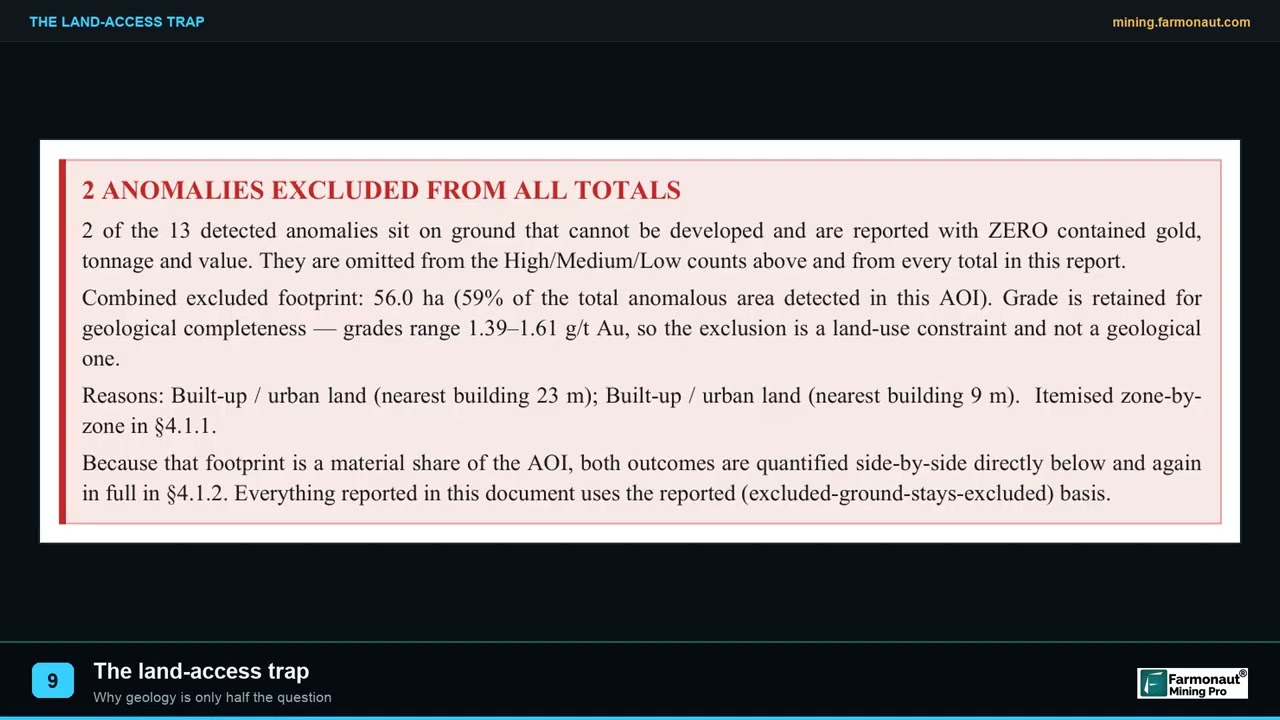
▶ How land access can block ground even where the rock looks good · 2:05
Where satellite screening fits
Imagery cannot prove how much gold is in a gravel bed. It can help you compare candidates before you travel: drainages, old workings, access, recent disturbance and rock alteration in the source area upstream. Farmonaut offers satellite-based mineral detection that ranks ground as exploration targets from a claim boundary. These results sit ahead of any sampling or resource estimate, so they do not replace the steps above. For a price on a specific boundary, use the mining query form or contact the team.

▶ How gold moves from discovery to refined metal, step by step · 5:27
Frequently asked questions
What is placer claim land?
It is usually federal land where someone holds the right to extract loose minerals such as gold in gravel. An unpatented claim does not transfer title. The public may still be allowed to use the surface in many cases, subject to the land manager’s rules.
How much does a placer claim cost in Arizona?
The Arizona listings we opened in autumn 2026 asked about US$485 to US$900 per acre, or US$9,700 to US$17,995 for 20 acres. Those are asking prices from a small sample, not sale prices. Add US$200 per 20 acres each year unless you hold a valid waiver.
Is buying a placer claim the same as buying land?
No. An unpatented claim is a transferable mineral right, while the federal government keeps title. Only a patented claim is private land, and new patents have been blocked by yearly moratoria since fiscal year 1995.
What is the difference between a placer claim and a lode claim?
A placer claim covers loose minerals, such as gold in gravel. A lode claim covers minerals in solid rock, such as a quartz vein. Limits and staking rules differ, so a claim on the wrong type of deposit can be challenged.
When is the BLM maintenance fee due?
BLM’s notice for the 2027 assessment year set a deadline of 1 September 2026, with no extensions. Waiver holders also face a 30 December deadline for the affidavit, filed with BLM and the county recorder, and a US$15 per claim BLM processing fee.
How do I check who owns a mining claim?
Search the BLM Mineral & Land Records System reports by serial number or legal location, and then compare the result with deeds at the county recorder in the county seat. Both should lead to the seller by an unbroken chain.
What happens if the seller missed a fee?
BLM says the claim is forfeited by operation of law. You would be paying for a right that no longer exists, so see the receipt or filed waiver first. An attorney can advise on any question about a past defect.
Do I get water rights with a placer claim?
No. Water for mining needs its own right. In Arizona you apply to the Department of Water Resources to appropriate surface water, and the application can raise conflicts with existing rights.
Can I live on a placer claim?
Do not assume so. Occupancy on BLM land falls under 43 CFR 3715, and it must relate to the mining activity. Forest land has its own limits, such as the 14-day stay rule noted near the Sedona listing.
Can I pan on a claim I do not hold?
Not without the holder’s permission, since the minerals on an active claim are reserved to the claimant. Check the BLM record first, then ask the holder and follow the land manager’s rules.
Does a claim guarantee there is gold?
No. To be valid a claim rests on a discovery, but a listing, a claim number or a famous district does not show that gold can be recovered at a profit. Only sampling on that ground can begin to answer the question.
This page is for information only. It is not legal or investment advice. Confirm the rules with BLM and the county recorder. Prospect only with permission and the right licence, keep safe around old workings, and never use mercury.
Farmonaut mining
Get a quote for your claim boundary
Send a claim boundary for a quote on satellite screening, which ranks ground as exploration targets ahead of sampling.

Mining Pro sample view, synthetic data
Keep reading
Sources
- BLM Arizona, Mining and Minerals (accessed 2026): blm.gov
- BLM California, notice on 2027 mining claim filings (2026): blm.gov
- BLM Montana-Dakotas, Mining Claims Packet (Feb 2026): blm.gov
- Arizona Mining Permitting Guide (2017): blm.gov
- USGS Professional Paper 610, Principal Gold-Producing Districts of the United States (1968): pubs.usgs.gov
- Congressional Research Service, Mining on Federal Lands: Hardrock Minerals: everycrsreport.com
- BLM, Mineral & Land Records System reports: reports.blm.gov
- BLM, Mineral & Land Records System: mlrs.blm.gov
- Western Mining History, Researching Mining Claims with the BLM MLRS: westernmininghistory.com
- MiningClaimSales.com listings (seen 15 Oct 2026): miningclaimsales.com
- Mountain Man Mining, Sedona Legend & Sunrise listing (updated 30 Sep 2026): mountainmanmining.com
Discussion
Questions, corrections or field experience? Share them below. First-time comments are reviewed before they appear, and your email is never published.
No comments yet. Be the first to add a question or your experience.

 Sahara Mining
 Sean Mining Limited
 NTS Group (Pty) Ltd
 Mine4Africa
 Lithspo Minerals Limited
 Tintina Mining Group
 Dalgety Minerals Pty Ltd
 Vortex Minerals Pty Ltd
 Faith At Work (Pty) Ltd
 Geotech Mining Solutions plc
 Vulcan International Limited
 Kidepo Associates
 GKY Mining
 Alkimy SARL
 Double A Trading
 GemSprout Metals Limited
 Qader Group
 Ileys General Trading
 SG Gold Mining LLC
 VRV Global Pte Ltd
 Omsri International FZE
 G.I.T.T.
 Jaunita Erss Ltd
 SRK Consulting
 Berks Gold Limited

 Client · Tanzania · Gold










