

California claims · Buyer guide
Gold Claims for Sale in California: Prices and Checks
Five California placer listings were priced $2,500 to $8,000 on two marketplaces on 5 November 2026, and BLM charges $200 per 20 acres each year to hold them. Prices, checks before you pay and a cost calculator follow.
Key takeaways
- Among five California placer listings with a place, acreage and price (two marketplaces, 5 November 2026), asking prices were $2,500 to $8,000; other listings ranged from $400 to $20,000.
- BLM charges $200 a year for each 20 acres of placer claim, due 1 September; a missed payment forfeits the claim (BLM California State Office, 2027 packet).
- A transfer needs a recorded deed, filed with the county and BLM within 90 days; BLM’s fee is $15 per claim per transferee (BLM, 2026).
- An unpatented claim is a right to minerals, not to the surface; BLM has accepted no new mineral patent applications since 1994.
- Suction dredging is prohibited throughout California, whoever owns the claim (CDFW).
In this article
- What you receive when you buy a gold claim in California
- Gold claims for sale in California: asking prices in our snapshot
- Where to find California gold claims for sale
- Buying an existing claim or staking your own
- How to check a California claim before you pay
- Transferring a claim after you buy it
- What a California gold claim lets you do
- Screening a claim before you buy
- Where California's gold is
- Cost calculator: what the claim costs you to buy and hold
- Frequently asked questions
Among five California placer listings that gave a place, acreage and price, asking prices ran from $2,500 to $8,000 for 20 to 40 acres on two public marketplaces on 5 November 2026 (Mountain Man Mining, MiningClaimSales.com). Those are asking prices, not sale prices, and the price is only the first bill: a placer claim also owes the Bureau of Land Management (BLM) $200 for each 20 acres every year, due by 1 September, or the claim is forfeited (BLM California State Office, 2027 mining packet).
This page is written for people who want to buy ground, not stake it. It shows what listings looked like on that date, what you actually receive when you pay, the checks that stop you buying a lapsed or empty claim, the filing steps after a sale, and a calculator for the full cost. Every seller in the listings is a third party. We do not sell claims, and nothing here recommends a particular listing.
What you receive when you buy a gold claim in California
Most claims in the listings below are unpatented claims on federal land. BLM describes a mining claim as a parcel where the claimant has asserted a right of possession and the right to develop and extract a discovered, valuable mineral deposit, and says the right does not include exclusive surface rights (BLM, Mining Claims). So you buy the seller’s mineral position and its paperwork. You do not buy land, and the surface stays under BLM or Forest Service rules.
A patented claim is different: the federal government conveyed title, so it is private land. BLM has been barred by Congress from accepting new patent applications since 1 October 1994, so patented ground only changes hands as a resale (BLM, Mining Claims and Sites on Federal Lands). Patented parcels and old mines sold as private property are priced as real estate and are a separate search from claims. Our short explainer on what a gold claim is covers the basics.
The two claim types you will see are placer and lode. A placer claim covers loose gold in gravel and old stream beds; the limit is 20 acres per locator, and 160 acres for an association of eight or more. A lode claim covers gold in solid rock such as quartz veins. Lode claims in the listings are priced differently because the value sits in the rock, which needs drilling, assays and a mine plan. A mill site is a separate five-acre site for processing.
Gold claims for sale in California: asking prices in our snapshot
We read two public listing pages on 5 November 2026: Mountain Man Mining, which lists claims it locates and sells, and MiningClaimSales.com, which collects eBay listings and seller classifieds. The table shows California placer claims where the page gave a price, an acreage and a place. Three weeks earlier, on 15 October, two of these were priced higher (Peek-A-Boo Too at $5,000 and Braveheart at $3,000), which shows that asking prices move with the seller’s mood and the time on the market. Four other California placer listings seen on 15 October, ranging from $3,200 to $6,300, no longer appeared on 5 November.
Chart
Asking prices of five California placer claims
US$, listings read 5 November 2026; 20-acre claims except Braveheart (40 acres)
| Listing name | Place given in listing | Acres | Asking price (US$) | BLM fee per year (US$) |
|---|---|---|---|---|
| The Golden Trinity Claim | Trinity County | 20 | 8,000 | 200 |
| Ayers Claim | Sierra County, Tahoe National Forest | 20 | 6,500 | 200 |
| Honeypot Placer | Near Sutter Creek | 20 | 4,500 | 200 |
| Peek-A-Boo Too | Middle Yuba River | 20 | 4,500 | 200 |
| Braveheart | Plumas County | 40 | 2,500 | 400 |
Read the table as a snapshot, not a price index; the same pages also carried listings priced at $400 and at $20,000 that gave no place and acreage. Five listings cannot tell you what a typical claim sells for, and we found no public record of completed California claim sales. Asking prices also ignore what the claim yields, which for most of these is unknown. A cheap listing is not a bargain if the ground has no documented gold, and a dearer one is not better because the seller says so.
The fee column matters more than it looks. BLM charges $200 for each 20 acres or part of a placer claim, so a 40-acre claim at $2,500 costs $400 a year to hold, and about six years of fees add up to the purchase price. Claim holders with 10 or fewer claims nationwide can file a small-miner waiver instead, which has no BLM filing fee but needs $100 of work per claim and a $15-per-claim affidavit of that work filed by 30 December (BLM, Mining Claim Fees).
Where to find California gold claims for sale
Four routes exist, and each has a different risk.
- Specialist claim brokers. They locate claims and list them with a county, acreage and sometimes a map. Mountain Man Mining is one example. A broker’s description is marketing, so check the filing yourself.
- Auction and classified listings. The eBay listings on MiningClaimSales.com are cheap and often thin on detail. Ask for the BLM serial number before you bid.
- Claim owners directly. Some owners sell without a broker, for example through clubs, forums or classified ads; verify the seller’s identity and the claim record.
- Staking open ground yourself. A new claim costs $274 in BLM fees for a lode claim or a placer of up to 20 acres, plus a county recording fee, and you choose the ground (BLM, Mining Claim Fees). Our guide to California gold mining claims lists the steps and deadlines.
Placer claims for sale in northern California
The listings include ground in Trinity County (upper Trinity River), Plumas County and the Sierra County and Middle Yuba area of the northern Sierra Nevada. In our snapshot the northern names were Trinity County, Plumas County and Sierra County, with one listing on the Middle Yuba River. If you search by county, such as Trinity County, use the listing as a lead and confirm the claim on the county recorder’s index and on the BLM map before you spend anything. Our page on California placer gold claims for sale covers the placer side in more detail.
If California ground is too dear or too contested, other states list claims too; our guide to gold claims for sale in Washington State shows how the same checks apply there.
Buying an existing claim or staking your own
A claim for sale saves you the staking trip and sometimes comes with a history of workings. Staking gives you a clean record and a ground choice, and for the price of a mid-range listing you can usually stake several claims. The comparison below uses BLM’s own fee numbers and a seller’s asking price as the example input.
Chart
First-year BLM fees for a new California lode claim
US$ per claim; a placer pays the maintenance part for each 20 acres
| Item | Buy a claim | Stake a claim |
|---|---|---|
| Money to the seller | The asking price | None |
| BLM filing | $15 per claim per transferee (transfer) | $274 for a lode claim or a 20-acre placer (new location) |
| County filing | Recorder fee for the deed | Recorder fee for the location notice |
| Fee paid for the current year | Often already paid by the seller; ask for proof | Included in the $274 |
| Known ground history | Sometimes documented, often not | You must make the discovery yourself |
| Main risk | Lapsed, void or overlapped claim | Time, travel and a missed deadline |
Because a seller may have paid the fee for the current assessment year, a buyer can inherit a paid-up claim. The BLM California packet shows the annual deadline as 1 September, and failing to pay makes the claim forfeited by operation of law (BLM California State Office, 2027 mining packet). The packet for the 2027 assessment year was due on 1 September 2026, so the next payment falls on 1 September 2027. Ask the seller for the receipt.
How to check a California claim before you pay
- Get the serial number. Every recorded claim has a BLM serial number (CAMC followed by digits). A seller who cannot give one has not recorded the claim.
- Look the claim up in BLM’s records. BLM’s Mineral and Land Records System (MLRS) holds claim case records and a research map, and it is where fees and transfers are filed online (BLM, MLRS). Check the case status, the owner’s name, the location and the maintenance payment history. The claim should show as active.
- Check the county record. California law requires the locator to record a copy of the notice with the county recorder within 90 days of posting (Public Resources Code 3911). Ask the recorder for the notice and any affidavits of labor or fee payment, which the code requires within 30 days after the deadline (Public Resources Code 3913).
- Check who manages the land. BLM and Forest Service rules differ. On Forest Service land, a notice of intent to operate is required for work that might cause significant surface disturbance, but not for gold panning, metal detecting or non-motorized hand sluicing (36 CFR 228.4). The listing for the Ayers Claim, for example, places it in the Tahoe National Forest.
- Ask for proof of a discovery. Federal practice requires a discovery of a valuable mineral on each claim, based on a physical exposure inside its boundaries, judged by the prudent-person rule (BLM brochure). A claim with no documented gold may not meet the test, whatever the sales copy says.
- Walk the ground. Match the corner monuments and the location notice to the map. A claim can overlap an older claim, a withdrawn area or private land.
- Hire a lawyer for the paperwork. A recordable deed follows state law, so have a mining or title lawyer review it.
A short video on why owning a claim is not owning the land follows.
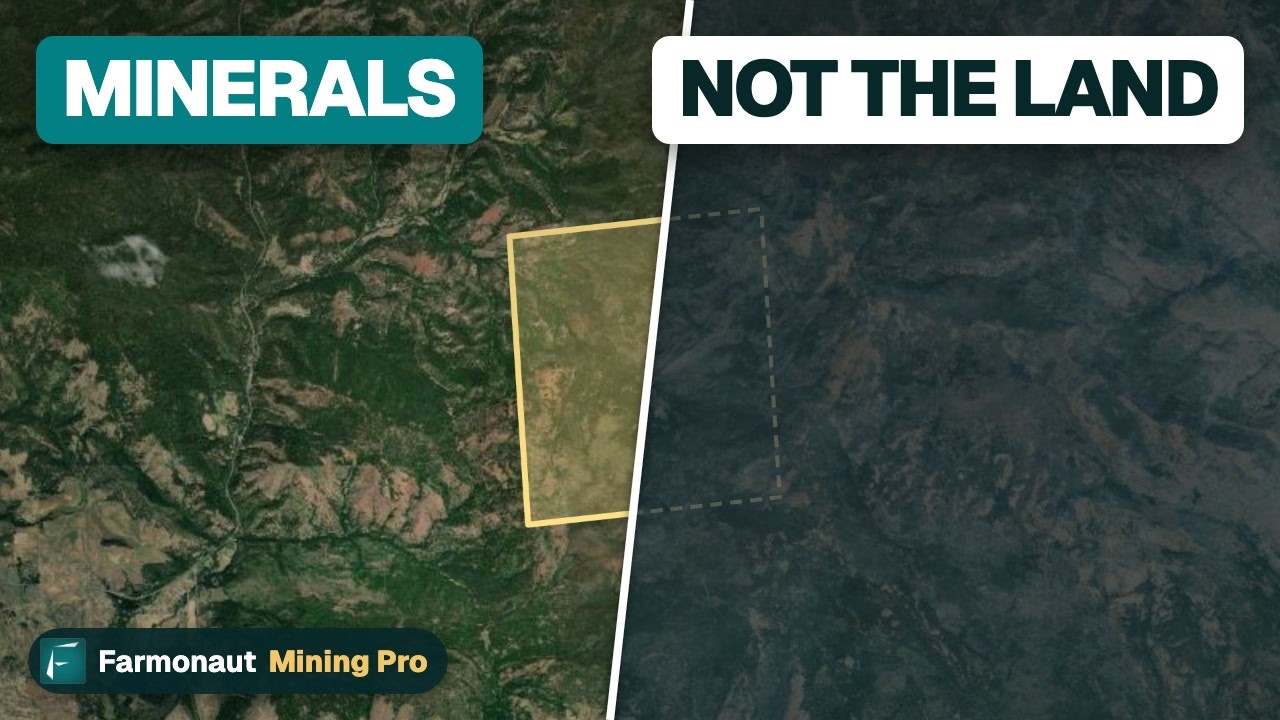
▶ Uses a Washington example to show that owning a gold claim is not owning the land; the federal rule is the same in California. · 3:19
Transferring a claim after you buy it
A transfer needs a recordable deed, usually a quitclaim deed, and it is governed by state law. BLM says to file the deed with the county office and with the BLM State Office within 90 days, and an amended location notice cannot be used to move ownership (BLM, Recording a Mining Claim or Site). The BLM fee is $15 per claim per transferee, and the deed must be recorded with the county first where the state requires recording (BLM, Mining Claim Fees).
Do not skip the BLM step. BLM states that failing to file transfer documents means you receive no notice of any action or contest started by the United States and have no legal defense for not being served (BLM brochure). In plain words, the government may send its letter to the old owner.
What a California gold claim lets you do
A claim gives you the right to look for and mine gold on the ground, but state and federal rules decide how. The big one for placer buyers is suction dredging. The California Department of Fish and Wildlife says suction dredging is prohibited and unlawful throughout the state, and nonmotorized recreational mining such as gold panning is not restricted by that definition (CDFW, Suction Dredge Permits). A claim does not change that. Work near a stream also draws other permits; our California panning rules page lists them.
A practical rule for any listing: if the sales copy says “dredge”, “sluice” or “production”, ask which method the seller used and when. The same words may describe work done before the dredging ban. Follow permission, safety and county rules, and never use mercury.
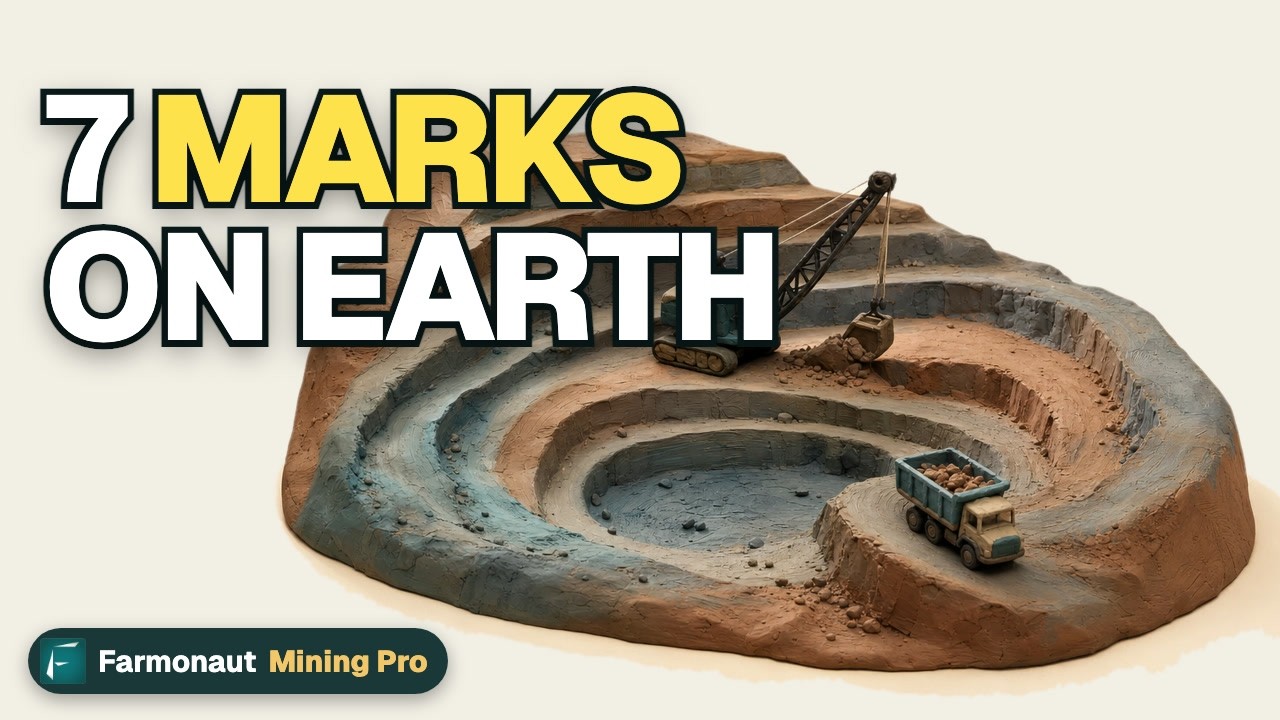
▶ The seven environmental impacts of mining, explained in claymation with satellite maps. · 2:31
Screening a claim before you buy
Satellite images cannot see gold, but they can map the rock and soil around it. Iron-stained rock, clay minerals and long straight faults are the clues exploration teams look for, and they show up in multispectral images before anyone visits the ground. For a buyer, this means you can compare several listings from your desk and rank them by whether the ground shows these clues at all. It does not replace a site visit, an assay or a lawyer, and a satellite screen produces exploration targets, not a resource estimate.
Farmonaut prepares satellite mineral-detection reports from a KML, KMZ or polygon file of your claim boundary. See satellite-based mineral detection for what the reports contain, and our guide to buying mining claims in seven steps for the general process.
▶ Why no satellite sees gold itself, and how teams map the rock changes a gold system leaves behind. · 2:00
Where California’s gold is
California produced about 3,670 metric tons of gold through 2001, 25% of the US total and second only to Nevada, according to the U.S. Geological Survey (USGS Open-File Report 02-303). The state’s gold rush began with the discovery at Sutter’s Mill in 1848. That history is why California claims are older and more contested than those in newer districts, and why a claim’s story needs checking against the record. For the rules that apply on the ground, see gold mining in California: satellite targets and claim rules.
Chart
Gold mined in the United States through 2001
Metric tons, leading states
Cost calculator: what the claim costs you to buy and hold
The calculator below adds the purchase price, the BLM transfer filing and a county recording fee, then the annual maintenance fee for the years you plan to hold. It shows how many ounces of gold the total equals at a price you enter. Enter your own numbers, and use today’s price from a source you trust.
Calculator
What will this claim cost me to buy and hold?
Enter the asking price, your number of claims and the years you will hold them.
- BLM maintenance fees each year: $200
- Total over the years you chose: $6,065
- Troy ounces of gold that total equals: 1.5
Example values only, not a forecast. BLM charges $15 per claim per transferee for a transfer and $200 for each 20 acres of placer or each lode claim per year (BLM Mining Claim Fees page and California 2027 packet). It assumes the seller paid the fee through 1 September 2027 and leaves out travel, equipment, labour and any recovery. The county fee and gold price are examples; use your recorder’s fee and today’s price.
Frequently asked questions
How much does a gold claim in California cost to buy?
Among the five California placer listings with a place, acreage and price on 5 November 2026, asking prices were $2,500 to $8,000 for 20 to 40 acres. Other listings fell outside that range, from $400 for 20-acre ads with no documentation to one unlabelled California placer at $20,000. Add $15 per claim for the BLM transfer, the county recording fee and $200 a year for each 20 acres.
Are mining claims for sale in California legitimate?
Many are, but the listing proves nothing. Ask for the BLM serial number, check it in MLRS and with the county recorder, and confirm that the maintenance fee was paid by 1 September. A claim that is not paid up is forfeited by operation of law.
Do I own the land if I buy a claim?
No. An unpatented claim is a right to the minerals, and BLM says it does not include exclusive surface rights. Only a patented claim carries title to the land, and BLM has accepted no new patent applications since 1994.
Can I buy a placer claim in California and dredge it?
No. Suction dredging is prohibited throughout California, whoever owns the claim. Gold panning and other non-motorized methods are not covered by the ban, but other permits and land rules still apply.
How do I transfer a mining claim after buying it?
Sign a recordable deed such as a quitclaim deed, record it with the county recorder, then file it with the BLM State Office within 90 days and pay $15 per claim per transferee.
What northern California placer claims are listed?
Our snapshot included Trinity, Plumas and Sierra County placer claims of 20 or 40 acres, some inside a national forest. Check which agency manages the surface, because Forest Service and BLM rules differ.
Is a Trinity County claim listed?
A 20-acre Trinity County placer was listed at $8,000 on Mountain Man Mining on 5 November 2026. Verify it in MLRS and with the Trinity County recorder before any deposit.
Are there gold mines for sale in California as well as claims?
Yes, but those are often private or patented parcels sold as real estate, priced differently and found through brokers and county records. Unpatented claims are the cheaper end of the listings we read.
Can I find a claim for sale near me?
Search by county in the two marketplaces, then check MLRS and the county recorder for the exact location. For open ground rather than a listing, the BLM research map shows which land is already claimed.
Is a claim a good investment?
Treat a claim as a right to explore, not an income stream. Most listings carry no documented grade or tonnage, annual fees continue whether or not gold is found, and the price you pay is not a measure of value.
Can I get help screening a claim?
Send the boundary and a request through our mining quote form, or contact us with questions about the reports.
This page is for information only. It is not legal advice or investment advice. Confirm the rules with the regulator and have a lawyer review any deed. Listings are third-party asking prices that may have changed or sold. Ask the land manager for permission before you prospect, follow state and county permit rules, and never use mercury.
Farmonaut mining
Get a quote to screen a claim from space
Send the claim boundary and we will quote a satellite screen that lists exploration targets ahead of any resource estimate.

Mining Pro sample view, synthetic data
Keep reading
Sources
- BLM California State Office, Mining claim and maintenance fee packet for the 2027 assessment year (2026): blm.gov
- BLM California State Office, Mining claim and maintenance fee packet for the 2022 assessment year (2021): blm.gov
- BLM, Mining Claim Fees: blm.gov
- BLM, Recording a Mining Claim or Site: blm.gov
- BLM, Mining Claims: blm.gov
- BLM, Mining Claims and Sites on Federal Lands (brochure): blm.gov
- BLM, Mineral and Land Records System (MLRS): blm.gov
- California Public Resources Code 3911, Recording with the county recorder: california.public.law
- California Public Resources Code 3913, County affidavit of labor or fee paid: california.public.law
- California Department of Fish and Wildlife, Suction Dredge Permits: wildlife.ca.gov
- 36 CFR 228.4, Forest Service notice of intent to operate (Cornell LII): law.cornell.edu
- USGS, Mineral Commodity Profiles: Gold, Open-File Report 02-303 (2002): pubs.usgs.gov
- Mountain Man Mining, Gold mining claims for sale (listing page, read 5 November 2026): mountainmanmining.com
- MiningClaimSales.com, Mining claims for sale (listing page, read 5 November 2026): miningclaimsales.com
Discussion
Questions, corrections or field experience? Share them below. First-time comments are reviewed before they appear, and your email is never published.
No comments yet. Be the first to add a question or your experience.

 Comfix & Engineering Limited
 Congo Mining Solutions
 Mining SARL
 SenGold Invest SAS
 Sania Corporation
 Sean Mining Limited
 NTS Group (Pty) Ltd
 Mine4Africa
 Lithspo Minerals Limited
 Tintina Mining Group
 Dalgety Minerals Pty Ltd
 Vortex Minerals Pty Ltd
 Faith At Work (Pty) Ltd
 Geotech Mining Solutions plc
 Vulcan International Limited
 Kidepo Associates
 GKY Mining
 Alkimy SARL
 Double A Trading
 GemSprout Metals Limited
 Qader Group











