

ASX lithium and rare earth miners · Company guide
Top Australian Lithium Producers and Rare Earth Miners
Greenbushes, part-owned by IGO, made 1.41 Mt of spodumene in FY26; PLS made 879.5 kt and Liontown 392 kt. Lynas leads rare earths. Ranked table, owners, dated prices and a calculator.
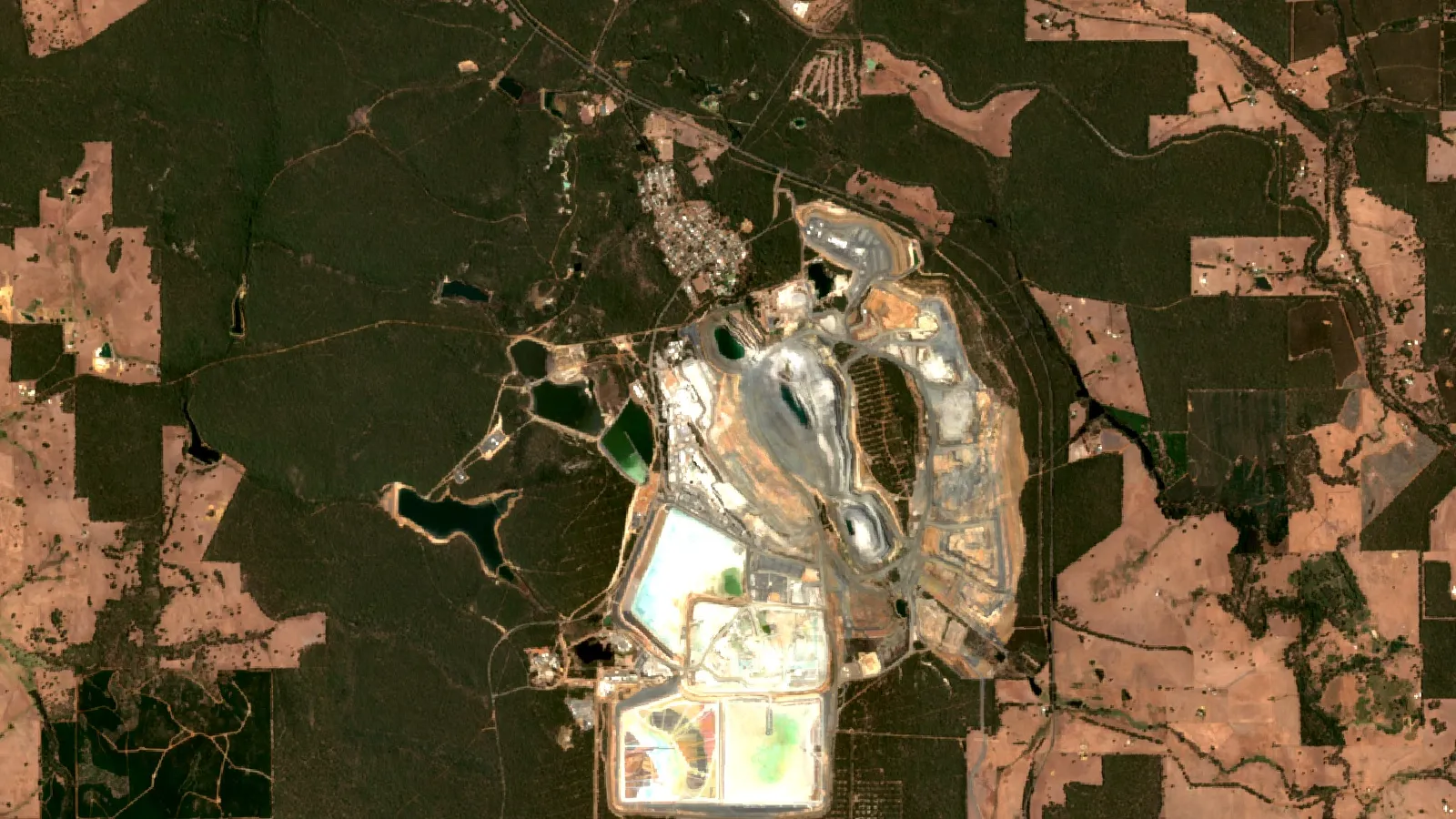
Key takeaways
- Australia mined an estimated 92,000 t of contained lithium in 2025, about 32% of the 290,000 t world total (USGS, 2026).
- FY26 spodumene concentrate: Greenbushes 1,410 kt (whole mine), PLS Pilgangoora 879.5 kt, Liontown Kathleen Valley 392.0 kt; MinRes sold 559k dmt SC6 on an attributable basis (company reports, to 30 June 2026).
- Lynas reported FY26 revenue of A$977.9 million and 7,260 t of NdPr; Iluka, Arafura and Hastings are building the next rare earth supply (ASX filings, 2026).
- Spodumene concentrate (FOB Australia) ended the September quarter at US$1,780 a tonne, down 23.5% on the quarter (Benchmark via Investing News Network, October 2026).
- Allkem no longer exists as a listed company: it became Arcadium Lithium in 2024 and Rio Tinto bought Arcadium in March 2025.
In this article
- How we ranked these companies
- ASX lithium producers compared: output, owners and status
- Top 5 ASX lithium companies ranked by reported annual output
- Where Australia sits in world lithium supply
- Other listed names with Australian lithium assets
- How the biggest lithium mining stocks rank by market value
- Lithium prices and what moves ASX lithium results
- From concentrate to battery chemical: why the downstream plants matter
- Australian rare earth miners: who produces, builds or plans
- Sustainability and permits: what the filings show
- Economic weight of ASX lithium and rare earth miners
- How satellite screening fits lithium and rare earth tenements
- What to check before you trust a lithium or rare earth figure
- Frequently asked questions
Australia mined an estimated 92,000 tonnes of contained lithium in 2025, about 32% of the world total of 290,000 tonnes, according to the USGS Mineral Commodity Summaries, and the companies below run the mines behind that figure. By the volume each reports for the year to 30 June 2026 (FY26), the biggest names are IGO, PLS, Mineral Resources and Liontown for lithium, and Lynas Rare Earths for rare earths, with Iluka, Arafura and Hastings building the next rare earth supply. Several names that older lists still show have since merged or been bought; they are corrected below.
This guide is written for consultants, advisers and mining business owners who need to know who owns what, how much each operation reports, and which figures can be compared. It lists the producers with a “best for” line and honest pros and cons, shows a world market-value comparison with its date, explains the price swings that drive their results, and gives a calculator for valuing a tonne of spodumene concentrate. Spodumene is the lithium-bearing mineral mined from hard rock in Western Australia; the concentrate that miners sell contains about 5 to 6% lithium oxide (Li2O).
It gives company facts, not advice: there are no price targets here and nothing on this page is a recommendation to buy or sell any share.
How we ranked these companies
We ranked producers by the spodumene concentrate volume each one reports for FY26, and we say which basis it is on, because the companies do not report on the same basis. Greenbushes, Pilgangoora and Kathleen Valley figures are production of the whole mine (called a 100% basis). The Mineral Resources figure is sales, and only its attributable share of two joint ventures. A bar chart that mixed those would mislead, so the chart below shows only the three 100%-basis production figures, and the table lists the rest with their basis.
- Metric: tonnes of spodumene concentrate in FY26, from each company’s own annual or quarterly report.
- Who is included: every ASX-listed company that reported lithium production from an Australian mine in FY26, plus listed owners of Australian lithium assets that were not producing. Companies listed only outside Australia are covered in a separate section.
- What we left out: share prices and price targets. Where a market value appears, it is a dated snapshot from a named source.
- Units: kt is thousand tonnes, Mt is million tonnes, and dmt is dry metric tonnes. SC6 means concentrate at the 6% Li2O benchmark grade, which Geoscience Australia also assumes when it converts concentrate to contained lithium.
ASX lithium producers compared: output, owners and status
The table runs from the largest reported volume to the smallest, then lists listed owners with no FY26 output. Read the basis column before comparing rows. Company ownership shares come from the filings linked in the notes under the table.
| Company (ASX ticker) | Australian lithium asset and ownership | FY26 output reported (basis) | Status in the latest filing |
|---|---|---|---|
| IGO (IGO) | Greenbushes, Western Australia: IGO holds 49% of Tianqi Lithium Energy Australia, which holds 51% of Talison Lithium; Albemarle holds the other 49% | 1,410 kt concentrate (whole mine) | A June 2026 fire left the new CGP3 plant offline for about seven weeks; it restarted in early August |
| PLS Group (PLS) | Pilgangoora, Western Australia, 100% owned | 879.5 kt produced (whole mine) | Ngungaju plant restart began 1 July 2026; P2000 expansion study continuing |
| Mineral Resources (MIN) | Wodgina (50% with Albemarle), Mt Marion (50% with Ganfeng) and Bald Hill, all Western Australia | 559k dmt SC6 sold (MinRes attributable share) | Bald Hill restarted May 2026; Mt Marion expansion approved at A$490 million |
| Liontown (LTR) | Kathleen Valley, Western Australia | 392.0 kt produced (whole mine) | Underground ramp-up toward 2.8 Mtpa ore mining rate by end of FY27 |
| Core Lithium (CXO) | Finniss, Northern Territory | No FY26 concentrate production (restart under way) | Restarting; first shipment of newly produced product targeted for the December quarter of 2026 |
| Rio Tinto (RIO) | Mt Cattlin, Western Australia (came with Arcadium Lithium) | None | Care and maintenance since March 2025 |
| Wesfarmers (WES) | Mt Holland, Western Australia, through Covalent Lithium (50/50 with SQM) | No separate figure: 50/50 joint venture with SQM | Kwinana hydroxide plant made first battery-grade product in July 2025 |
Notes: ownership at Greenbushes is from the IGO 2026 annual report; PLS figures are from its 2026 annual report; Mineral Resources figures are from its quarterly report to 30 June 2026, where the Wodgina and Mt Marion tables are on a 50% attributable basis; Liontown figures are from its June 2026 quarterly report; Core Lithium’s status is from its June 2026 quarterly report. The Mt Cattlin, Covalent and Mt Marion ownership lines come from Investing News Network (May 2026).
Top 5 ASX lithium companies ranked by reported annual output
1. IGO (ASX: IGO): a minority stake in Greenbushes
Best for: readers who want to see the world’s largest hard-rock lithium mine from the owner side. The mine made 1.41 Mt of concentrate in FY26 at a cash cost of A$415 a tonne, an EBITDA margin of 73% (EBITDA is earnings before interest, tax, depreciation and amortisation) and 5% less output than the year before, as IGO’s annual report shows. Mining.com calls Greenbushes the world’s biggest hard-rock lithium mine.
Chart
Spodumene concentrate produced in FY26
Thousand tonnes, whole-mine (100%) basis, year to 30 June 2026; MinRes and Core omitted because they report on other bases
Pros: low cost and a long record; IGO also reports the mine has the highest ore reserve grade of any hard-rock lithium mine in the world. Cons: IGO’s economic interest is about a quarter of the mine (49% of a venture that holds 51%), and the Kwinana lithium hydroxide refinery it holds through the same venture produced 8,839 tonnes in FY26, below its 9,000 to 11,000 tonne guidance, a year after the venture fully impaired the Kwinana assets (in FY25). The June 2026 fire at the CGP3 plant, offline for about seven weeks, is a further operational risk, though IGO says Greenbushes stayed within revised production guidance.
2. PLS Group (ASX: PLS): the 100% owner of Pilgangoora
Best for: a single large mine with one owner, so the reported figures are the whole operation. PLS, formerly named Pilbara Minerals, produced 879.5 kt in FY26, up 17% on FY25, with a produced grade of 5.3%, and ended June 2026 with A$2,290 million in cash, according to its June 2026 quarterly report. FY26 revenue was A$1,934 million.
Pros: record output, 100% ownership of the mine, and a restart of the Ngungaju plant that began on 1 July 2026 and is expected to reach target capacity within four months. Cons: earnings depend on one commodity and one district, and the P2000 expansion, a proposed new concentrator, is still in a feasibility study with a final investment decision subject to study results, funding and market conditions.
3. Mineral Resources (ASX: MIN): lithium beside iron ore and mining services
Best for: exposure to three lithium mines inside a diversified contractor and iron ore business. MinRes reported FY26 lithium sales of 559k dmt SC6 on an attributable basis: Wodgina 317k and Mt Marion 242k. It restarted Bald Hill in May 2026, a mine it had put on care and maintenance in November 2024, and made a final investment decision in May 2026 on a flotation plant and underground mining at Mt Marion for A$490 million (100% basis).
Pros: a record year at both producing mines and a realised price of US$2,425 per dmt SC6 in the June 2026 quarter. Cons: lithium is only part of the group, group net debt was about A$4.3 billion at 30 June 2026, and Investing News Network reports that a 30% stake in the Wodgina and Mt Marion business was sold to POSCO Holdings in May 2026, so MinRes’s lithium share will reflect that structure.
4. Liontown (ASX: LTR): Kathleen Valley, moving underground
Best for: readers who want to follow a newer mine that is shifting from open pit to underground mining. Liontown produced 391,992 dmt of concentrate in FY26 and sold 381,997 dmt at an average 5.1% Li2O, and closed June with A$561 million in cash. The Kathleen Valley power station gave about 71% renewable power in the June quarter, down from 85% in March.
Pros: a hybrid power station (wind is 30 MW of its 46 MW renewable capacity), a record 3,316 metres of underground development in one quarter, and an A$389 million expansion that Liontown approved on 30 September 2026, which aims to lift concentrate capacity from about 500,000 to about 780,000 tonnes a year (Motley Fool Australia). Cons: lithia (lithium oxide) recovery, the share of lithium in the ore that ends up in concentrate, averaged about 63% in the June quarter, and the company says feed mix and contamination drive it, so recoveries are the number to watch.
5. Core Lithium (ASX: CXO): a restart story
Best for: following a restart in the Northern Territory. Core’s June 2026 quarterly report records open-pit mining at Grants under way, a portal cut for underground decline development at BP33, agreements to sell about 45 kt of lithium fines from the existing stockpile to Glencore, and cash of A$181.8 million at 30 June 2026. It expects the first shipment of newly produced product in the December quarter.
Pros: the logistics chain through Darwin Port is running and the company has funding in hand. Cons: it has not yet shipped newly produced concentrate, so there is no FY26 production volume to compare.
Where Australia sits in world lithium supply
The USGS puts Australian mine production at 92,000 tonnes of lithium content in 2025 (estimate), ahead of China (62,000 tonnes) and Chile (56,000 tonnes). Australian reserves are 8.4 million tonnes of the 37 million tonnes the USGS lists worldwide. Geoscience Australia counts seven operating lithium mines at 31 December 2025 and a mine production figure of 118 thousand tonnes of lithium, a different figure from the USGS one because Geoscience Australia estimates it from concentrate output reported by the Australian Government’s Office of the Chief Economist, assuming 6% Li2O, as its 2026 preliminary tables explain. Two agencies, two definitions: use one source for any comparison.
Chart
Lithium mine production by country
Tonnes of contained lithium, 2025 estimate; eight largest producers
A ranking of mines is a separate question from a ranking of companies. For the mine-by-mine view of Australian spodumene, including geology and mine type, see our page on spodumene producers in Australia. For the global comparison, see our guide to the largest lithium mining companies and the list of major lithium producers in the world.
Other listed names with Australian lithium assets
Several names that older lists show as ASX lithium companies no longer trade as they did. Galaxy Resources and Orocobre completed a merger in August 2021 and rebranded as Allkem, with Galaxy’s Mt Cattlin mine passing to the new company, according to Australian Resources & Investment. A peer-reviewed paper in PubMed Central records that Allkem merged with Livent in early 2024 to form Arcadium Lithium. Rio Tinto then completed its US$6.7 billion purchase of Arcadium in March 2025 and put Mt Cattlin on care and maintenance the same month, as Investing News Network reports. Our older page on Galaxy Resources covers the pre-merger history. There is no listed “Allkem” to compare today. For a related list, see our page on Australian cobalt and rare earth mining companies.
- Albemarle (NYSE: ALB): holds 49% of Talison Lithium (Greenbushes) and 50% of Wodgina through a joint venture with Mineral Resources, according to Albemarle’s mining interests page. It is listed in the United States, not on the ASX.
- Tianqi Lithium and Ganfeng Lithium: Tianqi is listed in Shenzhen and Hong Kong and holds the other 51% of the Greenbushes-owning venture with IGO; Ganfeng, listed in Hong Kong and Shenzhen, holds 50% of Mt Marion.
- Wesfarmers (ASX: WES): owns half of Covalent Lithium, which runs Mt Holland and the Kwinana hydroxide refinery with SQM; the refinery produced its first battery-grade hydroxide in July 2025 and expected nameplate capacity of 50,000 tonnes a year by the end of 2026 (as of May 2026).
- Atlantic Lithium and Global Lithium Resources: Investing News Network reports that Zhejiang Huayou Cobalt agreed in May 2026 to buy Atlantic Lithium (ASX: A11) in a deal worth roughly US$210 million, whose Ewoyaa project is in Ghana, and that Global Lithium Resources (ASX: GL1) agreed a strategic investment and offtake with Lopal Tech. IGO has also announced a sale of its Nova nickel operation to Global Lithium Resources.
How the biggest lithium mining stocks rank by market value
For the search “world’s biggest lithium mining stocks”, the answer depends on the date, because shares have moved sharply. Investing News Network’s list, with data as of 13 May 2026, placed Rio Tinto first at US$191.17 billion, though lithium is a small part of that business. Among lithium-focused names it listed SQM (US$24.47 billion), Ganfeng (US$23.91 billion), Albemarle (US$23.7 billion), Tianqi (US$17.95 billion), PLS (US$15.05 billion) and Mineral Resources (US$10.5 billion). The chart leaves Rio Tinto out so the other bars stay readable.
Chart
Lithium-focused companies by market value
US$ billion, data as of 13 May 2026; Rio Tinto (US$191.17 billion) left out
Treat those figures as a May snapshot. Mining.com reported on 22 July 2026 that over the previous month Liontown shares had lost 36%, PLS 26%, Mineral Resources 21%, Core Lithium 20% and IGO 18%, so every market value on this list has changed since the snapshot. Look up a live figure on the ASX or a market data provider before using one.
Lithium prices and what moves ASX lithium results
Lithium company results move with the price of spodumene concentrate and lithium carbonate, which have swung widely in 2026. S&P Global data quoted by Investing News Network show battery-grade lithium carbonate in China at a two-year high of 201,000 yuan (US$30,032) a tonne on 12 May 2026, a 71.8% rise since the start of the year. Benchmark data in the same report show spodumene concentrate (FOB Australia, meaning the price at the Australian port before shipping) ended the September quarter at US$1,780 a tonne, down 23.5% on the quarter, and the most active Guangzhou Futures Exchange lithium carbonate contract fell 11.8% to about US$15,650 a tonne on 12 October 2026 (Investing News Network, 14 October 2026).
The company-reported prices are higher or lower depending on timing and contract terms. PLS reported a realised price of US$2,415 per tonne on an SC6 basis in the June quarter, and MinRes US$2,425 per dmt CIF SC6 (CIF means the price includes cost, insurance and freight), while Liontown reported US$1,880 per dmt on an SC6-equivalent basis. These are lagged averages of past sales, not today’s market.
Supply is returning. Mining.com reports that CATL restarted its Jianxiawo mine in China in late June 2026, that Mineral Resources is restarting Bald Hill and Core is restarting Finniss, and that Zimbabwe, which supplied about 10% of mined lithium last year, said it would stick to a ban on lithium concentrate exports from 1 January. Restarts at Australian mines respond to price, and idle capacity adds supply when prices rise. The calculator below turns concentrate volume, grade and a price you choose into contained lithium oxide and a value, so you can test what a price change does to one operation.
Calculator
What is your spodumene concentrate worth?
Enter your own tonnes, grade and price. Results update as you type.
- SC6-equivalent tonnes: 8,667
- Value at your price (US$): $13,000,000
- Value after royalty and selling costs (US$): $11,700,000
- Lithium carbonate equivalent (t): 1,029
Example values only, not benchmarks or forecasts. The price is an input: use today’s price for SC6 concentrate (6% Li2O) in US$ per dry metric tonne. Value assumes price scales in proportion to grade, which real contracts may not. The lithium carbonate equivalent line uses the molar-mass ratio of lithium carbonate to lithium oxide, 2.473, fixed in the formula, and your own conversion recovery.
From concentrate to battery chemical: why the downstream plants matter
A spodumene concentrate is an intermediate product. It still has to be converted into lithium hydroxide or carbonate before a battery maker can use it, and several Australian conversion plants have struggled. IGO reports that the Kwinana refinery, 35 km south of Perth and supplied with concentrate from Greenbushes, about 250 km south of Perth, has missed its guidance and that “structural market pressures” hurt downstream processing in Australia. Albemarle placed the remaining hydroxide train at its Kemerton plant on care and maintenance in February 2026, as reported in May 2026 by Investing News Network.
Infographic
From pit to battery chemical in 5 steps
- 1Mine and crushHard-rock ore from the pit is crushed and sorted.
- 2Make concentrateSpodumene is separated into a concentrate of about 5 to 6% Li2O.
- 3Ship or truckConcentrate leaves the mine for a converter, in Australia or overseas.
- 4ConvertA refinery turns it into lithium hydroxide or carbonate.
- 5SellBattery makers buy the chemical under contract.
This is why a miner with its own conversion capacity is not automatically a lower-risk business, and why the volume of concentrate sold is the cleaner number for comparing mines. Traceability also matters for buyers; our page on product traceability describes one way to track material from mine to customer, and long haul routes make fleet management a cost line for remote sites.
Australian rare earth miners: who produces, builds or plans
Rare earth elements are a group of metals found together; producers report them as total rare earth oxide (TREO) and sell mainly neodymium-praseodymium oxide (NdPr) for permanent magnets. The USGS estimates Australian mine production at 29,000 tonnes of rare earth oxide in 2025, against 270,000 tonnes in China and 51,000 tonnes in the United States, and Australian reserves at 6.3 million tonnes. Geoscience Australia counts one operating rare earth mine, and Lynas is its operator.
Chart
Lynas production by quarter
Tonnes, ready for sale; NdPr and total rare earth oxide (REO)
| Company (ASX ticker) | Asset | Stage and latest dated fact |
|---|---|---|
| Lynas Rare Earths (LYC) | Mt Weld mine, Kalgoorlie processing, Malaysia separation | FY26 revenue A$977.9 million, up 76%; 13,089 tonnes of rare earth oxide, including 7,260 tonnes of NdPr (year to 30 June 2026) |
| Iluka Resources (ILU) | Eneabba refinery, Western Australia | Under construction, nearing 60% complete; A$1,101 million spent to 30 June 2026 against an estimate of A$1.7 to 1.8 billion; commissioning in 2027 |
| Arafura Rare Earths (ARU) | Nolans, Northern Territory | Final investment decision 21 May 2026; planned average 4,440 tonnes a year of NdPr oxide over 38 years |
| Hastings Technology Metals (HAS) | Yangibana, Western Australia (40%) | Updated feasibility study 13 July 2026; Wyloo (60% owner) has started a sale process for its stake |
| Northern Minerals (NTU) | Browns Range, Western Australia | Heavy rare earth project rich in dysprosium and terbium; feasibility study complete and funding talks under way (July 2026) |
| Australian Strategic Materials (ASM) | Dubbo, New South Wales | Acquired by Energy Fuels; scheme effective 19 August 2026 |
Lynas: the producer
Lynas reported revenue of A$977.9 million for FY26, up 76% on the previous year, and ready-for-sale production of 13,089 tonnes of rare earth oxide with 7,260 tonnes of NdPr, in its Appendix 4E for the year to 30 June 2026. Output was uneven within the year: the June 2026 quarterly report shows NdPr falling to 1,857 tonnes in the quarter, which Lynas attributes to a water recycling plant problem at Mt Weld and ore concentrate quality, while the average selling price across all products rose to a record A$98.2 a kilogram. Reuters, via Kitco, calls Lynas the world’s largest producer of rare earths outside China and reports that Malaysia renewed its operating licence for 10 years in March 2026, with a requirement to stop producing radioactive waste after five years.
On 1 October 2026 Lynas and Meteoric Resources announced a binding agreement under which Lynas would acquire Meteoric, owner of the Caldeira ionic clay project in Minas Gerais, Brazil, for an implied equity value of A$968 million, as the ASX announcement states. It still needs a court-approved scheme of arrangement, so it is a proposal, not a completed deal. Lynas has also been led by an interim chief executive since 1 July 2026.
The development pipeline: Iluka, Arafura, Hastings and Northern Minerals
Iluka’s Eneabba refinery is funded by a A$1.65 billion non-recourse loan from the Australian Government, confirmed in a June 2026 release (non-recourse means the lender cannot claim against the rest of the company), and its June 2026 quarterly report gives the construction and spend figures above. Arafura’s decision announcement sets out its offtake agreements with several buyers. Hastings’ updated feasibility study reports a Stage 1 initial capital cost of A$333.4 million, a pre-tax net present value of A$649 million and a pre-tax internal rate of return of 34%, with first concentrate about two years after award of the process plant contract. Northern Minerals describes Browns Range in its July 2026 investor presentation. Dubbo’s 75.18 Mt resource is from ASM’s half-year report to 31 December 2025, and the takeover completion is reported by Motley Fool Australia. For a project-by-project guide, with environmental limits and costs, see our guide to rare earth deposits and exploration; for the oxide itself, read about neodymium-praseodymium oxide, and for the US side of the market see our list of US rare earth mining companies.
The price risk for rare earth producers differs from lithium. Benchmark Minerals reported on 21 August 2026 that ex-China NdPr oxide had fallen to US$95,000 a tonne, below the US$110 a kilogram floor in the US Department of Defense agreements with Lynas and MP Materials, and says the floor insulates both producers from the weak spot market.
Sustainability and permits: what the filings show
The filings give a few measurable sustainability points. Liontown reports that its Kathleen Valley hybrid power station supplied about 71% renewable power in the June 2026 quarter. Lynas must meet Malaysia’s licence conditions on radioactive residue. PLS reports a Calix electric-kiln demonstration plant at Pilgangoora that has government funding of up to A$38.1 million, according to Investing News Network. Land and water use for a particular mine are set in its state approval, so read that document rather than a company summary.
Emissions accounting is a growing cost line for miners and their customers; our page on carbon footprinting describes how satellite-based estimates of land impact can support it. For tenement rules in Western Australia, where most of these projects sit, read our guide to Dept of Mines WA tenement types, fees and where to apply.
Economic weight of ASX lithium and rare earth miners
The size of the sector shows up in the filings. PLS reported FY26 revenue of A$1,934 million and Lynas A$977.9 million; Iluka had spent A$1,101 million on its Eneabba refinery by 30 June 2026, and Arafura took an investment decision on Nolans in May 2026. IGO’s Greenbushes venture spent A$355.7 million on sustaining, growth and deferred waste capital in FY26, and Liontown reported A$302 million of cash receipts from customers in a single quarter. These numbers describe company activity; they are not a count of jobs or a national total.
Government finance is part of the picture too: the Australian Government loan to Iluka and the Export Finance Australia support for Arafura change who carries project risk. The video below explains in plain words how mining feeds exports, jobs and public revenue.
▶ Explains how mining feeds exports, jobs, public revenue and energy-transition minerals (5:03). · 5:03
How satellite screening fits lithium and rare earth tenements
Most lithium and rare earth deposits start as an exploration tenement, not a listed company. Multispectral satellite images can show clay and iron-oxide alteration, vegetation change and disturbed ground across a licence area before field crews are sent out. The result is a ranked list of exploration targets to test with sampling and drilling, not a resource estimate and not an environmental or social clearance. Farmonaut’s satellite mineral detection covers lithium and rare earth elements among 20+ minerals, takes KML, KMZ or polygon boundaries, and reports in 5 to 20 business days, which cuts early exploration cost by up to 80 to 85% in the company’s own figures.
The video below shows how a published satellite study approached lithium prospecting in Nigeria, to illustrate the method for a different geology from Western Australia’s pegmatites.

▶ A satellite-based exploration case study for lithium in Nigeria (10:49). · 10:49
What to check before you trust a lithium or rare earth figure
- Basis: is the number 100% of a mine or the company’s share, production or sales, concentrate or contained metal?
- Grade convention: SC6 is a 6% Li2O benchmark, not the grade shipped. Liontown shipped 5.0 to 5.1% Li2O and PLS produced 5.3%.
- Currency and date: Australian companies report in Australian dollars (A$) unless they state US$, and some ASX filings mix both in one table. Check the period end.
- Resource or reserve: a mineral resource has reasonable prospects of economic extraction; an ore reserve has been shown to be economic. Inferred resources have the lowest geological confidence.
- Ownership: a joint venture partner may report the same mine; do not add both.
- Restart or care and maintenance: a mine that has restarted can still be ramping up, as Bald Hill, Finniss and Ngungaju are.
- Merger status: the Lynas and Meteoric deal needs court approval, and Yangibana’s 60% owner has started a sale process.
The video below is a short guide to checking claims about AI in exploration, which applies equally to any technology claim in a company announcement.

▶ What AI in mineral exploration does, where it fails, and how to check any claim (4:37). · 4:37
For a closer look at a related question, see our guide: Cobalt Mines in Australia: Producers and Projects Listed.
If this topic matters to you, read Mining Industry in Australia: Output, Exports, Miners next.
Frequently asked questions
Which Australian lithium companies are listed on the ASX?
IGO (IGO), PLS Group (PLS), Mineral Resources (MIN), Liontown (LTR) and Core Lithium (CXO) are the main ASX names with Australian lithium operations or restarts, and Rio Tinto (RIO) and Wesfarmers (WES) hold Australian lithium assets inside larger groups. Albemarle, Tianqi and Ganfeng own major stakes but are not ASX-listed.
Who is the largest lithium producer in Australia?
The largest mine is Greenbushes, which produced 1.41 million tonnes of concentrate in FY26 at 100% of the mine. It is owned through Talison Lithium by a Tianqi and IGO venture (51%) and Albemarle (49%). Among listed companies owning a whole mine, PLS reported the most, at 879.5 kt from Pilgangoora.
Is Allkem still listed on the ASX?
No. Orocobre and Galaxy Resources merged into Allkem in 2021, Allkem merged with Livent in early 2024 to form Arcadium Lithium, and Rio Tinto bought Arcadium in March 2025.
Is Pilbara Minerals still a company?
Yes, under a new name. PLS Group (ASX: PLS) is the former Pilbara Minerals and owns the Pilgangoora lithium-tantalum project.
How much lithium does Australia produce?
The USGS estimates 92,000 tonnes of contained lithium in 2025, about 32% of the world total. Geoscience Australia reports 118 thousand tonnes of lithium for the same period using a different method.
What is the difference between spodumene concentrate and lithium carbonate?
Spodumene concentrate is a mineral product of about 5 to 6% Li2O sold by miners. Lithium carbonate and hydroxide are chemicals made from it in a conversion plant, and they sell at much higher prices per tonne.
What does SC6 mean?
SC6 is spodumene concentrate at a 6% lithium oxide grade. Companies convert their actual shipments to an SC6 basis so that prices and volumes are comparable.
Which Australian company produces rare earths?
Lynas Rare Earths (ASX: LYC) is the producer, with the Mt Weld mine in Western Australia and separation in Malaysia. Iluka is building the Eneabba refinery, Arafura took a final investment decision on Nolans in May 2026, and Hastings and Wyloo hold Yangibana.
How much rare earth oxide does Australia mine?
The USGS estimates 29,000 tonnes of rare earth oxide for 2025, against 270,000 tonnes in China and 51,000 tonnes in the United States.
What are the biggest lithium mining stocks in the world?
By market value in May 2026 data from Investing News Network, the list was Rio Tinto, SQM, Ganfeng, Albemarle, Tianqi, PLS and Mineral Resources. Market values change daily, so check a live source.
Can I explore for lithium or rare earths myself in Australia?
You need a granted tenement from the state or territory mines department, and other approvals vary by state. Satellite screening can narrow targets first, but tenure rules are set by the regulator.
This page is for information only. It is not investment advice, and it does not recommend buying or selling any company’s shares. Company figures are as reported on the dates shown and use different bases. Market values and prices change daily.
Farmonaut mining
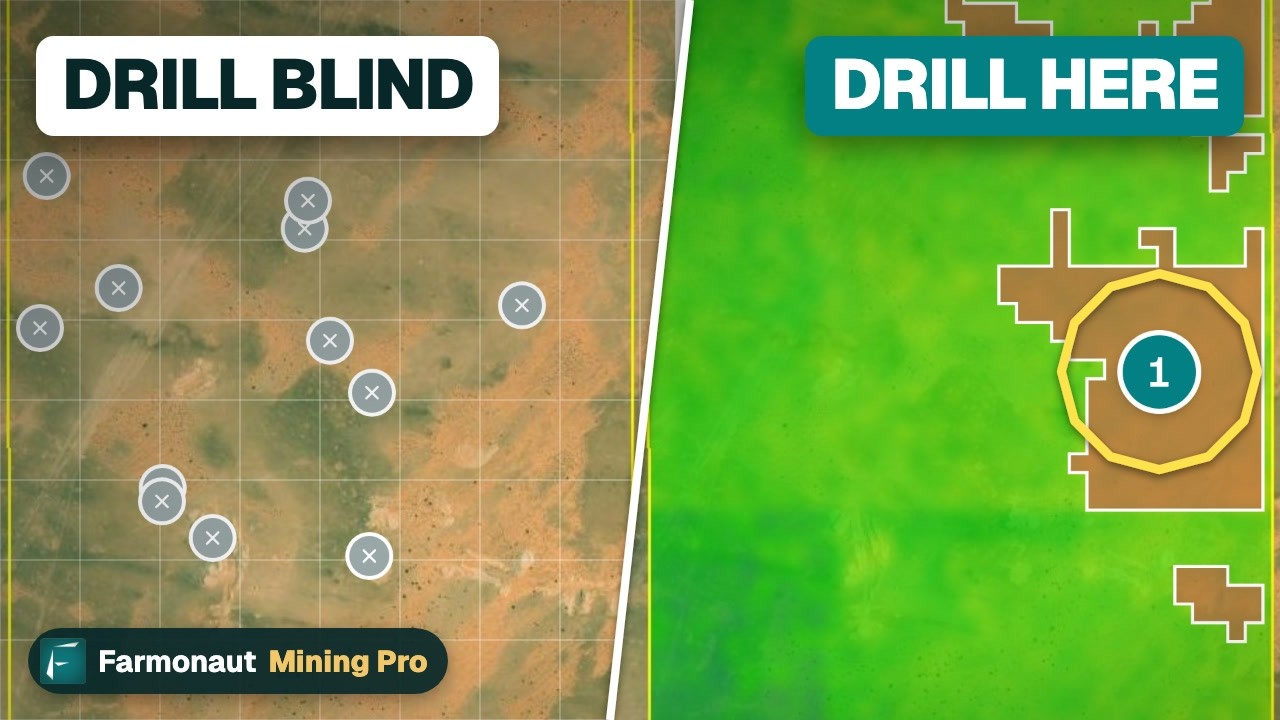
Map your lithium or rare earth site from space
Send your licence boundary to get a quote for satellite screening that ranks exploration targets to test before you drill.
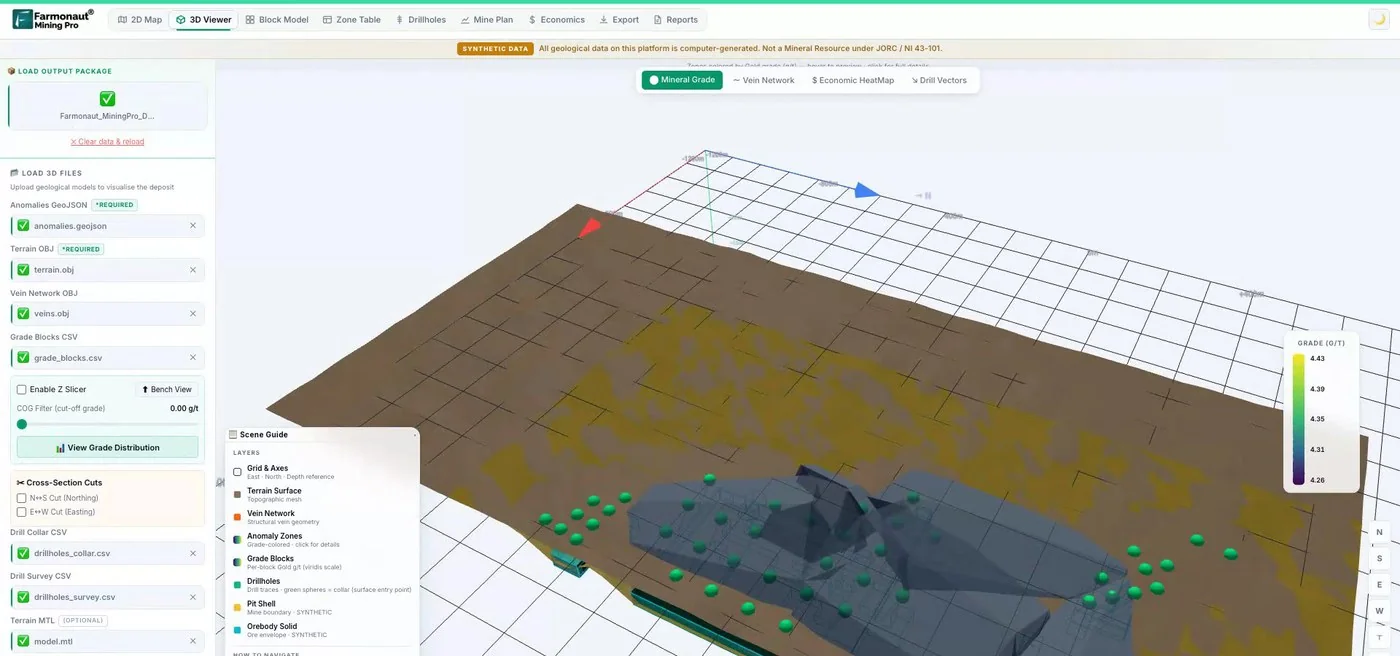
Mining Pro sample view, synthetic data
Keep reading
Sources
- USGS, Mineral Commodity Summaries 2026: Lithium: pubs.usgs.gov
- USGS, Mineral Commodity Summaries 2026: Rare Earths: pubs.usgs.gov
- Geoscience Australia, Australia’s Identified Mineral Resources 2026 preliminary tables: ga.gov.au
- IGO Limited, Annual Report 2026: igo.com.au
- PLS Group, Annual Report 2026 (ASX, 24 Aug 2026): pls.com
- PLS Group, June 2026 Quarterly Activities Report (ASX, 30 Jul 2026): announcements.asx.com.au
- Mineral Resources, Q4 FY26 Quarterly Activity Report (29 Jul 2026): mineralresources.com.au
- Liontown, Quarterly Activities Report to 30 June 2026 (ASX, 29 Jul 2026): investorpa.com
- Core Lithium, June Quarterly Activities Report (ASX, 15 Jul 2026): bulletin.webull.com
- Lynas Rare Earths, Appendix 4E for the year to 30 June 2026 (ASX, 26 Aug 2026): announcements.asx.com.au
- Lynas Rare Earths, Quarterly Report to 30 June 2026 (ASX, 22 Jul 2026): announcements.asx.com.au
- Lynas Rare Earths, Lynas to acquire Meteoric Resources (ASX, 1 Oct 2026): announcements.asx.com.au
- Iluka Resources, Rare earths update (ASX, 22 Jun 2026): announcements.asx.com.au
- Iluka Resources, Quarterly report to 30 June 2026 (ASX, 28 Jul 2026): announcements.asx.com.au
- Arafura Rare Earths, Final Investment Decision for Nolans (ASX, 21 May 2026): announcements.asx.com.au
- Hastings Technology Metals, Updated DFS for Yangibana Stage 1 (ASX, 13 Jul 2026): bulletin.webull.com
- Northern Minerals, investor conference presentation (ASX, 23 Jul 2026): bulletin.webull.com
- Australian Strategic Materials, Interim Financial Report 31 December 2025 (ASX, 11 Mar 2026): announcements.asx.com.au
- Motley Fool Australia, ASM confirms scheme effectiveness (20 Aug 2026): fool.com.au
- Investing News Network, 7 Biggest Lithium-mining Companies (data as of 13 May 2026): investingnews.com
- Investing News Network, Lithium Market Trends: Q3 2026 Review (14 Oct 2026): investingnews.com
- Mining.com, Lithium price sinks to five-month low (22 Jul 2026): mining.com
- Albemarle, Mining Interests: albemarle.com
- Australian Resources & Investment, Galaxy, Orocobre adopt new name (26 Aug 2021): australianresourcesandinvestment.com.au
- PubMed Central, The water footprint of lithium extraction technologies (2025): pmc.ncbi.nlm.nih.gov
- Reuters via Kitco, Malaysia renews Lynas operating licence for 10 years (2 Mar 2026): kitco.com
- Benchmark Minerals, Ex-China NdPr prices slip below US$110/kg price floor (21 Aug 2026): source.benchmarkminerals.com
- Motley Fool Australia, Liontown approves Kathleen Valley expansion (30 Sep 2026): fool.com.au
Discussion
Questions, corrections or field experience? Share them below. First-time comments are reviewed before they appear, and your email is never published.
No comments yet. Be the first to add a question or your experience.

 Geoticgy
 GemSprout Metals Limited
 Qader Group
 Ileys General Trading
 SG Gold Mining LLC
 VRV Global Pte Ltd
 Omsri International FZE
 G.I.T.T.
 Jaunita Erss Ltd
 Almosi SARL
 SRK Consulting
 Berks Gold Limited
 Mwerezi Minerals Company Limited
 Mining SARL
 SenGold Invest SAS
 Sean Mining Limited
 NTS Group (Pty) Ltd
 Mine4Africa
 Lithspo Minerals Limited
