

Automated Mining: Safer, Smarter, Greener Mines 2025
Automated Mining 2025: The Future of Safer and More Efficient Mineral Extraction
Automated mining has become the transformative force reshaping global mineral extraction in 2025. As this industry, long recognized as an economic cornerstone, faces new challenges—from safety concerns and rising operational costs to tighter environmental regulations—the deployment of advanced automated mining equipment, AI systems, and robotics is accelerating at an unprecedented pace.
The term automated mining refers to operations that leverage automated mine equipment, driverless haul trucks, robotic drilling rigs, and remote-controlled machinery, integrated with artificial intelligence (AI), machine learning, and sensor networks. This enables safer extraction of essential minerals, increased efficiency, and more sustainable practices—all while reducing exposure of humans to hazardous environments.
With precision mining practices, autonomous systems optimize productivity, dramatically reduce risks and costs, and ensure that mining in 2025 and beyond is not only smarter, but fundamentally safer and greener.

Let’s dive deeper into how automated mining technology is driving the evolution of the global mineral sector.
How Automated Mining is Transforming the Industry
The mining industry in 2025 stands at the confluence of automation, AI, advanced equipment, and connected networks. These technologies are altering every stage of the extraction lifecycle, from mineral exploration and drilling to haulage and production logistics.
- Automated mining operations employ driverless haul trucks, remotely operated loaders, and robotic drilling rigs to carry out activities with minimal human intervention.
- AI-powered control systems analyze real-time sensor data to optimize routes, equipment health, fuel use, and extraction parameters.
- Machine learning algorithms detect patterns in geological data to enhance resource targeting and reduce material waste.
- Integrated sensor networks and telemetry enable a connected digital mine for seamless, efficient, and adaptive operations.
The result is a safer environment for personnel, substantial increases in productivity, and a vital step towards environmentally responsible and sustainable mining for global industries.

Key Benefits of Automated Mining Equipment & Systems
- Substantial risk reduction: Removing humans from hazardous work zones.
- Productivity gains: 24/7 operations without traditional shift limitations or fatigue interruptions.
- Cost savings: Lower labor, increased efficiency, and fewer delays.
- Environmental preservation: Precision mining reduces land disruption, lowers emissions, and enables smarter energy use.
- Data-driven management: Real-time insight drives predictive maintenance, strategic planning, and rapid response to changing conditions.
Automated, semi-autonomous and autonomous: what the terms mean
“Automated mining” and “autonomous mining” are often used as if they meant the same thing. The industry body Global Mining Guidelines Group (GMG) separates them into steps.
- Manual or teleremote. An operator drives the machine, either from the cab or from a remote station.
- Semi-autonomous. The machine does part of a task on its own within set limits, for example tramming a loader between points, and a person handles the rest. GMG’s definition.
- Autonomous. The machine carries out its assigned task with no direct human control. People supervise the fleet from a control room.
GMG’s Guideline for the Implementation of Autonomous Systems in Mining (version 2, 2024) covers projects ranging from a single autonomous vehicle and mixed (hybrid) fleets to highly autonomous fleets, in surface and underground mines and on greenfield and brownfield sites.
Mixed fleets need particular care, because manual vehicles and autonomous trucks share the same roads.
Safety and Worker Welfare in Automated Mines
One of the most compelling benefits of automated mining equipment is its impact on worker safety and welfare. The mining industry has long been ranked among the world’s most dangerous fields, with numerous risks ranging from cave-ins and gas leaks to machinery accidents and exposure to extreme conditions.
Automated mining addresses these concerns by:
- Drastically reducing human exposure—Operations are managed remotely or via autonomous systems that work underground or in open-pit sites where hazardous events are common.
- Mitigating risks from environmental hazards—Automated equipment can operate in toxic atmospheres, high heat, dust, and unstable ground where humans face significant threats.
- Continuously monitoring site conditions—Sensor data and AI keep track of gas, structural integrity, and other critical factors, alerting operators and taking automated action if danger is detected.
The upshot for the future: Significantly fewer incidents and fatalities, less downtime, and increased overall site safety.
Automated Coal Mining: Safer Extraction in Harsh Conditions
In the specific field of automated coal mining, the deployment of automated longwall rigs, continuous miners, and driverless shuttle cars has reduced exposure to dangerous gases and supports continuous production in heat, dust, and cramped underground environments.

Increased Efficiency and Productivity with Automated Mining
Beyond safety, automated mining equipment and systems optimize every element of the production cycle, driving high efficiency and improved ore recovery in 2025’s competitive landscape.
Key drivers of increased productivity:
- Continuous operation: Automated haul trucks, loaders, and drilling rigs operate 24/7 without traditional shift changes or limitations from breaks or human fatigue.
- Consistent performance & precision: Robotic drilling and excavation deliver higher accuracy and repeatability, maximizing ore extraction and minimizing waste material.
- Real-time decision support: AI and data platforms aggregate sensor and operational data, enabling rapid, data-driven decisions across the mining site.
- Predictive maintenance: Equipment health is monitored by AI, preventing unplanned downtime and lengthening asset life.
- Optimized logistics: Automated, networked trucks and conveyor systems reduce bottlenecks, streamline material flow, and adapt to changing load and site conditions.
Much of the productivity gain comes from autonomous equipment running through shift changes and breaks, though results vary by mine.
The Role of Advanced Drilling and Haulage Systems
Modern automated drilling equipment leverages robotics, computer vision, and AI algorithms to:
- Adapt in real-time to varying geological conditions
- Optimize drilling speeds and ore targeting
- Reduce tool wear and operational delays
Similarly, autonomous haul trucks and loaders, directed by networked guidance systems, make material transport faster and safer, all while keeping the site clear of unnecessary human intervention.

Environmental Impact and Sustainability with Automated Mining
As the environmental impact of mining comes under intensifying global scrutiny, automation proves pivotal in making mines greener and more sustainable for 2025 and the future. Precision extraction enabled by robotics and data reduces overburden removal and minimizes ecological footprints.
Eco-Friendly Automated Mining Practices
- Reduced land disruption: Automated drills and loaders precisely extract resources, avoiding unnecessary clearing and damage to surrounding ecosystems.
- Energy efficiency: AI-optimized fleet management minimizes idle time, routes vehicles efficiently, and reduces fuel use and emissions.
- Electric and hybrid mining equipment: Mines increasingly operate electric-powered hauling units, many charged via on-site renewables, further reducing their carbon footprint. Explore Farmonaut’s Carbon Footprinting solution to track and optimize mining emissions globally.
- Real-time environmental tracking: Sensor networks & satellite data monitor impacts on nearby soil, water, and air, enabling compliance and conservation.
Together, these advancements mean the mines of 2025 not only extract essential raw materials efficiently, but do so with a sharp focus on green practices, regulatory compliance, and sustainability—helping secure the sector’s social license to operate.
Traceability & ESG (Environmental, Social, Governance)
Regulatory bodies and consumers are demanding transparent records for every material extracted. Blockchain and digital traceability platforms, like Farmonaut’s Product Traceability solution, allow companies to guarantee their resources are mined responsibly, tracked across the supply chain, and certified at every handoff.

Mobile and API Solutions for Modern Mining Operations
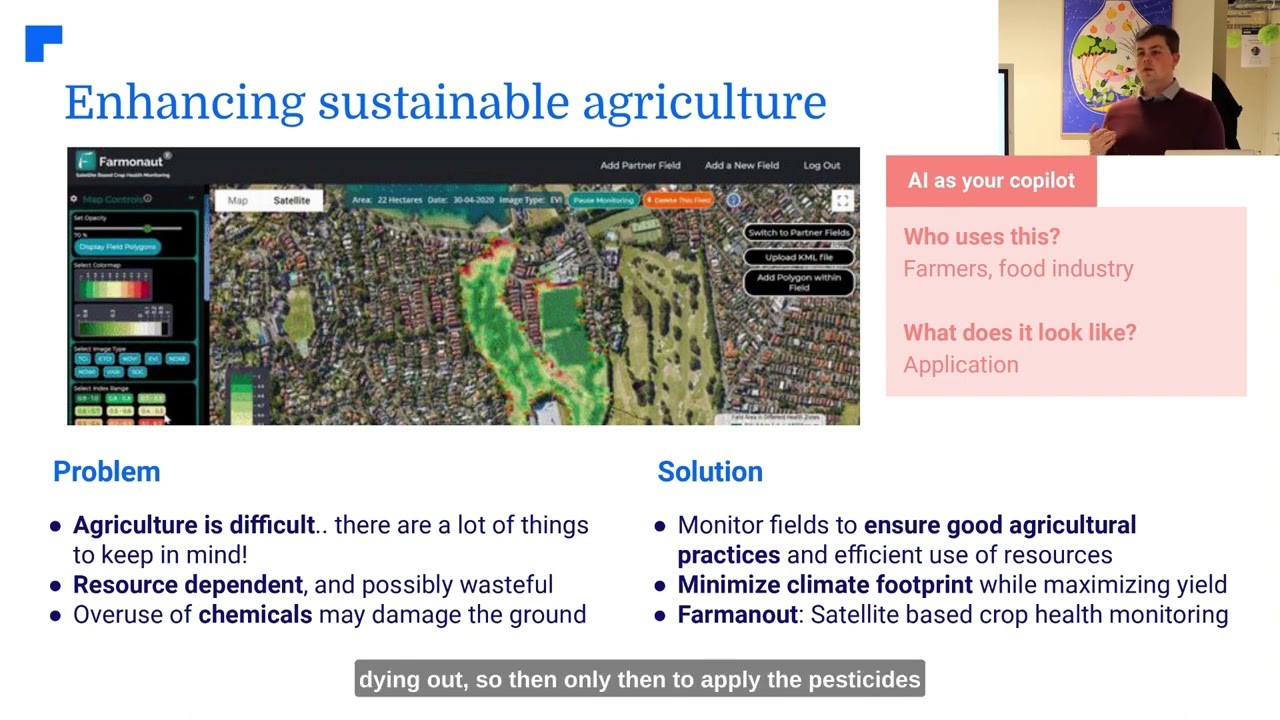
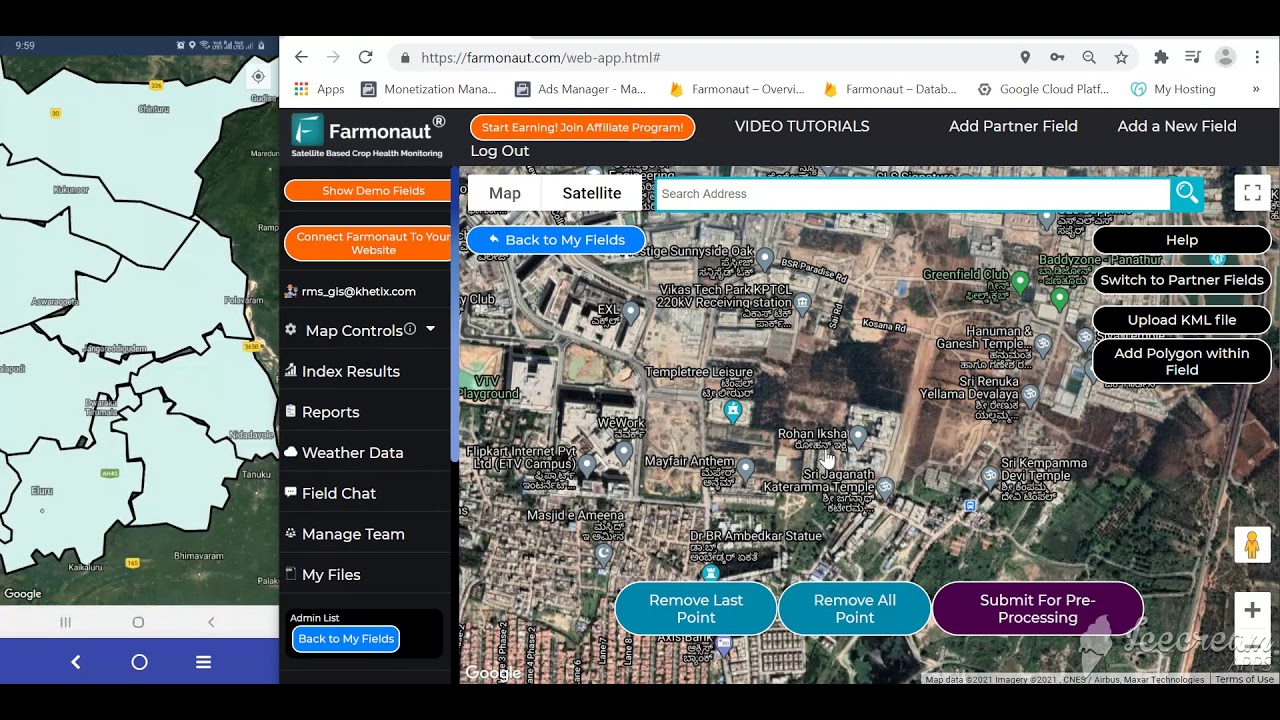
To empower onsite teams and decision-makers, integrated platforms are crucial. Our Farmonaut app delivers actionable, real-time insights for mining operations via web and mobile devices. Access the platform instantly:



And for seamless developer and business integration, access our API documentation: Farmonaut Satellite Data API and API Developer Docs.
Farmonaut: Bringing Satellite Intelligence to Automated Mining
As automated mining evolves to new heights in 2025, satellite technology and AI-powered decision support are critical for resource optimization, environmental compliance, and productivity.
At Farmonaut, our satellite-based monitoring tools, powered by AI and machine learning, offer mining companies:
- Real-time tracking of extraction rates, material flows, and on-site fleet movement
- Environmental impact monitoring—such as measuring and reducing carbon footprints in large mining regions
- Fleet and resource management: Track all automated mining equipment and vehicles to maximize uptime, safety, and maintenance cycles (learn more at Farmonaut Fleet Management)
- AI-based advisory for operational decisions, including weather risk alerts, predicting disruptions, or optimizing drilling schedules
- Blockchain-driven traceability to transparently document origins, custody, and processing of minerals extracted
(Product Traceability)
Through flexible subscriptions (see below), we at Farmonaut make it straightforward for companies, governments, and operators to deploy affordable, scalable, and actionable satellite intelligence alongside their automated mining systems.
Why Satellite Technology Matters for Automated Mines in 2025
- Unlocks complete, real-time visibility over vast or remote mining sites
- Empowers automation with actionable data for decision support and compliance
- Optimizes environmental performance—carbon accounting, land use, emissions tracking
- Supports safer, more efficient mine planning and risk assessment
- Integrates easily via web, mobile, and API channels for total operational visibility

Comparative Benefits of Automated Mining Technologies (2025)
Pioneering Mining Technologies & Equipment in 2025 (Focus Keyword: Automated Mining)
Let’s explore some of the most impactful advances in automated mining equipment and systems revolutionizing extraction worldwide:
- Driverless Haul Trucks: Fully autonomous vehicles transporting material around the clock over unpredictable terrain—guided by AI and real-time digital twins.
- Robotic Drilling Rigs: Precision-controlled drills that adapt to changing geology, minimize resource waste, and deliver higher-grade ore with less disruption.
- Remotely Controlled Loaders & Excavators: Allow operators to manage heavy equipment from a safe, climate-controlled environment—reducing human exposure to hazardous locations.
- AI and Machine Learning Platforms: Collect, analyze, and optimize operations using sensor and equipment data. These systems power fast, informed decisions that enhance productivity and environmental compliance.
- Integrated Sensor Networks & Edge Computing: Real-time monitoring of structural risks, gas levels, dust, equipment health, and energy use—helping make mines safer and more efficient.
- Electric and Sustainable Fleets: Battery-powered or hybrid trucks/equipment cut carbon output and noise, helping mines align with global climate goals.
- Blockchain Traceability: Full lifecycle documentation of minerals, offering a competitive edge and compliance for global supply chains (learn about supply chain traceability with Farmonaut).
Horizontal and vertical integration of these technologies ensures the future of mining is not just efficient, but fundamentally safer, more sustainable, and more responsive to the world’s mineral demands.
Where autonomous mining is already running at scale
Autonomous haulage is the most mature part of mine automation. The two largest truck makers publish running totals for their systems.
| System | First used | Scale reported | As of |
|---|---|---|---|
| Komatsu FrontRunner (haul trucks) | 2008, first commercial system | 1,000 ultra-class trucks commissioned; over 11.5 billion tonnes hauled | April 2026 |
| Cat MineStar Command for hauling | 2013, Fortescue’s Solomon mine | Over 8.6 billion tonnes hauled; 190 to 370-tonne trucks | September 2024 |
| Rio Tinto AutoHaul (iron ore trains) | 2018 | About 200 locomotives on 1,700+ km of track, 16 mines to 4 ports | December 2018 |
Sources: Komatsu, Caterpillar, Australian Mining, International Mining. Komatsu’s 1,000th truck went to Barrick’s Nevada Gold Mines. FrontRunner fleets run in North America, South America, Australia and Europe. Rio Tinto’s AutoHaul was the first heavy-haul, long-distance autonomous rail network. It cost A$940 million.
Most of this activity is in large open pits, where haul roads are fixed and trucks repeat the same cycle. Underground and smaller mines tend to adopt teleremote or semi-autonomous equipment first.
Challenges and Future Prospects for Automated Mining 2025+
While the benefits of automated mining are clear, global deployment is not without its challenges:
- High initial CAPEX: Automated equipment, digital infrastructure, and training require significant upfront investment.
- Robust infrastructure needed: Reliable high-speed connectivity (e.g., 5G or fiber), edge computing nodes, and cloud networks underpin automated systems.
- Workforce transformation: Automation shifts the skills required, increasing demand for operators versed in data analytics, AI system management, and equipment maintenance (Farmonaut’s remote verification tools may accelerate access to skilled labor by enabling remote machine and site monitoring).
- Cybersecurity: With increased reliance on digital networks, mines become targets for cyberattacks—necessitating resilient data protection and real-time monitoring.
- Change management: Organizational and cultural shifts are required to blend human and automation roles effectively.
Despite these hurdles, the outlook is resoundingly positive. As AI, robotics, and digital innovation mature, every year from 2025 onward sees automated mines that are safer, more productive, and more environmentally responsible.
FAQ: Automated Mining 2025
-
What is automated mining?
Automated mining refers to mining operations powered by advanced technologies—such as robotics, driverless vehicles, IoT sensors, and AI systems—that perform essential tasks with minimal human intervention. It includes autonomous haul trucks, robotic drills, remotely controlled loaders, and digitally integrated mine management platforms. -
How does automation make mining safer?
By removing humans from hazardous underground or open-pit environments, automating repetitive or risky tasks, and leveraging real-time sensor monitoring to detect hazards early, automation significantly reduces accidents, injuries, and fatalities. -
How does automated mining improve efficiency?
Automated equipment operates 24/7, enables more precise and adaptive extraction methods, reduces operational delays, and makes real-time, data-driven adjustments to optimize productivity and resource use at every stage. -
Does automated mining lead to job loss?
Workforce needs shift from manual labor to technical, analytical, and oversight roles. Fewer operators are needed on-site, but demand for skills in system management, AI, maintenance, and environmental analysis is increasing. -
What are the environmental benefits?
Reduced land footprint, lower emissions, optimized energy use, and precision extraction are core environmental advantages. Technologies like satellite and AI integration support ongoing site monitoring, impact mitigation, and regulatory compliance. -
What is Farmonaut’s role in automated mining?
We at Farmonaut provide satellite-based intelligence platforms for real-time mine monitoring, AI-based advisory, blockchain traceability, and environmental impact management—empowering streamlined, sustainable, and transparent mining operations. -
How can businesses access automated mining insights via API?
Access our satellite data and AI-powered analytics using our API for seamless integration into mine management systems. Visit the Farmonaut API page or API Developer Docs.
Conclusion: The New Era of Automated Mining in 2025
In summary, the rise of automated mining, advanced equipment, and adaptive AI systems is ushering in an era marked by safer, smarter, and more sustainable mineral extraction. Through optimized safety, 24/7 efficiency, lower operating costs, and targeted environmental impact reduction, the global mining industry is meeting the needs of modern industries, infrastructure development, and resource security.
The revolution in 2025 is just the beginning. As we move deeper into a data-driven, digitally connected world, mining operations will continue to rely on automation, satellite intelligence, and integrated supply chains—ensuring that the industry remains robust, competitive, and environmentally responsible for future generations.
Instantly Subscribe to Farmonaut’s Advanced Satellite Solutions
We make it easy and affordable to enhance your automated mining project with Farmonaut’s satellite-driven monitoring, AI advisory, blockchain traceability, and environmental management services. Choose a package that fits your needs below, scale as you grow, and unlock the power of smarter, safer, greener mining.
Ready to take the next step toward safer, smarter, and greener mines?
Discover the benefits of large scale monitoring and management for your site, or get started with the Farmonaut platform today!
Discussion
Questions, corrections or field experience? Share them below. First-time comments are reviewed before they appear, and your email is never published.
No comments yet. Be the first to add a question or your experience.

 Faith At Work (Pty) Ltd
 Geotech Mining Solutions plc
 Vulcan International Limited
 Kidepo Associates
 GKY Mining
 Alkimy SARL
 Double A Trading
 GemSprout Metals Limited
 Qader Group
 Ileys General Trading
 SG Gold Mining LLC
 VRV Global Pte Ltd
 Omsri International FZE
 G.I.T.T.
 Jaunita Erss Ltd
 Almosi SARL
 SRK Consulting
 Berks Gold Limited
 Mwerezi Minerals Company Limited
 Mining SARL
 SenGold Invest SAS
