

Gold producer · Company and environment guide
B2Gold Mines: Output, Costs and Environmental Record
B2Gold operates four gold mines and produced 979,604 ounces in 2025. This guide sets out each mine, 2026 guidance and costs, plus the company’s reported water, tailings, solar and safety figures, all dated and sourced.
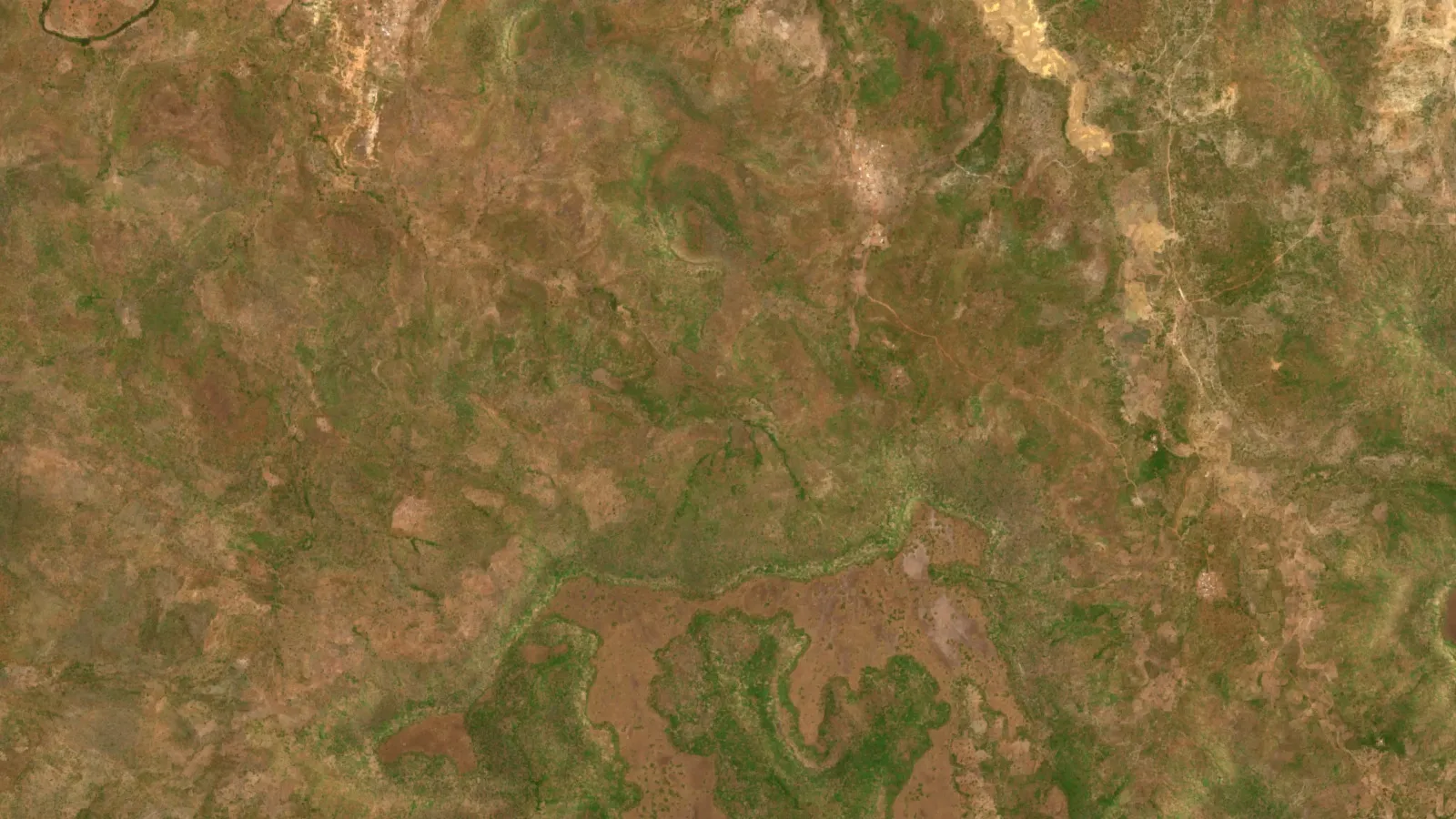
Key takeaways
- B2Gold produced 979,604 oz of gold in 2025 and guides to 820,000-920,000 oz for 2026 (B2Gold, 18 Feb and 6 Aug 2026).
- Mali granted the Menankoto exploitation permit for Fekola Regional on 7 August 2026; the company expects over 150,000 oz a year from 2028 (B2Gold, 7 Aug 2026).
- 2026 AISC guidance is US$2,370-2,550 per oz sold at an assumed US$5,000 gold price; each US$100 price change moves AISC by about US$12 (B2Gold, 2026).
- Water consumption was 15.93 m3 per oz in 2025, up from 15.24; renewables supplied about 25% of electricity (B2Gold Responsible Mining Report, 2025).
- The company reported no fatalities in 2025 but missed its injury-rate target: TRIFR 0.35 against 0.28 in 2024 (B2Gold, 2025 report).
In this article
- B2Gold mines at a glance
- How we chose what to cover
- Production and costs: guidance, the Goose fire and the Fekola Regional permit
- What B2Gold's all-in sustaining cost means
- The mines one by one
- How B2Gold manages water
- Tailings, cyanide and land reclamation
- Energy, solar power and emissions
- Safety and people
- Five checks for any gold miner's sustainability report
- Where B2Gold sits in world gold supply
- Frequently asked questions
B2Gold runs four operating gold mines: the Fekola Complex in Mali, the Otjikoto mine in Namibia, the Goose mine in Nunavut, Canada, and the Masbate mine in Southeast Asia. Together they produced 979,604 ounces of gold in 2025 (B2Gold Q4 and full-year release, 18 February 2026), and the company now guides to 820,000 to 920,000 ounces for 2026 (B2Gold Q2 release, 6 August 2026). This page puts the mines, the costs and the environmental record side by side, using the company’s own filings and its 2025 Responsible Mining Report.
B2Gold is headquartered in Vancouver and lists on the Toronto Stock Exchange (BTO), NYSE American (BTG) and the Namibian Stock Exchange (B2G). It was founded in 2007 (B2Gold release, 7 August 2026). Everything below is a fact from a filing, with its date. Nothing here is investment advice.
B2Gold mines at a glance
The table lists each operating mine with its 2025 output and the 2026 guidance the company updated on 6 August 2026. Guidance is the company’s own forecast and is built on an assumed gold price of US$5,000 per ounce. All-in sustaining cost (AISC) is the cost of producing and selling an ounce, including the capital needed to keep the mine running; a later section explains it in full.
| Mine | Location | 2025 output (oz) | 2026 guidance (koz) | 2026 AISC guidance (US$/oz sold) |
|---|---|---|---|---|
| Fekola Complex | Mali | 530,769 | 390 to 420 | 2,670 to 2,820 |
| Masbate | Southeast Asia | 196,526 | 180 to 200 | 1,430 to 1,580 |
| Otjikoto | Namibia | 199,139 | 80 to 100 | 1,830 to 1,980 |
| Goose (Back River) | Nunavut, Canada | 53,170 | 170 to 200 | 2,670 to 2,970 |
| Company total | 979,604 | 820 to 920 | 2,370 to 2,550 |
Sources: Q4 and full-year 2025 release for 2025 output (Goose includes 14,554 ounces of pre-commercial production before 2 October 2025) and the Q2 2026 release for guidance. Guidance figures are on a 100 per cent project basis, and B2Gold does not own 100 per cent of every mine: it owns 80 per cent of the Fekola Mine (the State of Mali holds 20 per cent) and 90 per cent of Otjikoto. The Fekola Complex also includes Fekola Regional, a nearby project described below.
How we chose what to cover
We used three kinds of source: the company’s quarterly and annual results releases, its 2025 Responsible Mining Report and 2025 Climate Strategy Report, and independent industry data from the World Gold Council and the US Geological Survey (USGS). The sustainability report states that its data has not been externally assured, so figures such as water use and emissions are the company’s own reporting. We list the mines the company itself calls operating, and we leave out exploration projects and price views.
Production and costs: guidance, the Goose fire and the Fekola Regional permit
Three things shaped the company’s guidance in the second quarter. First, Fekola, Otjikoto and Masbate produced more than expected. Second, a fire in the crushing circuit at Goose on 17 April 2026 cut output there; no injuries were reported, the mill and power plant were not damaged, and repairs were expected to finish in the third quarter, which ended on 30 September, at a cost of about US$13 million, plus about US$16 million for an extra mobile crusher (Q2 release). For the first half of 2026, consolidated output was 441,411 ounces. Third, the permit for Fekola Regional took longer than planned, which lowered the top of the 2026 range from 970,000 to 920,000 ounces.
Chart
Gold output by mine: 2025 actual and 2026 guidance midpoint
Thousand ounces; guidance is the midpoint of the company range of 6 August 2026
That permit has since been granted. On 7 August 2026 the State of Mali issued the Menankoto exploitation permit, which together with the Dandoko exploration permit makes up Fekola Regional, about 20 km from the Fekola Mine. The company says the project will be owned 65 per cent by B2Gold and 35 per cent by the State of Mali, that pre-stripping (removing waste rock above the ore) will now begin, and that it expects output above 150,000 ounces a year from 2028 to the mid-2030s (B2Gold release, 7 August 2026). The permit was issued under Mali’s 2023 Mining Code, while the Fekola Mine stays under the 2012 code, under an agreement the company signed with the State of Mali in September 2024.
The chart shows why 2026 looks different from 2025. Otjikoto finished open pit mining in 2025 and steps down, Fekola is stripping waste for the next phase of its pit, and Goose is ramping up after reaching commercial production on 2 October 2025.
The cost line moved too. The company’s average realised gold price rose from US$1,946 per ounce in 2023 to US$3,299 in 2025, and AISC rose from US$1,199 to US$1,584 over the same period. Part of that rise is royalties that scale with the gold price: the company says the higher price added US$169 per ounce of royalties in 2025 compared with its budget (Q4 and full-year 2025 release). Across the industry, the World Gold Council reports average AISC reached a record US$1,706 per ounce in the fourth quarter of 2025 (World Gold Council, Gold Demand Trends Q1 2026).
What B2Gold’s all-in sustaining cost means
All-in sustaining cost, or AISC, is a non-IFRS measure used by gold miners. It adds the cash cost of mining and processing, royalties and production taxes, sustaining capital (equipment and tailings dams needed to keep running), deferred stripping, sustaining exploration and head-office costs, then divides by ounces sold. It does not include income tax or growth projects, so it is not the same as profit per ounce.
Chart
Realised gold price and all-in sustaining cost
US$ per ounce, B2Gold consolidated, 2023-2025
B2Gold publishes how AISC reacts to the gold price: each US$100 per ounce change in the realised price moves consolidated AISC by about US$12 per ounce, because of price-linked royalties (B2Gold, 18 February 2026). The calculator below uses that sensitivity. It is a simplification for working out the order of magnitude of margin, not a forecast.
Calculator
What is the margin after all-in sustaining cost?
Enter your own gold price and cost to see the margin per ounce and in total.
- AISC adjusted to your price (US$/oz): $2,460
- Total margin after AISC (US$): $2,159,000,000
Example values only, not a forecast. The base AISC of US$2,460 is the midpoint of B2Gold’s 2026 guidance (US$2,370-2,550) at its assumed US$5,000 gold price (B2Gold, 6 August 2026). The model adds US$12 of AISC for each US$100 the price rises above that assumption (B2Gold, 18 February 2026). AISC excludes income tax and growth capital, so the margin is not profit. The 850,000 ounces is an example inside the 2026 production guidance of 820,000-920,000 ounces.
The mines one by one
Fekola Complex, Mali
Fekola milled 9.76 million tonnes of ore in 2025 at an average grade of 1.84 grams per tonne (g/t, the gold content of each tonne of rock) and 91.8 per cent recovery, producing 530,769 ounces. The company says the complex passed four million ounces produced since the mine started in the third quarter of 2025, and on 3 February 2026 marked two years without a lost-time injury (Q4 and full-year 2025 release). B2Gold describes the Fekola Complex as the largest producing gold mine in Mali. In 2025, 78.7 per cent of Fekola’s procurement spend, US$495 million of US$628 million, went to Malian-owned companies or registered Malian subsidiaries (B2Gold Responsible Mining Report 2025).
Otjikoto, Namibia
Otjikoto produced 199,139 ounces in 2025, near the top of its 185,000 to 205,000 ounce guidance, then stopped open pit mining. That is why 2026 guidance falls to 80,000 to 100,000 ounces. Closure work has already started, with hydroseeding of waste rock dump slopes using indigenous grasses and rehabilitation trials on the tailings facility walls (Responsible Mining Report 2025).
Goose and the Back River district, Nunavut
Goose is B2Gold’s newest mine. It reached commercial production on 2 October 2025 and produced 38,616 ounces in the fourth quarter. It sits in the Back River Gold District, which the company says is expected to become a large, long-life complex. Work in Nunavut is governed by an Inuit Impact Benefit Agreement with the Kitikmeot Inuit Association, and the company reports contract spending with Kitikmeot Inuit-owned businesses under it (Responsible Mining Report 2025). Goose has the widest and highest AISC guidance range of the four mines. It is still ramping up, and its power plant runs on diesel.
Masbate, Southeast Asia
Masbate produced 196,526 ounces in 2025 and is guided to 180,000 to 200,000 ounces for 2026, with the lowest AISC guidance in the group. Its sustainability programmes include marine work: the CEO’s message in the 2025 report cites more than 2.1 million mangroves planted and more than 3,800 reef balls deployed (artificial reef structures) around the site.
How B2Gold manages water
A gold mine uses water to process ore, and most of it is either recycled or ends up in the pores of the tailings. B2Gold reports that its four sites withdrew 24.1 million cubic metres of water in 2025, of which 68 per cent was precipitation and runoff and 32 per cent groundwater. It discharged 8.5 million cubic metres, and it consumed about 15.6 million cubic metres (withdrawn minus discharged minus change in storage). A further 11.2 million cubic metres was recycled from tailings storage facilities back into the plant (Responsible Mining Report 2025, Table 25).
Chart
Water consumed per ounce of gold produced, 2025
Cubic metres per ounce, by site; company-reported, not externally assured
The company’s water consumption rose to 15.93 cubic metres per ounce of gold in 2025 from 15.24 in 2024. The chart shows the spread between sites: Masbate used the most water per ounce in 2025 (21.8 m3), and Back River (Goose) the least (6.3 m3), though Goose had only part of a year of commercial output. Fekola used 10.2 and Otjikoto 14.3. The report says the Fekola and Masbate sites have water-quality monitoring teams that include representatives of nearby communities and local government. Water accounting follows the Minerals Council of Australia framework and the ICMM water reporting guide.
Tailings, cyanide and land reclamation
Tailings are the finely ground waste left after gold is extracted, stored behind dams in tailings storage facilities (TSFs). B2Gold manages six TSFs, four active and two inactive, and commissioned two new ones in 2025, Fekola TSF2 and the Goose Echo TSF. It reports zero significant incidents at its TSFs in 2025 and says inspections found no significant stability deficiencies at current dam heights. Its tailings standard is aligned with the Mining Association of Canada’s Towards Sustainable Mining tailings protocol (Responsible Mining Report 2025).
Cyanide is the chemical most gold mines use to dissolve gold from ore. B2Gold used 11,383 tonnes of sodium cyanide in 2025. Its cyanide standard is aligned with the nine principles of the International Cyanide Management Code, a voluntary programme run by the International Cyanide Management Institute, and it reports keeping weak-acid dissociable (WAD) cyanide in process ponds well below the Code’s 50 parts-per-million guideline.
On reclamation, the numbers are modest because the mines are still operating. As of the end of 2025, 67 hectares had been reclaimed at Fekola; the 2024 report had wrongly stated 83 hectares and the company corrected it. Fekola re-grassed the TSF1 embankments, two waste rock dumps and more than 3 km of access roads, and runs community nurseries with youth associations in nearby villages. Each mine has a closure plan, and the Masbate plan follows ISO 21795, the international standard for mine closure and reclamation planning.
The clearest example of land use after mining is at Otjikoto. B2Gold Namibia built a 180-hectare pivot irrigation project at the Erhardtshof farm using local groundwater. It produces about 2,000 tonnes of maize a year plus a wheat winter crop, sold through Namibia’s largest milling company. In Mali, the Goungoubato and Bafarato agricultural projects support market gardening for local procurement (Responsible Mining Report 2025). These are company-run examples, not a general rule that mined land returns to farming.
▶ The 7 environmental impacts of mining, explained in clay (2:31) · 2:31
Energy, solar power and emissions
Scope 1 emissions come from fuel burned on site, and Scope 2 from purchased electricity. B2Gold reports Scope 1 and 2 emissions of about 757 thousand tonnes of CO2e in 2025 across all four sites, up from the prior year because Goose was added. For the three older mines they were 673 thousand tonnes, down from 699 thousand tonnes in 2024. Emissions intensity fell to 0.77 tonnes of CO2e per ounce from 0.89. The company’s target is a 30 per cent cut in absolute Scope 1 and 2 emissions by 2030 against a 2021 baseline, and it describes progress as in progress, not met (Responsible Mining Report 2025).
Chart
Share of electricity from renewable sources
Per cent of total electricity consumed, B2Gold sites
Solar is the main tool. The share of electricity from renewables rose from 10 per cent in 2021 to about 25 per cent in 2025. The expanded Fekola solar plant added 22 megawatts when it reached full capacity in January 2025 and supplied 23 per cent of Fekola’s electricity that year, and Otjikoto also buys power from a 9.6 MW solar plant under a wheeling agreement (B2Gold 2025 Climate Strategy Report). Goose runs on diesel; the report describes a proposed wind, solar and battery plant at Back River whose size is still being optimised.
For context, the World Gold Council, the gold industry’s market development body, reports that per US dollar of value gold has among the lowest greenhouse gas emissions intensity of all metals and mined products (World Gold Council, Gold and climate change).
Safety and people
B2Gold reported no fatalities in 2025, meeting its zero-fatality target. It missed its target to reduce the total recordable injury frequency rate (TRIFR, injuries per 200,000 hours worked): the rate was 0.35 in 2025 against 0.28 in 2024, and the company attributes the rise to construction at Back River, project work at Gramalote and more contractor hours. Its severity rate fell 28 per cent, from 5.27 to 3.80. National employees made up 97.3 per cent of the operating workforce, against a target of at least 95 per cent, and female representation in senior positions was 24 per cent, missing the target to increase it (Responsible Mining Report 2025). The company’s own release says it employs more than 3,300 workers in Mali, about 98 per cent of them Malian.
Five checks for any gold miner’s sustainability report
The figures matter more than the promises. Use these checks on B2Gold or any other producer.
- Is it audited? B2Gold says its report data has not been externally assured. Ask whether a third party checks the numbers.
- Are targets stated with results? B2Gold’s report lists each target as met, not met or in progress. Look for misses, not just wins.
- Is the unit per ounce, not only in total? Total water and emissions rise when a new mine opens. Per-ounce figures show efficiency.
- Do land numbers have a base year? The corrected 83 to 67 hectare figure at Fekola shows why restatements matter.
- Does the standard exist outside the company? Look for the Cyanide Code, Towards Sustainable Mining, ISO 21795 or the ICMM guides.
Consultants and landholders can also look from above. Satellite imagery shows vegetation recovery on waste dumps, the footprint of pits and tailings, and change near water bodies over time. It cannot measure water chemistry or tailings stability, so it supports site reports and does not replace them. Farmonaut’s satellite mineral detection work is aimed at early exploration targets, and you can request a quote for a licence area.
▶ Remote sensing for mining explained in three minutes (2:01) · 2:01
Where B2Gold sits in world gold supply
The USGS estimates world gold mine production at 3,300 tonnes in 2025 (USGS Mineral Commodity Summaries 2026). B2Gold’s 979,604 ounces equal about 30.5 tonnes, or roughly 0.9 per cent of that total. The World Gold Council puts 2025 mine output at a record 3,815 tonnes, a larger figure because its data includes estimates of artisanal and small-scale mining, and it reports that Mali’s output fell 17 per cent in 2025 (World Gold Council, Gold Demand Trends Q1 2026). Its fourth-quarter 2025 report linked Mali’s fall to the suspension of the Loulo-Gounkoto mine, despite higher production at Fekola (World Gold Council, Gold Demand Trends Full Year 2025). The two bodies count differently, so compare each only with its own total.
For related reading, see our guides on checking title, geology and risk before buying a gold mine, annual gold production statistics for Nevada and picking an exploration drilling contractor.
We cover a connected topic in Perth Mining Hub: Jobs, Ports and Output by Region.
For a closer look at a related question, see our guide: Environmental Lighting for Mines: Rules and Running Costs.
Frequently asked questions
Where are B2Gold’s mines?
The company operates the Fekola Complex in Mali, Otjikoto in Namibia, Goose in Nunavut, Canada, and Masbate in Southeast Asia, according to its August 2026 filings.
How much gold does B2Gold produce a year?
It produced 979,604 ounces in 2025. Its 2026 guidance, narrowed on 6 August 2026, is 820,000 to 920,000 ounces.
What is the Fekola mine and who owns it?
Fekola is an open pit mine in Mali with an underground operation that produced 25,230 ounces in 2025. B2Gold owns 80 per cent and the State of Mali 20 per cent. The nearby Fekola Regional project will be owned 65 per cent by B2Gold and 35 per cent by the State of Mali.
Is B2Gold a Canadian company?
It is headquartered in Vancouver, British Columbia. Its shares trade on the TSX (BTO), NYSE American (BTG) and the Namibian Stock Exchange (B2G).
What does all-in sustaining cost mean?
It is the cash cost of mining, processing, royalties, sustaining capital and overhead per ounce sold. B2Gold guides to US$2,370 to US$2,550 per ounce for 2026 at an assumed US$5,000 gold price.
What happened at the Goose mine crushing circuit?
A fire on 17 April 2026 damaged part of the crushing circuit. No one was hurt, the mill and power plant were not affected, and in its 6 August 2026 release the company expected repairs to finish in the third quarter of 2026. Check the third-quarter results for the final status.
Does B2Gold use cyanide?
Yes. It used 11,383 tonnes of sodium cyanide in 2025 and says its management standard follows the International Cyanide Management Code.
How much water do B2Gold’s mines use?
The company reports withdrawing 24.1 million cubic metres in 2025 and consuming about 15.6 million, or 15.93 cubic metres per ounce produced.
How is B2Gold cutting emissions?
Mainly with solar power, led by the expanded Fekola solar plant and a 9.6 MW solar plant that supplies Otjikoto. Renewables supplied about 25 per cent of its electricity in 2025, and the target is a 30 per cent cut in Scope 1 and 2 emissions by 2030 from a 2021 base.
Does B2Gold run any farming projects?
Yes, a 180-hectare irrigated farm at Otjikoto in Namibia producing about 2,000 tonnes of maize a year, and two agricultural projects near Fekola in Mali, as reported in its 2025 Responsible Mining Report.
Where can I find B2Gold’s official reports?
On the investor and sustainability pages of b2gold.com, and in its filings on SEDAR+ and on SEC EDGAR under its US filings.
This page is for information only. It is not investment advice. It gives no share prices or targets. Company figures are as reported by B2Gold and the sustainability data has not been externally assured.
Farmonaut mining
Map your mining site from space
Consultants can request a quote to screen a licence area with satellite data as an exploration target, ahead of any resource estimate.
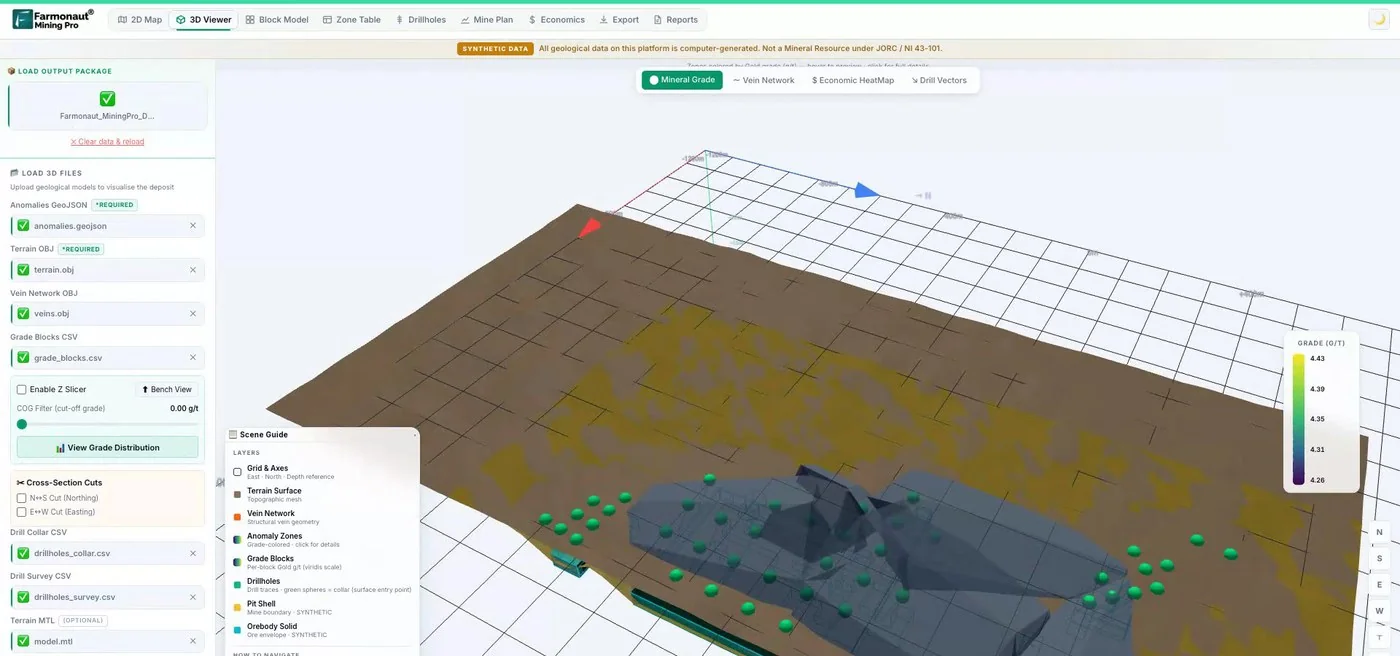
Mining Pro sample view, synthetic data
Keep reading
Sources
- B2Gold, Q4 and full-year 2025 results and 2026 guidance (18 Feb 2026): finanznachrichten.de
- B2Gold, Q2 2026 results news release (6 Aug 2026): s204.q4cdn.com
- B2Gold, Fekola Regional exploitation permit granted (7 Aug 2026): bnnbloomberg.ca
- B2Gold, 2025 Responsible Mining Report: s204.q4cdn.com
- B2Gold, 2025 Climate Strategy Report: s204.q4cdn.com
- World Gold Council, Gold Demand Trends Q1 2026: Supply: gold.org
- World Gold Council, Gold Demand Trends Full Year 2025: Supply: gold.org
- World Gold Council, Gold and climate change: current and future impacts: gold.org
- USGS, Mineral Commodity Summaries 2026: Gold: pubs.usgs.gov
- Mining Association of Canada, Towards Sustainable Mining: mining.ca
- International Cyanide Management Institute, The Cyanide Code: cyanidecode.org
Discussion
Questions, corrections or field experience? Share them below. First-time comments are reviewed before they appear, and your email is never published.
No comments yet. Be the first to add a question or your experience.

 Riverside Resources Limited
 Congo Mining Solutions
 Mining SARL
 SenGold Invest SAS
 Sania Corporation
 Sean Mining Limited
 NTS Group (Pty) Ltd
 Mine4Africa
 Lithspo Minerals Limited
 Tintina Mining Group
 Dalgety Minerals Pty Ltd
 Vortex Minerals Pty Ltd
 Faith At Work (Pty) Ltd
 Geotech Mining Solutions plc
 Vulcan International Limited
 Kidepo Associates
 GKY Mining
 Alkimy SARL
 Double A Trading
 Licence holder · Nigeria · Gold + lithium










