

Copper processing · Step-by-step guide
Copper Beneficiation Process: 7 Steps and Recoveries
Copper beneficiation turns ore of well under 1% copper into a concentrate of about 20 to 35% in seven steps. Freeport-McMoRan mills reported 83.6% to 87.9% copper recovery in 2025. Each step below carries sourced numbers, and a calculator estimates your concentrate and its value.
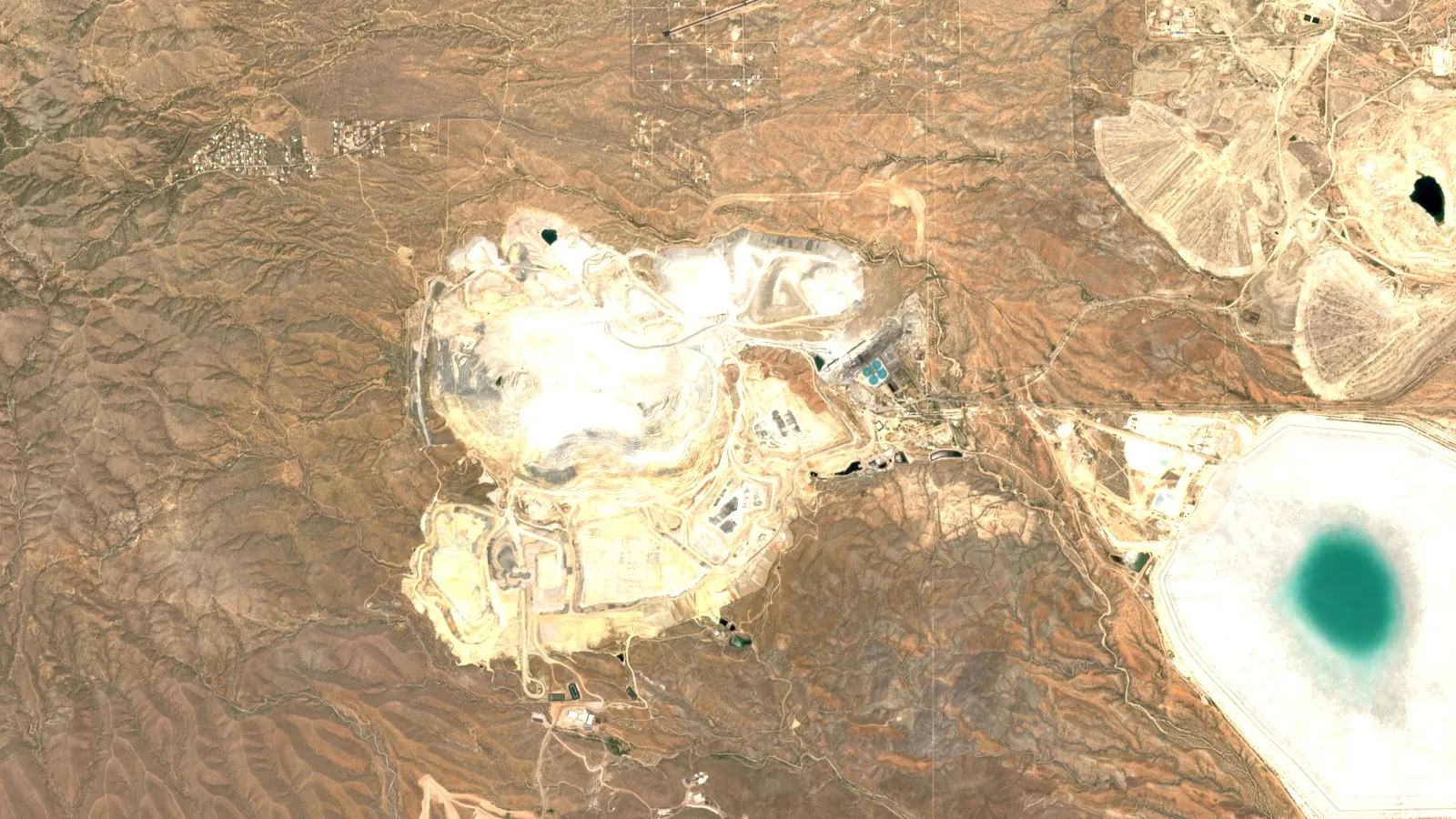
Key takeaways
- Ore at Freeport-McMoRan’s U.S. mills averaged 0.31% copper in 2025; the concentrate from its mills holds about 20 to 30% copper (company annual report).
- Mill copper recovery in 2025 was 83.6% in the U.S., 84.3% in South America and 87.9% in Indonesia (Freeport-McMoRan, annual report).
- Comminution takes about 36% of a copper mine’s energy, and grinding is 87 to 90% of concentrator energy in the studies cited (CEEC, Mining Energy Consumption 2021).
- Conventional flotation uses 1.5 to 3.5 tonnes of water per tonne of ore (USGS, 2012); Chilean copper mining reused or recirculated 71.0% of its water in 2024 (Cochilco).
- At 0.31% head grade, 83.6% recovery and a 25% concentrate, about 99% of the milled mass becomes tailings (our calculation from the figures above).
In this article
- Copper beneficiation process at a glance: 7 steps
- Step 1: Crushing and grinding (comminution)
- Step 2: Classification with screens and cyclones
- Step 3: Flotation, where copper is separated
- Copper recovery rates: what working mills report
- Step 4: Dewatering the copper concentrate
- Step 5: Tailings storage and management
- Step 6: Water use and recycling in a concentrator
- Step 7: Sampling, process control and concentrate quality
- What a copper concentrate is worth: payable copper and smelter charges
- Calculator: concentrate output and value from your ore
- Where copper concentrators operate: the main producing countries
- Oxide ores and heap leaching: when flotation is not used
- Planning a site before you plan a plant
Copper beneficiation is the set of physical steps that turns mined copper ore into a concentrate a smelter will buy. Ore at a large open-pit mine often carries well under 1% copper (the Freeport-McMoRan mills in the United States fed ore averaging 0.31% copper in 2025, according to the company’s annual report). Crushing, grinding, flotation and dewatering lift that to a concentrate of roughly 20 to 35% copper. Searchers often type the word as “benefication”; it is the same process. The seven steps are set out below, each with the numbers working plants report, followed by a calculator for concentrate output and value.
The page is written for mine owners, plant planners and licence holders who need to know what each step does, what it consumes and where the metal is lost. It describes sulfide ore treated by flotation, which is how most copper concentrate is made. Oxide ore usually goes to leaching instead, covered in a short section near the end.
Copper beneficiation process at a glance: 7 steps
Every concentrator is different, because each ore is different. The U.S. Environmental Protection Agency’s technical resource document notes that there is no standard flotation procedure and that circuits are tuned as the feed changes. The table below gives the common sequence and one sourced number per step.
Infographic
Copper beneficiation in 7 steps
- 1ComminutionCrush and grind the ore to about 75 to 200 microns.
- 2ClassificationScreens and cyclones return coarse particles to the mill.
- 3FlotationReagents and air lift copper minerals into a froth.
- 4DewateringThickeners and filters dry the concentrate.
- 5Tailings storageWaste slurry goes to an engineered facility.
- 6Water recyclingReclaimed water returns to the circuit.
- 7ControlSampling keeps grade and recovery on target.
| Step | What happens | Sourced number | Source |
|---|---|---|---|
| 1. Comminution | Crushers and mills break the rock so copper minerals are freed from waste | Ground to about 75 to 200 microns; comminution is about 36% of a copper mine’s energy | USGS (2012); CEEC (2021) |
| 2. Classification | Screens and cyclones split fine from coarse; coarse goes back to the mill | Mill runs in closed circuit with screens and cyclones | USGS (2012) |
| 3. Flotation | Reagents and air bubbles lift copper minerals into a froth | Mill recovery 83.6% to 87.9% across Freeport operations (2025) | Freeport-McMoRan 10-K |
| 4. Dewatering | Thickeners and filters remove water from the concentrate | Concentrate of 25 to 35% copper, moisture cut to about 8 to 10% | USGS (2012) |
| 5. Tailings storage | Waste slurry goes to an engineered storage facility | Slurry of about 40 to 60% solids | USGS (2012) |
| 6. Water recycling | Water is reclaimed from thickeners and the tailings pond | 1.5 to 3.5 t of water per tonne of ore | USGS (2012) |
| 7. Control and quality | Sampling and analysers keep grade and recovery on target | Typical arsenic penalty limit is 0.2% in concentrate (Teck paper table) | Teck technical paper |
▶ How copper ore of under 1% becomes refined copper, and why Chile leads supply. · 6:03
Step 1: Crushing and grinding (comminution)
Comminution (size reduction) comes first. The EPA describes crushing in two or three stages, with a jaw or gyratory crusher taking the largest rocks. Run-of-mine ore carries about 2 to 5% water by weight when it leaves the pit, and much of that is lost in the crusher and stockpile, according to the U.S. Geological Survey’s water study of copper flotation plants. The crushed ore then goes to a semiautogenous grinding (SAG) mill or a ball mill, where water turns it into a slurry of roughly 20 to 55% solids. The target is a grind of about 75 to 200 microns, so each copper mineral grain is separated from the rock around it. That separation is called liberation.
Chart
Where a copper mine’s energy goes
Share of total final energy at a typical copper mine (smelting excluded)
Grinding is also where most of the processing energy goes. A Coalition for Eco-Efficient Comminution (CEEC) study of mining energy found that comminution takes about 36% of the energy at a typical copper mine, mining equipment about 60% and all other processing about 4%. Inside the concentrator, the study cites one life-cycle study that puts grinding at about 90% of plant energy and another that puts comminution at 87%. Across the copper operations in its data, the average was about 24 gigajoules per tonne of copper produced, with smelting left out. See Mining Energy Consumption 2021.
For a mine owner, this means the grind size is the first big cost decision. Grinding finer frees more copper but uses more power, and the power bill is paid on every tonne milled, whether or not the extra freeing pays back.
Step 2: Classification with screens and cyclones
Classification sorts particles by size so that only properly ground material moves on. In the plant the USGS describes, the mill works in closed circuit with screens that size the ore and cyclones that sort it by size and density. The coarse underflow returns to the mill. The fine overflow, a water-based slurry, goes to flotation.
The reason is plain. Flotation depends on particle size, so the EPA notes that regrinding between the rougher and cleaner stages may be needed. Particles that are too coarse still hold copper locked in rock and sink. Particles that are too fine float poorly and waste grinding energy. Some plants add a regrind stage on the rougher concentrate to release copper from the minerals it is intergrown with.
Step 3: Flotation, where copper is separated
Froth flotation is the heart of copper beneficiation. The slurry (25 to 40% solids in the USGS description) is mixed with reagents and air in a bank of cells. Collectors make copper sulfide surfaces water-repellent so bubbles pick them up, frothers keep the froth stable, and depressants hold unwanted minerals down. The EPA technical document lists lime as the usual pH control and pyrite depressant. Waste minerals such as quartz stay in the pulp and leave as tailings.
The cells are arranged in stages. Per the EPA, roughers give a medium-grade concentrate, cleaners upgrade it by removing more pyrite and rock, and scavengers make a final pass on the rougher tailings to catch remaining sulfides. The scavenger froth is often returned to a regrind mill and then to the roughers. Complex ores may start with a bulk flotation that is later split into separate copper and by-product concentrates. The EPA also notes that molybdenite, a molybdenum sulfide, can be recovered by selective flotation, and Freeport’s U.S. mines report molybdenum production alongside copper.
Copper recovery rates: what working mills report
Recovery is the share of the copper fed to the plant that ends up in the concentrate. It is the number that best measures how well steps 1 to 3 are working. Freeport-McMoRan publishes mill data for its operations in its annual filing. For 2025 the mills reported a copper recovery of 83.6% at the U.S. copper mines (ore grade 0.31%), 84.3% at the South America operations (ore grade 0.30%) and 87.9% in Indonesia (ore grade 1.10%).
Chart
Mill copper recovery, Freeport-McMoRan operations
Percent of copper fed to the mill that reaches the concentrate, 2021 to 2025
The trend lines differ. U.S. mill recovery rose from 81.2% in 2021 to 83.6% in 2025. South American recovery fell from 87.3% in 2021 to 81.3% in 2023 before climbing back to 84.3%. Indonesia, which has the richest ore of the three, ran at 89.8% to 90.0% in 2021 and 2022 and 87.9% in 2025, while its ore grade fell from 1.30% to 1.10% over the same years. These are company-wide averages that mix ore types, so a single plant can sit well above or below them. Indonesia’s 2025 volumes also reflect the September 2025 mud rush at the Grasberg minerals district, which Freeport’s filing cites. Plan on your own metallurgical test work, not on a headline average.
Step 4: Dewatering the copper concentrate
The final froth is a wet paste. Thickeners settle it and pressure filters squeeze it, cutting the moisture from about 40% to roughly 8 to 10% by weight, according to the USGS. The water that comes off is usually reused in the circuit. At this point the concentrate holds 25 to 35% copper in the USGS description, and Freeport reports concentrate of about 20 to 30% copper from its mills. The range depends on the copper minerals present and the waste they are mixed with.
Lower moisture also reduces concentrate transport cost, because water is shipped by the tonne. Freeport states that 43% of the copper it mined in 2025 was sold as concentrate, with the rest sold as cathode and rod.
Step 5: Tailings storage and management
Tailings are the ground rock left after the copper minerals are removed. They leave the plant as slurry of roughly 40 to 60% solids and are pumped to a tailings storage facility (TSF). The USGS notes that thickening the slurry first recovers water for reuse and cuts pumping cost. The USGS notes that tailings high in pyrite may be placed under water to prevent oxidation. Dry deposition is less common. Where mines are underground, tailings can be thickened to 70 to 80% solids and used as backfill.
The mass balance explains why tailings are the largest stream by far. At the Freeport U.S. mills’ 2025 figures (0.31% head grade, 83.6% recovery) and a 25% copper concentrate, one tonne of concentrate takes about 96 tonnes of ore, so about 99% of the milled mass becomes tailings. This is our own calculation from those figures, not a reported number.
Because failures of tailings dams can be severe, the International Council on Mining and Metals (ICMM) published a Global Industry Standard on Tailings Management in August 2020, with six topic areas, 15 principles and 77 auditable requirements. It is directed at operators of current and future tailings facilities and covers design, monitoring, emergency preparedness and public disclosure. Check which standard your regulator and lenders expect.
▶ The environmental impacts of mining, explained in clay with sourced facts. · 2:31
Step 6: Water use and recycling in a concentrator
Flotation needs a lot of water. After reviewing site reports, the USGS estimated that processing copper sulfide ore through a conventional crush-grind-flotation circuit takes about 1.5 to 3.5 tonnes of water per tonne of ore. In the southwestern United States the figure is about 2.5 to 3 tonnes for porphyry ore of about 0.5% copper. The highest ratio the USGS found was 4 to 5 tonnes at the Lubin mine in Poland.
Chart
Water needed to process one tonne of copper ore
Tonnes of water per tonne of ore, low and high estimates
Most of that water is recycled. The USGS estimates that for most operations, makeup water (the fresh water added to replace losses) is 10 to 50% of the plant’s total water requirement. The main losses are evaporation and water trapped in tailings: about 52% of the water placed in one Chuquicamata tailings facility in Chile was retained in the tailings, and nearly 30% of the water sent to the tailings facility at the Mission complex in Arizona.
Chile, the largest producer, publishes detailed industry-wide water data. Its copper commission, Cochilco, reported for 2024 that the 49 operations surveyed (mines, smelters and refineries, 97.9% of national output) used 78.49 cubic metres per second in total, of which 71.0% was reused or recirculated and 9.9% was seawater, while water consumption was 18.13 cubic metres per second (Cochilco, water consumption in copper mining, 2024 update). Of the 18.13 cubic metres per second consumed, 80.3% (14.56) went to concentration and tailings deposition. Individual plants differ, so ask for the water balance of the specific site.
Step 7: Sampling, process control and concentrate quality
The last step is control. Orebodies are not uniform, and the EPA states that variations in feed and mineralogy are normal and may need circuit changes, so operators sample feed and products continuously and adjust grind size, reagent dosage and froth.
Quality at this step also decides the price. Smelters blend concentrates and penalise impurities. An older Teck technical paper on impurities (undated; it cites work up to 2014) lists typical penalty limits: arsenic 0.2% (about $2 per tonne for each extra 0.1%), antimony 0.05% and bismuth 0.02% (about $15 and $25 per tonne), and mercury 0.0005% (about $3,000 per tonne). Current smelter terms differ. Check the actual limits in the smelter’s contract. A concentrate with high arsenic can be sold, but at a discount, and some smelters reject it outright.
What a copper concentrate is worth: payable copper and smelter charges
A miner is not paid for all the copper in a concentrate. The buyer pays for a share of it, called payable copper, at a price linked to the exchange price. The buyer then deducts a treatment charge (TC, in US$ per tonne of concentrate) and a refining charge (RC, in US cents per pound of copper). These annual benchmark charges fell to record lows. Antofagasta and a Chinese smelter agreed charges of US$0 per tonne and 0 cents per pound for 2026, against US$21.25 per tonne and 2.125 cents per pound for 2025, Reuters reported on 19 December 2025. The report said that mine outages had tightened concentrate supply so much that spot fees had turned negative, and that China’s main smelters planned to cut output by more than 10% in 2026.
For a plant owner, the lesson is that the value of a tonne of concentrate depends on three things you control (copper grade, impurities, moisture) and three you do not (the copper price, the payable share and the smelter charges). The calculator below lets you test all of them.
Calculator: concentrate output and value from your ore
Enter your own throughput, head grade, recovery and contract terms in the calculator. It returns the tonnes of concentrate per day, the ore needed per tonne of concentrate, the tailings, and a yearly concentrate sales value after treatment and refining charges but before mining, milling and freight costs (it assumes 365 operating days). It uses 2,204.62 pounds per tonne.
Calculator
How much concentrate would your ore make, and what is it worth?
Enter your own throughput, grades and contract terms. All values start as round examples.
- Copper recovered: 212.5 t/day
- Ore needed per tonne of concentrate: 63.5 t
- Tailings produced: 49,213 t/day
- Net value per tonne of concentrate (US$): $3,415
- Concentrate sales per year after smelter charges, 365 days (US$): $981,020,316
Example values only, not a benchmark or forecast. Copper price, payable share, treatment charge and refining charge are inputs: use today’s price and your contract terms. Uses 2,204.62 pounds per tonne. Mining, milling, freight and royalty costs are not included. Reported benchmark charges: US$21.25 per tonne and 2.125 US cents per pound for 2025, US$0 and 0 cents for 2026 (Reuters, 19 December 2025).
Where copper concentrators operate: the main producing countries
Concentrators sit close to the mines, so the map of copper beneficiation follows the map of copper mining. The USGS Mineral Commodity Summaries estimates world copper mine output at about 23 million tonnes of contained copper in 2025, led by Chile at about 5.3 million tonnes, the Democratic Republic of the Congo at 3.2 million, Peru at 2.7 million, China at 1.8 million, Russia at 1.3 million and the United States at 1.0 million (USGS, 2026, 2025 figures are estimates).
Chart
Copper mine production by country
Thousand tonnes of contained copper, 2025 estimates, six largest producers
In the United States, the USGS counts 26 copper-recovering mines, 17 of which make more than 99% of output, and Arizona accounts for about 70% of production. For the geology behind these operations, see our guides to porphyry copper deposits and copper deposit types and top producing countries.
Oxide ores and heap leaching: when flotation is not used
Flotation suits sulfide minerals such as chalcopyrite. Oxide minerals respond poorly, so oxide and low-grade ores are often leached with acid, and the copper is recovered from the solution by solvent extraction and electrowinning (SX-EW). The EPA’s table of leaching methods lists oxides, silicates and some sulfides as suited to vat and heap leaching, while dump leaching takes low-grade ore. Freeport’s U.S. leach stockpiles averaged 0.21% copper in 2025, against 0.31% at its U.S. mills. The USGS counts 14 electrowon copper refineries in the United States. Leaching skips the grinding and flotation steps, which is why its energy and water profile differs. A more detailed guide to copper flotation cost and circuits covers the flotation side.
Planning a site before you plan a plant
Plant size, grind target and tailings footprint all follow from the ore, so the first questions are where the mineralised ground is and how big it might be. Farmonaut’s satellite-based mineral detection screens a licence area for copper-related alteration zones from multispectral and hyperspectral data, which can cut early exploration from months to days. The output is an exploration target, which sits ahead of any resource estimate and is not a feasibility study. To discuss a licence area, request a quote through the mining query form or contact our team.
▶ What remote sensing for mining means and why agreement between instruments matters. · 2:01
If this topic matters to you, read Iron Ore Pelletizing Process: 7 Steps With Costs next.
Frequently asked questions
What is copper beneficiation?
It is the processing that raises the copper content of mined ore by removing waste rock. In practice it means crushing, grinding, flotation and dewatering to make a concentrate of about 20 to 35% copper, which is then smelted and refined.
What are the 7 steps in the copper beneficiation process?
Comminution, classification, flotation, dewatering, tailings management, water recycling, and sampling and process control. Some plants add regrinding between flotation stages or a separate molybdenum circuit.
What is the difference between beneficiation and smelting?
Beneficiation is physical: it separates minerals without changing them chemically. Smelting is pyrometallurgy: it melts the concentrate to separate copper from sulfur and iron.
What is a typical copper recovery in flotation?
Freeport-McMoRan’s mills reported 83.6% (U.S.), 84.3% (South America) and 87.9% (Indonesia) for 2025. Results depend on ore type, grind size and ore grade, so use test work on your own ore.
How much copper is in a copper concentrate?
The USGS describes concentrate of 25 to 35% copper, and Freeport reports 20 to 30% from its mills. Smelters pay for a share of that copper and charge for treatment and refining.
How much water does copper beneficiation use?
The USGS estimates 1.5 to 3.5 tonnes of water per tonne of ore for conventional flotation. Makeup water is 10 to 50% of the total for most operations because the rest is recycled.
How much energy does copper processing use?
The CEEC study found comminution uses about 36% of a copper mine’s energy and averaged about 24 gigajoules per tonne of copper produced across mining and concentrating, with smelting excluded.
What are tailings and how are they stored?
Tailings are the ground waste rock left after the copper is removed. They are pumped as slurry of about 40 to 60% solids to an engineered storage facility, and the ICMM standard sets requirements for design, monitoring and emergency planning.
What is a treatment charge in copper concentrate sales?
It is a fee the smelter deducts, in US dollars per tonne of concentrate, for processing it. The refining charge is a separate fee in cents per pound. Antofagasta and a Chinese smelter agreed 2026 charges of zero, against US$21.25 per tonne and 2.125 cents per pound for 2025 (Reuters, 19 December 2025).
Can oxide copper ore be processed by flotation?
Seldom. Oxide minerals respond poorly to standard sulfide flotation, so oxide ore is usually leached and the copper recovered by solvent extraction and electrowinning.
This page is general information, not engineering advice. Reagent choice, recovery and tailings design need metallurgical test work and a qualified engineer.
This page is for information only. It is not investment advice. Plant design, reagent use and tailings decisions need metallurgical test work and a qualified engineer. Confirm licence, permit and tailings rules with the regulator.
Farmonaut mining
Get a quote to screen your licence area from space
Send your licence boundary and target mineral to receive a quote for a satellite mineral detection report.
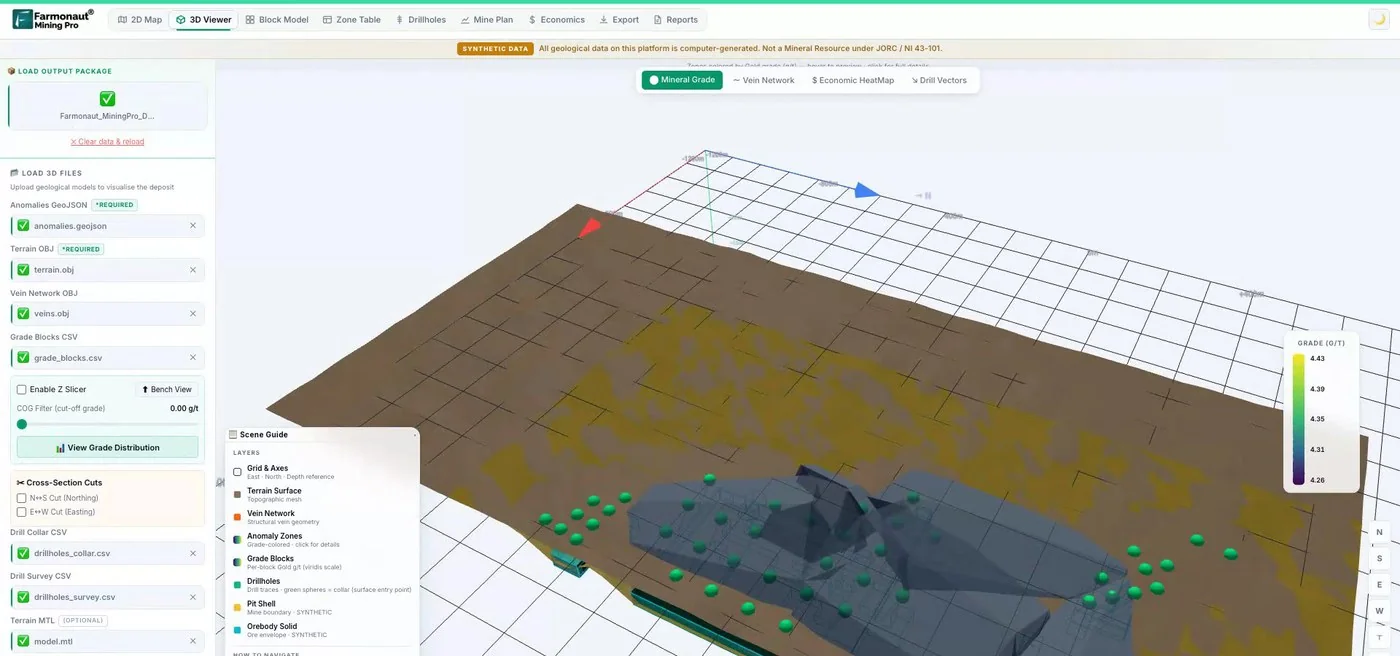
Mining Pro sample view, synthetic data
Keep reading
Sources
- U.S. Geological Survey, Estimated water requirements for the conventional flotation of copper ores, Open-File Report 2012-1089 (2012): pubs.usgs.gov
- U.S. EPA, Technical Resource Document: Extraction and Beneficiation of Ores and Minerals, Copper (EPA 530-R-94-031, 1994): archive.epa.gov
- Freeport-McMoRan Inc., Form 10-K annual report (financial year 2025): s22.q4cdn.com
- Coalition for Eco-Efficient Comminution, Mining Energy Consumption 2021: ceecthefuture.org
- Cochilco, Consumo de agua en la minería del cobre, actualización al año 2024 (DEEP 16/2025): cochilco.cl
- Reuters via Mining.com, Antofagasta agrees zero copper processing charges for 2026 (19 December 2025): mining.com
- USGS, Mineral Commodity Summaries 2026: Copper (February 2026): pubs.usgs.gov
- ICMM, Global Industry Standard on Tailings Management (5 August 2020): icmm.com
- Teck, Tackling impurities in copper concentrates (technical paper): teck.com
Discussion
Questions, corrections or field experience? Share them below. First-time comments are reviewed before they appear, and your email is never published.
No comments yet. Be the first to add a question or your experience.

 Tipareth Mines
 GemSprout Metals Limited
 Qader Group
 Ileys General Trading
 SG Gold Mining LLC
 VRV Global Pte Ltd
 Omsri International FZE
 G.I.T.T.
 Jaunita Erss Ltd
 Almosi SARL
 SRK Consulting
 Berks Gold Limited
 Mwerezi Minerals Company Limited
 Mining SARL
 SenGold Invest SAS
 Sean Mining Limited
 NTS Group (Pty) Ltd
 Mine4Africa










