

Copper mining risk · How-to guide
Copper Mining Risk Management: 7 Steps and Calculator
Mining risk management in copper works in seven steps: scope, risk list, scoring, critical controls, ground and tailings monitoring, price exposure, and drills with a review cycle. Each step uses filed data, and a calculator tests a price fall.
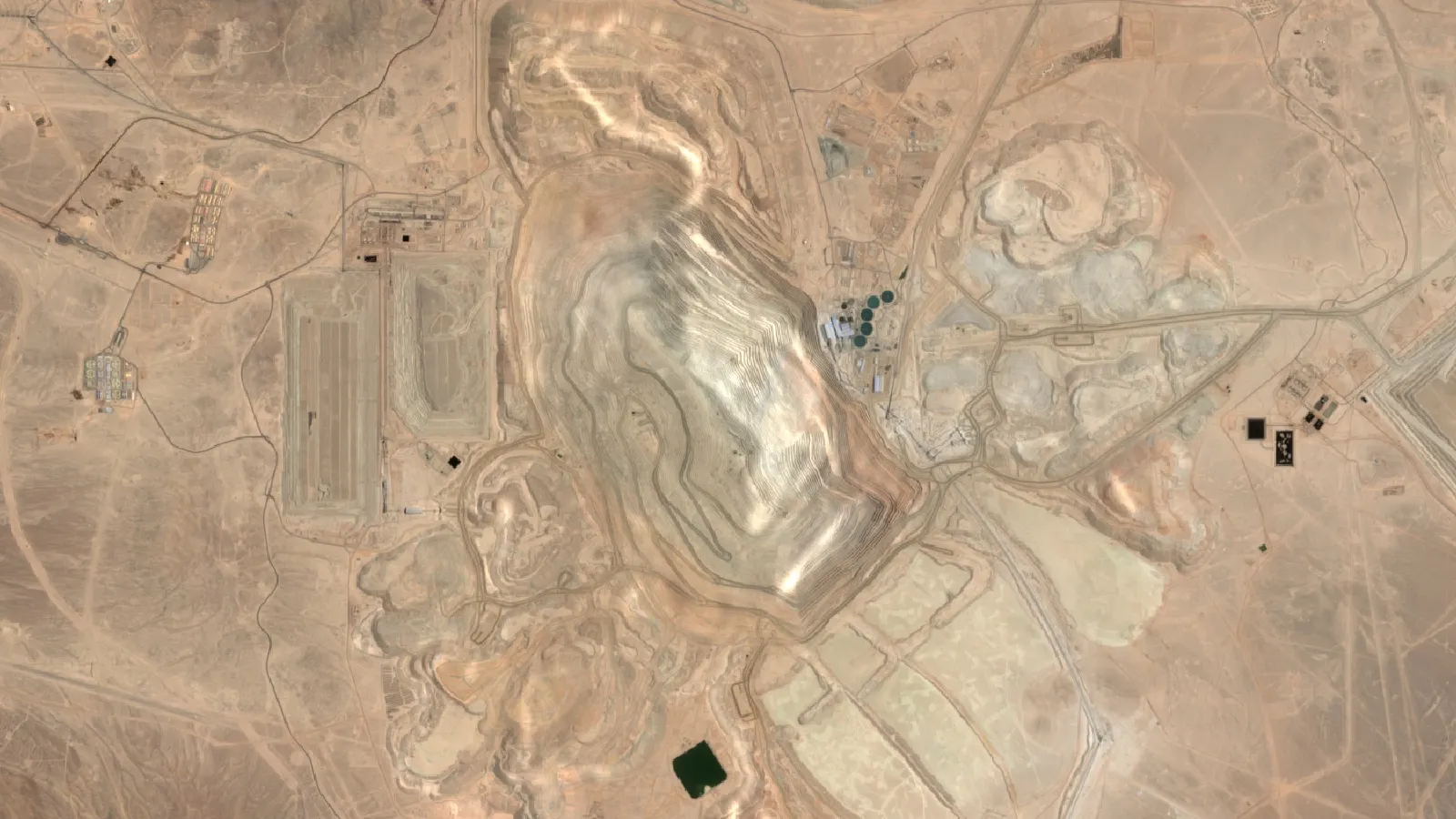
Key takeaways
- MSHA counted 25 fatalities among 265,965 US metal and nonmetal miners in 2025, against 18 in 2024 and 31 in 2023 (MSHA).
- A mud rush at Grasberg on 8 September 2025 killed seven people; Freeport reported 20 potential fatal events in 2025 against 30 in 2024 (Freeport 10-K).
- ICMM members had 67% of 836 tailings facilities in full conformance with the tailings standard in August 2025 (ICMM, November 2025).
- Each $0.10 a pound change in copper moves Freeport’s second-half 2026 operating cash flow by about $150 million (Freeport, July 2026).
- Chile, Congo (Kinshasa) and Peru mined about 11.2 of the 23 million tonnes of copper worldwide in 2025 (USGS estimate).
In this article
- The seven steps at a glance
- Step 1: Set the scope and list the risks of a copper mine
- Step 2: Score each risk by likelihood and consequence
- Step 3: Put hard controls on the risks that can kill
- Step 4: Watch the ground and the tailings dam
- Step 5: Price the copper exposure and test a price fall
- Step 6: Cover permits, water and where the copper comes from
- Step 7: Rehearse emergencies, measure a few numbers and review
- What failures and price moves cost: figures from filings
- Where Farmonaut fits in a risk programme
- Frequently asked questions
Copper mining risk management comes down to seven steps: define the scope, list the risks, score them, put hard controls on the few that can kill people or stop the mine, watch the ground and the tailings, price the copper exposure, and rehearse and review. The sections below work through each step with filed data from US safety statistics, mining company reports and a peer-reviewed satellite study, and include a calculator that tests how a copper price fall changes a mine’s margin. The page is written for mining consultants and technical managers who have to turn a long hazard list into a short list of decisions.
Two points shape everything that follows. First, a copper mine carries unusually large fixed exposures: a deep pit or block cave, a tailings dam that must hold for decades, and a product whose price moves with the global economy. Second, risk registers fail when every item gets the same attention. The aim is to find the handful of events that could cause a fatality, a dam failure, a long stoppage or a permit loss, and to put real controls on those.
The seven steps at a glance
This table shows what each step produces and the evidence used on this page. Use it as a checklist when you review a site or write a scope of work.
| Step | What you produce | Evidence on this page |
|---|---|---|
| 1. Set scope and list risks | Risk register covering the mine’s life stage | Seven risk families, from fatal events to price |
| 2. Score likelihood and consequence | Ranked list with an owner for each risk | A 5 x 5 scoring method and worked examples |
| 3. Control fatal risks | Critical controls checked in the field | MSHA fatality counts and the Grasberg mud rush |
| 4. Watch ground and tailings | Monitoring plan with alert levels | Tailings standard conformance and satellite radar results |
| 5. Price the copper exposure | Margin under a price fall | USGS price series, company sensitivities, calculator |
| 6. Cover permits, water and supply | Licence, community and water plan | USGS country output and company water data |
| 7. Rehearse, measure, review | Drill log, a few KPIs, a review date | TRIR, LTIFR and potential-fatal-event data from filings |
Step 1: Set the scope and list the risks of a copper mine
Start by writing down which asset you are assessing and which stage of its life it is in, because the risk list changes. An exploration programme worries about access, permits and drilling safety. A producing open pit worries about slopes, haul trucks and the tailings facility. Our guide to the seven stages of the mining process shows how the work changes from stage to stage, so that the register is built for the stage you are in.
A usable register groups risks into families, gives each risk an owner and states the event in one plain sentence (“tailings embankment loses strength after a wet season”). These seven families cover most copper operations:
- Fatal and serious injury events: vehicle collisions, falls of ground, electrical contact, mobile equipment, and mud or water inrushes underground.
- Geotechnical failure: pit-wall slides, subsidence over underground workings and tailings or waste-dump instability.
- Environmental release: tailings, acid drainage, process solution and dust.
- Price and cost: the copper price, treatment charges, energy and consumables.
- Permits and community: licence conditions, water rights, land access and local opposition.
- Supply and equipment: a single mill, a single power line, a single port, or long lead times on spares.
- Health and people: dust, noise, fatigue and the shortage of trained operators.
Tailings are the finely ground rock left after the copper has been separated, usually stored behind a dam as a wet slurry. They get their own section below because the consequences of a failure are so much larger than for most other items. A register that mixes small equipment risks with a tailings failure and gives them equal weight will hide the one that matters, which is why the next step is scoring.

▶ The seven environmental impacts of mining, explained in claymation with satellite maps. · 2:31
Step 2: Score each risk by likelihood and consequence
Scoring turns a long list into a ranked one. A common method is a five-by-five matrix: rate likelihood from 1 (rare) to 5 (almost certain), rate consequence from 1 (minor) to 5 (catastrophic), and multiply. Many companies set a score above which a risk is not accepted until controls are added. Each company and its insurers set their own cut-offs, so write yours into the register and keep them fixed from one review to the next.
Two rules keep the scoring honest. Rate consequence on the worst credible outcome, not the usual one, and treat any risk that could cause a fatality as top priority whatever its likelihood score. Rate likelihood on the controls that are working today, not on the controls in the procedure manual. The table shows example scores of the kind a site workshop might produce. These are illustrations of the method, not benchmarks for any mine.
| Risk event (example) | Likelihood | Consequence | Score | Treatment |
|---|---|---|---|---|
| Haul truck collides with a light vehicle | 3 | 5 | 15 | Collision-avoidance systems, separation rules, speed limits |
| Tailings embankment loses stability | 2 | 5 | 10, but treated as top priority | Independent review, monitoring, conservative design |
| Copper price falls 20% for a year | 3 | 4 | 12 | Sensitivity test, forward sales, cost flexibility |
| Water permit renewal delayed | 3 | 3 | 9 | Early filing, alternative supply |
| Single mill motor fails | 2 | 3 | 6 | Spare on site, condition monitoring |
The tailings line shows why the multiplication rule needs an override: a 10 looks moderate, yet it describes an event that can kill many people. A site can therefore keep a separate list of critical risks that senior management reviews regardless of score.
For economic risks, a single score is too blunt. Uncertainty in price, grade and cost is better described as a range of outcomes than as one number. Our course chapter on P10, P50 and P90 outcomes in a Monte Carlo simulation shows how the three inputs combine into a distribution.
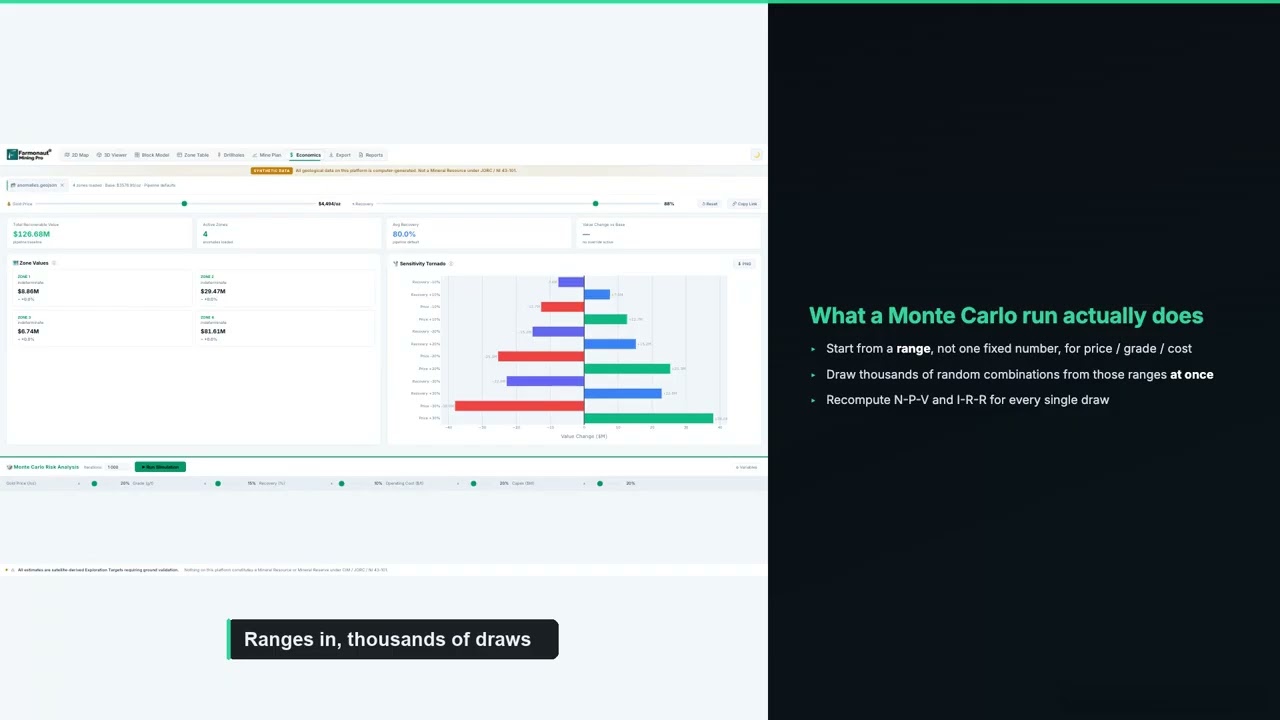
▶ How a Monte Carlo simulation turns price, grade and cost uncertainty into P10, P50 and P90 outcomes. · 14:59
Step 3: Put hard controls on the risks that can kill
A control is only worth listing if you can check in the field that it is in place and working. Mining safety professionals call the few controls that stand between a hazard and a death “critical controls”. Examples include the seat belt and speed governor on a haul truck, the isolation lock on a conveyor, the barricade at a pit edge, and the ground support in an underground drive.
Chart
US metal and nonmetal mining fatalities
Deaths per calendar year, 2019 to 2025 (includes sand, gravel and stone)
The United States gives a useful public reference. The Mine Safety and Health Administration (MSHA) publishes yearly fatality counts for metal and nonmetal mining, a category that also includes sand and gravel and stone operations, so it is not copper-only. MSHA reports 25 fatalities among 265,965 miners in 2025, 18 in 2024 and 31 in 2023 (MSHA, Metal/Nonmetal Fatalities). The 2025 count works out at roughly nine deaths per 100,000 miners. The year-to-year swings are large, which is why single-year comparisons say little and why a site should track near-misses as well as deaths.
Freeport-McMoRan shows how a single event changes a company’s year. On 8 September 2025 a mud rush at the Grasberg minerals district in Indonesia killed seven people, and mining was suspended while the team recovered the victims and investigated. Operations at two other underground mines restarted in late October 2025, and the filing expected a phased restart of the Grasberg Block Cave to begin in the second quarter of 2026; the July 2026 results still describe a phased ramp-up under way (Freeport-McMoRan annual report on Form 10-K for 2025). The same filing says the company had 20 potential fatal events in 2025 against 30 in 2024, and a total recordable incident rate of 0.55 per 200,000 hours worked in 2025 against 0.53 in 2024. A potential fatal event is an incident that could have caused a death. Tracking them lets a company learn from near-misses before the fatal one.
The financial cost followed. In its second-quarter 2026 results, Freeport reported idle-facility and restoration charges linked to the incident of $690 million in production and delivery costs and $172 million in depreciation (DD&A) for the first six months of 2026, and about $0.7 billion in insurance proceeds collected in the second quarter (Freeport-McMoRan, second-quarter 2026 results). Those two cost lines are reported separately and should not be added together without reading the notes in the release.
Training and supervision belong in this step as well. In the United States, MSHA’s Part 48 sets minimum training for miners at underground and surface operations, and requires approximately 8 hours of a new underground miner’s training to be given at the mine site (MSHA, Part 48 reference guide). Other countries set their own minimums, so check the regulator for your jurisdiction.
Machines are part of the picture too. Vehicle interactions belong in the register, and location and speed logs show where haul trucks, loaders and light vehicles meet. Tools such as Farmonaut’s fleet management page describe one way of recording vehicle movements, though the controls that matter most remain physical: separation, barriers and speed limits.
Step 4: Watch the ground and the tailings dam
Pits, waste dumps and tailings dams move. The question is whether they move in a way the design expected. Monitoring turns a design assumption into a measurement with an alert level, and the plan should state who is called when a reading crosses it.
Mount Polley, a copper-gold mine in British Columbia, shows what happens when a foundation weakness goes undetected. An independent expert panel concluded that the tailings dam failed on 4 August 2014 because the design missed a continuous glaciolacustrine (lake-deposited glacial) layer in the foundation that was prone to undrained failure, and that government inspections would not have prevented the failure (Mount Polley Review Panel, 30 January 2015; see also The Globe and Mail, 30 January 2015). The panel recommended stricter design rules and independent review boards for tailings facilities.
The industry’s answer is the Global Industry Standard on Tailings Management (GISTM), published in 2020. The International Council on Mining and Metals (ICMM) reports that, of its members’ 836 tailings facilities, 67% were in full conformance with the standard in August 2025 and 33% in partial conformance. Over 80% of the facilities rated “extreme” or “very high” consequence were in full conformance, while the other consequence classes ranged from 53% to 65% (ICMM, Tailings Progress Report, November 2025). The figures cover ICMM members only, not every mine in the world.
What satellite radar can add to a monitoring plan
Satellite radar can measure small ground movement over large areas. A peer-reviewed study of the No. 4 tailings dam at the Dexing copper mine in China used 118 Sentinel-1A radar images taken between January 2018 and December 2021. It found line-of-sight movement rates from about minus 46 to plus 13 millimetres a year, with the upper part of the dam moving away from the satellite at about 40 mm a year and the lower part approaching it at about 8 mm a year (SBAS-InSAR deformation monitoring of the Dexing tailings dam, PubMed Central). The authors tie the pattern to the stored material and the dam’s construction materials.
The European Space Agency designed the Sentinel-1 constellation, a pair of radar satellites, to image the whole Earth every six days, day or night and through cloud (ESA, Introducing Sentinel-1). The Dexing study used a single satellite with a 12-day repeat. Radar shows surface movement; it does not show pore pressure inside a dam, so it complements piezometers, survey prisms and inspection by the engineer of record rather than replacing them. Rainfall records matter as well, because wet seasons raise pore pressure and stress dams, and weather data can be pulled into a site water balance through a service such as the Farmonaut weather API.
Step 5: Price the copper exposure and test a price fall
Copper is sold at a price set on exchanges, so a mine’s revenue moves with a number it does not control. The US Geological Survey (USGS) reports annual average prices for the London Metal Exchange (LME) and for COMEX in New York. In the USGS series, the LME grade A cash average ran from 384.8 cents a pound in 2023 to 414.7 in 2024 and an estimated 440 in 2025 (USGS, Mineral Commodity Summaries 2026: Copper). Annual averages hide the swings inside each year, which is where a mine’s cash flow actually feels the pain.
Chart
Copper price, annual average
US cents per pound, 2021 to 2025 (2025 is a USGS estimate)
Company filings show how large the exposure is. Freeport says that, for the second half of 2026 and at an assumed $6.00 a pound, each $0.10 a pound change in the average copper price changes operating cash flow by about $150 million (Freeport-McMoRan, second-quarter 2026 results). Southern Copper reports that each $0.10 a pound change in copper changes its 2026 estimated annual net income by $120.0 million, with the other metals and tax rates held as stated in its filing (Southern Copper annual report on Form 10-K for 2025). The two figures use different measures and periods, so they cannot be compared one-for-one; they show the order of magnitude.
Three tools reduce price risk. Forward sales and hedging fix the price on part of the output, which protects the margin but gives up the upside. Offtake contracts with smelters set terms for a period. Cost flexibility, such as the ability to defer waste stripping, lowers the break-even price. The calculator below tests one simple case: what a price fall does to the margin once part of the output has been sold forward.
Calculator
What does a copper price fall do to your margin?
Enter your own output, price, cost and hedge share.
- Margin at the current price (US$): $165,346,500
- Margin after the fall (US$): $88,184,800
- Fall that wipes out the margin (%): 42.9
Example values only, not a forecast or a benchmark. Simplified: one price and one all-in cost per pound, with no by-product credits, tax or royalties. The hedged share is assumed to be sold at today’s price. The price is an input: example, use today’s price. Money is in US$; 1 tonne = 2,204.62 lb.
Step 6: Cover permits, water and where the copper comes from
Permits and water are where many projects slip. On US federal land, the Federal Land Policy and Management Act directs the Bureau of Land Management (BLM) to take action to prevent unnecessary or undue degradation of the lands (BLM, FLPMA text), so a plan of operations has to show how disturbance will be limited and reclaimed. Other countries use different regimes, and a register should list each permit with its owner, its renewal date and the lead time to replace it.
Chart
Copper mine production by country
Thousand tonnes of contained copper, 2025 estimate, eight largest producers
Water is the other common constraint in arid copper districts. Antofagasta reports that 63% of its water withdrawals in 2025 came from sea water, up from 58% in 2024, and that its Centinela operation runs on untreated sea water pumped from the Pacific coast (Antofagasta, Annual Report 2025). A switch of that kind is a risk treatment: it lowers dependence on continental water, though it adds pumping and energy cost.
Supply concentration is a third exposure, for buyers and for investors in any single country. USGS estimates that Chile, Congo (Kinshasa) and Peru together mined about 11.2 million tonnes of the roughly 23 million tonnes of copper mined worldwide in 2025, close to half the total.
Land access is a risk that is easy to miss. A deposit can have excellent grade and still be unmineable if the ground sits under a town, a protected area or another holder’s claim, which is why a land-access check belongs in the first desktop screen. Provenance and sourcing records are the other part of supply risk, and pages such as Farmonaut’s product traceability overview describe the idea of tracking a lot from site to buyer.
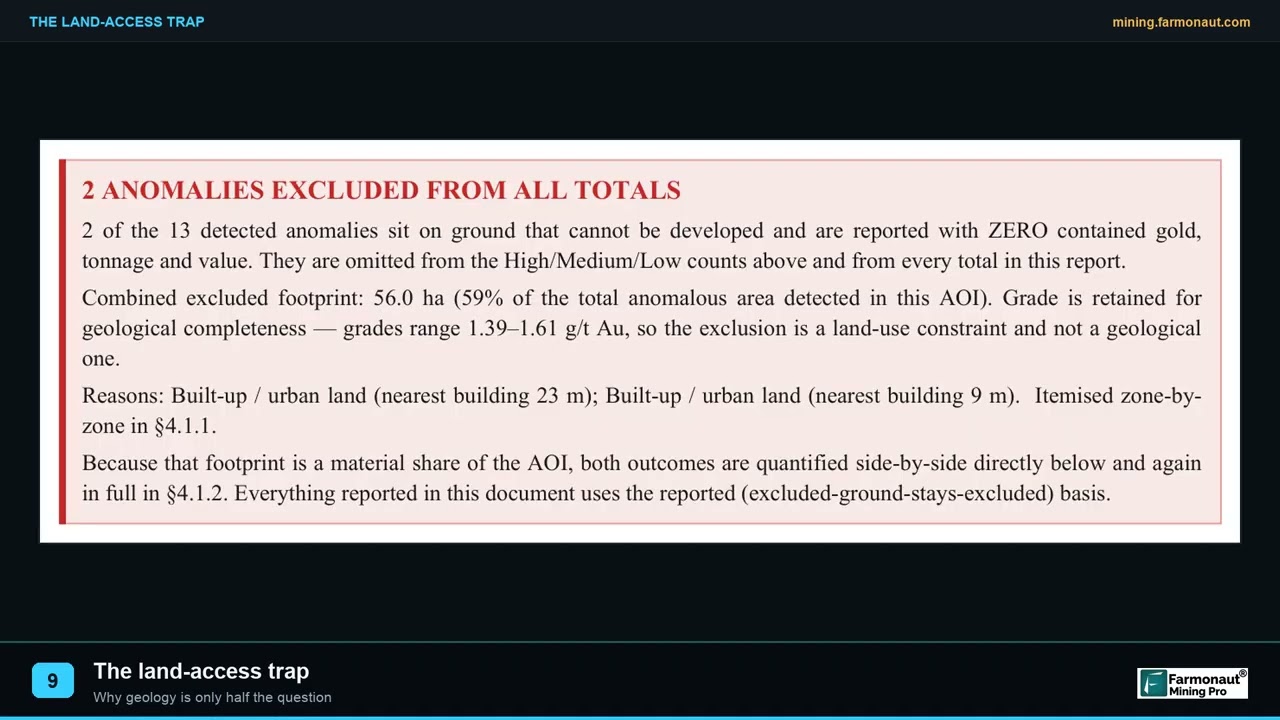
▶ A survey where 59% of the anomalous ground sat under a town: land access can block good rock. · 2:05
Step 7: Rehearse emergencies, measure a few numbers and review
An emergency response plan is only tested when people use it. The plan should cover evacuation, medical response, spill containment, communications and recovery, and every scenario in the register’s top ten should have a drill or a desktop exercise. How often to drill depends on your regulator, your insurer and the plan itself, so write the interval for each scenario into the plan and keep a log of each exercise, what went wrong and what changed.
Choose a few indicators and report them the same way every time. Companies usually publish these:
- Fatalities and potential fatal events, which show whether critical controls are working. Freeport reported 20 potential fatal events in 2025.
- Total recordable incident rate (TRIR), the number of recordable injuries per 200,000 hours worked, which was 0.55 at Freeport in 2025.
- Lost time injury frequency rate (LTIFR), the number of lost-time accidents per million hours worked. Antofagasta reported a group LTIFR of 0.58 and no fatalities in 2025, with zero fatalities in 2024 (Antofagasta, Annual Report 2025).
- Tailings conformance, the share of facilities that meet the tailings standard, as in the ICMM data above.
- Emissions intensity, such as tonnes of carbon dioxide equivalent per tonne of copper. Antofagasta’s Mining Division reported 1.91 in 2025, up 9% on 2024. Methods and tools for this are covered by pages such as Farmonaut’s carbon footprinting overview.
Rates differ by definition, so only compare a number with another reported on the same basis. Set a review date, such as quarterly for the top risks and annually for the whole register, and after any significant incident. Software can hold the register, the actions and the drill log; our overview of digital transformation providers in mining compares some of the vendors.
What failures and price moves cost: figures from filings
Risk management programmes cost staff time, consultants, instruments and software, and the amounts depend on the size and jurisdiction of the mine, so this page does not quote a typical budget. What can be sourced is the size of the exposures the programme is meant to reduce.
| Exposure | Reported figure | Source and basis |
|---|---|---|
| Copper price move of $0.10 a pound | About $150 million of operating cash flow (Freeport, second half of 2026, at an assumed $6.00 a pound) | Freeport-McMoRan second-quarter 2026 results |
| Copper price move of $0.10 a pound | $120.0 million of annual net income (Southern Copper, 2026 estimate) | Southern Copper Form 10-K for 2025 |
| Underground mud rush, Grasberg, September 2025 | $690 million production and delivery costs plus $172 million DD&A, idle-facility and restoration charges, first six months of 2026 | Freeport-McMoRan second-quarter 2026 results; separate cost lines |
| Insurance recovery for the same event | About $0.7 billion in pre-tax proceeds collected in the second quarter of 2026 | Freeport-McMoRan second-quarter 2026 results |
The comparison shows two things. A price move is a continuing exposure that can be priced and partly hedged. A fatal event is rare but expensive, and insurance covers some losses without returning the lives lost. That is why critical controls sit at the top of the register. For a related look at the same discipline, see our guide to risk management in gold mining.
Where Farmonaut fits in a risk programme
Farmonaut is a US-based company that analyses satellite data for mining. In a risk programme, the useful parts are early screening of a licence area for access and land-cover constraints, and a record of surface change over time. It is a screening input for a consultant, not a replacement for geotechnical instruments, engineering design or a regulator’s approval. The Farmonaut app and the main Farmonaut site describe the platform.
For a closer look at a related question, see our guide: ISO 31000 in Mining: 5 Real Company Risk Frameworks.
Frequently asked questions
What are the main risks in copper mining?
The main families are fatal and serious injury events, geotechnical failure of pits, dumps and tailings dams, environmental release, copper price and cost, permits and community, supply and equipment, and health. The weight given to each depends on the mine’s type, depth and location.
What are the steps of risk management for a mine?
Set the scope, list the risks, score each by likelihood and consequence, apply controls to the highest-ranked and the fatal ones, monitor, and review. This page groups them into seven steps for copper: scope and list, score, critical controls, ground and tailings monitoring, price exposure, permits and water, and drills with a review cycle.
How do you score a mining risk?
Rate likelihood and consequence from 1 to 5, multiply them, and compare the result with the company’s own tolerance bands. Rate consequence on the worst credible outcome, and keep a separate critical list for any event that could cause a fatality or a major environmental release, whatever its score.
What is a tailings dam and why does it carry such a high risk?
A tailings dam holds the finely ground waste rock and water left after copper is recovered. It is built to last for decades and is often raised in stages, so a design or foundation weakness can grow unnoticed. The Mount Polley dam failed in 2014 because the design missed a weak glaciolacustrine layer in its foundation, according to the independent panel that reviewed it.
How does the copper price affect a mine’s risk?
Revenue moves with the price while many costs are fixed, so a small price change moves cash flow by a large amount. Freeport’s filing puts the effect at about $150 million of operating cash flow for each $0.10 a pound in the second half of 2026. Forward sales, offtake contracts and cost flexibility reduce the exposure.
Which standard covers tailings safety?
The Global Industry Standard on Tailings Management, published in 2020, is the main industry standard. ICMM members committed to conform, and ICMM reported 67% of its members’ 836 facilities in full conformance in August 2025. Regulators in each country may add their own rules.
Can satellites help monitor a mine’s risks?
Yes, for surface change. Radar satellites measure ground movement in millimetres a year, as the Dexing tailings-dam study showed with Sentinel-1 data, and optical satellites show land cover, water and disturbance. Satellites do not measure conditions inside a dam, so they sit alongside instruments and inspections.
How often should emergency drills be held at a mine?
The interval depends on the regulator, the insurer and the emergency plan. Write a frequency for each scenario into the plan, log every drill, and repeat a scenario after any change in the workforce, equipment or layout.
What do TRIR and LTIFR mean?
TRIR is the total recordable incident rate, usually the number of recordable injuries per 200,000 hours worked. LTIFR is the lost time injury frequency rate, which Antofagasta defines as accidents with lost time per million hours worked. The bases differ, so compare a rate only with another on the same basis.
Who regulates mine safety in the United States?
MSHA, the Mine Safety and Health Administration, enforces federal mine safety rules, including the Part 48 training requirements, and publishes fatality statistics for metal and nonmetal mines. Mining on federal land also involves the Bureau of Land Management.
This page is for general information and is not engineering, safety or legal advice.
This page is for information only. It is not engineering, safety or legal advice, and it is not investment advice. Confirm the rules with the regulator and use a qualified engineer for design and monitoring decisions.
Farmonaut mining
Map your client's site from space
Consultants can request a satellite screen of a licence area to check land cover and access before the site visit.
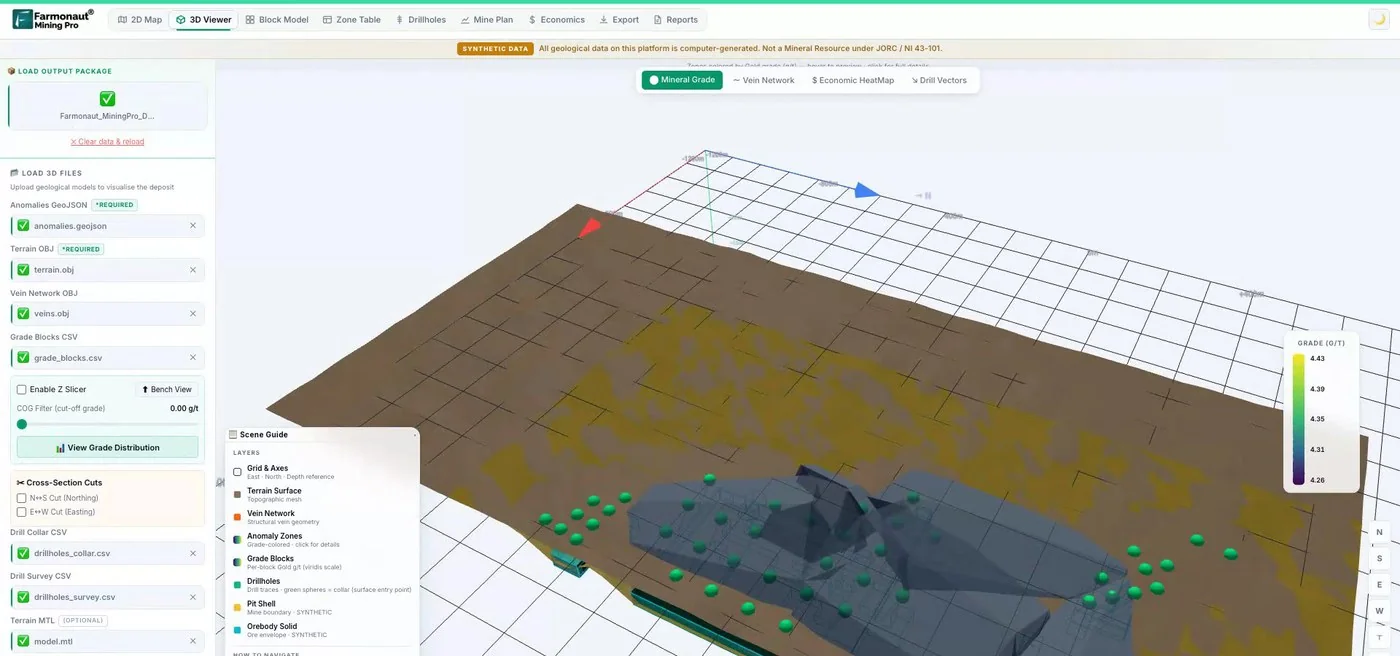
Mining Pro sample view, synthetic data
Keep reading

Sources
- MSHA, Metal/Nonmetal Fatalities, 1900 through 2025: msha.gov
- MSHA, Part 48 reference guide: msha.gov
- Freeport-McMoRan, annual report on Form 10-K for 2025: s22.q4cdn.com
- Freeport-McMoRan, second-quarter 2026 results: s22.q4cdn.com
- Southern Copper, annual report on Form 10-K for 2025: southerncoppercorp.com
- Antofagasta, Annual Report 2025: antofagasta.co.uk
- ICMM, Tailings Progress Report (November 2025): icmm.com
- USGS, Mineral Commodity Summaries 2026: Copper: pubs.usgs.gov
- SBAS-InSAR deformation monitoring of the Dexing copper mine tailings dam (PubMed Central): ncbi.nlm.nih.gov
- ESA, Introducing the Sentinel-1 mission: esa.int
- The Globe and Mail, Design failure caused Mount Polley tailings breach (30 January 2015): theglobeandmail.com
- BLM, Federal Land Policy and Management Act text: blm.gov
- Mount Polley Independent Expert Engineering Investigation and Review Panel, report (30 January 2015): mountpolleyreviewpanel.ca
Discussion
Questions, corrections or field experience? Share them below. First-time comments are reviewed before they appear, and your email is never published.
No comments yet. Be the first to add a question or your experience.

 Tipareth Mines
 GemSprout Metals Limited
 Qader Group
 Ileys General Trading
 SG Gold Mining LLC
 VRV Global Pte Ltd
 Omsri International FZE
 G.I.T.T.
 Jaunita Erss Ltd
 Almosi SARL
 SRK Consulting
 Berks Gold Limited
 Mwerezi Minerals Company Limited
 Mining SARL
 SenGold Invest SAS
 Sean Mining Limited
 NTS Group (Pty) Ltd
 Mine4Africa










