

Gold detectors · Buyer guide
Gold Detector Price in PNG: 8 Models Compared
US dealer and maker pages showed gold detectors from US$399 to US$6,999 in October 2026. This guide compares eight models on stated specs, explains who may dig and sell gold in PNG, and adds landed-cost and payback calculators.
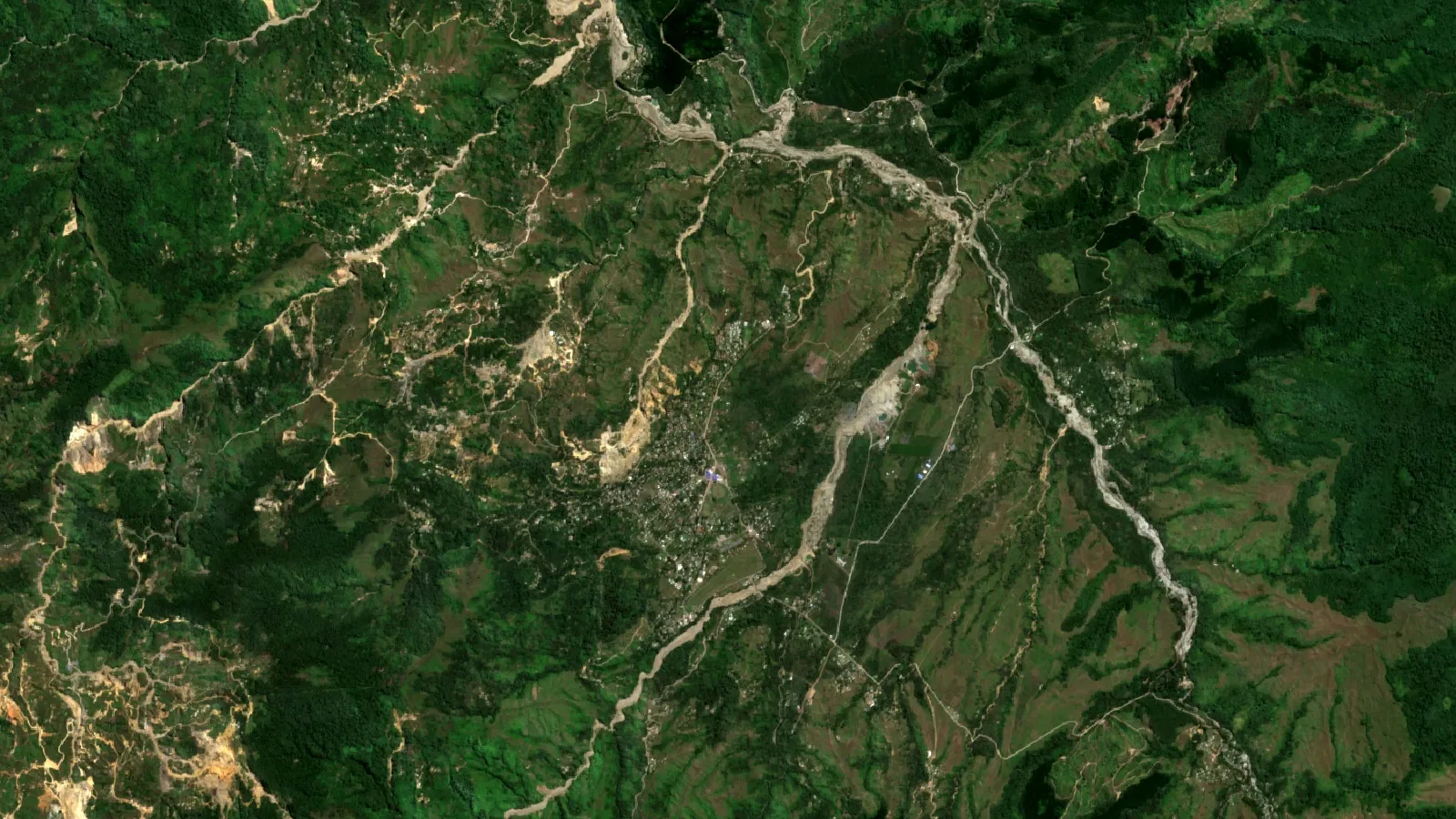
Key takeaways
- Eight models were listed at US$399 (Fisher Gold Bug Pro combo, Kellyco) to US$6,999 (Minelab GPX 6000, Kellyco) on pages opened 16 October 2026; add freight, duty and the kina rate for PNG.
- Garrett says high-frequency VLF suits fine gold, while pulse induction or a lower-frequency VLF may outperform it in heavily mineralised ground (Garrett, detector frequency guide).
- Alluvial mining and the buying and export of alluvial gold are reserved for PNG citizens (Ministry of Mining statement, MRA, March 2024).
- About 97% of PNG land is customary, so landowner consent comes before any digging (Asian Development Bank, 2018).
- USGS puts the 2025 average gold price at an estimated US$3,300 per troy ounce, about US$106 per gram of pure gold before purity and buyer discounts (USGS, 2026).
In this article
- What gold detectors cost in PNG
- Landed cost in PNG: freight, duty and exchange rate
- How we chose the eight models
- The eight models, cheapest to dearest
- VLF or pulse induction: which suits mineralised ground
- What a detector can and cannot do in PNG
- Gold price and payback: will a detector pay for itself
- Field tips and safety in PNG
- Where satellite data fits with a detector
- Frequently asked questions
Gold detectors listed at US$399 to US$6,999 on manufacturer and dealer pages in October 2026, depending on the technology inside. A VLF (very low frequency) machine such as the Fisher Gold Bug Pro costs a few hundred dollars. A pulse induction (PI) machine such as the Minelab GPX 6000 costs about seventeen times as much. Every price below is a US dealer or maker price that you must adjust for freight, duty and the kina rate.
This guide is for mining consultants, exploration managers and small-scale operators who are asked which handheld machine to buy for PNG and what it will really cost. It compares eight models on stated specifications and dated prices, explains who may dig and sell gold in PNG, and gives two calculators: one for the landed cost in kina and one for how many grams of gold repay the purchase. A metal detector finds loose pieces of gold near the surface. It does not find a vein deep underground, so the last section shows where map and satellite work fits.
What gold detectors cost in PNG
The table lists the eight models in this guide with the specification and price that each maker or dealer showed when we opened its page on 16 October 2026. Prices are US dollars, listed before freight. Treat each figure as a dated snapshot and check the page again before you pay. Gold Monster 1000, Gold Bug 2 and Deus II show the retail price from MetalDetectingWorld spec pages, not a live shop page.
Chart
Gold detector prices seen on maker and dealer pages
US$, before freight; maker, dealer and spec-database pages opened 16 October 2026
| Model | Type | Frequency | Weight | Price seen (US$) | Page used |
|---|---|---|---|---|---|
| Fisher Gold Bug Pro (2-coil combo) | VLF | 19 kHz | 1.1 kg | 399 (list 519) | Kellyco |
| Garrett AT Gold | VLF | High frequency, four settings | Not stated on page | 639.99 (list 752.99) | Garrett |
| Garrett Goldmaster 24K | VLF | 48 kHz | Up to 3.4 lb (1.5 kg) | 679.99 | Garrett |
| Minelab Gold Monster 1000 | VLF | 45 kHz | 1.33 kg | 799 | MetalDetectingWorld |
| Fisher Gold Bug 2 | VLF | 71 kHz | 2.9 lb (1.3 kg) | 849.95 | MetalDetectingWorld |
| XP Deus II | Multi-frequency VLF | 7 to 45 kHz in six steps, or mixed | From 0.75 kg, by version | 1,599 | MetalDetectingWorld |
| Garrett Axiom Lite | Pulse induction | Not applicable (pulse) | 1.9 kg | 2,299.99 | Garrett |
| Minelab GPX 6000 | Pulse induction | Not applicable (pulse) | 2.1 kg | 6,999 (list 8,399) | Kellyco |
Two points about the figures. First, the Gold Bug Pro combo showed “low stock” on the Kellyco page, so the US$399 offer may not be available when you read this. Second, the Gold Monster 1000 and Deus II prices come from a spec database, not a live shop; a US dealer listing for the Gold Monster 1000 can sit higher. For a purchase order, ask for a written quote.
The price gap between the cheapest and dearest machine is large, but price is not the only cost. A PI machine such as the GPX 6000 ships with two coils, a three-year warranty and about eight hours of battery, according to Minelab’s tech-specs page. A budget VLF machine runs on one or two 9-volt batteries and has one or two coils. Add the cost of spare coils, headphones and a pinpointer when you compare totals.
Landed cost in PNG: freight, duty and exchange rate
A US shop price is not what you pay in Port Moresby or Lae. Freight and insurance depend on the carrier and the route. Import duty and goods tax depend on how PNG Customs classifies the machine; ask a licensed customs broker for the rate before you order, and enter it in the calculator below. The kina rate moves, so use the Bank of Papua New Guinea’s published rate or your bank’s quote on the day you pay.
The calculator turns a US price into kina. The freight, duty and exchange-rate values are examples only. Replace each of them with a real quote.
Calculator
What will the detector cost landed in kina?
Enter the US price and your own quotes. Results update as you type.
- Landed cost in US dollars: $1,140
- Added by freight, duty and tax: $340
Example values only, not quotes. Freight, duty and tax are inputs: ask a customs broker for the duty and goods-tax rate, and use your bank’s kina rate on the day you pay.
How we chose the eight models
We kept the selection simple so that a buyer can repeat it. A model had to be sold new by its maker or a dealer we could open, to have a stated frequency or pulse technology, and to have a waterproof or at least rain-proof coil. We left out models where we could not find a current maker page. We did not run field tests in PNG, so nothing here says that one machine finds more gold than another in a given creek. The notes on each model repeat what the maker or dealer states.
The White’s GMX Sport, a popular waterproof model until 2020, is not listed because White’s suspended operations in June 2020, and Garrett announced on 17 October 2020 that it had bought certain White’s assets, including trademarks, intellectual property and tooling. Garrett sells the Goldmaster 24K, which is in the table.
The eight models, cheapest to dearest
Each entry gives what the maker or dealer states, who the machine suits and what to check. “Suits” is our reading of those specifications, not a field result.
Chart
Price seen against list price on three pages
US$; only pages that showed both figures
1. Fisher Gold Bug Pro: the low-cost entry
The Gold Bug Pro runs at 19 kHz, weighs 1.1 kg and has a ground balancing system, according to the Kellyco listing. The combo includes a 5-inch and a 10-inch double-D coil, both waterproof, and a five-year limited warranty.
Suits: a first machine for a small team that wants to learn on shallow gravel and old workings. Watch out for: the control box is not waterproof, so keep it dry when you cross rivers. At 19 kHz it sits in the mid-high band that Garrett describes as a start for moderately sized nuggets, so it is not the best choice for very fine gold.
2. Garrett AT Gold: waterproof and widely sold
The AT Gold is submersible to 10 feet (3 m), has manual and automatic ground balance, 44 levels of iron discrimination and a 5 by 8 inch double-D coil, according to Garrett’s product page. Garrett’s manual says it operates at a high frequency tuned for gold and lets you shift among four frequencies to reduce interference from other machines or power lines.
Suits: river and creek work where the whole machine may get wet. Watch out for: Garrett does not state a weight or a kilohertz figure on the page, so ask the dealer if either matters to you. The price shown was a sale price of US$639.99 against a US$752.99 list.
3. Garrett Goldmaster 24K: high frequency for small gold
The Goldmaster 24K operates at 48 kHz, weighs up to 3.4 lb (about 1.5 kg) and comes with a 6 by 10 inch double-D coil that is listed as waterproof, per Garrett’s page. Garrett puts detectors in this frequency class under “fine gold, tiny gold nuggets and flakes”, at the cost of depth.
Suits: searching tailings and shallow ground for small pieces. Watch out for: high-frequency machines react more to ground minerals, so ground balance needs care.
4. Minelab Gold Monster 1000: simple and automatic
The MetalDetectingWorld specification page lists the Gold Monster 1000 at 45 kHz and 1.33 kg (with a 10 by 6 inch coil, without battery), with a coil waterproof to 1 m and a control box that is only rain and splash proof. Ground balance is automatic, through ground tracking, so there is little to set.
Suits: crews with rotating members who need a machine that is quick to learn. Watch out for: do not submerge the control box. A newer Gold Monster 2000 now appears on the Minelab site, so ask your dealer which version is in stock.
5. Fisher Gold Bug 2: the highest frequency in this list
The Gold Bug 2 runs at 71 kHz, weighs 2.9 lb (about 1.3 kg), takes two 9-volt batteries and carries a five-year limited warranty, per its MetalDetectingWorld specification page, which shows a retail price of US$849.95.
Suits: hunting for the smallest flakes. Watch out for: the page gives no water rating beyond a waterproof standard coil, and the highest frequency is also the most sensitive to mineralised ground.
6. XP Deus II: wireless and multi-frequency
The Deus II offers a mixed multi-frequency mode or six single frequencies from 7 to 45 kHz. It weighs from 750 g depending on version, and its coils are rated IP68 to 20 m (66 ft), with a five-year warranty on parts and labour, according to the specification page. Coil, remote and headphones link by radio, so there are fewer cables to snag. The page shows US$1,599.
Suits: a team that wants one light machine for gold, relics and coins, and that is willing to learn the settings. Watch out for: the page says an optional antenna is needed when the coil is submerged.
7. Garrett Axiom Lite: lower-cost pulse induction
The Axiom Lite is a pulse induction machine with four search modes, a dual-channel ground balance system, an 11 by 7 inch mono coil and about 16 hours of battery life, weighing 1.9 kg with coil, per Garrett’s page. It lists at US$2,299.99.
Suits: strongly mineralised ground where a VLF machine gives constant false signals. Watch out for: the page states no waterproof depth, so confirm the rating in writing before wading with it.
8. Minelab GPX 6000: top-end pulse induction
The GPX 6000 weighs 2.1 kg, runs about eight hours per charge, has coils submersible to 1 m, a splash-proof body and a three-year warranty, according to Minelab. Kellyco showed US$6,999 against a list price of US$8,399, with an 11-inch mono coil and a 14-inch double-D coil.
Suits: an operator or contractor who will use the machine daily and can afford the outlay. Watch out for: price. At US$6,999 you need a large find, or steady use, to repay it; see the payback calculator below.
VLF or pulse induction: which suits mineralised ground
A VLF machine sends a continuous signal at a fixed frequency. A pulse induction machine fires short pulses and listens to how the signal fades, so it has no fixed kilohertz setting. Garrett’s guidance says higher-frequency VLF (40 to 70 kHz and above) is best for fine gold with less depth, that 15 to 20 kHz suits moderate nuggets and is less prone to interference from ground minerals, and that in heavily mineralised areas a pulse induction machine or a lower-frequency VLF with good ground balance “may actually outperform” ultra-high-frequency models, per its detector frequency guide.
Chart
Operating frequency of four single-frequency VLF models
kHz, as stated by maker or dealer
That gives a simple rule for a buyer who has not tested the ground. If the creek gravel is clean and the gold is fine, a high-frequency VLF is cheap and sensitive. If the ground is full of iron minerals, rent or borrow a pulse induction machine for a day before you pay four figures. The chart shows the four single-frequency VLF models in this guide.
Whatever you buy, set ground balance on the actual ground before each session. Lift the coil, bounce it near the soil, and adjust until the response is quiet. Re-do it when you move between a riverbank and a hillside, because the mineral content can change within a few metres.
Gold grains, nuggets and veins: what the machine can find
A detector responds to a piece of metal close to the coil. It can find a nugget or a cluster of grains in gravel. It cannot map a vein underground or tell you how much gold a hillside holds. Early exploration answers those questions with geology, soil and stream sampling, mapping and drilling; see our guide to mining prospecting for gold for the steps. Coins and relics are a separate hobby. The Deus II can be used for both, but relic hunting in PNG raises safety and land-access questions, covered in the safety section.
What a detector can and cannot do in PNG
Owning a detector does not give you the right to dig or to sell what you find. Three rules decide that.
Alluvial mining is reserved for citizens. A Ministry of Mining press statement posted by the Mineral Resources Authority (MRA) in March 2024 says the government has reserved all alluvial mining for Papua New Guinean artisanal and small-scale miners, and that this extends to the buying and export of alluvial gold, apart from existing foreign operators the State has exempted, per the press statement. So a foreign visitor with a detector cannot lawfully set up as a gold digger or buyer under that policy.
The alluvial lease has strict terms. The MRA permitting page describes the Alluvial Mining Lease as held only by naturalised citizens who own the land, with an area of up to five hectares and a term of up to five years, extendable. Exploration licences cover a minimum of 3.41 square kilometres. The page lists no separate permit for hand-held detecting, so write to the Registrar of Tenements before you ship a machine.
Land belongs to communities. About 97% of land in PNG is customary or traditionally owned, according to an Asian Development Bank blog (27 August 2018). Treat every creek and hillside as owned by a clan. Agree access, share terms and safety rules with the landowners in writing before any digging.
The scale of the small-scale sector explains why detectors attract interest. The same statement says some 200,000 artisanal miners use simple panning and sluicing and produce about 5,000 kg of gold, or 120,000 ounces, a year, worth up to K640 million. Dividing the statement’s figures by 200,000 miners gives roughly 19 grams per miner a year (from 120,000 ounces) or 25 grams (from 5,000 kg); the statement’s two figures do not match exactly, and either is only a mean across a very uneven group. Large mines produce far more: the statement says national gold output fell from over 2 million ounces to about 1.3 million ounces a year after Porgera closed, and that Porgera was officially reopened on 22 December 2023.
If your client is a company rather than an individual, handheld detecting is a side tool. The decision to hold ground sits with an exploration licence or a mining lease, which is where tenement screening, land checks and our mining cadastre guide come in.
Gold price and payback: will a detector pay for itself
The US Geological Survey puts the average US gold price at US$1,801 per troy ounce in 2021 and an estimated US$3,300 in 2025 (Engelhard annual averages; 2025 is a USGS estimate), per its Mineral Commodity Summaries 2026. At the 2025 estimate, one gram of pure gold is worth about US$106 (US$3,300 divided by 31.1035 grams per troy ounce). Real sales bring less: gold from creeks is not pure, and buyers pay a discount.
Chart
US average gold price, 2021 to 2025
US$ per troy ounce; 2025 is a USGS estimate
Use the calculator with your own numbers: the landed cost from the first calculator, today’s gold price, the purity of what you sell and the buyer’s discount. The default gold price is the USGS 2025 estimate, an example only.
A detector is also a time saver, not a source of gold. If the ground has no gold in it, no machine will make money. That is why the pre-visit work in the next sections matters more than the brand.
Calculator
How many grams of gold repay the detector?
Enter your landed cost and what you expect to sell at. Results update as you type.
- Net value of one gram you sell: $86
- Same gold in troy ounces: 0.37 oz
Example values only. The gold price is an input (default is the USGS 2025 estimate; use today’s price). Purity and buyer discount are your own assumptions. 31.1035 grams per troy ounce.

▶ Follows a gold nugget from rock to refined metal, step by step. · 5:27
Field tips and safety in PNG
- Calibrate on site. Test the machine on a known target such as a small gold item buried in the same ground, and set ground balance before each session.
- Match the coil to the ground. Small coils reach into rocks and thick vegetation; larger coils cover open gravel faster. The Gold Bug Pro combo ships with a 5-inch and a 10-inch coil for this reason.
- Protect the electronics. Only some control boxes are waterproof. The Gold Monster 1000, GPX 6000 and Gold Bug Pro all have coils that can be submerged while the body is not; check the rating before wading.
- Carry spares. Bring spare batteries, a spare cable and a basic tool kit, because a repair shop may be days away.
- Log your sweeps. Record a GPS track and each find; it avoids re-working ground and gives your client a record.
- Leave war relics alone. The UK government warns that there are unexploded Second World War weapons in PNG, particularly along the Kokoda Track, at Milne Bay and at Rabaul, per its travel advice. If your machine gives a strong signal on a rusty object, do not dig it.
- No mercury. Do not use mercury to collect fine gold. Use gravity methods, and follow the landowners’ and MRA’s instructions.
Where satellite data fits with a detector
A detector works at the scale of a few metres. Satellite data works at the scale of a licence area. They answer different questions. Satellites cannot see gold itself; they map the rock around it, such as iron-stained surfaces, clay minerals and fault lines, which can help decide where to send a ground team with a detector or sampling kit. Our guide to how satellite data narrows where to search shows what such a map does and does not show, and the notes on geological survey tools for gold compare the other methods.
Farmonaut accepts a KML, KMZ or polygon of a licence area and returns a satellite mineral detection report with prospectivity zones. See satellite-based mineral detection or use the mining query form to ask for a quote. The results are exploration targets to check on the ground, not a resource estimate. If you want a detector reviewed in more detail, see our write-up of the Minelab Gold Monster 1000.
▶ Explains that satellites cannot see gold itself but can map the alteration it leaves behind. · 2:00
Frequently asked questions
How much does a gold detector cost in PNG?
US dealer and maker pages showed US$399 to US$6,999 for the eight models here in October 2026. Add freight, import duty and goods tax, then convert to kina at the rate you are quoted.
Which gold detector is the cheapest?
Of the models here, the Fisher Gold Bug Pro combo at US$399 on the Kellyco page, which showed low stock. The Garrett AT Gold at US$639.99 was next.
Is a pulse induction detector better than VLF for gold?
Not always. Garrett says pulse induction handles highly mineralised soil and depth well but is less effective for small, near-surface gold, while high-frequency VLF is best for fine gold with less depth.
Can a foreigner dig or buy alluvial gold in PNG?
Under the 2021 Alluvial Mining Policy as described in a Ministry of Mining statement posted in March 2024, alluvial mining and the buying and export of alluvial gold are reserved for PNG citizens, with an exemption for existing foreign operators.
Do I need a permit to use a metal detector in PNG?
The MRA permitting page lists tenements and does not describe a separate detector permit. You need landowner consent, and gold recovery for sale is regulated. Write to the Registrar of Tenements for the current position.
Which detectors are waterproof?
The AT Gold is submersible to 10 feet. The Deus II coils are rated IP68 to 20 m. The Gold Monster 1000, GPX 6000 and Gold Bug Pro have waterproof coils but not waterproof control boxes.
What happened to the White’s GMX Sport?
White’s suspended operations in June 2020 and Garrett bought selected White’s assets in October 2020. Garrett sells the Goldmaster 24K.
Can a metal detector find a gold vein?
No. A detector finds metal near the coil. Veins are found by mapping, sampling and drilling, and satellite alteration maps can help decide where to look first.
How many grams of gold repay a detector?
It depends on the purchase cost, gold price, purity and buyer discount. With the example inputs in the calculator, a US$1,000 machine needs about 12 grams of gold. Replace every input with your own.
Where should I buy a detector for PNG?
Buy from the maker or an authorised dealer who will ship to PNG and give a written quote with warranty terms. Ask who handles repairs, because the warranty periods in this guide run from two to five years.
This page is for information only. It is not investment advice and it is not legal advice. Prices are dated dealer and maker snapshots and change often. Confirm tenement, permit, export and import rules with the Mineral Resources Authority, Bank of Papua New Guinea and PNG Customs, and get landowner consent before any site work. Never dig suspected war remnants, never use mercury, and respect permission, licence and safety rules.
Farmonaut mining
Map your mining site from space
Send a KML, KMZ or polygon and Farmonaut screens the ground for exploration targets before your team walks it with a detector.

Mining Pro sample view, synthetic data
Keep reading

Sources
- Mineral Resources Authority of PNG, Permitting: tenement types: mra.gov.pg
- Ministry of Mining press statement, PNG’s mineral potential (posted by MRA, March 2024): mra.gov.pg
- Asian Development Bank blog, Managing Resettlement in PNG (27 August 2018): blogs.adb.org
- UK Government, Papua New Guinea safety and security travel advice: gov.uk
- USGS, Mineral Commodity Summaries 2026: Gold (February 2026): pubs.usgs.gov
- Garrett, AT Gold product page (October 2026): garrett.com
- Garrett, AT Gold owner’s manual: garrett.com
- Garrett, Goldmaster 24K product page (October 2026): garrett.com
- Garrett, Axiom Lite product page (October 2026): garrett.com
- Garrett, Detector frequency for gold: garrett.com
- Minelab, GPX 6000 tech specs: usa.minelab.com
- Kellyco, Minelab GPX 6000 listing (October 2026): kellycodetectors.com
- Kellyco, Fisher Gold Bug Pro 2-coil combo listing (October 2026): kellycodetectors.com
- MetalDetectingWorld, XP Deus II specifications: metaldetectingworld.com
- MetalDetectingWorld, Minelab Gold Monster 1000 specifications: metaldetectingworld.com
- MetalDetectingWorld, Fisher Gold Bug 2 specifications: metaldetectingworld.com
- Treasure Hunting World, Garrett announces acquisition of White’s assets (17 October 2020): treasurehuntingworld.com
Discussion
Questions, corrections or field experience? Share them below. First-time comments are reviewed before they appear, and your email is never published.
No comments yet. Be the first to add a question or your experience.

 WSP Investment Company
 Dalgety Minerals Pty Ltd
 Vortex Minerals Pty Ltd
 Faith At Work (Pty) Ltd
 Geotech Mining Solutions plc
 Vulcan International Limited
 Kidepo Associates
 GKY Mining
 Alkimy SARL
 Double A Trading
 GemSprout Metals Limited
 Qader Group
 Ileys General Trading
 SG Gold Mining LLC
 VRV Global Pte Ltd
 Omsri International FZE
 G.I.T.T.
 Jaunita Erss Ltd
 Almosi SARL
 SRK Consulting
 Berks Gold Limited
 Mwerezi Minerals Company Limited
 Mining SARL

 Exploration consultancy · South Africa · Gold










