

Mineral rights · Software guide
Mineral Management Software: Tools and What to Track
Mineral management software records who owns which mineral, royalty or claim interest, what each should be paid and which deadlines keep it alive. Owners, operators and claim holders need different tools; this guide shows which fits whom and how to check a payment.
Key takeaways
- Owner tools check royalty payments; operator land systems such as My Quorum Land and Pandell LandWorks run leases and title (vendor pages, checked November 2026).
- ONRR disbursed US$14.61 billion from fiscal year 2025 federal and tribal energy production, down from US$21.53 billion in fiscal year 2022 (US Interior).
- BLM claim maintenance fees are US$200 per lode claim, due on or before 1 September each year (BLM, checked November 2026).
- Texas takes 4.6% of oil and 7.5% of gas market value as production tax before owners are paid (Texas Comptroller).
- The calculator on this page checks one well’s monthly royalty from your decimal, volume, price, deductions and tax.
In this article
- What mineral management software does
- Named mineral management software and what each is for
- Who uses mineral rights management software
- What a mineral owner's software should track
- What a claim holder or mining company should track
- Claim fees, royalty rates and government revenue
- How to check a royalty payment step by step
- How to choose mineral management software
- Mapping and satellite data alongside land records
- Frequently asked questions
Mineral management software keeps a record of who owns which mineral and royalty interests, which leases or claims cover them, what each interest should be paid, and which deadlines keep them alive. In the US the biggest group of users is oil and gas mineral and royalty owners and the land teams that pay them; hard-rock claim holders and mining companies need the same records for claims, fees and royalties. This guide sorts the main software types by who uses them, lists what each should track, and gives a calculator for checking a royalty payment by hand.
Money is the reason the records matter. The Office of Natural Resources Revenue disbursed US$14.61 billion from fiscal year 2025 energy production on federal and tribal land and offshore areas, and every one of those dollars started as a royalty or rent line that someone had to calculate, pay and check. Private owners face the same arithmetic on a smaller scale, usually with less help.
What mineral management software does
All products in this category do four jobs, whatever they call themselves: mineral management, mineral rights management, land management or royalty management.
- Ownership records. Which tracts, wells, claims or leases you hold, and your share of each. For an oil and gas owner the key number is the decimal interest in each well; for a claim holder it is the claim name, BLM serial number and acreage.
- Contracts. Lease terms, royalty rates, deduction clauses, primary terms, renewal and expiry dates, assignments and amendments, stored with the source documents.
- Payments. Expected versus received royalties, by month and by property, with flags for missing, late or short payments.
- Deadlines and filings. Lease expiries, claim maintenance fees, tax forms and government reports.
Spreadsheets can do all of this for a few properties. Owners usually move to software once they hold interests in dozens of wells, receive statements from many operators, or hold claims in several states, because manual checking stops being realistic.

▶ What a mineral management system should hold: maps, samples and targets in one place · 3:21
Named mineral management software and what each is for
The products below are described from their vendors’ own pages. We do not score them or quote prices: vendors publish no comparable accuracy figures and generally price on request, so any ranking would be guesswork.
| Product | Vendor | Main users | What it covers |
|---|---|---|---|
| My Quorum Land | Quorum Software | Oil and gas land departments, from startups to large producers | Lease acquisition, GIS mapping, lease management, right of way, obligation management and royalty management, with Esri ArcGIS and SAP integrations (Quorum Software) |
| Pandell LandWorks | Pandell | Companies managing surface and mineral holdings | Holdings plotted on interactive maps, acreage histories, chain of title and reports on surface and mineral rights (Pandell) |
| Owner-side portfolio services | Several vendors | Individual owners, trusts, family offices and funds that receive royalty checks | Collecting check stubs from many payers, matching decimals, flagging missing revenue and producing tax totals |
| BLM Mineral & Land Records System (MLRS) | US Bureau of Land Management | Holders of unpatented mining claims on federal land | Online filing and payment of annual maintenance fees and other claim documents (BLM) |
| Spreadsheet plus document folder | Your own | Owners with a handful of properties | Everything, as long as someone updates it every month |
A rough rule: if you receive royalty checks, start with an owner-side portfolio service or a well-built spreadsheet. If you pay owners and administer leases, you need an operator land system such as My Quorum Land or Pandell LandWorks. If you hold federal mining claims, the BLM’s own MLRS is the record that counts, and your software only needs to remind you of the dates.
How we chose these examples
We included products whose vendors describe mineral, land or royalty functions on a public page we could open, plus the government system that claim holders must use. We left out general accounting packages and mine-planning software, which solve different problems. The list is not exhaustive and is not an endorsement.
Who uses mineral rights management software
The right tool depends on which side of the payment you sit on.
Mineral and royalty owners
Individuals and families who inherited or bought mineral rights receive monthly statements from operators. Their main job is checking: is the decimal right, is every producing well paying, are the deductions allowed by the lease? Most owner tools focus on importing statements and comparing them with expected values.
Operators and land departments
Companies that lease and drill pay thousands of owners. Their land systems hold title, division orders and lease obligations, and feed revenue accounting. A missed lease expiry or a wrong decimal multiplied across many owners becomes a large liability, which is why these systems are built around audit trails.
Hard-rock claim holders and mining companies
A prospector with a few lode claims in Nevada and a company holding hundreds of claims across the West face the same deadline: the annual maintenance fee is due on or before 1 September each year to keep a claim for the next assessment year. Mining companies that also pay royalties to the state or to private royalty holders need the same contract and payment records as an oil and gas operator.
Funds, trusts and royalty buyers
Buyers of mineral and royalty packages need clean data for due diligence: the decimal per well, payment history and lease terms. Sellers with tidy records are easier to value. Our guide on how to sell a mine covers the paperwork buyers ask for on the hard-rock side, and our Montana mineral rights guide shows how ownership and leasing work in one state.
What a mineral owner’s software should track
For a US oil and gas mineral or royalty owner, the job is less about production systems and more about checking that every payment is right.
- Decimal interest per well. Your share of revenue from each well. For example, a 1/5 royalty on 40 net mineral acres in a 640-acre unit gives 0.2 × 40 / 640 = 0.0125. The software should store this number and flag any check that uses a different one.
- Division orders. The operator’s statement of your decimal interest, which it sends before paying. Check it against your deeds and lease before signing, and keep a copy.
- Check-stub reconciliation. Each month, compare volumes, price, deductions and severance taxes on the stub with the well’s reported production. Flag wells that stop paying or pay late.
- Lease terms and expirations. Royalty rate, primary term, deduction and shut-in clauses, and the date a lease lapses if no well is drilled.
- Severance taxes. States tax production and take it before you are paid. In Texas the oil production tax is 4.6% of market value and the natural gas production tax is 7.5% of market value (Texas Comptroller, checked November 2026). Your software should know the rate for each state you own in, so a wrong deduction stands out.
- Tax records. Payers report royalties of US$10 or more in box 2 of Form 1099-MISC, before severance and other taxes withheld; working-interest payments go on Form 1099-NEC instead (IRS instructions for Forms 1099-MISC and 1099-NEC). Year-end totals in your records should match each payer’s form.
What a claim holder or mining company should track
Hard-rock interests have different paperwork, but the same failure mode: a missed date or an unchecked payment.
Chart
Cost to file one new BLM lode claim
US$ per claim, claims located on or after 1 September 2024
- Claim register. Claim names, BLM serial numbers, type (lode, placer, mill site or tunnel site), acreage, county recording dates and ownership shares. A lode claim is a claim on a vein or other deposit in place; a placer claim covers loose deposits such as gold in gravel.
- Annual BLM fees. The maintenance fee is US$200 per lode claim, mill site or tunnel site, and US$200 for each 20 acres (or part) of a placer claim. New claims located on or after 1 September 2024 pay a US$49 location fee, plus a US$25 processing fee (BLM mining claim fees, checked November 2026).
- Small-miner waivers. Claimants who, with all related parties, hold 10 or fewer claims nationwide may file a waiver and do assessment work instead of paying the fee. The software should record which path each claim uses each year, because the paperwork differs.
- State and county filings. Many states also require an affidavit or notice to be recorded with the county each year. Keep the recording receipts with the claim record.
- Royalty and production records. Where a mine pays a government or private royalty, keep the contract, the formula and each period’s calculation together.
- Maps. Claim and lease outlines, with the source of each boundary. Mapping is where land software and exploration data meet: the same outline that defines a claim can be used to screen the ground with satellite imagery.
Claim fees, royalty rates and government revenue
Royalties and fees are set by law, so good software stores the rate and its legal source rather than a number typed in once and forgotten.
Chart
Western Australia royalty rates by product form
% of royalty value
Chart
Federal energy and mineral revenue disbursed by ONRR
US$ billion, by fiscal year
Federal energy and mineral revenue
ONRR collects royalties, rents and bonuses on federal and tribal land and offshore. Disbursements were US$21.53 billion for fiscal year 2022 (Interior, November 2022), US$18.24 billion for fiscal year 2023 (Interior, November 2023), US$16.45 billion for fiscal year 2024 (Interior, 2024) and US$14.61 billion for fiscal year 2025, when US$4.07 billion went to 34 states and US$5.01 billion to the US Treasury (Interior, November 2025). The fall tracks lower commodity prices, which is a reminder that royalty income moves with prices even when volumes do not.
Royalty rates in a mining jurisdiction
Western Australia shows how a mining royalty regime works. Most minerals pay an ad valorem royalty, a percentage of the “royalty value” of the mineral. Many minerals pay 7.5% of the royalty value if sold crushed or screened, 5.0% if sold as a concentrate and 2.5% if sold in metallic form, while gold pays 2.5% of the royalty value, with no royalty on the first 2,500 ounces a gold royalty project produces each financial year (WA Government mineral royalties fact sheet, September 2025). A royalty system for a WA miner therefore needs the product form as well as the tonnage and price, or it will apply the wrong rate.
How to check a royalty payment step by step
Whatever software you use, the check behind it is the same. You can do it by hand for one well or one period:
- Find your decimal. Royalty rate × your net mineral acres ÷ acres in the unit (or as stated on the signed division order).
- Get the volume. Use the volume on the stub, then compare it with the production the operator reported to the state for that well and month.
- Check the price. Compare the price on the stub with a public benchmark for the month. Large gaps need an explanation, such as quality or transport differentials.
- Check deductions. Read the lease: some leases forbid post-production cost deductions, others allow them. Flag any deduction the lease does not permit.
- Check taxes. Confirm the severance tax rate used matches the state rate.
- Compare and record. Expected net payment versus paid. Record the difference and contact the operator in writing if it is material.
The calculator below does steps 1 to 6 for one well and one month.
Calculator
Is my royalty check right?
Enter your lease terms and one month’s numbers from the check stub.
- Your decimal interest, as a percentage: 1.25
- Gross royalty before tax and deductions (US$): $4,500
- Difference: check minus expected (US$): -$293
Example values only, not a benchmark. Decimal = royalty rate x net mineral acres / unit acres. Texas production tax is 4.6% for oil (Texas Comptroller). Price is an input: example, use today’s price.
How to choose mineral management software
Ask these questions before paying for any system:
- Which side are you on? Owner tools check payments; operator land systems run leases and pay owners; claim registers track fees and filings. Buying the wrong type is the most common mistake.
- How do statements get in? Manual entry does not scale. Ask whether the tool imports check-stub files from your payers or reads PDFs, and how errors are fixed.
- Can it hold your formulas? Ad valorem, fixed per tonne, sliding-scale and net smelter return (NSR) royalties all need different inputs. An NSR royalty is a share of the money received from the smelter or refinery after allowed costs.
- Does it map your holdings? GIS layers make overlaps, unit boundaries and lapsed areas visible. Ask which map formats it imports, such as shapefiles or KML.
- Can you export everything? Your records must outlive any vendor. Insist on full export to spreadsheet and document files.
- Who can see what? Family trusts and funds need role-based access and an audit log of every change.
- What does it cost over three years? Most vendors price on request. Compare the annual fee with the payment errors you could catch: on a portfolio paying a few thousand dollars a month, one corrected decimal can cover a basic subscription.
Mapping and satellite data alongside land records
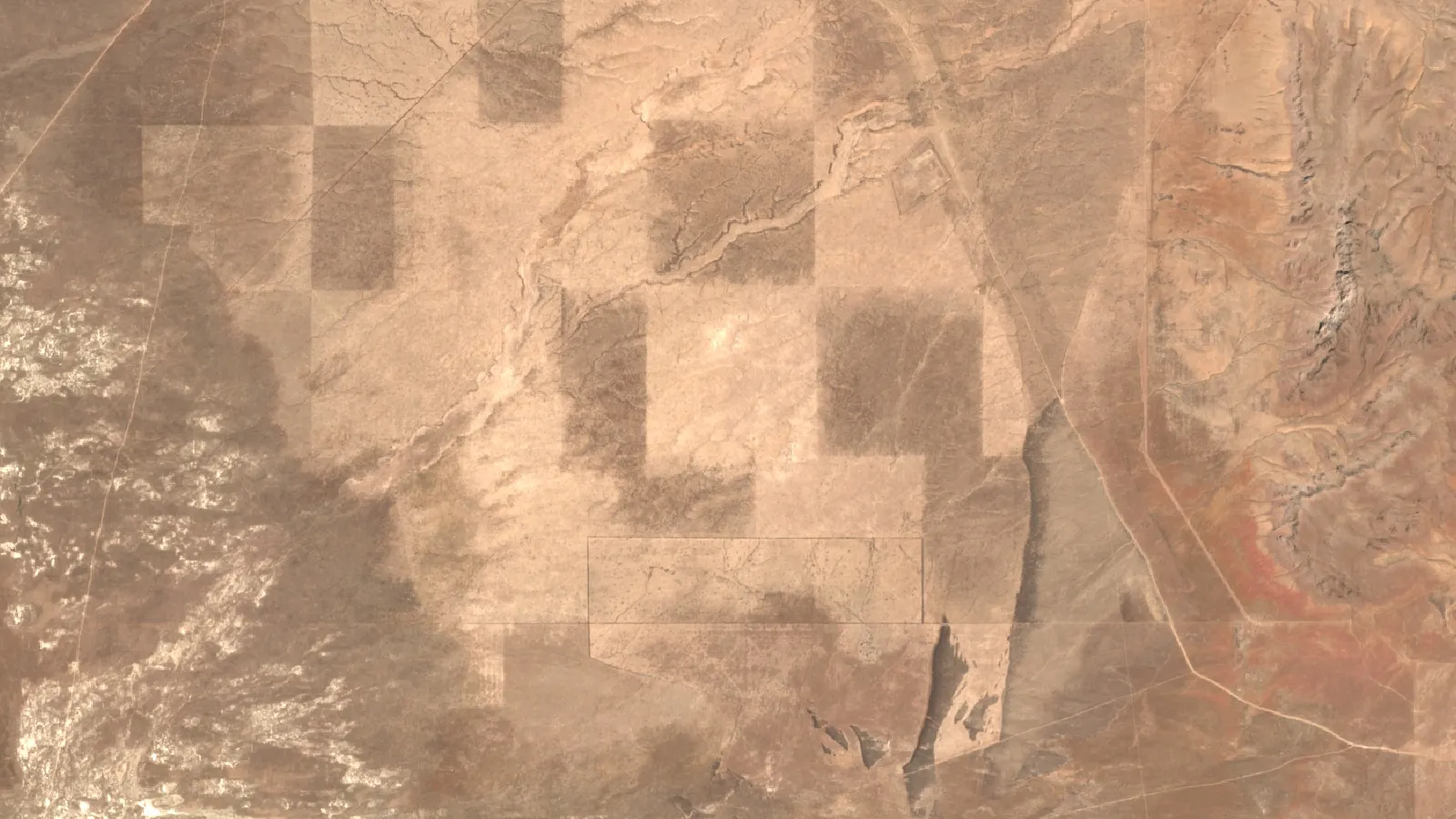
Land and royalty software tells you what you own and what you are owed. It does not tell you what is in the ground. Claim holders, buyers of mineral land and consultants often add a geological screening step: before buying a claim or planning a drill programme, they use satellite imagery to map alteration minerals, structures and old workings over the same outline held in the land record. Farmonaut provides satellite-based mineral detection for this kind of screening; results guide where to look first and do not replace sampling or drilling.
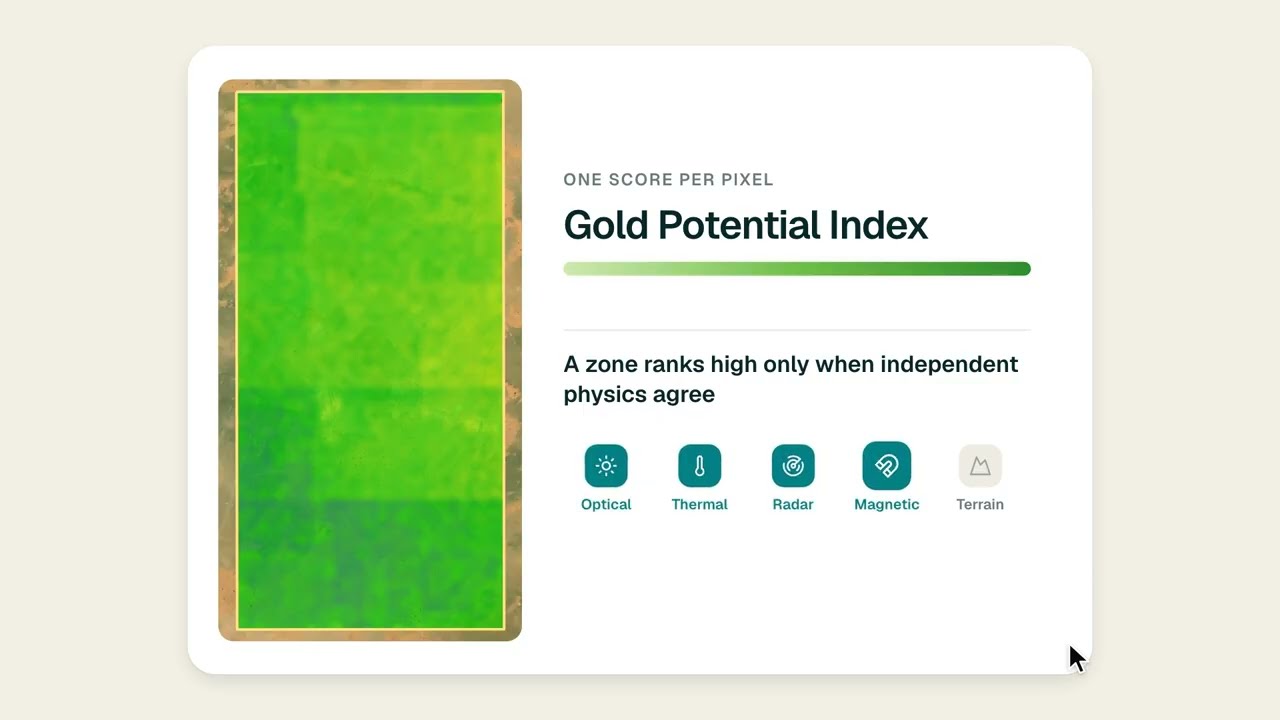
▶ Screening a licence area with satellite data before choosing where to drill · 1:46
Frequently asked questions
What is mineral management software?
Software that records mineral and royalty ownership, leases or claims, expected and received payments, and deadlines, so an owner, operator or claim holder can check every payment and keep every interest in good standing.
Is minerals management software the same as royalty management software?
Mostly. Royalty management is one module of a full mineral management system, focused on calculating and checking payments; mineral management also covers title, leases, maps and filings.
What is the difference between mineral rights software for owners and land software for operators?
Owner tools check payments received across many payers. Operator land systems manage leases, title and division orders and pay thousands of owners. The two sides use the same data but need different features.
Do I need software to manage a few royalty interests?
No. With a handful of wells, a spreadsheet with the decimal, lease terms and monthly payments per well, plus a folder of statements and division orders, is enough. Software helps once manual checks stop getting done.
How do I calculate my decimal interest?
Multiply your royalty rate by your net mineral acres and divide by the acres in the unit. A 1/8 royalty on 80 net acres in a 640-acre unit gives 0.125 × 80 / 640 = 0.015625.
Which taxes come out of a royalty check?
Mainly state severance or production taxes, which in Texas are 4.6% for oil and 7.5% for gas of market value (Texas Comptroller). The payer reports gross royalties of US$10 or more on Form 1099-MISC.
When are BLM mining claim fees due?
The annual maintenance fee is due on or before 1 September for the assessment year that starts that day. It is US$200 per lode claim, mill site or tunnel site, and US$200 per 20 acres of a placer claim.
Can mineral management software track hard-rock mining royalties?
Yes, if it lets you define your own formulas. Check that it can hold product-dependent rates, such as Western Australia’s different rates for crushed ore, concentrate and metal, and net smelter return royalties.
What should I ask a vendor before buying?
How statements are imported, which royalty formulas it supports, whether it maps holdings, how data is exported, who can see what, and the full cost over three years.
How can I get help mapping my claims or licence area?
For satellite screening of a claim, licence or lease area, you can request a quote through the mining query form or contact us with your boundary file.
This page is for information only. It is not legal, tax or investment advice. Check lease terms, fees and tax rates with the issuing agency or an adviser before acting.
Farmonaut mining
Screen your claim or licence area from space
Get a quote for satellite mapping of the ground behind your claims, leases or licence.

Mining Pro sample view, synthetic data
Keep reading
Sources
- US Department of the Interior, $14.61 billion in fiscal year 2025 energy revenue (2025): doi.gov
- US Department of the Interior, $16.45 billion in fiscal year 2024 energy revenue (2024): doi.gov
- US Department of the Interior, $18.24 billion in fiscal year 2023 energy revenue (2023): doi.gov
- US Department of the Interior, $21.53 billion in fiscal year 2022 energy revenue (2022): doi.gov
- Government of Western Australia, Mineral royalties in WA fact sheet (2025): wa.gov.au
- Bureau of Land Management, Mining claim fees (2026): blm.gov
- 43 CFR 3834.11, maintenance fees for mining claims (Cornell LII): law.cornell.edu
- Texas Comptroller, Crude oil production tax: comptroller.texas.gov
- Texas Comptroller, Natural gas production tax: comptroller.texas.gov
- IRS, Instructions for Forms 1099-MISC and 1099-NEC: irs.gov
- Quorum Software, My Quorum Land: quorumsoftware.com
- Pandell, LandWorks land management software: pandell.com
Discussion
Questions, corrections or field experience? Share them below. First-time comments are reviewed before they appear, and your email is never published.
No comments yet. Be the first to add a question or your experience.

 SMA Investments Ltd
 NTS Group (Pty) Ltd
 Mine4Africa
 Lithspo Minerals Limited
 Tintina Mining Group
 Dalgety Minerals Pty Ltd
 Vortex Minerals Pty Ltd
 Faith At Work (Pty) Ltd
 Geotech Mining Solutions plc
 Vulcan International Limited
 Kidepo Associates
 GKY Mining
 Alkimy SARL
 Double A Trading
 GemSprout Metals Limited
 Qader Group
 Ileys General Trading
 SG Gold Mining LLC
 VRV Global Pte Ltd
 Omsri International FZE
 G.I.T.T.
 Jaunita Erss Ltd
 Almosi SARL
 SRK Consulting
 Berks Gold Limited

 Client · Tanzania · Gold










