

Rare earth funds · Comparison list
Best Rare Earth ETFs: 7 Funds Compared on Fees and AUM
Seven ETFs give listed exposure to rare earths, with fees from 0.53% to 0.69% and assets from US$3.66 million to US$1.59 billion (issuer pages, 14 October 2026). Only REXC screens for rare earth revenue. See holdings, risks and a fee calculator.
Key takeaways
- Fees run from 0.53% (REMX) to 0.69% (XMET, management fee and costs); REXC and SETM charge 0.65% (issuer pages and SEC reports, 2026).
- REMX is the largest at US$1.59 billion; EART had US$45.25 million and WDIG US$3.66 million at 14 October 2026 (VanEck, Global X, WisdomTree).
- Lynas and MP Materials made up about 39% of REXC at 30 June 2026 (Sprott semi-annual report, our calculation).
- REMX’s two biggest positions on 14 October 2026 were lithium producers SQM and Albemarle; mainland China A shares were 28.2% (VanEck holdings file, our calculation).
- China produced an estimated 270,000 of 390,000 tonnes of rare earth oxide in 2025 (USGS, 2026).
In this article
- Best rare earth ETFs at a glance
- How we chose these funds
- The 7 funds, ordered from most to least rare-earth focus
- Fees, size and spread compared
- What each fund holds
- China exposure and where supply comes from
- Risks that apply to all of these funds
- What these funds cost to hold and trade
- How to check any rare earth fund before you buy
- Looking at the ground behind the holdings
- Rare earth ETFs or rare earth stocks?
- Frequently asked questions
Seven exchange-traded funds give listed access to rare earth miners and refiners: Sprott’s REXC, VanEck’s REMX in the US and as a UCITS fund, Global X’s EART, Sprott’s SETM, WisdomTree’s WDIG and BetaShares’ XMET in Australia. Their annual fees run from 0.53% to 0.69%, and their size runs from about US$4 million to US$1.59 billion (XMET reports A$126.7 million) (issuer pages and SEC reports, 14 October 2026 and 30 June 2026). Only one of them, REXC, screens for companies that earn at least half their revenue or assets from rare earths. The others mix in lithium, copper, uranium or futures on other metals.
This page compares them on fee, holdings, size and what is actually inside, using the issuers’ own pages and SEC filings that we opened for this update. It gives facts, not recommendations. A rare earth element is one of 17 metals, such as neodymium and dysprosium, that go into permanent magnets, and exchange-traded fund (ETF) shares trade on an exchange like a stock while the fund holds a basket of other securities.
Best rare earth ETFs at a glance
The table lists the seven funds by how closely each one’s own rules point at rare earths. Fees are the issuer’s stated total annual expense ratio. Holdings counts and net assets carry their dates because both move daily.
| Fund (ticker) | Issuer | Expense ratio | Holdings | Net assets |
|---|---|---|---|---|
| Sprott Rare Earths Ex-China ETF (REXC) | Sprott | 0.65% | 42 (30 Jun) | US$55.9 million (30 Jun) |
| VanEck Rare Earth and Strategic Metals ETF (REMX) | VanEck | 0.53% | 32 stocks (14 Oct) | US$1.59 billion (14 Oct) |
| VanEck Rare Earth and Strategic Metals UCITS ETF | VanEck | 0.59% | Not on overview page | US$969.7 million (14 Oct) |
| Global X Rare Earth & Critical Materials ETF (EART) | Global X | 0.59% | 50 (14 Oct) | US$45.25 million (14 Oct) |
| Sprott Critical Materials ETF (SETM) | Sprott | 0.65% | 159 (30 Jun) | US$574.9 million (30 Jun) |
| BetaShares Critical Minerals ETF (XMET) | BetaShares | 0.69% (management fee and costs) | 43 equities (14 Oct) | A$126.7 million (14 Oct) |
| WisdomTree Efficient Rare Earth Plus Strategic Metals Fund (WDIG) | WisdomTree | 0.55% | Not on overview page | US$3.66 million (14 Oct) |
Sources: VanEck REMX page, VanEck UCITS page, Global X EART page, Sprott Funds Trust semi-annual report (30 June 2026), BetaShares XMET page and WisdomTree WDIG page.
How we chose these funds
We started from every fund whose name or stated strategy names rare earths or strategic metals, found through issuer pages, ETF news and the SEC filings of the issuers. We kept a fund when four tests were met:
- Its own prospectus, index rules or issuer page names rare earths, strategic metals or critical minerals as the theme.
- It is open to buy today, with a stated expense ratio and a dated net-assets figure on the issuer’s page or in an SEC report.
- Its holdings are published, so we could check what it really owns instead of trusting the name.
- It has a listing a retail investor can reach: the US, an Irish UCITS fund for European exchanges, or the ASX.
We left out funds that are broad miners, lithium-only, battery or electric-vehicle funds, because rare earths are not part of their stated rules. Aggregator pages gave us leads, but every number in the table comes from the issuer or its SEC filing. Where the issuer page did not show a figure (holdings count for two funds), the table says so rather than guessing. For a wider look at Europe-listed products, see our critical minerals ETFs in Europe guide; for funds and shares on the Australian exchange, see our ASX-listed rare earth guide.
The 7 funds, ordered from most to least rare-earth focus
The order is our own judgement of how directly each fund’s rules point at rare earths. It is not a ranking by returns, and it is not a ranking of which fund is better for you.
1. Sprott Rare Earths Ex-China ETF (REXC)
Best for: an investor who wants a screen built only on rare earths and wants to leave out companies listed in China.
REXC began trading on 14 April 2026 and follows the Nasdaq Sprott Rare Earths Ex-China Index. Under the prospectus, the index covers companies that earn at least 50% of revenue or assets from mining, exploration, development, separation, refining or production of rare earths, and it bars Chinese A shares, B shares, H-shares and other Chinese-listed securities. At each quarterly rebalance no single company can exceed 20% of the index (Sprott Funds Trust prospectus). The total annual expense ratio is 0.65%.
At 30 June 2026 the fund had net assets of US$55,918,289 and 42 holdings (semi-annual report). By our calculation from the report’s schedule of investments, Lynas Rare Earths was 20.0% of net assets, MP Materials 19.1% and Neo Performance Materials 5.5%. A Motley Fool round-up in October 2026 counted 31 companies, so the number of holdings changes between reports. Sprott and HANetf also announced a UCITS version with a 0.65% fee on 23 September 2026 (ETF Express).
- Pros: the tightest rare earth revenue screen of the seven; no Chinese-listed shares by rule; includes developers and explorers that larger funds skip.
- Cons: two stocks hold about 39% of the fund; many positions are small companies that may not yet produce; assets of US$55.9 million are small; the fee is higher than REMX.
2. VanEck Rare Earth and Strategic Metals ETF (REMX)
Best for: an investor who wants the oldest and largest fund in this group and accepts a basket that is wider than rare earths.
VanEck reports a net and gross expense ratio of 0.53%, net assets of US$1.59 billion and an inception date of 27 October 2010 (VanEck, 14 October 2026). The fund tracks the MVIS Global Rare Earth/Strategic Metals Index of companies that produce, refine or recycle rare earth and strategic metals. Its daily holdings file for 14 October 2026 lists 32 stocks plus small cash lines. The top five were SQM (8.88%), Albemarle (8.46%), China Northern Rare Earth (6.61%), MP Materials (6.50%) and Pilbara Minerals (5.75%).
SQM and Albemarle are lithium producers, so the two biggest positions are not rare earth companies. By our count the four rare earth producers on that list (China Northern Rare Earth, MP Materials, Lynas and Shenghe Resources) add up to 22.7% of the fund. Seven mainland China A-share lines total 28.2%. VanEck’s page shows a year-to-date return of -24.27% at 14 October 2026, a reminder of how volatile the sector is.
- Pros: lowest fee of the seven; largest assets; 32 stocks across several metals; long history since 2010.
- Cons: lithium and tungsten names take a large share; more than a quarter sits in mainland China shares; it is not a pure rare earth fund.
3. VanEck Rare Earth and Strategic Metals UCITS ETF
Best for: an investor who buys through a European platform and needs a UCITS wrapper (the EU rule set for retail funds).
The Irish-domiciled fund (ISIN IE0002PG6CA6) lists a total expense ratio of 0.59%, net assets of US$969.7 million on 14 October 2026 and an inception date of 24 September 2021. VanEck describes it as exposure to the largest and most liquid companies in the rare earth and strategic metals industry, and classes it as Article 6 under the EU sustainability disclosure rules. The overview page shows a year-to-date return of -23.46%. It does not state a holdings count, so check the holdings tab before you rely on a figure.
- Pros: UCITS format; large assets for a niche theme; same issuer as REMX.
- Cons: 0.06 percentage points dearer per year than the US fund; the overview page does not show the holdings count; a fund in US dollars may add currency effects for non-dollar investors.
4. Global X Rare Earth & Critical Materials ETF (EART)
Best for: an investor who wants a rules-based mining basket that spreads across ten material groups, rare earths being only one.
EART follows the Solactive Rare Earth and Critical Materials Index. The index looks at ten groups: rare earth elements, zinc, platinum and palladium, nickel, manganese, lithium, graphene and graphite, copper, cobalt and carbon fibre, and picks the top five companies in each. The fund has 50 holdings, a 0.59% expense ratio, an inception date of 24 January 2022 and net assets of US$45.25 million at 14 October 2026. Anglo American (5.91%), Freeport-McMoRan (5.70%) and Grupo Mexico (5.65%) were the three largest positions (Global X).
- Pros: broad spread, with no stock above 6% in the top three; semi-annual rebalance; a clear published index method.
- Cons: the top names are large diversified miners, so rare earths are a small share; assets are small; the 30-day median bid-ask spread was 0.68%, which is wide for an ETF.
5. Sprott Critical Materials ETF (SETM)
Best for: an investor looking for a wide critical-materials basket in which rare earth producers are a minority.
SETM was previously named the Sprott Energy Transition Materials ETF. Its prospectus sets a 0.65% total annual expense ratio and an index of companies that earn at least 50% of revenue or assets from critical materials, a list that includes uranium, copper, lithium, nickel, cobalt, graphite, manganese, rare earths and silver (summary prospectus). At 30 June 2026 the fund had US$574.9 million in net assets and 159 holdings. Our reading of the schedule puts Freeport-McMoRan (5.4%), Kazatomprom (5.3%), Lynas (5.1%) and Cameco (5.1%) among the largest, and Lynas and MP Materials together at 8.5% of net assets. The fund was 35.7% Canada, 21.9% Australia and 20.4% United States by country.
- Pros: large for a thematic fund; very broad, with 159 holdings; a spread across copper, uranium and lithium as well.
- Cons: rare earth producers are a small slice, so it behaves more like a mining fund; uranium names alone make up a quarter of it.
6. BetaShares Critical Minerals ETF (XMET, Australia)
Best for: an investor who buys on the Australian exchange and wants a diversified critical-minerals fund with a few rare earth names.
BetaShares reports a management fee and costs of 0.69% a year, net assets of A$126.7 million and 43 equity holdings at 14 October 2026, and follows the Nasdaq Sprott Critical Minerals Select Index. Anglo American (6.1%), Teck (5.9%), Southern Copper (5.8%) and Freeport-McMoRan (5.7%) lead the list. Lynas is 4.3%, MP Materials 4.2% and Arafura Rare Earths 0.5%. The fund has traded since 26 October 2022, and BetaShares notes that extra costs are described in the product disclosure statement.
- Pros: an ASX-listed route in Australian dollars; some Lynas, MP and Arafura weight; diversified across copper, lithium and silver.
- Cons: highest fee of the seven; copper miners lead, so the three rare earth names we counted (Lynas, MP Materials, Arafura) add up to about 9%.
7. WisdomTree Efficient Rare Earth Plus Strategic Metals Fund (WDIG)
Best for: an investor who wants an actively managed mix of mining shares and commodity futures and can follow a derivatives structure.
WDIG began on 7 May 2026. WisdomTree says it holds a basket of commodity metals futures plus equities of companies in strategic metals and rare earth mining, with a net expense ratio of 0.55%. At 14 October 2026 the page showed assets of US$3.66 million, equities at 84.44% of the portfolio and cash and collateral at 15.56%. The futures groups listed are aluminium, copper, lead, platinum, nickel, zinc, silver and tin; none is a rare earth. The fund’s return since inception was -22.67% at 30 September 2026, over under five months (WisdomTree).
- Pros: adds metal price exposure through futures as well as shares; active management; a mid-range fee.
- Cons: assets of US$3.66 million raise closure and liquidity risk; futures positions are not rare earths; only a few months of history; the median bid-ask spread was 0.70%.
Fees, size and spread compared
Fees look small in a table and add up. On US$10,000 held for five years at a flat balance, 0.53% costs about US$265 and 0.69% costs about US$345, before any trading cost. The first chart shows the stated fees in basis points (one basis point is 0.01%), and the second shows net assets. Size matters because the funds with the smallest assets are the likeliest to close, as the Motley Fool round-up warns (Motley Fool, October 2026).
Chart
Net assets of the US-dollar funds
US$ million; REMX, UCITS, EART, WDIG at 14 Oct 2026; SETM, REXC at 30 Jun 2026
Chart
Annual fund cost in basis points
Stated expense ratio; 100 basis points = 1%; XMET is management fee and costs
The XMET figure is BetaShares’ management fee and costs, so treat it as close to, not identical to, a US expense ratio. XMET is left out of the size chart because its assets are in Australian dollars (A$126.7 million).
What each fund holds
The names behind the tickers differ more than the fees do. The table shows the three largest positions in each fund on the date given.
Chart
REMX: eight largest positions
% of net assets, daily holdings file, 14 October 2026
| Fund | Largest positions | Date |
|---|---|---|
| REXC | Lynas 20.0%, MP Materials 19.1%, Neo Performance 5.5% | 30 Jun |
| REMX | SQM 8.88%, Albemarle 8.46%, China Northern Rare Earth 6.61% | 14 Oct |
| EART | Anglo American 5.91%, Freeport-McMoRan 5.70%, Grupo Mexico 5.65% | 14 Oct |
| SETM | Freeport-McMoRan 5.4%, Kazatomprom 5.3%, Lynas 5.1% | 30 Jun |
| XMET | Anglo American 6.1%, Teck 5.9%, Southern Copper 5.8% | 14 Oct |
REXC, REMX and SETM have a rare earth producer among their top three (Lynas in REXC and SETM, China Northern Rare Earth in REMX, where that producer is Chinese-listed). Our companion piece on rare earth minerals stocks looks at the underlying companies one by one. The REMX chart below lists its eight largest positions on 14 October 2026.
China exposure and where supply comes from
China produced an estimated 270,000 tonnes of rare earth oxide equivalent in 2025 out of a world total of about 390,000 tonnes, and holds 44 million of more than 75 million tonnes of reserves (USGS Mineral Commodity Summaries 2026). In April 2025 China tightened export controls on several rare earths, and they stayed in force with general licences for selected exporters (USGS, 2026). That concentration is why REXC exists, and why REMX holds Chinese producers.
Chart
Rare earth mine output outside China
Thousand tonnes of rare earth oxide equivalent, selected producers
Ex-China output is small but moving. The US rose from an estimated 45,500 to 51,000 tonnes between 2024 and 2025, Australia held at 29,000 and Thailand and Madagascar rose from low bases. Prices matter for these miners: see our rare earth price charts for dated NdPr quotes, and our rare earth deposits map for where the mines are.
Risks that apply to all of these funds
- Concentration: a few stocks drive results. Two stocks are 39% of REXC, and four rare earth producers are 22.7% of REMX.
- Small size: EART and WDIG had under US$50 million at 14 October 2026. The SEC notes that ETF shares can trade above or below net asset value and that a trading market may not develop at all (Investor.gov).
- Price and policy risk: MP Materials signed a 10-year US government deal in July 2025 with a price floor of US$110 per kilogram of NdPr (ETF Express). Such support can change a miner’s outlook, and so can a change in Chinese export rules.
- Volatility: REMX was down 24.27% year to date at 14 October 2026 and the UCITS fund 23.46% (VanEck).
- Not all rare earth: lithium, copper, uranium and futures on other metals decide much of the result in six of the seven funds.
What these funds cost to hold and trade
Two costs apply: the yearly fee, which the fund takes from its assets, and the trading spread, the gap between the buy and sell price. EART’s median spread was 0.68% and WDIG’s 0.70% at 14 October 2026. Enter your own amount, fees and spread in the calculator.
Calculator
What will a fund cost you in fees and spread?
Enter your own amount, two fund fees, years held and the bid-ask spread. Results update as you type.
- Fund B fees over the period: $265
- Extra cost of fund A per year: $12
- Spread cost of one buy and sell: $68
Example values only, not forecasts. Fees are taken from a flat balance with no growth, so real costs change with returns. The spread cost assumes you pay the full quoted bid-ask gap once across buying and selling. Example fees are the stated ratios of REMX (0.53%) and REXC (0.65%); the spread default is the 0.68% EART median reported by Global X. Use your fund’s current figures.
How to check any rare earth fund before you buy
- Open the issuer’s fund page and read the expense ratio, net assets and the date beside each.
- Download the daily or latest holdings file and add up the stocks that are really rare earth producers. VanEck and Global X publish daily holdings.
- Read the index rule in the summary prospectus: what share of revenue or assets must come from rare earths, and which countries are allowed.
- Check the top two positions. If two names are over a third of the fund, the fund is a bet on those two.
- Check the spread and size on your own broker’s screen, since both change daily.
- Look at the fund’s wrapper and country. A US ETF, an Irish UCITS fund and an ASX fund have different tax and access rules; ask a tax adviser.
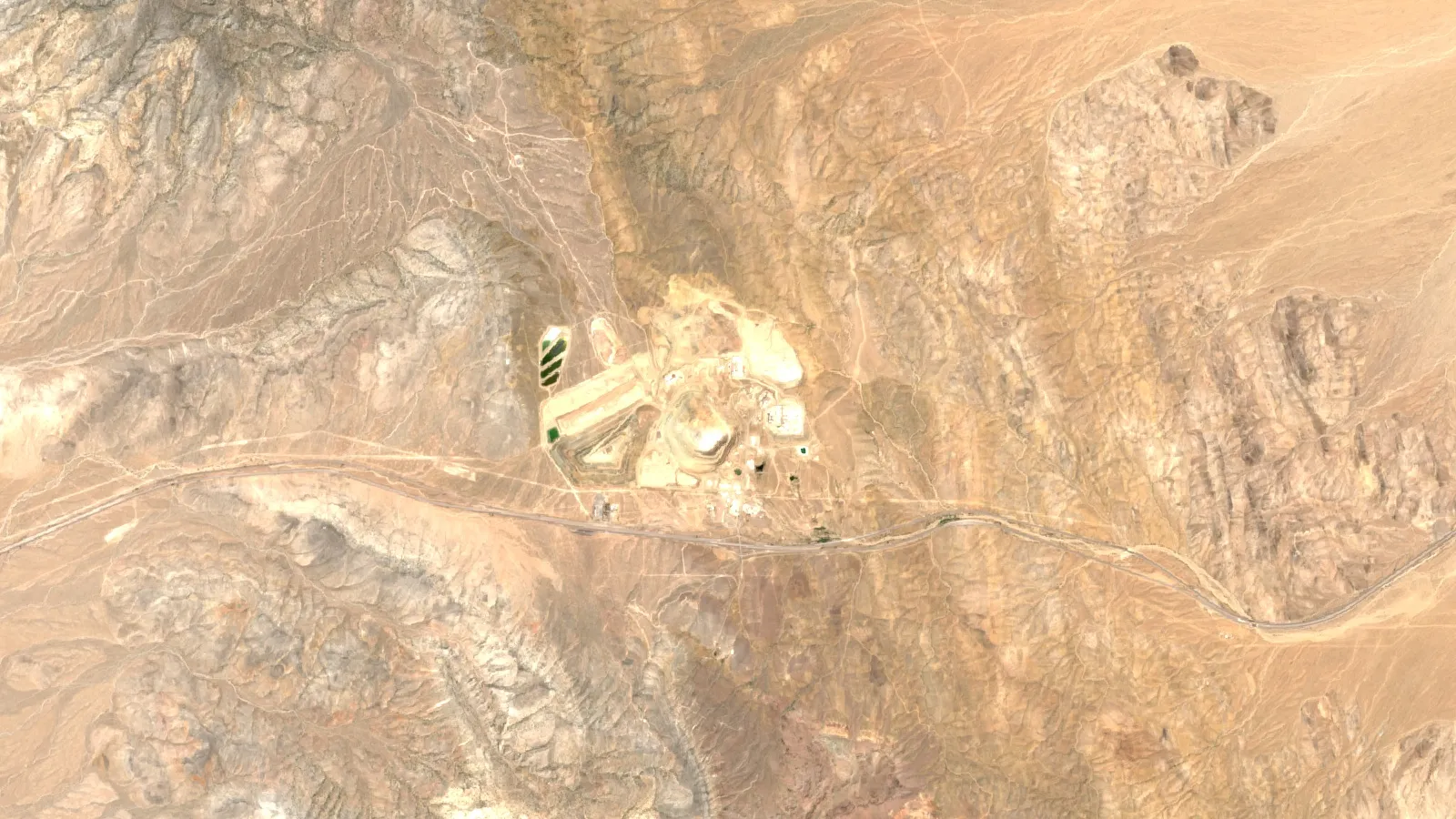
For a miner’s own project, a fund’s holdings file is only a start. Satellite images can screen the ground around a licence, but they do not replace drilling or a reserve estimate.
▶ Explains three limits of satellite exploration that matter in mining due diligence. · 2:08
Looking at the ground behind the holdings
An ETF holds shares, and the shares rest on licences and deposits. Farmonaut screens an area of interest from satellite images before ground crews go in, and takes KML, KMZ or polygon input; the output is an exploration target, not a resource estimate. Licence holders who want a quote can use our mining quote form, and the satellite mineral detection page describes the service. Our look at gold-miner funds, including how VanEck’s gold fund relates to mining costs, shows the same fund-versus-mine split.
▶ A short explanation of remote sensing for mining and the six instrument families behind it. · 2:01
Rare earth ETFs or rare earth stocks?
A fund spreads the risk of one mine failing across many companies, and a stock gives a direct stake in one company. Funds cost 0.53% to 0.69% a year in the table above, while a share has no annual fee but carries single-company risk. Funds also drag in metals you may not want: lithium in REMX, uranium in SETM. If you want one producer, read our rare earth stocks guide.
Frequently asked questions
What is the best rare earth ETF?
No fund is best for everyone. REXC has the tightest rare earth screen, REMX has the lowest fee and largest assets, and EART and SETM hold a wider range of metals. The right fit depends on whether you want China-listed shares, how much you accept paying in fees, and how much concentration you can live with. This page gives facts, not advice.
How many rare earth ETFs are there?
We found seven funds that pass our four tests and whose rules name rare earths, strategic metals or critical minerals: REXC, REMX, the VanEck UCITS fund, EART, SETM, XMET and WDIG. A UCITS version of REXC was announced on 23 September 2026. New funds launch often, so check issuer pages.
Is there a pure rare earth ETF?
REXC comes closest: its index needs at least 50% of revenue or assets from rare earths and bars Chinese-listed shares. Even so, it holds Neo Performance Materials, USA Rare Earth and several explorers, so the mix includes non-producers.
What does REMX hold?
On 14 October 2026 it held 32 stocks. SQM, Albemarle, China Northern Rare Earth, MP Materials and Pilbara Minerals were the five largest. Seven mainland China A-share lines added up to 28.2%.
What are the expense ratios of rare earth ETFs?
0.53% for REMX, 0.55% for WDIG, 0.59% for the VanEck UCITS fund and EART, 0.65% for REXC and SETM, and 0.69% management fee and costs for XMET (issuer pages and SEC reports).
Is there a rare earth ETF on the ASX?
XMET is the closest, but it is a critical-minerals fund with Lynas, MP Materials and Arafura at about 9% in total. For shares listed in Australia, see our ASX-listed guide linked above.
Are rare earth ETFs risky?
Yes. They are thematic, hold small and mid-size miners, and move with metal prices and export policy. REMX was down 24.27% year to date at 14 October 2026. The funds can also close if assets stay small.
Which fund has no Chinese companies?
Only REXC excludes Chinese-listed securities by rule. SETM showed 1.73% in China by country at 30 June 2026, and the EART and XMET rules do not ban Chinese companies, so check each holdings file.
Can I buy a rare earth ETF outside the US?
The VanEck UCITS fund is built for European platforms, and XMET trades on the ASX. Availability depends on your broker and your country’s rules for retail investors, so check with your broker first.
Where do the numbers on this page come from?
From the issuers’ own pages and SEC filings opened for this update, with the date beside each number. Percentages marked as our calculation come from the Sprott schedule of investments or the VanEck holdings file.
This page is for information only. It is not investment advice. Fund fees, holdings and assets change often; confirm them on the issuer’s page and in the prospectus before you decide.
Farmonaut mining
Screen the ground behind a miner's licence from space
Farmonaut screens an area of interest from satellite images before ground crews go in, and takes KML, KMZ or polygon input.

Mining Pro sample view, synthetic data
Keep reading
Sources
- VanEck, REMX fund page and daily holdings (14 October 2026): vaneck.com
- VanEck, Rare Earth and Strategic Metals UCITS ETF page: vaneck.com
- Global X, EART fund page (14 October 2026): globalxetfs.com
- Sprott Funds Trust, semi-annual shareholder report and schedules of investments (30 June 2026), SEC: sec.gov
- Sprott Funds Trust, prospectus including Rare Earths Ex-China ETF (April 2026), SEC: sec.gov
- Sprott Critical Materials ETF summary prospectus (30 April 2026), SEC: sec.gov
- WisdomTree, WDIG fund page (14 October 2026): wisdomtree.com
- BetaShares, Critical Minerals ETF (XMET) page (14 October 2026): betashares.com.au
- USGS, Mineral Commodity Summaries 2026: Rare Earths: pubs.usgs.gov
- ETF Express, Sprott and HANetf launch rare earths ex-China UCITS ETF (23 September 2026): etfexpress.com
- The Motley Fool, rare earth ETFs round-up (October 2026): fool.com
- Investor.gov, Updated Investor Bulletin: Exchange-Traded Funds: investor.gov
Discussion
Questions, corrections or field experience? Share them below. First-time comments are reviewed before they appear, and your email is never published.
No comments yet. Be the first to add a question or your experience.

 CIMISCO SARL
 Mining SARL
 SenGold Invest SAS
 Sania Corporation
 Sean Mining Limited
 NTS Group (Pty) Ltd
 Mine4Africa
 Lithspo Minerals Limited
 Tintina Mining Group
 Dalgety Minerals Pty Ltd
 Vortex Minerals Pty Ltd
 Faith At Work (Pty) Ltd
 Geotech Mining Solutions plc
 Vulcan International Limited
 Kidepo Associates
 GKY Mining
 Alkimy SARL
 Double A Trading
 GemSprout Metals Limited
 Qader Group
 Ileys General Trading
 SG Gold Mining LLC
 VRV Global Pte Ltd
 Omsri International FZE










