

Bioheap Leaching: 5 Sustainable Mining Trends 2025
Meta Description: Bioheap leaching is revolutionizing sustainable mining in 2025. Discover how this eco-friendly technique transforms metal extraction, reduces emissions, waste, and makes mining greener and more efficient.
Introduction: Revolutionizing Mining for 2025
The mining sector is facing a turning point as global demand for metals surges in 2025 and beyond. From electric vehicles to digital infrastructure, technological advancements and green development are rapidly increasing the need for critical raw materials. However, traditional mining methods — such as energy-intensive smelting and chemical leaching — produce significant environmental emissions, toxic byproducts, and waste.
To align with global sustainability priorities, the industry is searching for solutions that are both environmentally and economically viable. This is where bioheap leaching emerges as a transformative, sustainable mining technique — revolutionizing the way valuable metals are extracted from even the lowest grade ores and mining waste in 2025.

What is Bioheap Leaching?
Bioheap leaching is a state-of-the-art biohydrometallurgical process that leverages the power of naturally occurring or engineered microorganisms to extract metals from ores and mining tailings. Unlike traditional methods — which often rely on smelting, high-temperature chemical leaching, or hazardous chemical agents — this technique harnesses the unique metabolic activities of acidophilic bacteria and archaea.
These microorganisms catalyze a series of biochemical reactions, oxidizing mineral sulfides and breaking down metal ores piled in heaps. This process efficiently liberates and solubilizes valuable metals such as copper, gold, nickel, cobalt, and uranium, even from ore grades previously considered economically unfeasible.
In 2025, bioheap leaching is increasingly recognized as a sustainable and scalable solution in the mining industry — aligning perfectly with the sector’s evolving environmental priorities.
How Bioheap Leaching Works: The Biohydrometallurgical Process
Let’s break down the process flow of bioheap leaching:
- Stacking/Piling:
Low-grade ore or mining waste is stacked into large engineered heaps on prepared impervious pads. - Inoculation:
The heap is irrigated with an aqueous solution containing a select microbial consortia (acidophilic bacteria and archaea, either naturally occurring or engineered). - Irrigation:
Continuous or intermittent irrigation is maintained with nutrient-rich, sometimes recycled, process solutions, allowing the microbes to thrive and catalyze oxidation reactions. - Biochemical Reactions:
As microbial metabolic activities progress, sulfide minerals are oxidized, liberating metals into a leachate solution. - Leachate Collection:
The resulting metal-rich leachate is collected through a network of drainage channels beneath the heap. - Metal Recovery:
The leachate is processed using methods such as solvent extraction, electrowinning, or precipitation to reclaim pure metals. - Residual Management:
Spent heaps are managed for environmental safety, and in some cases, further remediation or carbon capture strategies are implemented to maximize sustainability.
This biohydrometallurgical approach is at the core of modern, green mining — maximizing resource efficiency and minimizing waste and negative environmental impact.

Comparative Benefits Table: Sustainable Mining Methods Compared
One of the most compelling aspects of bioheap leaching is how it measures up against established extraction techniques on sustainability metrics.
| Mining Method | Estimated CO₂ Emissions Reduction (%) | Water Consumption Reduction (%) | Hazardous Waste Generation Reduction (%) | Cost Efficiency (%) | Projected Adoption Rate by 2025 (%) |
|---|---|---|---|---|---|
| Bioheap Leaching | 30–40 | 35–50 | 45–60 | 20–30 | 40+ |
| Traditional Heap Leaching | 10–15 | 12–20 | 10–20 | 10–15 | 25–30 |
| Conventional Mining | 0 | 0 | 0 | 0 | 30–35 |
Note: Figures are estimated ranges based on current published data and expert projections for 2025. Cost efficiency refers to operational cost savings compared to baseline conventional mining.

Advantages of Bioheap Leaching in 2025
Environmental Sustainability
- Lower Emissions: Operating at ambient temperatures and atmospheric pressures, bioheap leaching produces drastically reduced greenhouse gas emissions and a smaller carbon footprint compared to pyrometallurgical smelting methods.
- Less Hazardous Waste: No need for harsh reagents; microbial reactions avoid forming hazardous waste and reduce overall toxic byproducts.
- Reduced SO2 Emissions: As bioheap leaching does not rely on the high-temperature oxidation of sulfides, sulfur dioxide (SO2) emissions are minimized.
Economic Efficiency & Viability
- Recovering Value from Low-Grade Ores: Many ore bodies deemed uneconomical by conventional methods become viable sources of metal through the process of bioheap leaching.
- Extended Mine Life: Enables mining operators to tap into previously regarded “waste” or tailings, maximizing resource utilization.
- Lower Operational and Capital Costs: Compared to traditional extraction, bioheap leaching significantly reduces the need for large-scale energy infrastructure or hazardous chemical handling.
Environmental Impact Control
- Land Preservation: Heaps can be engineered to suit challenging terrain, reducing the impact on surrounding land, forests, and ecosystems.
- Advanced Waste Management: Tailings and spent heaps can be rehabilitated with modern engineering and even used for additional recovery or carbon sequestration.
Process Scalability & Flexibility
- Flexible Heap Designs: Modular heap set-ups mean scalability to suit project size and resource availability.
- Tailored Microbial Consortia: Use of site-specific or engineered microbial consortia adapts bioheap leaching to a range of mineral chemistry and climate conditions.
- Real-Time Monitoring: The integration of biosensors, AI-driven process control, and satellite monitoring (such as Farmonaut’s fleet and resource management tools) further improves safety, reliability, and efficiency.

Bioheap Leaching: 5 Sustainable Mining Trends in 2025
As bioheap leaching matures in the global mining industry, the following five trends define the path forward for sustainable, efficient, and eco-friendly metal extraction in 2025 and beyond:
-
1. Genetically Engineered Microbial Consortia
Ongoing biotechnology advances are producing robust, custom-tailored microbes that can withstand challenging conditions and process ores faster. Engineered strains show increased metal recovery yields and greater tolerance for toxic elements present in complex mineral bodies.
-
2. Real-Time Process & Environmental Monitoring
The use of satellite-based monitoring systems, such as those offered by Farmonaut, along with IoT sensors, enables continuous oversight of heap stability, oxidation reactions, and emissions. This provides actionable intelligence to optimize irrigation schedules, nutrient dosing, and safety.
-
3. Renewable and Green Energy Integration
Bioheap operations are increasingly powered by solar or wind energy, reducing reliance on fossil fuels. Automated irrigation systems are now frequently driven by renewable resources, multiplying sustainability gains.
-
4. Combined Metal Recovery and Carbon Sequestration
Future bioheap leaching sites are designed not just for metal extraction but also for carbon capture and mineral carbonation — potentially turning mining heaps into long-term environmental assets.
Farmonaut’s carbon footprinting tools help industry actors track and manage these efforts for compliance and sustainability reporting. -
5. Blockchain-Based Traceability and Circular Economy
Stakeholders and governments are increasingly adopting blockchain-based traceability tools — ensuring ethical sourcing and transparent supply chains.
Farmonaut’s blockchain traceability platform is supporting accountability in mining and sustainable resource management globally.

Recent Innovations Shaping the Future of Bioheap Leaching
Rapid technological advancements in 2025 are accelerating bioheap leaching’s evolution as a mainstream, viable solution for eco-friendly mining:
-
AI-Driven Process Optimization:
Sophisticated models predict and control microbial population dynamics, optimizing conditions for maximal metal recovery.
Real-time process analytics, like those in Farmonaut’s large-scale resource management suite, enable remote management and continuous efficiency improvements. -
Sensor-Enhanced Irrigation Control:
Precise irrigation management reduces water use, prevents run-off, and maintains ideal biochemical reaction environments. -
Advanced Heap Engineering:
New materials and eco-compatible liners enhance heap integrity, minimizing risk of leaks and environmental contamination. -
Synergy with Satellite Remote Sensing:
Integration with high-resolution multispectral imaging (as delivered by Farmonaut and similar providers) improves heap monitoring, tracks environmental **impact**, and streamlines regulatory compliance. -
Digital Supply Chain Integration:
From extraction to final product, data-driven traceability ensures responsible stewardship and full transparency.

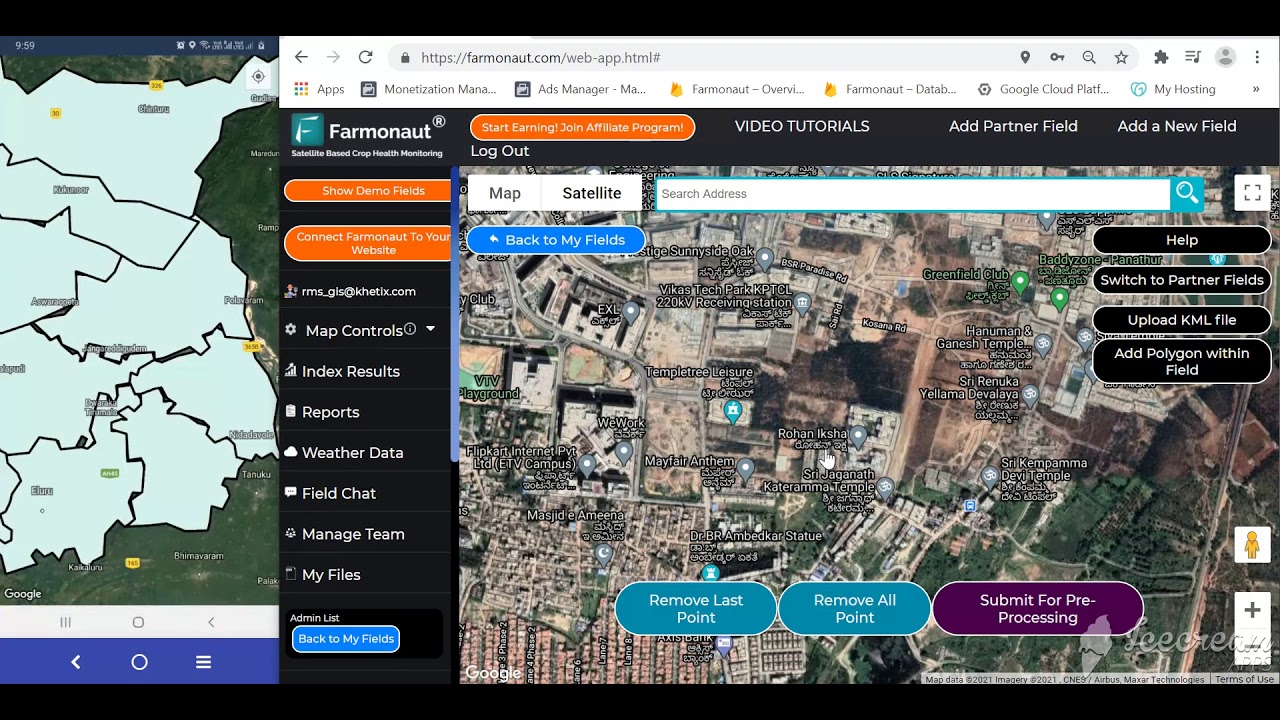
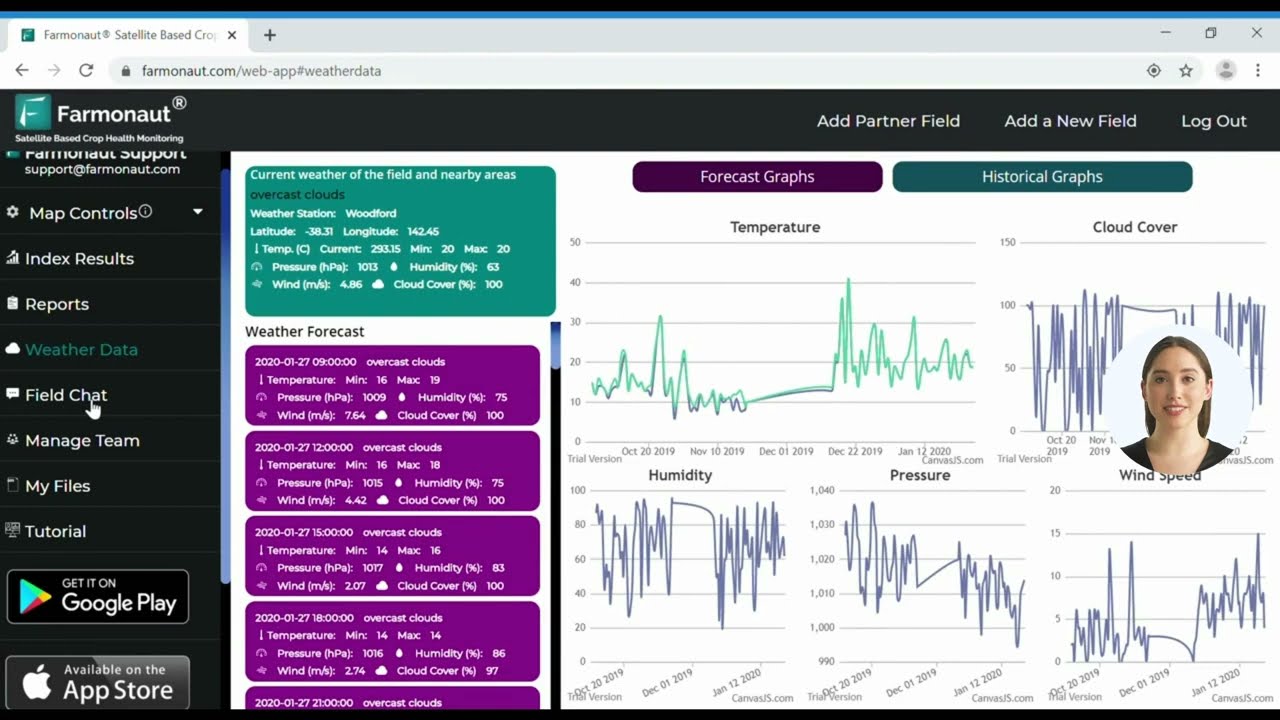
How Satellite Technology (Farmonaut) Supports Sustainable Mining in 2025
The rise in bioheap leaching adoption is paired with the evolution of satellite-based technologies. Farmonaut plays a pivotal role in making this possible by providing:
-
Real-Time Mining Site Monitoring:
Our satellite imagery tools deliver up-to-date views of heap conditions, land use, and ecological trends, empowering better operational and environmental management. -
AI-Based Advisory Systems (Jeevn AI):
Sat-data and AI enhance decision-making in heap construction, irrigation timing, and process adjustments, leading to increased efficiency and safer operations. -
Blockchain Traceability:
Our traceability solutions help mining operators, manufacturers, and governments assure consumers and regulators of responsible metal sourcing. -
Environmental Footprint Monitoring:
Tools like carbon footprinting enable mining projects to track, minimize, and report carbon emissions and environmental impact efficiently. -
Resource and Fleet Management:
Optimize fleet logistics, reduce idle time, and decrease fuel & emissions through integrated fleet management tools.



Developers can also integrate real-time satellite data and mining analytics using our API and detailed API documentation for tailored mining solutions.
If you are a business, government agency, or individual keen on optimizing your mining operations’ environmental and economic performance, discover how you can leverage Farmonaut’s modular and scalable subscription options below:
Challenges and Limitations of Bioheap Leaching
As transformative as bioheap leaching is, some critical challenges remain for the mining sector:
- Relatively Slower Kinetics:
Biohompetallurgical reactions tend to be slower than traditional chemical leaching or pyrometallurgical processes, sometimes taking weeks to months for complete metal recovery. - Sensitivity to Environmental Conditions:
The microbial communities facilitating extraction are highly sensitive to pH, temperature, oxygen and nutrient availability, and can be disrupted by fluctuating weather. - Risk of Environmental Contamination:
Poor heap design or inadequate runoff control may risk leachate leakage and heavy metal pollution if not engineered and managed carefully. - Ore-Specific Parameters:
Not all ores or tailings are amenable to bioheap leaching. Custom engineering of heaps, microbial consortia, and process flow is sometimes required. - Regulatory and Social Acceptance:
Some jurisdictions require robust demonstration of environmental safety before granting permits for large-scale bioheap leaching projects.
Continuous innovation in heap management, environmental monitoring, and microbial biotechnology is essential to overcome these challenges and ensure the global mining industry fully realizes the potential of this sustainable technique.
FAQ: Bioheap Leaching and Sustainable Mining
What metals can be extracted using bioheap leaching?
Bioheap leaching is particularly effective for extracting copper, gold, nickel, cobalt, and uranium from low-grade ores and mining waste.
Is bioheap leaching environmentally safe?
Yes, bioheap leaching minimizes greenhouse gas emissions, reduces toxic waste production, and uses naturally occurring or engineered microorganisms, making it significantly safer for the environment compared to traditional methods.
How does bioheap leaching compare to traditional heap leaching?
Bioheap leaching relies on microbial action rather than chemical agents. This leads to better environmental outcomes, higher cost efficiency, and lower resource consumption. See our comparative table above for more details.
Can bioheap leaching be used at every mining site?
Not all ore bodies are suitable for bioheap leaching. Each site should be evaluated for mineralogy, environmental conditions, and logistical feasibility.
How do satellite and digital technologies support bioheap leaching?
Satellite technologies, such as those provided by Farmonaut, allow real-time site monitoring, environmental impact tracking, and process optimization, making bioheap leaching more efficient and scalable for modern mining operations.
How can blockchain add value to bioheap leaching operations?
Blockchain provides secure, transparent documentation for the entire mining value chain, supporting ethical sourcing and enabling regulatory compliance — critical for sustainable mining.
Conclusion: The Path to Green Mining in 2025 and Beyond
Bioheap leaching marks a paradigm shift in sustainable mining practices, allowing for valuable metal recovery from low-grade ores and mining waste while dramatically reducing environmental impact. As clean energy, technology advancement, and responsible resource management shape the world’s evolving priorities in 2025, bioheap leaching is set to be a cornerstone of eco-friendly, efficient mining.
Progressive companies, governments, and researchers embracing this transformative technique are not only responding to increasing global demand for metals but are also honoring the urgent need for sustainability and stewardship.
Through integrating satellite technology, AI, blockchain, and advanced process engineering, solutions such as those provided by Farmonaut empower mining operators with the data-driven, scalable, and affordable tools needed to thrive in this new age of responsible mining.
Stay ahead of the 2025 sustainable mining revolution. Optimize your operations and environmental impact with Farmonaut’s innovative, satellite-based solutions:
Explore our large scale management suite for resource optimization, or utilize satellite-based verification for improved mining project insurance. Start building a greener mining future, today.

 Enterprise Takreem
 Sean Mining Limited
 NTS Group (Pty) Ltd
 Mine4Africa
 Lithspo Minerals Limited
 Tintina Mining Group
 Dalgety Minerals Pty Ltd
 Vortex Minerals Pty Ltd
 Faith At Work (Pty) Ltd
 Geotech Mining Solutions plc
 Vulcan International Limited
 Kidepo Associates
 GKY Mining
 Alkimy SARL
 Double A Trading
 GemSprout Metals Limited
 Qader Group
 Ileys General Trading
 SG Gold Mining LLC
 VRV Global Pte Ltd
 Omsri International FZE
 G.I.T.T.
 Jaunita Erss Ltd
 SRK Consulting
 Berks Gold Limited
