

Coal blasting · Buyer guide
Coal Bulk Mining Explosives: Costs, Suppliers, Safety
Bulk explosives (ANFO and emulsions) took about 65% of 2025 mining-explosives spending, and coal about 58% of the total. Compare bulk and packaged product, check the price index, suppliers and legal blast limits, then run your own cost.
Key takeaways
- Bulk products held 65.12% of global mining-explosives value in 2025 and coal mining 58.34% (Mordor Intelligence, 2026 update).
- Surface mines gave 305.8 of 512.0 million short tons of US coal in 2024, about 60% (EIA Annual Coal Report 2024).
- The BLS producer price index for explosives manufacturing rose from 330.0 in January 2019 to 485.1 in September 2026, about 47%.
- Federal surface coal rules cap peak particle velocity at 1.25, 1.00 or 0.75 in/s by distance, and underground coal allows only MSHA-approved permissible explosives.
- MSHA recorded five coal mine fatalities in fiscal 2025, down from 11 in fiscal 2024.
In this article
- Bulk vs packaged coal explosives: which one fits which hole
- How surface coal mines use bulk explosives
- Which surface method uses the explosive
- Water resistant explosives and when ANFO fails
- Coal packaged explosives: where they still fit
- Underground mining explosive suppliers: the permissible rule
- Mining explosives prices and what drives them
- Calculate your own explosive spend per tonne of coal
- Mining explosives market: size, shares and growth
- Surface mining explosive suppliers: who sells and how to vet them
- Blast limits and safety numbers for surface coal
- Environmental effects of surface blasting
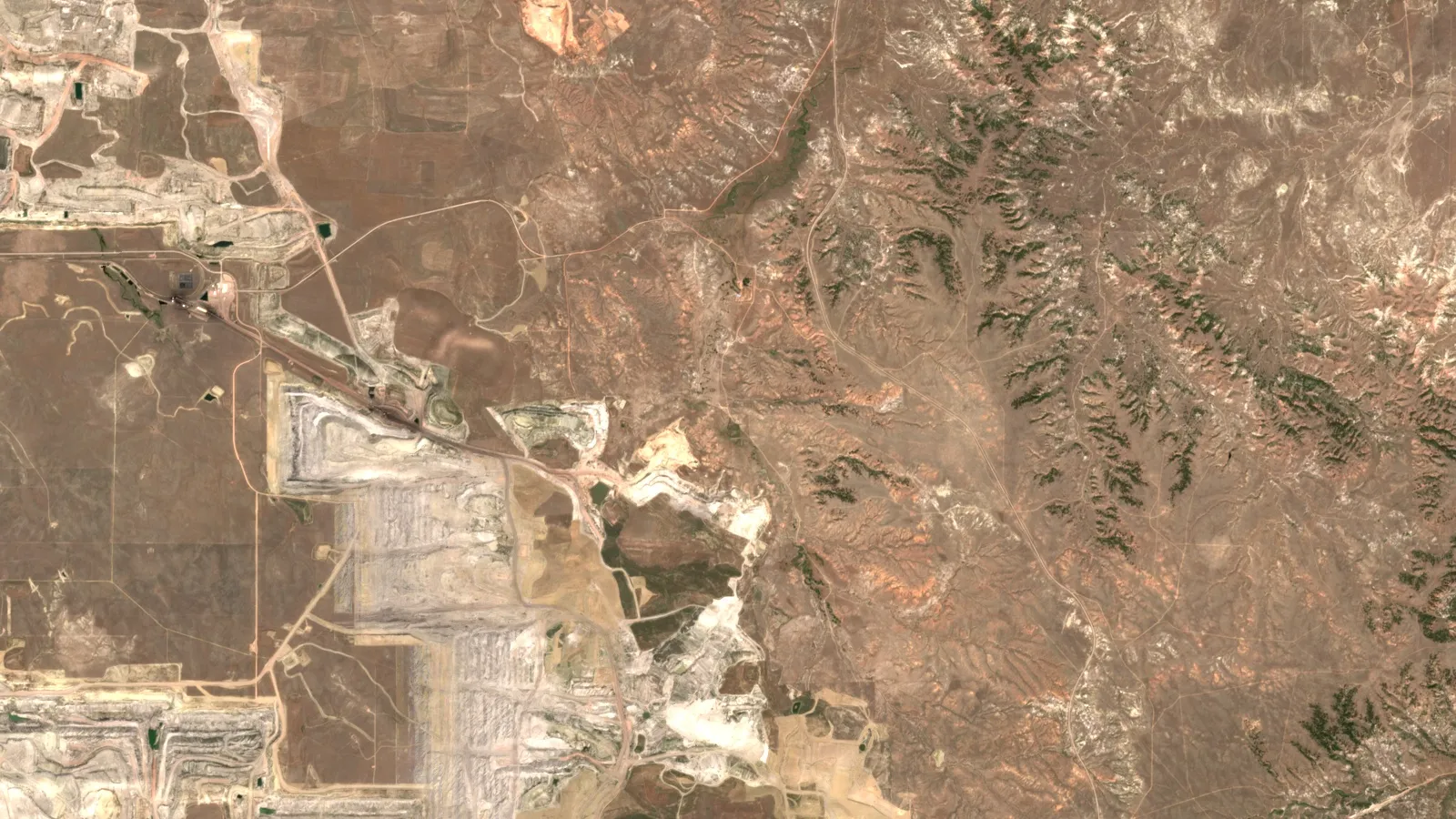
- Where satellite data helps a blasting operation
- Frequently asked questions
Coal bulk mining explosives are ammonium-nitrate blends, mainly ANFO (ammonium nitrate and fuel oil) and emulsions, that a truck mixes at the pit and pumps straight into the blast hole. Packaged coal explosives are factory-sealed cartridges loaded by hand. Bulk products took about 65% of global mining-explosives spending in 2025 and coal mining took about 58% of all mining-explosives value, according to Mordor Intelligence. In the United States, surface mines supplied about 60% of 2024 coal output (EIA Annual Coal Report 2024), which is where large bench blasting takes place.
This page gives the numbers a mine buyer or operator needs: how bulk and packaged products compare, what drives the price (with the US producer price index for explosives), who the suppliers are and how to vet them, the legal blast limits that cap your charge size, and a calculator for your own explosive spend. Prices change, so every figure carries its source and date.
Bulk vs packaged coal explosives: which one fits which hole
Both families use the same base chemistry. The difference is where the product is made and how it gets into the hole. A mobile manufacturing unit (MMU) is a truck that carries non-explosive ingredients and blends them at the blast site. Packaged product is made and sealed in a plant, then shipped as finished explosive.
| Question | Bulk (ANFO, heavy ANFO, bulk emulsion) | Packaged (cartridges, water gels, sleeved ANFO) |
|---|---|---|
| How it is loaded | Pumped or augered from a truck into the hole | Placed by hand or lowered by line |
| Share of global 2025 value (Mordor) | 65.12% | 34.88% |
| Forecast growth, 2026 to 2031 (Mordor) | Not published separately (whole market: 3.60% a year) | 3.93% a year |
| Best fit | High-tonnage strip and open-pit benches with many holes | Wet or flowing holes, small shots, trim and presplit rows, confined headings |
| What you need on site | Truck access, a supplier service contract, bulk storage rules | A licensed magazine and case-by-case ordering |
| Main risk | Plain ANFO dissolves in standing water | Slower to load hole by hole than a pumped bulk product |
The 65.12% and 3.93% figures are market-research estimates from Mordor Intelligence (report updated 2026), not audited trade data. Use them for direction, then price your own mine with the calculator below.
How surface coal mines use bulk explosives
Most blasting in US coal happens on the surface, where rock above the seam (overburden) must be broken before draglines, shovels or trucks move it. The EIA Annual Coal Report 2024 counts 339 surface mines producing 305.8 million short tons and 177 underground mines producing 206.2 million short tons that year. A short ton is 2,000 pounds.
Chart
US coal production by mine type
Million short tons, 2020 to 2024
Surface output fell from 359.7 million short tons in 2023 (EIA Annual Coal Report 2023), which cuts the number of holes drilled and the volume of explosive bought. Orica, a large explosives maker, told investors in September 2025 that lower thermal coal demand reduced its volumes in the United States and Indonesia (Orica ASX announcement, 5 September 2025).
The five steps of a bulk coal blast
- Design. The blaster sets hole depth, spacing and burden from the geology and the dig plan. Under US surface coal rules, blasts using more than 5 pounds of explosive must follow a published schedule, and a certified blaster must direct the work (30 CFR 816.61).
- Drilling. Rigs drill the pattern. Water in the holes decides the product choice.
- Loading. The truck meters ANFO or emulsion into each hole, then crews add stemming (inert crushed rock) on top.
- Initiation. Detonators fire holes in a timed order. Electronic detonators held 39.38% of the initiation market in 2025 and can cost up to nine times as much as non-electric ones, per Mordor.
- Monitoring. The peak-particle-velocity limits come with a requirement for a seismographic record of each blast, while the scaled-distance equation is the alternative that sets charge size without seismic monitoring (30 CFR 816.67).
Which surface method uses the explosive
EIA splits 2024 surface output by method. Open-pit and contour-strip mining each produced more than 130 million short tons, so most blasted overburden sits in these two methods. Area mining, auger and highwall work, and mountaintop removal were small by comparison.
Chart
US surface coal output by mining method, 2024
Million short tons

▶ Strip mining pros and cons, a plain-language look at the surface method behind most coal blasting. · 4:37
Water resistant explosives and when ANFO fails
ANFO is built from porous ammonium nitrate prills. Prills dissolve in water, which weakens the charge and can wash nitrate into groundwater. Emulsions hold the nitrate inside tiny droplets coated in fuel, so they tolerate wet holes better.
Vermont’s environmental guidance for blasters is a practical checklist. It says to remove water from a hole before loading ANFO, to use water-resistant ANFO in holes that refill from groundwater, to load bulk emulsion from the bottom up so it does not mix with standing water, and to switch to packaged product where groundwater is artesian or flowing (Vermont Agency of Natural Resources, December 2016). It is a state guide, not a coal-specific rule, but the same physics applies in a wet Appalachian or Illinois Basin pit.
Rule of thumb for buyers: if you must pump holes dry before every shot, ask your supplier to price a bulk emulsion or a blend against dewatering time and failed-hole risk, not against price per kilogram alone.
Coal packaged explosives: where they still fit
Coal packaged explosives win when the job is too small, too wet or too tight for a mixing truck. Typical uses are trim and presplit rows along a final highwall, secondary breaking of oversize rock, short programs where a mobile unit would sit idle, and isolated holes in flowing water. Mordor puts the packaged segment’s growth at 3.93% a year to 2031, slightly above the market as a whole, and links that to deeper underground work and narrower environmental buffer zones.
Cartridge product is stored in a magazine until use. Anyone who makes, deals in or moves explosives across state lines needs a federal license or permit from ATF; a user who buys in the home state on no more than six occasions in 12 months can hold a limited permit (27 CFR 555.41). Mine operators that buy through a licensed blasting contractor often leave this to the supplier, but the rule explains why packaged product is ordered and tracked case by case.
Underground mining explosive suppliers: the permissible rule
Underground coal is a narrower market. Federal rules allow only permissible explosives, approved sheathed explosive units and permissible blasting units underground (30 CFR 75.1310). Permissible means MSHA has tested and approved the product for use in gassy coal mines; Part 15 sets the approval requirements for underground coal mines and certain gassy underground metal and nonmetal mines (30 CFR 15.1). Black blasting powder may not be taken underground (30 CFR 75.1310(b)), and no more than 48 hours of explosive may be kept in an underground magazine (30 CFR 75.1312).
That approval step shrinks the supplier list. When you request quotes for an underground mine, ask each supplier for the MSHA approval number of every product and detonator, and check it against MSHA’s approved list before you sign.
Explosives also matter less to underground coal tonnage than to surface coal. Of 206.2 million short tons mined underground in 2024, 112.8 million came from longwall and 92.8 million from continuous miners, with only 0.6 million from other methods (EIA Table 3, Annual Coal Report 2024). Longwall and continuous miners cut coal with machines.
Mining explosives prices and what drives them
There is no public exchange price for ANFO or bulk emulsion. Contracts are priced per tonne of product or per hole, and they often include the truck, the crew and the blast design. The best public gauge is the US Bureau of Labor Statistics producer price index for explosives manufacturing. It stood at 330.0 in January 2019 and 485.1 in September 2026 (base December 1980 = 100), a rise of about 47% (BLS series PCU325920325920 via FRED, updated 15 October 2026).
Chart
US explosives producer price index
BLS index, December 1980 = 100, each January
Two cost drivers show up in public data. First, ammonia, the feedstock for ammonium nitrate. USGS reports a Gulf Coast price of US$440 per short ton in 2024 and an estimated US$450 in 2025, down from US$1,070 in 2022; about 88% of US ammonia goes to fertilizer, with explosives among the smaller uses (USGS Mineral Commodity Summaries 2026, nitrogen). Second, trucking and labor: Mordor reports a shortage of hazmat-endorsed drivers in North America that raises delivered cost, and says on-site mixing units cut hazardous-goods trucking distance by as much as 60%.
Put the explosive bill in context. EIA gives the 2024 average sales price of surface-mined coal as US$29.61 per short ton, against US$85.88 for underground coal (EIA Annual Coal Report 2024). A surface mine with low-priced coal has little room for blast mistakes, which is why powder factor (kilograms of explosive per bank cubic metre of rock) is tracked closely.
Calculate your own explosive spend per tonne of coal
The calculator below turns your overburden volume, powder factor and the bulk and packaged prices you are quoted into a total bill for the period and a cost per tonne of coal uncovered. Every default is an example, not a benchmark: use your drill-and-blast design and today’s supplier quote.
Calculator
What does explosive cost per tonne of coal?
Enter your own overburden, powder factor and quoted prices.
- Total explosive (kg): 175,000
- Bulk cost (US$): $94,500
- Packaged cost (US$): $35,000
- Cost per bcm (US$): 0.26
- Cost per tonne of coal (US$): 0.86
Examples only, not benchmarks. Powder factor is kilograms of explosive per bank cubic metre (bcm) of rock; take it from your blast design. Prices are inputs: example, use today’s price and your supplier quote. Excludes drilling, detonators, stemming and labor.
Mining explosives market: size, shares and growth
Mordor Intelligence sizes the global mining explosives market at US$13.56 billion in 2025, US$14.05 billion in 2026 and US$16.77 billion by 2031, a 3.60% compound annual growth rate. It says Asia-Pacific held 48.21% of 2025 value and the Middle East and Africa is the fastest-growing region at 3.99% a year. Coal mining took 58.34% of value in 2025, and quarry and aggregates are growing fastest by application at 4.06% a year.
| Measure | Figure | Source |
|---|---|---|
| Global mining explosives, 2025 | US$13.56 billion | Mordor Intelligence |
| Forecast, 2031 | US$16.77 billion | Mordor Intelligence |
| Bulk share of 2025 value | 65.12% | Mordor Intelligence |
| Coal mining share of 2025 value | 58.34% | Mordor Intelligence |
| Top five firms, share of 2024 revenue | Over 60% | Mordor Intelligence |
For the US mining explosives market specifically, the Institute of Makers of Explosives (IME) reports that the commercial explosives industry creates more than 60,000 jobs and contributes more than US$19 billion a year to the US economy, using 2023 data (IME economic impact study, as reported by ISEE, August 2024). That covers coal, metals, quarrying and construction together, not coal alone.
Surface mining explosive suppliers: who sells and how to vet them
A handful of global makers supply most large surface coal mines. Mordor says the top five firms held over 60% of 2024 revenue and names Orica, MAXAM, Dyno Nobel and Enaex among the leaders. The table lists suppliers whose own filings or websites confirm the facts shown. It is not a ranking and not an endorsement.
| Supplier | Verified detail | Source |
|---|---|---|
| Orica | ASX-listed; Blasting Solutions external sales of A$7,034.6 million in the year to September 2025 | Orica ASX filing, 7 May 2026 |
| Dyno Nobel Limited | Formerly Incitec Pivot, ASX ticker DNL since 2 April 2025 (ASX notice); company site cites over 3,770 employees, 32 manufacturing facilities on three continents and over 1.2 million tons of ammonium nitrate capacity; Americas, EMEA and Asia Pacific groups | Dyno Nobel website; name and ticker notice |
| BME (Omnia Group) | Division of JSE-listed Omnia, head office in Johannesburg; lists emulsion plants, a cartridge explosive facility, electronic detonator plants and MMU assembly | BME website |
| Austin Powder Company | Lists bulk explosives, E*STAR electronic detonators and blasting software | Austin Powder website |
| MAXAM, Enaex | Named among the leaders by Mordor Intelligence | Mordor Intelligence |
A five-point vetting list
- Ask for the federal explosives license or permit and check it with ATF (27 CFR 555.41 sets who needs which one).
- Check membership of IME, the US trade body for commercial explosives makers.
- For bulk service, ask for the cost per tonne loaded, truck standby charges and what happens when a hole is wet.
- For underground coal, ask for the MSHA approval of each product.
- Ask for the blast designer’s vibration and airblast predictions for your nearest house or road, then compare them with the limits below.
Blast limits and safety numbers for surface coal
Federal surface coal rules cap vibration and air overpressure at the nearest occupied building outside the permit area. Operators can show compliance by seismograph or by the scaled-distance equation W = (D / Ds)2, where W is the largest charge weight in pounds fired in any 8-millisecond period, D is the distance in feet to the nearest protected structure and Ds is the scaled-distance factor (30 CFR 816.67).
Chart
US coal mine fatalities by fiscal year
Deaths, operators and contractors
| Distance to nearest building | Peak particle velocity limit | Scaled-distance factor Ds | Example charge per 8 ms delay |
|---|---|---|---|
| 0 to 300 ft | 1.25 in/s | 50 | 36 lb at 300 ft |
| 301 to 5,000 ft | 1.00 in/s | 55 | 331 lb at 1,000 ft |
| Over 5,000 ft | 0.75 in/s | 65 | 8,521 lb at 6,000 ft |
The example charges are worked from the equation using the distance shown. Airblast limits in the same rule are 134 dB peak (0.1 Hz system), 133 dB peak (2 Hz) and 105 dBC for a C-weighted slow-response system. Flyrock must not travel beyond half the distance to the nearest occupied structure or beyond the permit boundary. State programs can be stricter, so read your permit.
On injuries, MSHA’s fiscal 2025 data show five coal mine fatalities, down from 11 in fiscal 2024 and 15 in fiscal 2019, with all-mining deaths at 28 (MSHA At A Glance, FY2025). In a separate MSHA safety alert, ten miners died between 3 January and 5 March 2025 across all mining; powered haulage caused four and explosives one (MSHA 2025 Fatalities Focus alert). Those ten deaths are a two-month snapshot, not an annual rate, and the alert covers all mining rather than coal alone.
Environmental effects of surface blasting
Four effects tie directly to the blast: ground vibration and air overpressure beyond the site boundary, flyrock, dust, and nitrate that escapes from spilled or dissolved product into water. The first three are capped by the federal limits above. The fourth is why regulators ask for water-resistant products in wet holes and prompt clean-up of spills at the collar of the hole, as the Vermont guide above sets out. For the wider picture of how coal is extracted and reclaimed, see our coal mining process guide, and for the wider safety picture see mining safety solutions ranked by hazard.
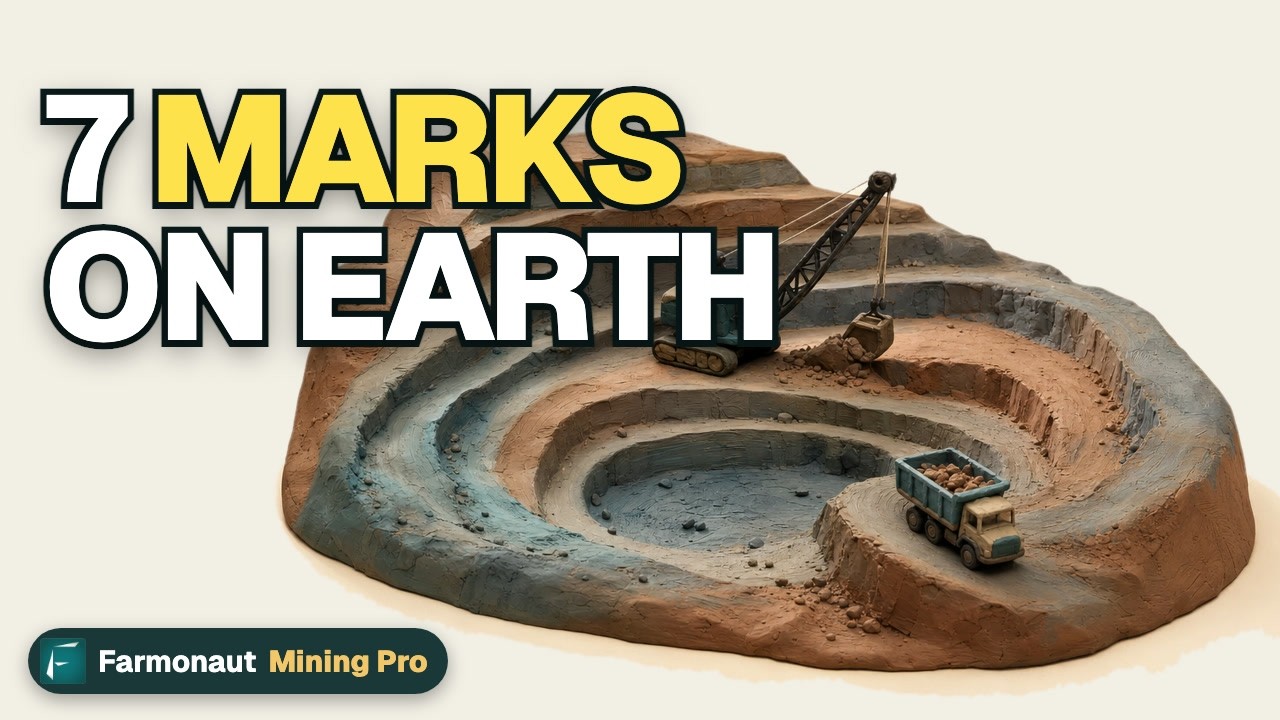
▶ The seven environmental impacts of mining, explained in clay animation. · 2:31
Where satellite data helps a blasting operation
Explosives are bought and fired on the ground, but disturbance around a pit is easy to see from space. Sentinel-2 imagery, open-access from the European Union’s Copernicus programme, shows bare ground, spoil placement and vegetation change at 10-metre pixels every few days. Farmonaut offers satellite monitoring and exploration mapping of a mine boundary from KML, KMZ or polygon input. The satellite view does not replace a seismograph or a blast log; it adds a repeat record of land change around the permit for reclamation checks and lender or regulator reports.
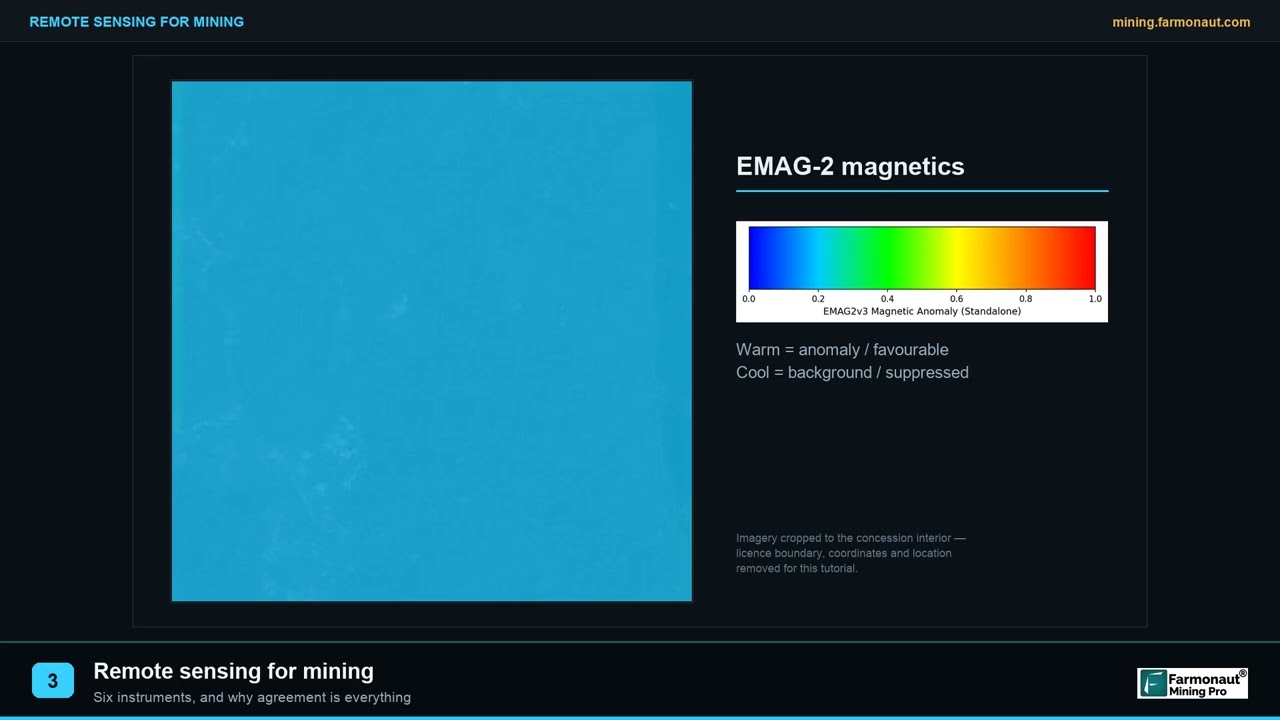
▶ A two-minute plain-language explainer of remote sensing for mining. · 2:01
Frequently asked questions
What is the difference between bulk and packaged coal explosives?
Bulk explosives (ANFO and bulk emulsions) are mixed at the pit and pumped into the hole. Packaged explosives are factory-sealed cartridges or sleeves. Bulk held 65.12% of global mining-explosives value in 2025 and packaged the remaining 34.88%, per Mordor Intelligence.
How much of the explosives market is coal?
Mordor Intelligence puts coal mining at 58.34% of global mining-explosives value in 2025. That is a global estimate; US coal demand is falling, and Orica reported lower US volumes in 2025 because of reduced thermal coal demand.
Is surface or underground mining bigger in US coal?
Surface. EIA reports 305.8 million short tons from surface mines and 206.2 million from underground mines in 2024, so surface mines gave about 60% of output.
Are ANFO and bulk emulsion the same thing?
No. ANFO is dry ammonium nitrate prills soaked in fuel oil and is not water resistant. An emulsion holds ammonium nitrate in fuel-coated droplets and resists water better.
What are water resistant explosives used for?
They are used in holes that stay wet. Vermont’s blasting guidance calls for water-resistant ANFO in holes that refill with groundwater after pumping and for packaged product where groundwater flows or is artesian.
Can underground coal mines use bulk ANFO?
Underground, federal rules allow only permissible explosives, approved sheathed units and permissible blasting units (30 CFR 75.1310). The product must carry MSHA approval, so check the approval before you buy.
How are mining explosives prices changing?
The BLS producer price index for explosives manufacturing rose from 330.0 in January 2019 to 485.1 in September 2026, about 47%. It is a national index, not a quote for your mine.
What license does a mine need to buy explosives?
Under 27 CFR 555.41, a user who buys from another state or buys on more than six occasions in 12 months needs an ATF user permit; a limited permit covers up to six purchases in the home state. Many mines buy through a licensed contractor, which holds the license.
What are the blast vibration limits near homes?
Federal surface coal rules cap peak particle velocity at 1.25 inches per second within 300 feet, 1.00 from 301 to 5,000 feet and 0.75 beyond 5,000 feet, and airblast at 133 dB peak for a 2 Hz system (30 CFR 816.67).
How do I find a mining explosive supplier?
Start with the suppliers in the table above, confirm the ATF license, ask for bulk service pricing per tonne loaded and, for underground coal, MSHA approval numbers. Request at least two quotes on the same blast design.
More from Farmonaut: large-scale operations app, web and mobile apps, carbon footprinting, loan and insurance verification, satellite and weather API, fleet management and product traceability.
This page is for information only. It is not investment advice and not legal advice. Confirm blasting, licensing and storage rules with MSHA, your state regulator and ATF.
Farmonaut mining
Get a quote to map your mine from space
Mine owners can send a boundary as KML, KMZ or polygon and request a quote for a satellite view of land change around the pit.

Mining Pro sample view, synthetic data
Keep reading
Sources
- EIA, Annual Coal Report 2024 (November 2025): eia.gov
- EIA, Annual Coal Report 2023: eia.gov
- EIA, Annual Coal Report 2022: eia.gov
- EIA, Annual Coal Report 2021: eia.gov
- EIA, Annual Coal Report 2020: eia.gov
- Mordor Intelligence, Mining Explosives Market (2026 update): mordorintelligence.com
- BLS via FRED, Producer Price Index: Explosives Manufacturing (PCU325920325920): fred.stlouisfed.org
- USGS, Mineral Commodity Summaries 2026: Nitrogen (fixed), ammonia: pubs.usgs.gov
- MSHA, Mine Safety and Health At A Glance, FY2025: msha.gov
- MSHA, 2025 Fatalities Focus safety alert: msha.gov
- 30 CFR 816.67, Use of explosives: control of adverse effects: law.cornell.edu
- 30 CFR 816.61, Use of explosives: general requirements: law.cornell.edu
- 30 CFR 75.1310, Explosives and blasting equipment (underground coal): law.cornell.edu
- 30 CFR 75.1312, Explosives and detonators in underground magazines: law.cornell.edu
- 30 CFR 15.1, Approval of explosives and sheathed explosive units: law.cornell.edu
- 27 CFR 555.41, Licenses and permits (ATF): law.cornell.edu
- Vermont ANR, Best Management Practices for Blasting to Avoid Environmental Contamination (2016): anr.vermont.gov
- IME economic impact study, reported by ISEE (August 2024): isee.org
- Orica, ASX business update (5 September 2025): announcements.asx.com.au
- Orica, ASX financial data (7 May 2026): announcements.asx.com.au
- Dyno Nobel, About us and company profile: dynonobel.com
- BME (Omnia Group), About us: bme.co.za
- Austin Powder Company, home page: austinpowder.com
- Dyno Nobel, change of company name and ASX ticker: dynonobel.com.au
Discussion
Questions, corrections or field experience? Share them below. First-time comments are reviewed before they appear, and your email is never published.
No comments yet. Be the first to add a question or your experience.

 Mwerezi Minerals Company Limited
 Congo Mining Solutions
 Mining SARL
 SenGold Invest SAS
 Sania Corporation
 Sean Mining Limited
 NTS Group (Pty) Ltd
 Mine4Africa
 Lithspo Minerals Limited
 Tintina Mining Group
 Dalgety Minerals Pty Ltd
 Vortex Minerals Pty Ltd
 Faith At Work (Pty) Ltd
 Geotech Mining Solutions plc
 Vulcan International Limited
 Kidepo Associates
 GKY Mining
 Alkimy SARL
 Double A Trading

 Licence holder · Nigeria · Gold + lithium










