

Underground Mining Safety Equipment & CIS Equipment Market
Reviewed August 2026 against EIA (US Energy Information Administration), MSHA (US Mining Safety and Health Administration), and Technavio market research.
Try it: Run your own numbers →
Underground mining safety equipment spans four categories that regulators and buyers actually compare: ventilation and gas detection, diesel particulate control, ground support (roof bolters and similar), and personal protective/proximity systems. In the United States, MSHA’s diesel particulate matter (DPM) standard under 30 CFR Part 70 and 75 caps what unequipped machinery can emit, and equipment without aftertreatment devices generates 1.2 to 1.8 grams per minute of diesel particulate matter — the baseline every retrofit or new-unit purchase decision gets measured against. Globally, the underground mining equipment market — including the Commonwealth of Independent States (CIS: Russia, Kazakhstan, Uzbekistan, Ukraine) — is projected to grow at a 5.1% compound annual growth rate from 2025 to 2030, according to Technavio. This article covers what that equipment actually does, what it costs the environment, and how CIS-specific market dynamics compare to what US buyers see in MSHA data.

Underground Mining Safety Equipment: What It Covers and What It Costs
“Underground mining safety equipment” is not one product — it’s a category that buyers, regulators, and safety officers break into distinct budget lines. The four that dominate procurement decisions:
- Diesel particulate and emissions control: aftertreatment devices, diesel oxidation catalysts, and filtration systems designed to bring equipment under the MSHA threshold. Without these devices, mining equipment generates 1.2–1.8 g/min of diesel particulate matter, per MSHA’s regulatory analysis of 30 CFR Part 70/75 — the figure every retrofit business case starts from.
- Ventilation and gas monitoring: sensor-driven airflow systems that respond to methane, carbon monoxide, and particulate concentration in real time rather than on a fixed schedule.
- Ground support and roof control: roof bolters and related systems that prevent collapse in the void left by extraction — arguably the single most safety-critical machine category underground.
- Proximity detection and personal protective systems: collision-avoidance sensors on mobile equipment and wearable gas/impact monitors for personnel.
Investment doesn’t split evenly across mine types. Underground operations account for 78% of total mining-sector safety equipment investment, versus surface operations, according to MSHA Safety Services’ review of current industry procurement data. That imbalance is the direct answer to why “underground mining safety equipment” as a search term behaves differently than generic “mining equipment”: underground conditions — confined ventilation, roof-fall risk, diesel exhaust with nowhere to disperse — force a category of spending that surface mines simply don’t carry at the same intensity.
For small-footprint operations, equipment sizing matters as much as equipment type — a roof bolter or ventilation unit designed for a wide seam doesn’t fit a narrow one. See our equipment sizing comparison at underground mining equipment for small spaces for how machine footprint constraints change the safety-equipment selection itself, not just the extraction method.
CIS Underground Mining Equipment Market Overview
The Commonwealth of Independent States — principally Russia, Kazakhstan, Uzbekistan, and Ukraine for underground mineral extraction — holds coal, precious metals, and industrial mineral deposits that are frequently accessed underground rather than by open pit, due to depth, permafrost, or steppe terrain that makes surface stripping impractical. The equipment used there — continuous miners, longwall systems, roof bolters, shuttle cars — is the same broad category sold into US and European underground coal and hard-rock mines, which is why CIS market sizing and safety-equipment standards get searched together: buyers comparing global suppliers want to know whether a machine built to one region’s ventilation or emissions spec transfers to another.
On growth: the global underground mining equipment market — a category that includes CIS demand alongside North America, Europe, and other regions — is forecast at a 5.1% CAGR from 2025 through 2030, per Technavio’s industry analysis. That is a global figure, not a CIS-only one; Technavio’s report is the source to check directly for any regional breakout, since a CIS-specific growth rate isolated from the global number is not separately published in the sources available for this review.
What is not centrally published, and worth stating plainly rather than guessing at: manufacturer-level market share for CIS-specific producers (regional players and CIS subsidiaries of international manufacturers), CIS-specific safety-technology adoption rates (proximity detection, gas detection penetration by mine), quantified contamination loads by specific CIS mining region beyond qualitative subsidence risk, and CIS equipment pricing or cost indices are not available in centralized public datasets as of this review. Where a reader needs current figures on any of these, the practical path is a direct data request to a commercial research firm covering the region (e.g., DataBridge Market Research, which updates CIS equipment forecasts annually and can be asked directly for a current-year projection) rather than relying on a static number in this article.
Specific Regional Environmental Concerns
- Russia: Mining in the Ural Mountains and Siberian permafrost increases land deformation risk and accelerates permafrost thaw, destabilizing infrastructure and releasing trapped greenhouse gases.
- Kazakhstan: The Karaganda coal basin is a recognized hotspot for subsidence and water contamination affecting nearby croplands and settlements dependent on river and groundwater systems.
- Uzbekistan: Mining in the Kyzylkum desert competes directly with agricultural water demand in a water-scarce zone, affecting cotton and wheat irrigation allocations.
- Ukraine: The Donetsk region’s coal mines have a documented history of underground fires, methane emissions, and ground instability affecting downstream water bodies.
These are qualitative risk findings from World Bank regional reporting — numerical contamination loads (heavy metals, radionuclide concentrations) disaggregated by specific operation are not published in a form this review could verify, and should not be estimated without a site-specific environmental assessment.

Underground Mining Equipment Manufacturers: What Distinguishes Them
Buyers searching “underground mining equipment manufacturers” are usually comparing on three axes, whether they’re sourcing for a CIS operation or a US one: automation level (fully autonomous vs. remotely operated vs. manual), emissions compliance (electric/hybrid vs. diesel-only), and regional service and parts support. A manufacturer’s published spec sheet will state automation tier and emissions class directly; what it typically will not state is region-specific field performance data, since that’s proprietary to individual operators and rarely appears in public filings.
A practical due-diligence checklist for comparing manufacturers, regardless of region:
- Diesel particulate output relative to the MSHA 1.2–1.8 g/min unequipped baseline — ask for the machine’s tested DPM output with and without aftertreatment fitted.
- Automation tier — fully autonomous, remote-operated, or manual — and whether retrofits to a higher tier are supported on existing fleet.
- Ventilation integration — does the machine’s control system expose real-time telemetry to a mine-wide ventilation network, or does it operate in isolation?
- Regional parts and service footprint — for CIS buyers specifically, confirm whether the manufacturer maintains a regional subsidiary or relies on import lead times, since that materially affects downtime cost.
- Water and dust suppression integration — misting or foam systems built into the chassis versus retrofitted aftermarket.
This page does not name individual manufacturer market-share figures for the CIS because unit-sales or revenue-per-producer data for specific companies is not published in a centralized, citable form — a gap worth stating rather than papering over with an invented percentage.
Environmental Impacts of Underground Mining Equipment
Equipment choice drives environmental outcome directly, and the two impacts with hard published figures are methane emissions and diesel particulate output.
- Methane and Air Emissions: Coal mining accounted for 7% of total US methane emissions in 2021, according to the EIA’s Coal and the Environment explainer. Underground coal mines vent methane liberated during extraction, and equipment choice — particularly ventilation system design — determines how much of that methane is captured or flared versus released. Check the EIA’s coal-and-environment page directly for the current-year figure, since methane totals are revised as EIA updates its energy data series.
- Diesel Particulate Matter: Equipment lacking aftertreatment devices generates 1.2 to 1.8 g/min of DPM, the baseline MSHA’s regulatory analysis of 30 CFR Part 70 and 75 was built against. This is a US regulatory standard; CIS jurisdictions do not have a centrally published equivalent DPM limit, so operators sourcing equipment for CIS mines should request manufacturer test data against whichever national standard applies, rather than assume MSHA’s threshold transfers directly.
- Land Subsidence: Underground voids can collapse the overlying land, threatening infrastructure, agriculture, and habitat — a documented risk in Siberian permafrost and Kazakh steppe terrain specifically, per World Bank regional risk assessments, though no numerical subsidence-area figure is centrally published for these regions.
- Water Contamination: Acid mine drainage leaches heavy metals into groundwater and surface water, a particular concern in Kazakhstan and Uzbekistan’s arid zones where irrigation water is already scarce.
- Extraction Ratio Context: For scale, underground gold mining processes roughly 12 tonnes of ore per ounce of gold produced, per MSHA Safety Services’ review — a ratio that illustrates why equipment throughput and waste-rock handling capacity are inseparable from the environmental footprint per unit of output, whatever the specific commodity.

For a fuller breakdown of underground mining’s environmental effects beyond equipment-specific emissions, see underground mining environmental impact: 7 key effects.
Legacy Equipment and Modernization Gap
Aging machinery without aftertreatment or dynamic ventilation compounds every impact above — sites still running equipment predating the MSHA DPM standard’s enforcement window sit at the upper end of the 1.2–1.8 g/min range or above it, since that figure describes equipment “without aftertreatment devices” specifically, not a ceiling for all equipment. Modernization is simultaneously a safety upgrade and an emissions upgrade; the two are not separable line items in most retrofit decisions.
How Equipment Innovation Cuts Environmental and Safety Costs
Four categories of innovation are doing the most measurable work, based on the equipment specifications reviewed here:
1. Electrification and Hybridization
- Electric loaders and haul trucks eliminate tailpipe diesel particulate output entirely at the point of use, sidestepping the 1.2–1.8 g/min MSHA baseline rather than reducing it — the emissions move to wherever the electricity is generated.
- Hybrid haul trucks combine electric motors with diesel engines to cut fuel consumption versus diesel-only equivalents, a relevant option where charging infrastructure for full-electric fleets isn’t yet built out — common in remote CIS operations.
2. Automation and Remote Operation
- Automated drills, bolters, and ore-transport systems remove personnel from the highest-risk zones directly — the same logic that puts 78% of safety equipment investment into underground rather than surface operations applies here: automation is a safety spend before it’s an efficiency spend.
- Real-time telematics let operators respond to gas or ventilation anomalies as they’re detected rather than on inspection cycles.
3. Ventilation, Dust, and Emissions Control
- Sensor-driven ventilation adjusts airflow to worker location and real-time gas/particulate readings, rather than running at a fixed rate regardless of actual conditions.
- Water-misting and foam dust suppression cut respirable dust at the source, addressing the same air-quality problem the MSHA DPM standard targets from the equipment-emissions side.
4. Water Management and Reuse
- Closed-loop water recycling limits acid mine drainage discharge and reduces external water draw — the specific pressure point in Uzbekistan and Kazakhstan’s arid mining zones.

For a broader framework on cutting equipment’s environmental footprint across categories, see sustainable equipment: 7 ways to cut environmental footprint.
Calculator: Diesel Particulate Exposure and Ventilation Requirement
Use MSHA’s 1.2–1.8 g/min unequipped baseline and your own fleet size to estimate total shift-level diesel particulate output and the airflow needed to keep concentration under control — adjust every input to your own fleet and mine conditions.
Run your own numbers
Assumptions: uses MSHA's published 1.2–1.8 g/min unequipped DPM range as the per-unit baseline; assumes all units operate simultaneously for the full shift length entered; does not calculate required cubic-feet-per-minute airflow (that depends on mine geometry and dilution ventilation standards specific to each site) and does not account for methane or other gas loads. For an actual ventilation design, consult a qualified mine ventilation engineer against your site's specific MSHA ventilation plan.
Satellite Monitoring as a Complement to On-Site Safety Systems
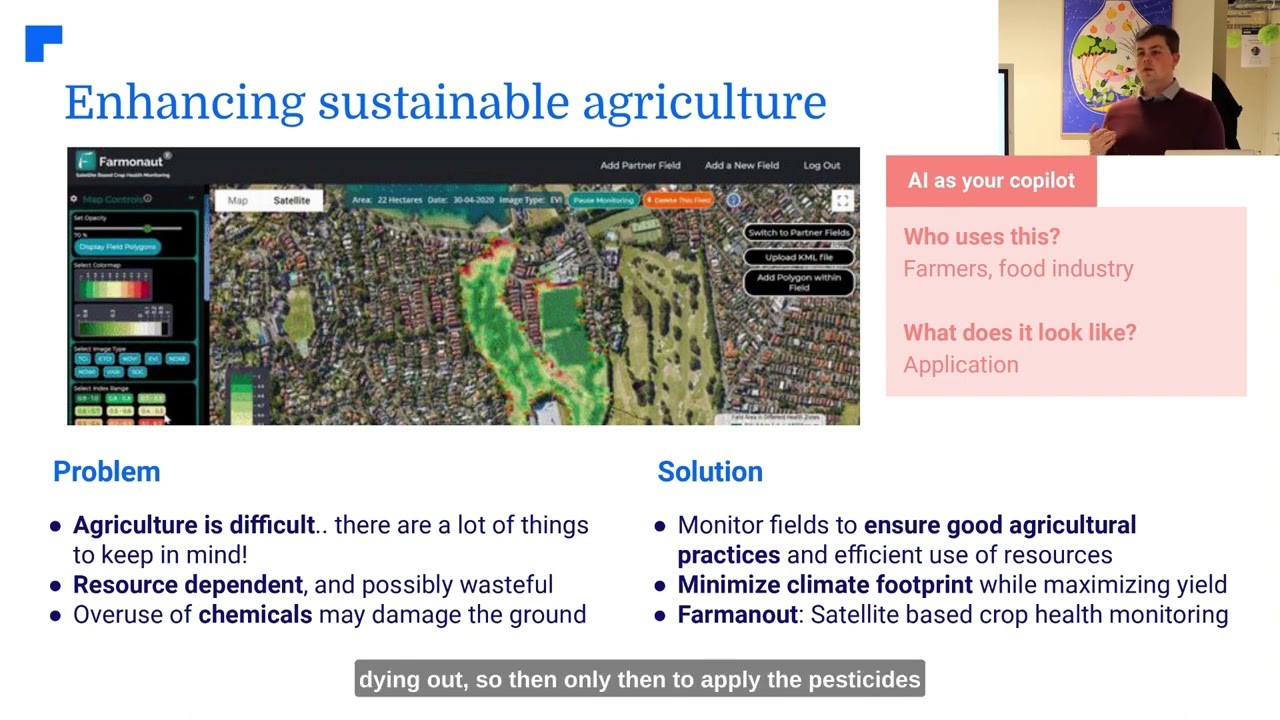
Underground safety equipment — ventilation sensors, DPM aftertreatment, proximity detection — covers what happens inside the mine. Satellite-based monitoring covers what happens at the surface and around the perimeter, which is where subsidence, vegetation stress, and water contamination first become visible before they reach a regulatory threshold. At Farmonaut, we deliver affordable, high-resolution satellite insights for mining operators, governments, and businesses working alongside underground operations in the CIS and globally.
How Farmonaut Supports Mining Operations Above Ground:
- Real-Time Environmental Monitoring: Continuous tracking of surface indicators near mining sites — water contamination signals, land subsidence, and vegetation health — that complement underground sensor data.
- AI-Based Advisory Systems: Jeevn AI provides tailored guidance on environmental risk mitigation around mining operations.
- Blockchain Traceability: Supply chain transparency from extraction to export for ore, minerals, and logistics. See Product Traceability.
- Carbon Footprint Tracking: Carbon footprint monitoring for mining operations to support sustainability reporting. See Farmonaut Carbon Footprinting.
- Fleet and Equipment Management: Tools to maximize usage efficiency of mining equipment fleets, including underground safety equipment deployment tracking. See Fleet Management.
- APIs & Integrations: Integrate Farmonaut data into mining analytics or compliance systems via our API and Developer Documentation.



Comparative Table: Equipment Categories and Sustainability Metrics
An AI summary can tell a reader that automation "helps sustainability." It cannot hand over a comparison table. Here is one built from the equipment categories most relevant to underground mining safety equipment procurement:
| Equipment Type | Automation Level | Diesel Particulate Relevance | Primary Safety Function | Primary Environmental Function |
|---|---|---|---|---|
| Electric Loaders | High | Eliminates tailpipe DPM (vs. 1.2–1.8 g/min unequipped diesel baseline) | Removes diesel exhaust exposure underground | Zero point-of-use emissions |
| Automated Drills | High | Varies by power source | Removes personnel from active drilling face | Precision extraction reduces overbreak/waste rock |
| Hybrid Haul Trucks | Medium | Reduces diesel runtime vs. diesel-only equivalents | Lower cabin exhaust exposure on haul routes | Cuts fuel consumption vs. diesel-only trucks |
| Smart Ventilation Systems | High | Directly manages ambient DPM and gas concentration | Dynamic response to gas/particulate spikes | Energy savings vs. fixed-rate ventilation |
| Roof Bolters | Medium–High | Not applicable | Prevents roof collapse — core ground-support function | Reduces subsidence risk from unsupported voids |
| Water Management Systems | Medium | Not applicable | Reduces slip/contamination hazards | Limits acid mine drainage discharge |
Note: Diesel particulate figures reference MSHA's regulatory baseline for unequipped machinery (1.2–1.8 g/min); other cells describe function, not a single universal percentage, because manufacturer-specific performance data for CIS equipment specifically is not centrally published — request tested specifications directly from the manufacturer for any purchase decision.

Regulatory Pathways: MSHA, CIS National Rules, and ESG Pressure
US underground mining equipment sits under MSHA's 30 CFR Part 70 and 75 diesel particulate standard — the source document for the 1.2–1.8 g/min figure used throughout this piece, and the reference point any buyer should check directly at MSHA's regulatory analysis page for current enforcement thresholds, since standards are periodically revised.
- ESG and Export Compliance: Global investors and trading partners increasingly require CIS mineral exports to demonstrate environmental, social, and governance compliance, pushing adoption of equipment with built-in emissions monitoring.
- National-Level CIS Regulations: Russia, Kazakhstan, Uzbekistan, and Ukraine are each updating legislation to require environmental assessment, rehabilitation guarantees, and pollution monitoring for new or expanded underground mines — though a centralized, comparable regulatory database across all four is not available; each country's mining ministry or environmental agency is the authoritative source for its current rules.
- Community and Stakeholder Engagement: Operators are increasingly engaging agricultural and forestry-dependent communities on water, land stability, and ecosystem-service questions tied to underground mine expansion.
Satellite imagery and multispectral data — including the kind Farmonaut provides — allow early detection of surface disturbance before regulatory thresholds are breached, and modern fleet management platforms extend equipment lifespan while reducing emissions per unit of output. Blockchain-based traceability lets operators assert export compliance to international buyers.

Where the CIS Underground Mining Equipment Market Goes Next
The global 5.1% CAGR (2025–2030) that Technavio projects gives a directional read on demand, but the more durable way to track this market than any single year's snapshot is to watch three structural drivers that don't expire when the forecast period ends:
- Electrification share of new equipment orders — track this via manufacturer order backlogs and industry association releases rather than a fixed percentage, since electrification share moves every reporting cycle.
- DPM standard revisions — MSHA periodically revisits its diesel particulate thresholds; check MSHA's Part 70/75 analysis page directly for the current enforceable limit before citing 1.2–1.8 g/min as still current.
- AI and Blockchain Integration: Expanding traceability technologies strengthen resource-flow transparency and accountability for mining outcomes.
- Carbon Management: Compliance with decarbonization targets is driving carbon-footprinting tool adoption industry-wide; Farmonaut's Carbon Footprinting Platform tracks and reports emissions across mining activities.
- Integrated Resource Management: Cross-sectoral tools spanning mining, agriculture, and forestry — see our Large Scale Farm Management Solutions — are growing where mining and farmland border each other.
Where mining operations border or overlap intensive forestry or cropping zones, Farmonaut's Crop Plantation and Forest Advisory Platform gives managers real-time insight for synergy — reducing conflicts and supporting restoration initiatives.
The durable check for a reader returning to this topic later: re-verify the CAGR against Technavio's current report (forecasts get revised or rolled forward), re-check MSHA's Part 70/75 page for any threshold change, and request an updated CIS-specific forecast from a commercial research provider like DataBridge Market Research if you need a number more granular than the global 5.1% figure. None of those three checks require this article to be rewritten to stay useful.

FAQs
What counts as underground mining safety equipment?
Four main categories: diesel particulate/emissions control (aftertreatment devices bringing equipment under MSHA's 1.2–1.8 g/min unequipped baseline), ventilation and gas monitoring, ground support including roof bolters, and proximity detection/personal protective systems. Underground operations account for 78% of mining-sector safety equipment investment, per MSHA Safety Services.
How big is the underground mining equipment market and how fast is it growing?
Technavio projects a 5.1% compound annual growth rate globally from 2025 to 2030. This is a global figure covering the CIS alongside other regions; a CIS-specific isolated growth rate is not separately published in centrally available sources — request a regional breakout directly from Technavio or a CIS-focused research firm.
What should I check before choosing an underground mining equipment manufacturer?
Compare diesel particulate output against the MSHA 1.2–1.8 g/min unequipped baseline, automation tier, ventilation telemetry integration, regional parts/service footprint, and built-in water/dust suppression. Manufacturer-specific market share data for CIS producers is not centrally published, so request tested specifications directly.
What are the main environmental impacts tied to underground mining equipment?
Methane emissions (7% of total US methane emissions came from coal mining in 2021, per EIA), diesel particulate matter (1.2–1.8 g/min from unequipped machinery, per MSHA), land subsidence, and water contamination from acid mine drainage. See underground mining environmental impact: 7 key effects for the full breakdown.
What tools does Farmonaut offer for mining operators?
How does underground equipment differ from surface mining equipment on safety spend?
Underground operations draw 78% of total mining-sector safety equipment investment versus surface operations, per MSHA Safety Services — driven by confined ventilation, roof-fall risk, and diesel exhaust with no open-air dispersion, none of which apply the same way to surface pits.
Conclusion: Matching Equipment to Measurable Standards
Underground mining safety equipment decisions come down to measurable thresholds: MSHA's 1.2–1.8 g/min unequipped diesel particulate baseline, the 78% share of safety investment underground operations carry versus surface, and a global equipment market growing at a 5.1% CAGR through 2030. CIS-specific manufacturer and pricing data remains a genuine gap in public reporting — the honest path for a buyer is a direct request to the research firm or manufacturer rather than a guessed figure. What holds regardless of region: verify diesel particulate output against the MSHA baseline, confirm ventilation telemetry integration, and check roof bolter and ground-support specifications against your specific seam geometry before any purchase.
At Farmonaut, we support mining operators with satellite insights and digital tools that complement — not replace — on-site safety equipment, covering the surface and environmental side of compliance that underground sensors can't see.

 Enterprise Takreem
 Sean Mining Limited
 NTS Group (Pty) Ltd
 Mine4Africa
 Lithspo Minerals Limited
 Tintina Mining Group
 Dalgety Minerals Pty Ltd
 Vortex Minerals Pty Ltd
 Faith At Work (Pty) Ltd
 Geotech Mining Solutions plc
 Vulcan International Limited
 Kidepo Associates
 GKY Mining
 Alkimy SARL
 Double A Trading
 GemSprout Metals Limited
 Qader Group
 Ileys General Trading
 SG Gold Mining LLC
 VRV Global Pte Ltd
 Omsri International FZE
 G.I.T.T.
 Jaunita Erss Ltd
 SRK Consulting
 Berks Gold Limited
