

Australian cobalt · Producers and projects
Cobalt Mines in Australia: Producers and Projects Listed
Only two Australian mines produced cobalt in 2025: Glencore’s Murrin Murrin and IGO’s Nova. This guide lists them, the idle plants and the main cobalt projects, with tonnes, status and a cobalt value calculator.
Key takeaways
- Two cobalt mines operated in Australia in 2025, Murrin Murrin (2.2 kt of cobalt metal, Glencore) and Nova (548 t of cobalt in concentrate, IGO, year to June 2026); Nova’s mine life ends around the end of 2026.
- Geoscience Australia estimates national output at 3.1 kt of cobalt in 2025, down from 4.8 kt in 2024; the USGS estimates 3,700 t, about 1.2% of the 310,000 t world total.
- Australia holds the world’s second-largest cobalt reserves at 1.7 million tonnes (USGS, 2026), behind the Democratic Republic of the Congo at 6 million.
- The largest cobalt resources are in projects not yet built: Kalgoorlie Nickel Project 386 kt, Sunrise 170 kt and Broken Hill 87 kt of contained cobalt (company figures).
- Cobalt traded at US$39,345 per tonne on 14 October 2026, down 7.9% on a year earlier (Trading Economics).
In this article
- Cobalt mines and projects in Australia at a glance
- Producing mines: Murrin Murrin and Nova
- Idle plants: Ravensthorpe and Nickel West
- Development projects ranked by cobalt in the resource
- How Australia compares with other cobalt countries
- Why output fell: price lows, Congo quotas and Indonesian supply
- Where cobalt occurs in Australian rocks
- Environment, land and community
- How to read a cobalt project's numbers
- Frequently asked questions
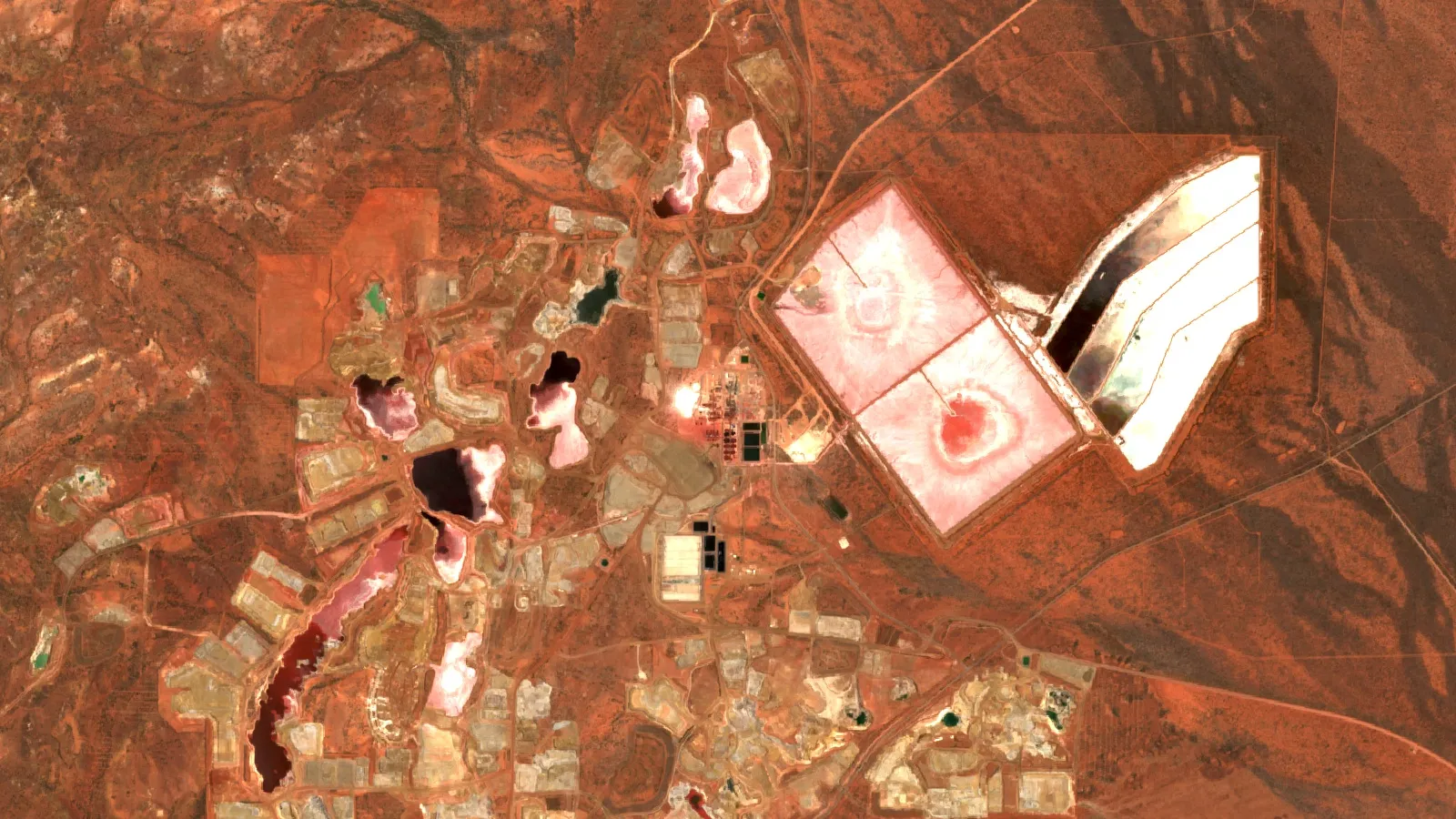
Australia had two operating cobalt mines in 2025: Glencore’s Murrin Murrin and IGO’s Nova, both in Western Australia, according to the Cobalt Institute’s May 2026 market report. Geoscience Australia puts national output at 3.1 kt of cobalt in 2025, down from 4.8 kt a year earlier. Neither mine is a cobalt mine in the strict sense. Cobalt is a by-product of nickel there. The biggest cobalt tonnages sit in development projects that have not been built yet. This page lists every producer, the idle plants and the main projects, with tonnes, status and the source for each number.
Cobalt mines and projects in Australia at a glance
The table sorts operations by status first, then by cobalt tonnes. Figures are as reported by each company or agency, and the basis differs between rows (annual output for mines, total resource for projects), so do not add the columns together. A resource is the rock a company has measured or inferred; it is not yet a plan to mine it. “kt” means thousand tonnes.
Chart
Australian cobalt output fell between the last two reporting years
Tonnes of cobalt. National and Murrin Murrin: 2024 to 2025. Nova payable cobalt: year to June 2025 to year to June 2026.
| Name | Operator | State | Status | Cobalt figure and basis |
|---|---|---|---|---|
| Murrin Murrin | Glencore | Western Australia | Operating | 2.2 kt cobalt metal in 2025 (Glencore, own-sourced) |
| Nova | IGO | Western Australia | Operating; mine life ends about the end of 2026 | 548 t cobalt in concentrate, year to June 2026 (IGO) |
| Ravensthorpe | First Quantum | Western Australia | Care and maintenance since May 2024 | No current output |
| Nickel West (Mount Keith, Leinster) | BHP | Western Australia | Suspended; BHP’s review is due by February 2027 | No current output |
| Kalgoorlie Nickel Project | Ardea Resources with Sumitomo Metal Mining and Mitsubishi | Western Australia | Definitive feasibility study under way | 386 kt cobalt in resource |
| Sunrise Nickel-Cobalt | Sunrise Energy Metals | New South Wales | Awaiting a development decision | 170 kt cobalt in resource |
| Broken Hill Cobalt Project | Cobalt Blue Holdings | New South Wales | Feasibility studies and permitting | 87 kt cobalt in resource |
| Walford Creek | Aeon Metals | Queensland | Pre-feasibility study funded | Cobalt is part of a copper-zinc-lead-silver resource |
Geoscience Australia counted five operating cobalt mines for 2024 and two for 2025. The fall from five to two follows low nickel and cobalt prices, which pushed several nickel operations offline. Cobalt is a by-product there, so it stops when the nickel plant stops.
Producing mines: Murrin Murrin and Nova
Murrin Murrin (Glencore)
Murrin Murrin is a remote, fully integrated nickel and cobalt producer in the north-eastern Goldfields of Western Australia. It mines laterite ore in shallow open cuts. Laterite is a soil-like ore formed when tropical weathering concentrates nickel and cobalt near the surface. A high-pressure acid leach plant then dissolves the metals, and a refinery makes London Metal Exchange grade nickel and cobalt briquettes on site.
Infographic
How Murrin Murrin turns laterite ore into cobalt
- 1Mine the lateriteShallow open cuts remove the nickel-cobalt ore, which is sorted by grade and crushed.
- 2Leach with acidOre slurry meets sulphuric acid at 255 degrees Celsius and 44 atmospheres in titanium-lined autoclaves.
- 3Neutralise and precipitateCalcrete neutralises the acid, then hydrogen sulphide makes a mixed nickel-cobalt sulphide.
- 4Separate the metalsSolvent extraction splits cobalt from nickel.
- 5Make briquettesThe cobalt solution is processed on a separate, smaller path into cobalt briquettes.
Glencore reports 2.2 kt of cobalt metal from Murrin Murrin in 2025, down 12% from 2.5 kt in 2024. In the first half of 2026 it reported 1.2 kt of cobalt, up 20% on the first half of 2025, with Glencore putting the higher nickel output down to maintenance downtime in the earlier period. In its 2026 half-year report, Glencore recorded a US$457 million impairment on the operation, citing a stronger Australian dollar and higher sulphur price assumptions. Sulphur matters because the plant burns it to make the sulphuric acid used in leaching.
In April 2022, Glencore and General Motors signed a multi-year deal for Murrin Murrin cobalt to go into GM’s Ultium battery cathodes.
Nova (IGO)
Nova sits in the Fraser Range, about 160 km east-northeast of Norseman. It is a nickel-copper-cobalt sulphide mine and sells concentrate, not refined metal. IGO’s 2026 annual report gives 548 t of cobalt in concentrate for the year to June 2026, with 218 t of payable cobalt sold (235 t the year before). Payable means the share of metal in the concentrate that the buyer pays for.
The end is close. IGO says Nova is expected to reach end of mine life by late 2026. In July 2026 IGO signed a binding agreement to sell the plant and infrastructure to Global Lithium Resources (ASX: GL1), with completion targeted for 30 November 2026. The buyer plans to reuse the plant for its Manna lithium project. When Nova stops, Murrin Murrin is the only Australian cobalt producer left unless another project restarts.
Idle plants: Ravensthorpe and Nickel West
First Quantum placed its Ravensthorpe nickel operation on care and maintenance in May 2024, and its second-quarter 2026 results still show it in that state. BHP suspended Nickel West in 2024 and, per the ABC’s report on BHP’s August 2026 results, expected to finish a review of the business by February 2027. BHP’s FY2026 annual filing says the review includes a possible sale of the Western Australian nickel assets. The Cobalt Institute lists Nickel West among the producers that went offline after cobalt and nickel prices hit lows at the end of 2024.
Cobalt from these plants depends on the nickel price as much as on the cobalt price, because cobalt is a by-product of the nickel they were built to make.
Development projects ranked by cobalt in the resource
How we ranked these projects
The metric is contained cobalt in the company’s published mineral resource, in thousand tonnes, across all resource categories. A mineral resource follows the JORC Code, Australia’s reporting standard, and includes Measured, Indicated and Inferred material. Inferred is the least certain. We list only projects whose company publishes a cobalt tonnage. Grade is shown beside tonnes, because a large low-grade resource can be worth less per tonne of ore than a small rich one.
Chart
Contained cobalt in the three largest published project resources
Thousand tonnes of cobalt, all resource categories; company figures from different years
| Project | Cobalt in resource | Cobalt grade | Product focus |
|---|---|---|---|
| Kalgoorlie Nickel Project | 386 kt | 0.045% (450 ppm) | Nickel and cobalt for batteries |
| Sunrise Nickel-Cobalt | 170 kt | 0.10% (1,000 ppm) | Nickel and cobalt from laterite |
| Broken Hill Cobalt Project | 87 kt | 690 ppm | Primary cobalt from pyrite |
1. Kalgoorlie Nickel Project, Western Australia
Ardea Resources’ Kalgoorlie Nickel Project holds 854 Mt of resource at 0.71% nickel and 0.045% cobalt, which is 6.1 Mt of nickel and 386 kt of cobalt. Its Goongarrie Hub holds 584 Mt of that. The Western Australian Government granted the hub Lead Agency Status in June 2026. In its FY2026 annual report, Ardea said Sumitomo Metal Mining and Mitsubishi raised their stake in Kalgoorlie Nickel Pty Ltd to 35%, a definitive feasibility study is under way, and a Heritage Agreement was signed with the Marlinyu Ghoorlie Native Title Claimant Group. Export Finance Australia and the US Export-Import Bank gave non-binding support of up to A$1 billion.
2. Sunrise Nickel-Cobalt, New South Wales
Sunrise Energy Metals reports a resource of 180 Mt at 0.53% nickel and 0.10% cobalt, with 170 kt of contained cobalt and 89% in the Measured and Indicated categories. That estimate dates from 2020. The company says a development decision awaits better nickel and cobalt markets. Its current build focus is the nearby Syerston scandium project, whose feasibility study was completed in March 2026.
3. Broken Hill Cobalt Project, New South Wales
Cobalt Blue Holdings (ASX: COB) describes this as Australia’s largest undeveloped primary cobalt resource. Primary means cobalt is the main product, not a by-product of nickel or copper. The cobalt sits in pyrite, an iron sulphide mineral. A January 2024 quarterly report gave a resource of 126.5 Mt at 690 ppm cobalt, or 87 kt of contained cobalt. The company website lists permitting and feasibility studies as under way (resource figure dated January 2024). Its second plan is the Kwinana Cobalt Refinery near Perth, which aims to make cobalt sulphate for lithium-ion batteries and cobalt metal for defence uses. The company’s 2026 annual report summary lists a confirmed battery-precursor specification and a Works Approval for the refinery, and its June 2026 quarter report describes a growing offtake pipeline.
4. Walford Creek, Queensland
Walford Creek lies about 350 km north-west of Mount Isa and is 100% owned by unlisted Aeon Metals. Aeon calls it one of Australia’s highest-grade sulphide-hosted cobalt resources, with copper, zinc, lead and silver as well. In an August 2026 announcement, Proactive Investors reported that A$20 million from the Queensland Critical Minerals Fund, structured as a royalty, will pay for a pre-feasibility study, drilling and approvals. Aeon is assessing an open pit and underground mine of 2 to 3 million tonnes a year. For ASX-listed cobalt developers and their share-market status, see our list of ASX cobalt miners.
How Australia compares with other cobalt countries
Australia is second in the world for reserves but fifth or sixth for output, on USGS figures. The USGS estimates Australian reserves at 1.7 million tonnes, behind only the Democratic Republic of the Congo at 6 million. The same report puts 2025 world mine output at 310,000 t, with Congo at 230,000 t and Indonesia at 44,000 t. Australia’s estimated 3,700 t is about 1.2% of the world total. The USGS says the vast majority of identified world cobalt resources are in sediment-hosted copper deposits in Congo and Zambia, nickel laterites in Australia, nearby island countries and Cuba, and magmatic nickel-copper sulphide deposits in Australia, Canada, Russia and the United States.
Chart
Cobalt reserves in selected countries
Thousand tonnes of contained cobalt; selected countries, not the full list
The gap between reserves and output is the story. Most Australian reserves sit in nickel laterite and sulphide projects that need a decent nickel price to run, or in projects that have not been built.
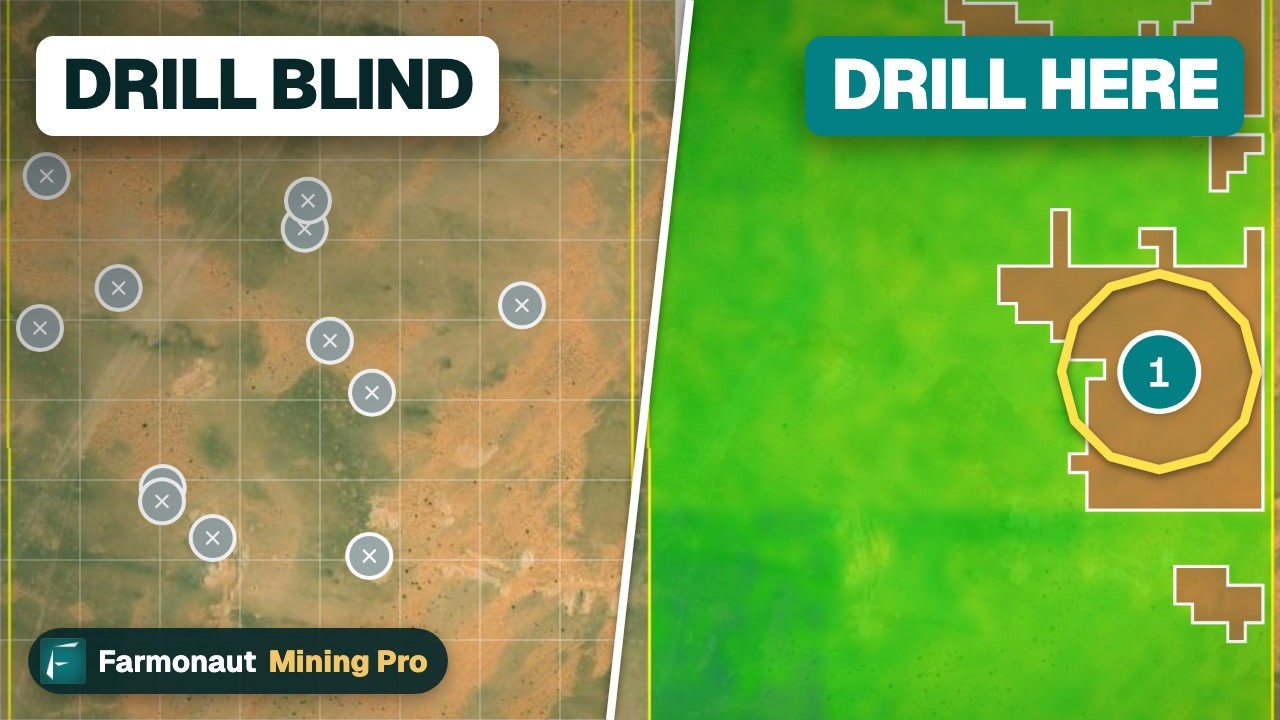
▶ Follows the money from mine to economy: exports, jobs, revenue and why energy-transition minerals matter. · 5:03
Why output fell: price lows, Congo quotas and Indonesian supply
Three forces shaped the cobalt market that Australian producers faced between 2024 and 2025. The first was the price. The Cobalt Institute reports that cobalt hydroxide prices delivered to China fell as low as US$5.60 per pound in February 2025, effectively at or below cost. The second was Congo. On 22 February 2025 the Congolese government banned cobalt exports, then replaced the ban with quotas in the last quarter of 2025. Glencore says the quota system runs until at least the end of 2027. The third was Indonesia, where nickel output with cobalt as a co-product kept growing and, per the Cobalt Institute, made it the largest effective supplier in 2025.
Chart
Average cobalt price, US dollars per pound
Annual averages, 2025 estimated
Congo is the world’s largest producer, so its quota system is a major price driver. The effect on Australian output is indirect: a higher cobalt price helps, but a nickel plant also needs a good nickel price.
Cobalt price and what moves it
The benchmark cobalt price traded flat at US$39,345 per tonne on 14 October 2026, down 7.9% on the same date a year earlier, according to Trading Economics, which tracks a contract for difference on the benchmark. That is about US$17.85 per pound. The USGS gives annual averages for the London Metal Exchange cash price: US$23.17 per pound in 2021, a peak of US$28.83 in 2022, then US$11.84 in 2024 and an estimated US$15 in 2025. Watch three drivers: Congolese export quotas, Indonesian output, and battery makers’ choice of cathode chemistry.
Where cobalt occurs in Australian rocks
Australian cobalt comes from three rock settings. This is useful if you hold or plan to buy exploration ground, because each type needs a different search method.
- Nickel laterite. Murrin Murrin, the Kalgoorlie Nickel Project and Sunrise are all laterites. Tropical weathering of iron- and magnesium-rich rock concentrates the metals in a near-surface layer. Ore is shallow and wide, but it needs acid leaching.
- Magmatic nickel-copper sulphide. Nova is this type. Hot magma rich in iron and magnesium cooled and left sulphide minerals that hold nickel, copper and cobalt. IGO’s annual report describes the deposit as running at 1.85% nickel.
- Sulphide-hosted cobalt. Broken Hill (cobalt in pyrite) and Walford Creek (cobalt with copper and zinc sulphides) are here. Cobalt is the main target or a major co-product.
The USGS names laterite and magmatic sulphide as the main Australian hosts. Broken Hill and Walford Creek add the third, sulphide-hosted type, according to their companies. Satellite data helps choose where to look, for example for the surface signs of laterite or of clay and iron-oxide alteration. Drilling and assays confirm the cobalt grade. Treat any satellite result as an exploration target that sits ahead of a resource estimate.
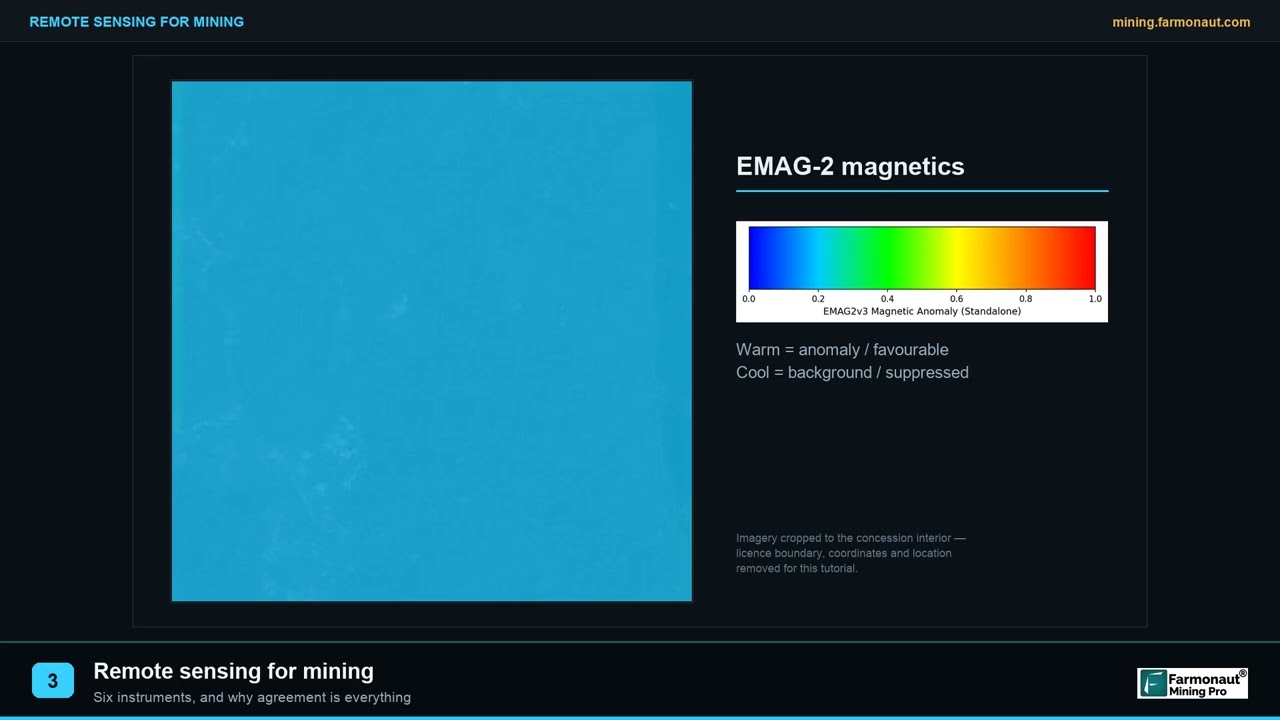
▶ Explains remote sensing for mining in plain words: the six instrument families and why agreement between them matters. · 2:01
Environment, land and community
Cobalt operations in Australia work under state mining and environment laws, and projects need approvals before they build. Four points show how that looks in practice.
- Acid and water. Murrin Murrin’s high-pressure leach uses sulphuric acid at 255 degrees Celsius and 44 atmospheres. Glencore says the residue is neutralised before it goes to tailings storage, and the site runs its own acid plant, power station and a reverse osmosis plant that treats bore water.
- Reuse at end of life. IGO says Nova is not expected to go through a traditional closure, because its plant and infrastructure are being sold for reuse.
- Native title. Nova lies on the country of the Ngadju people, and Ardea signed a Heritage Agreement with the Marlinyu Ghoorlie Native Title Claimant Group in FY2026.
- Permits. Cobalt Blue’s 2026 annual report summary lists a Works Approval for its planned Kwinana refinery.
Buyers also ask for proof of responsible sourcing. In its April 2022 statement with General Motors, Glencore said Murrin Murrin conforms to the OECD-aligned Responsible Minerals Assurance Process.

▶ A clay-animation walk through seven environmental impacts of mining, with satellite maps. · 2:31
How to read a cobalt project’s numbers
When you read a company update, check five things before comparing projects. First, is cobalt the main product or a by-product? A by-product pays only if the main metal runs. Second, which resource category is the cobalt in? Inferred tonnes can change a lot with more drilling. Third, what is the grade, in percent or parts per million (ppm; 1,000 ppm equals 0.1%)? Fourth, what share of the cobalt can the plant recover? Fifth, what do buyers pay for it, after discounts, since the payable share is below 100% for most concentrates and intermediates.
The calculator below turns those five items into recoverable cobalt and gross revenue for any ore tonnage. Use it to test a company’s headline against your own price view. It does not include capital costs, operating costs, royalties or tax, all of which can exceed revenue.
Farmonaut’s satellite-based mineral detection lists cobalt among the base metals it screens, and holders of exploration ground can request a quote for their licence area or contact the team. For related reading, see our guides to nickel, cobalt and vanadium exploration targets and the mines of Queensland by commodity and status.
Calculator
What is the cobalt in my ore worth?
Enter ore tonnes, cobalt grade, recovery, payable share and a price from a source you trust.
- Contained cobalt in the ore: 10,000 t Co
- Payable cobalt: 6,800 t Co
- Gross cobalt revenue (US$ million): 269.8 US$m
- Gross revenue per tonne of ore: 27.0 US$/t
Example values only, not any project’s figures or a forecast. Price is an input: example, use today’s price (US$ per pound of cobalt). The formula uses 2,204.62 pounds per tonne. Recovery and payable share vary by plant and contract. Revenue is gross: it leaves out capital, operating cost, royalties and tax.
Related reading on this site: Rare Earth Elements Australia: Mines, Projects, Reserves.
Frequently asked questions
How many cobalt mines are there in Australia?
Two operated in 2025: Murrin Murrin and Nova, both in Western Australia, per the Cobalt Institute and Geoscience Australia. Nova is due to reach end of mine life around the end of 2026.
Which is the biggest cobalt mine in Australia?
Murrin Murrin. Glencore reported 2.2 kt of cobalt metal there in 2025, about four times Nova’s 548 t of cobalt in concentrate for the year to June 2026 (the two bases differ: refined metal against cobalt contained in concentrate).
How much cobalt does Australia produce?
Geoscience Australia estimates 3.1 kt of cobalt in 2025 and 4.8 kt in 2024. The USGS estimates 3,700 t for 2025 and 4,780 t for 2024. The two agencies use different sources, so the figures differ slightly.
Where is cobalt mined in Australia?
Currently only in Western Australia: at Murrin Murrin in the north-eastern Goldfields and at Nova in the Fraser Range. Projects in New South Wales, Queensland and Western Australia have cobalt resources but are not in production.
Is cobalt a by-product in Australia?
At both operating mines, yes. Murrin Murrin makes nickel and cobalt from laterite, and Nova sells nickel-copper-cobalt concentrate. Broken Hill is different: Cobalt Blue plans cobalt as the main product.
Does Australia have large cobalt reserves?
Yes. The USGS puts Australian reserves at 1.7 million tonnes, second to the Democratic Republic of the Congo at 6 million. Geoscience Australia reports 1,697 kt of economic demonstrated resources for Australia at the end of 2024.
Why did Australian cobalt production fall?
Low nickel and cobalt prices at the end of 2024 took operations such as BHP’s Nickel West offline, according to the Cobalt Institute, and First Quantum’s Ravensthorpe has been idle since May 2024. Geoscience Australia counted five operating mines for 2024 and two for 2025.
What is the cobalt price per tonne today?
Trading Economics showed US$39,345 per tonne on 14 October 2026. Cobalt moves with Congolese quota news, so the figure above is a dated snapshot.
What is cobalt used for?
Geoscience Australia lists rechargeable battery electrodes in lithium-ion batteries and electric vehicles, superalloys, pigments, catalysts and magnets. In the United States, the USGS estimates 51% of cobalt consumed goes into superalloys, mainly for aircraft gas turbine engines.
Can I explore for cobalt in Australia?
Yes, with a licence from the state or territory where the ground lies. Each runs its own cadastre and rules, so start with our guide to mining cadastre portals and confirm the rules with the regulator.
Which Australian companies are developing cobalt projects?
The main developers are Ardea Resources, Sunrise Energy Metals, Cobalt Blue Holdings and Aeon Metals, with Glencore and IGO as the current producers. See the ASX list linked above for the status of listed names. This page is not investment advice.
This page is for information only. It is not investment advice and gives no share prices or targets. Resource figures are company estimates from different years and are not comparable with production figures. Check each company’s own filings before you rely on a number.
Farmonaut mining
Screen your licence area from space first
Consultants can see how satellite data screens a site for minerals as an exploration target, ahead of drilling and a resource estimate.

Mining Pro sample view, synthetic data
Keep reading
Sources
- USGS, Mineral Commodity Summaries 2026: Cobalt: pubs.usgs.gov
- Geoscience Australia, Australia’s Identified Mineral Resources 2025: Commodity Summaries: ga.gov.au
- Geoscience Australia, AIMR 2026 Preliminary Tables (updated 12 October 2026): ga.gov.au
- Cobalt Institute, Cobalt Market Report 2025 (May 2026): cobaltinstitute.org
- Glencore, Full Year 2025 Production Report: glencore.com
- Glencore, Half-Year Production Report 2026: glencore.com
- Glencore, Half-Year Report 2026: glencore.com
- Glencore Australia, The Murrin Murrin Operations: glencore.com.au
- Glencore Australia, Producing nickel and cobalt at Murrin Murrin: glencore.com.au
- Glencore Australia, Glencore and General Motors sign Australian cobalt supply agreement (April 2022): glencore.com.au
- IGO, Annual Report 2026: igo.com.au
- IGO, Nova Operation: igo.com.au
- First Quantum Minerals, Second Quarter 2026 Results: first-quantum.com
- ABC News, BHP to decide Kalgoorlie Nickel Smelter future (20 August 2026): abc.net.au
- Crux Investor, Ardea Resources: Goongarrie Hub Lead Agency Status (4 June 2026): cruxinvestor.com
- Kalkine Media, Ardea Resources FY2026 report highlights: kalkinemedia.com
- Sunrise Energy Metals, Sunrise Nickel-Cobalt Project: sunriseem.com
- Sunrise Energy Metals, Syerston Feasibility Study (ASX announcement, March 2026): announcements.asx.com.au
- Cobalt Blue Holdings, home page: cobaltblueholdings.com
- Cobalt Blue Holdings, Kwinana Cobalt Refinery: cobaltblueholdings.com
- Cobalt Blue Holdings, latest news (2026): cobaltblueholdings.com
- Cobalt Blue Holdings, quarterly activities report (ABN Newswire, January 2024): abnnewswire.net
- Proactive Investors, Aeon Metals secures $20 million QIC backing for Walford Creek: proactiveinvestors.com.au
- Trading Economics, Cobalt price: tradingeconomics.com
Discussion
Questions, corrections or field experience? Share them below. First-time comments are reviewed before they appear, and your email is never published.
No comments yet. Be the first to add a question or your experience.

 SMA Investments Ltd
 NTS Group (Pty) Ltd
 Mine4Africa
 Lithspo Minerals Limited
 Tintina Mining Group
 Dalgety Minerals Pty Ltd
 Vortex Minerals Pty Ltd
 Faith At Work (Pty) Ltd
 Geotech Mining Solutions plc
 Vulcan International Limited
 Kidepo Associates
 GKY Mining
 Alkimy SARL
 Double A Trading
 GemSprout Metals Limited
 Qader Group
 Ileys General Trading
 SG Gold Mining LLC
 VRV Global Pte Ltd
 Omsri International FZE
 G.I.T.T.
 Jaunita Erss Ltd
 Almosi SARL
 SRK Consulting
 Berks Gold Limited











