

Project guide · Rare earths
Rare Earth Elements Australia: Mines, Projects, Reserves
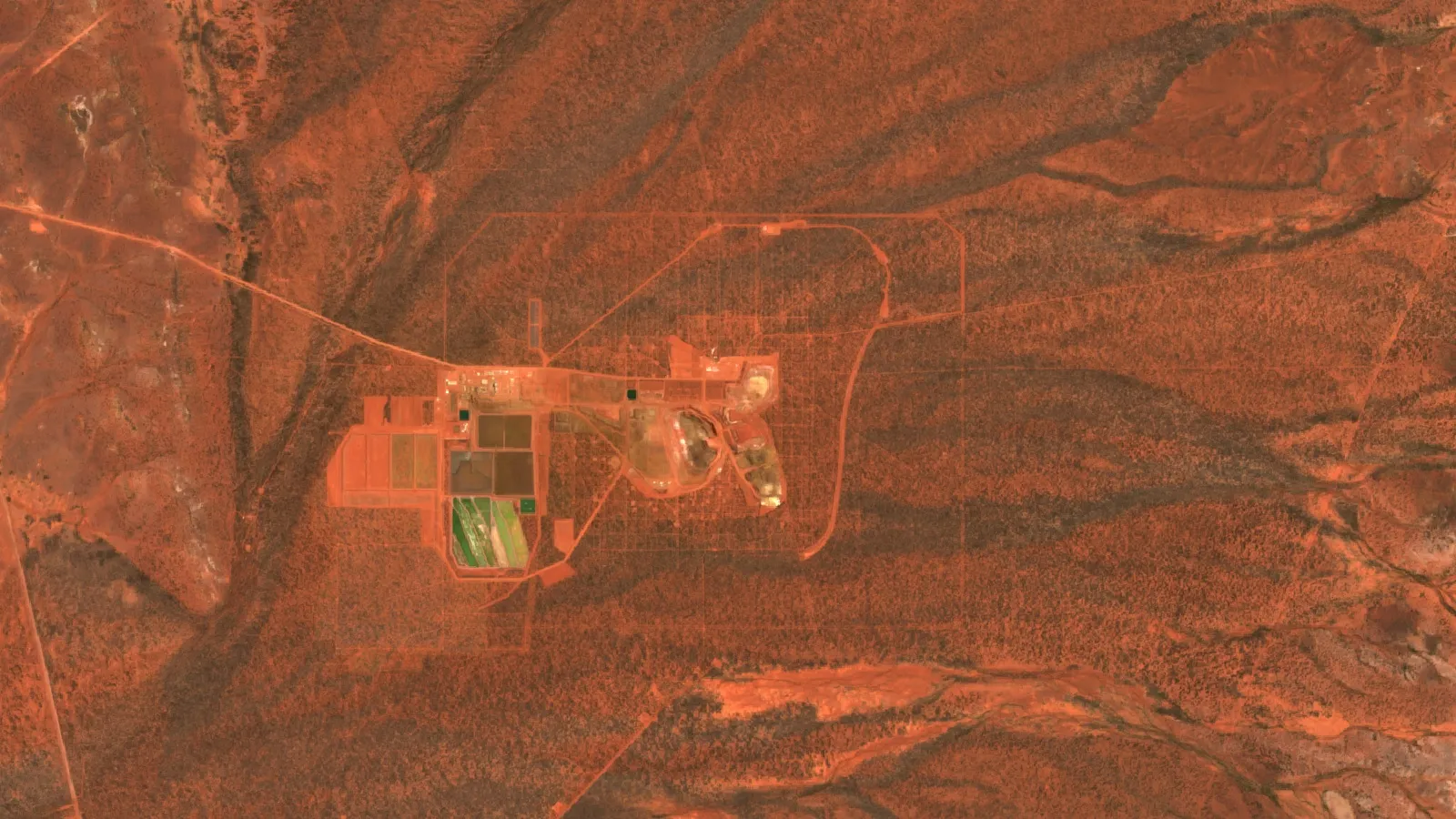
Australia mined 29,000 tonnes of rare earth oxide in 2025 and holds 6.3 million tonnes of reserves (USGS). Lynas at Mt Weld is the producer; Iluka, Arafura and others are building.
Key takeaways
- USGS puts Australian rare earth mine output at 29,000 tonnes of oxide in 2025, third in the world, and reserves at 6.3 million tonnes (USGS, 2026).
- Lynas produced 13,089 tonnes of oxide, including 7,260 tonnes of NdPr, in the year to June 2026 (Lynas Annual Report, 26 Aug 2026).
- Iluka’s Eneabba refinery was 60% built in August 2026, with feedstock due in 2027 (Iluka, 19 Aug 2026).
- Arafura’s Nolans project has a 4,440 tonne a year NdPr design and first production from mid-2029 (Reuters, 21 May 2026).
- Yangibana’s July 2026 study shows a 19-year mine life and A$333.4 million of Stage 1 capital (Hastings, July 2026).
In this article
- Australian rare earth mines and projects compared
- How we chose these projects
- Mt Weld and Lynas: Australia's producing mine
- Iluka's Eneabba refinery in Western Australia
- Arafura's Nolans project in the Northern Territory
- Yangibana, Browns Range and Dubbo
- How much rare earth does Australia have?
- What Australian producers are paid per kilogram
- Timeline: what has to happen next
- Government support and the strategic reserve
- Estimate the value of a rare earth concentrate
- Where satellite screening fits
- What to check before relying on any rare earth project
- Frequently asked questions
Australia has one large rare earth producer today, Lynas at Mt Weld in Western Australia, and a short list of projects that could add to it by 2029. The US Geological Survey (USGS) puts Australian mine output at 29,000 tonnes of rare earth oxide in 2025, third behind China and the United States, and reserves at 6.3 million tonnes (USGS Mineral Commodity Summaries, February 2026). Rare earth elements are a group of 17 metals that go into magnets, catalysts and polishing powders; the ones that matter most for money are neodymium and praseodymium (NdPr, used in motor and wind-turbine magnets) and the heavy elements dysprosium and terbium. This page compares the Australian mines, refineries and developers that have public company filings, with charts of output, reserves and planned capacity, and a calculator you can change.
Australian rare earth mines and projects compared
The table lists each project by stage, from producing to still seeking funding. Dates are the filing dates shown in the sources; plans can move, so check the company’s latest ASX announcement before relying on one.
| Project | Company (listing) | Where | Stage and product | Latest fact from filings |
|---|---|---|---|---|
| Mt Weld | Lynas Rare Earths (ASX: LYC) | Western Australia | Producing; concentrate, then oxides in Malaysia | 7,260 t NdPr produced in the year to June 2026 |
| Eneabba refinery | Iluka Resources (ASX: ILU) | Western Australia | Under construction; separated oxides | About 60% built in August 2026; feedstock in 2027 |
| Nolans | Arafura Rare Earths (ASX: ARU) | Northern Territory | Construction started; NdPr oxide | Design output 4,440 t NdPr a year; first production from mid-2029 |
| Yangibana | Hastings Technology Metals (ASX: HAS) and Wyloo | Western Australia | Fully permitted; concentrate | Updated feasibility study in July 2026; 19-year mine life |
| Browns Range | Northern Minerals (ASX: NTU) | Western Australia | Pre-construction; heavy rare earths | Decision was targeted by 30 September 2026, subject to funding; no decision found as of 16 October 2026 |
| Dubbo | Australian Strategic Materials (formerly ASX: ASM; acquired by Energy Fuels, completed 28 August 2026) | New South Wales | Development stage; multi-metal | Plans several rare earth product lines including Dy and Tb |
How we chose these projects
We included each Australian project that has a recent company filing or a named government or news report we could open, and that is either producing or has a stated route to production. We ordered the table by how close each is to making product, not by size, because the projects make different things: Mt Weld mines ore, Eneabba refines, and Yangibana sells a concentrate. Exploration-stage companies, and projects with no filing we could read, are left out rather than guessed at. This is a factual comparison, not advice to buy shares.
Mt Weld and Lynas: Australia’s producing mine
Lynas mines rare earth ore at Mt Weld, 35 km south-east of Laverton in the Northern Goldfields (Western Australia EPA, Report 1752). The ore body is a carbonatite, a rock that forms from carbonate-rich magma. In the year to 30 June 2026 Lynas sold A$977.9 million of product, made a net profit of A$222.4 million and produced 13,089 tonnes of rare earth oxide ready for sale, including 7,260 tonnes of NdPr (Lynas Appendix 4E and 2026 Annual Report, 26 August 2026). Lynas says it is the only commercial producer of both light and heavy rare earth oxides outside China (Lynas quarterly report, 22 July 2026).
Chart
Lynas rare earth oxide ready for sale, by quarter
Tonnes of oxide, quarters to September 2025 through June 2026
At 30 June 2026 the Mt Weld Mineral Resource was 109.2 million tonnes at 4.2% total rare earth oxide (TREO, at a 2.5% cut-off grade, the lowest grade counted as ore) and the Ore Reserve was 31.5 million tonnes at 6.4% TREO (Lynas Annual Report, 2026). Output moves from quarter to quarter: Lynas reported 3,993 tonnes of oxide ready for sale in the September 2025 quarter, 2,382 in December, 3,233 in March and 3,481 in June (Lynas quarterly reports, 2025 to 2026). Lynas links the December dip to power supply disruptions and the June quarter to an ore variation at Mt Weld. For its magnet plans see Lynas and the NdFeB magnet strategy.
Iluka’s Eneabba refinery in Western Australia
Iluka Resources is building a refinery at Eneabba, Western Australia, to turn monazite (a rare earth phosphate mineral) from its stockpile into separated oxides. At its first-half 2026 results on 19 August 2026 the company said construction was 60% complete, most major equipment was on site, high-voltage power had been energised, and mineral commissioning, the first delivery of feedstock, would happen in 2027 (Iluka half-year results teleconference transcript, August 2026). It also said it had full access to a A$1.65 billion government loan and had signed its first rare earths offtake with a global automotive company, 1,200 tonnes a year of magnet oxides, which management described as based on the Eneabba stockpile only. Reuters puts Iluka’s NdPr capacity at 5,500 tonnes a year; Iluka’s ASX notice of 22 June 2026 says that figure needs additional feedstock and that the Eneabba stockpile alone would give about 3,500 tonnes of NdPr a year (Reuters via Kitco, 21 May 2026). Iluka is meant to buy dysprosium- and terbium-rich xenotime concentrate from Browns Range under a binding but conditional supply agreement with Northern Minerals.
Arafura’s Nolans project in the Northern Territory
Nolans is about 135 km north of Alice Springs. Arafura Rare Earths approved development on 21 May 2026 with a design output of 4,440 tonnes of NdPr oxide a year, finance commitments from export credit agencies in the United States, Canada, Germany and South Korea, and supply deals with Hyundai, Kia, Siemens Gamesa and the trader Traxys; Reuters reports first production from mid-2029 and 500 tonnes of NdPr earmarked for Australia’s strategic reserve (Reuters via Kitco, 21 May 2026). The ABC reported a ground-breaking ceremony on 8 October 2026 and said the mine and processing plant will be built over the next three years (ABC News, 8 October 2026). The Prime Minister’s office says Nolans, once operating, will produce 5% of global rare earths and is one of two projects named under the October 2025 US-Australia framework, with an Australian equity investment of US$100 million (Prime Minister of Australia, 21 October 2025).
Chart
NdPr oxide: Lynas output and Iluka and Arafura plans
Tonnes a year; Lynas is actual FY26 output, the others are planned or designed
Yangibana, Browns Range and Dubbo
Yangibana (Western Australia). A joint venture in which Wyloo owns 60% and Hastings Technology Metals the rest. The updated feasibility study of 13 July 2026 shows a pre-tax net present value of A$649 million at an 8% discount rate, a 34% internal rate of return, Stage 1 capital cost of A$333.4 million, a 19-year mine life and peak output of 37,000 tonnes a year of concentrate at 27% TREO. NdPr makes up 37% of the TREO and over 90% of forecast revenue. Wyloo has started a sale process for its 60% interest (Hastings corporate presentation, July 2026). Hastings also plans a processing plant in Thailand for 12,000 tonnes a year of mixed carbonate, a separate project with first output targeted for early 2027 (same presentation).
Browns Range (Western Australia). Northern Minerals aims to mine xenotime, a yttrium phosphate rich in heavy rare earths, in the East Kimberley. Its quarterly report of 30 April 2026 moved the target for a final investment decision (FID, the board’s go-ahead to build) from 30 June to no later than 30 September 2026, subject to project funding (Northern Minerals quarterly report, 30 April 2026). That deadline has now passed and we found no announcement of a decision as of 16 October 2026; check the September quarter report, due in late October. The Iluka supply agreement is binding but conditional, and the two companies were working on the outstanding conditions at 30 April 2026.
Dubbo (New South Wales). Australian Strategic Materials (ASM) says its Dubbo project has several rare earth product lines and is developing the process to make terbium and dysprosium, working with the national nuclear science agency ANSTO (Australian Strategic Materials, Dubbo Project). Unlike Mt Weld or Yangibana it is a multi-metal deposit, so its economics depend on zirconium and niobium as well as rare earths. Energy Fuels announced on 28 August 2026 that it had completed its acquisition of ASM, whose shares were delisted from the ASX (Energy Fuels press release, 28 August 2026).
How much rare earth does Australia have?
USGS lists reserves, the part of a resource that can be mined economically today, for 11 countries. Australia’s 6.3 million tonnes of oxide is third among countries with a published figure. Output and reserves tell different stories: China mined 270,000 of the world’s 390,000 tonnes in 2025, and Australia’s 29,000 tonnes is about 7% of the world total (USGS, 2026). USGS did not publish a reserve figure for several producing countries, including Burma, Madagascar, Nigeria and Thailand, so the chart cannot rank them.
Chart
Rare earth reserves by country
Million tonnes of rare earth oxide equivalent, 2025 (8 largest of 11 reported)
What Australian producers are paid per kilogram
Price decides whether a project gets built, and rare earths do not trade on an open exchange, so prices vary by grade, product and buyer. USGS annual averages for oxide, 99% or better purity, rose between 2024 and 2025: praseodymium oxide from US$56 to US$74 per kg, neodymium oxide from US$56 to US$73, NdPr oxide from US$55 to US$69, while gadolinium oxide moved only from US$28 to US$30 (USGS, 2026). Lanthanum oxide stayed near US$1 per kg, which is why a mine that mostly produces lanthanum and cerium earns far less per tonne than one rich in NdPr. Across all its products, Lynas averaged A$98.2 per kg in the June 2026 quarter, a record, helped by NdPr prices, more heavy rare earth sales and higher premiums (Lynas quarterly report, 22 July 2026). That average mixes cheap and dear elements, so it is not the NdPr price.
Infographic
From rare earth ore to oxide in 4 steps
- 1MineOre is dug from a carbonatite or similar deposit.
- 2ConcentrateCrushing and flotation raise the rare earth content.
- 3Crack and leachAcid or caustic treatment dissolves the rare earths.
- 4SeparateSolvent extraction splits NdPr, Dy, Tb and others into oxides.
The gap between a concentrate and an oxide is large. A concentrate is rock that has been crushed and floated to raise the rare earth content, and the buyer must still crack it with acid or caustic, dissolve it and split the elements by solvent extraction. That is why Yangibana’s study shows NdPr share, not tonnes of concentrate alone, as the revenue driver, and why Eneabba and the Malaysian plant matter as much as the mines that feed them.
Timeline: what has to happen next
- 2026 to 2027. Iluka reaches mineral commissioning at Eneabba in 2027; Hastings targets first mixed carbonate in Thailand in early 2027; Northern Minerals has not yet announced a Browns Range investment decision, which depends on funding.
- Mid-2029. Arafura’s reported date for first Nolans production, about three years after construction began.
- 2031. The Malaysian licence for Lynas requires its residue to fall to 1 becquerel per gram or less after 2 March 2031 (Lynas Annual Report, 2026).
Each date comes from a company or news report cited above, and each depends on funding, approvals and construction. When two projects feed one another, as Browns Range does with Eneabba, a delay at one can slow the other.
▶ A plain-language claymation on the seven environmental impacts of mining. · 2:31
Government support and the strategic reserve
Two policy moves shape which Australian projects get built. On 20 October 2025 the United States and Australia signed a critical minerals framework with at least US$1 billion of investment from each side to speed an US$8.5 billion pipeline of projects and fast-track approvals (Prime Minister of Australia, 21 October 2025). Australia is also setting up a Critical Minerals Strategic Reserve that can take offtake and stockpile rare earths, and Reuters reported it was due to operate by the end of 2026 (Reuters via Kitco, 21 May 2026). Price floors matter too: the Lynas deals with Japan and the United States use a US$110 per kg NdPr floor (Lynas Annual Report, 2026), well above the USGS 2025 average of US$69 per kg for NdPr oxide (USGS, 2026). Heavy-element demand is covered in our note on heavy rare earth demand, and the wider picture of listed names in Australian rare earth companies and Australian cobalt and rare earth miners. Our rare earth deposit map and exploration guide covers the global geology.
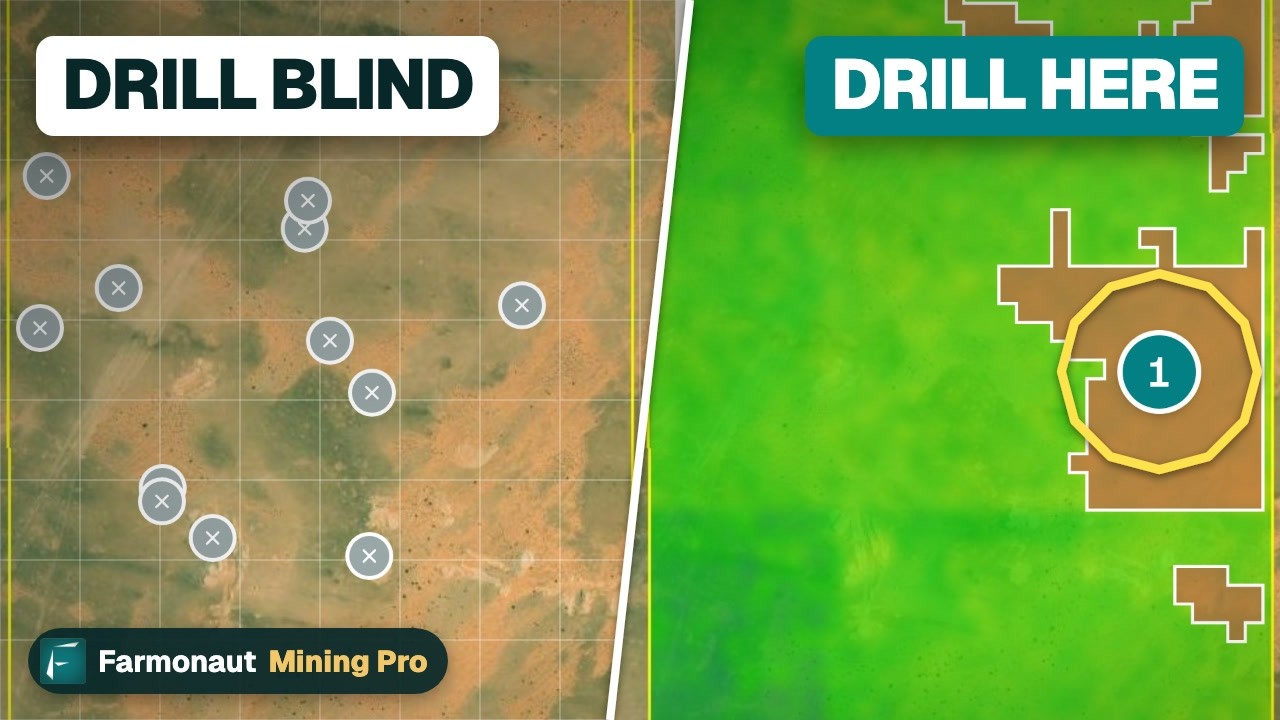
▶ Follows the money from the ground up: what mining does for an economy and why energy-transition minerals are in demand. · 5:03
Estimate the value of a rare earth concentrate
A concentrate is only the first product; the money is made in refining. The calculator below turns a mine plan into NdPr oxide and a gross value. Enter your own ore tonnes, grade, recovery, the NdPr share of the TREO (Yangibana’s study uses 37%) and a price. Gross value is before refining cost, penalties, royalties and tax, and a seller of concentrate is paid only a share of it.
Calculator
What is my ore worth as NdPr oxide?
Enter your own ore tonnes, grade, recovery, NdPr share and price.
- TREO recovered (tonnes): 6,000
- Gross value (US$ million): 177.6
Example values only, not a forecast. The 37% NdPr share is the figure in Hastings’ Yangibana study (July 2026); every other default is an example. Prices are inputs: example, use today’s price (US$ per kg). Gross value is before refining cost, payability, royalties and tax.
Where satellite screening fits
Explorers use multispectral and radar data to screen ground for alteration, structures and access before they spend on drilling. Carbonatites and weathered clays leave different surface signatures, so the work is target selection, and results are exploration targets that sit ahead of a resource estimate. Farmonaut Mining Pro turns a licence boundary into a satellite-based geological picture; see our overview of satellite-based mineral detection or send a site through the mining query form.
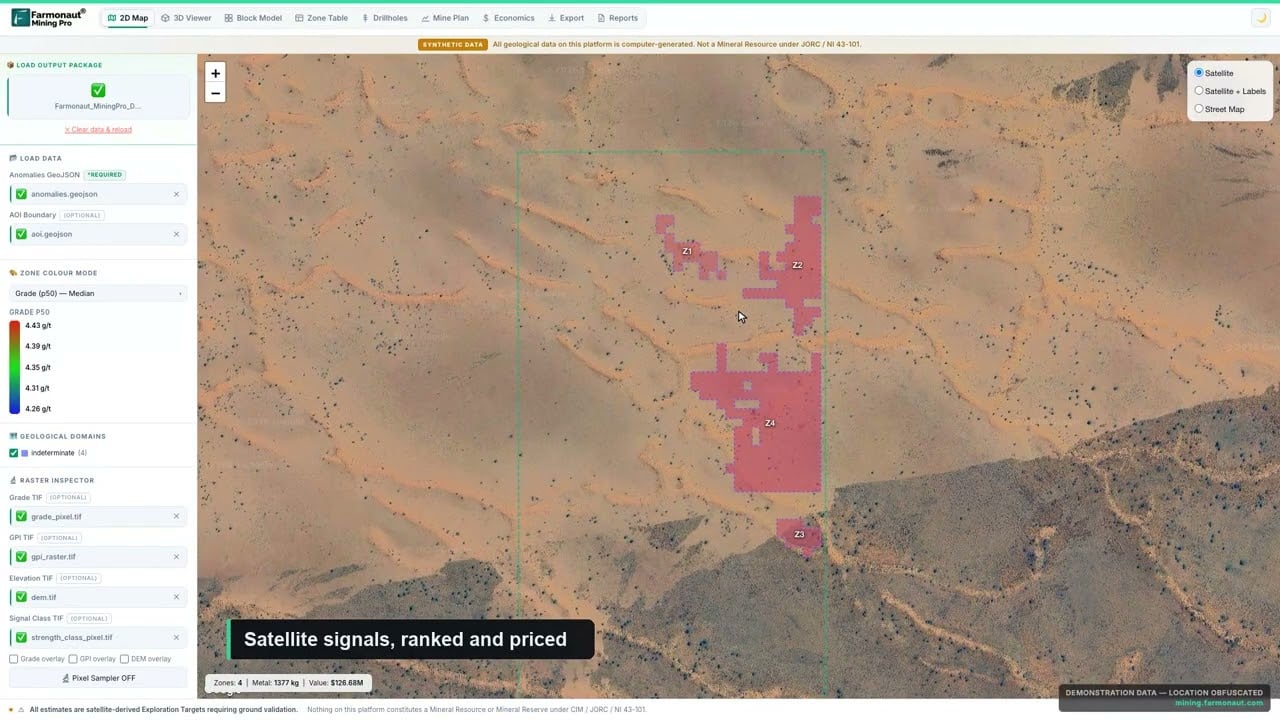
▶ A quick look at Farmonaut Mining Pro, which turns a licence boundary into a satellite-based geological picture (de-identified demo data). · 4:56
What to check before relying on any rare earth project
- Product. Concentrate, mixed carbonate and separated oxide sell at very different prices.
- Grade and mix. The share of NdPr, dysprosium and terbium in the TREO drives revenue more than the headline grade.
- Funding and approvals. A feasibility study is not a final investment decision; read the conditions in the filing.
- Offtake. Look for named customers, volumes and price floors.
- Processing. Check where the material will be separated and who holds the licence for the residue.
- Date. Every figure above carries its filing date; a plan from last year may have moved.
We cover a connected topic in Cobalt Mines in Australia: Producers and Projects Listed.
For a closer look at a related question, see our guide: Rare Earth Mining in the USA: 7 Projects Compared.
Frequently asked questions
How many rare earth elements are there and which are mined in Australia?
There are 17: the 15 lanthanides plus scandium and yttrium. Australia mainly produces light elements, lanthanum, cerium, neodymium and praseodymium, from Mt Weld, and Lynas has also made dysprosium, terbium and samarium oxides (Lynas quarterly report, 22 July 2026).
Where are Australia’s rare earth deposits?
Mt Weld, Yangibana and Browns Range are in Western Australia, Nolans is in the Northern Territory and Dubbo is in New South Wales. Eneabba in Western Australia is a refinery site with a monazite stockpile rather than a mine.
Who is the biggest rare earth producer in Australia?
Lynas, which produced 13,089 tonnes of oxide ready for sale in the year to June 2026 (Lynas Annual Report, 2026).
How much rare earth does Australia produce compared with China?
USGS estimates 29,000 tonnes of oxide from Australian mines in 2025 against 270,000 tonnes from China, out of 390,000 tonnes worldwide.
Which Australian rare earth projects are under construction?
Iluka’s Eneabba refinery was about 60% complete in August 2026, and Arafura held a ground-breaking at Nolans on 8 October 2026.
When will Nolans start producing?
Reuters reported first production from mid-2029 when the project was approved on 21 May 2026.
Are there rare earth stocks and funds for Australia?
Yes, several ASX-listed companies are named above. This page gives facts only and is not investment advice; see our list of Australian rare earth stocks for the listed names.
What are rare earths used for?
Magnets are the largest end use worldwide, according to USGS, followed by catalysts, batteries, ceramics, glass and polishing.
Does mining rare earths create radioactive waste?
Some ores contain thorium and uranium, so processing can leave low-level radioactive residue. Regulators set limits on it; Mt Weld was assessed by the Western Australia EPA in Report 1752.
Can satellites find rare earth deposits?
They can help rank ground for follow-up, for example by mapping alteration and structures, but only sampling and drilling can show grade. For a site screen, contact us.
This page is for information only. It is not investment advice. It gives no share prices or targets. Check each company’s ASX filings before you decide anything.
Farmonaut mining
Map your own mining site from space
Consultants can see how satellite data screens a licence area for minerals as an exploration target, ahead of a resource estimate.
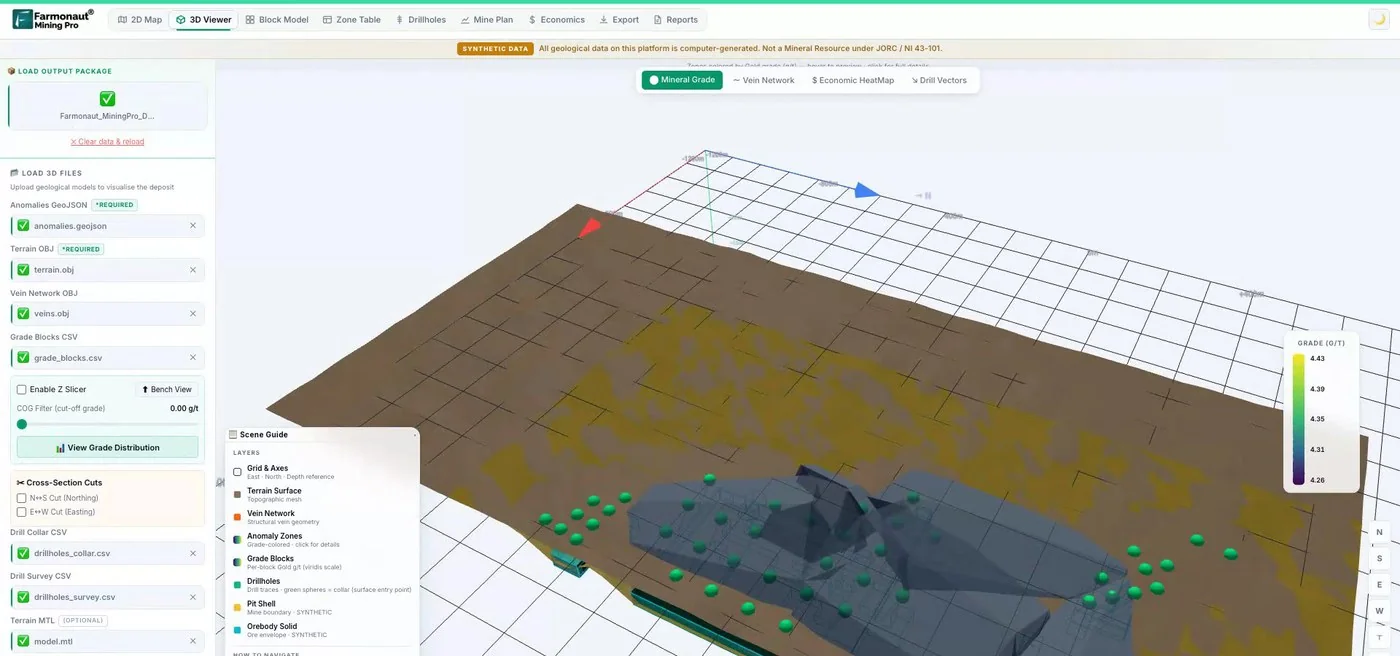
Mining Pro sample view, synthetic data
Keep reading
Sources
- Lynas Rare Earths, Appendix 4E and 2026 Annual Report (26 Aug 2026): announcements.asx.com.au
- Lynas Rare Earths, Quarterly Report for the period ended 30 June 2026: announcements.asx.com.au
- Lynas Rare Earths, Quarterly Report for the period ended 31 March 2026: announcements.asx.com.au
- USGS, Mineral Commodity Summaries 2026: Rare Earths: pubs.usgs.gov
- Western Australia EPA, Report 1752: Mt Weld Rare Earths Project: epa.wa.gov.au
- Iluka Resources, 2026 half year results teleconference transcript: iluka.com
- Reuters via Kitco, Arafura approves rare earth project (21 May 2026): kitco.com
- ABC News, Ground broken for Arafura Rare Earths mine (8 Oct 2026): abc.net.au
- Hastings Technology Metals, Corporate Presentation (July 2026): bulletin.webull.com
- Northern Minerals, Quarterly report (30 Apr 2026): announcements.asx.com.au
- Northern Minerals, ASX announcement on Browns Range funding (27 Oct 2025): announcements.asx.com.au
- Prime Minister of Australia, Historic critical minerals framework signed (21 Oct 2025): pm.gov.au
- Australian Strategic Materials, Dubbo Project: asm-au.com
- Energy Fuels, Completes Acquisition of Australian Strategic Materials (28 Aug 2026): investingnews.com
Discussion
Questions, corrections or field experience? Share them below. First-time comments are reviewed before they appear, and your email is never published.
No comments yet. Be the first to add a question or your experience.

 Double A Trading
 GemSprout Metals Limited
 Qader Group
 Ileys General Trading
 SG Gold Mining LLC
 VRV Global Pte Ltd
 Omsri International FZE
 G.I.T.T.
 Jaunita Erss Ltd
 Almosi SARL
 SRK Consulting
 Berks Gold Limited
 Mwerezi Minerals Company Limited
 Mining SARL
 SenGold Invest SAS
 Sean Mining Limited
 NTS Group (Pty) Ltd
 Mine4Africa










