

Seabed mining · Company and equipment guide
Deep Sea Mining Companies and Machine Makers Compared
No company yet holds a licence for commercial seabed mining in international waters. This guide compares the companies and machine builders in the sources, with the ISA and NOAA timeline, field-test results on sediment plumes and a nodule metal calculator.
Key takeaways
- The ISA lists 22 exploration contractors; live contracts are 19 for nodules, 7 for sulphides and 5 for cobalt-rich crusts (ISA, accessed October 2026).
- The ISA Council ended its July 2026 meeting on 24 July without adopting a mining code; experts quoted expect 3-4 more years of talks (Benchmark, August 2026).
- NOAA found TMC’s consolidated US application fully compliant (announced 19 August 2026); comments close 19 October 2026 and TMC expects a permit before the end of Q1 2027.
- The ISA’s 2010 study estimates 270 million tonnes of nickel and 46 million tonnes of cobalt in nodules of the CCZ study area; these are resources, not reserves.
- Patania II’s 2021 test raised sediment up to 10,000 times natural levels near the site, with small changes detectable 4.5 km away (GEOMAR/BGR, 2025).
In this article
- How we chose the companies in this guide
- Seabed mining companies compared
- Who makes underwater mining machines?
- How seabed nodule collectors work
- How much metal is on the seabed
- Why cobalt and nickel supply concentration drives interest
- ISA contracts and the US permit route
- Where the rules and timetable stand
- Listed seabed mining names: facts, not tips
- Environmental impacts: what field tests measured
- Deep sea mining for rare earth minerals
- Terms used in nodule reports
- What a nodule project's metal could be worth
- What satellites can and cannot see in seabed mining
No company holds a licence for commercial seabed mining in international waters as of 16 October 2026. The closest is The Metals Company (TMC, Nasdaq: TMC), whose consolidated US application NOAA found fully compliant with the information requirements of the Deep Seabed Hard Mineral Resources Act, as announced on 19 August 2026 (NOAA, 19 August 2026). NOAA has not yet certified it. TMC expects a permit before the end of the first quarter of 2027 (TMC Form 8-K, 1 May 2026), which is the company’s forecast. The machines come from a short list of offshore engineering firms, mainly Allseas and the GSR unit of DEME. The International Seabed Authority (ISA) lists 22 exploration contractors, but it has not yet adopted the rules that would allow mining to start.
This page answers four questions in order: who the companies are, who builds the underwater mining machines, what the rules and timetable look like, and what the field tests found about the environment. It also covers the rare earth angle, because rare earths and nodule metals are often mixed up. Every figure carries its source and date.
How we chose the companies in this guide
We included an organisation only if public records show at least one of three things: it holds an ISA exploration contract, it has filed a seabed mining application with a national regulator, or it built a collector or lift system that has worked on the seabed. This is a selection, not a complete directory. The ISA alone lists 22 contractors, and we do not claim to cover them all.
We left out price targets, share prices and any buy or sell view. Stock details are limited to the exchange and ticker named in company filings. This page is for information only and is not investment advice.
Seabed mining companies compared
The table sorts organisations by what they actually do: hold licences, build machines or test technology. Status is as reported in the sources named in the last column.
| Organisation | Role | What the sources show | Source |
|---|---|---|---|
| The Metals Company (TMC) | Licence applicant and project developer | Nasdaq: TMC. Consolidated NOAA application covers about 65,000 km2 in the Clarion-Clipperton Zone (CCZ) with an estimated 619 million tonnes of wet nodules. NOAA found it fully compliant (announced 19 August 2026); its public comment period closes 19 October 2026. TMC expects a permit before the end of Q1 2027. | NOAA, Aug 2026; TMC 8-K, May 2026 |
| Allseas | Offshore contractor, built TMC’s pilot collector and riser system | In 2022 the pilot system collected about 4,500 tonnes of nodules and lifted more than 3,000 tonnes up a 4.3 km riser, as reported by TMC. On 11 May 2026 TMC announced a contract under which Allseas will complete and operate the first commercial collection system, designed for 3 million wet tonnes a year. | Offshore Engineer, Nov 2022; International Mining, 11 May 2026 |
| Global Sea Mineral Resources (GSR) | ISA contractor, unit of DEME Group | Built the Patania II collector, tested at 4,500 m in 2021. Transocean invested in GSR in 2023. | DEME GSR site; Baird Maritime, 2021 |
| Odyssey Marine Exploration and American Ocean Minerals | Planned merger | Odyssey trades as Nasdaq: OMEX. The all-stock merger with American Ocean Minerals was announced on 8 April 2026. In the S-4/A filed with the SEC on 6 October 2026, the special meeting date was still blank, the outside date was 8 December 2026, and the combined company is expected to trade on Nasdaq as AOMC. The merger had not closed in that filing. | SEC Form S-4/A, 6 Oct 2026; Global Mining Review, Apr 2026 |
| Impossible Metals | Developer of the Eureka robot; lease requester in US federal waters | Pittsburgh-based. Asked the Bureau of Ocean Energy Management (BOEM) on 8 April 2025 to start a lease sale off American Samoa. BOEM’s proposed leasing notice of 17 July 2026 proposes a sale on 19 November 2026 of two areas. On 9 October 2026 Eco Minerals announced an MOU naming it Impossible Metals’ exploration partner. | CRS, 28 Aug 2026; Eco Minerals release, 9 Oct 2026 |
| China Ocean Mineral Resources Research and Development Association (COMRA) | ISA contractor | Holds three ISA exploration contracts: nodules, sulphides and cobalt-rich crusts. | ISA contractor list |
| Japan (JAMSTEC and the Cabinet Office programme) | Government test programme for rare earth mud | The drill ship Chikyu lifted about 50 tonnes of mud from about 6 km depth in early 2026. A larger trial is planned for February 2027. | Reuters via Marine Technology News; Ocean Mining Intel |
| Nautilus Minerals | Former sulphide developer (Papua New Guinea) | Creditors voted to effectively liquidate the company in August 2019. Its Solwara 1 project never reached production. | Ocean Mining Intel, Aug 2019 |
Two corrections to older lists, including the previous version of this page. Nautilus Minerals is no longer an active developer, and DeepGreen Metals is not a separate company from TMC: DeepGreen is the name TMC used before its 2021 listing on Nasdaq (reference summary of TMC’s history). For more on American-listed names, see our overview of US-linked seabed firms.
Who makes underwater mining machines?
There is no catalogue of seabed mining machines you can buy. Each collector is built for a specific project by an offshore engineering contractor, then tested on the seabed with scientists watching. Two builders have tested full-scale pre-prototype collectors on the seabed, both for nodules.
Allseas and the Hidden Gem system
Allseas designed the pilot collector vehicle and the riser that TMC’s subsidiary NORI used in the CCZ in late 2022. TMC reported that the vehicle drove more than 80 km, sustained 86.4 tonnes per hour and moved over 3,000 tonnes of nodules up a 4.3 km riser to the ship Hidden Gem, with another 1,500 tonnes left on the seafloor on purpose (Offshore Engineer, 14 November 2022). These are company-reported figures. On 11 May 2026 TMC announced a contract under which Allseas will complete and operate the first commercial nodule collection system: two collector vehicles, a riser, the Hidden Gem and a transfer vessel, with a nameplate capacity of 3 million wet tonnes a year. Allseas will fund a significant part of the development cost, recoverable from production revenue, and TMC calls Allseas its largest shareholder (International Mining, 11 May 2026, reprinting TMC’s announcement).
GSR and the Patania II collector
Patania II is a tracked pre-prototype with four vacuum-style collector heads. A waterjet above the nodules creates negative pressure that lifts them off the seabed, and the nodules are separated from the sediment, which is returned to the seafloor. It is powered and controlled through a cable of about 5 tonnes from the support ship (DEME GSR). On 25 April 2021 a lifting point separated and the vehicle came off its cable. It was recovered on 29 April (Baird Maritime, 2 May 2021). DEME said GSR would apply for a mining contract only if the science shows the seabed can be a responsible source of metals.
Impossible Metals and the Eureka robot
Impossible Metals describes Eureka as an autonomous underwater vehicle that hovers above the seabed and picks nodules selectively, avoiding those with visible life (company release, 16 April 2025). That is the company’s description, not an independent test result. Its route is a lease on the US outer continental shelf, not a high-seas licence. The Congressional Research Service notes that BOEM had issued no critical mineral leases as of 28 August 2026 (CRS, 28 August 2026). The same report lists a November 2025 request from Odyssey Marine Exploration for a lease sale for heavy mineral sands and phosphorites off Virginia.
Other equipment on the job
Beyond the collector, a project needs a riser or lift system, a production ship, remotely operated vehicles for inspection and autonomous vehicles for monitoring. Japan’s rare earth mud test uses a scientific drill ship rather than a nodule collector. For general reading on mining equipment and sensors, see our notes on mineral technology and mining innovations.
How seabed nodule collectors work
Polymetallic nodules are potato-sized lumps that lie on the abyssal plain at depths of about 3,000 to 6,000 metres (GEOMAR, March 2025). They were first brought up by the HMS Challenger expedition on 7 March 1873 (ISA). A nodule system has four jobs: pick the nodules up, separate them from mud, lift them to a ship and move them ashore for processing.
Infographic
A nodule system in 4 steps
- 1CollectA tracked collector lifts nodules off the seabed with the top layer of sediment.
- 2SeparateNodules are split from the sediment, which is returned to the seafloor (GSR design).
- 3LiftA riser pipe brings the nodules up to the production ship, as in the 2022 Allseas pilot.
- 4Ship and processNodules go ashore to be processed into nickel, copper, cobalt and manganese products.
Because nodules sit on the seabed surface rather than in a rock body, these collectors work the surface layer instead of cutting rock. In the 2021 Patania II test, nodules were removed together with at least the top 5 cm of the seafloor (see the environmental section below), and the sediment is where much of the life and most of the disturbance sits.
How much metal is on the seabed
The ISA’s geological model study estimates that the CCZ study area holds about 21,100 million tonnes of nodules, containing roughly 5,950 million tonnes of manganese, 270 million tonnes of nickel, 234 million tonnes of copper and 46 million tonnes of cobalt. These are inferred resource estimates from sampling, not reserves, and they date from 2010 (ISA Technical Study No. 6, 2010). The study’s mean grades on a dry basis are 29.0% manganese, 1.34% nickel, 1.14% copper and 0.23% cobalt.
Chart
CCZ nodule metal estimate as a share of USGS world land reserves
Per cent: ISA inferred resource estimate divided by USGS 2025 world reserves (nickel reserves are a floor, over 140 Mt)
To judge the scale, compare those estimates with what the US Geological Survey counts as economic reserves on land. USGS puts world reserves at more than 140 million tonnes of nickel, 12 million tonnes of cobalt, 980 million tonnes of copper and 1.8 billion tonnes of manganese (USGS, Mineral Commodity Summaries 2026). Resources and reserves are different measures, so the comparison shows scale rather than value.
Rare earths are not on this list. The metals in nodules are manganese, nickel, copper and cobalt, which is why the nodule projects described here are battery and steel projects, not rare earth projects.
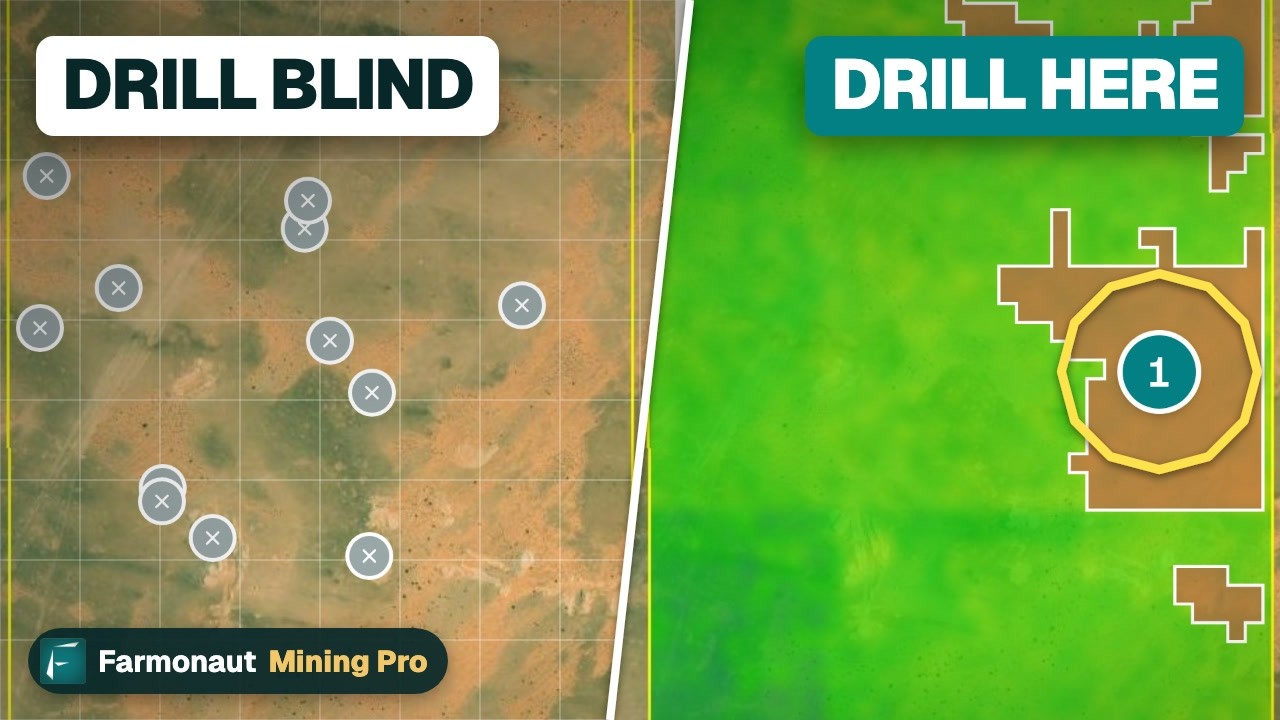
▶ Explains what mining contributes to economies and why energy-transition minerals are in demand. · 5:03
Why cobalt and nickel supply concentration drives interest
Supply of the two battery metals is concentrated on land. USGS reports that the Democratic Republic of the Congo mined 230,000 of the world’s 310,000 tonnes of cobalt in 2025 (estimate), and Indonesia mined 2.6 million of 3.9 million tonnes of nickel (USGS nickel, 2026). Shares are calculated from the USGS tables. Nodule developers point to this concentration when they describe the case for a second source, while Norway’s environment agency and others point to gaps in knowledge about deep-sea ecosystems (Marine Technology News, December 2025). The size of the resource is not the argument in dispute; supply risk and ecology are.
Chart
Share of world cobalt mine output by country
Per cent of world cobalt mine production, selected countries (2024; 2025 estimate)
ISA contracts and the US permit route
Outside national waters, the ISA grants 15-year exploration contracts. Its list shows 22 contractors and, among live contracts, 19 for polymetallic nodules, 7 for polymetallic sulphides and 5 for cobalt-rich crusts. One contract, held by the Brazilian company CPRM, was renounced on 28 December 2021 (ISA exploration contracts). Seventeen of the nodule contracts are in the CCZ.
Chart
Live ISA exploration contracts by mineral type
Number of contracts (22 contractors)
The United States is not a member of the ISA. It uses the Deep Seabed Hard Mineral Resources Act of 1980, under which NOAA can issue exploration licences and commercial recovery permits to US companies. Executive Order 14285, issued in April 2025, told agencies to speed up seabed minerals work. On 21 January 2026 NOAA published a final rule (91 FR 2642) that lets applicants file for an exploration licence and a commercial permit together (Gradient, 24 April 2026). NOAA says TMC USA submitted the first consolidated application on 6 February 2026; TMC and Gradient give 22 January. NOAA found it in substantial compliance on 9 March 2026.
The applicants named in the NOAA Federal Register notices we opened, as of 13 October 2026, are: TMC USA (exploration applications A and B, notice of 23 December 2025, plus the consolidated application, notice of 19 August 2026), American Metal Resources, LLC and SeaX (notice of 23 March 2026, hearings 21 and 22 April 2026), and American Deep Sea Minerals, Inc. (notice published 2 June 2026, hearing 1 July 2026). See the March 2026 notice and the June 2026 notice. This is the list in the notices we read, not NOAA’s complete register. Impossible Metals and Odyssey use the separate BOEM route for US federal waters.
Where the rules and timetable stand
The ISA still has no mining code. The Council ended its March 2026 session on 19 March without agreement. The Council ended its July meeting on 24 July without adopting the code, and the Assembly closed Part II of the 31st session on 31 July. Environmental safeguards, liability, inspection and benefit-sharing remain open, and experts quoted by Benchmark expect at least three to four more years of talks (Benchmark Mineral Intelligence, 14 August 2026). The ISA says negotiations resume in March 2027. The Council meets from 8 to 19 March and from 12 to 23 July 2027, and the 32nd Assembly runs from 26 to 30 July 2027 (ISA, 13 October 2026).
| Step in TMC’s US application (status as of 13 October 2026) | Date | Source |
|---|---|---|
| NOAA consolidated-application rule takes effect | 21 January 2026 | Gradient |
| Consolidated application (USA-A) submitted, per NOAA (TMC and Gradient give 22 January) | 6 February 2026 | NOAA |
| NOAA: substantial compliance | 9 March 2026 | Marine Technology News |
| NOAA: full compliance with information requirements (TMC announced it 1 May) | Spring 2026 | TMC 8-K; NOAA |
| USA-B exploration licence application certified | 28 May 2026 | TMC USA project page |
| Notice of intent to prepare an environmental impact statement (EIS) for USA-B published | 17 August 2026 | TMC USA project page; Ocean News |
| NOAA announces 60-day comment period on the consolidated application; virtual hearing held 13 October 2026, 3-5 pm ET | 19 August 2026 | NOAA; Federal Register notice 2026-16869 |
| Written comments close | 19 October 2026 | NOAA |
| Next: NOAA decides whether to certify; then EIS, public comment, final decision | TMC expects a permit before the end of Q1 2027 | NOAA; TMC 8-K |
The expected permit date is the company’s own forecast, not a NOAA commitment. NOAA’s decision follows an environmental impact statement and public comment.
Countries that have paused or opposed it
Norway ruled out seabed mining licences in its waters until at least the end of 2029 and withdrew public funding for government-led mineral mapping (UN Regional Information Centre, December 2025). By December 2025, 40 countries had taken a clear stance against the industry, the European Parliament had called for a moratorium and the European Investment Bank had excluded seabed minerals from financing. In November 2025 the Cook Islands announced five-year extensions for deep sea applications, which delays mining there until at least 2032 (Marine Technology News, 4 December 2025).
Listed seabed mining names: facts, not tips
This section names the listed companies that have seabed mining projects. TMC trades on Nasdaq under TMC. Odyssey Marine Exploration trades on Nasdaq under OMEX and announced a merger with American Ocean Minerals on 8 April 2026. The 6 October 2026 SEC filing shows the merger pending, with the combined company expected to trade as AOMC (Odyssey Form S-4/A, 6 October 2026). Global Mining Review also reports that TMC announced the direct listing of The Metals Royalty Company, which holds a 2% royalty on TMC’s NORI nodule project. GSR is the deep-sea exploratory division of DEME Group NV, so DEME’s results are not a seabed-only measure. For a longer background list, see our earlier piece on publicly traded names and the notes on polymetallic nodule companies.
None of these companies had started commercial seabed production as of 16 October 2026. Permits, test results and financing are still open. Read each company’s annual report and risk factors on SEC EDGAR before drawing any conclusion. This is not investment advice.
Environmental impacts: what field tests measured
Two sets of evidence matter most. The first is the DISCOL experiment, in which a plough-harrow was dragged across the Peru Basin seabed in 1989 to mimic mining. When scientists returned 26 years later, suspension feeders such as sponges and anthozoans (corals and anemones) were still much less common in the tracks, and diversity was lower in the disturbed area than in the reference area (Simon-Lledo et al., Scientific Reports, 2019).
The second is the 2021 monitoring of GSR’s Patania II in the CCZ. Over 41 hours the vehicle travelled about 20 km and covered 34,000 square metres. Near the site, sediment concentrations were up to 10,000 times natural levels and returned to normal after 14 hours. Most particles stayed within 5 metres of the seafloor, but small changes were detectable 4.5 km away. A redeposited layer about 3 cm thick covered the nodule habitat within about 100 m, and the collector removed at least the top 5 cm of the seafloor where it worked (Marine Technology News on the Nature Communications study, March 2025). The authors describe the data as the first detailed look at the far-field footprint.
What the tests do not show is the effect of a full-scale operation running for years, or how the midwater discharge from a riser behaves over time. For the permit steps that cover these gaps, see our guide to environmental impact assessment in mining.
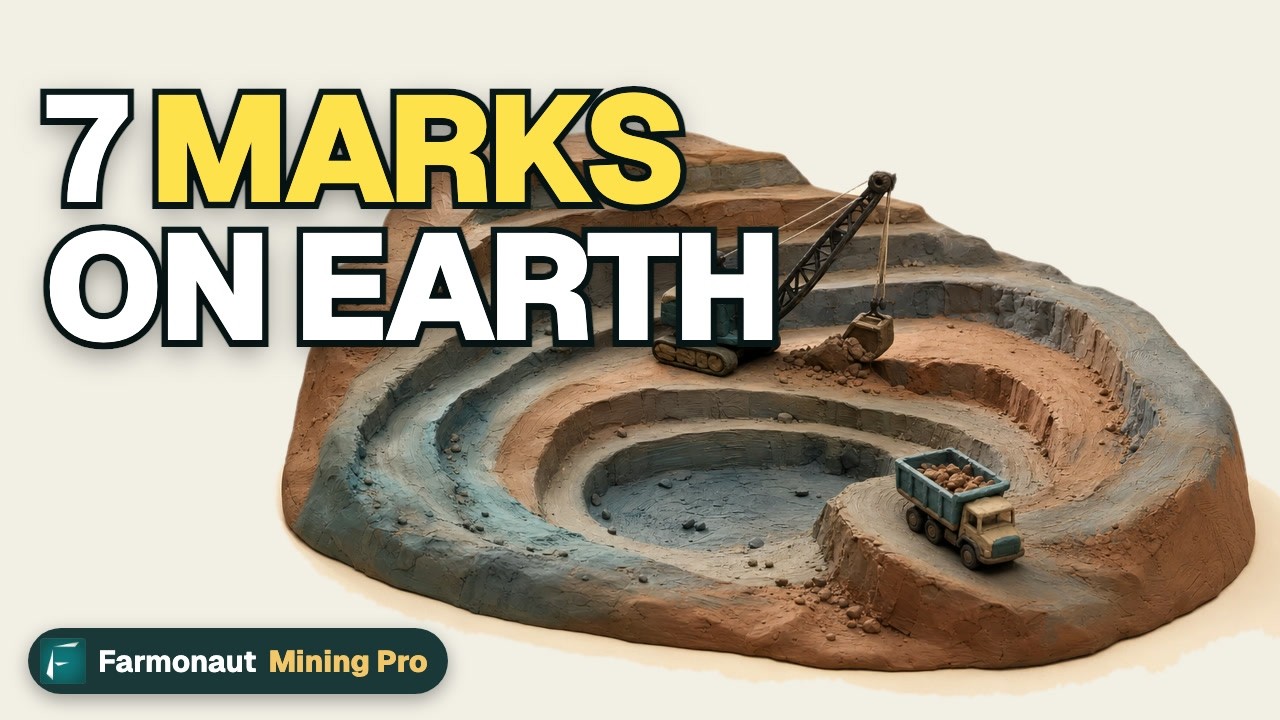
▶ A plain-language claymation on the seven environmental impacts of mining. · 2:31
Deep sea mining for rare earth minerals
Rare earth elements such as neodymium and dysprosium go into the permanent magnets used in electric vehicle motors and wind turbines. For readers new to the group, our explainer on what a rare earth metal is gives the basics. Japan’s government test is the main seabed rare earth work in the sources we reviewed, and it is about mud, not nodules.
The drill ship Chikyu left on 12 January 2026 for waters near Minamitori Island, about 1,900 km southeast of Tokyo. It recovered rare earth mud from about 6 km depth, the first continuous lift of such mud from that depth (Reuters via Marine Technology News, 2 February 2026). In July 2026 the government reported that about 50 tonnes of mud were recovered and that medium and heavy rare earths made up about 54% of the total rare earth content. Officials did not give the deposit size because the sampling was too limited. A month-long trial aiming to dredge 350 tonnes of mud a day is planned from February 2027, and an assessment of industrial prospects is due by March 2028 (Ocean Mining Intel, 28 July 2026).
The context is trade policy. Reuters reported that China banned exports of dual-use items to Japan in January 2026, including rare earths, which is why Japan funds the work. A trial is not a mine.
Terms used in nodule reports
Wet and dry tonnes. Nodules hold water. TMC states its application resource of 619 million tonnes in wet tonnes, with potential exploration upside of a further 200 million tonnes. Metal grades are usually quoted on a dry basis, so you must remove the water before applying a grade.
Grade. The percentage of a metal by weight. The ISA study’s mean dry grades are 1.34% nickel and 1.14% copper (dry weight).
Resource and reserve. A resource is an estimate of material that may be mined. A reserve is the part shown to be economic under current conditions. The ISA study estimates inferred resources, so its metal totals are not reserves.
Abundance. Nodules are measured in kilograms per square metre of seabed. The ISA study’s mean abundance in its screened data set is 7.2 kg per square metre, with a maximum of 44.1, so the ground is patchy.
What a nodule project’s metal could be worth
Use the calculator to see how output, grade and recovery combine. It uses the ISA study’s mean dry grades as defaults and assumes you supply prices, water content and recovery. It covers nickel and copper only, and it leaves out cobalt, manganese, operating costs, processing charges and royalties, so the result is gross value, not profit. TMC’s own resource figure is stated in wet tonnes, which is why water content is an input.
Calculator
What could the metal in nodules be worth?
Enter your own tonnage, water content, grades, recovery and prices.
- Copper recovered per year: 12,768 t
- Dry nodules per year: 1.40 Mt
- Gross nickel + copper value per year: $352,800,000
Example values only, not a forecast or any company’s figures. Default grades are the mean dry grades in ISA Technical Study No. 6 (2010). Prices are inputs: example, use today’s price (US$ per tonne). Cobalt, manganese, costs, processing charges and royalties are left out, so the result is gross metal value, not profit.
What satellites can and cannot see in seabed mining
Optical satellites cannot see through deep water, so they do not map nodule fields or the seabed. They can help at the surface: ship tracks, coastal ports and processing sites on land. Farmonaut works on land licences, where satellite data screens ground for mineral targets before drilling. That is an exploration target ahead of any resource estimate, and it does not cover the deep ocean. Our satellite mineral exploration page explains what the service does on land.
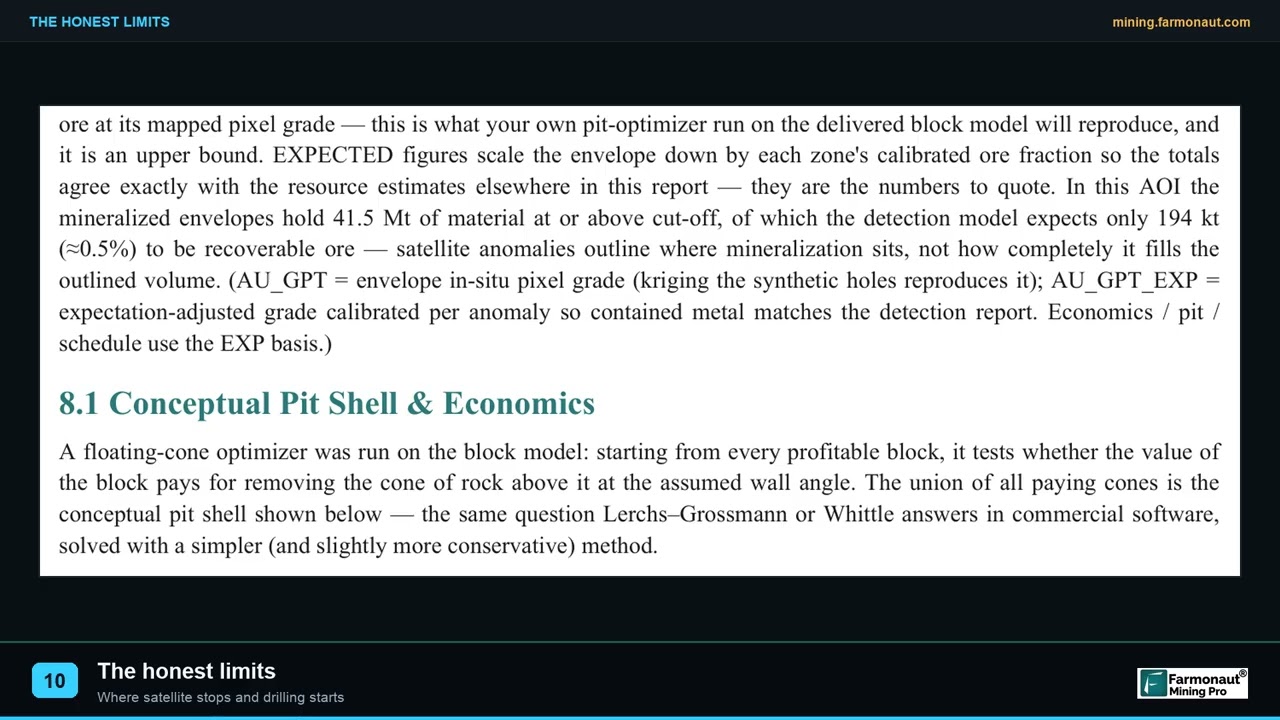
▶ Covers the limits of satellite mineral exploration that matter for due diligence. · 2:08
How to follow the story: what to check
- The ISA Council and Assembly outcomes: whether a mining code is adopted, and any change to the contractor list.
- The NOAA record for TMC USA: the draft environmental impact statement, the public comment period and the final decision.
- Independent monitoring results, such as the Nature Communications and Scientific Reports papers cited above.
- Company filings on SEC EDGAR: financing, permit assumptions and risk factors.
- Government decisions: Norway, the Cook Islands, the European Union and the countries calling for a pause.
We cover a connected topic in Machine to Separate Gold From Sand: 6 Types Compared.
Frequently asked questions
What is deep sea mining?
It means taking mineral deposits from the seabed at depths of roughly 3,000 to 6,000 metres. The main targets are polymetallic nodules, which hold manganese, nickel, copper and cobalt, plus sulphide deposits and cobalt-rich crusts (ISA contractor list).
Is seabed mining legal?
Exploration is legal under ISA contracts. Commercial mining in international waters needs rules the ISA has not adopted. The US uses its own 1980 law and NOAA permits, and other countries disagree with that route.
Which companies are doing deep sea mining?
The ones with the most advanced work are TMC, GSR (DEME Group) and Allseas as a machine builder, with Odyssey Marine Exploration and American Ocean Minerals planning a merger. None is producing metal.
Who manufactures underwater mining machines?
Machines are built per project by offshore contractors. Allseas built TMC’s pilot collector and riser, and GSR built Patania II. There is no standard product to order.
When could commercial seabed mining start?
TMC expects a US permit before the end of Q1 2027 and says production would follow. The ISA’s mining code is expected to take at least three to four more years to agree, according to Benchmark.
Which metals come from the seabed?
Nodules contain manganese, nickel, copper and cobalt. Rare earths are found in some seabed muds, which Japan is testing. They are not a main nodule metal.
How much of the world’s nickel and cobalt could nodules supply?
The ISA study estimates 270 million tonnes of nickel and 46 million tonnes of cobalt in its CCZ study area. That is a resource estimate, not a reserve, and how much could be recovered is untested.
What are the environmental risks?
The main findings so far are slow recovery of seabed animals (DISCOL, 26 years) and sediment plumes that settle mostly within a few hundred metres but are detectable up to 4.5 km away.
Can you invest in deep sea mining?
A few companies are listed, including TMC (Nasdaq: TMC) and Odyssey Marine Exploration (Nasdaq: OMEX). They have no seabed metal revenue. This is not investment advice.
Does seabed mining include rare earths?
Japan is testing rare earth mud near Minamitori Island. Nodule projects in the CCZ target manganese, nickel, copper and cobalt instead.
Can satellites help with seabed mining?
Not on the seabed itself. Satellites can watch the surface and land sites, while seabed work relies on ships, sonar and underwater vehicles.
This page is for information only. It is not investment advice. It gives no share prices or targets, and none of the companies named has started commercial seabed production. Check each company’s filings before you decide anything.
Farmonaut mining
Screen a land licence from space
Investors can see how satellite data screens a licence area on land for minerals as an exploration target, ahead of a resource estimate.
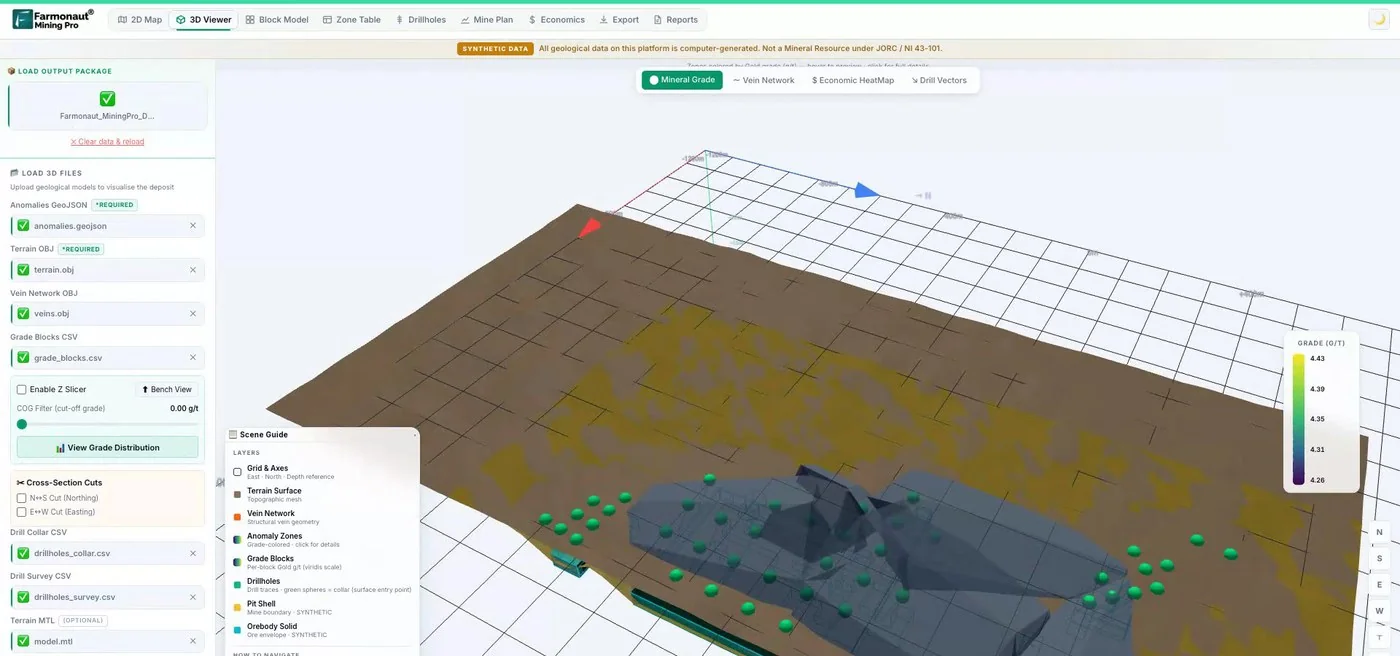
Mining Pro sample view, synthetic data
Keep reading
Sources
- ISA, Exploration Contracts: isa.org.jm
- ISA Technical Study No. 6: A Geological Model of Polymetallic Nodule Deposits in the CCZ (2010): isa.org.jm
- USGS, Mineral Commodity Summaries 2026: Cobalt: pubs.usgs.gov
- USGS, Mineral Commodity Summaries 2026: Nickel: pubs.usgs.gov
- USGS, Mineral Commodity Summaries 2026: Copper: pubs.usgs.gov
- USGS, Mineral Commodity Summaries 2026: Manganese: pubs.usgs.gov
- Benchmark Mineral Intelligence, ISA meeting report (14 Aug 2026): source.benchmarkminerals.com
- Global Mining Review, Why 2026 will decide who governs the seabed (22 Apr 2026): globalminingreview.com
- Gradient, Deep Seabed Mining: New US Regulatory Framework (24 Apr 2026): gradientcorp.com
- TMC Form 8-K exhibit 99.1 (1 May 2026): boardroomalpha.com
- Marine Technology News, NOAA substantial compliance (9 Mar 2026): marinetechnologynews.com
- Offshore Engineer, TMC’s NORI and Allseas lift 3,000t of nodules (14 Nov 2022): oedigital.com
- DEME, Global Sea Mineral Resources (GSR): deme-group.com
- Baird Maritime, DEME’s seabed mining robot back in service (2 May 2021): bairdmaritime.com
- Marine Technology News, Deep-sea mining test caused distant sediment change (9 Mar 2025): marinetechnologynews.com
- GEOMAR, Footprints of Deep-Sea Mining (5 Mar 2025): geomar.de
- Simon-Lledo et al., Biological effects 26 years after simulated deep-sea mining, Scientific Reports (2019): ncbi.nlm.nih.gov
- UNRIC, UN experts commend Norway’s decision to postpone licensing (Dec 2025): unric.org
- Marine Technology News, Norway halts deep sea mining plans (4 Dec 2025): marinetechnologynews.com
- Reuters via Marine Technology News, Japan retrieves rare earth mud (2 Feb 2026): marinetechnologynews.com
- Ocean Mining Intel, Minamitori Island seabed mud (28 Jul 2026): oceanminingintel.com
- Ocean Mining Intel, Main shareholders gain control of Nautilus Minerals (22 Aug 2019): oceanminingintel.com
- The Northern Miner, AOMC and Odyssey merge (2026): northernminer.com
- Wikipedia, The Metals Company (reference summary): en.wikipedia.org
- ISA, From the 31st to the 32nd Session (13 Oct 2026): isa.org.jm
- NOAA, NOAA advances review of first-ever deep seabed mining commercial recovery application (19 Aug 2026): noaa.gov
- Federal Register notice 2026-16869: consolidated application, TMC USA (19 Aug 2026): public-inspection.federalregister.gov
- Federal Register, notice of receipt: AMR and SeaX (23 Mar 2026): govinfo.gov
- Federal Register notice 2026-10975: American Deep Sea Minerals (2 Jun 2026): public-inspection.federalregister.gov
- Federal Register, notice of receipt: TMC USA applications A and B (23 Dec 2025): govinfo.gov
- TMC, USA projects page: metals.co
- Ocean News, NOAA publishes notice of intent for USA-B (17 Aug 2026): oceannews.com
- International Mining, TMC and Allseas sign agreement (11 May 2026): im-mining.com
- CRS, Seabed Mining on the U.S. Outer Continental Shelf: Recent Developments (28 Aug 2026): everycrsreport.com
- Impossible Metals lease request release (16 Apr 2025): steel-technology.com
- Eco Minerals and Impossible Metals MOU release (9 Oct 2026): newswire.com
- Odyssey Marine Exploration Form S-4/A (6 Oct 2026): sec.gov
Discussion
Questions, corrections or field experience? Share them below. First-time comments are reviewed before they appear, and your email is never published.
No comments yet. Be the first to add a question or your experience.

 Sean Mining Limited
 NTS Group (Pty) Ltd
 Mine4Africa
 Lithspo Minerals Limited
 Tintina Mining Group
 Dalgety Minerals Pty Ltd
 Vortex Minerals Pty Ltd
 Faith At Work (Pty) Ltd
 Geotech Mining Solutions plc
 Vulcan International Limited
 Kidepo Associates
 GKY Mining
 Alkimy SARL
 Double A Trading
 GemSprout Metals Limited
 Qader Group
 Ileys General Trading
 SG Gold Mining LLC
 VRV Global Pte Ltd
 Omsri International FZE
 G.I.T.T.
 Jaunita Erss Ltd
 Almosi SARL
 SRK Consulting
 Berks Gold Limited










