

EIA Environmental Impact Assessment: 7 Mining Trends 2026



Environmental Impact and Assessment in Mining: A Crucial Tool for Sustainable Development in 2025 & Beyond
Mining remains an irreplaceable lynchpin in our global economies, providing essential raw materials—minerals, gemstones, and rare earths—vital for infrastructure, defense, industrial processes, and technological advancement. However, mining operations often pose significant environmental and social challenges, from habitat destruction and water pollution to community displacement and livelihood change.
Today, as we cross into 2026, environmental impact and assessment is not just a regulatory requirement, but a crucial framework guiding mining sector sustainability and responsibility. EIA environmental impact assessment and its more comprehensive counterpart—environmental and social impact assessment (ESIA)—have become indispensable tools. These frameworks identify, predict, evaluate, and mitigate environmental and social impacts before projects proceed, ensuring mining’s benefits are balanced with environmental stewardship and social equity.
By leveraging modern technologies—remote sensing, GIS, satellite data analytics, and AI modeling—assessments today are more precise, inclusive, and future-proof. Let’s explore the critical practices, regulatory trends, challenges, and the seven key sustainable mining trends shaping EIA and ESIA for 2026 and beyond.

Understanding EIA Environmental Impact Assessment in Mining
The EIA environmental impact assessment is a systematic tool used to identify, predict, evaluate, and mitigate potential environmental effects of proposed mining projects before they are allowed to proceed. In many countries, robust EIA is mandated by law or regulation, ensuring that environmental considerations are embedded at the earliest stages of project design.
Why is EIA Indispensable in Mining?
- EIA environmental impact assessment serves as a preventive mechanism—helping to minimize or avoid adverse impacts on air quality, water resources, soil stability, biodiversity, and local ecosystems.
- It is crucial for responsibly balancing development objectives with environmental protection, particularly in 2025 and beyond as global sustainability standards become more stringent.
- Modern EIA processes integrate continuous monitoring, using a combination of ground-based surveys, chemical tests, and increasingly, satellite data and predictive modeling to forecast impacts under various scenarios (e.g., different extraction techniques, seasonal climate variations).
Common types of adverse environmental impacts from mining activities that EIA seeks to address include:
- Pollution of surface and groundwater through acid mine drainage
- Air quality deterioration from dust, emissions, or fumes
- Soil erosion, instability, and nutrient loss due to land disturbance
- Habitat destruction and loss of biodiversity—affecting both flora and fauna
- Disruption of surrounding ecosystems and landscapes
In 2026, the scope of EIAs is expanding beyond basic compliance—embracing the predictive power of artificial intelligence, satellite remote sensing, and data analytics for both pre-mining and operational phases. This evolution is improving the precision of impact modeling and facilitating compliance with national and international sustainability standards.

Key Phases of EIA Environmental Impact Assessment in Mining
- Screening – Determining if a project requires a full EIA based on size, location, and nature.
- Scoping – Identifying the critical environmental issues and assessment methods to be included.
- Baseline Data Collection – Compiling pre-project data on air, water, soil, biodiversity, climate, and environmental health parameters.
- Impact Prediction and Evaluation – Using empirical, GIS, and/or AI-based techniques to predict potential changes in environmental parameters under different scenarios.
- Mitigation Planning – Proposing concrete actions to avoid, minimize, or offset negative impacts.
- Public Consultation & Stakeholder Engagement – Involving regulators, local communities, and other stakeholders to ensure concerns are transparently addressed.
- Reporting & Review – Preparing EIA documentation for regulatory authority review and public disclosure.
Technological Integration in Modern EIA (2026)
- Remote Sensing & GIS – High-resolution satellite imagery and geospatial data provide dynamic monitoring of land use, vegetation, soil and water quality across vast mining sites, supporting the impact assessment process.
- Data Analytics – AI and big data models are deployed to analyze historical, current, and predictive trends in environmental variables, enhancing the accuracy of EIA outcomes.
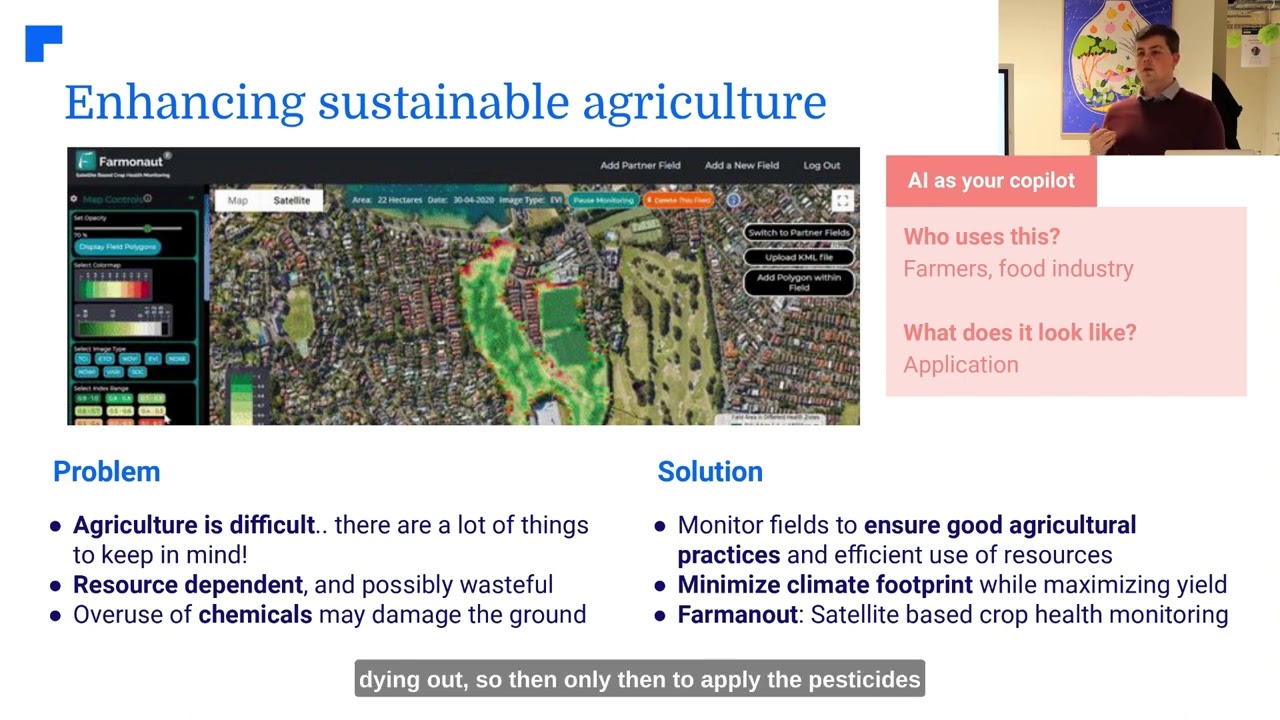
- Real-time Monitoring – IoT and satellite platforms (like those offered by Farmonaut) enable ongoing environmental impact tracking, alerting companies and regulators to anomalies in carbon, water, and soil conditions.
With these advancements, EIA environmental impact assessment processes not only facilitate compliance, but also promote sustainable mining practices that protect critical natural resources for future generations.

Expanding the Scope: Environmental and Social Impact Assessment (ESIA)
While traditional EIA frameworks focus primarily on environmental and ecological dimensions, modern ESIA (Environmental and Social Impact Assessment) broadens the lens, integrating social, economic, and cultural considerations into mining impact assessment.
By 2026, ESIA is a critical tool for mining projects worldwide, especially as global attention intensifies around issues of community displacement, indigenous rights, public health risks, and local livelihoods. This approach supports the realization of the United Nations Sustainable Development Goals (SDGs) and aligns with international best practices for mining sector responsibility.
Key Social Considerations in ESIA
- Affected local and indigenous communities—displacement, land use change, cultural site impact
- Worker and public health and safety—exposure to mining-related environmental risks
- Changes in local economies and livelihoods—both positive (employment) and negative (loss of access to traditional lands/resources)
- Equitable benefit-sharing and social investment in host regions
- Human rights risk assessments—especially in areas with vulnerable populations
In addition to community consultations, social baseline studies, and engagement activities, ESIA frameworks in 2025 and 2026 emphasize:
- Participatory Planning – Engaging stakeholders from project inception, ensuring local voices shape mitigation and benefit-sharing plans.
- Transparency and Disclosure – Requiring public release of assessment findings to foster trust and inclusive decision-making.
- Ongoing Grievance Redress Mechanisms – Establishing processes for affected communities to raise concerns throughout the lifetime of mining operations.
This inclusive approach helps mitigate social risks, builds a company’s social license to operate, and ultimately makes mining development more sustainable and resilient.

Sustainable Benefits of Integrating EIA and ESIA in Mining, 2026
- Better project design: Early identification of adverse environmental and social impacts leads to less disruptive, more efficient development plans.
- Regulatory compliance: Aligning with national and international laws prevents legal delays, fines, and costly project redesigns.
- Community support: Inclusive engagement minimizes conflict and builds stronger community relationships.
- Resilience & flexibility: Adaptive management responding to new risks, climate change, and technological shifts.
Learn how Farmonaut’s blockchain-based traceability enhances transparency in mining and supply chains.
Blockchain traceability ensures every resource and mineral can be tracked securely, minimizing environmental and social risks.
Regulatory and Corporate Trends in Mining EIA/ESIA
The momentum in environmental impact and assessment is driven by both stringent regulatory frameworks and evolving corporate responsibility standards. As we approach 2026, both national governments and international organizations are tightening requirements for EIA and ESIA in the mining sector.
Global and National Regulatory Shifts
- EIA/ESIA as permit requirement: In many regions, mining projects cannot proceed without comprehensive environmental and social impact assessment, including public disclosure and active monitoring obligations.
- Stricter enforcement: Regulatory agencies are imposing higher penalties—including operational suspensions—on companies found guilty of non-compliance.
- Mandatory real-time environmental monitoring: Governments are encouraging—or requiring—adoption of technological tools like satellite data and IoT sensors for near-real-time impact tracking.
- Integration with climate policy: Climate change risk projections (flooding, droughts, heatwaves) now inform EIA/ESIA, with mitigation and adaptation measures becoming standard in impact assessments.
Corporate and Investor Pressure: ESG, CSR, and Beyond
- Environmental, Social, and Governance (ESG) metrics and corporate social responsibility (CSR) programs drive companies to exceed regulatory minimums, reducing long-term risks and ensuring access to international capital and markets.
- Investors increasingly demand robust impact assessments as a condition for financing, especially for major international mining projects.
- Transparent, public EIA/ESIA reporting is rapidly becoming a global expectation.
These dual pressures are leading to faster adoption of new EIA/ESIA tools and best practices, from blockchain traceability and AI-driven predictive modeling to advanced stakeholder engagement platforms. Farmonaut’s solutions are designed to empower industry players to keep pace in this evolving landscape.

Discover Farmonaut’s Carbon Footprinting solution for mining projects.
Carbon tracking and reporting are critical for EIA/ESIA compliance and help manage your project’s responsibility toward climate commitments.
Comparative Table: 7 Sustainable Mining Trends 2026
The mining industry is evolving rapidly. Stakeholders are focusing on scalable, sustainable solutions that answer to both environmental and social demands. Explore these 7 key trends expected to redefine EIA environmental impact assessment practices and metrics in 2026. Each trend in the table is linked to a recommended EIA/ESIA approach, providing a practical roadmap for sustainable mining projects.
| Mining Trend (2026) | Estimated Environmental Impact (2026) | Recommended EIA/ESIA Practice |
|---|---|---|
| 1. AI-Driven Remote Sensing for EIA | 30–40% reduction in environmental monitoring delays; improved CO₂, water, and soil data accuracy | Integrate satellite, drone, and IoT systems for real-time multi-parameter monitoring and predictive impact modeling |
| 2. Automated ESG Compliance Tracking | 15–20% improvement in regulatory breach detection; early risk alerts | Embed ESG tracking tools (blockchain/reporting) alongside baseline EIA/ESIA requirements; automate alerts for threshold breaches |
| 3. Water-Efficient Mining & Waste Management | 10–25% reduction in water usage per ton of ore; reduced surface/groundwater pollution incidents | Comprehensive water assessment—include water recycling, leachate management, and pollution control in EIA/ESIA plans |
| 4. Indigenous & Community Co-governance Models | Increased social license rates; up to 50% reduction in social conflict cases | Mandate participatory stakeholder mapping, local benefit-sharing, and ongoing community engagement in ESIA |
| 5. Climate-Adaptive Mining Operations | Supports adaptation to rising weather extremes; mitigates site stability risks | Incorporate climate scenario modeling and risk assessment as standard EIA/ESIA modules |
| 6. Biodiversity Net Gain Mandates | Potential for net zero or positive ecological outcomes | Require baseline biodiversity audits and enforce restoration or offset actions in EIA/ESIA |
| 7. Lifecycle & Circular Economy Mining | Reduction in raw resource demand; lower cumulative waste/environmental load | Adopt full lifecycle impact assessment (mine-to-closure), and prioritize reuse/recycling commitments in EIA/ESIA |
These trends reflect how technology, stakeholder engagement, and global ecological priorities will shape tomorrow’s mining sector.

Technological Advancements, Persistent Challenges & Future Directions for EIA/ESIA
While EIA environmental impact assessment and environmental and social impact assessment (ESIA) frameworks continue to progress, several technological advancements and persistent challenges warrant close attention heading into 2026 and beyond.
Major Advancements Transforming EIA/ESIA
- Satellite and Remote Sensing Platforms: Satellite monitoring (such as multispectral/thermal) provides expansive, continuous, and unbiased data on mine environments, supporting better baseline and ongoing impact assessments.
- AI & Machine Learning in Predictive Modeling: AI accelerates complex analysis of environmental, geological, and social datasets—enabling proactive risk identification and simulation of various mining impact scenarios.
- Blockchain Traceability Solutions: Distributed ledgers increase transparency and traceability of environmental compliance and resource movement across the mining supply chain.
- Real-time Environmental Impact Tracking: IoT and satellite-linked sensors facilitate continuous monitoring of air, water, and soil quality—creating accountability and quick response to adverse changes.
Continuing Challenges
- Geological/Ecological Variability: Accurate predictions remain difficult across complex, regionally variable mine sites.
- Cumulative Impacts: Assessing additive impacts across multiple mining operations within a watershed or region requires integrated, landscape-level assessment frameworks, which are still emerging.
- Enforcement Gaps in Developing Countries: Many resource-rich countries lack the institutional capacity or governance to ensure comprehensive EIA/ESIA implementation.
- Climate Change: Rapidly shifting rainfall, temperature, and extreme weather patterns require new approaches to mine stability, water management, and baseline environmental assessment.
Stepping into 2026, advancing data reliability, transparency, and inclusiveness in EIA and ESIA will be crucial for responsible mining and sustainable development worldwide.
Optimize mining logistics with Farmonaut’s Fleet Management tools.
Efficient fleet management reduces emissions, improves resource allocation, and aligns with EIA sustainability requirements.
Explore satellite-based verification for mining loans and insurance with Farmonaut.
Satellite verification helps banks and insurers in the mining sector reduce fraud and enhance project feasibility assessment.

Farmonaut’s Role: Satellite & AI for EIA Environmental Impact Assessment in Mining
At Farmonaut, we are committed to making advanced satellite-based monitoring and AI-driven impact advisory accessible to governments, businesses, and stakeholders in the mining industry. Our mission is to democratize satellite data for better environmental and social outcomes—empowering robust EIA and ESIA practices worldwide.
How Farmonaut Supports EIA/ESIA in Mining
- Satellite-based Environmental Monitoring: Our platform collects high-resolution satellite imagery to monitor mine sites and surrounding landscapes in real-time. This enables precise, ongoing assessment of vegetation, soil, water, and air quality—all critical parameters for EIA environmental impact assessment.
- AI-Driven Impact Advisory: The Jeevn AI system analyzes environmental and operational data to deliver tailored, location-specific advisory—helping optimize operations, prevent adverse ecological impacts, and ensure regulatory compliance.
- Blockchain Traceability: We offer blockchain-based tracking systems for ensuring environmental compliance and ethical sourcing in mining supply chains.
- Carbon Footprint Reporting: Real-time tracking of carbon and greenhouse gas emissions for use in EIA/ESIA documentation and sustainability reporting.
- Resource & Fleet Management: Optimizing the allocation and usage of mining fleets, vehicles, and equipment directly supports more sustainable, lower-impact operations.
- API Integration: Businesses and developers can leverage Farmonaut’s API for integrating real-time satellite data into their own EIA/ESIA systems or third-party analytics solutions. View developer docs.
For large mining and infrastructure projects, Farmonaut’s scalable monitoring services offer a single-platform solution for multi-site EIA/ESIA management.
Manage large-scale environmental monitoring and compliance efficiently—even across multiple mine sites or jurisdictions.
Farmonaut Subscription Pricing
Easily subscribe to our advanced EIA environmental impact assessment and remote monitoring tools. Scale with your needs, from single projects to enterprise portfolios.
FAQ – EIA Environmental Impact Assessment in Mining
What is the difference between EIA and ESIA?
EIA (Environmental Impact Assessment) focuses on identifying, evaluating, and mitigating environmental impacts of a project—such as on air, water, soil, and biodiversity. ESIA (Environmental and Social Impact Assessment) expands on this by integrating social, economic, and cultural factors—including the impact on communities, livelihoods, health, and indigenous rights.
Are EIA/ESIA mandatory for all mining projects?
In most countries, EIA is legally required for medium-to-large scale mining projects and any operation expected to have significant environmental impact. ESIA is increasingly mandated, especially for projects affecting community populations, indigenous lands, or sensitive ecological areas.
How do technological advancements improve EIA/ESIA in mining?
Technologies like satellite monitoring, IoT sensors, and AI-powered analytics provide higher quality, real-time data and predictive models—making EIA/ESIA faster, more accurate, and better able to anticipate future risks. This supports regulatory compliance and more truly sustainable mining practices.
What is a “social license to operate” and how does ESIA help secure it?
A social license to operate refers to ongoing community acceptance and support for a mining project. Thorough ESIA processes—including stakeholder engagement and benefit-sharing—are crucial in addressing concerns and ensuring mutual trust and long-term support.
How does Farmonaut’s platform support EIA and ESIA activities?
We provide real-time satellite monitoring, AI advisory, and blockchain traceability solutions—supporting baseline data collection, ongoing monitoring, impact modeling, and stakeholder reporting for both EIA and ESIA projects.
Conclusion: EIA, ESIA & Sustainable Mining—Charting a Responsible Path to 2026
As environmental and social expectations for the mining sector rise, EIA environmental impact assessment and environmental and social impact assessment have become indispensable frameworks steering mining projects toward sustainable, responsible development. Advanced technologies—from satellite imaging to AI-driven analytics—are strengthening our ability to identify, predict, and mitigate risks before they escalate, while inclusive stakeholder engagement safeguards community and ecosystem interests.
For miners, investors, regulators, and communities, the future hinges on integrating these assessments as living, adaptive tools—not just one-off regulatory exercises. By embracing continuous improvement, transparency, and technological innovation, the industry can ensure a balance between economic progress and the stewardship of our planet’s resources.
For a responsible mining future grounded in environmental impact and assessment, proactive use of EIA and ESIA—powered by technology—remains our strongest path toward resilience, stewardship, and sustainable growth.
Discussion
Questions, corrections or field experience? Share them below. First-time comments are reviewed before they appear, and your email is never published.
No comments yet. Be the first to add a question or your experience.

 Congo Mining Solutions
 Mining SARL
 SenGold Invest SAS
 Sania Corporation
 Sean Mining Limited
 NTS Group (Pty) Ltd
 Mine4Africa
 Lithspo Minerals Limited
 Tintina Mining Group
 Dalgety Minerals Pty Ltd
 Vortex Minerals Pty Ltd
 Faith At Work (Pty) Ltd
 Geotech Mining Solutions plc
 Vulcan International Limited
 Kidepo Associates
 GKY Mining
 Alkimy SARL
 Double A Trading
 GemSprout Metals Limited
 Qader Group
 Ileys General Trading
 SG Gold Mining LLC
 VRV Global Pte Ltd










