

Canada bauxite and lithium · Fact guide
Bauxite Mines in Canada: None, and Where Ore Comes From
Canada has no bauxite mines and no reported bauxite reserves, yet it smelts about 3.3 million tonnes of aluminium a year from imported ore. Lithium is different: two Canadian mines produced 5,983 tonnes in 2024 (NRCan).
Key takeaways
- Canada reports no bauxite mine output and no bauxite reserves (USGS, February 2026); NRCan says it relies on imported bauxite.
- Canada smelted about 3.3 million tonnes of primary aluminium in 2024 at ten smelters, nine in Quebec (NRCan).
- One alumina refinery, at Jonquière, Quebec, makes about 1.5 million tonnes a year (USGS, 2025 estimate), well short of the roughly 6.6 million tonnes of alumina that 3.3 million tonnes of metal implies (our arithmetic from NRCan’s ratio).
- Canada does mine lithium: Tanco in Manitoba and North American Lithium in Quebec, 5,983 tonnes in 2024 (NRCan); USGS estimates 5,600 tonnes for 2025 and reserves of 1.6 million tonnes.
- Guinea mined an estimated 150 million tonnes of bauxite in 2025, about a third of the world total of 440 million tonnes (USGS).
In this article
- Bauxite mines in Canada: the short answer
- What the sources cover and how we used them
- Where Canada gets its bauxite
- Bauxite output by country compared with Canada
- Canada's aluminium chain from ore to metal
- How much bauxite does a smelter need?
- Bauxite and lithium side by side
- Why bauxite is mined where it is
- Aluminium prices and trade in Canada
- Does Canada have lithium?
- Canada's lithium mines and projects
- Canada's lithium output next to selected producers
- Lithium prices and why they matter to Canadian projects
- What mining changes on the ground
Bauxite mines in Canada: the short answer
There are no bauxite mines in Canada. The U.S. Geological Survey lists Canada’s bauxite mine output as nil for 2024 and 2025 and reports no Canadian bauxite reserves (USGS Mineral Commodity Summaries, February 2026). Natural Resources Canada says the same in plain words: the country does not mine bauxite and relies on imported bauxite for its aluminium industry (NRCan, Aluminum facts).
That does not make Canada a minor player in aluminium. The same USGS tables show Canada smelting about 3.3 million tonnes of primary aluminium a year and refining about 1.5 million tonnes of alumina, the oxide that sits between bauxite and metal. Canada simply does that work on ore dug in other countries.
Lithium is the opposite case. Canada does have lithium mines. NRCan counts two operating mines in 2024, one in Manitoba and one in Quebec, with an estimated 5,983 tonnes of lithium produced (NRCan, Lithium facts). That is about 2.5% of world output, so Canada is a small producer with a large resource.
This guide answers both questions with figures you can check: where Canada’s bauxite comes from, how much its aluminium chain needs, what the lithium mines and projects are, and how to test any claim about “Canadian bauxite” that you meet online. Three terms first. Bauxite is the rock that is the main ore of aluminium. Alumina is aluminium oxide, made by refining bauxite. Primary aluminium is metal smelted from alumina, as opposed to metal recycled from scrap.
What the sources cover and how we used them
We used two kinds of source. The first is national statistics: the USGS Mineral Commodity Summaries for bauxite, aluminium and lithium (February 2026 edition, where 2025 figures are estimates), and the NRCan commodity fact sheets, which carry 2024 data. The second is project records from the Canadian government’s impact assessment register for the one lithium project that needs federal approval.
Where two sources give different numbers for the same thing, we show both and say why. Canada’s 2024 lithium output is a good example: USGS shows 4,820 tonnes and NRCan shows about 5,983 tonnes. They are separate estimates of the same quantity, made at different times, and neither is a company-reported figure.
An earlier version of this page named bauxite zones in Quebec, Newfoundland and Labrador and Nova Scotia, and gave tonnage ranges for each province. None of that is supported by the national surveys above, so it has been removed. If a geological survey publishes a bauxite resource in Canada, USGS would be expected to carry it in the reserves column; it shows none.
Where Canada gets its bauxite
Canada’s smelters run on bauxite and alumina that arrive by ship. NRCan puts the value of bauxite concentrate and alumina imported for aluminium production at C$3.0 billion in 2024, which is 28% of all aluminium-related imports of C$10.7 billion that year (NRCan, Aluminum facts). Brazil supplied 22% of the value of those aluminium imports, behind the United States at 39%, and ahead of China at 17% and Australia at 7%. That list covers all aluminium imports, not bauxite alone, so read it as the trade pattern around the industry.
For bauxite on its own, the trade press (AL Circle) reported Canadian import figures for 2018 to 2020: about 2.08 million tonnes in 2018, 3.68 million in 2019 and 3.56 million in 2020, with Brazil, China, Guinea and the Netherlands named as the main trading partners (AL Circle, July 2021). Those are older figures. Use them for scale, and look up the current Statistics Canada trade tables before you quote an annual number.
Guinea matters because it is the largest bauxite producer in the world. In the USGS tables it mined an estimated 150 million tonnes in 2025, about a third of the world total of 440 million tonnes. Our own export-ranking page covers that trade in detail: see top bauxite and aluminium exporting countries.
Bauxite output by country compared with Canada
The table lists selected bauxite producers using USGS estimates for 2025 and adds Canada for comparison; it is not the full top ten. Shares are our arithmetic from the USGS figures, rounded to the nearest percent.
Chart
Bauxite mined, selected countries and Canada, 2025
Million tonnes (USGS estimates)
| Country | Bauxite mined, 2025 estimate (million tonnes) | Share of world total | Reserves (million tonnes) |
|---|---|---|---|
| Guinea | 150 | 34% | 7,400 |
| Australia | 97 | 22% | 3,700 |
| China | 87 | 20% | 710 |
| Brazil | 33 | 8% | 1,700 |
| Indonesia | 10 | 2% | 2,900 |
| Jamaica | 6.2 | 1% | 2,000 |
| Canada | None reported | 0% | None reported |
World bauxite output in the USGS table is 440 million tonnes for 2025 (estimate) against 428 million tonnes in 2024, and world reserves are 29 billion tonnes. The USGS also notes that resources are spread across Africa (32%), Oceania (23%), South America and the Caribbean (21%), Asia (18%) and elsewhere (6%).
Canada’s aluminium chain from ore to metal
Canada’s aluminium industry is large, and almost all of it is in Quebec. NRCan lists ten primary smelters: nine in Quebec and one in Kitimat, British Columbia. The largest, the Alouette smelter at Sept-Îles, Quebec, has a capacity of 632,000 tonnes a year. One alumina refinery operates in Jonquière, Quebec. NRCan adds that Canadian producers have the lowest carbon footprint among major producers, largely because they run on hydroelectric power.
Chart
Canada’s aluminium chain, from ore to metal
Million tonnes a year; the last bar is our arithmetic
The chart below follows the chain with USGS numbers. Bauxite is zero. Alumina refining is 1.5 million tonnes. Smelting is 3.3 million tonnes of metal. The last bar is our own arithmetic: NRCan says it takes about 2 tonnes of alumina to make 1 tonne of aluminium, so 3.3 million tonnes of metal implies roughly 6.6 million tonnes of alumina. A single refinery cannot supply that, which is why the industry imports alumina as well as bauxite.
| Stage | Canada | Source |
|---|---|---|
| Bauxite mining | None reported; no reserves listed | USGS, 2026 |
| Alumina refining | About 1.5 million tonnes in 2025 (estimate); one refinery, Jonquière, Quebec | USGS, 2026; NRCan |
| Primary aluminium smelting | About 3.3 million tonnes in 2024 and 2025 (estimate); ten smelters | USGS, 2026; NRCan |
| Exports of aluminium products | C$17.4 billion in 2024; 91% to the United States | NRCan |
How much bauxite does a smelter need?
You can size the ore behind any amount of aluminium with three ratios. NRCan gives them: about 2 tonnes of alumina per tonne of aluminium, and 4 to 5 tonnes of bauxite per 2 tonnes of alumina, which is 2 to 2.5 tonnes of bauxite per tonne of alumina. Multiply them and one tonne of aluminium needs roughly 4 to 5 tonnes of bauxite.
At Canada’s 3.3 million tonnes of metal, that points to about 13 to 16.5 million tonnes of bauxite equivalent a year. Canada’s recorded bauxite imports in 2020 were 3.56 million tonnes, and the Jonquière refinery makes about 1.5 million tonnes of alumina a year, so the balance of the alumina has to come in as alumina or as bauxite equivalent. These are our calculations from published ratios, not a reported figure, and real plants vary with ore quality.
The calculator below lets you change the metal output, the two ratios and a bauxite price to test a smelter, a project or a news claim.
Calculator
How much bauxite sits behind your aluminium tonnage?
Enter a smelter’s metal output and the ratios; change them to test a claim.
- Alumina needed (t): 6,600,000
- Bauxite bill at your price (US$): $891,000,000
- Alumina shortfall after home refining (t): 5,100,000
Defaults are round examples near Canada’s 2024 output (about 3.3 Mt of metal, NRCan) and NRCan’s ratios (about 2 t alumina per t aluminium; 2 to 2.5 t bauxite per t alumina). They are not a plant benchmark. The bauxite price is an input: example, use today’s price (US$ per tonne).
Bauxite and lithium side by side
The two minerals are often asked about together, but they play different roles in Canada. The table sets the main facts next to each other, using the sources named above.
| Question | Bauxite | Lithium |
|---|---|---|
| Mined in Canada? | No | Yes, two mines (Manitoba and Quebec) |
| Canada’s mine output | None reported (USGS, 2025 estimate) | 5,600 tonnes of lithium (USGS, 2025 estimate); 5,983 tonnes (NRCan, 2024) |
| Reserves in Canada | None reported | 1.6 million tonnes (USGS) |
| Main use | Feed for alumina, then aluminium | Rechargeable batteries, 87% of demand in 2024 (NRCan) |
| What Canada does with it | Refines and smelts imported material | Mines spodumene; refining projects are planned |
| Main risk to supply | Dependence on shipments from other countries | Price swings and slow project approvals |
Why bauxite is mined where it is
The Arkansas Geological Survey describes bauxite as an ore that forms mainly in tropical and subtropical regions, where long weathering leaches silica out of aluminium-rich rock (Arkansas Geological Survey, Bauxite). The producer table fits that pattern: Guinea, Brazil, Jamaica and Indonesia sit in the tropics, and Australia is also a major producer with an estimated 97 million tonnes in 2025.
The United States has a similar position to Canada. USGS reports that US bauxite production is withheld to protect company data, that only a limited amount is mined for non-metallurgical uses in Alabama, Arkansas and Georgia, and that net import reliance is above 75% of consumption. The USGS adds that the United States and most other major aluminium-producing countries have essentially inexhaustible subeconomic resources of aluminium in materials other than bauxite, which means rock that is not mineable at present costs.
The practical reading for Canada is simple: the ore comes from abroad. NRCan says the industry uses mostly hydroelectric power, and the AusIMM minerals processing toolbox makes the general point that smelters are often sited near cheap power, with bauxite itself found mostly in tropical regions (AusIMM, Minerals Processing Toolbox). Ore supply does not, and the industry has been built on ships bringing bauxite and alumina in.
Aluminium prices and trade in Canada
Canada earns far more from aluminium than it spends on the ore. NRCan reports exports of aluminium products at C$17.4 billion in 2024, up 3% on the year because prices were higher, and imports at C$10.7 billion, up 12.6%. Ninety-one percent of export value went to the United States, then Mexico at 2% and the Netherlands at 1%.
The price NRCan shows for the metal averaged US$2,419 a tonne across 2024, up from US$2,256 in 2023. It rose from US$2,193 in January 2024 to a peak of US$2,596 in October and eased to US$2,541 by December. The price over the last decade ran from a low of US$1,460 in April 2020 to a high of US$3,498 in March 2022. Prices for the metal and for bauxite move on different drivers, so the bauxite price is an input in the calculator, not a fixed number.
Does Canada have lithium?
Yes. Lithium is a metal used mainly in rechargeable batteries; NRCan reports batteries took 87% of world lithium demand in 2024. In Canada the lithium comes from hard rock, not brine. The ore is spodumene, a lithium-bearing mineral that occurs in pegmatites, which are coarse-grained igneous rocks formed in the last stage of cooling magma.
The USGS puts Canada’s 2025 mine output at 5,600 tonnes of contained lithium (estimate), up from 4,820 tonnes in 2024, with reserves of 1.6 million tonnes. Its resource estimate for Canada is 8.1 million tonnes, the seventh-largest national total on the USGS list (USGS Mineral Commodity Summaries, lithium, February 2026). Reserves are the part of a resource that can be mined profitably today; resources are everything known with some confidence, mineable or not.
Output is small for the size of the resource because few mines have been built. Canada’s production was limited between 2014 and 2020, and NRCan dates the current mining run from late 2021 at the Tanco mine and from March 2023 at the North American Lithium mine.
Lithium’s end uses explain the policy interest. The USGS puts batteries at 88% of world demand, followed by ceramics and glass at 4%, lubricating greases at 2% and smaller uses such as air treatment and medical products. NRCan reports a slightly different split for 2024 (87% batteries, 5% ceramics and glass), because the two agencies group the small uses differently.
NRCan also points out where the largest resources are: Bolivia, Chile and Argentina, the so-called lithium triangle, hold nearly 50 million tonnes of lithium between them. Canada’s 8.1 million tonnes in the USGS resource list is a fraction of that, and it is the mining and processing pipeline, not the quantity in the ground, that decides how much Canada ships.
Canada’s lithium mines and projects
| Operation | Where | Status in NRCan’s 2024 fact sheet |
|---|---|---|
| Tanco | Manitoba | Producing lithium for export and processing since late 2021 |
| North American Lithium | Near Val-d’Or, Quebec | Restarted lithium concentrate production in March 2023 and increased output through 2024; owner Eleva Lithium, formed from the merger of Sayona and Piedmont Lithium, plans a refinery for lithium hydroxide or carbonate |
| Whabouchi (Nemaska Lithium) | James Bay region, Quebec | Idle since 2019; plan to restart the mine and build a lithium hydroxide refinery at Bécancour, Quebec; owned by Rio Tinto and the Quebec government; supply agreement with Ford Motor Company |
The federal impact assessment register shows the Whabouchi project is still moving through approvals. The Impact Assessment Agency of Canada issued an amended Environmental Assessment Decision Statement for the project on 31 August 2026 (Impact Assessment Agency of Canada, Whabouchi Mining Project). The register describes a mine at about 30 kilometres from the community of Nemaska and 280 kilometres north-northwest of Chibougamau, with an open pit, an underground mine and a concentrator.
NRCan also notes a wider pipeline: projects at stages from early exploration to pre-production in Ontario, Quebec, Alberta, Manitoba, Nova Scotia and Saskatchewan, including work on oilfield brines and industrial wastewaters. The Manitoba Geological Survey is evaluating pegmatites in Precambrian rock and deep saline groundwater as lithium sources (Manitoba Geological Survey, Lithium). For a close look at one belt, see our pages on spodumene in James Bay and on a Sentinel-2 outcrop survey of James Bay claims.
Canada’s lithium output next to selected producers
The chart compares 2024 and 2025 (estimate) mine output for five selected producers and Canada, in thousand tonnes of contained lithium. Australia, Chile and China together made most of the world total of 222,000 tonnes in 2024 and 290,000 tonnes in 2025 (estimate). Zimbabwe, Argentina and Mali are the fast risers in the same table.
Chart
Lithium mine output, 2024 and 2025 (estimate)
Thousand tonnes of contained lithium
Canada’s rise from 4,820 to 5,600 tonnes is a gain of about 16%, which is smaller than the jump in China (about 50%) and Zimbabwe (40%). The USGS notes that its reserve figure for Canada was revised in this edition on the basis of company and government reports, so the 1.6 million tonnes should be read as a recent estimate, not a long-run constant.
Lithium prices and why they matter to Canadian projects
A mine’s value tracks the lithium price, and that price has swung widely. USGS gives the annual average real price of battery-grade lithium carbonate as about US$63,700 a tonne in 2022, US$39,000 in 2023, US$11,800 in 2024 and an estimated US$9,000 in 2025. NRCan recalls that the North American Lithium mine closed in 2019 because of low prices, and the mine restarted in March 2023.
This is why Canadian projects are tied to long-term supply agreements and to government support for processing, not only to the spot price. We do not give a live price here because it changes daily. Check the latest quote from a price reporter or the exchange you use, and enter it into the lithium calculator as an example input rather than a forecast.
What mining changes on the ground
Bauxite mining and lithium mining leave different footprints, and neither is a Canadian bauxite story. Because every bauxite mine that feeds Canada is abroad, the land effects of digging the ore fall on the exporting countries. In Canada the aluminium chain is plant-based: one refinery and ten smelters that are fed by imported material.
Lithium mines in Canada are hard-rock operations: an open pit or underground workings, a crushing and concentrating plant, waste rock and tailings, which are the fine ground rock left after the valuable mineral is removed. The Whabouchi project description lists exactly these parts: pit, underground mine, ore stockpile, overburden and waste rock areas, tailings storage and a concentrator. The impact assessment register is the place to read each project’s conditions.
The short film below explains the main environmental effects of mining in plain terms.
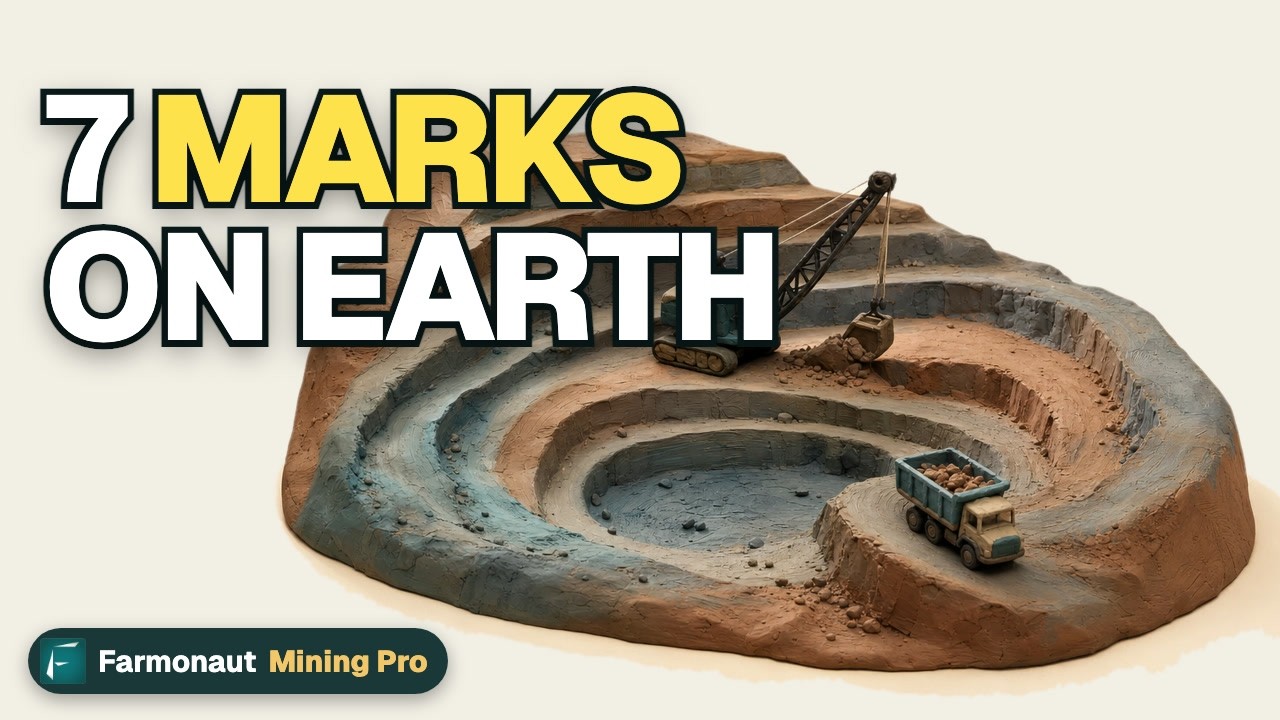
▶ A short claymation on the seven main environmental impacts of mining. · 2:31
How satellites help screen ground for either mineral
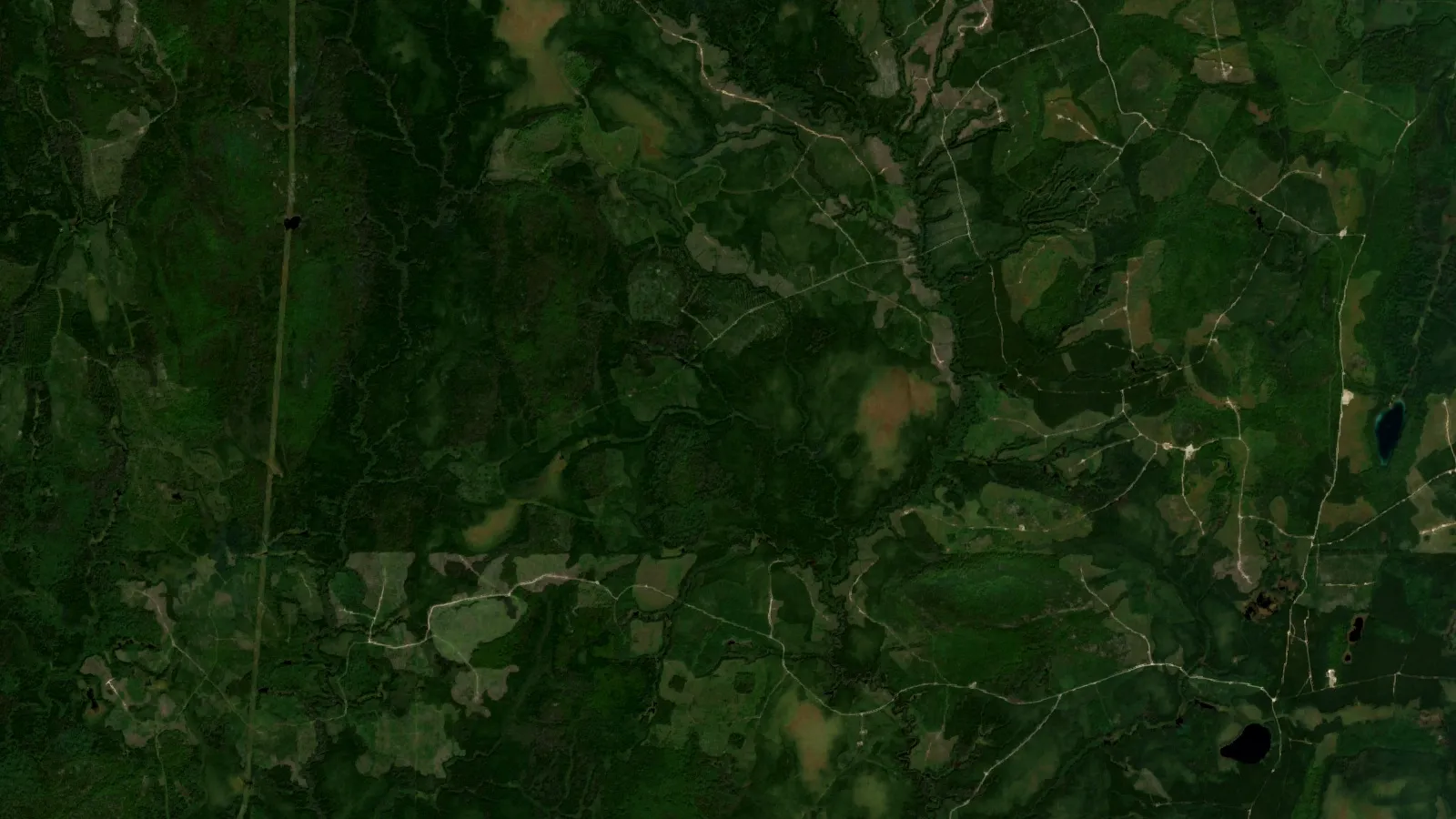
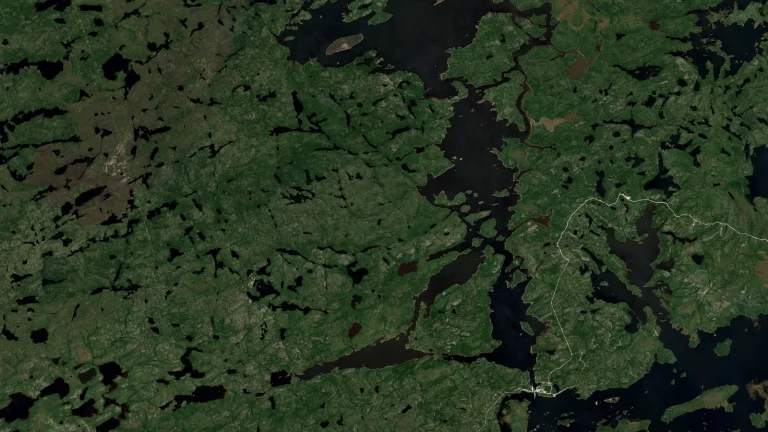
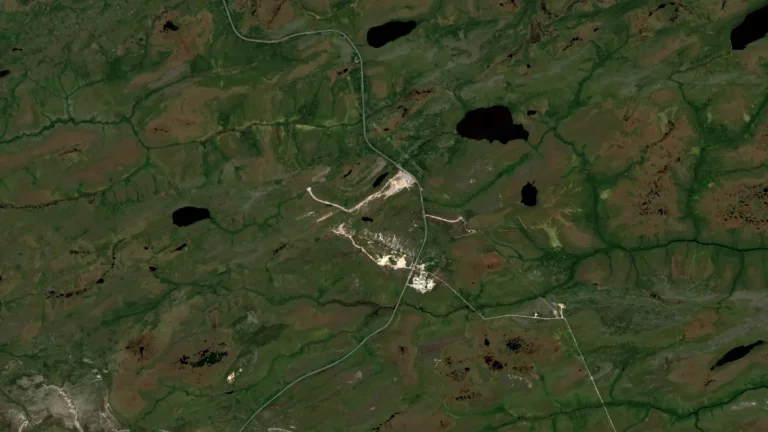
Satellite imagery cannot show you bauxite or lithium in the ground. It can show surface clues that guide where to look. For lithium pegmatites that means outcrops, pale rock against dark forest or tundra, and structures that control where pegmatite dikes cut the host rock. For bauxite, it means deeply weathered, iron-rich surfaces. Any such screen produces an exploration target. It sits ahead of a resource estimate and needs drilling and sampling to test.
Farmonaut screens licence areas from space with Sentinel-2 and other public data, from a KML, KMZ or polygon you supply; see the satellite-based mineral detection page, or send a request for a quote. For where exploration money is going in Canada, see our summary of NRCan exploration spending data.
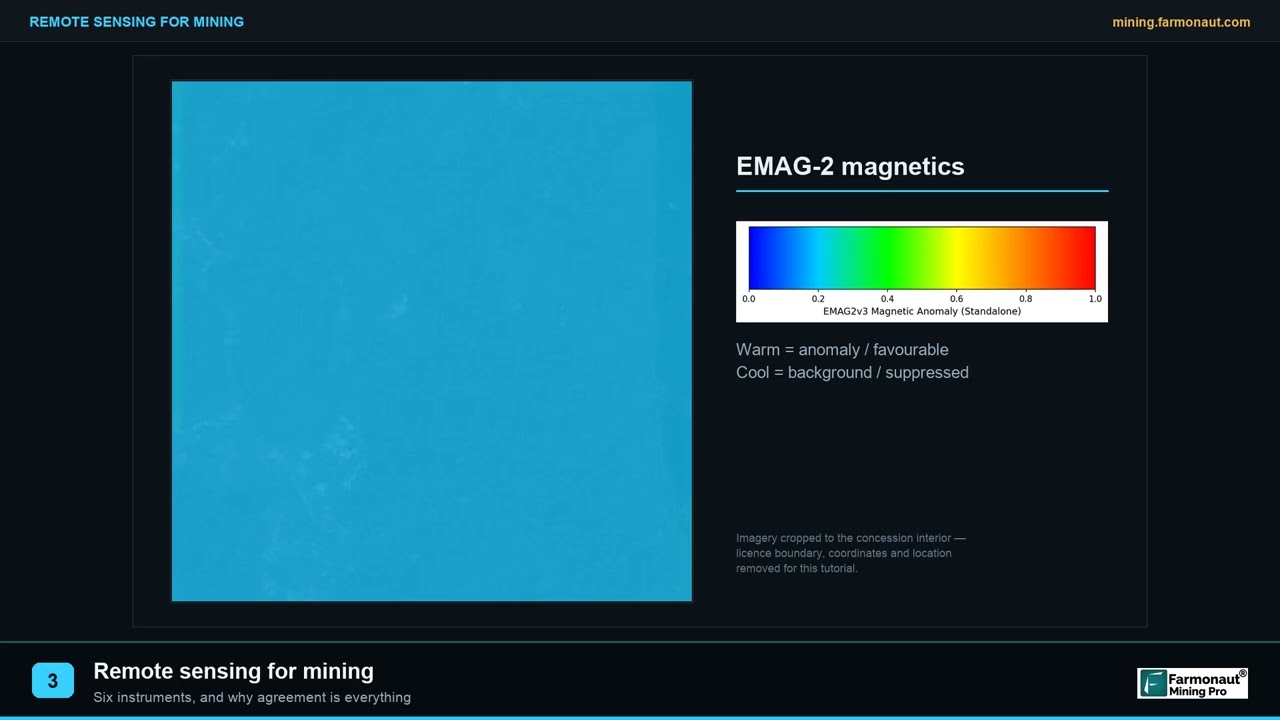
▶ Explains remote sensing for mining in plain words: the instrument types and why agreement between them matters. · 2:01
How to check a claim about Canadian bauxite
Pages that say Canada has bauxite deposits, or is about to start bauxite mining, tend to repeat each other. Run any such claim through these checks.
- Look for the country in the USGS Mineral Commodity Summaries bauxite table. Canada appears with dashes for production and reserves.
- Ask for a name: a company, a licence number and a province. Provincial mineral-occurrence databases and the stock exchange filings of a listed company would carry it.
- Look for a resource statement under a recognised reporting code. An “occurrence” or “showing” is a place where a mineral is found, not a deposit that can be mined.
- Check the grade and the tonnage. NRCan describes bauxite ore as 40% to 60% hydrated aluminium oxide; a small body below that range does not compete with ore shipped from Guinea or Australia.
- Separate bauxite from aluminium. A Canadian aluminium company is not a bauxite miner; most buy ore or alumina on the market, as NRCan’s fact sheet describes.
Frequently asked questions
Does Canada have bauxite?
Canada has no reported bauxite reserves and no bauxite mine. USGS shows dashes for Canadian bauxite production and reserves, and NRCan states that bauxite is not mined domestically.
Does Canada mine bauxite?
No. Canada’s aluminium industry runs on imported bauxite and alumina. NRCan puts imports of bauxite concentrate and alumina at C$3.0 billion in 2024.
Where does Canada get its bauxite?
From overseas suppliers. An AL Circle trade report from July 2021 names Brazil, China, Guinea and the Netherlands as the main trading nations for Canada’s bauxite imports in 2018 to 2020. Check current Statistics Canada trade tables for the latest split.
How much bauxite does Canada have?
None is listed as a reserve. For comparison, USGS lists world bauxite reserves at 29 billion tonnes, with Guinea alone at 7.4 billion tonnes.
Why is there no bauxite in Canada when Canada makes so much aluminium?
NRCan says Canadian producers rely largely on hydroelectric power, and AusIMM notes that smelters are often sited near cheap power. The Arkansas Geological Survey describes bauxite as an ore of tropical and subtropical regions, so most supply comes from countries such as Guinea, Australia and Brazil.
Is bauxite a critical mineral in Canada?
Natural Resources Canada updated the list in June 2024 to 34 critical minerals (NRCan, June 2024). The Government of Canada’s list names aluminum and lithium, and bauxite is not on it. Lithium is designated critical, as NRCan’s lithium fact sheet states.
Does Canada have lithium?
Yes. NRCan reports two operating mines, Tanco in Manitoba and North American Lithium in Quebec, with an estimated 5,983 tonnes of lithium produced in 2024. USGS estimates 5,600 tonnes for 2025.
How much lithium does Canada have?
USGS lists 1.6 million tonnes of lithium in reserves and 8.1 million tonnes in resources for Canada, out of about 37 million tonnes of world reserves.
Where is lithium mined in Canada?
Manitoba (Tanco) and Quebec (North American Lithium near Val-d’Or) have operating mines. Whabouchi in the James Bay region of Quebec is a restart project, and NRCan lists projects in Ontario, Alberta, Nova Scotia and Saskatchewan at earlier stages.
Who owns the Whabouchi lithium project?
NRCan describes Nemaska Lithium as owned by Rio Tinto and the Quebec government. It has a long-term supply agreement with Ford Motor Company.
Which country is the biggest bauxite producer?
Guinea, with an estimated 150 million tonnes in 2025, about a third of the world total.
How many aluminium smelters does Canada have?
Ten: nine in Quebec and one in Kitimat, British Columbia, according to NRCan. Canada is the fourth-largest primary aluminium producer behind three larger producers, with China first.
This page is for information only. It is not investment advice. It gives no price targets and no buy or sell view. Company ownership and project status change; check the filings on SEDAR+.
Farmonaut mining
See a licence area from space before drilling
Investors can see how satellite data screens a licence area for minerals as an exploration target, ahead of a resource estimate.

Mining Pro sample view, synthetic data
Keep reading
Sources
- USGS, Mineral Commodity Summaries 2026: Bauxite and alumina: pubs.usgs.gov
- USGS, Mineral Commodity Summaries 2026: Aluminum: pubs.usgs.gov
- USGS, Mineral Commodity Summaries 2026: Lithium: pubs.usgs.gov
- Natural Resources Canada, Aluminum facts: natural-resources.canada.ca
- Natural Resources Canada, Lithium facts: natural-resources.canada.ca
- Impact Assessment Agency of Canada, Whabouchi Mining Project: iaac-aeic.gc.ca
- Manitoba Geological Survey, Lithium: gov.mb.ca
- Arkansas Geological Survey, Bauxite: geology.arkansas.gov
- AusIMM, Minerals Processing Toolbox: ausimm.com
- AL Circle, Canada’s import of bauxite 2018-20 (July 2021): alcircle.com
- Natural Resources Canada, updated Critical Minerals List (June 2024): canada.ca
Discussion
Questions, corrections or field experience? Share them below. First-time comments are reviewed before they appear, and your email is never published.
No comments yet. Be the first to add a question or your experience.

 Dalgety Minerals Pty Ltd
 Vortex Minerals Pty Ltd
 Faith At Work (Pty) Ltd
 Geotech Mining Solutions plc
 Vulcan International Limited
 Kidepo Associates
 GKY Mining
 Alkimy SARL
 Double A Trading
 GemSprout Metals Limited
 Qader Group
 Ileys General Trading
 SG Gold Mining LLC
 VRV Global Pte Ltd
 Omsri International FZE
 G.I.T.T.
 Jaunita Erss Ltd
 Almosi SARL
 SRK Consulting
 Berks Gold Limited
 Mwerezi Minerals Company Limited
 Mining SARL
 SenGold Invest SAS

 Exploration consultancy · South Africa · Gold










