

Gold exploration companies · Ranking and vetting guide
Gold Exploration Companies: Top Names and How to Vet Them
Gold took US$6.15 billion of the US$12.4 billion spent on nonferrous exploration in 2025 (S&P Global). This guide ranks the biggest spenders, shows how explorers differ, and gives seven checks and a runway calculator.
Key takeaways
- Gold exploration budgets rose 11% to US$6.15 billion in 2025, about half of all nonferrous exploration; grassroots work was only 21% of budgets (S&P Global, via BusinessDay, 2026).
- Published 2026 budgets: Barrick US$320-350 million for exploration and evaluation, Newmont about US$240 million, Agnico Eagle about US$196 million of expensed exploration (company filings).
- Explorers sit at different stages: Dakota Gold reports one resource, Vista Gold a feasibility study, New Found Gold a producing mine plus drilling (SEC and company filings, 2026).
- Newfoundland and Labrador exploration spending on all minerals was about C$249 million in 2025, up from C$169 million in 2021 (provincial geological survey).
- Check the qualified person, resource category, true width, cash runway and title before trusting any explorer; this is not investment advice.
In this article
- What a gold exploration company does, and the five kinds you will meet
- Where the money goes: what the budget data shows
- Top gold exploration companies by what they spend
- What a junior, a developer and a new producer look like in their filings
- Where explorers work: gold output by country
- Newfoundland gold exploration companies
- How to vet a gold exploration company: seven checks
- How long will an explorer's cash last?
- Check the ground: claims, licences and land
- What satellites add before you commit
- Frequently asked questions
Gold exploration companies are firms that look for new gold deposits and measure them with drilling, rather than dig and sell the metal. They range from the exploration teams of the largest miners to small listed juniors with one project and a few drill rigs. S&P Global Market Intelligence counted US$12.4 billion of global nonferrous exploration budgets in 2025, and gold took US$6.15 billion of it, close to half (S&P figures reported by BusinessDay, April 2026).
This guide does three things. It names the companies that spend the most on gold exploration, using the budgets they published for 2026. It shows what a typical explorer, a developer and a mine builder look like in their own filings. And it gives a seven-step method, plus a cash-runway calculator, for checking any explorer before you partner with it, sell it a claim or read its press releases. It states facts only and does not recommend any share.
What a gold exploration company does, and the five kinds you will meet
Exploration is the part of mining that finds and measures gold in the ground. A company drills diamond core (hollow bits that bring up a rod of rock), assays the core for grams of gold per tonne (g/t), and publishes the drill results. If the results are good enough, it estimates a mineral resource, which is a tonnage and grade of rock with reasonable prospects of economic extraction. Reserves come later, after engineering and cost studies. The SEC’s guide to its mining rules draws the same line: exploration results are data from sampling, drilling and assaying, and they are not part of a resource or reserve statement (SEC small entity compliance guide, 2018).
Five kinds of company use the label, and they behave very differently.
- Major producers. Newmont, Barrick and Agnico Eagle explore around mines they already run, so the budget aims to replace the ounces mined each year. Their numbers are large and reported in annual guidance.
- Mid-tier producers. They run several mines and keep a smaller exploration team, often looking for extensions near the mill.
- Juniors. A junior holds claims or licences, raises money by selling shares, and spends it on drilling. It has no gold sales. Its value rests on drill results and on whether a bigger company wants the project.
- Developers. A developer has a defined deposit and is now doing feasibility work, permitting and financing. Its spending is mostly engineering, not drilling.
- Prospect generators and royalty companies. A prospect generator stakes ground, does early work and sells or joint-ventures projects to others. A royalty company funds exploration in return for a share of future revenue.
Drilling contractors, assay laboratories and geological consultants also appear in searches for the same words, but they are service firms, not owners of projects. If you need one of those, our guides to diamond drilling companies in Canada and to choosing an assay lab cover them.
Where the money goes: what the budget data shows
The S&P data tells you which kind of company is spending and on what. Gold budgets rose 11% in 2025 to US$6.15 billion, while copper rose 2% to US$3.27 billion, and lithium fell 46% to US$595 million. Spending at existing mines reached US$5.63 billion, a record 45% share of the global total. Grassroots work, meaning the search for new districts, fell 8% to US$2.57 billion, or 21% of budgets, the lowest share in the dataset. Junior explorers’ budgets fell 13% to US$4.39 billion, while money raised by junior and intermediate companies rose 109% to US$21.43 billion (all from S&P via BusinessDay, April 2026).
Chart
Global exploration budgets by metal, 2025
US$ billion
In plain terms, most exploration money now goes to extending known gold systems, and S&P says much of the money raised went to mine development rather than exploration. A junior with only early-stage ground is competing for a smaller share of attention.
Top gold exploration companies by what they spend
There is no single official league table of explorers. The fairest ranking available is the exploration budget each company itself published for 2026. The three numbers below come from company filings, and they use different accounting definitions, so read them as scale, not as a precise contest.
Chart
Company-published exploration spending, 2026
US$ million, expensed exploration; Barrick at midpoint of its 320-350 range; definitions differ
| Company | 2026 expensed figure (US$ million) | What the figure covers | Source |
|---|---|---|---|
| Barrick Mining | 320 to 350 | Exploration and evaluation guidance, separate from 130 to 150 of project expenses | Barrick MD&A, SEC Form 6-K |
| Newmont | about 240 | Exploration expense guidance, plus about 285 for advanced projects. The 2025 actual was 243. | Newmont Form 8-K, February 2026 |
| Agnico Eagle | about 196 | Expensed exploration (US$195.8 million). With US$94.2 million of project evaluations and corporate costs, expensed exploration and corporate development total 290. Capitalized exploration, about 310, is extra. | Agnico Eagle release, 12 February 2026 |
Barrick’s range is shown at its midpoint in the chart below. Newmont’s 2026 guidance (about 240) is close to its 2025 actual (243), which fits a company whose goal is to keep reserves level rather than to open new districts. Agnico Eagle describes its 2025 program as an average of 120 diamond drill rigs turning 1.4 million metres of core, and says its gold reserves rose 2.1% to 55.4 million ounces at year-end 2025, driven by additions at Detour Lake, Odyssey and Hope Bay.
These are the majors. Other large names, such as Northern Star, Gold Fields, Kinross and AngloGold Ashanti, also run large programs, but we have not compared their budgets on one basis here, so they are not ranked.
What a junior, a developer and a new producer look like in their filings
Three listed companies show the stages. These are descriptions of what each company reports, not recommendations, and their numbers will move with each quarterly filing.
| Company | Stage | What its filings say |
|---|---|---|
| Dakota Gold (NYSE American) | Explorer and developer, Homestake District, Black Hills of South Dakota | Cash of US$99.3 million at 30 June 2026 and a six-month net loss of US$16.8 million. Its only resource estimate is for Richmond Hill (effective 3 February 2025); it states that none of its other properties is drilled enough to estimate a resource under SEC rules (Form 10-Q, June 2026). |
| Vista Gold (NYSE American, TSX) | Developer, Mt Todd, Northern Territory, Australia | 100% owned. A July 2025 feasibility study covers 15,000 tonnes a day, with proven and probable reserves of about 5.19 million ounces at 0.94 g/t, an after-tax NPV of about US$1.1 billion at US$2,500 an ounce and initial capital of US$425 million. Cash was US$49.5 million at 30 June 2026 with no debt (Form 10-Q, June 2026). |
| New Found Gold (TSX and NYSE American) | Explorer that became a producer, Newfoundland | Holds 100% of the Hammerdown gold mine, which declared commercial production on 19 August 2026, and the Queensway land package of more than 110 km of strike. In preliminary third-quarter results it produced 4,863 ounces at 85% recovery, targets 20,000 to 25,000 ounces a year, and held about C$167 million cash against C$70 million of debt at 30 September 2026 (company results summary, 15 October 2026). |
Compare how these read. Dakota Gold states a single resource and a loss; Vista has a full feasibility study but no mine yet; New Found Gold sells gold and still drills below the Hammerdown pit. When you look at any explorer, ask which row it is in, because that decides which numbers matter. For a developer the question is the cost of building the mine and whether it can be financed. For a junior it is the drill results and the months of cash left.
Where explorers work: gold output by country
Explorers follow geology and permits. The USGS estimates world gold mine output at 3,300 tonnes in 2025, with China at 380 tonnes, Russia 310, Australia 280, Canada 200, the United States 160, Ghana 150 and Mexico 140 (USGS Mineral Commodity Summaries, February 2026). Nevada alone accounted for about 64% of US output, and the top 25 operations produced about 94% of it. That concentration is why so many US-listed explorers hold ground in Nevada, and our Nevada gold guide is a good map for that state. For Canada, see gold exploration in Canada.
Chart
Gold mine output, selected countries, 2025 estimate
Tonnes of contained gold
Newfoundland gold exploration companies
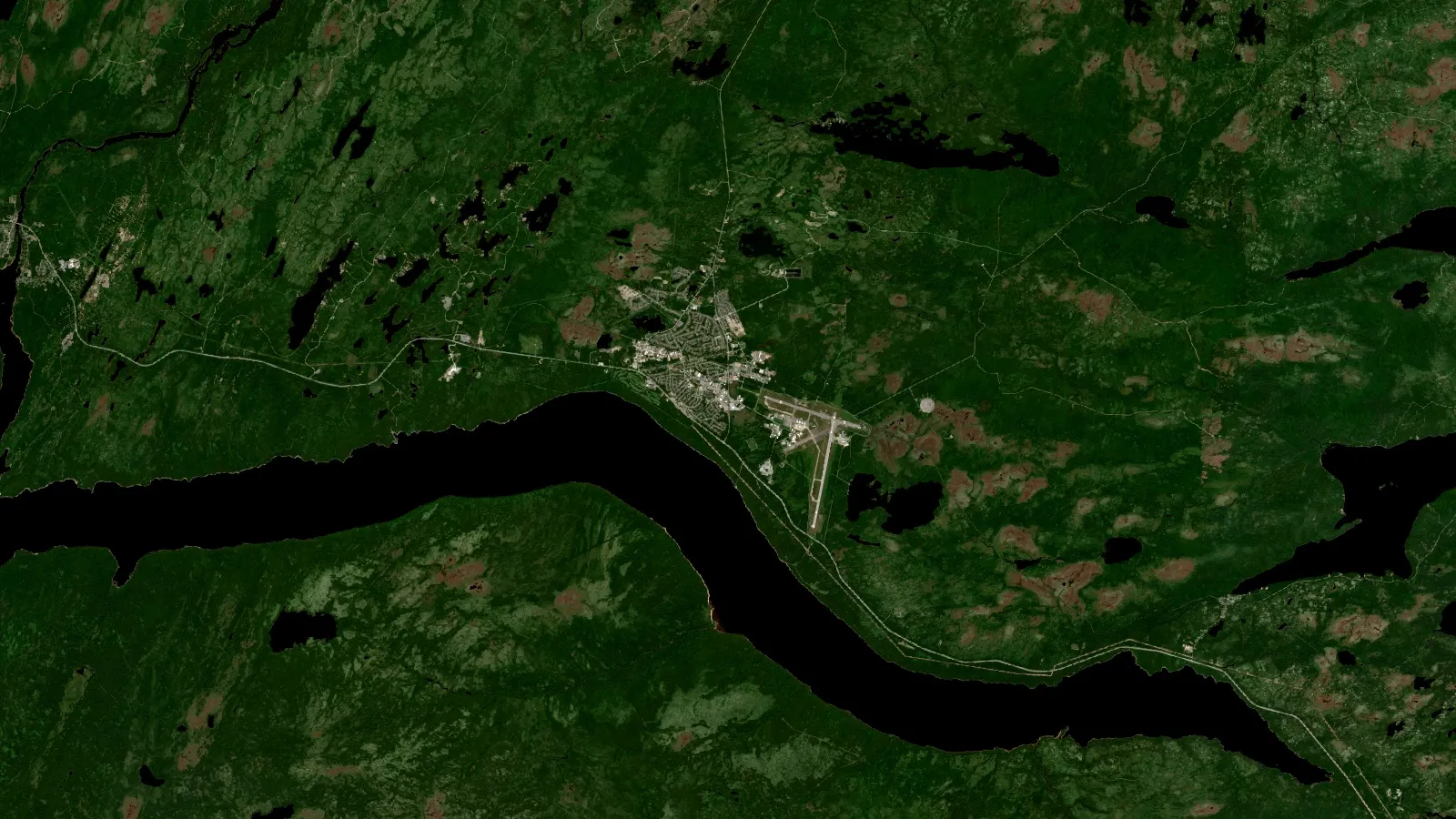
Newfoundland and Labrador has become one of the more active gold provinces in Canada. The provincial geological survey publishes exploration statistics, and the table gives exploration expenditure on all minerals, not only gold, of C$248.8 million in 2025 (Labrador C$77.7 million plus the island of Newfoundland C$171.1 million), up from C$243.9 million in 2024 and C$169.3 million in 2021, with a 2026 intention of about C$283.3 million (Newfoundland and Labrador Geological Survey, exploration statistics). Our chart plots the combined totals; the survey marks 2025 as actual and 2026 as intentions.
Chart
Newfoundland and Labrador exploration spending
C$ million, all minerals, Labrador plus island of Newfoundland
The best-known name here is New Found Gold, with its Queensway project and Hammerdown mine described above. Company news in this province moves fast, so the right way to build a list is to check the provincial claims map for the holder, then the holder’s filings on SEDAR+. Our guide to gold deposits in Newfoundland walks through the main deposits and how claims are staked.
How to vet a gold exploration company: seven checks
The same seven checks work for a junior you might invest in, a company that wants to option your claim, or a partner you plan to work with.
Infographic
Five of the seven checks for vetting an explorer
- 1Read the filingsCash, debt and risk factors are on SEDAR+, EDGAR or ASX.
- 2Find the qualified personCheck who signs the technical disclosure.
- 3Split results from resourcesDrill hits are not a resource estimate.
- 4Test the runwayCash divided by yearly spend gives months left.
- 5Verify titleConfirm the holder, expiry and work commitments.
- Read the filings, not the news release. Canadian issuers file on SEDAR+, US issuers on SEC EDGAR, and Australian ones on the ASX platform. The filed annual report states the cash, the debt, the share count and the risk factors that releases leave out.
- Find the qualified person. Under the SEC rules a qualified person is a mineral industry professional with at least five years of relevant experience and membership of a recognized professional body (SEC guide, 2018). Canada’s NI 43-101 requires technical disclosure to be based on work by a qualified person too. A press release that names no qualified person is a warning.
- Separate drill results from resources. A single hole of 20 g/t over a metre is a result, not a deposit. A resource needs enough closely spaced holes to estimate tonnes and grade. Check whether the category is inferred, indicated or measured, because inferred is the least certain.
- Look at width, not only grade. Ask for the true width of an intercept, meaning the thickness of the vein, not the length along the drill hole. A short, narrow, high-grade hit has a different value from a wide, steady one.
- Test the cash runway. Take cash on hand, divide by yearly spend (drilling plus office and listing costs), and see how many months are left. The calculator below does this. A company with under a year of cash will probably have to sell shares soon, which dilutes holders.
- Verify title. Check the regulator’s online register for the tenement, claim or licence: its holder, expiry and work commitments. A claim is a right to the minerals under a set of rules, not ownership of the land. Our prospecting and deposit guide explains how to read that ground.
- Watch for promotion patterns. Heavy paid promotion, unsolicited tips, constant name changes, promises of guaranteed returns and drill results released only in headline form are common warning signs in microcap stocks. Check the filing, then ask a geologist you trust.
How long will an explorer’s cash last?
The calculator turns the runway check into numbers. Enter the company’s cash, its planned metres of drilling and its cost per metre, and the yearly overhead. The all-in cost per metre varies widely by country, rock, depth and season, so use a quote or the company’s own plan and not a benchmark.
Calculator
How many months of cash does the explorer have?
Enter the company’s cash, planned drilling and yearly overhead.
- Drilling cost (US$ million): 4.0
- Total yearly spend (US$ million): 6.0
- Drilling cost per US$ of cash: 0.40
Example values only, not a benchmark. Cost per metre varies by country, depth and rock; use the company’s plan or a drilling quote. Money in US$.
Check the ground: claims, licences and land
Before you sign an option or a sale, confirm who holds the right and what it allows. A mining claim in the United States is a right to minerals under the 1872 law, subject to federal and state rules; licences elsewhere carry different work commitments, and the holder can lose them for missing a filing. If you own a claim and an explorer approaches you, ask for the draft agreement, the payment schedule, the work commitment and who owns the data and core if the deal ends. If the buyer asks you to pay first, step back. Nothing here is legal advice, so have a mining lawyer read the contract. Our guide for sellers, how juniors meet investors at the PDAC convention, shows how explorers present projects to the market.
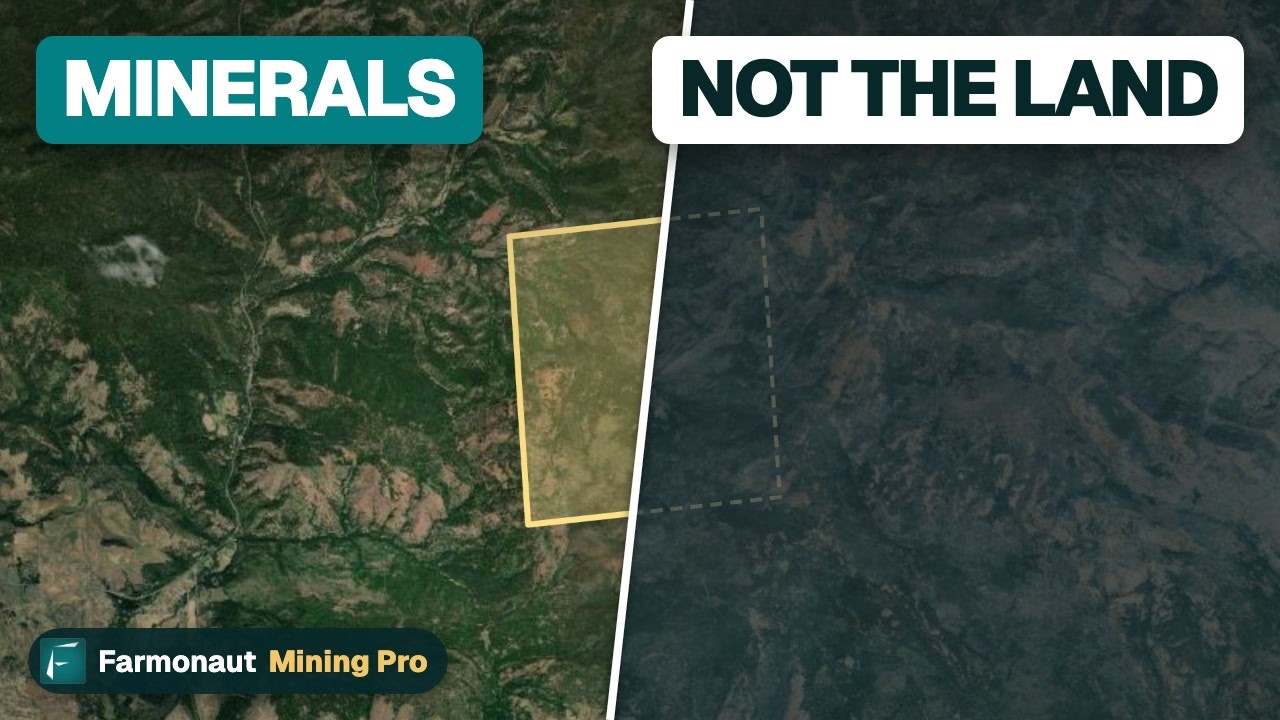
▶ Explains that owning a gold claim is not owning the land and how to check the ground first. · 3:19
What satellites add before you commit
Satellite imagery cannot see gold, but it maps the rock around it: iron-stained surfaces, clay and mica alteration, and long faults. A desk screen of a licence with public satellite imagery can show which parts of the ground match those patterns before anyone drills. It does not replace sampling, and it is not a resource estimate. A consultant or a licence owner can use it to compare an explorer’s pitch against the ground, and Farmonaut Mining Pro does this screen from a boundary file you supply.
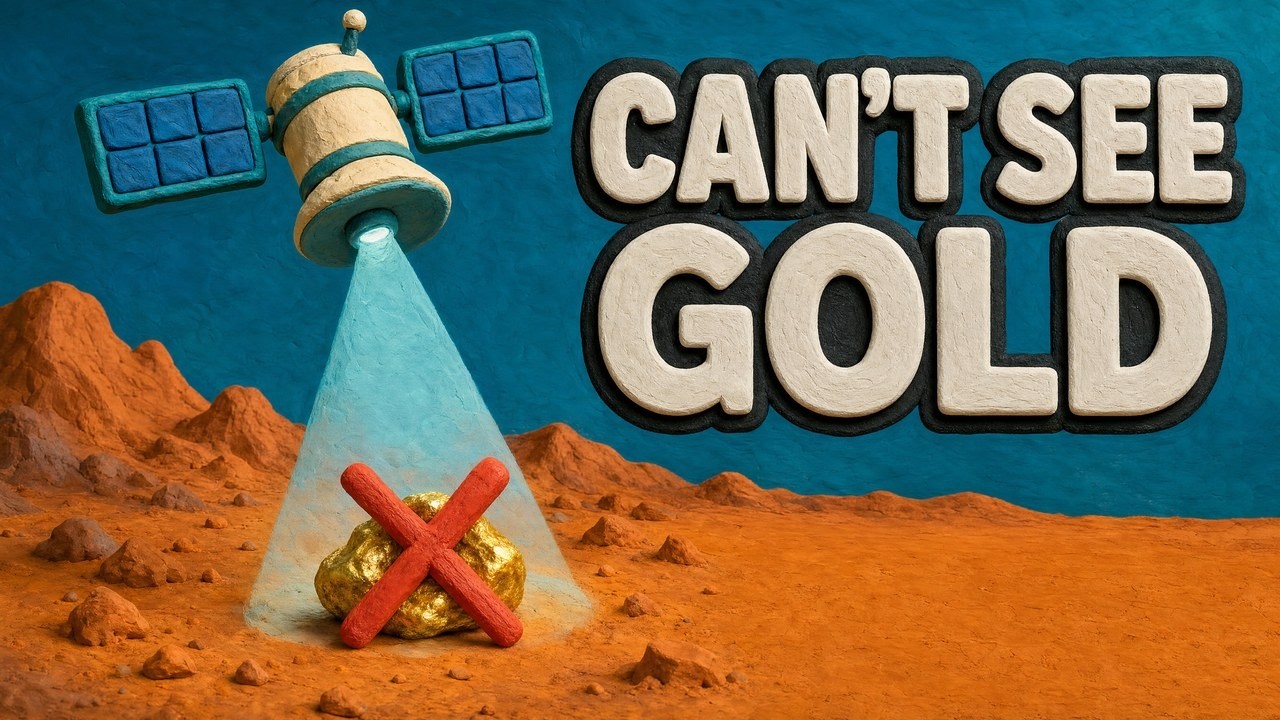
▶ Explains how satellites map the rock around gold rather than the gold itself. · 4:25
Frequently asked questions
What are gold exploration companies?
They are firms that search for gold deposits and measure them by drilling. Some are major miners with in-house teams, and many are small listed juniors that raise money to drill. The difference from a producer is that a junior has no gold sales yet.
Who are the top gold exploration companies?
By published 2026 budgets, the largest are Barrick (US$320 to 350 million for exploration and evaluation), Newmont (about US$240 million of exploration expense) and Agnico Eagle (about US$196 million of expensed exploration). The figures use different definitions, so this is a scale guide, not a strict league table.
How much money goes into gold exploration?
S&P Global Market Intelligence put gold exploration budgets at US$6.15 billion in 2025, up 11%, within a global nonferrous total of US$12.4 billion.
What is the difference between an explorer and a miner?
An explorer spends money to find and measure a deposit. A miner extracts and sells gold. Some companies are both: New Found Gold, for instance, sells gold from Hammerdown, still drills below the Hammerdown pit and is advancing Queensway toward production.
What is a junior exploration company?
A small company, usually listed on a junior exchange, that holds claims and raises money from shareholders to drill. It usually has no revenue, so cash runway matters more than profit.
How do I check whether a gold exploration company is legitimate?
Read its filings on SEDAR+, SEC EDGAR or the ASX platform, find the named qualified person, check that its title is registered with the regulator, and compare the cash with the planned spend. If a stock is being pushed by paid tips or guaranteed returns, treat that as a warning.
What is a qualified person?
A professional with relevant experience and membership of a recognized body who prepares or approves technical disclosure. Under the SEC rules the minimum is five years of relevant experience.
Are drill results the same as a resource?
No. Drill results are raw data from sampling and assaying. A resource is an estimate of tonnes and grade with reasonable prospects of economic extraction, and it needs enough drilling to support it.
Which gold exploration companies work in Newfoundland?
New Found Gold is the best known, with Queensway and the Hammerdown mine. Other explorers hold ground in the province; check the provincial claims map and each holder’s SEDAR+ filings. Provincial exploration spending was about C$249 million in 2025.
Can a licence owner sell or option a claim to an explorer?
Yes, and it is common. Get the terms in writing, including payments, work commitments and data ownership, and have a mining lawyer review the draft. This page is not legal advice.
Is this page investment advice?
No. It reports facts from filings and public data. Company figures change each quarter, so use the latest filing.
This page is for information only. It is not investment advice or legal advice. Company figures change each quarter; use the latest filing and confirm claim and licence rules with the regulator.
Farmonaut mining
Screen your gold licence from space
Get a satellite screen of your licence for exploration targets before you sign an option or drill.

Mining Pro sample view, synthetic data
Sources
- S&P Global figures reported by BusinessDay, gold drives exploration as budgets fall (April 2026): businessday.co.za
- SEC, Modernization of Property Disclosures for Mining Registrants: small entity guide (2018): sec.gov
- Barrick, MD&A guidance, SEC Form 6-K (2026): sec.gov
- Newmont, Form 8-K fourth quarter 2025 results and 2026 outlook: sec.gov
- Agnico Eagle, 2025 exploration results and 2026 plans (12 February 2026): newswire.ca
- Dakota Gold, Form 10-Q for June 2026: sec.gov
- Vista Gold, Form 10-Q for June 2026: sec.gov
- New Found Gold third-quarter 2026 production summary (15 October 2026): cruxinvestor.com
- USGS, Mineral Commodity Summaries 2026: Gold: pubs.usgs.gov
- Newfoundland and Labrador Geological Survey, mineral exploration statistics: geosurv.gov.nl.ca
Discussion
Questions, corrections or field experience? Share them below. First-time comments are reviewed before they appear, and your email is never published.
No comments yet. Be the first to add a question or your experience.

 Omsri International FZE
 G.I.T.T.
 Jaunita Erss Ltd
 Almosi SARL
 SRK Consulting
 Berks Gold Limited
 Mwerezi Minerals Company Limited
 Mining SARL
 SenGold Invest SAS
 Sean Mining Limited
 NTS Group (Pty) Ltd
 Mine4Africa
 Lithspo Minerals Limited
 Tintina Mining Group
 Dalgety Minerals Pty Ltd

 Licence holder · Nigeria · Gold + lithium










