

Mining events · PDAC Convention
PDAC Convention for Juniors: Booths, Core Shack, Investors
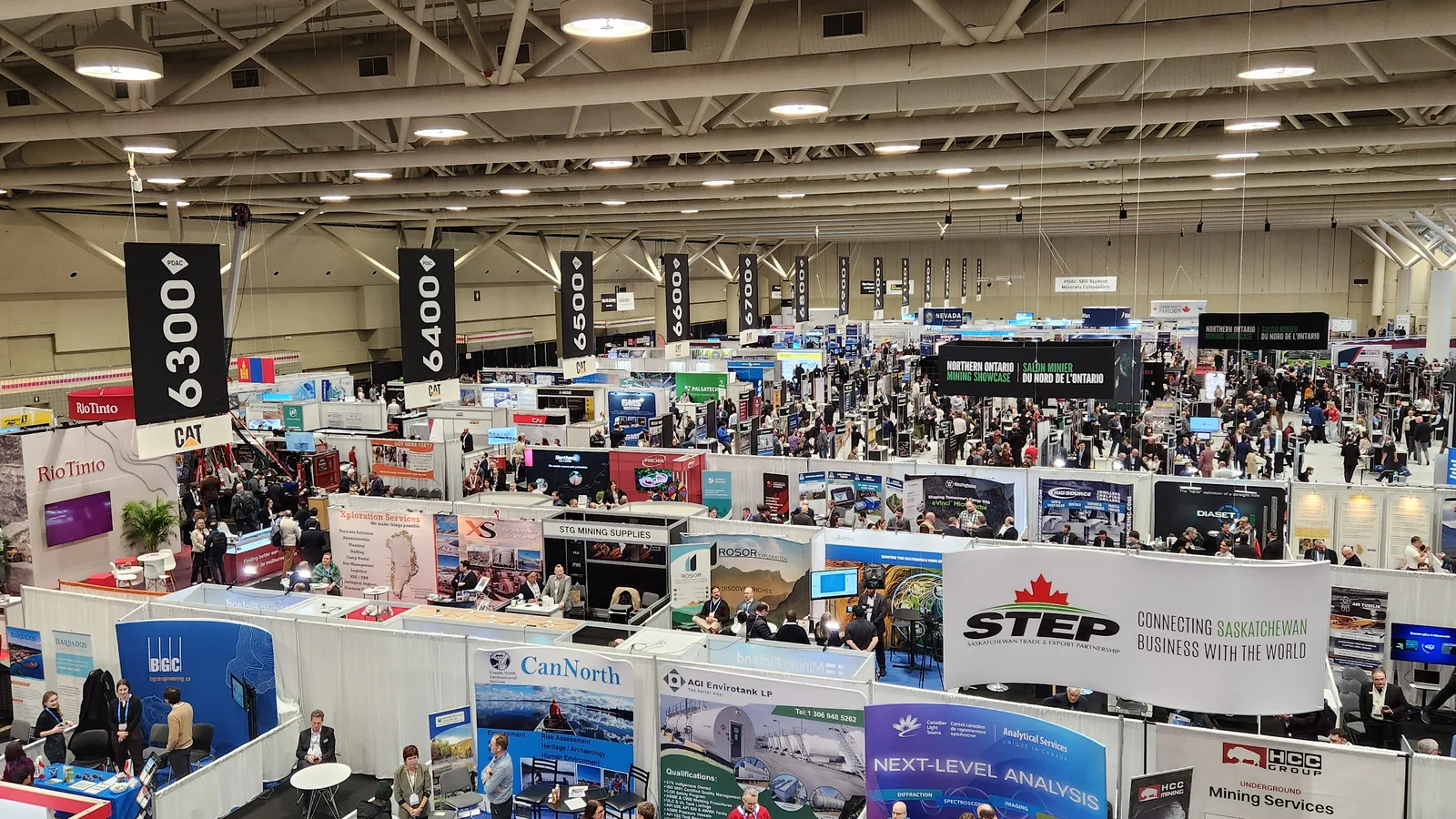
PDAC is the Prospectors & Developers Association of Canada’s annual convention in Toronto; the 2027 edition runs Sunday March 7 to Wednesday March 10 at the Metro Toronto Convention Centre, and exploration companies usually meet investors there through an Investors Exchange booth, a Core Shack slot or a corporate presentation.
Key takeaways
- PDAC 2027 runs Sunday March 7 to Wednesday March 10 at the Metro Toronto Convention Centre; exhibit halls open 10 a.m. to 5 p.m. Sunday to Tuesday and close at noon on Wednesday.
- Listed explorers exhibit on the Investors Exchange, not the Trade Show. A 4-day booth was listed at C$3,100 for corporate members or C$4,100 for non-members, tax included.
- Core Shack space is complimentary if your project is selected, but it is reserved for projects with new drill results, and applications open in the fall.
- Booth posters and slide decks are written disclosure: NI 43-101 rules on qualified persons, data verification and exploration targets apply to them.
- Natural Resources Canada reports juniors planned C$2.91 billion of Canadian exploration spending for 2026, a nominal record.
In this article
- What PDAC is and when the next convention happens
- Which PDAC exhibit space fits your company
- Core Shack: putting drill core in front of investors
- Meeting investors at PDAC: the programs that matter
- How to pitch exploration targets at PDAC without breaking NI 43-101
- Where satellite screening fits before PDAC
- A PDAC planning timeline for exploration companies
- PDAC questions exploration teams ask
For a junior explorer, PDAC is less a conference than a four-day investor roadshow held in one building. The Prospectors & Developers Association of Canada says the convention has run since 1932 and now draws more than 32,000 people and more than 1,300 exhibitors. Most of the value for a TSX, TSXV or CSE-listed company comes from three places: the Investors Exchange floor, the Core Shack and the investor-facing program. This guide covers each one with the fees, dates and rules PDAC and the securities regulators publish, and it adds two things you will not find on the organiser’s site: a count of where the latest Core Shack projects came from, and a checker for presenting exploration targets within NI 43-101.
PDAC 2026 drew 32,155 attendees from 141 countries, a third of them from outside Canada.
What PDAC is and when the next convention happens
The convention is run by the Prospectors & Developers Association of Canada, the national industry body for mineral exploration. It is held once a year in Toronto in early March. The organiser’s FAQ confirms PDAC 2027 runs from Sunday March 7 to Wednesday March 10, with registration desks open from Friday March 5 for the short courses that come before the main show. Most sessions and all exhibits sit in the Metro Toronto Convention Centre (MTCC), 222 Bremner Blvd, while the awards evening and some events use the Fairmont Royal York at 100 Front St W, according to the key dates and venue page.
The daily rhythm matters when you plan meetings. Programming runs 9 a.m. to 5 p.m. Sunday to Tuesday and 9 a.m. to noon on Wednesday. Exhibit halls open at 10 a.m. and close at 5 p.m. for the first three days, and at noon on the last. Exhibitors can enter three hours before opening on Sunday and two hours before on the other days. That early window is the quietest time to walk a fund manager through your core or maps.
Who walks the floor? The organiser lists investors, financiers, banking executives, fund managers, brokers, analysts, lawyers, mining developers, exploration managers, prospectors, geoscientists, students and government officials. The published statistics for the 2026 convention put numbers on that: 32,155 attendees, 33.4% of them international, 1,514 students, 459 accredited media and 3,431 people who identified themselves as investors. Outside Canada, the largest groups came from the United States, Australia, the United Kingdom, Argentina, Brazil, Peru, Chile, Mexico, Turkey and Germany.
The 2026 edition was bigger than 2025 on almost every count the association publishes. Self-identified investors rose from 2,524 to 3,431 and program sessions from 195 to 263, according to the 2025 convention statistics. The Investors Exchange stayed flat at about 475 booths, because its hall is full. For a junior, that last number is the one to remember: the investor floor does not grow with demand, so the renewal deadline decides who gets in.
Chart
PDAC grew between the 2025 and 2026 conventions
Counts published by PDAC for each convention
If you are new to the event, read our overview of gold exploration and claims across Canada for the provincial claim systems your audience will ask about. The convention itself is commodity-neutral: copper, uranium, nickel, lithium and gold projects all compete for the same investor attention.
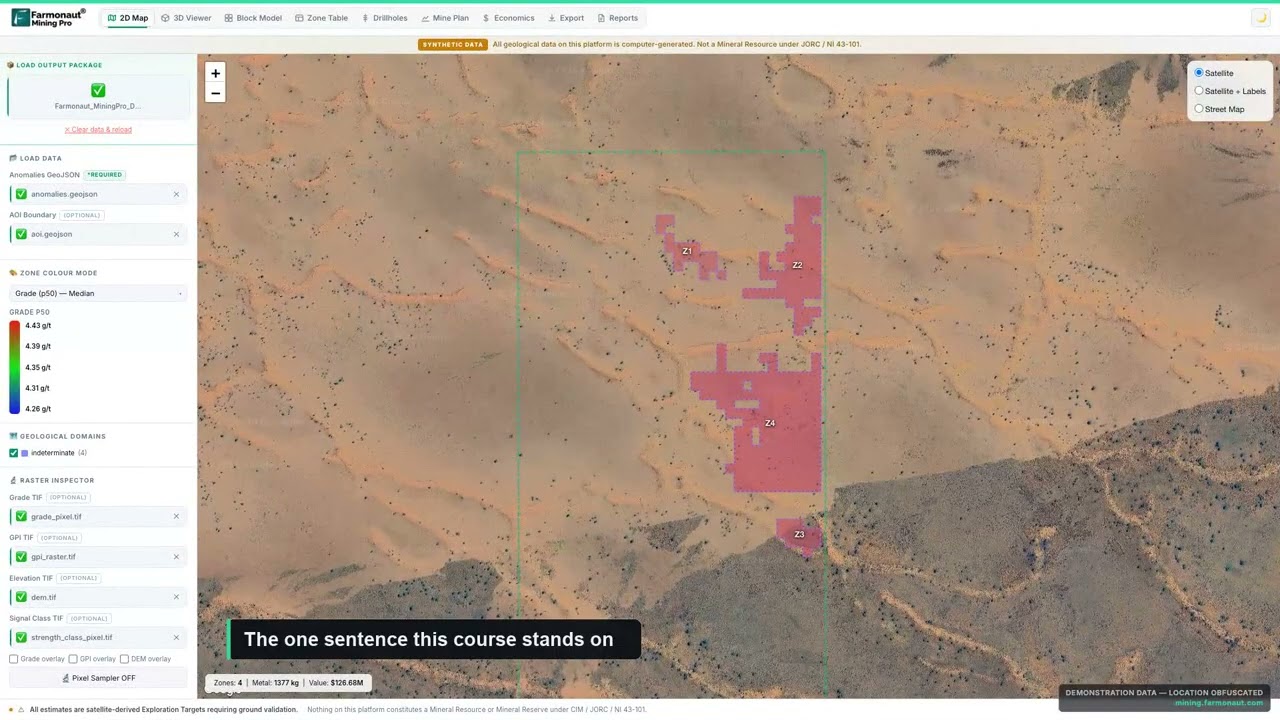
▶ What an exploration target is, and what it takes to turn one into a classified mineral resource (4 min). · 4:14
Which PDAC exhibit space fits your company
PDAC exhibitors are split by who they are, not by what they want to sell. The FAQ is explicit: the Investors Exchange is limited to junior exploration companies, mid-size producers, major mining companies, oil and gas companies, prospectors, and stock exchanges, brokers and financial institutions. Consultants, drillers, laboratories, software and remote sensing firms, universities and governments go to the Trade Show or Trade Show North. A listed explorer therefore almost always belongs on the Investors Exchange, and an individual prospector with a property belongs in the Prospectors Tent.
Each option suits a different stage of company. The table below sets out what the organiser publishes for each, with the fee as listed in mid-2026. Treat every figure as a planning number until you see a written confirmation.
| Option | Who it is for | Fee (C$, incl. tax) | Length | How you get in |
|---|---|---|---|---|
| Investors Exchange booth | Junior explorers, producers, prospectors, financial firms | 3,100 member or 4,100 non-member (4 days); 2,000 or 2,600 (2 days) | 2 or 4 days | Renewal first, then new applications from Sept. 15 |
| Core Shack | Projects generating new drill results | Complimentary if selected | 2 days (Session A or B) | Application to a selection committee in the fall |
| Prospectors Tent | Self-employed individuals with a project or property | 700 (2026 fee) | 4 days | First come, first assigned; limited spaces |
| Trade Show / Trade Show North | Service and supply firms, governments, surveys | 3,100 member or 4,100 non-member | 4 days | Renewal first, then new applications from Sept. 15 |
| Presentation room | Companies or jurisdictions hosting a briefing | 2027 pricing due summer 2026 | Half or full day | First come, first served once applications open |
Sources: PDAC 2027 Investors Exchange, Core Shack, Prospectors Tent, Trade Show and Presentation and Reception Rooms pages, as published mid-2026.
What does a booth actually include? On the Investors Exchange, each 10-foot booth comes with black back and side drapes, one 1,500-watt outlet, four Exhibitor Staff Passes, one generic All-Access Pass that the booth team shares, and a listing in the printed and online exhibitor directories. Furniture, graphics, extra power and carpet are extra. The hall is on Level 800 of the MTCC South Building, Halls E, F and G.
Chart
What one 10-foot PDAC booth costs, by option
Canadian dollars (C$) including tax; Core Shack space is complimentary if selected
Corporate membership changes the price. To get the member booth rate you must send a corporate membership application and payment with the booth application, and the organiser says it may bill the non-member rate if the membership form is missing. Corporate membership fees vary with market capitalization, so check the figure for your company before assuming the saving is worth it.
Renewal is where most juniors win or lose a good spot. For the 2027 show, the organiser opened renewing-exhibitor applications on June 23 and set a priority deadline of Friday August 14. Renewing exhibitors keep first right of refusal over their 2026 space only if they apply and pay by that date. New exhibitors could apply from September 15. Requests to move or enlarge a booth are handled first come, first assigned, by the time of the application.
The calculator below adds up the floor cost for an Investors Exchange team. It uses the fees listed for 2027 and the 2026 pass rates, because 2027 pass prices were not yet published when we checked. It does not include travel or hotels, which for a team flying into Toronto in March are often the larger bill.
Calculator
What will a PDAC Investors Exchange booth cost your team?
Enter your booths, the fee that applies to you and the size of your team.
- Booth fees (C$): $4,100
- Staff passes included with the booths: 4
- People who need their own pass: 2
- Cost of those passes (C$): $1,698
Example values only, not a quote. Amounts in Canadian dollars (C$), tax included. Assumptions: the 4-day Investors Exchange fee PDAC listed in mid-2026 for the 2027 show (C$4,100 non-member or C$3,100 for corporate members; C$2,600 or C$2,000 for a 2-day booth). Each 10-foot booth includes four Exhibitor Staff Passes and one shared All-Access Pass. Extra people are priced at the 2026 regular non-member All Access rate of C$849 (C$539 for members); 2027 rates were not yet published. Excludes travel, hotels, shipping, furniture, power upgrades and marketing. Sources: PDAC Investors Exchange 2027 page and 2026 Fee and Pass Info. Confirm current fees with PDAC.
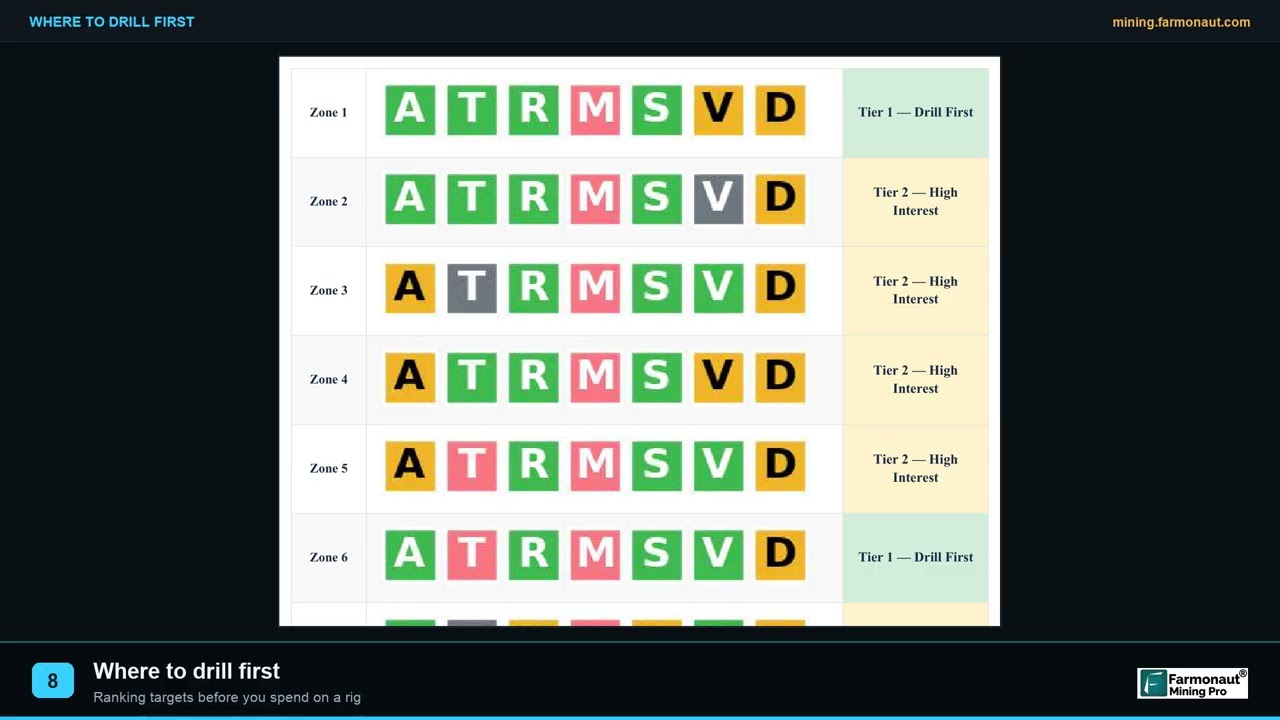
▶ How a list of satellite targets becomes a ranked drill order an investor can follow (2 min). · 2:19
Core Shack: putting drill core in front of investors
The Core Shack is the part of the convention that looks most like geology. The organiser describes it as a venue to display core from new or ongoing projects that are generating new drill results, alongside maps, charts and technical information. Each slot gets a 10-foot booth with hard walls, carpet, a 6-foot draped table for core or other samples of mineralization, two chairs, a sign with the project and country, two arm lights, power and four Exhibitor Staff Passes. Those passes do not give access to the Technical, Indigenous, Sustainability or Capital Markets programs.
Space is complimentary if your project is selected, and the Core Shack page says the selection committee picks projects for one of two sessions: Session A on Sunday and Monday, or Session B on Tuesday and Wednesday. For the 2026 show, the application deadline was Friday November 21 at 5 p.m. ET. Applications for PDAC 2027 were due to open in early fall 2026, so a company that expects assays over the summer should plan its core logistics before the results come back.
Which projects get selected? We counted the locations on the published list of the 40 Core Shack 2026 exhibitors. Canada supplied 23 projects: 8 in British Columbia, 6 in Yukon, 5 in Ontario and 4 in Quebec. Seven came from four US states (Nevada, Alaska, Arizona and Montana), seven from six Latin American countries, and three from Mongolia, Australia and Côte d’Ivoire. We report the counts by location only. They show what the committee picked in one year, not a rule about what it prefers.
Chart
Where the 40 Core Shack projects of PDAC 2026 were
Number of projects by location; 23 of 40 were in Canada
Most listings in that 2026 list are polymetallic, with copper and gold appearing together more often than either alone. That matters for your pitch. Investors at the Core Shack are looking at actual intersections, so the table should show the interval that matches the numbers on your poster, with the true width stated if you know it. NI 43-101 section 3.3(2) already requires the drill hole location, azimuth, dip and sample depths, the true width where known, and any higher-grade interval inside a lower-grade intersection when you disclose sample results in writing.
A practical checklist for a Core Shack slot, drawn from the published booth inclusions:
- ✔ Choose core boxes that match the press release you will hand out, and label each one with hole ID and depth.
- 📊 Bring a plan map and a cross-section that put the hole in context; the 6-foot table holds core, not a full display.
- Arrange shipping and customs for samples early if the project is outside Canada.
- Have your qualified person, or someone who can speak for their work, at the booth for at least part of each day.
- Book the session that suits your IR plan: Session A catches investors on the first two days, when many meeting schedules are still open.
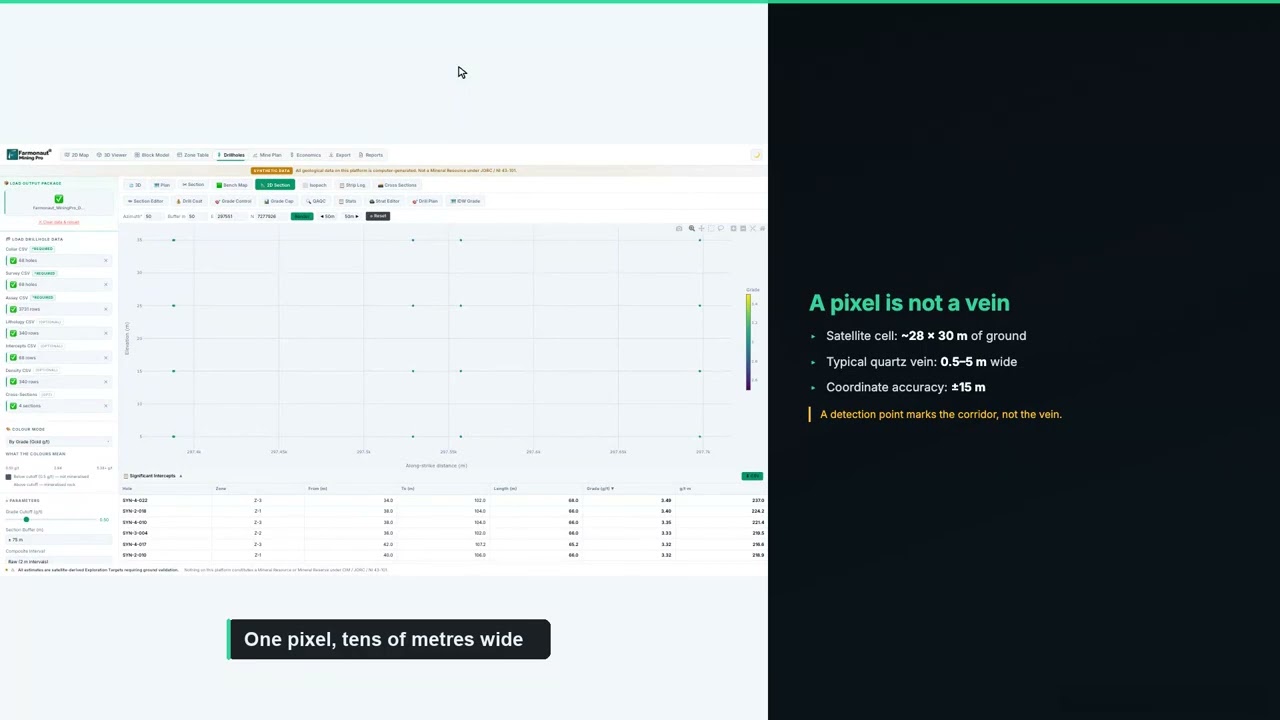
▶ Why you trench across strike before you drill, shown on de-identified demo data in Mining Pro (6 min). · 5:49
Meeting investors at PDAC: the programs that matter
The booth is only the base. The convention runs several programs aimed at the money side of the industry, and a junior’s week usually mixes three or four of them. They differ in who applies, who attends and what pass is needed.
The PDAC One on One Meeting Program is run with Precious Metals Summit Conferences, LLC. The organiser describes 25-minute meetings between senior management and screened, qualified investors and portfolio managers. It is open only to a select group of Investors Exchange and Core Shack exhibitors, and advance registration is required. For 2026 the meetings ran on the Monday and Tuesday. If you want this program, the booth is the entry ticket, so the exhibitor deadline is really the meeting deadline too.
The Corporate Presentations for Investors (CPI) series features select exploration and development companies presenting their current activities and investment potential. Companies apply. The 2027 key-dates page listed CPI applications as opening in March and closing on October 16, so check now if you have not already applied. CPI sessions are open to All Access, VIP, Exhibitor Staff and Exhibits Day pass holders, which means the room can include retail investors as well as institutions.
The Capital Markets Program is a forum on financing mineral exploration, where the organiser says access to capital is the lifeblood of the exploration industry. It is a policy and market discussion, not a pitch slot; presenters apply through an expression of interest, which closed June 1 for 2027. The Investment Leaders Forum brings newsletter writers and other investment professionals to discuss companies and markets. Both are useful for reading the mood of the room before your own meetings.
Why is the room so full? Natural Resources Canada’s exploration information bulletin reports that exploration and deposit appraisal spending in Canada reached a preliminary C$4.4 billion in 2025, and that companies planned C$5.3 billion for 2026, which would be a record if it happens. Juniors alone planned C$2.91 billion, a new nominal record, up from C$2.27 billion in 2025. Gold is the main driver of the planned increase, and uranium exploration was expected to rise 61%.
Chart
Exploration spending in Canada
Exploration and deposit appraisal, C$ billion; p = preliminary, i = spending intentions
Flow-through financing comes up in many booth conversations. In March 2025, Finance Canada proposed extending the 15 per cent Mineral Exploration Tax Credit for investors in flow-through shares by two years, to March 31, 2027. Tax measures change with budgets and elections, so do not quote a credit in a pitch without checking its current status. General information, not tax, legal or investment advice; confirm with your advisers and the exchange.
A few habits help teams turn a busy week into follow-up meetings:
- ✔ Book investor meetings for the morning exhibitor window or the first two days, when calendars are least crowded.
- 📊 Keep one page of numbers that matches your latest filings exactly: drill intercepts, current resources by category, cash position.
- Use a presentation or reception room only if you can fill 120 to 190 seats or a 70 to 100 person reception; otherwise an empty room sends the wrong signal.
- Watch for the scam warning repeated on the exhibit pages: it does not sell attendee or exhibitor lists and will never ask for card details by email or phone.
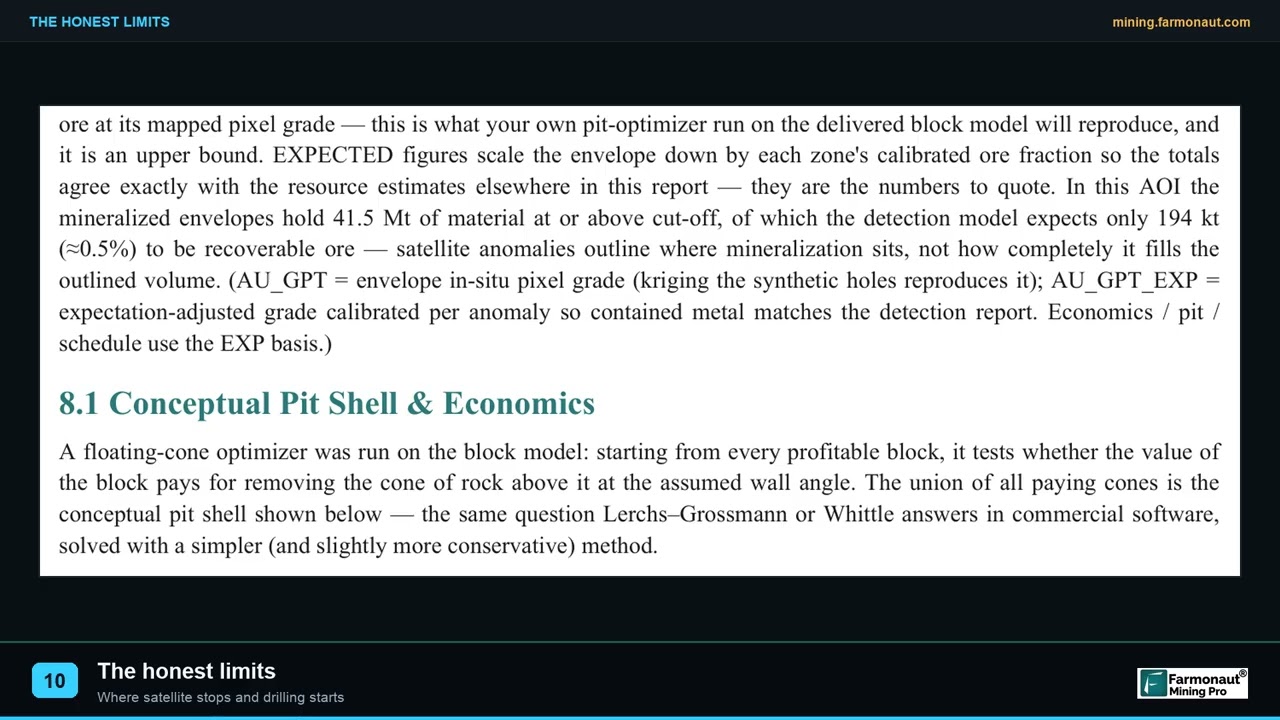
▶ The three limits of satellite exploration that a due-diligence reader should ask about (2 min). · 2:08
How to pitch exploration targets at PDAC without breaking NI 43-101
Every poster, slide and handout at a convention booth is written disclosure, and for a reporting issuer in Canada that brings in National Instrument 43-101. The current instrument is the 2016 consolidation, which the OSC publishes as NI 43-101 Standards of Disclosure for Mineral Projects. The Canadian Securities Administrators proposed a full repeal and replacement in June 2025, but until a new rule takes effect the existing one applies. Our guide to NI 43-101 rules and qualified persons covers the instrument in depth; here we look only at the parts that trip up booth material.
Three sections do most of the work. Section 3.1 says written scientific or technical disclosure about a material property must name the qualified person who prepared, supervised or approved it, and state their relationship to the issuer. Section 3.2 requires a statement on whether a qualified person verified the data, how, and any limits. Section 3.3 requires a summary of results, their interpretation and the QA/QC used, and the hole details listed above when you publish assay results.
Targets are where marketing most often runs ahead of the rules. Section 2.3(1) bars an issuer from disclosing the quantity, grade or metal content of a deposit that has not been classified as a resource or reserve, and from disclosing the gross value of metal in a deposit, sampled interval or drill intersection. Section 2.3(2) then allows one exception: you may disclose the potential quantity and grade of a target for further exploration, expressed as ranges, if you state with equal prominence that it is conceptual, that exploration has been insufficient to define a mineral resource, and that it is uncertain whether further exploration will define one, and if you state the basis for the figures.
An exploration target must be shown as a range, next to wording that says it is conceptual.
The checker below turns a tonnage range and a grade range into contained ounces, so you can see how wide your stated range really is before it goes on a poster. It deliberately has no gold price, because a dollar value for metal in the ground is exactly what section 2.3(1)(c) prohibits. If the high case is many times the low case, investors will notice, and your qualified person should be ready to explain the basis.
Calculator
How wide is your exploration target range?
Enter the tonnage and grade ranges your qualified person supports.
- High end of the range: 154,323 oz
- Low end in tonnes of gold: 1.6 t
- High end in tonnes of gold: 4.8 t
- High case as a multiple of the low case: 3.0 x
Example values only, not a resource. Contained ounces = tonnes x grade (g/t) / 31.1035. NI 43-101 section 2.3(2) lets an issuer disclose the potential quantity and grade of a target only as ranges, with an equally prominent statement that it is conceptual, that exploration is insufficient to define a mineral resource and that it is uncertain further exploration will delineate one, plus the basis for the figures. Section 2.3(1)(c) bars disclosing the gross value of metal in a deposit, so there is no price input. Source: OSC, NI 43-101 consolidation (2016). General information, not legal or investment advice; confirm with your qualified person, counsel and the exchange.
For a resource that has been classified, the separate section 2.2 rules apply: use only the defined categories, report each one separately, never add inferred resources to the other categories, and state grade and quantity for each category. Projects at the study stage should also check our explainer on scoping, pre-feasibility and feasibility studies, because section 2.3(4) restricts the use of those study names.
Where satellite screening fits before PDAC
Most juniors arrive in Toronto with more ground than they can drill. A common question at the booth is simply: why this target first? A ranked, mapped answer is easier to defend than a list, and this is where satellite data can help before the show.
We built the Farmonaut satellite mineral detection platform to screen large areas from space before field teams deploy. It analyses multispectral and hyperspectral reflectance for the spectral signatures of minerals and alteration zones, then flags mineralised target zones, alteration halos, faults and fractures. The service has covered 100,000+ hectares across 20+ mineral types in 25+ countries, and it can cut early-exploration timelines from months to days and early-exploration cost by up to 80 to 85%. You send coordinates, a KML or KMZ file or a polygon with the target mineral, and the report comes back in 5 to 20 business days depending on size and complexity. See satellite-based mineral detection for what the report contains, or Map Your Mining Site to start with your own boundary.
Be clear about what that output is when you put it on a booth wall. Satellite targets are exploration targets ahead of any resource estimate; they are not a mineral resource and they do not replace drilling, sampling or a qualified person’s work. Canadian terrain adds its own limits: snow cover for much of the year, boreal forest, glacial till and lakes all hide bedrock from an optical sensor, and short summers narrow the window for clear imagery. Where outcrop is poor, satellite data tends to help more with structure, access and logistics than with direct alteration mapping.
- ✔ Use a satellite screen to decide which claims to keep before renewal and assessment costs fall due.
- 📊 Overlay targets on your claim boundaries and drill plan so investors see why hole one sits where it does.
- ⚠ Label every satellite map as exploration targets, not resources, and state the data used and its limits.
- Pair the map with ground checks: mapping, sampling and geophysics before any drill decision. Our guide to exploration drilling methods and costs covers the next step.
The Premium+ report adds TargetMax drilling intelligence: suggested drill angles, interactive 3D models of vein structures and next-step guidance. For a company preparing a convention deck, that can turn a satellite map into a drill plan with a stated rationale. To discuss an area, get a quote or contact us; licence and claim questions for other countries are covered in our mining cadastre portal guide.
A PDAC planning timeline for exploration companies
The convention lasts four days, but the work starts nearly a year earlier. The dates below are the ones the organiser published for the 2027 cycle on its key-dates, exhibit and FAQ pages. Some were still marked “to be confirmed” when we checked, so treat the organiser’s site as the final word.
Infographic
The PDAC 2027 year for an exploration company
- 1Program bidsCapital Markets closed June 1; CPI applications Oct. 16.
- 2Booth renewal2026 exhibitors renewed from June 23; priority deadline Aug. 14.
- 3New exhibitorsInvestors Exchange and Trade Show applications opened Sept. 15.
- 4Core Shack and TentApplications open in the fall; selection for Core Shack.
- 5Register the teamEarly rates from December to Feb. 5.
- 6ConventionMarch 7 to 10, 2027, at the MTCC in Toronto.
Registration follows a simple pattern. Early registration opens in December and closes on February 5, and regular rates apply from February 6. For the 2026 show, the regular All Access Pass cost C$539 for members and C$849 for non-members, tax included, with one-day passes at C$229 and C$449. An Exhibits Day Pass for members was C$25 a day, and the VIP pass, which sold out, was C$879 or C$1,309. Students, seniors and short courses had their own rates. In 2026 one of the short courses covered the proposed updates to NI 43-101, which shows how much the disclosure rules matter to this audience.
Here is a sequence that works for many juniors:
- ✔ Spring: decide whether you need an Investors Exchange booth, a Core Shack slot or both, and apply for programming such as CPI.
- 📊 Summer: renew before the August priority deadline, or prepare to apply as a new exhibitor in September.
- Fall: submit the Core Shack application if new drill results are expected, and book hotels early.
- Winter: register the team before early rates end, finalise booth graphics with your qualified person, and schedule investor meetings.
- March: run the booth, then follow up within two weeks while the conversations are fresh.
PDAC questions exploration teams ask
When is PDAC?
The 2027 convention runs from Sunday March 7 to Wednesday March 10 in Toronto. Short courses start on Friday March 5. Exhibit halls are open 10 a.m. to 5 p.m. Sunday to Tuesday and 9 a.m. to noon on Wednesday. Check the organiser’s site for any changes.
Where is the PDAC convention held?
At the Metro Toronto Convention Centre, 222 Bremner Blvd, Toronto. Some events, including the awards evening, use the Fairmont Royal York Hotel at 100 Front St W.
How much does it cost to exhibit at PDAC?
As listed in mid-2026 for the 2027 show, a 4-day Investors Exchange or Trade Show booth cost C$3,100 for corporate members or C$4,100 for non-members, tax included. A 2-day Investors Exchange booth was C$2,000 or C$2,600. A Prospectors Tent booth was C$700 in 2026, and Core Shack space is complimentary if your project is selected.
Who are the PDAC exhibitors on the Investors Exchange?
Junior exploration companies, mid-size producers, major mining companies, oil and gas companies, prospectors, and stock exchanges, brokers and financial institutions. Service firms, consultants, software and remote sensing companies and governments exhibit on the Trade Show instead.
How do you get into the PDAC Core Shack?
Apply when applications open in the fall. A selection committee picks projects that are generating new drill results. Space is free if selected, and each project gets a two-day session, either Sunday and Monday or Tuesday and Wednesday.
How many people attend the PDAC convention?
The association reported 32,155 attendees for 2026, from 141 countries, including 3,431 self-identified investors, 1,514 students and 459 accredited media. The 2025 convention had 27,353 attendees.
Is PDAC worth it for a small junior explorer?
It depends on what you can show. A company with fresh drill results or a clear drill plan can meet more investors in four days than in months of separate trips. A company with nothing new to say may be better served by attending, booking meetings and saving the booth fee until it has news. Not investment advice.
Can I show an exploration target on my PDAC poster?
Yes, if you follow NI 43-101 section 2.3(2): give potential quantity and grade as ranges, state with equal prominence that it is conceptual, that exploration is insufficient to define a resource and that further exploration may not define one, and explain the basis. Name the qualified person. Never show a dollar value for metal in the ground.
What pass do I need for the PDAC investor sessions?
Corporate Presentations for Investors and the Investment Leaders Forum accept All Access, VIP, Exhibitor Staff and Exhibits Day passes. The Capital Markets Program needs an All Access or VIP pass. Pass rules can change each year, so check the program page.
When do PDAC exhibitor applications open?
For the 2027 show, returning exhibitors could renew from June 23 with a priority deadline of August 14, and new Investors Exchange and Trade Show applications opened on September 15. Core Shack and Prospectors Tent applications open in the fall.
General information only, not tax, legal or investment advice; confirm with your advisers and the exchange. Fees, dates and programs change each year; confirm with the organiser. Farmonaut is not a broker, investment adviser, legal adviser or licensing agent, is not affiliated with the convention organiser, and satellite targets are exploration targets, not resources or reserves.
Farmonaut mineral detection
Map your claims before the convention
Send your claim or licence boundary as KML, KMZ or a polygon. Farmonaut returns ranked satellite exploration targets for it, usually in 5 to 20 business days.

Keep reading
Sources
- PDAC, PDAC 2027 Convention home page (2026): pdac.ca
- PDAC, Frequently Asked Questions, PDAC 2027 (2026): pdac.ca
- PDAC, Key Dates and Venue Information, PDAC 2027 (2026): pdac.ca
- PDAC, Convention Statistics 2026 (2026): pdac.ca
- PDAC, Convention Statistics 2025 (Internet Archive copy, 2026): web.archive.org
- PDAC, Investors Exchange, PDAC 2027 (2026): pdac.ca
- PDAC, Core Shack and Core Shack 2026 exhibitor list (2026): pdac.ca
- PDAC, Prospectors Tent, PDAC 2027 (2026): pdac.ca
- PDAC, Trade Show and Trade Show North, PDAC 2027 (2026): pdac.ca
- PDAC, Corporate Presentations for Investors, PDAC 2027 (2026): pdac.ca
- PDAC, Capital Markets Program, PDAC 2027 (2026): pdac.ca
- PDAC, Presentation and Reception Rooms, PDAC 2027 (2026): pdac.ca
- PDAC, One on One Meeting Program, PDAC 2026 (Internet Archive copy): web.archive.org
- PDAC, Fee and Pass Info, PDAC 2026 (Internet Archive copy): web.archive.org
- Ontario Securities Commission, NI 43-101 Standards of Disclosure for Mineral Projects, consolidation (2016): osc.ca
- Canadian Securities Administrators, Proposed Repeal and Replacement of NI 43-101, Notice and Request for Comment (2025): fcaa.gov.sk.ca
- Natural Resources Canada, Canadian Mineral Exploration Information Bulletin (2026): natural-resources.canada.ca
- Department of Finance Canada, Government extending support for mineral exploration in Canada (2025): canada.ca
- Crown-Indigenous Relations and Northern Affairs Canada, Government of Canada and the duty to consult: rcaanc-cirnac.gc.ca
- Wikimedia Commons, PDAC convention 2025 at Metro Toronto Convention Centre, CC BY-SA 4.0 (2025): commons.wikimedia.org
Discussion
Questions, corrections or field experience? Share them below. First-time comments are reviewed before they appear, and your email is never published.
No comments yet. Be the first to add a question or your experience.

 Mine4Africa
 Lithspo Minerals Limited
 Tintina Mining Group
 Dalgety Minerals Pty Ltd
 Vortex Minerals Pty Ltd
 Faith At Work (Pty) Ltd
 Geotech Mining Solutions plc
 Vulcan International Limited
 Kidepo Associates
 GKY Mining
 Alkimy SARL
 Double A Trading
 GemSprout Metals Limited
 Qader Group
 Ileys General Trading
 SG Gold Mining LLC
 VRV Global Pte Ltd
 Omsri International FZE
 G.I.T.T.
 Jaunita Erss Ltd
 Almosi SARL
 SRK Consulting
 Berks Gold Limited
 Mwerezi Minerals Company Limited
