

WA tenements · Buyer guide
Gold Lease for Sale WA: Tenure, Costs, Transfer
A gold lease for sale WA listing is a tenement, not land. Here is what each type costs to hold, how to check it on the state registers, and what a mining lease adds in royalty and closure duties.
Key takeaways
- A WA listing is a prospecting licence (P), exploration licence (E) or mining lease (M); only an M lease allows commercial mining (DMPE, Mining Act 1978).
- Holding cost on a full 200 ha prospecting licence is about $880 rent plus $8,000 minimum spending a year (DMPE fees and charges, effective 1 July 2026).
- Gold royalty is 2.5% of royalty value, with the first 2,500 oz a financial year exempt (WA Government, 2025 fact sheet).
- Holders of most tenements report disturbance and may pay into the Mining Rehabilitation Fund; liability of $50,000 or less pays nothing (WA Government).
- Check holder, status, dealings and boundary on Mineral Titles Online and TENGRAPH before you pay.
In this article
- What a gold lease for sale Western Australia listing actually is
- What a WA tenement costs to hold, year by year
- How to check a WA gold lease on the official registers
- Buying a gold lease for sale Western Australia: transfers and consent
- Kalgoorlie, Leonora and the Goldfields: judging a gold mine for sale in Western Australia
- Australian gold leases for sale outside WA: Queensland, NSW, Victoria, NT and Tasmania
- Checklist before you buy a gold mine for sale in Australia
- Where satellite screening fits for Australian tenements
- Frequently asked questions
A gold lease for sale Western Australia listing is usually a mining tenement granted under the state’s Mining Act, not a piece of land. Here is which tenement you are actually buying, what it costs to hold, how to check it on the state’s registers, what a transfer involves, and how Queensland, New South Wales, Victoria, the Northern Territory and Tasmania differ.
Focus Western Australia tenements
Registers MTO · TENGRAPH · MinView · GeoVic
Format Due-diligence guide
Most people searching for a gold lease for sale Western Australia want one of three things: a small prospecting licence to work with a detector, an exploration licence to test a larger area, or a mining lease with a history of production. Each is a different legal right, with its own size limit, term, rent, expenditure condition and transfer rules. The asking price only makes sense once you know which one is on offer and whether it is in good standing.
Try it: WA tenement cost-to-hold check for buyers →
This rewrites and expands our earlier overview of WA gold leases. It sticks to the practical checks a buyer should make on Western Australia’s official registers, then summarises the systems in the other states and territories, including what to look for in a gold mine for sale in Queensland or a gold lease in NSW. We finish with a checklist and a look at how independent satellite screening can test the ground before you commit. If you are also weighing ground outside Australia, our ten checks before you pay for gold claims apply to any market.
Farmonaut is not a marketplace, broker, agent or lawyer, and we do not list, buy or sell leases, claims or mines. We provide independent satellite-based mineral intelligence on any tenement boundary you send us, as one input to your own due diligence. Confirm tenement details with the relevant state department and get legal advice before you sign.
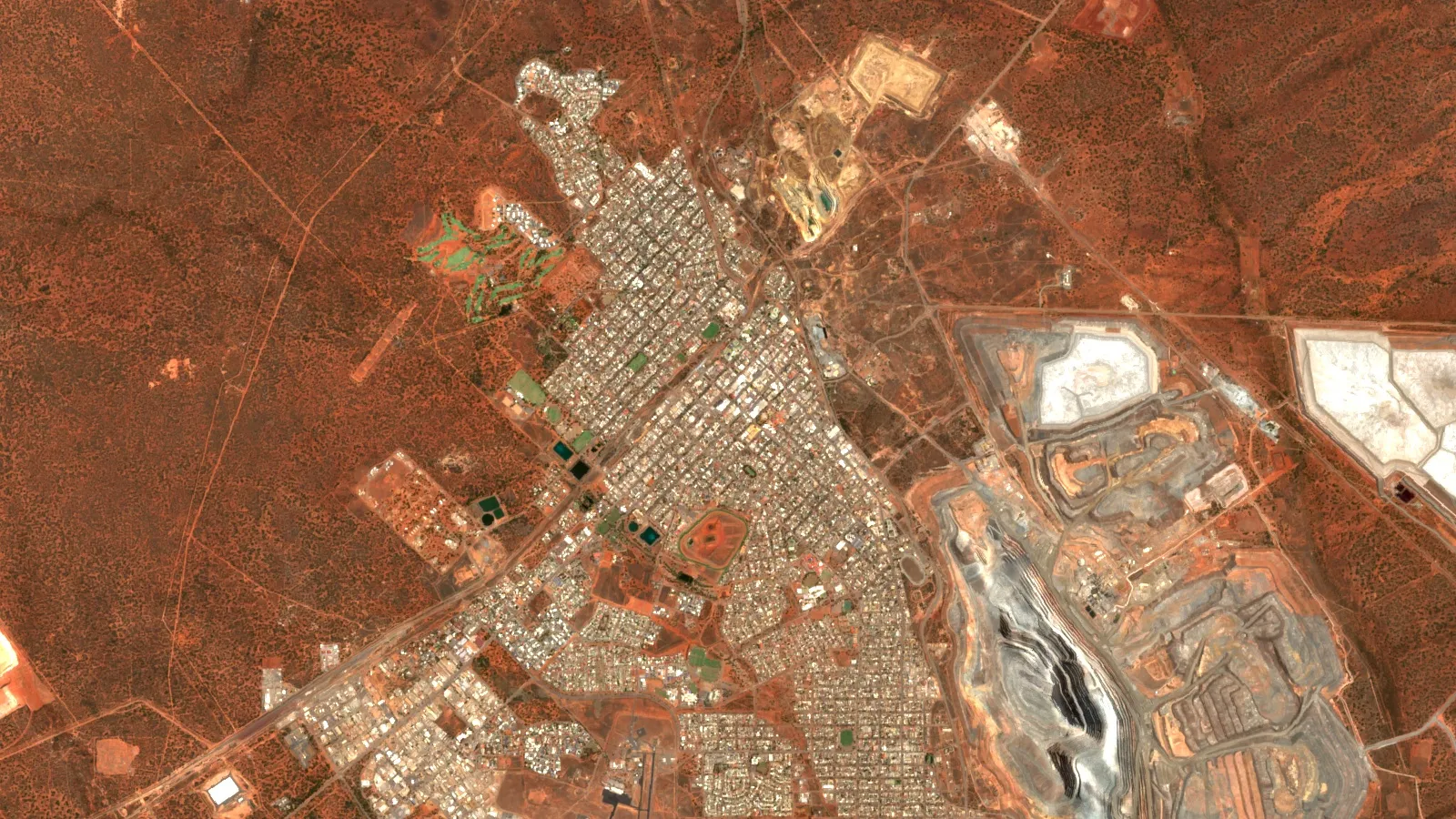
“Western Australia sold 214 tonnes of gold in 2021–22, almost 70 per cent of all the gold sold in Australia.”
What a gold lease for sale Western Australia listing actually is
Mining in Western Australia is governed by the Mining Act 1978 and the Mining Regulations 1981. Since 1 July 2025, the tenement system has been run by the Department of Mines, Petroleum and Exploration (DMPE), which took over the resource regulation role of the former Department of Energy, Mines, Industry Regulation and Safety. Older listings may still mention DMIRS or DEMIRS.
Chart
Initial term of the main WA tenements
Years
The Act has three main tenements used for exploration and mining, and the phrase “gold lease for sale Western Australia” can mean any of them. Start by asking for the tenement number and looking it up.
| Tenement | Size | Term | What it allows |
|---|---|---|---|
| Prospecting licence | Up to 200 ha | 4 years; can apply for a 4-year extension or a retention licence | Small-scale prospecting: sampling, trenches, pits, drilling |
| Exploration licence | Up to 70 blocks (200 in designated exploration areas) | 5 years; can apply for a 5-year extension or a retention licence | Larger-scale exploration |
| Mining lease | No maximum size | 21 years initially, renewable for a further 21 | Mining and commercial production |
For any WA gold tenement buyers look at, these figures come from the Environmental Defenders Office’s summary of the WA Mining Act (September 2024 edition) and the department’s page on mining tenure types in Western Australia. You need a mining lease to start commercial production. A prospecting or exploration licence lets you explore, not run a mine.
Prospecting leases for sale in WA are usually licences
Searches for a “prospecting lease for sale Kalgoorlie”, or for prospecting leases for sale in WA generally, usually mean a prospecting licence. The difference is not just a word. A licence is an exploration right with a fixed term and conditions, while a lease is the production-stage title. If a seller calls a prospecting licence a “lease”, ask why, and check what the register says. Plenty of gold leases for sale in WA turn out to be prospecting licences once you look them up, so do that first.
The same applies to ads for gold prospecting leases for sale in WA or prospecting leases for sale in Western Australia more broadly: the register will show a prospecting licence (P-prefixed), an exploration licence (E) or a mining lease (M). Only the last is a gold mining lease in WA in the full sense. When someone offers gold mining leases for sale in Western Australia, ask for the M number, because a genuine WA gold lease buyers can mine on will always have one.
“Claim” is also a loose word here. WA has no mining claim title, so an ad for gold mining claims for sale in Australia usually means a WA tenement, a Queensland mining claim, or a North American listing. Claims in the United States and Canada are different titles with different fees, as our guides to British Columbia gold claims and their holding costs and staking and paying for BLM mining claims explain.
Private land and the 30-metre rule
Some tenements sit over private land. The EDO summary notes that where the owner and occupier do not consent, a mining tenement over certain private land may only be granted for land more than 30 metres below the natural surface. If a WA gold listing overlaps farmland, check how the tenement was granted and what access arrangements exist.
In WA, a mining lease is the only tenement that lets you mine commercially. Many “gold leases for sale” are in fact prospecting licences near historic workings. That can be a sensible buy, as long as the price reflects an exploration-stage right and not a producing mine.
What a WA mining lease does and does not include
A WA mining lease is the production-stage title, so buyers pay more attention to it than to an exploration licence. The lease gives the right to mine, but it does not remove other duties. The holder still pays rent, meets the minimum spending condition and reports to the department. If the ground produces gold, a state royalty applies as well. Ask the seller whether any production has happened on the lease, because that changes the royalty and closure position you would inherit.
Listings called a gold mine for sale in Western Australia vary a lot. Some are one tenement with old workings. Others are a package of several licences and leases with a plant or camp. Ask for the tenement number of every title in the package and look each one up on its own. A package is only as strong as its weakest title, and one lapsed licence can change the price you are willing to pay.
What a WA tenement costs to hold, year by year
$880 a year in rent and $8,000 a year in required spending: that is the floor on a full 200-hectare prospecting licence under the 2026-27 fee schedule (effective 1 July 2026) and Mining Regulations 1981. The 2026-27 fee schedule (effective 1 July 2026) sets rent at $4.40 per hectare for a prospecting licence (minimum $40.70) and $30.10 per hectare for a mining lease. The expenditure conditions are separate: regulation 15 requires at least $40 per hectare on a prospecting licence with a $2,000 minimum, and regulation 31 requires at least $100 per hectare on a mining lease with a $10,000 minimum ($5,000 if the lease is 5 hectares or less).
Chart
Exploration licence rent per block, by year of term
A$ per block per year, graticular licence of more than one block
Chart
Rent per hectare: prospecting licence vs mining lease
A$ per hectare per year, before minimums
Exploration licences work in blocks, and their costs climb with age. For a graticular licence, The 2026-27 fee schedule charges $177 per block a year in years 1 to 3, $318 in years 4 and 5, $435 in years 6 and 7 and $825 from year 8. Regulation 21 adds minimum spending of $1,000 per block in years 1 to 3, $1,500 in years 4 and 5, $2,000 in years 6 and 7 and $3,000 from year 8, with minimums that depend on the number of blocks (for 6 or more blocks: $20,000, $30,000, $50,000 and $70,000). The department publishes the regulations; check the version date on the PDF, because fees are indexed each 1 July.
Put those rules together and you can estimate what any WA gold tenement sellers list will cost you before you make an offer, including any spending shortfall the seller leaves in the current tenement year.
Costs beyond the asking price
The price on a WA gold listing is only the first cost. Transfers carry the $159 registration fee and a stamp duty assessment. Holding costs are the rent and the minimum expenditure the tenement’s conditions require. Then there is advice (legal review of the sale agreement and the conditions, and tax advice on the structure) and evidence: satellite screening, a site visit and independent sampling before settlement.
- ⚠ Obligations you inherit: rehabilitation of any disturbance on the ground, and reporting deadlines you must now meet.
- Exemptions cost money too: Schedule 2 charges $494 to apply for a one-year exemption from expenditure conditions on a prospecting licence and $459 on a mining lease, and an exemption is not guaranteed.
Price any listing on three things: remaining term, the conditions you inherit (rent and minimum expenditure), and independent evidence of the geology. A lower price rarely makes up for a short term and heavy expenditure commitments on untested ground.
Royalty and closure costs on a producing gold lease
Rent and spending are only the holding costs. Once gold is sold, the WA Government states that the gold royalty rate is 2.5% of the royalty value, and that no royalty is payable on the first 2,500 ounces a financial year from a gold royalty project (WA Government, mineral royalties, read November 2026). The royalty value is based on the London Bullion Market gold price (London PM Fix) in Australian dollars. The Mining (Royalties) Regulations 2025 carry the same 2,500-ounce exemption (Legislation WA). Returns are due within 30 days after each quarter ends. A small operator may pay nothing, while a larger one pays on every ounce above the exemption, so ask how many ounces the lease has produced in recent years.
Closure is the other cost. Holders of most Mining Act tenements must report disturbance data and may pay into the Mining Rehabilitation Fund each year. The WA Government says tenements with a rehabilitation liability estimate at or below $50,000 report but do not pay, and that the fund covers abandoned mines where the holder has not met its duties (WA Government, Mining Rehabilitation Fund, read November 2026). Ask the seller for the latest disturbance report and any levy notice, so you know what you would take over.
Calculator
What will a WA tenement cost to hold each year?
Enter your own areas. Leave a box at 0 to skip that tenement.
- Prospecting licence rent: $880
- Prospecting licence minimum spend: $8,000
- Mining lease rent: $1,505
- Mining lease minimum spend: $10,000
Example values only. Rents are the DMPE 2026-27 fees (effective 1 July 2026): prospecting licence $4.40/ha (minimum $40.70), mining lease $30.10/ha, exploration licence per block as entered ($177 is the years 1-3 rate for licences of more than one block). Minimum spending: prospecting licence $40/ha ($2,000 minimum), mining lease $100/ha ($10,000 minimum; $5,000 if 5 ha or less is not modelled). Excludes duty, rehabilitation and exemptions.
How to check a WA gold lease on the official registers
Western Australia gives buyers two official online tools. Use both before you negotiate on any WA gold tenement sellers advertise.
Mineral Titles Online (MTO)
The department’s Mineral Titles Online system holds details of exploration and mining tenements across the state and is where transactions with the Mineral Titles Division are lodged. Use it to confirm the tenement type and number, the registered holder, the grant and expiry dates, the area, and any registered dealings such as transfers, mortgages or caveats.
TENGRAPH
TENGRAPH is the department’s spatial enquiry and mapping system. It shows where each tenement sits in relation to other land information. Use it to check the boundary against the seller’s map, to see neighbouring tenements and pending applications, and to spot overlaps with reserves or other land that could limit what you can do.
- ✔ Holder matches the seller, or the seller has written authority from the holder.
- ✔ Status is live: the tenement is granted, not an application, and not near expiry without a renewal in hand.
- Boundary on TENGRAPH matches the workings or targets the seller described.
- ⚠ Caveats and mortgages: the department notes that a caveat blocks registration of a dealing until it is removed or cleared.
Print or save a dated copy of the MTO tenement report and the TENGRAPH map on the day you agree terms, and again just before settlement. If anything changes between the two (a new caveat, a dealing, a change in status) you will know before your money moves.
If you have a tenement number or boundary in hand, you can also get an independent read on the ground while the legal checks run. Draw it on mining.farmonaut.com (Map Your Mining Site), or send the coordinates through our mining query form.
Questions to ask the seller of a gold lease for sale Western Australia
Before you spend on travel or advice, ask the seller of any WA gold tenement offers for a short, written file. A serious seller should be able to provide:
- ✔ Tenement number(s) and a current MTO tenement report.
- A digital boundary (KML/KMZ or shapefile) that matches TENGRAPH.
- Conditions and compliance: the tenement’s conditions and recent expenditure and reporting history (the Form 5 expenditure reports).
- Geology: any sample results with laboratory certificates, drilling logs and past exploration reports.
- ⚠ Encumbrances: mortgages, caveats, royalties, joint-venture or option agreements over the ground.
- Access: how you reach the ground, and any agreements with landholders.
Gaps in this file are not always a problem, but each one is something you will have to fill yourself, at your own cost, before you can value the tenement.

▶ Shows how to read GeoVIEW.WA, WAMEX, MINEDEX and Tengraph before you go gold prospecting. · 4:13
Buying a gold lease for sale Western Australia: transfers and consent
A tenement transfer in WA is a registered dealing. The department’s guidance on mining tenure dealings describes two main types: transfers, which change ownership, and mortgages, which secure a loan against a tenement.
- Check whether Ministerial consent is needed. Under section 64 of the Mining Act, an exploration licence cannot be dealt with in the first year of its term without the Minister’s consent, a rule aimed at stopping “real-estating” of exploration ground. A dealing made without that consent does not transfer a legal or equitable interest. Requests can be lodged online through MTO.
- Lodge the transfer. Transfers use the prescribed form (Form 23 in the department’s guidance, read September 2026) and are lodged through MTO or a Mining Registrar’s office, with the $159 registration fee.
- Deal with stamp duty. The department notes that transfers must be assessed for duty by the state’s revenue office. Build this into your costs.
- Clear caveats first. A caveat on the tenement blocks registration until it is withdrawn or removed.
- Take over the conditions. Once registered, you inherit the tenement’s conditions: rent, minimum expenditure, reporting and any environmental obligations.
Comparing several WA listings fairly
Weighing more than one WA listing? Compare them on the same basis: tenement type, remaining term, area, conditions, encumbrances, access and independent geological evidence. The cheapest listing is not always the cheapest to hold, and a higher price can be justified by a longer term, cleaner title and better evidence. Run each one through the cost-to-hold check above, and screen every boundary with the same method so the comparison stays honest.
“Paddy Hannan’s find on 14 June 1893 set off the rush that became Kalgoorlie-Boulder and its famous Golden Mile.”
Kalgoorlie, Leonora and the Goldfields: judging a gold mine for sale in Western Australia
Much of the demand behind “gold lease for sale Western Australia” searches is anchored in Goldfields history. Arthur Bayley and William Ford reported their rich discovery at Coolgardie on 17 September 1892. On 14 June 1893, Paddy Hannan and his partners found gold near what is now Mount Charlotte, starting the rush that became Kalgoorlie-Boulder. The State Library of Western Australia describes the resulting goldfield as the Golden Mile.
That history is real, and old workings are genuine evidence that gold was once found nearby. But it has limits. Historic miners generally worked the most accessible ore first, and ground near the famous towns has been prospected since the 1890s. A gold mine for sale in WA that leans on the name Kalgoorlie, Leonora or Coolgardie still needs the same checks as anywhere else: the tenement, its conditions and independent evidence from the ground itself.
Leonora is a good example. The department still runs a Regional Mining Registrar office in Leonora (Rochester Street, per DMPE’s office list, read September 2026), alongside offices such as Kalgoorlie and Karratha. So if you are looking at gold ground near Leonora, WA, the local registrar can take lodgements, and the same MTO and TENGRAPH checks apply as in Perth.
- Old workings on the tenement: useful clues to structure and past grades, but also potential safety and rehabilitation issues.
- Past exploration reports: ask the seller for them, and check the department’s public geoscience records.
- ⚠ Detector patches: a history of nugget finds on the surface does not show what lies below.
Prospecting leases for sale near Kalgoorlie and Leonora
Most prospecting leases for sale in Kalgoorlie, Leonora or elsewhere in the Goldfields are prospecting licences with a P number. Check how much of the term is left, because a licence close to expiry needs an extension application, and the DMPE tenure page sets the extension rules. Also compare the boundary with neighbouring tenements and with any registered dealings on the register. Ground close to a known mine may already be covered by other titles, so overlaps and pending applications matter as much as the geology.
Gold ground in Leonora, or a gold prospecting lease for sale in WA described as a claim, should get the same file request as any other listing: tenement report, boundary file, conditions and spending history, and past exploration reports. Treat a seller who cannot supply the tenement number as a warning sign, and do not pay a deposit until you have seen the register entry yourself.
Australian gold leases for sale outside WA: Queensland, NSW, Victoria, NT and Tasmania
Each state and territory has its own law, titles and register. The buyer’s questions stay the same everywhere (what exactly is the title, is it in good standing, can it be transferred, what is under it) but the answers come from different offices. That applies whether you are after Australian gold mining leases for sale in the eastern states or a gold mine for sale in Western Australia.
Mining leases for sale in QLD, and the small mining claim
Queensland’s small-scale title is the mining claim. The state says a mining claim allows small-scale mining such as prospecting and hand-mining. A standard claim is 1 hectare, and a prescribed mining claim can be 20 hectares. Claims can run for up to 10 years and are renewable, and a person can hold no more than 2 at a time. They can cover any mineral except coal and uranium, but you cannot use machinery unless the claim has been granted as a prescribed mining claim, which applies to corundum, gemstones and other precious stones.
That is why Rubyvale mining claims for sale attract interest: Rubyvale, Sapphire and Anakie sit in the Central Queensland sapphire gemfields, and prescribed claims there are geared to corundum. For larger gold ground, and for most mining leases for sale in QLD, the titles are an exploration permit for minerals (EPM) (up to 5 years, renewable, and up to 100 sub-blocks) or a mining lease. The state has offered zero rent on EPMs from 1 September 2023 to 31 August 2028, while existing invoices remain payable. A gold mine for sale in QLD should therefore be checked for which of these titles it actually holds. Most gold claims for sale in QLD are the 1-hectare hand-mining kind, so a claim is a prospecting toehold rather than a mine.
A gold mine for sale in QLD: Charters Towers and the northern fields
What sells in the north is history. Queensland Places records that gold was found near Towers Hill in January 1872, that 12 ore-processing mills were working in the district by the end of 1878, and that output reached 217,000 ounces in 1892, double the 1888 figure. The same source notes an exodus to the Palmer River goldfields between Cairns and Cooktown in the 1870s. Gold mines for sale in North Queensland often trade on those names. Treat them as you would Kalgoorlie ground: old shafts and mill sites prove gold was there once, not that it is left, and the title is usually a mining lease or EPM. The checks are the same ones you would run on a WA listing.
“Queensland’s standard mining claim is just one hectare, and no machinery is allowed unless it is a prescribed claim.”
New South Wales
Under the Mining Act 1992, NSW titles are the exploration licence, the assessment lease and the mining lease. A mining lease needs development consent under planning legislation and proof of a mineable resource. Titles can be searched on MinView, which replaced Common Ground, and on the Mining Titles Register. Before an exploration licence holder can go onto land, a written land access arrangement with the landholder is required. So a gold lease in NSW, or a gold claim for sale NSW listing, should come with its land access position explained.
Watch the title codes. The NSW title-types page lists a Gold Lease (GL) as a legacy title: GLs are no longer granted, though some remain active. The same list has no prospecting lease. So a gold prospecting lease in NSW is either an exploration licence (including the Exploration (Prospecting) Licence code) described loosely, or an old GL. A gold mining lease in NSW today should show as an ML or CML on the Mining Titles Register.
Old gold mines for sale in NSW need one more check. The state’s Legacy Mines Program defines a legacy mine as an abandoned site that once held a mining title, has no party responsible for rehabilitation and carries high environmental or safety risk. If a gold mine for sale in NSW sits on or near such a site, ask the department about its status before you price it.
Victoria
Victoria’s minerals are governed by the Mineral Resources (Sustainable Development) Act 1990, administered by Resources Victoria. Titles include exploration, retention, mining and prospecting licences, and documents are held on the Victorian Mining Register, with summary information available through the GeoVic mapping tool. Victorian gold leases for sale and small gold mines for sale in Victoria should be checked on GeoVic first.
There are no gold claims in Victoria in the Queensland sense. According to Resources Victoria’s prospecting licence guidelines, a prospecting licence covers no more than 5 hectares and runs for a maximum of 7 years, and it cannot be renewed. A miner’s right lets a person prospect on Crown land where access is allowed, or on private land with consent, but it is a personal permit, not a title you can sell. So gold claims for sale in Victoria, Australia are usually prospecting licences, and the remaining years on a non-renewable 7-year term matter a great deal.
Northern Territory and Tasmania
In the Northern Territory, an exploration licence under the Mineral Titles Act gives the exclusive right to explore within the title area, and mineral leases authorise mining. In Tasmania, Mineral Resources Tasmania grants exploration licences for an initial five years, with mining leases for extraction. For gold leases for sale in the Northern Territory or gold mines for sale in Tasmania, check the relevant government title system for holder, status and conditions.
| State / territory | Main titles | Where to check | Buyer watch-point |
|---|---|---|---|
| Western Australia | Prospecting licence, exploration licence, mining lease | MTO, TENGRAPH | First-year consent for exploration licences; duty; caveats; expenditure shortfall |
| Queensland | Mining claim, EPM, mining lease | State tenure systems (MyMinesOnline) | Claim size and machinery limits; 2-claim cap |
| New South Wales | Exploration licence, assessment lease, mining lease | MinView, Mining Titles Register | Land access arrangement; development consent |
| Victoria | Exploration, retention, mining, prospecting licences | Victorian Mining Register, GeoVic | Planning approval needed before mining |
| Northern Territory | Exploration licence, mineral lease | NT mineral titles system | Check conditions and status |
| Tasmania | Exploration licence, mining lease | Mineral Resources Tasmania | Initial 5-year exploration term |
Checklist before you buy a gold mine for sale in Australia
A gold lease for sale Western Australia listing and a small gold claim for sale in Queensland need the same order of work, and it keeps costs down. The early steps are free or cheap and remove most weak listings.
- Get the tenement number and look it up on the state register yourself.
- Confirm holder, status and expiry, and whether the title is granted or still an application.
- Check dealings: mortgages, caveats, pending transfers, and any consent the transfer will need.
- Map the boundary on the state’s spatial system and compare it with the seller’s map.
- Read the conditions: rent, minimum expenditure, reporting and rehabilitation duties you will inherit.
- Check land access: private land, native title processes, reserves and neighbours.
- Screen the geology independently with public geoscience and satellite analysis of the boundary.
- Visit and sample with your own chain of custody and an accredited laboratory.
- Get legal and tax advice on the transfer, duty and structure before you sign.
Treating an abandoned mine for sale in WA or elsewhere in Australia as a bargain because the price is low is a common mistake. Old shafts, waste dumps and tailings can bring safety risks and rehabilitation obligations. Ask what the tenement conditions require, and get advice on liabilities before you buy an old mine site.
WA’s own numbers show the scale. The department’s Abandoned Mines Program says thousands of abandoned mine features (shafts, costeans, pit voids and waste rock landforms) still exist across the state, recorded in its Abandoned Mines Inventory. Before you treat an abandoned mine for sale in Australia as a bargain, look the site up in that inventory in WA or the Legacy Mines Program in NSW, and ask who carries the rehabilitation duty. The same question applies to any gold mining lease in Australia with old workings: a cheap WA gold tenement sellers call “abandoned” may just mean the holder stopped spending.
Reading the seller’s geology claims
Geology is the hardest part of a WA gold listing to verify from a desk. If a listing quotes tonnes and grades, ask for the report behind them. ASX-listed companies report under the JORC Code, which requires that any Exploration Target be stated as ranges of tonnes and grade with a cautionary statement that it is conceptual and that exploration is insufficient to estimate a Mineral Resource. Private sales rarely come with a JORC report. That is normal, but a single precise tonnage on untested ground should make you ask where it came from.
Gold claims for sale in Western Australia: a quick note
WA does not issue mining claims, so gold claims for sale in Western Australia are tenements sold under another name. When you see this wording, ask which of the three tenement types is on offer, then run the register check above. Buying from a private seller also means checking that the person selling is the registered holder, or has the holder’s written authority, before any money moves.
Where satellite screening fits for Australian tenements
Satellite analysis cannot confirm who holds a tenement, but it gives you an independent read on the ground before you travel or commit. Our satellite-based mineral detection analyses multispectral and hyperspectral imagery of the tenement boundary. Minerals and alteration zones reflect light in their own spectral signatures, and we use them to flag likely mineralised target zones, alteration halos and structures such as faults and fractures. On a WA tenement buyers are weighing, that shows where on the tenement the evidence is strongest, which matters when you have $40 a hectare to spend every year and want it spent in the right place.
- Input: the tenement boundary as coordinates, KML/KMZ or a polygon, plus the target mineral.
- Turnaround: 5–20 business days depending on area size and mineral complexity.
- 📊 Deliverables: high-potential zones, prospectivity heatmaps, estimated location and depth ranges, geological interpretation and georeferenced GIS files. Premium+ adds TargetMax™ drilling intelligence and interactive 3D subsurface models.
- Cost and time: satellite screening can lower early-exploration costs by up to 80–85% and shorten timelines from months to days compared with starting on the ground.
- ⚠ Limitation: results are exploration targets, not a JORC resource, and they do not replace title checks or sampling.
Satellite screening involves no ground disturbance. On farmland, pastoral leases or culturally significant country, you can learn a lot about a tenement before any vehicle, trench or drill pad goes in, and then focus field work where it matters.
We have scanned 100,000+ hectares for 20+ mineral types across 25+ countries, including Australia. See the satellite-driven 3D mineral prospectivity mapping sample for typical output, and our mining cadastre portal guide by country for licence registers in other countries.
Weighing a gold lease for sale Western Australia? Test the ground first.
Send us the tenement boundary. We’ll return ranked target zones and geological interpretation so you can weigh the asking price against independent evidence.
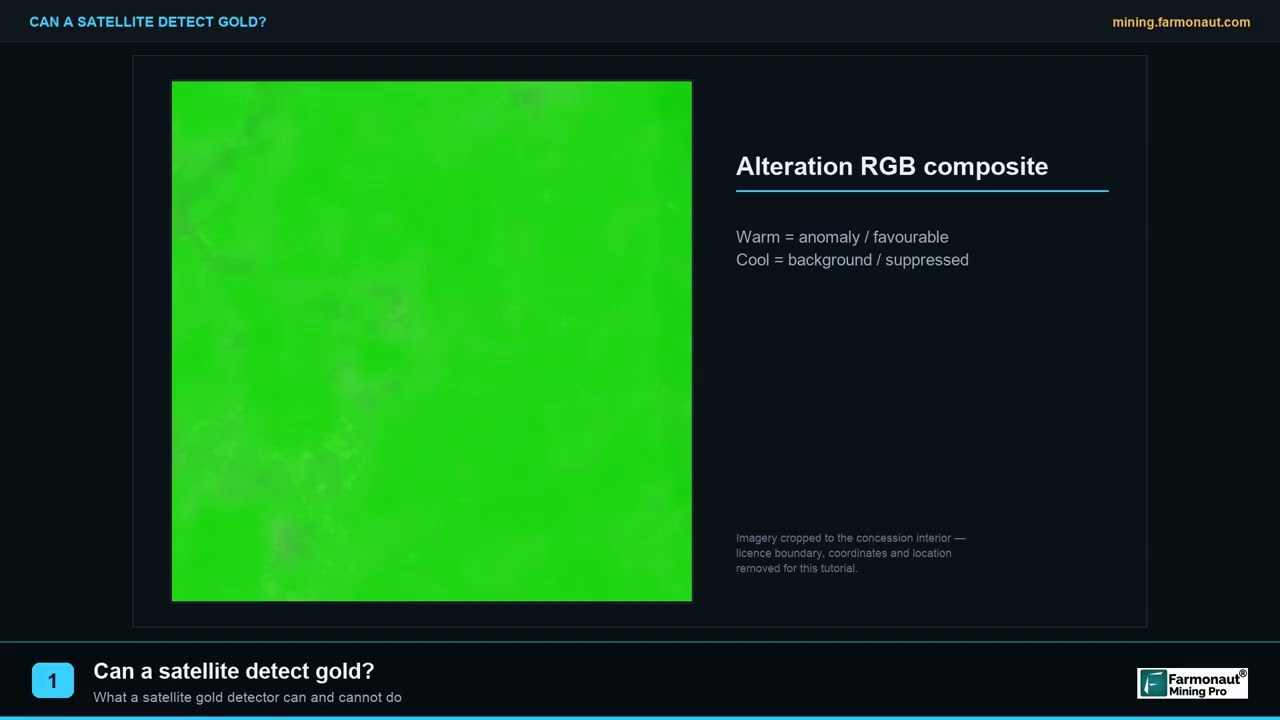
▶ Explains that no satellite sees gold itself, but it can map the alteration halo a gold system leaves behind. · 2:00
Frequently asked questions
What does “gold lease for sale Western Australia” usually mean?
It is usually a tenement under the Mining Act 1978: a prospecting licence, an exploration licence or a mining lease. Only a mining lease allows commercial production. Ask for the tenement number and check its type, holder and expiry on Mineral Titles Online.
What does it cost to hold gold leases for sale in Western Australia?
Under the 2026-27 fee schedule (effective 1 July 2026), a prospecting licence carries rent of $4.40 per hectare and minimum spending of $40 per hectare ($2,000 minimum) each year. A mining lease carries $30.10 per hectare in rent and $100 per hectare in spending ($10,000 minimum). Check the current version of the regulations before you budget.
Is a gold lease for sale in Western Australia a good investment?
That depends on the tenement’s type, remaining term, conditions and geology, and on your own circumstances. We can’t answer it for you, and this guide is not investment advice. What you can do is check each listing against the official registers and independent evidence before deciding.
Can I transfer a WA exploration licence in its first year?
Only with the Minister’s consent. Section 64 of the Mining Act restricts dealings in an exploration licence during the first year of its term, and a dealing without consent does not pass an interest. Requests can be lodged online through MTO.
How big are gold claims for sale in QLD?
A standard Queensland mining claim is 1 hectare, and a prescribed mining claim can be 20 hectares. A person can hold up to 2 claims at a time, and machinery is only allowed on prescribed claims, which are for corundum, gemstones and other precious stones.
Where can I search a gold lease for sale in NSW or Victoria?
NSW exploration and mining titles are on MinView and the Mining Titles Register. In Victoria, summary information from the Victorian Mining Register is available through GeoVic. Both are free to view.
Does Farmonaut have Australian gold mining leases for sale?
No. We do not list, buy, sell or broker leases, claims or mines, and we don’t offer a gold mine for sale in Australia or anywhere else. We provide satellite-based mineral intelligence on any tenement boundary you send us, so you can evaluate a gold lease anywhere in Australia with independent evidence.
Tenement types, terms, rents and procedures here come from the Western Australian Government and the Department of Mines, Petroleum and Exploration, the WA Mining Regulations, the Environmental Defenders Office’s summary of the WA Mining Act, and the Queensland, New South Wales, Victorian, Northern Territory and Tasmanian governments. Rents and fees are revised by regulation, and department names change, so confirm details with the relevant authority and get legal advice before you buy. Satellite results are exploration targets, not Mineral Resources. This guide is general information, not legal or investment advice.
This page is for information only. It is not legal advice or investment advice. Confirm the rules with the regulator.
Farmonaut mineral detection
Map your mining site from space
Send your claim or licence boundary as KML, KMZ or a polygon. Farmonaut returns ranked satellite exploration targets for it, usually in 5 to 20 business days.

Mining Pro sample view, synthetic data
Keep reading
Sources
- WA Government, Mineral royalties in WA: wa.gov.au
- WA Government, About the Mining Rehabilitation Fund: wa.gov.au
- WA Government, Mineral royalties fact sheet (2025): wa.gov.au
- Legislation WA, Mining (Royalties) Regulations 2025: legislation.wa.gov.au
- Mining Rehabilitation Fund Act 2012 (WA): legislation.wa.gov.au
- WA DMPE, Fees and Charges 2026-27 (effective 1 July 2026): wa.gov.au
- Environmental Defenders Office, Mining Law in WA (2024): edo.org.au
- WA DMPE, Mining tenure types: wa.gov.au
Discussion
Questions, corrections or field experience? Share them below. First-time comments are reviewed before they appear, and your email is never published.
No comments yet. Be the first to add a question or your experience.

 Nanita Company Limited
 Mwerezi Minerals Company Limited
 Congo Mining Solutions
 Mining SARL
 SenGold Invest SAS
 Sania Corporation
 Sean Mining Limited
 NTS Group (Pty) Ltd
 Mine4Africa
 Lithspo Minerals Limited
 Tintina Mining Group
 Dalgety Minerals Pty Ltd
 Vortex Minerals Pty Ltd
 Faith At Work (Pty) Ltd
 Geotech Mining Solutions plc
 Vulcan International Limited
 Kidepo Associates
 GKY Mining

 Licence holder · Nigeria · Gold + lithium
 Client · Somalia · Gold










