

British Columbia claims · Buyer guide
British Columbia Gold Claims for Sale: Checks and Costs
A gold claim for sale in BC is a title to minerals in map cells, not land. Check the good-to date, the owner and the work reports in Mineral Titles Online, then budget the holding cost per cell.
Key takeaways
- A BC claim is a right to minerals not already granted, held in map cells of about 21 ha in the south and 16 ha in the north (BC Mineral Titles, claims FAQ).
- A sale is a two-step bill of sale: the seller starts it and the buyer completes it within 30 days. The expiry date does not change on transfer (BC Mineral Titles).
- Holding cost per southern cell is about $105 of work a year in anniversary years 1 to 2 for a mineral claim, rising to about $420 from year 7; placer is about $420 every year (Mineral Tenure Act Regulation, derived).
- Cash in lieu of work costs double, so a claim close to its good-to date can need a large payment soon after you buy.
- Satellite screening is a desk step before a site visit and sampling; it does not prove grade or title.
In this article
- How mineral titles work in British Columbia
- What it costs to keep British Columbia gold claims in good standing
- What changed: new claims now go through consultation
- Buying British Columbia gold claims for sale: the Province's own checklist
- Regional notes: Vancouver Island, Thompson River and Princeton claims
- Testing British Columbia gold claims for sale before you buy
- Frequently asked questions
Listings for British Columbia gold claims for sale run from Vancouver Island placer ground to hard rock cells near Princeton and the Thompson River. Here is how BC mineral titles actually work, what the Province itself says to check before you complete a bill of sale, what a claim costs to keep alive, and how to test the ground before you pay.
Register Mineral Titles Online (MTO)
Titles Mineral & placer cell claims
Rules Checked against BC sources
If you are browsing British Columbia gold claim listings, the first thing to know is that you are not buying land. A BC mineral or placer claim is a title to the available mineral rights in a set of map cells, held in the Province’s online register, Mineral Titles Online (MTO). It comes with a good-to date, work or payment obligations, and rules about what you can do on the surface. The listing price only makes sense once you have checked all three.
We wrote this for prospectors, small operators and investors, including anyone looking at the Vancouver Island, Thompson River and Princeton listings that draw the most searches. It draws on the Province’s Mineral Titles guidance and the Mineral Tenure Act Regulation. You will find the title system, what a claim costs to hold, the 2025 change to how new claims are approved, the Province’s own checklist for buyers, and a way to screen the ground cheaply. For the checks that apply to claims anywhere, see our buyer’s checklist for gold claims in any market.
Farmonaut does not list, buy or sell mining claims, and we are not a broker, agent or lawyer. We provide independent satellite-based mineral intelligence on any claim boundary you send us, as one input to your own due diligence. Always confirm title details with BC’s Mineral Titles Branch before you pay.
“In 1858, around 30,000 people descended on Victoria after news of Fraser and Thompson River gold reached San Francisco.”
How mineral titles work in British Columbia
Nobody hammers posts into the ground to acquire a new claim in BC. You select cells on the electronic Mineral Titles Online map instead. The Province’s claims FAQ says cells range from about 21 hectares (457 m × 463 m) in the south to about 16 hectares in the north, because lines of longitude converge towards the pole. One claim application can include up to 100 adjoining cells.
That map-based design helps anyone weighing a BC claim purchase. You can see the exact cells on the same public map the Province uses, instead of relying on a hand-drawn sketch of posts in the bush. The boundary is also already digital, so it can be screened, compared and overlaid on geology in minutes.
Mineral claims versus placer claims
There are two kinds of claim, and a listing should say which one it is. A mineral claim covers minerals in place, which for gold usually means hard rock (lode) targets such as veins and disseminated deposits. A placer claim covers placer minerals, such as gold concentrated in stream gravels. Many Vancouver Island and Thompson River listings are placer claims, while Princeton-area listings include both. The difference is not academic: as you will see below, placer ground costs four times as much to hold in its first two years. BC’s cell-based claims also differ from US federal claims, which the claimant stakes on the ground and sizes by statute; our guide to BLM claim staking, filing and fees covers that system.
What a BC claim does and does not give you
According to the Province, a person whose claim application is approved acquires the available rights to minerals or placer minerals in the claim area that have not already been granted. That qualifier matters. You do not acquire rights already held by a legacy claim, and you do not acquire rights over alienated land or other titles that carry mineral rights, such as a Crown grant. The Province gives the example of a Crown grant that holds the gold and silver: a new title over it holds everything except those two metals.
- Minerals or placer minerals in the claim area, where not already granted to someone else.
- ⚠ Not sand and gravel: these are not minerals under the Mineral Tenure Act, and need a separate Land Act tenure.
- ⚠ Not surface ownership: work involving mechanical disturbance needs a Mines Act permit, and private land needs the owner’s authorisation.
- Not a guarantee of gold: a claim is a legal right to explore, not evidence of a deposit.
Who can hold a claim: the Free Miner Certificate
To acquire a claim, including by buying an interest in someone else’s, you need a valid Free Miner Certificate (FMC). The process starts with a Business BCeID account, which is how you log in to MTO, and individuals may have to verify their identity in person. Schedule B of the Mineral Tenure Act Regulation (B.C. Reg. 529/2004), last amended for fees by B.C. Reg. 89/2012, sets the FMC at $25 for an individual, nothing for a senior over 65, and $500 for a corporation. The Province says FMCs are renewed online in MTO.
Sort out your Business BCeID and Free Miner Certificate before you start talking price. The seller initiates the transfer, and you then have a fixed window to complete it. You don’t want ID verification to be the reason a deal stalls.
Where listings come from and who you buy from
The Province’s claims FAQ describes the transfer of a claim between free miners and points to Mineral Titles Online for available ground. It does not describe a marketplace. Listings you see for a BC gold claim for sale come from private sellers, brokers and classified pages, so the only official check is the register itself. Ask for the tenure number first, then confirm in Mineral Titles Online that the registered owner is the person selling. This matters most for by-owner sales, where there is no agent to vouch for the title.
What it costs to keep British Columbia gold claims in good standing
A claim stays alive only if you register exploration and development work, or make a payment instead of work (often called CIL, cash in lieu), before its good-to date. The Province says claims forfeit at midnight on the expiry date if they are not kept in good standing. The amounts are set by the Mineral Tenure Act Regulation, and for mineral claims they rise every two anniversary years.
Calculator
What will it cost to hold your BC claim?
Enter your own cells, cell size, work rate, years and whether you pay cash instead of work.
- Per year: $1,050
- Per cell per year: $105
- Hectares held: 210
Example values only, not a forecast. Work rates per hectare per year from the Mineral Tenure Act Regulation (B.C. Reg. 529/2004, BC Laws): mineral claims $5 in anniversary years 1 to 2, $10 in years 3 to 4, $15 in years 5 to 6 and $20 from year 7; placer claims $20 every year. Enter the rate for the year you are in. Cash in lieu of work is double, so use 2 for the multiplier; use 1 for registered work. A southern cell is about 21 ha, a northern cell about 16 ha (BC Mineral Titles). Rate changes between years are not modelled. Canadian dollars. Excludes the Free Miner Certificate, permits and the cost of doing the work.
The planner below turns those rates into a budget for the exact claim you are offered. Enter the anniversary year the claim is in now (the MTO title record shows its history), because a claim that has already been held six years is on the top $20/ha mineral rate, whatever its asking price suggests.
A worked example
Holding cost is the number most BC claim listings leave out, so run the arithmetic. Take a hypothetical 10-cell mineral claim in southern BC, where cells are roughly 21 hectares, so about 210 hectares in total. Registering it new would cost about $1.75 per hectare, or roughly $370. Keeping it for one year in anniversary years 1 or 2 needs about $1,050 of approved work, or about $2,100 as a payment instead. From year 7, the same claim needs about $4,200 of work a year, or $8,400 as a payment. A placer claim of the same size needs about $4,200 of work, or $8,400 in cash, every single year.
| Item | Mineral claim | Placer claim | Where it’s set |
|---|---|---|---|
| Registration fee | $1.75 per hectare | $5.00 per hectare | MTA Regulation, Schedule B |
| Work, years 1–2 | $5 per hectare per year | $20 per hectare per year | MTA Regulation s. 8 |
| Work, years 3–4 | $10 per hectare per year | $20 per hectare per year | MTA Regulation s. 8 |
| Work, years 5–6 | $15 per hectare per year | $20 per hectare per year | MTA Regulation s. 8 |
| Work, year 7 onward | $20 per hectare per year | $20 per hectare per year | MTA Regulation s. 8 |
| Payment instead of work | Double the work value | $40 per hectare | MTA Regulation s. 10 |
| Free Miner Certificate | $25 individual / $500 corporation | Same | MTA Regulation, Schedule B |
| Lease rental, if converted | $20 per hectare per year | $20 per hectare per year | MTA Regulation, Schedule B |
| Size limit | Up to 100 cells | Up to 100 cells | MTA Regulation s. 4 |
These are the figures in the regulation as read on BC Laws in September 2026. BC Laws always shows the consolidated current version, so check it there before you budget or pay. The Province also notes that work can be registered within a year of being done, and that statements of work can be applied up to 10 future anniversary years, which is why some BC claims on offer have good-to dates well into the future.
A distant good-to date adds value only if the work behind it was approved. When comparing BC claim listings, value each one on its verified good-to date, then subtract the realistic annual cost of holding it until you can test the ground properly.
What a claim costs to hold, per cell
Asking prices are often quoted per claim, while the work rules in the Mineral Tenure Act Regulation are per hectare. Multiplying the rates in the table above by a southern cell of about 21 hectares gives a simple per-cell figure in Canadian dollars. These are our arithmetic from the regulation’s rates, not Province figures, and a northern cell of about 16 hectares costs less.
- Mineral claim, anniversary years 1 to 2: about $105 of work per cell per year, or about $210 as cash in lieu.
- Mineral claim, years 3 to 4: about $210 of work, or $420 in cash.
- Mineral claim, years 5 to 6: about $315 of work, or $630 in cash.
- Mineral claim, year 7 onward: about $420 of work, or $840 in cash.
- Placer claim, every year: about $420 of work, or $840 in cash.
So a 100-cell mineral claim, the largest single application, needs roughly $42,000 of work a year from year 7. If a seller asks little for a large block, the holding cost is the real price. The Province’s claims FAQ also says work can be registered for up to 10 future anniversary years, so ask whether the good-to date is already paid forward and by whom.
What changed: new claims now go through consultation
For years, BC claims were registered the moment you selected cells and paid online. That ended on 25 March 2025. Under the Province’s Mineral Claims Consultation Framework (MCCF), a new mineral or placer claim is submitted as an application in MTO, and the Province consults affected First Nations before it decides whether to register the claim. The Province says the framework was developed in response to a 2023 court ruling that granting claims, and some activities that do not need a Mines Act permit, may affect First Nations’ rights and title.
There are three stages: Application Submitted (application and payment received), Consultation Initiated (a referral package goes to the First Nation) and Application Decision (approved, denied or withdrawn). The Province publishes statistics on how many applications are in process, approved, withdrawn and declined on the MCCF page, and it acknowledges that complex cases may take longer.
Why this matters to buyers
Here is the quiet effect of the change: an existing, registered claim is now worth more relative to empty ground, because a new application no longer guarantees you the cells. So ask every claim seller whether the title is fully registered or still an application under review. An application is not the same asset as a registered claim, and it should not carry the same price.
The consultation framework applies to registering new claims. If your plan involves adding ground around what you buy, confirm with Mineral Titles how the framework affects each step. Build that time into your plans instead of assuming instant registration.
If you already have a boundary in mind, whether a claim you are offered or one you plan to apply for, you can get an independent satellite read on it while the paperwork moves. Draw it on mining.farmonaut.com (Map Your Mining Site), or send the cell coordinates through our mining query form.
Buyers asking about a gold claim for sale in BC often compare buying with applying for open cells. Applying now means waiting for the Province’s consultation decision, described on its Mineral Claims Consultation Framework page. Buying a registered claim avoids that wait, but you inherit the title as it stands. Confirm in MTO that the claim is registered, not an application, before you pay a deposit.
Buying British Columbia gold claims for sale: the Province’s own checklist
BC’s Mineral Titles Branch publishes guidance for anyone buying a claim from another free miner, and its core advice is to research a claim carefully before you complete a bill of sale. We have put its points, and the transfer mechanics, into a sequence you can use on any BC claim you are offered.
- Review the good-to date. A claim’s expiry date does not change when it is sold. The Province gives the example of a buyer whose newly bought claim expired two days later. If the good-to date is close, work or a payment must be registered before it lapses.
- Review the title details in MTO. Confirm the tenure number, the registered owner(s), the cells, the claim type (mineral or placer) and the area.
- Look for a complaint event. If one is registered, contact the Mineral Titles helpdesk to find out its status.
- Look for Statement of Work (SOW) registrations. Ask the owner to confirm that the work report behind each one was submitted and approved, and confirm with the helpdesk.
- Get copies of past work reports. Request previously submitted and approved reports from the owner for your records.
- Complete the two-step transfer. The seller initiates the bill of sale in MTO, and the buyer completes it within 30 days.
- Take over the obligations. Once ownership transfers, keeping the claim in good standing is your responsibility.
Relying on work the seller recorded without checking that the reports were approved is a classic mistake. The Province warns that if a claim is bought from an owner without an approved report, the Chief Gold Commissioner may cancel all or part of that recorded work, even after the transfer. The claim’s good-to date could then fall back, and it could forfeit.
Red flags in BC claim listings
Most sellers are honest prospectors moving on to new ground. Still, a few patterns should make you slow down before you commit to British Columbia gold claims for sale:
- ⚠ No tenure number in the listing, or a seller who will not share it until you pay a deposit. Tenure details are public in MTO, so there is no reason to hide them.
- ⚠ A good-to date days away, with the price quoted as if the claim were secure for years.
- “Proven gold” backed only by photos of a pan or a few nuggets, with no assay certificates and no work reports.
- Seller is not the registered owner, or the owner list in MTO does not match the person you are dealing with.
- A claim still under application marketed as a registered claim.
None of these proves a problem on its own. Each is a reason to ask questions, check MTO yourself and, where the answers are thin, walk away.
What the Province’s checklist does not cover
The Mineral Titles guidance is about the title. A careful buyer also looks at the ground and the deal. Start with overlaps and underlying rights: legacy claims, Crown grants, parks, protected areas and reserves can all limit what the title gives you. Then surface and access, meaning private land, road access, and whether any work permits (Notices of Work) exist and can be transferred. Then the geology itself, which needs independent evidence rather than the seller’s photos. Last, weigh the asking price against the holding cost you calculated above. The same ground-and-deal checks carry over to US listings, as our Arizona and New Mexico claim checks show.
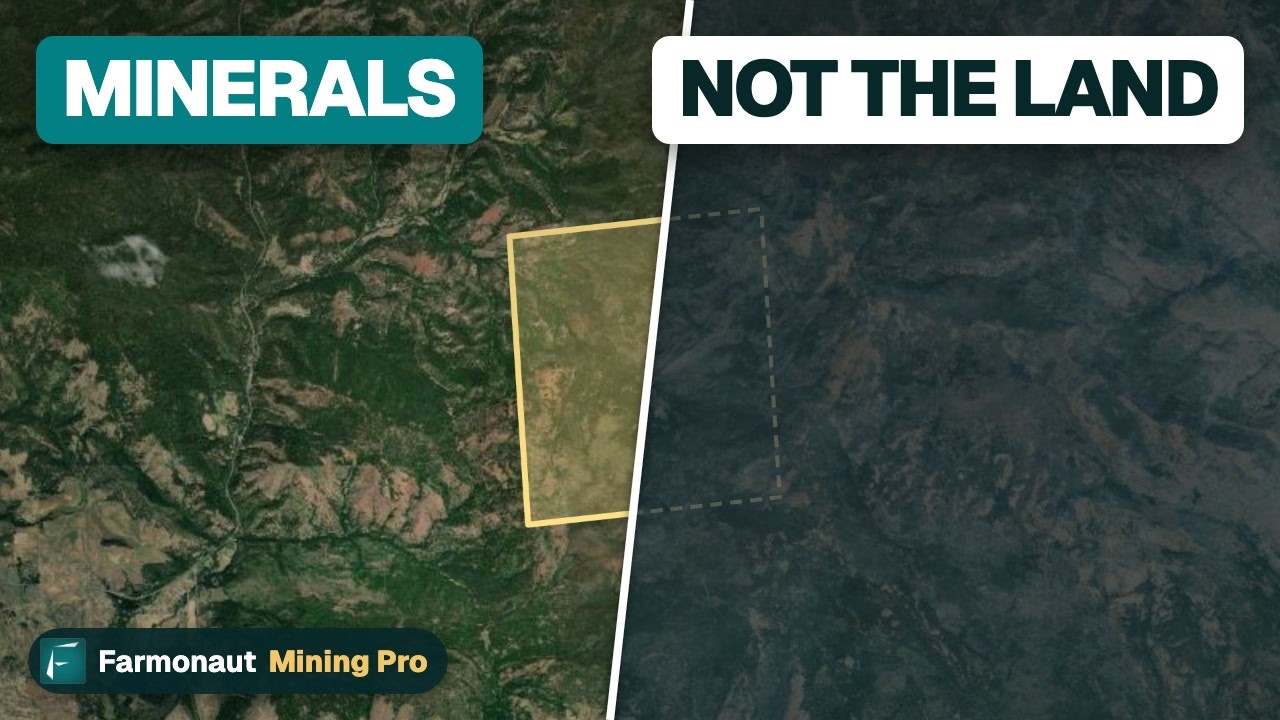
▶ Explains that a gold claim gives a right to the minerals, not title to the land, and how to check the ground first. · 3:19
Regional notes: Vancouver Island, Thompson River and Princeton claims
Most searches for British Columbia gold claims for sale name a place, and each area has its own history and practical questions. History explains why listings cluster there. It does not tell you whether a particular claim still carries gold.
Gold claims for sale on Vancouver Island
Vancouver Island’s best-known gold story is the Leech River rush. In the summer of 1864, four Black miners (Samuel Booth, George Munro, John Tyril and William Dyer) found gold on the Leech River near Sooke, about 40 miles west of Victoria, according to BC Black History Awareness Society records. Stores and hotels sprang up quickly, then were abandoned within 18 months. Placer claims on Vancouver Island often trade on that legacy. Check them carefully for overlaps with private land, parks, Crown grants and other tenures, which the claim title does not override.
Thompson River gold claims for sale
Gold on the Thompson River was found near its confluence with the Nicoamen River, a few miles upstream of Lytton, and it helped trigger the 1858 Fraser Canyon rush. That rush led to the creation of the Colony of British Columbia the same year. Today, Thompson River gold claims on offer are mostly placer ground on river bars and benches. Ask for past work reports, confirm whether seasonal water levels limit access, and check which permits any mechanised work would need.
Gold claims for sale near Princeton, BC
Princeton sits in the Similkameen Mining Division. The Tulameen River nearby is recognised as a gold and platinum-group-metal placer district associated with the Tulameen mafic-ultramafic complex, which is why some listings mention platinum as well as gold. Hard rock mineral claims also trade in the area. For both, confirm the claim type, the good-to date and whether any old workings or Crown grants overlap the cells.
“Leech River’s gold camp near Victoria grew almost overnight in 1864, and was abandoned within 18 months.”
BC claims sit within First Nations territories, which is why the consultation framework exists, and placer claims by definition sit on rivers and creeks. Before planning any work, read the consultation framework, check whether a Notice of Work is needed, and think about fish and water. Satellite screening lets you learn a lot about a claim before any machinery or crew goes on site.
Questions to ask on any placer listing
For a placer claim for sale on Vancouver Island, the Thompson River or near Princeton, ask four things. Is the ground a placer claim or a mineral claim? Which anniversary year is it in, because placer costs the same $20 per hectare every year? Do any Crown grants, private parcels or older tenures overlap the cells, since the title does not override them? Has any mechanical work been done under a Mines Act permit, and can you see it? Sand and gravel are not minerals under the Mineral Tenure Act, so selling gravel from the ground needs a different tenure. Use MINFILE to see whether the ground has recorded occurrences, and treat any claim of gold grade as unproven until you sample it.
Testing British Columbia gold claims for sale before you buy
BC is well supplied with public geoscience, and a buyer can use much of it at no cost before spending on a site visit. Combine it with an independent remote-sensing read of the exact cells and you have a sensible, low-cost first filter for British Columbia gold claims for sale.
- MTO title search: tenure details, owner, good-to date and events, including work registrations and complaints.
- MINFILE: the BC Geological Survey’s database of metallic, industrial mineral and coal occurrences, deposits and past producers.
- ARIS: assessment reports that past holders submitted under the Mineral Tenure Act, often including maps, samples and drilling.
- 📊 Satellite screening: an independent view of alteration and structure across every cell, not just the spots the seller sampled.
- ⚠ Your own sampling: the only way to confirm grade. Keep custody of samples and use an accredited laboratory.
Our satellite-based mineral detection analyses multispectral and hyperspectral imagery of the claim boundary. Minerals and alteration zones reflect light in their own spectral signatures, and we use that to flag likely mineralised target zones, alteration halos and structures such as faults and fractures. On hard rock gold claims, that shows where alteration and structure line up. On placer claims, it helps you understand the source areas and landforms around the drainage.
- Input: the MTO cell boundary as coordinates, KML/KMZ or a polygon, plus the target mineral.
- Turnaround: 5–20 business days depending on area size and mineral complexity, so usually inside a 30-day bill-of-sale window if you start early.
- 📊 Deliverables: high-potential zones, prospectivity heatmaps, estimated location and depth ranges, geological interpretation and georeferenced GIS files. Premium+ adds TargetMax™ drilling intelligence and 3D subsurface models.
- ⚠ Limitation: results are exploration targets, not a resource estimate, and they do not verify title.
Compared with starting on the ground, satellite screening can cut early-exploration timelines from months to days and lower early-exploration costs by up to 80–85%. See the satellite-driven 3D mineral prospectivity mapping sample for what the output looks like. For licensing portals in other countries, our mining cadastre portal guide by country is a useful companion.
Found British Columbia gold claims for sale? Check the cells first.
Send us the MTO boundary. We’ll return ranked target zones, geology and next steps, so you can judge the asking price on evidence rather than the listing alone.
A short pre-purchase checklist
- Set up your Business BCeID and Free Miner Certificate before you negotiate.
- Search the tenure in MTO and record the owner, cells, claim type and good-to date.
- Check events: complaints, statements of work and whether the reports behind them were approved.
- Check overlaps: legacy claims, Crown grants, parks, reserves and private land.
- Screen the geology with MINFILE, ARIS and an independent satellite read of the cells.
- Visit and sample if the property passes the desk review.
- Budget the holding cost for the years you need before you can prove anything.
- Complete the bill of sale within 30 days of the seller initiating it, then register work or payment on time.

▶ Explains that satellites cannot see gold but map the rock around it: iron stains, clay minerals and cracks left by hot water. · 4:25
Frequently asked questions
Can anyone buy British Columbia gold claims for sale?
You need a valid Free Miner Certificate to acquire a claim or an interest in one, and a Business BCeID to use Mineral Titles Online. Individuals and companies can both hold certificates. Check the eligibility rules with BC’s Mineral Titles Branch before you agree a price.
How do I transfer a BC mineral or placer claim?
Transfers are done in Mineral Titles Online as a two-step bill of sale. The seller registers the initiation, and the buyer completes it within 30 days. The claim keeps its original expiry date, so check that date before you complete.
Are placer claims for sale on Vancouver Island a good buy?
They can be, but check them carefully. Look at the good-to date, approved work reports, overlaps with private land, parks or Crown grants, and access. The Leech River history shows gold was found there, but only your own sampling can show whether a particular claim is worth its price.
How much does it cost to keep a BC claim?
Under the Mineral Tenure Act Regulation as read in September 2026, mineral claims need $5 per hectare of work in years 1 and 2, rising to $20 from year 7. Placer claims need $20 per hectare every year. Paying cash instead of doing work costs double. Confirm the rates on BC Laws or with Mineral Titles.
Do new BC claims still register instantly?
No. Since 25 March 2025, new mineral and placer claims go through the Mineral Claims Consultation Framework. The application is submitted in MTO, the Province consults affected First Nations, and then it decides whether to register the claim.
Does Farmonaut sell or broker BC gold claims?
No. We do not list, buy, sell or broker claims. We provide satellite-based mineral intelligence on any claim boundary you send us, so you can evaluate a BC claim with independent evidence.
Rules, fees and procedures here come from the BC Mineral Tenure Act Regulation and the Province of British Columbia’s Mineral Titles and permitting guidance. Some gov.bc.ca pages were read through archived copies because the live site refused connections from our network; confirm all details with the Mineral Titles Branch. Satellite results are exploration targets, not Mineral Resources. This guide is general information, not legal or investment advice.
How much does a gold claim for sale in BC cost?
Asking prices vary by seller and we do not publish a price list. Work out the cost of the first two years instead: the Free Miner Certificate, the work or cash needed before the good-to date, and the $10 per claim fee to register a document or notice. All amounts are in Canadian dollars. A 10-cell southern mineral claim in anniversary years 1 to 2 needs about $1,050 of work or $2,100 in cash a year under the regulation’s rates.
Where can I find BC gold claim listings by owner?
The Province’s claims FAQ does not publish sale listings. By-owner claims turn up on classified pages, prospector clubs and direct offers. Whatever the source, verify the tenure number, owner and good-to date in MTO before you send money.
Can I buy a placer claim on Vancouver Island?
Yes, if you hold a Free Miner Certificate. The Province’s claims FAQ describes the same two-step bill of sale for any claim, and placer claims are claims. Check overlaps with private land and Crown grants, and confirm which permits any mechanical work would need.
What does a mining claim cost to keep in BC?
It depends on the type and anniversary year. Mineral claims need $5 to $20 per hectare of work a year as they age; placer claims need $20 per hectare a year. Cash in lieu is double.
This page is for information only. It is not legal advice. Confirm the rules with the regulator.
Farmonaut mineral detection
Map your mining site from space
Send your claim or licence boundary as KML, KMZ or a polygon. Farmonaut returns ranked satellite exploration targets for it, usually in 5 to 20 business days.

Mining Pro sample view, synthetic data
Keep reading
Sources
- Province of BC, Mineral Titles claims FAQ: www2.gov.bc.ca
- Mineral Tenure Act Regulation, B.C. Reg. 529/2004, BC Laws: bclaws.gov.bc.ca
- Mineral Tenure Act, BC Laws: bclaws.gov.bc.ca
- Province of BC, Mineral Claims Consultation Framework: www2.gov.bc.ca
- BC Geological Survey, MINFILE: minfile.gov.bc.ca
- Province of BC, Mineral Titles Online: mtonline.gov.bc.ca
Discussion
Questions, corrections or field experience? Share them below. First-time comments are reviewed before they appear, and your email is never published.
No comments yet. Be the first to add a question or your experience.

 Mine4Africa
 Lithspo Minerals Limited
 Tintina Mining Group
 Dalgety Minerals Pty Ltd
 Vortex Minerals Pty Ltd
 Faith At Work (Pty) Ltd
 Geotech Mining Solutions plc
 Vulcan International Limited
 Kidepo Associates
 GKY Mining
 Alkimy SARL
 Double A Trading
 GemSprout Metals Limited
 Qader Group
 Ileys General Trading
 SG Gold Mining LLC
 VRV Global Pte Ltd
 Omsri International FZE
 G.I.T.T.
 Jaunita Erss Ltd
 Almosi SARL
 SRK Consulting
 Berks Gold Limited
 Mwerezi Minerals Company Limited

 Exploration consultancy · South Africa · Gold










