

California gold mines · Buyer's guide
Gold Mine for Sale in California: Prices and What to Check
California placer claims asked about $2,500 to $8,000 in listings read on 5 November 2026, a Sierra County quartz mine $50,000 and a gold project $2.4 million. Title, permits and holding costs decide what you can do with them.
Key takeaways
- Unpatented placer claims in the California listings we read asked $2,500 to $8,000 for 20 to 40 acres, or about $63 to $400 an acre (MiningClaimSales and Mountain Man Mining, 5 November 2026).
- A Sierra County quartz mine asked $50,000 and a California gold project $2.4 million with a $50,000 non-refundable 4-month hold (MineListings, 5 November 2026).
- Producing mines trade between listed companies: Equinox Gold agreed to pay $158 million for Mesquite in 2018 (Equinox Gold, 2018).
- BLM has accepted no new mineral patent applications since 1 October 1994, so any patented California gold property is an old one (BLM; CRS).
- A claim costs $200 a year per lode claim or 20 placer acres to hold, due 1 September, and permits come before production (BLM California packet, 2027 assessment year).
In this article
- Types of gold mine for sale in California
- What California gold mines and claims cost
- Where California gold mines are listed
- Where California's gold is
- Producing, historic and tour mines
- A buyer's lesson from the Idaho-Maryland Mine
- Title: what you own when you buy a claim or mine
- What it costs to hold a claim after you buy
- California permits and rules for a working mine
- Check the ground before you pay
- Gold price and what a California mine is worth
- How to buy a gold mine in California in 8 steps
- Red flags in a California mine listing
- Frequently asked questions
A gold mine for sale in California is usually one of four things: an unpatented claim on federal land, a quartz mine with old underground workings, a small project that comes with some sampling data, or, rarely, a producing mine. In the listings we read in October and November 2026, California placer claims asked about $2,500 to $8,000 (one claim with no size given asked $20,000), a Sierra County quartz mine asked $50,000 and one gold project asked $2.4 million. Producing mines change hands between listed companies: Equinox Gold agreed to pay $158 million for the Mesquite mine in 2018.
An asking price tells you little about what you may do with the ground. Title, county permits and access decide that. The sections below give price ranges with their sources, the legal types of ownership, the yearly cost of holding a claim, the California rules for a working mine, and a calculator that shows how much gold your total outlay would have to return.
Types of gold mine for sale in California
Sellers use “mine” for very different things. The legal form of what you buy matters more than the name on the listing. Gold in loose gravel and stream beds is called placer gold; gold in veins of solid rock is lode (hardrock) gold. Both can be held as claims.
| Type | What you buy | Asking prices seen | First check |
|---|---|---|---|
| Unpatented placer claim | The right to the gold on federal land; the government keeps title to the land | $2,500 to $8,000 for 20 to 40 acres; one California claim with no size given at $20,000 | BLM serial number and the yearly fee paid |
| Unpatented lode claim or quartz mine | The right to a vein and any old workings on federal land | $50,000 for a Sierra County quartz mine | Assay certificates and safe, legal access |
| Patented claim | Title to the minerals and usually the surface, as private land | None in the pages we read | County title and tax records |
| Project with data | A property sold with drilling or sampling results | $2.4 million for one gold project | Permits and the terms of the hold deposit |
| Producing mine | An operating mine with permits and a mill or heap leach | $158 million for Mesquite (2018) | Reserves, permits and closure liabilities |
The difference between the first and third rows is title. On an unpatented claim you may mine without a patent, but the land stays federal; a patented claim is one where the government conveyed title, so it is private land. Since 1 October 1994 the Bureau of Land Management (BLM) has been barred by Congress from accepting new patent applications, and the moratorium has been renewed in each Interior spending bill since fiscal 1995. Any patented gold property for sale in California is therefore an old one, and its supply cannot grow.
What California gold mines and claims cost
Most of the cheap listings are unpatented placer claims of 20 or 40 acres. Asking prices in the pages we read ran from about $63 an acre (a 40-acre claim at $2,500) to $400 an acre (a 20-acre claim at $8,000). Prices above that belong to quartz mines and projects, where the seller is selling data, workings or a permit position rather than ground alone. The chart converts the placer listings in the table to a price per acre; the table names every California listing behind it.
Chart
Asking price per acre of California placer claims
US$ per acre, calculated as asking price divided by claim acres
| Listing | Location and size | Asking price | Seller page |
|---|---|---|---|
| Black Diamond Gold Project | California; terms include a $50,000 non-refundable deposit that holds it for 4 months | $2,400,000 (as printed: $2.400,000) | MineListings |
| Late 1800s quartz mine | Sierra County; two California claim numbers listed | $50,000 | MineListings |
| The Golden Trinity Claim | Trinity County; 20 acres | $8,000 | Mountain Man Mining |
| Ayers Claim | Sierra County; 20 acres | $6,500 | Mountain Man Mining |
| Honeypot placer | Sutter Creek; 20 acres | $4,500 | MiningClaimSales |
| Braveheart placer (reduced) | Plumas County; 40 acres | $2,500 | MiningClaimSales |
These are asking prices as the pages stood on 5 November 2026 (MiningClaimSales, Mountain Man Mining and MineListings), not sale prices. Other California placer claims we saw there on 15 October had been removed by then, so treat the figures as a snapshot. The Black Diamond price is printed on MineListings as “$2.400,000 U.S. Dollars” and is read here as $2.4 million. The same marketplace pages show how wide the market is: MineListings says its gold listings range from $1,500 to $250 million across the United States, Canada and other countries, which is why a California price only means something next to the claim type, the title and the data that come with it.
Where California gold mines are listed
Small claims are sold mainly through claim marketplaces and the sellers’ own sites. The three pages above are examples, not recommendations; each lists the seller’s description, and none of them checks title for you. Larger properties change hands through brokers and direct sales between companies, as Mesquite did. Two public records let you check any seller’s claim, whatever site it appears on:
- The BLM Mineral and Land Records System (MLRS) shows federal claim records by serial number.
- The county recorder holds the notice of location and any later transfers, because a claim must also be recorded with the county where it lies.
If you already hold a claim and want to sell it rather than buy one, our guide on how to sell a mine covers valuation, buyers and the sale process. For the cheapest end of the market, read our list of California gold claims for sale.
Where California’s gold is
California’s gold history explains why old claims are still being sold. Gold was found at Sutter’s Mill on 24 January 1848, and the state’s non-Native population grew from about 14,000 to some 250,000 by 1852. The U.S. Geological Survey counts about 3,670 metric tons of gold mined in California through 2001, 25 percent of the US total and second only to Nevada. Two California deposits, Empire-North Star (196 tons) and Hammonton (160 tons), sit on the same USGS list of the ten largest US gold deposits by past production.
The listings above cluster in Sierra Nevada foothill and northern counties: Sierra, Plumas and Trinity, plus Sutter Creek. For a regional picture, see our posts on gold and lithium deposits in California and on active gold mines in the United States. Placer ground is run very differently at scale in other places; our post on Tamarack Inc. and Tony Beets shows a large placer operation in the Yukon.
Producing, historic and tour mines
The two large gold mines in California that we found in company disclosures are owned by Equinox Gold, a listed company, and are not marketed through claim sites. Equinox Gold’s Mesquite mine in Imperial County is an open-pit heap leach operation that has run since 1986. Equinox says it produced about 86,000 ounces in 2025 and guided to 70,000 to 80,000 ounces for 2026, at an all-in sustaining cost (AISC) of $2,500 to $2,600 an ounce. New Gold sold Mesquite to Equinox for cash of $158 million under a 2018 agreement; the sale announcement put reserves at 1.13 million ounces at the end of 2017.
The ore is low grade. In Equinox’s August 2026 results deck, Mesquite’s proven and probable reserves at 31 December 2025 were 22.4 million tonnes at 0.38 grams per tonne (g/t), holding 275,000 ounces. Castle Mountain, also in California, reports 4.1 million ounces at 0.52 g/t. A grade of 0.4 to 0.5 g/t only pays when tens of millions of tonnes are moved and leached cheaply, which is a very different business from a small vein mine.
Castle Mountain also shows how long permits take. Its Phase 1 stockpile heap leach ran from November 2020 to August 2024, when operations were suspended during the Phase 2 permitting, and Equinox expects federal approvals in the first half of 2027. A buyer of any large California property should plan for years, not months, between purchase and production. This is information about companies and their disclosures, not investment advice.
Is the Julian gold mine for sale?
A well-known Julian gold property, the Eagle Mining Co., is run as a visitor attraction. The Eagle Mining Co. website offers one-hour tours of hardrock tunnels restored to their 1870s state, describes how the owner’s grandparents, who arrived in Julian in 1967, reopened the old tunnels, and carried no sale notice when we read it on 5 November 2026. Treat any “Julian gold mine for sale” ad as something to verify with the owner and the county before you pay a deposit.
A buyer’s lesson from the Idaho-Maryland Mine
Owning a famous gold property does not give you the right to mine it. In Nevada County, Rise Grass Valley Inc. asked Nevada County to recognise a vested right to mine the historic Idaho-Maryland Mine. A vested right is an old mining right that survives later zoning rules. The county’s Board of Supervisors voted unanimously on 14 December 2023 to deny vested rights, and on 16 February 2024 it denied the proposed project and its final environmental impact report.
On 7 May 2026 a Nevada County Superior Court judge found that a vested right to mine at least some activities came into existence in 1954. The judge also held that the county had shown by clear and convincing evidence that the old mine corporation abandoned it by 1963, after it stopped underground mining by 1957 and sold the equipment and, by 1963, the remaining property including surface parcels and mineral rights. A second claim, about the use permit, was set for a case management conference on 8 June 2026.
The lesson for a buyer is practical. Ask the county planning department, before you pay, whether the property has a use permit or a recognised vested right, what the zoning allows, and whether the old operator’s rights were ever interrupted. A good ore body and a clear mineral title do not replace a land-use permit.
Title: what you own when you buy a claim or mine
An unpatented claim is a right to the minerals on federal land, held by meeting the filing and fee rules; it is not ownership of the land. A claim can be transferred in whole or in part, usually with a quitclaim deed or another recordable document under state law. BLM says transfer documents must be filed with the county office and the BLM State Office within 90 days, with a BLM service charge for each claim, and that failing to file leaves you without notice of any government action against the claim.
Mineral rights and surface rights can also be split. The BLM California State Office reports that it administers 47 million acres of subsurface mineral estate under federal land and 2.5 million acres under privately owned land in California. Buying private land therefore does not always include the gold below it, and a title search should confirm who holds the minerals.
For a plain-language look at the difference between a claim and land ownership, see the video below. Our guide to California gold mining claims explains how claims are staked and filed.
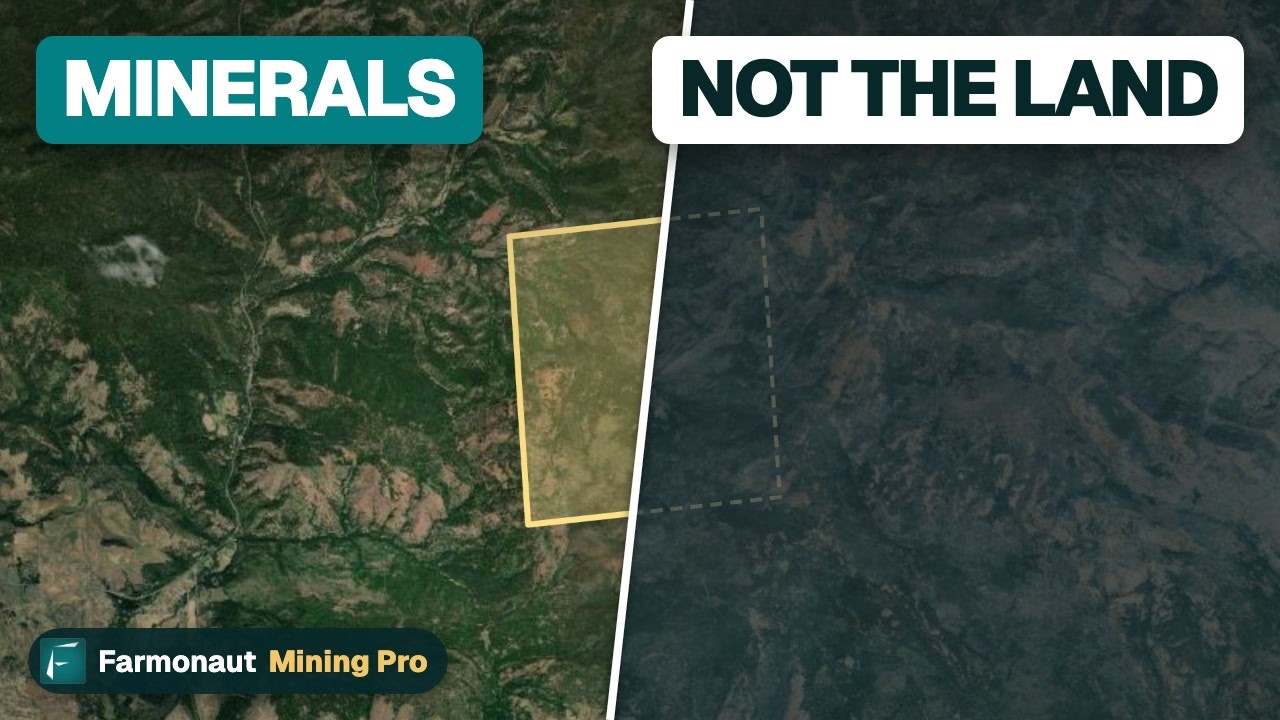
▶ Uses a Washington example to show that a gold claim is the right to the minerals, not title to the land; the federal rule is the same in California. · 3:19
What it costs to hold a claim after you buy
The purchase price is the smaller part of owning a claim over several years. BLM’s California packet for the 2027 assessment year lists the maintenance fee at $200 for each lode claim and $200 for each 20 acres of a placer claim, due on or before 1 September. A new lode claim costs $274 in its first year ($25 processing, $49 location and $200 maintenance). Owners of 10 or fewer claims nationwide can instead file a small-miner waiver and show $100 of assessment work per claim.
Chart
First-year BLM fees for a new lode claim
US$ per claim, BLM California State Office packets
The fees have risen. The chart compares the BLM California packets for the 2024 and 2027 assessment years. A 40-acre placer such as the Braveheart listing needs two 20-acre units, so its BLM fee is $400 a year; ten years of fees come to $4,000 against a $2,500 asking price. County recording fees and any work on the ground come on top. For the filing steps, read the BLM California packet.
California permits and rules for a working mine
A claim lets you look for and extract minerals, but surface use is regulated at three levels.
- BLM land: you must give BLM a notice 15 calendar days before exploration that disturbs 5 acres or less, and you need an approved plan of operations before work greater than casual use, including bulk sampling of 1,000 tons or more.
- National forest land: a notice of intent to operate goes to the District Ranger for operations that might cause significant disturbance of surface resources.
- County and state: under the Surface Mining and Reclamation Act (SMARA), the city or county that approves the reclamation plan is the lead agency. Prospecting or extraction is outside SMARA only below 1,000 cubic yards in any one location and under one acre of disturbance. Mine operators must report to the state each year and pay $5 per ounce of gold mined into the abandoned mine reclamation fund.
Water and equipment limits apply to every claim. The California Department of Fish and Wildlife says suction dredging is prohibited and unlawful in California rivers, streams and lakes, so a river claim sold with a “dredge-ready” pitch cannot be worked that way. Our post on gold panning laws in California lists what is allowed on public land.

▶ The seven environmental impacts of mining, explained in claymation with satellite maps. · 2:31
Check the ground before you pay
A seller’s photos and a few nuggets are weak evidence. Before paying a hold deposit, ask for assay certificates with sample locations and methods, and take an independent sample yourself. A satellite screen can add a cheaper first look at the ground. Satellites cannot see gold itself, but they can map iron-oxide staining, clay alteration and fracture patterns that guide where to sample. Farmonaut’s satellite mineral detection takes a boundary as a KML, KMZ or polygon and returns a report in 5 to 20 business days; early screening of this kind can cut the time from months to days and lower early-exploration cost by up to 80 to 85 percent compared with ground work alone. The results are exploration targets ahead of any resource estimate and do not replace assays, a title check or a permit review.
To see what a screen of your claim would include, use the mining quote form, read about our satellite-based mineral detection or contact us.

▶ What satellites can and cannot show about gold: the rock, clay and fault clues around it. · 4:25
Gold price and what a California mine is worth
Kitco showed spot gold at $4,115.90 per troy ounce at 2:36 a.m. New York time on 5 November 2026. The USGS reports that the average annual price rose from $1,801 an ounce in 2021 to an estimated $3,300 in 2025, a record, so asking prices for claims and mines are set in a much higher gold market than before. The chart shows the annual averages.
Chart
US average annual gold price
US$ per troy ounce; 2025 is a USGS estimate
A higher price does not make every property worth buying. At Mesquite’s reserve grade of 0.38 g/t, one tonne of ore holds about 0.012 troy ounces, roughly $50 of gold at the 5 November spot price before recovery. Equinox gives average recoveries of about 75 percent for oxide ore and 35 percent for non-oxide ore, and 2026 costs of $2,500 to $2,600 an ounce AISC. The calculator below turns your own purchase price, holding years, gold price, grade and recovery into the ounces and tonnes needed to cover your outlay. For wider context, see our post on global gold mining market data.
Calculator
How much gold must a purchase return?
Enter your own price, holding years, gold price, grade and recovery.
- Total outlay (US$): $31,200
- BLM maintenance fees over the holding years (US$): $1,200
- Tonnes of ore to process at your grade and recovery: 323
Example values only, not a benchmark. Holding fees use $200 per 20-acre unit per year (BLM California State Office, packet for the 2027 assessment year) and leave out county recording fees and any work on the ground. Gold price is an input: use today’s price. 1 troy ounce = 31.1035 grams.
How to buy a gold mine in California in 8 steps
- Choose the type and a budget. Decide whether you want an unpatented claim, a patented property or a project with data, and add the holding costs above to the price.
- Get the identifiers. Ask for the claim name, the BLM serial number and the county recording details for every claim.
- Check the records. Look the serial number up in MLRS, confirm the maintenance fee or waiver was filed by 1 September, and read the notice of location at the county recorder.
- Check who owns the surface and the minerals. For private land, order a title search that covers the mineral estate.
- Check permits and zoning. Ask the county planning department what is allowed, whether SMARA applies, and whether a vested right or use permit exists.
- Verify the gold. Review assay certificates, take an independent sample and, if useful, commission a satellite screen to rank targets.
- Agree the terms in writing. A hold deposit such as the $50,000 non-refundable deposit on one listing buys time, not title. Use an attorney for the quitclaim deed or purchase agreement.
- Record the transfer. File with the county and the BLM State Office within 90 days, pay the next fee before 1 September, and get the land manager’s permission before any work on the ground.
Red flags in a California mine listing
- No BLM serial numbers, or claim names that do not match MLRS.
- “Proven reserves” without assay certificates, sample locations or an independent author.
- An ad that sells the ground as “your own land” when it is an unpatented claim on federal land.
- A river claim promoted for dredging, which California does not allow.
- A seller who refuses independent sampling or a county permit check.
- A hold deposit that is non-refundable with no time to do the checks.
Frequently asked questions
How much does a gold mine for sale in California cost?
In the listings we read, unpatented placer claims asked $2,500 to $8,000, a Sierra County quartz mine $50,000 and a gold project $2.4 million. A producing mine is in a different class: Equinox agreed to pay $158 million for Mesquite in 2018.
Are there patented gold mines for sale in California?
Some old patented claims exist and can be sold, but BLM has not accepted new patent applications since 1 October 1994, so the supply is fixed. Confirm patent status with BLM records and the county assessor, because sellers sometimes call an unpatented claim “private”.
Is the Julian gold mine for sale?
The Eagle Mining Co. at Julian runs tours of its old tunnels, and its website showed no sale notice on 5 November 2026. Ask the owner and check county records before relying on an ad.
Where can I find California gold mines for sale?
Claim marketplaces such as MineListings, MiningClaimSales and Mountain Man Mining list California properties, and brokers handle larger ones. Whatever the source, check the claim in BLM’s MLRS and with the county recorder.
Can I start mining as soon as I buy a gold mine?
Not automatically. BLM requires a notice or an approved plan of operations for work beyond casual use, the Forest Service requires a notice of intent on national forest land, and the county’s SMARA rules apply above the small-scale exemption. Large projects can take years, as Castle Mountain’s permitting shows.
Does buying a claim mean I own the land?
No. An unpatented claim gives you the right to the minerals on federal land, and the government keeps title to the land itself.
What does it cost to keep a California claim?
BLM’s maintenance fee is $200 per lode claim and $200 per 20 acres of placer claim each year, due by 1 September, plus county recording fees. Owners of 10 or fewer claims nationwide may file a waiver instead and show $100 of work per claim.
Can I use a suction dredge on a California claim?
No. CDFW states that suction dredging is prohibited and unlawful in California rivers, streams and lakes, whether or not you hold a claim.
What is the price of gold in California today?
Gold has one world spot price, not a California price. Kitco showed $4,115.90 per troy ounce at 2:36 a.m. New York time on 5 November 2026. Dealers add a premium on coins and bars.
Can you still find gold in California?
Yes. Mesquite in Imperial County produced about 86,000 ounces in 2025 according to Equinox, and recreational panning is allowed in some places under rules that vary by land manager; see our California panning rules.
Who first found gold in California?
James Marshall noticed gold flakes in the tailrace of Sutter’s Mill on 24 January 1848, according to California State Parks, which set off the Gold Rush.
Are there other mines for sale in California besides gold?
Listing sites sort properties by commodity, so you can look for silver, copper or industrial minerals as well. The same title, permit and county checks apply to every commodity.
This page is for information only. It is not investment advice and not legal advice. Confirm title, permits and fees with the regulator and a qualified attorney. Ask the land manager for permission before you prospect, follow state and county rules, and never use mercury.
Farmonaut mining
Get a quote to screen a claim from space
Send the claim boundary and we will quote a satellite screen that lists exploration targets before you pay a deposit.

Mining Pro sample view, synthetic data
Keep reading
Sources
- MiningClaimSales, gold mining claims for sale (read 5 November 2026): miningclaimsales.com
- Mountain Man Mining, gold claims and mines for sale (read 5 November 2026): mountainmanmining.com
- MineListings, gold mines for sale (read 5 November 2026): minelistings.com
- BLM California State Office, mining claim and maintenance fee packet for the 2027 assessment year (2026): blm.gov
- BLM California State Office, mining claim and maintenance fee packet for the 2024 assessment year (2023): blm.gov
- BLM, Mining Claims and Sites on Federal Lands (brochure): blm.gov
- Congressional Research Service, Mining on Federal Lands: Hardrock Minerals (RL33908): everycrsreport.com
- BLM, Mineral and Land Records System (MLRS) research map: mlrs.blm.gov
- USGS, Mineral Commodity Profiles: Gold, Open-File Report 02-303 (2002): pubs.usgs.gov
- USGS, Mineral Commodity Summaries 2026: Gold: pubs.usgs.gov
- California State Parks, Gold Rush overview: parks.ca.gov
- Equinox Gold, Mesquite gold mine (read 5 November 2026): equinoxgold.com
- Equinox Gold, acquisition of the Mesquite gold mine for $158 million (19 September 2018): equinoxgold.com
- Equinox Gold, Castle Mountain Phase 2 (read 5 November 2026): equinoxgold.com
- Equinox Gold, Q2 2026 results and corporate update (5 August 2026): equinoxgold.com
- YubaNet, Court rejects Rise Grass Valley’s petition on vested right to mine (7 May 2026): yubanet.com
- Eagle Mining Co., Julian (read 5 November 2026): theeaglemining.com
- 43 CFR 3809.21, When do I have to submit a notice? (Cornell LII): law.cornell.edu
- 43 CFR 3809.11, When do I have to submit a plan of operations? (Cornell LII): law.cornell.edu
- 36 CFR 228.4, Forest Service notice of intent (Cornell LII): law.cornell.edu
- California Public Resources Code 2728, Lead agency: california.public.law
- California Public Resources Code 2714, SMARA exemptions: california.public.law
- California Public Resources Code 2207, Annual reporting and gold-ounce fee: california.public.law
- California Department of Fish and Wildlife, Suction Dredge Permits: wildlife.ca.gov
- Kitco, gold price (5 November 2026): kitco.com
Discussion
Questions, corrections or field experience? Share them below. First-time comments are reviewed before they appear, and your email is never published.
No comments yet. Be the first to add a question or your experience.

 SMA Investments Ltd
 NTS Group (Pty) Ltd
 Mine4Africa
 Lithspo Minerals Limited
 Tintina Mining Group
 Dalgety Minerals Pty Ltd
 Vortex Minerals Pty Ltd
 Faith At Work (Pty) Ltd
 Geotech Mining Solutions plc
 Vulcan International Limited
 Kidepo Associates
 GKY Mining
 Alkimy SARL
 Double A Trading
 GemSprout Metals Limited
 Qader Group
 Ileys General Trading
 SG Gold Mining LLC
 VRV Global Pte Ltd
 Omsri International FZE
 G.I.T.T.
 Jaunita Erss Ltd
 Almosi SARL
 SRK Consulting
 Berks Gold Limited











