

Gold Mining Industry: 2025 Global Market Size & Stats
“The global gold mining market is projected to reach over $250 billion by 2025, reflecting steady industry growth.”
“China remains the world’s top gold producer, contributing nearly 11% of total global gold output in 2023.”
- 1. Gold Mining Industry: 2025 Overview
- 2. Global Mining Market Size & Gold’s Role
- 3. Gold Mining Industry Statistics: 2025 Key Data
- 4. Global Gold Mining Market: 2025 Regional Overview (Table)
- 5. Industry Trends & Technological Advancements
- 6. ESG Practices and Sustainability in Gold Mining
- 7. Top Ten Mining Companies in the World (Gold Sector)
- 8. Gold Mining Industry: 2025 Outlook & Beyond
- 9. Farmonaut: Satellite-Based Mining Solutions
- 10. FAQ: Global Gold Mining Industry in 2025
Gold Mining Industry: 2025 Overview
The gold mining industry remains a cornerstone of the global mining sector, continuing to attract significant investment and drive economic activity worldwide. As of 2025, the global mining market size is estimated to exceed $1.5 trillion, with gold mining constituting a substantial segment due to gold’s enduring value as a store of wealth, a hedge against inflation, and its diverse industrial applications in jewelry, electronics, and high-tech sectors.
As we approach a pivotal moment in industry evolution, understanding the current landscape—including key statistics, investments, technological advancements, and evolving sustainability practices—provides insight into the trajectory of gold mining and its impact on the broader global economy.

Global Mining Market Size & Gold’s Role
The past decade has witnessed steady growth in the global mining industry, fueled by rising demand for minerals essential to technology, infrastructure, and renewable energy. As a critical segment, gold mining contributes billions annually to the worldwide economy, supported by sustained consumer demand across multiple applications:
- Jewelry and Ornaments: Dominates more than 45% of global gold consumption every year.
- Electronics & Industrial Uses: Gold’s conductive and non-corrosive properties make it vital in semiconductors, microchips, and aerospace technology.
- Financial Instruments: From bullion and sovereign coins to ETFs, gold is a preferred hedging asset during economic uncertainties and inflation.
In 2025, estimated global gold production will reach approximately 3,200 metric tonnes. This is reflecting new discoveries in underexplored regions as well as continued operational efficiencies thanks to modern technologies. The segment’s enduring value and significant economic impact further cement its importance in the global extractive industry.



Did you know? Using Farmonaut’s large-scale farm and mining monitoring solutions, businesses can access real-time satellite data to optimize gold extraction operations and ensure sustainable land management—directly from web and mobile applications.
Gold Mining Industry Statistics: 2025 Key Data
- Market Size Exceeds $250 Billion: The global gold mining market is projected to exceed $250 billion in 2025 (see trivia above).
- Annual Production Hits 3,200 Metric Tonnes: Mining activities worldwide continue to deliver 3,200 metric tonnes of gold annually, a figure powered by both new reserves and heightened operational performance.
- Top Producers Dominate Output: China, Australia, Russia, the United States, and Canada comprise the top five countries, collectively producing over half of the global output.
- Investment Remains Strong: Gold’s role as a safe-haven and hedging instrument ensures persistent investor interest—supporting both major players and emerging market operations.
- ESG Progress Accelerates: Companies are allocating up to 12% of CAPEX on sustainability and environmental improvements in 2025, compared to less than 7% in 2021.
- Technological Integration Advances: Over 70% of the top 100 mining companies are actively adopting AI, satellite data, and advanced automation into operations for improved yields and reduced environmental impact.

The gold mining industry is not only shaping the future of mining but also supporting economic growth in both traditionally rich and emerging regions. Its value, impact, and role in global trade and investment remain substantial.
Global Gold Mining Market: 2025 Regional Overview
To further clarify the global landscape, below is a comprehensive table summarizing estimated market sizes and key metrics by region and leading country. This snapshot enhances our understanding of geographic trends, regional market shares, and the current key players influencing the sector.
| Region/Country | Estimated Market Size (USD Billion) | % Global Market Share | Top Producers | Notable ESG Initiatives | YoY Growth Rate (%) |
|---|---|---|---|---|---|
| Asia-Pacific (inc. China, Australia) | $112 | 44.8% | China, Australia | Solar-powered operations, advanced water recycling | 6.2 |
| North America (USA, Canada) | $60 | 24% | USA, Canada | Carbon-neutral targets, indigenous engagement programs | 5.4 |
| Europe (Russia) | $32 | 12.8% | Russia | Land rehabilitation, biodiversity conservation | 4.2 |
| Africa (South Africa, Ghana) | $28 | 11.2% | South Africa, Ghana | Community investment, water conservation | 7.1 |
| Latin America (Peru, Brazil) | $18 | 7.2% | Peru, Brazil | Deforestation reduction, sustainable mining certifications | 7.8 |
Key Takeaway: Regions such as Asia-Pacific and North America dominate in size and innovative ESG practices, while Africa and Latin America show rapidly growing year-over-year rates, signaling new opportunities and rising importance on the global mining industry statistics landscape.

Discover how carbon footprint tracking fosters sustainability for mining businesses worldwide: Tools like Farmonaut’s enable mining companies to monitor and reduce carbon emissions, comply with environmental regulations, and actively support greener mining targets.
Industry Trends & Technological Advancements in Gold Mining
The gold mining industry in 2025 features an increasing convergence of modern technologies, innovative extraction techniques, and responsible stewardship. Here are the prominent trends reshaping gold production and market performance globally:
Key Technology Advancements
- Satellite & Remote Sensing: Real-time satellite monitoring and multispectral analysis are now central to exploration, operational safety, and resource management.
- Artificial Intelligence & Automation: Automated drilling, AI-powered predictive maintenance, and machine learning-enabled yield optimization all increase productivity while mitigating operational costs.
- Drone Surveillance: Drones facilitate mapping of terrains, monitoring safety, and on-site inspections in hazardous or inaccessible locations.
- Big Data Analytics: Using vast quantities of sensor and operational data, mining corporations are optimizing planning, minimizing downtime, and evaluating environmental impact in real time.
- Blockchain Traceability: Secure, transparent supply chain traceability is driving improved consumer trust, regulatory compliance, and fraud prevention. Learn more about blockchain traceability in gold mining supply chains.
- Advanced Ore Processing Techniques: Sophisticated extraction and recovery processes have reduced waste and boosted output, especially in grades previously considered uneconomical.

Current Gold Mining Industry Challenges
- Resource Depletion: Major companies face declining yields in historically rich deposits, driving the push toward new discoveries and technological innovation.
- Increasing Operational Costs: Heightened regulatory compliance and enhanced ESG requirements have raised the cost of doing business, yet these costs also foster longer-term sustainability and efficiency.
- Environmental and Social Governance (ESG): Demands for sustainable mining, social license to operate, transparency, and responsible community engagement are now at the forefront.
- Regulatory Scrutiny: Governmental bodies worldwide are tightening regulations around emissions, land use, and community displacement.
- Water and Energy Consumption: Mining corporations are developing strategies to decrease water usage, recycle resources, and transition toward renewable energy in their operations.
The industry’s ability to overcome these challenges through technology, responsible investment, and stakeholder engagement will determine its competitiveness and relevance in the coming years.

Strategic Importance of Gold in 2025 and Beyond
Gold remains strategically important not only due to its financial usage as a reserve asset and inflation hedge but also as a critical resource in technological and industrial innovation, especially as global economic uncertainty continues. Companies that adapt quickest—integrating cutting-edge tools and sustainable frameworks—will be best positioned to lead.
ESG Practices and Sustainability in Gold Mining
Environmental, Social, and Governance (ESG) practices have evolved from optional commitments to central operational imperatives in the global gold mining industry. Stakeholder expectations, regulatory frameworks, and evolving societal norms all demand a transparent, responsible approach to mining that balances profitability with stewardship and long-term community wellbeing.
Key ESG Initiatives (2025 Focus)
- Reducing Carbon Footprint: Major mining companies are investing in renewable energy sources, transitioning operations to solar, wind, and hydroelectric power. Many are leveraging carbon footprinting and emissions tracking software to monitor and report on sustainability progress.
- Water Resource Management: Active recycling, advanced filtration, and consumption management strategies minimize environmental impact and promote circular economy practices.
- Land Rehabilitation and Biodiversity: Companies are restoring landscapes post-mining and funding biodiversity enhancement programs, essential for community relations and bio-conservation.
- Community Engagement: Stringent social governance requires mining companies to involve local communities, indigenous groups, and regional stakeholders in project development and benefit-sharing.
- Transparency & Traceability: Blockchain-based traceability platforms enable audit trails and secure supply chains, reducing fraud and reinforcing trust with consumers and investors.
Measuring Sustainable Impact
- Gold Fields, Australia: Achieved significant reductions in energy intensity and emissions with large-scale hybrid renewable microgrids.
- Canada’s ESG Mandates: Leading North American mines are following aggressive GHG reduction targets and water reclamation benchmarks.
- Africa: Community investment funds are supporting education, health, and skills training adjacent to gold mines.

ESG leadership is increasingly seen as a prerequisite, not just a differentiator: Secure investment, regulatory approval, and long-term community cooperation all hinge on these evolving sustainability trends.
Top Ten Mining Companies in the World: Gold Sector (2025)
The top 100 mining companies by market capitalization continue to drive innovation and set benchmarks for the global industry. Within this group, the top ten mining companies in the world specializing in gold wield significant influence over policy, market trends, and operational advancement.
-
Newmont Corporation (USA):
- World’s leading gold miner by production volume, with mines across North America, South America, Australia, and Africa
- Pioneers ESG frameworks, transparent governance, and aggressive sustainability milestones
-
Barrick Gold Corporation (Canada):
- Industry giant with extensive portfolios in Africa, North & South America, and the Middle East
- Strong focus on asset optimization, responsible mining, and technological adoption
-
AngloGold Ashanti (South Africa/Ghana):
- Third-largest global gold producer; operates efficiently with strong ESG and regional investment in Africa and the Americas
-
Kinross Gold Corporation (Canada):
- Multi-continental operations in North America, Russia, and West Africa
- Renowned for blending digital tech and community partnership programs
-
Freeport-McMoRan (USA/Indonesia):
- Major presence in copper but significant contributor to global gold production
- Leverages integrated operations and multimineral extraction efficiency
-
Gold Fields Limited (South Africa/Australia):
- South African powerhouse, globally diversified, with leading mining technology adoption
- Focuses heavily on environmental stewardship and community impact
-
Agnico Eagle Mines Limited (Canada):
- Highly respected for low-cost production, operational transparency, and northern latitude mining
-
Newcrest Mining Limited (Australia):
- Australia’s largest gold miner; strategic investments in high-yield regions and ore-processing advancements
-
Polyus Gold International (Russia):
- Russia’s top gold miner with substantial stakes in Siberia and the Russian Far East
- Modernizes through AI and sustainable expansion
-
Harmony Gold Mining Company (South Africa):
- South Africa’s largest gold producer; known for its community development work and achieving record recovery rates via operational innovation
Key Observations: These companies dominate due to diverse asset portfolios, innovative technologies, and proactive ESG compliance. Their operational decisions ripple throughout global supply chains, investment climates, and sustainability goals.
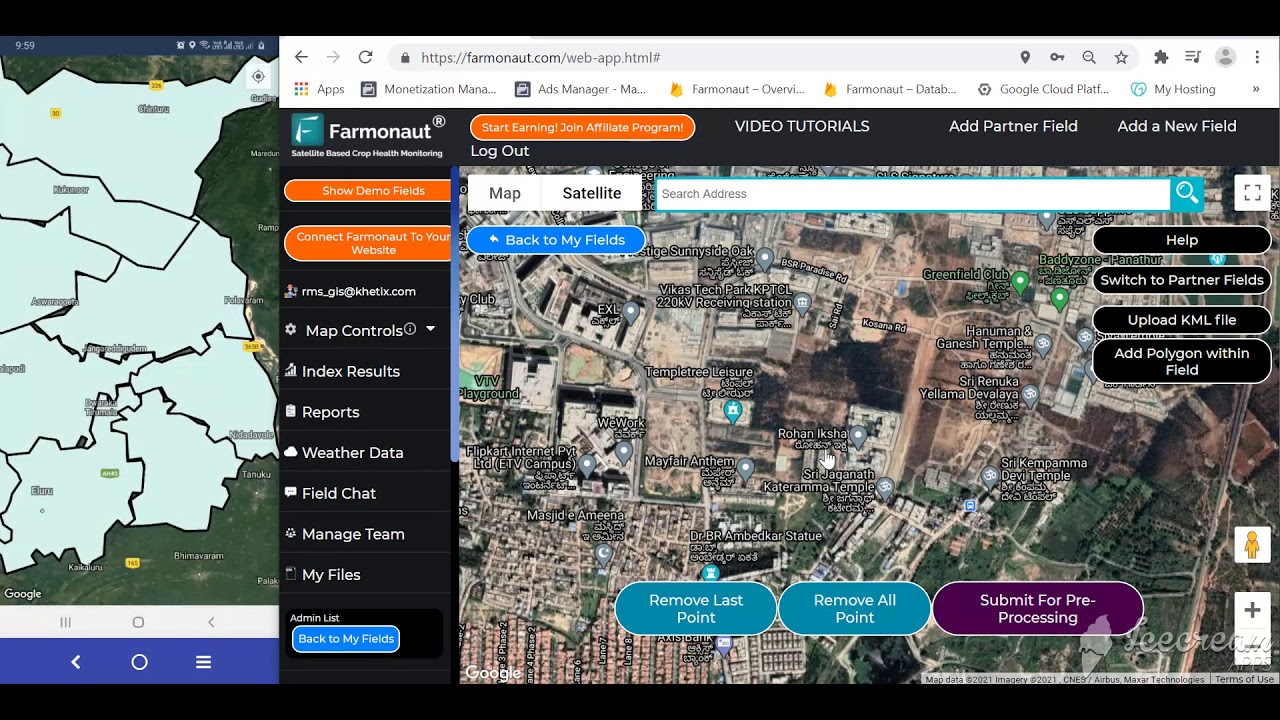
Explore Farmonaut’s API:
Tap into global satellite insights for mining, agriculture, and infrastructure projects with our enterprise-grade API Service. Deploy smart monitoring, resource tracing, or carbon tracking with ease. Developers: Access full documentation at API Developer Docs.
Gold Mining Industry: 2025 Outlook & Beyond
As we look forward, several underlying factors will dictate the trajectory and future outlook of the global gold mining sector:
Emerging Trends Shaping the Next Decade
- Continued Emphasis on Responsible Mining: ESG will evolve further, with systematic environmental monitoring, increased automation, and greater transparency at every step.
- Geopolitical Instability: Heightened uncertainty will further position gold as a core “safe haven,” maintaining strong investor and central bank demand across the globe.
- New Frontiers & Deposits: Exploration in Africa, Southeast Asia, and the Arctic Circle—supported by AI-driven satellite imaging—will unlock new reserves.
- Digital Transformation: Widespread adoption of data analytics, remote monitoring, and digital twin technologies will revolutionize efficiency and environmental stewardship.
- Stakeholder-First Community Models: The industry will deepen partnerships with indigenous communities, sharing long-term benefits and fostering social acceptance.

Farmonaut: Satellite-Based Mining Solutions
As a pioneering satellite technology company, we at Farmonaut provide advanced, satellite-based solutions tailored to meet the evolving needs of the global gold mining industry. Our diverse technology suite empowers businesses, financial institutions, and governments to optimize operations and ensure sustainability at scale.
Farmonaut’s Technologies for Mining and Resource Management
- Satellite-Based Monitoring: Real-time analytics and multispectral imaging for gold mine surveillance, environmental compliance, and performance benchmarking via web and mobile platforms.
- Jeevn AI Advisory System: Provides predictive analytics, weather forecasting, and AI-powered operational guidance for mining companies, streamlining extraction schedules and yield expectations.
- Blockchain Traceability: Ensures transparent and fraud-resistant supply chains for gold, supporting responsible sourcing and regulatory adherence. See: Product Traceability Solutions.
- Fleet & Resource Management: Oversee all machinery, vehicles, and staff in real time, driving operational efficiency and reducing logistical risks. Learn more at Fleet Management Page.
- Carbon Footprint & Environmental Monitoring: Leverage satellite imagery combined with AI to actively monitor emissions, water usage, and ecological impacts. Visit Carbon Footprinting.
Farmonaut’s Value Proposition
- Cost-Effectiveness: Affordable, subscription-based access democratizes satellite monitoring for mining operators of any size.
- API Access: Seamlessly integrate mining and environmental data into your corporate or regulatory workflows. See Farmonaut API and Developer Docs.
- SCALABILITY: Solutions are flexible for small operators to large corporations and government bodies, ensuring growth is supported every step of the way.
Farmonaut Subscription Options (For Businesses & Institutions):
Getting Started: For onboarding guidance and support, download our web and mobile app or visit our Agro-Admin/Mining Control Platform.
FAQ: Global Gold Mining Industry in 2025
What is the estimated size of the global gold mining market in 2025?
The global gold mining market size is projected to exceed $250 billion in 2025, solidifying its role as a critical segment of the estimated $1.5 trillion global mining industry.
Who are the top gold producing countries in 2025?
China, Australia, Russia, USA, and Canada dominate the gold mining industry, accounting for a significant share of total global production.
What are the main challenges facing the gold mining sector?
The gold mining sector faces resource depletion, increasing operational costs, heightened ESG expectations, and more stringent regulatory requirements in 2025 and beyond.
How is technology changing the gold mining landscape?
Emerging technologies such as AI, satellite imagery, drone surveillance, and blockchain are revolutionizing gold mining exploration, operational efficiency, and supply chain transparency globally.
What is the significance of ESG in mining operations?
Environmental, Social, and Governance (ESG) standards are now mandatory for securing investment, maintaining social license to operate, and achieving long-term profitability and sustainability in gold mining.
How can mining companies benefit from Farmonaut’s technologies?
With real-time satellite monitoring, AI advisory, blockchain traceability, and carbon footprint tracking, our Farmonaut platform enables mining companies to optimize operations, ensure compliance, and uphold sustainable practices globally.
“The global gold mining market is projected to reach over $250 billion by 2025, reflecting steady industry growth.”
Conclusion: Gold Mining Industry—A Strategic Pillar in the Global Economy
The gold mining industry remains a powerful engine driving the global mining market size, economic development, and technological evolution into 2025 and beyond. Led by the top ten mining companies in the world, fueled by continual investment and sustained demand across diverse applications, gold extraction stands at the crossroads of operational innovation and environmental responsibility.
The coming years will further highlight gold’s enduring importance as a store of wealth, an industrial necessity, and a barometer for economic and geopolitical uncertainty. As digital transformation and ESG imperatives reshape every industry segment, companies and nations that invest in modern, responsible mining techniques are best poised to secure lasting prosperity and stakeholder trust.
Stay ahead in the gold mining industry with access to data-driven insights and innovative technologies. Explore advanced monitoring, sustainability tracking, and efficient resource management tools with Farmonaut’s satellite solutions.
Note: Farmonaut is a satellite technology platform provider, offering monitoring, advisory, and traceability solutions for mining, agriculture, and infrastructure sectors. We are not a regulatory body, online marketplace, or equipment manufacturer.
Discussion
Questions, corrections or field experience? Share them below. First-time comments are reviewed before they appear, and your email is never published.
No comments yet. Be the first to add a question or your experience.

 Berks Gold Limited
 Mwerezi Minerals Company Limited
 Congo Mining Solutions
 Mining SARL
 SenGold Invest SAS
 Sania Corporation
 Sean Mining Limited
 NTS Group (Pty) Ltd
 Mine4Africa
 Lithspo Minerals Limited
 Tintina Mining Group
 Dalgety Minerals Pty Ltd
 Vortex Minerals Pty Ltd
 Faith At Work (Pty) Ltd
 Geotech Mining Solutions plc
 Vulcan International Limited
 Kidepo Associates
 Licence holder · Nigeria · Gold + lithium










