

Gold Mining Equipment Maintenance Strategies: Pros & Cons (2025 Guide)
“Predictive maintenance can reduce unplanned equipment downtime by up to 40% in gold mining operations by 2025.”
Introduction
Gold mining continues to be a vital driver of the global economy, powering innovation and significant investments in technology, especially as we approach 2025. With gold mining operations growing increasingly mechanized and sophisticated, the importance of reliable equipment and efficient maintenance strategies cannot be overstated. The high value and criticality of assets like crushers, ball mills, and dredges mean that equipment downtime directly impacts productivity, costs, and even worker safety. This is why maintenance strategies for gold mining equipment: pros and cons is a central topic for companies, engineers, and managers operating in the sector today.
This comprehensive article explores the primary maintenance strategies—reactive, preventive, predictive, and condition-based maintenance—used in 2025 for gold mining. We will compare these approaches, analyze their distinct pros and cons, highlight technological advancements, and offer practical recommendations on selecting the most effective maintenance plan based on your operation’s specific context.
Global Gold Mining Sector in 2025: Technological Context
The gold mining industry in 2025 is shaped by rapid technological advancement and the need for operational excellence. From South America’s goldfields to African, Asian, and Australian mines, companies are investing in smarter equipment and smarter maintenance. As the sector strives to balance increasing output with sustainability, the implementation of effective maintenance strategies for gold mining equipment has become paramount.
- Automation and robotics now manage heavy lifting and repetitive tasks, reducing manual errors and safety risks.
- Satellite monitoring and AI-driven insights support resource planning and operational efficiency.
- Environmental regulations require real-time carbon footprint tracking and sustainable practices, further emphasizing reliable equipment operation.
These technological and regulatory trends drive the adoption of advanced maintenance strategies, making it crucial for companies in 2025 to choose approaches that minimize costs, reduce downtime, and support data-driven decision-making.

Maintenance Strategies for Gold Mining Equipment: Pros and Cons Overview
Before delving into each strategy, it’s vital to understand how maintenance impacts the efficiency, productivity, and profitability of gold mining operations. The chosen approach affects:
- Operational reliability: Equipment uptime and failure rates
- Cost controls: Planned maintenance costs versus unplanned repair costs
- Safety: Risks associated with sudden equipment failure
- Resource planning: Labor, parts, and inventory management
- Environmental compliance: Equipment emissions and environmental safety
In 2025, four primary strategies are prevalent:
- Reactive Maintenance (“run-to-failure”; repairs occur post-breakdown)
- Preventive Maintenance (PM) (scheduled inspections, replacements, and servicing)
- Predictive Maintenance (data-driven, sensor-based monitoring and early action)
- Condition-Based Maintenance (maintenance triggered by reaching specific measured thresholds)
Reactive Maintenance: Strategies, Pros, and Cons
What is Reactive Maintenance?
Reactive maintenance—also known as breakdown maintenance—involves repairing equipment only when a failure occurs. This approach is often viewed as the most “minimal planning” method.
Key Characteristics of Reactive Maintenance:
- Involves fixing or replacing equipment only after damage or failure is evident
- Requires minor upfront planning and scheduling
- Often preferred when equipment is non-critical or repair/ replacement is inexpensive
- Generally implemented by basic operators without specialized skills
Pros of Reactive Maintenance
- Low initial cost: Since no routine maintenance is scheduled, labor and parts expenses are minimal at first
- Simplicity: Straightforward to implement; relies on the “run to failure” mindset
Cons of Reactive Maintenance
- Unplanned downtime: Sudden failures can cause significant production losses and delays
- Extensive equipment damage: Issues often escalate before detection, leading to higher repair costs
- Emergency repairs and higher costs: Rush sourcing of parts and urgent labor increase overall spend
- Collateral damage: One failed component may damage others, causing cascading failures
- Risk to safety: Unexpected breakdowns in crushers, ball mills, or dredges may lead to accidents
Suitability in Modern Gold Mining
Given the capital value and operational importance of mining equipment, reactive maintenance is generally considered suboptimal for modern, large-scale operations. Its unpredictable nature makes it unsuited to today’s data-driven, safety-oriented gold sector.

Preventive Maintenance: The PM Approach
Maintenance Strategies for Gold Mining Equipment: Pros and Cons of Preventive Maintenance
Preventive maintenance (PM) is based on scheduled, routine servicing and inspections, carried out after set periods of time or usage intervals. It is designed to address potential issues before failure occurs.
Key Features of Preventive Maintenance
- Planned servicing at regular time-based or usage intervals (e.g., every 500 machine hours)
- Routine inspections, parts replacements, lubrification, and cleaning
- Uses manufacturer’s guidelines and historical operational data for scheduling
Pros of Preventive Maintenance
- Prolongs equipment life by reducing equipment wear and tear
- Reduces chance of unexpected breakdowns, leading to more stable production schedules
- Resource planning is easier; labor and inventory can be scheduled in advance
- Improves safety, as equipment is more likely to operate within designed specifications
- Regulatory compliance, especially as environmental and workplace safety rules become stricter in 2025
Cons of Preventive Maintenance
- May lead to over-maintenance: Equipment serviced while still in good working condition
- Results in planned downtime: Scheduled shutdowns can affect productivity
- Possible inefficiency: Some checks may be unnecessary

“Preventive maintenance strategies may increase gold mining equipment lifespan by as much as 30% compared to reactive approaches.”
Applications in Gold Mining Equipment Maintenance
In gold mining, PM is widely adopted for main machinery—ball mills, crushers, and dredges—especially where regular wear due to abrasive ore, dust, and harsh weather is evident. For critical assets, strong record-keeping and regular intervals are combined with digital maintenance logbooks and fleet management platforms built on satellite data and AI.

Predictive Maintenance for Gold Mining Equipment
Key Strategies & Maintenance Strategies for Gold Mining Equipment: Pros and Cons of Predictive Maintenance
Predictive maintenance uses advanced data analytics, IoT sensor technology, and AI to monitor the real-time condition of mining equipment. The goal is to predict failures before they occur—only conducting maintenance when it’s required, optimizing costs, and maximizing equipment reliability.
How Predictive Maintenance Works in Mining
- IoT sensors on gold mining equipment collect data on vibration, temperature, humidity, and other key indicators
- Data is transmitted to centralized platforms where AI and machine learning algorithms analyze it to spot abnormal “signatures” indicating early failure
- Maintenance is triggered based on evidence, not just time or usage
- Alerts are sent to skilled personnel before breakdown occurs
Pros of Predictive Maintenance
- Minimizes unexpected downtime — fixes are made only when necessary, reducing production losses
- Optimizes costs — less over-maintenance, reduced labor hours, and lower spend on unnecessary parts
- Improves asset utilization and availability
- Drives data-driven operational improvements
- Supports continuous improvement; fosters a culture of innovation
Cons of Predictive Maintenance
- High initial investment, as it requires IoT sensors, satellite connectivity, and skilled data analysts
- Relies on complex algorithms, which require frequent calibration and validation
- Cybersecurity risks, particularly if remote access to sensor data is compromised
- Requires data infrastructure, cloud storage, and bandwidth, all of which need ongoing investment

Adoption in the 2025 Mining Industry
Predictive maintenance is rapidly gaining ground in 2025, especially in large and mid-scale mining operations. It’s best suited for monitoring critical equipment where downtime is costly and maintenance windows are short. Techniques include:
- Vibration analysis for rotating machinery
- Thermography for electrical and bearing heat checks
- Satellite-based site monitoring, integrated with field IoT systems for a holistic condition overview
- AI-model-driven predictions using traceability and equipment health data

Condition-Based Maintenance Approaches
What is Condition-Based Maintenance?
Condition-based maintenance is a strategy where servicing is triggered directly by reaching specific, measurable equipment condition thresholds—such as a maximum vibration level or oil contamination reading—instead of using set time intervals (as in preventive maintenance).
- Can use simpler indicators than predictive maintenance (e.g., a basic pressure gauge alert)
- May employ sensors and condition monitors, but not always with advanced analytics
- Maintenance occurs only when an indicator signals abnormal wear, performance drop, or impending failure
Pros of Condition-Based Maintenance
- Reduces unnecessary maintenance—only performed as needed
- More responsive: Can react quickly to emerging issues, compared to fixed PM schedules
- Lower cost and complexity than predictive maintenance for basic applications
Cons of Condition-Based Maintenance
- Risk of poor threshold settings: If limits are not adjusted, failures may still occur
- Requires skilled personnel to interpret sensor outputs
- May miss early failure signatures if only simple indicators are used
- May still become reactive if not implemented with continuous monitoring
Application in Mining
Condition-based strategies are popular for equipment exposed to uneven operational loads or environmental stress, where failure risks are variable. For example:
- Monitoring dredges for excessive wear due to abrasive slurries
- Using oil contamination analysis to schedule engine rebuilds
- Quickly swapping out failing conveyor motors based on real-time alerts
This approach often sits between preventive and predictive maintenance, providing reasonable balance between cost and equipment uptime for many modern gold mining operations.

Comparative Table: Maintenance Strategies for Gold Mining Equipment
The following comparative table summarizes the key features, costs, downtime impact, technological requirements, pros, and cons for each main maintenance strategy adopted in gold mining operations for 2025.
| Maintenance Strategy | Key Features | Estimated Cost Impact (USD/year) | Downtime Reduction (%) | Technological Requirements | Pros | Cons |
|---|---|---|---|---|---|---|
| Reactive Maintenance | Repairs after failure; minimal planning | $30,000 – $150,000 (can spike higher due to emergencies) | 0–5% | Basic tools; skilled labor for emergency repair |
Low initial investment Simple to implement |
High unplanned downtime Risk of severe collateral damage Higher emergency costs |
| Preventive Maintenance (PM) | Scheduled inspections, replacements, and servicing | $60,000 – $180,000 | 15–30% | Record-keeping, scheduling software, moderate skill set |
Prolongs equipment life (up to 30%) Reduces unexpected failures Supports regulatory compliance |
Over-maintenance risk Planned downtime May be inefficient |
| Predictive Maintenance | Continuous monitoring, AI, and sensors predict failure | $80,000 – $350,000+ | Up to 40% | IoT sensors, satellite & cloud data platforms, analytics, skilled personnel |
Minimizes downtime Optimizes maintenance costs Data-driven Maximizes safety and uptime |
Higher initial costs Complex setup & skills Data and cybersecurity risks |
Note: Cost impact and reduction percentages are typical 2025 industry estimates for medium-to-large gold mining sites and may vary by location, equipment age, and operational intensity.
The Role of Advanced Technologies in Mining Equipment Maintenance (2025)
Key Innovations Shaping Equipment Maintenance Strategies
The adoption of new digital and satellite technologies is the major trend influencing gold mining maintenance strategies in 2025. Here’s how technology is transforming the sector:
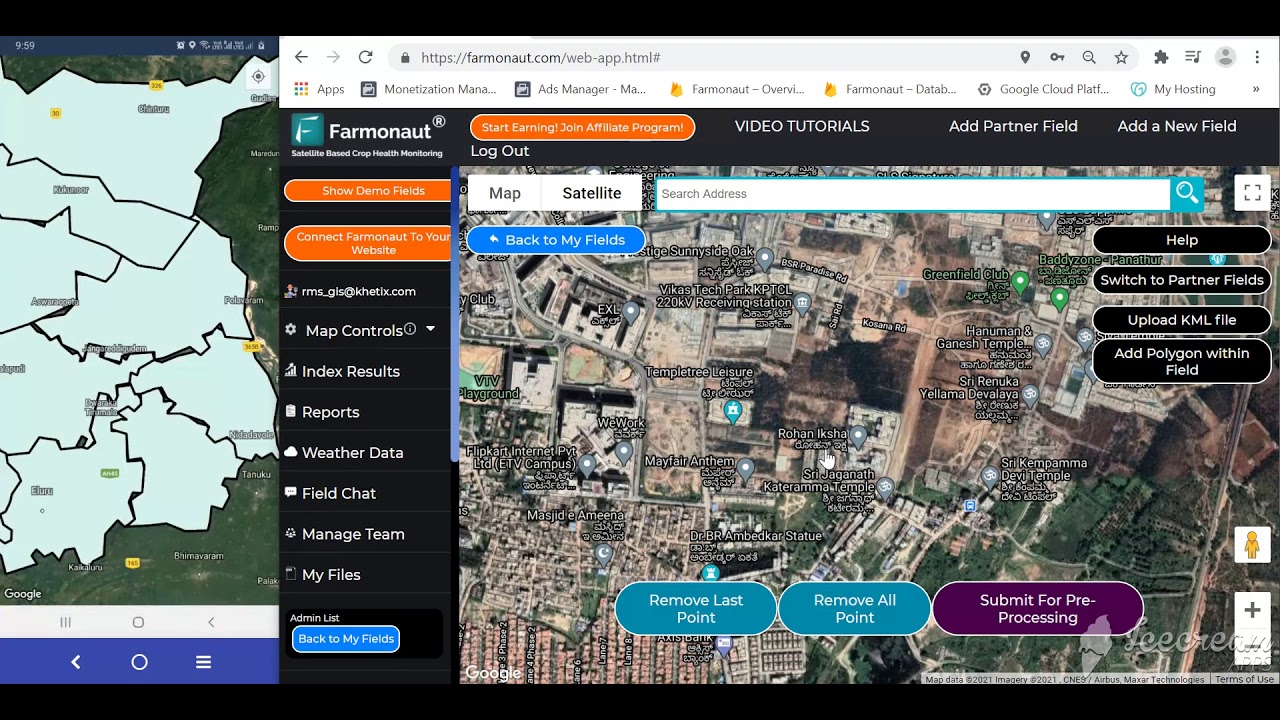
- Satellite Monitoring: Platforms like Farmonaut use multispectral satellite images for mine site assessment, asset integrity checks, and logistics, informing maintenance priorities and resource allocation.
- IoT and Smart Sensors: Vibration, temperature, and pressure sensors are attached to critical mining equipment for continuous, real-time data collection. These trigger proactive maintenance through predictive and condition-based approaches.
- Artificial Intelligence (AI): AI analyzes complex equipment data, predicts failures, and helps schedule maintenance based on equipment condition, not just arbitrary intervals.
- Blockchain-based Traceability: Ensures repair and maintenance activity records are secure, auditable, and compliant, especially important in regulated markets and for gold supply chain transparency.
- Cloud Data Platforms and Mobile Apps: Enable remote management of maintenance schedules, inventory, and ordering, improving API-based integrations with business systems.
- Remote Expert Advisory Systems: AI-driven advisors, such as Farmonaut’s Jeevn, deliver tailored operational and failure prevention recommendations based on live equipment and satellite data.
These innovations deliver a step-change in reliability, safety, and operational efficiency, especially for complex gold mining operations spread over large geographic regions.
How Farmonaut Supports Modern Gold Mining Equipment Maintenance
As a satellite technology company, Farmonaut offers transformative solutions that help gold mining businesses monitor, optimize, and manage maintenance strategies from anywhere globally. Here’s how we contribute to the future of gold mining equipment maintenance:
- Satellite-Based Monitoring: Our large-scale mapping tools provide up-to-date images and analytics for gold mining sites, helping operations managers identify where equipment is exposed to harsh conditions or at risk of failure.
- Real-Time Resource Management: Fleet status, operational hours, and rotational asset health can be monitored to reduce labor and downtime.
- AI-Based Advisory: The Jeevn AI system synthesizes live satellite and operational data to deliver actionable insights, supporting preventive, predictive, and condition-based maintenance strategies tailored to every unique gold mining context.
- Blockchain Traceability: Maintenance logs are secured using blockchain for tamper-proof record-keeping and regulatory compliance, increasing transparency and trust in gold sector operations.
- Environmental Impact Tracking: Maintain compliance and sustainability by tracking equipment-related emissions and resource usage through carbon footprint monitoring services.
To experience these benefits first-hand, download the Farmonaut app or try our APIs for seamless integration with your management systems:



Developers can explore our documentation for API-based mining site monitoring here:
Farmonaut API Documentation
For scalable, tailored, and sustainable mining maintenance, our subscription options fit both single-site operators and large, multisite corporations. See below for pricing options:
Best Practices and Practical Tips for Gold Mining Equipment Maintenance in 2025
To successfully navigate the complexities and opportunities of gold mining in 2025, companies must optimize their maintenance management processes by adopting the right mix of maintenance strategies and leveraging the best-in-class technologies:
Routine Planning and Decision Support
- Choose preventive or predictive maintenance for critical equipment—reactive should only be used for non-essential assets
- Align maintenance schedules with operational cycles to minimize production impact
- Regularly reassess and update thresholds for condition-based indicators as equipment ages or workloads change
- Invest in training for skilled personnel to interpret sensor data and act promptly
Technology Integration
- Install IoT sensors on rotating equipment, engines, pumps, and critical circuits
- Use satellite-based monitoring solutions for remote and large-scale field equipment
- Adopt cloud-based maintenance management systems to centralize schedules, inventory, and labor planning across multiple sites
- Utilize AI and machine learning platforms for real-time predictive analytics
- Apply blockchain for incident and repair log traceability to improve reporting and compliance
Cost and Resource Management
- Monitor inventory and supply chains for spares using digital fleet management tools to avoid delays
- Plan for “windows of opportunity” during natural production lulls or holidays to schedule intensive servicing
- Balance upfront investment in technology with long-term savings from downtime reduction
- Benchmark operational costs and downtime to continuously improve the value of your maintenance program
Sustainability and Compliance
- Track environmental impact of equipment operation and maintenance using carbon footprinting services
- Ensure maintenance activities align with evolving workplace safety and emissions regulations
Conclusion: Choosing the Right Maintenance Strategy
As the global gold mining sector advances into 2025 and beyond, adopting robust, data-driven maintenance strategies for gold mining equipment: pros and cons becomes a foundational lever for success.
While reactive maintenance offers a simple, low-cost entry point, its unpredictable downtime and high hidden costs render it unsuitable for most modern mining operations. Preventive maintenance remains the core strategy for many, especially where operational schedules and regulatory requirements can be anticipated and planned around. The evolution towards predictive and condition-based maintenance is accelerating, unlocking new gains in reliability, cost management, and safety, thanks to advancements in IoT, satellite, and AI technologies.
Ultimately, the best maintenance approach is one that aligns with your organization’s scale, budget, digital maturity, and operational risk profile. Companies that invest in modern technology platforms, prioritize preventive and predictive strategies, and continuously monitor their performance will emerge as leaders, achieving lower operational costs, maximized asset utilization, and improved environmental and safety outcomes.
For gold mining operators seeking to future-proof their equipment and gain a competitive edge, it’s crucial to understand the evolving landscape of maintenance strategies for gold mining equipment: pros and cons—and to act now while technological investments deliver the highest returns.
FAQs on Maintenance Strategies for Gold Mining Equipment: Pros and Cons
1. Which maintenance strategy is most commonly used in gold mining in 2025?
Preventive maintenance remains the most widely adopted as it balances reliability, cost, and ease of implementation. However, predictive and condition-based approaches are rapidly gaining ground due to advances in sensors, AI, and satellite monitoring.
2. Why is predictive maintenance preferred for critical gold mining equipment?
Predictive maintenance uses real-time sensor data and AI analytics to predict failures before they occur, minimizing unplanned downtime and costly emergency repairs while maximizing equipment availability and life.
3. What role does technology play in modern mining equipment maintenance?
Technologies such as IoT sensors, satellite imagery (like those provided by Farmonaut), AI, and blockchain improve equipment monitoring, reduce risks, enhance compliance, and support proactive maintenance planning.
4. How can I transition from reactive to proactive maintenance?
Start by digitizing maintenance records, installing sensors on key equipment, rolling out basic preventive schedules, then layering in AI-driven predictive maintenance. Consider end-to-end platforms and API integration for centralized management.
5. Can Farmonaut help my mining operation adopt smarter maintenance?
Yes. We provide satellite-based monitoring, resource and fleet management, and AI-driven advisory tools that support data-driven maintenance planning and execution—delivered via web and app or integrated API services for seamless site management.
6. Is predictive maintenance cost-effective for small mines?
While initial investments can be higher, predictive maintenance reduces lifecycle costs by minimizing unexpected failures and extending equipment life, making it increasingly accessible and valuable—even for smaller operations.
7. How does condition-based maintenance differ from predictive maintenance?
Condition-based maintenance triggers action when specific, measured thresholds are reached. Predictive maintenance uses complex analytics and historical data to forecast failures even before thresholds are breached, offering a more proactive approach.

 Riverside Resources Limited
 Congo Mining Solutions
 Mining SARL
 SenGold Invest SAS
 Sania Corporation
 Sean Mining Limited
 NTS Group (Pty) Ltd
 Mine4Africa
 Lithspo Minerals Limited
 Tintina Mining Group
 Dalgety Minerals Pty Ltd
 Vortex Minerals Pty Ltd
 Faith At Work (Pty) Ltd
 Geotech Mining Solutions plc
 Vulcan International Limited
 Kidepo Associates
 GKY Mining
 Alkimy SARL
 Double A Trading
