

Gold prospecting · Western Australia guide
Gold Prospecting in Western Australia: Rules, Maps, Costs
A Miner’s Right costs A$30 in Western Australia (2026-27 fees) and lets you prospect vacant Crown land and pastoral leases with hand tools and a metal detector. This guide covers the maps, the no-go zones, the costs and how other states compare.
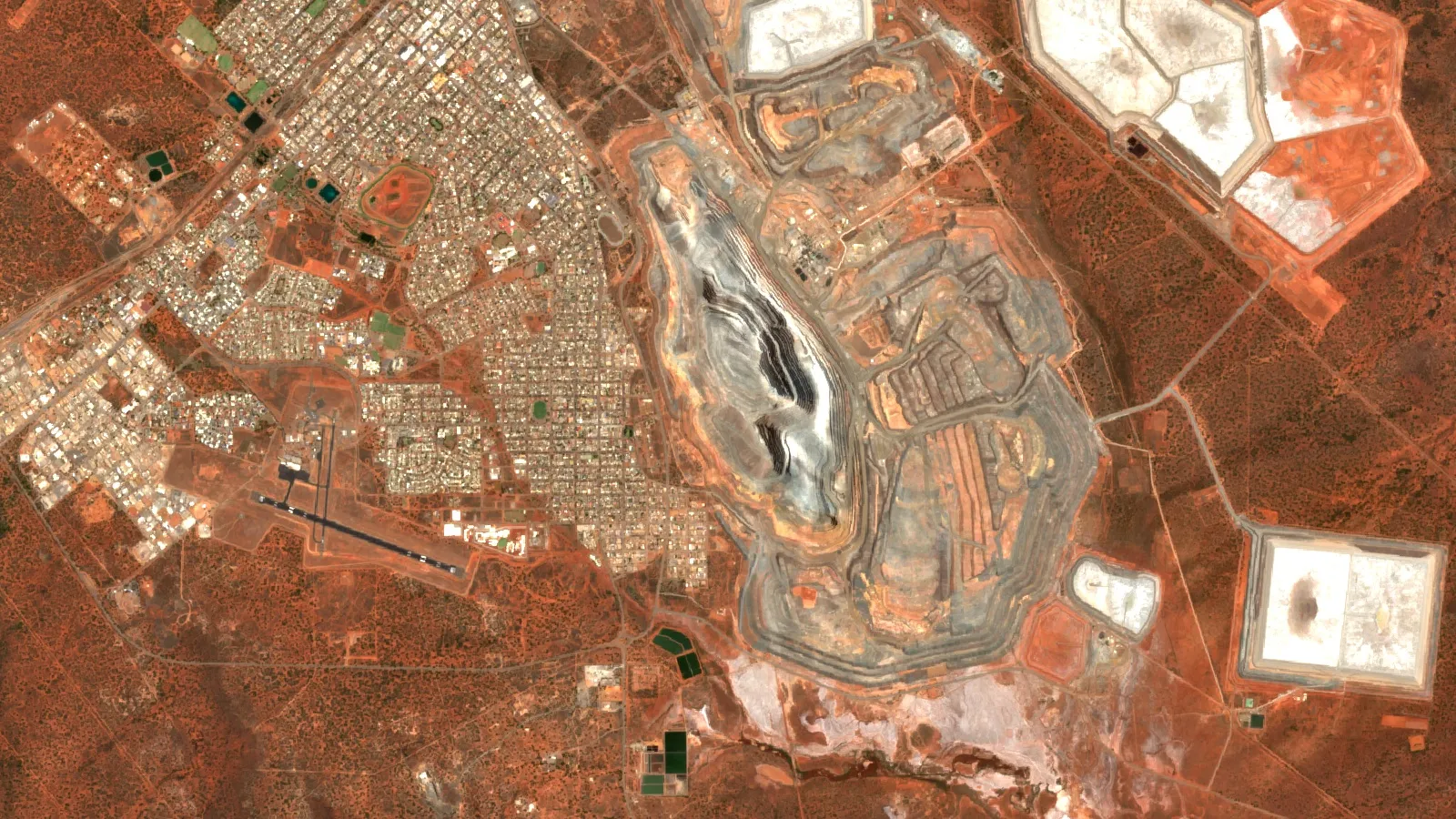
Key takeaways
- A Miner’s Right costs A$30 on the 2026-27 fee schedule and allows hand-tool prospecting, including metal detecting, on vacant Crown land and pastoral leases, with samples of up to 20 kg (WA Department of Mines, Petroleum and Exploration).
- Ground under a tenement needs the holder’s written permission; a Section 40E permit (A$119, three months, handheld tools only) covers exploration licences (WA Government, 2026-27 fees).
- Without the occupier’s consent you cannot prospect within 100 m of crops, yards, houses or cemeteries, or within 400 m of pastoral water works and bores (WA Government).
- WA produced 209 tonnes of gold in 2024-25, 72% of Australian output, with record sales of A$29 billion (WA Statistics Digest 2024-25).
- Other states differ: Victoria’s miner’s right is A$28.60 for 10 years, Queensland requires a fossicking licence, and NSW sets take limits per 48 hours (state regulators).
In this article
- What you need before you start prospecting for gold in Western Australia
- Seven steps from permit to first detector sweep
- Government maps and databases for WA prospecting, and what each shows
- Where prospecting is not allowed, and the distance rules that catch people
- What it costs to get on the ground in Western Australia
- How big gold is in Western Australia
- Where in WA the gold is produced: the Goldfields, the Murchison and Yalgoo
- Gold prospecting in the other Australian states
- What a find is worth, and what it costs to recover it
- Staying safe in remote goldfields
- Screening ground from space before you peg or buy a tenement
- Frequently asked questions
What you need before you start prospecting for gold in Western Australia
To prospect for gold in Western Australia you need a Miner’s Right, which costs A$30 on the 2026-27 fee schedule, and you may then search vacant Crown land and pastoral leases with hand tools and a metal detector (Department of Mines, Petroleum and Exploration, fees and charges). The permit lets you take samples of up to 20 kilograms, but it does not let you mine, and it does not cover land that sits under someone else’s mining tenement (Miner’s Rights, WA Government). A tenement is the legal title to a block of ground, such as a prospecting licence or a mining lease.
Prospecting or mining without authority is an offence under the Mining Act 1978, with penalties of up to A$150,000 for an individual and A$300,000 for a company (A guide to prospecting in Western Australia). So the order of work matters: permit first, then a map check of who holds the ground, then permission where it is needed, and only then the detector. The sections below follow that order and finish with costs, the goldfields themselves, the rules in other states, and a short list of safety points.
This page is written for licence holders, consultants and small-scale operators who want the rules, the data sources and the numbers in one place. The department that runs these systems has changed name twice, so older guides say DMIRS or DEMIRS; since 1 July 2025 the mining work sits in the Department of Mines, Petroleum and Exploration (DMPE), and the Mineral House office in East Perth and the regional Mining Registrar offices issue the permit (Getting a Miner’s Right).
Seven steps from permit to first detector sweep
- Buy your Miner’s Right. Every person who prospects needs their own. You can buy it at Mineral House, at any Mining Registrar’s office, online, or by post with the application form. It cannot be bought at the department’s Core Libraries.
- Pick a district and read what is already known. Open GeoVIEW.WA and MINEDEX, find the old mines, prospects and drill holes near your target, and note the operating status of each (details in the next section).
- Check the tenure on the ground. Switch on the tenement layers. Ground under a granted prospecting licence, mining lease or exploration licence is not open to a Miner’s Right holder unless the tenement holder agrees in writing, or you hold a Section 40E permit on an exploration licence.
- Work out the land type. Vacant Crown land and pastoral leases are open. National parks, nature reserves, town sites and private farmland are not. Native title can add a further permission step.
- Tell the pastoralist. On a pastoral lease you must take reasonable steps to notify the lessee where you will be and for how long. Mining Registrar offices hold the contact details and are the department’s only source for them.
- Plan the trip for safety. Leave a route plan and contact times with someone at home, carry a personal locator beacon, and stay out of old workings.
- Work with hand tools, fill your holes, and log every find. Record the GPS position, date and depth of each target.
Government maps and databases for WA prospecting, and what each shows
There is no single official map titled “Crown land open to prospecting”. You build the answer by layering three things: tenements (who holds the ground), land type (pastoral lease, reserve, park, private) and the geology and history of the area. WA publishes the pieces as public data sets.
| Tool | What it shows | Best used for |
|---|---|---|
| GeoVIEW.WA | Geology, mines, mineral deposits, active leases, drill holes, open-file exploration reports (WAMEX) and historic tenement plans; custom maps and data extracts to shapefile | Building a base map of a district and spotting old workings |
| MINEDEX | Database of mines, deposits, prospects and project owners with operating status and resource estimates; no login needed | Looking up what is known about a named deposit or prospect |
| Tengraph Web and Mineral Titles Online | The department’s tenement mapping system and its online register; a tenement register search costs A$10.50 on the 2026-27 schedule | Confirming the holder and status of a lease before you ask for permission |
| Pastoral land tenure maps (DPIRD) | Statewide and regional maps of pastoral lease boundaries, including Murchison and Goldfields-Nullarbor sheets | Finding which station you will cross and who to notify |
| Open-file exploration reports (WAMEX) | Company reports on soil, rock-chip and drilling work, searchable by map or text from inside GeoVIEW.WA | Seeing where others sampled and what they found |
GeoVIEW.WA lets you choose an area and scale, add mines, mineral deposits and active leases, and print a custom map, and its search tools cover exploration reports, drill holes, geochemistry and historic Mines Department plans (GeoVIEW.WA, WA Government). MINEDEX covers mines, deposits and prospects with operating status and resource estimates, needs no login, and offers bulk downloads in Excel and PDF (MINEDEX, WA Government). For the lease side, our guide to WA mining tenements, fees and where to apply explains each title type. For lease maps in particular, run the register search first: it tells you the holder and the status, which a screenshot of the map cannot.
For the land-type layer, the Department of Primary Industries and Regional Development publishes a statewide pastoral land tenure map and separate maps for the Murchison, Goldfields-Nullarbor, Pilbara, Gascoyne and Kimberley regions (DPIRD Geospatial Information Services maps). Lay a pastoral map next to the tenement layer and you can see, for any patch, whether it is a station with no tenement on it. That is the starting point for open ground.

▶ How to read GeoVIEW.WA, WAMEX, MINEDEX and Tengraph, and what a Miner’s Right is. · 4:13
Where prospecting is not allowed, and the distance rules that catch people
A Miner’s Right holder can prospect on vacant Crown land that is not under a granted tenement, and on pastoral, diversification and grazing-and-timber leases as long as the lessee is notified (Where you can prospect, WA Government). The same page sets out the places where you cannot work without the occupier’s consent or a Warden’s direction:
- Land under crop, or within 100 metres of it.
- Within 100 metres of a yard, stockyard, garden, cultivated field, orchard, vineyard, plantation, airstrip or airfield.
- Within 100 metres of an occupied house or other substantial building.
- Within 100 metres of a cemetery or burial ground.
- On a pastoral lease, within 400 metres of the outer edge of any water works, race, dam, well or bore.
National parks, nature reserves, town sites and other classified reserves are closed to prospecting. Private farmland needs a Permit to Enter issued by the department, which the 2026-27 schedule lists from A$41. A Miner’s Right does not give a lawful right to enter land where exclusive-possession native title exists; in that case you must ask the native title party first. You may still cross protected Crown land to reach open ground, and you may be liable for compensation for damage to fences, roads or livestock (Prospector obligations on Crown land).
Working on a tenement: Section 40E permits
Much of the best-known ground is covered by exploration licences. A Miner’s Right holder can apply for a Section 40E permit, which allows hand-tool prospecting on the Crown land inside a nominated exploration licence. The permit costs A$119, lasts three months, and covers handheld tools only (no powered or hydraulic hand tools), down to 2 metres, with up to 20 kg of samples. The licence holder is told when it is issued and has 21 days to comment, so you can start only once the holder’s statement arrives or 21 days have passed. Up to three people can share one application, and each needs a Miner’s Right (Section 40E permits, WA Government). Gold or other minerals found under a 40E permit must be reported to the licence holder and the department within 14 days of the permit ending. Section 40E permits apply to exploration licences. On a prospecting licence or mining lease you need the holder’s written permission, and you may keep what you find only with the holder’s agreement.
What it costs to get on the ground in Western Australia
For most hobby and small-scale prospectors the entire outlay on paper is the A$30 Miner’s Right. Costs rise quickly if you want exclusive ground. A prospecting licence covers up to 200 hectares for four years, with a renewal of another four, and the 2026-27 schedule lists an A$478 application fee, rent of A$4.40 per hectare (or part of a hectare) each year, and a minimum exploration spend of A$40 per hectare each year (at least A$2,000) (fees and charges, effective 1 July 2026). A Special Prospecting Licence for Gold is capped at 10 hectares, carries the same A$478 application fee, and has a minimum spend of A$2,000. The department publishes the rent minimum for small licences, A$40.70, so a very small block still pays that much.
Chart
What the main WA permits and licence charges cost
A$ per item, 2026-27 fee schedule; licence rent shown for an example 100 ha block for one year
The calculator below applies those published rates to your own block size and term. It shows the fixed fees and rent separately from the exploration spend, because the spend is money you must put into the ground, not a fee you pay to the state.
Calculator
What would a WA prospecting licence cost?
Enter your block size and term to see rent, fees and the minimum spending commitment.
- Annual rent (A$): $440
- Minimum exploration spend per year (A$): $4,000
- Fees, rent and minimum spend over the term (A$): $18,238
Defaults are the published 2026-27 rates (WA Department of Mines, Petroleum and Exploration): A$478 application, A$4.40 per hectare rent with a A$40.70 minimum, A$40 per hectare minimum spend with a A$2,000 minimum. Whole hectares only. Rates change each 1 July: confirm them with the department. The spend is exploration work you must carry out, not a fee paid to the state.
How big gold is in Western Australia
WA produced 209 tonnes (6.7 million ounces) of gold in 2024-25, up from 204 tonnes the year before, and that was 72 percent of Australian output (WA Mineral and Petroleum Statistics Digest 2024-25). Sales reached a record A$29 billion, helped by an average price of A$4,366 per ounce (US$2,820) for the financial year. Gold was the state’s second most valuable mineral after iron ore and accounted for 17 percent of the value of minerals sold. The industry also supported 35,672 full-time-equivalent on-site jobs in 2024-25, up from 28,419 in 2020-21 (same digest, employment table).
Chart
On-site jobs in WA gold mining
Average full-time-equivalent jobs, financial years 2020-21 to 2024-25
These figures matter to a prospector for one reason: a busy industry means busy ground. Producing mines sit on granted tenements, which a Miner’s Right does not cover without the holder’s written permission, so check the tenure layer before you plan a trip. That is why the map work in the earlier sections comes before any field work.
Where in WA the gold is produced: the Goldfields, the Murchison and Yalgoo
By value, the Goldfields-Esperance region dominates. The 2024-25 digest lists A$21.8 billion of gold sales there, against A$3.4 billion in the Mid West and A$1.1 billion in the Pilbara. The Peel region, which includes Boddington, is reported as a combined figure with alumina, copper and silver, so it is not shown separately in the chart. Kalgoorlie-Boulder sits in the Goldfields-Esperance region, and the Murchison towns of Cue and Mount Magnet are in the Mid West.
Chart
WA gold sales by region
A$ billion, 2024-25; Wheatbelt is gold and silver combined; Peel not shown
Yalgoo, a Mid West town with its own goldfield next to the Murchison, shows how the history and the map work together. According to the Shire of Yalgoo, prospectors Knight, Parsons, Rice, Moxon and Evans found gold there in 1892 and opened the Emerald Reward Mine, Yalgoo was declared a separate goldfield in 1895, and the gold began to dwindle around 1903 (Shire of Yalgoo, history). The Emerald Reward mine closed in 1908. A century of small shafts and shallow workings means the district is full of marked history, which is exactly what GeoVIEW.WA’s historic plans and MINEDEX are good at showing. It also means open shafts: see the safety section.
For a deeper view of the deposit styles and districts behind these numbers, see our guide to Australia gold deposits by state.
Gold prospecting in the other Australian states
Australia has the largest gold resources in the world on Geoscience Australia’s count (13,352 tonnes of economic demonstrated resources at the end of 2025 on the preliminary tables, 20 percent of the world total), and the third-largest mine output, behind China and Russia on the USGS estimate (Geoscience Australia, commodity summaries; USGS Mineral Commodity Summaries 2026). Geoscience Australia’s preliminary 2026 tables put 2025 mine output at 314 tonnes, a different basis from the USGS estimate of 280 tonnes (AIMR 2026 preliminary tables). Each state sets its own permit rules, and they differ in ways that matter.
Chart
Gold mine production, eight selected producers
Tonnes of contained gold, 2025 estimate, eight selected large producers (Uzbekistan also 130 t)
| State | What you need | Cost shown by the regulator | Map tool |
|---|---|---|---|
| Western Australia | Miner’s Right; Section 40E permit on exploration licences | A$30 (right); A$119 (40E, 3 months) | GeoVIEW.WA, Tengraph, MINEDEX |
| Queensland | Fossicking licence in 1-month, 6-month or 1-year terms; landholder consent off designated land | Fee table on the Queensland Government licences page (varies by term and licence type) | GeoResGlobe |
| Victoria | Miner’s right; hand tools including metal detectors; some parks and reserves are closed | A$28.60 for 10 years (indexed; confirm at purchase) | Parks Victoria and Earth Resources Victoria pages for closed areas |
| New South Wales | Consent of landholders and title holders; no power-operated equipment; no explosives | The state guide sets take limits per 48 hours rather than a fee | MinView (fossicking districts layer) |
Queensland: maps, licence and where the gold areas are
Queensland’s mapping viewer is GeoResGlobe, with more than 600 layers covering exploration and production permits, historical resource authorities, geology, geophysics and native title; it needs no registration and no charge (GeoResGlobe, Business Queensland). A fossicking licence is required in Queensland, and it comes as an individual, family, club or other type in 1-month, 6-month or 1-year terms, although the government says you do not need one to hunt for lost items with a metal detector (Licences for fossicking, Queensland Government). Fossicking is not permitted in national parks, conservation parks or wildlife reserves, and in state forests and timber reserves only where a general permission area exists. On land that is not specified fossicking land you need the landholder’s written consent, except on unoccupied state land and public watercourses (Where you can fossick, Queensland Government). The state lists gold fossicking areas in the Central gold district near Clermont and in south-eastern Queensland, plus the Mount Morgan No 7 Dam general permission area (Fossicking areas in Queensland).
Victoria and New South Wales
In Victoria a miner’s right costs A$28.60 and lasts 10 years on the Resources Victoria page (the fee is indexed, so confirm it when you buy), it allows hand tools including metal detectors for gold, and it does not open national, state or wilderness parks except in specific permitted areas (Resources Victoria, recreational prospecting). Our Victoria gold fields guide covers the Ballarat and Bendigo districts in more detail. In New South Wales, the state guide allows metal detectors where there is no surface disturbance, bans explosives and power-operated equipment, caps the soil disturbed at one cubic metre per 48 hours, and limits what one person may take in 48 hours to 50 grams of gold plus up to five nuggets of 10 grams or more (NSW Resources, a guide to fossicking). South Australia, Tasmania and the Northern Territory run their own systems, so check with the relevant regulator before you travel.
What a find is worth, and what it costs to recover it
The Perth Mint’s published spot price on 28 October 2026 was about A$5,780 per ounce asked and A$5,730 bid (the page updates every five minutes) (Perth Mint metal prices). A troy ounce is 31.1035 grams. Raw finds are rarely pure gold, so the calculator asks for a purity, and a buyer will usually pay a share of spot rather than the full figure. The second calculator below turns a weight, a purity, a price and a trip cost into a net figure so you can see whether a weekend pays for the fuel.
Calculator
What is your gold find worth after the trip?
Enter the weight, purity, a price and what the trip cost you.
- Pure gold in the find (grams): 9.0
- Value at full spot price (A$): $1,447
- Result after trip cost (A$): $874
Example values only, not a benchmark. The gold price is an input: use today’s price. 31.1035 grams per troy ounce is the standard conversion. The payout share is what you assume a buyer pays against spot (an example, ask for a real quote). Trip cost covers fuel, food, tools and permits. Any tax is not included.

▶ How gold goes from rock to ring, step by step, and where satellite screening fits before drilling. · 5:27
Staying safe in remote goldfields
WorkSafe WA advises prospectors to tell someone where they are going and when they will be back, to leave maps of the intended roads and camps, to agree a missed-call plan, and to carry satellite-based communication in addition to a phone. A personal locator beacon is the compact option, and the Coroner has recommended that prospectors carry one after a 2014 inquest (Staying safe while prospecting and fossicking, WorkSafe WA). Old workings need the same respect. Ground around openings can give way under a person’s weight, vegetation can form a false floor over a shaft, underground air can hold lethal gases or too little oxygen, and old explosives can be unstable (Dangers of old mine workings, WorkSafe WA). Do not enter them. Never use mercury to recover gold.
Screening ground from space before you peg or buy a tenement
Satellite imagery cannot see a nugget. It can map the rock and soil around likely gold: iron-stained and clay-altered ground, structures and the footprint of old workings. A reader weighing up a prospecting licence, or a consultant checking a tenement for sale, can use that to rank patches before paying for field work. Farmonaut produces satellite mineral detection reports from a KML, KMZ or polygon boundary in 5 to 20 business days, and the output is a set of exploration targets, not a resource estimate. To check a block of your own, request a quote, read how satellite mineral detection works, or contact the team.
Prospecting beyond Western Australia? The Australia mineral deposits map guide lists each state’s official map viewer.
Frequently asked questions
How much does a Miner’s Right cost in Western Australia?
A$30 on the 2026-27 fee schedule (WA Government fees and charges). You can buy it at Mineral House in East Perth, at any Mining Registrar’s office, online, or by post.
Can I use a metal detector to look for gold in WA?
Yes. A Miner’s Right allows prospecting for minerals, including gold, and the use of a metal detector, on vacant Crown land and pastoral leases that are not under a tenement. The department’s definition of prospecting includes metal detectors.
Where can I find a map of Crown land that is open for prospecting?
No single map shows it. Combine the tenement layers in GeoVIEW.WA or Tengraph with the DPIRD pastoral land tenure maps, then exclude parks, reserves, town sites and private land. A register search on Mineral Titles Online (A$10.50) confirms the status of any one lease.
Do I need permission to prospect on a pastoral lease?
You do not need the lessee’s written consent for most prospecting, but you must take reasonable steps to notify the lessee where you will be and for how long. Inside the 100-metre and 400-metre protected zones around crops, houses, yards, water works and bores you need the occupier’s consent, or a Warden’s direction.
What is a Section 40E permit?
A three-month permit, costing A$119, that lets a Miner’s Right holder use handheld tools on Crown land inside a nominated exploration licence. Minerals found must be reported to the licence holder and the department within 14 days of the permit ending.
Can I prospect on a mining lease or an exploration licence?
On a prospecting licence or mining lease you need the holder’s written permission. On an exploration licence you can apply for a Section 40E permit instead, which does not need the holder’s consent. Gold found on a prospecting licence or mining lease may be kept only with the holder’s permission. Under a 40E permit you must report any minerals recovered to the licence holder and the department within 14 days of the permit ending.
Where can I get mining lease maps for Western Australia?
Use GeoVIEW.WA and Tengraph Web for the map view, and Mineral Titles Online for the register record. Historic tenement plans, often called Mines Department public plans, are searchable inside GeoVIEW.WA.
Do I keep the gold I find?
On Crown land that is not under a tenement, yes, as long as you hold a Miner’s Right. On a tenement, only with the holder’s permission. Minerals are the property of the Crown, which is why the permit is what makes the find yours.
Where can I find gold in Australia?
Western Australia produced 72 percent of the country’s gold in 2024-25, mainly from the Goldfields-Esperance and Mid West regions. Queensland lists gold fossicking areas near Clermont and in the south-east, and Victoria and New South Wales have their own old goldfield districts. Our guide to gold deposits by state covers the provinces.
Do I need a licence to look for gold in Queensland?
A fossicking licence is required to fossick in Queensland, including at its listed gold areas. Licences run for 1 month, 6 months or 1 year, and you can buy one online or from an authorised agent. The state says a metal detector hunt for lost items does not need one.
What is Yalgoo known for in prospecting?
Yalgoo is a Mid West town with its own goldfield, where five prospectors found gold in 1892 and opened the Emerald Reward Mine. The field was declared in 1895, and output fell from about 1903. Check the tenure layer before you go, because ground near old workings is often held under tenements.
This page is for information only. It is not legal advice or investment advice. Rules, fees and tenement status change: confirm them with the Department of Mines, Petroleum and Exploration or the relevant state regulator before you go. Always get the permits and any landholder or tenement-holder permission first, stay out of old workings, carry a personal locator beacon, and never use mercury.
Farmonaut mining
Screen your own ground from space
Request a quote to screen a prospecting licence or tenement area for alteration and structures before you commit to field work.

Mining Pro sample view, synthetic data
Keep reading
Sources
- WA Government, Miner’s Rights: wa.gov.au
- WA Government, Where you can prospect with a Miner’s Right: wa.gov.au
- WA Government, Prospector obligations on Crown land: wa.gov.au
- WA Government, Getting a Miner’s Right: wa.gov.au
- WA Government, Section 40E permit applications, fees and charges: wa.gov.au
- WA Department of Mines, Petroleum and Exploration, Fees and Charges 2026-27: wa.gov.au
- WA Government, A guide to prospecting in Western Australia: wa.gov.au
- WA Government, GeoVIEW.WA: wa.gov.au
- WA Government, MINEDEX: wa.gov.au
- DPIRD, Western Australia Pastoral Land Tenure map: library.dpird.wa.gov.au
- WA Mineral and Petroleum Statistics Digest 2024-25: wa.gov.au
- Geoscience Australia, Australia’s Identified Mineral Resources 2025 commodity summaries: ga.gov.au
- Geoscience Australia, AIMR 2026 preliminary tables: ga.gov.au
- USGS, Mineral Commodity Summaries 2026: Gold: pubs.usgs.gov
- Shire of Yalgoo, History: yalgoo.wa.gov.au
- Business Queensland, GeoResGlobe: business.qld.gov.au
- Queensland Government, Licences for fossicking: qld.gov.au
- Queensland Government, Where you can fossick: qld.gov.au
- Queensland Government, Fossicking areas in Queensland: qld.gov.au
- Resources Victoria, Recreational prospecting: resources.vic.gov.au
- NSW Resources, Fossicking: a guide to fossicking in NSW (2025): resources.nsw.gov.au
- WorkSafe WA, Staying safe while prospecting and fossicking: worksafe.wa.gov.au
- WorkSafe WA, Dangers of old mine workings: worksafe.wa.gov.au
- Perth Mint, metal prices (28 October 2026): perthmint.com
Discussion
Questions, corrections or field experience? Share them below. First-time comments are reviewed before they appear, and your email is never published.
No comments yet. Be the first to add a question or your experience.

 Rains of Favour
 Tintina Mining Group
 Dalgety Minerals Pty Ltd
 Vortex Minerals Pty Ltd
 Faith At Work (Pty) Ltd
 Geotech Mining Solutions plc
 Vulcan International Limited
 Kidepo Associates
 GKY Mining
 Alkimy SARL
 Double A Trading
 GemSprout Metals Limited
 Qader Group
 Ileys General Trading
 SG Gold Mining LLC
 VRV Global Pte Ltd
 Omsri International FZE
 G.I.T.T.
 Jaunita Erss Ltd
 Almosi SARL
 SRK Consulting
 Berks Gold Limited
 Mwerezi Minerals Company Limited

 Exploration consultancy · South Africa · Gold










