

Agriculture 2.0 & 6.0: Top Trends Shaping 2026
Meta description: Agriculture 2.0 to Agriculture 6.0—the evolution of farming driven by precision, sustainability, AI, and regenerative practices will shape global food and environmental security in 2025 and beyond.
“By 2026, AI-powered precision farming is projected to boost global crop yields by up to 25%.”
Summary:
Agriculture 2.0 to Agriculture 6.0: The Evolution of Farming in 2025
Agriculture has undergone profound transformations since its inception, catalyzed by technological advancements, environmental challenges, and the increasing demand for sustainable food production. By 2025 and beyond, we stand at a crossroads: the journey from Agriculture 2.0 to Agriculture 6.0 encapsulates a dynamic era, defined by innovation, precision, and resilience. These elements are crucial for meeting global food security and environmental sustainability goals.
The Evolution: From Agriculture 2.0 to Agriculture 6.0
The evolution of agriculture reflects humanity’s persistent quest for efficiency, productivity, and ecological balance. To appreciate the dramatic leap to agriculture 6.0, it’s essential to contextualize each preceding era and their defining features.
Agriculture 2.0: The Dawn of Mechanization and Chemical Inputs
Agriculture 2.0 refers to the period primarily characterized by mechanization and the widespread use of chemical fertilizers and pesticides that began in the mid-20th century. This era marked a significant leap from traditional, manual farming—as tractor-driven plowing, chemical-based crop protection, and the introduction of Green Revolution’s high-yield crop varieties revolutionized fields worldwide.
- ✔ Key innovation: Mechanized machinery replaced animal/human labor
- ✔ Chemical inputs: Synthetic fertilizers and pesticides boosted yields
- 📊 Data Insight: Average cereal yields increased by 250% in some countries during the Green Revolution.
- ⚠ Risk: Led to soil degradation, water depletion, and pollution due to intensive input use
Despite its drawbacks, agriculture 2.0 set the stage for understanding how technology could amplify production efficiency. However, it largely followed a linear, input-intensive model—often neglected ecological balance and long-term sustainability.
Key Insight:
The “Green Revolution” helped avert famine in many regions, yet exposed the hidden ecological cost of a chemical-driven, linear agriculture model—setting the call for regenerative approaches.
Progressing Through the Decades: 3.0, 4.0, and 5.0
While our focus is on the leap from agriculture 2.0 to 6.0, the intermediate stages form the necessary bridge.
- 🚜 Agriculture 3.0: Embraced digital innovation like GPS in machinery, early satellite imaging, and rudimentary data analytics.
- 🌐 Agriculture 4.0: The rise of IoT (Internet of Things), drones, and big data analytics for real-time crop, soil, and weather monitoring.
- 🤖 Agriculture 5.0: Arrival of AI, robotics, automation, and fully autonomous machinery capable of adaptive management and sustainability at scale.
Each phase intertwined technologies to create smarter, more responsive farming systems, incrementally preparing the industry for the future.

Comparative Timeline: Agricultural Eras Table
The table below distills the entire evolution—from agriculture 2.0 to 6.0—showcasing key technologies, milestone adoption years, major innovations, and projected sustainability impact.
| Era | Key Technologies | Estimated Adoption Year | Major Innovations | Sustainability Impact |
|---|---|---|---|---|
| Agriculture 2.0 | Machinery, Chemical fertilizers & pesticides | 1950s-1970s | Mechanization, Green Revolution, High-yielding crop varieties | +200% yields (in many regions) – Soil and water health: Decline due to intensive chemical use |
| Agriculture 3.0 | GPS, Satellite Imaging, Data Analytics | 1980s-1990s | Precision tillage, Digital mapping, Early yield forecasting | +20% resource efficiency Moderate step towards sustainability |
| Agriculture 4.0 | IoT Sensors, Drones, Big Data, Cloud Computing | 2005-2015 | Real-time monitoring, Variable rate inputs, Automated irrigation | +30% crop yield potential -20% water/fertilizer use |
| Agriculture 5.0 | AI, Robotics, Automation, Machine Learning, Blockchain | 2018-2024 | Autonomous vehicles, Robotic weeding/harvest, Resilient resource management | +10% further yield gain Significant reduction in labor/resource needs |
| Agriculture 6.0 | Sensor Networks, AI-driven ecosystem management, Digital Twin Farms, Regenerative practices, Circular economy, Carbon tracking | 2025–2030 | Ecosystem-adaptive AI, Climate-smart carbon farming, Precision biological inputs, Collaborative autonomous robotics |
+25% yield boost possible +40% leap in regenerated soils -50% resource waste |
Trivia
“Regenerative agriculture adoption is expected to increase by 40% worldwide between Agriculture 2.0 and 6.0 eras.”
Key Trends Defining Agriculture 6.0 by 2026
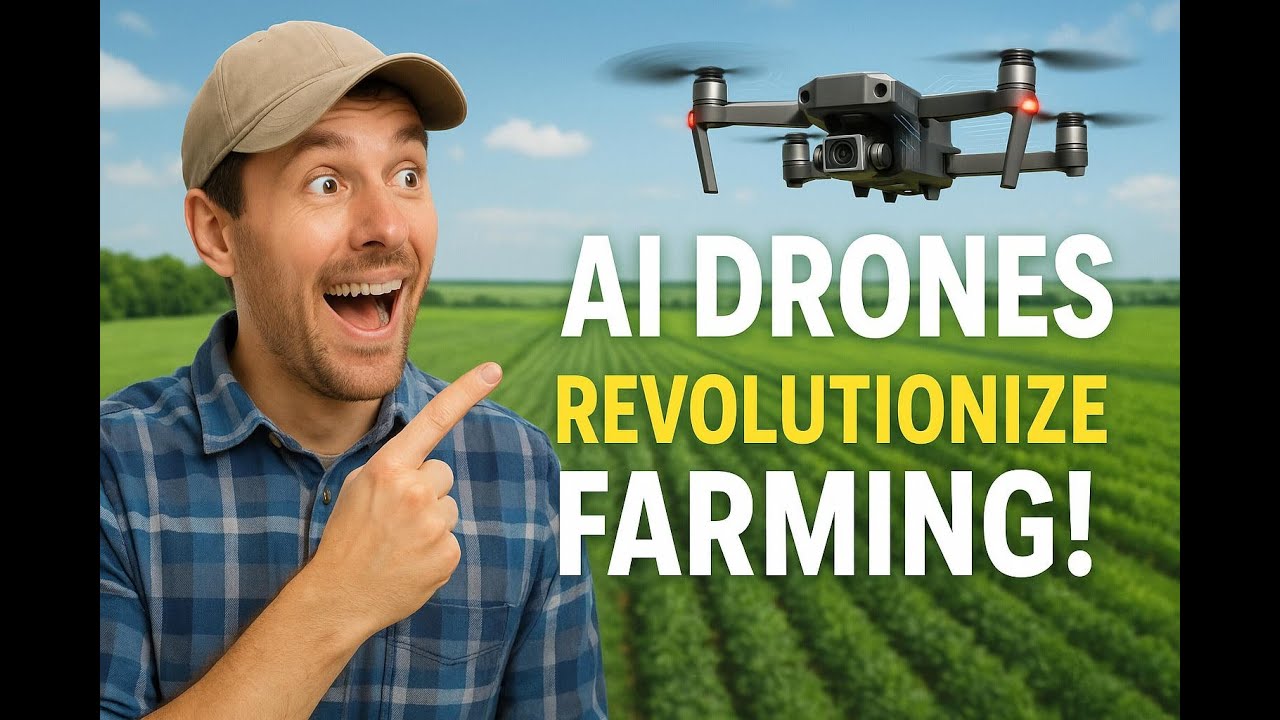
Agriculture 6.0 emerges in 2025 and beyond as an advanced phase, seamlessly blending regenerative practices and state-of-the-art technologies. The focus is a paradigm shift: not simply maximizing outputs, but ensuring resilience, ecological balance, and long-term sustainability.
- 💡 Integrated Sensor Networks & AI: Networks of micro/macroscale sensors monitor soil microbiomes, crop health, water usage, and more, enabling AI to recommend adaptive interventions for yield optimization and environmental management.
- 🌱 Carbon Farming & Regenerative Practices: Carbon sequestration innovations such as agroforestry, cover cropping, and minimal tillage turn farms into carbon sinks and restore soil health.
- 👾 Fully Autonomous, Collaborative Robotics: Autonomous vehicles, robots, and drones form integrated fleets, handling planting, weeding, monitoring, harvesting, and resource management at ultra-high efficiency and minimal impact.
- 🔗 Digital Twin Farming: Real-time virtual replicates of farms allow forecasting, scenario planning, and highly tailored management.
- ♻ Circular Economy & Waste Valorization: Nutritive residues, animal waste, and biomass are upcycled into inputs such as organic fertilizers and bioenergy, closing the loop on resources.
Investor Note:
Investment in AI-powered, precision farming systems and regenerative practices is set to drive a new era of sustainable agricultural productivity and environmental market opportunities by 2026—especially for ventures supporting data integration, automation, and low-carbon growth.
Precision Agriculture, AI, and Regenerative Practices Reshaping Farming and Sustainability
Emerging trends in agriculture 6.0 reflect a shift from input-intensive, linear models toward resilient, closed-loop systems. Below, let’s unpack the core transformations for 2025 and beyond:
1. Precision Reaches Every Level: Sensor-Integrated Decision-Making
- 🌡 Soil sensors monitor nutrient cycling, microbial activity, and moisture in real time for precise input application.
- 🔬 High-resolution satellite data (e.g., NDVI, RGB, SWIR) empower hyper-localized crop and environmental monitoring.
- 🤖 AI algorithms synthesize data, forecast issues, and automate field interventions, boosting efficiency and minimizing waste.
These tools help move from uniform, input-heavy practices to adaptive management by monitoring each field’s unique needs.

Pro Tip:
Adopting AI-powered advisory tools—such as Farmonaut’s JEEVN AI—accelerates decision-making by merging real-time weather, crop monitoring, and tailored recommendations into a single, actionable dashboard.
2. Climate Change Adaptation and Carbon Farming in Agriculture 6.0
With agriculture as both a driver and victim of climate change, carbon farming sets the standard for 2025–2026 and beyond:
- 🔋 Carbon soil amendments: Adding organic matter (biochar, compost) increases sequestration capacity.
- 🌳 Agroforestry and perennial crops: Support carbon cycles and biodiversity.
- 👩🌾 Cover cropping and minimal tillage: Keep the soil resilient and lower carbon emissions from fields.
According to the Farmonaut Carbon Footprinting Platform, farmers and businesses can track and reduce their carbon emissions via satellite-based environmental monitoring—facilitating sustainable certification and market access.

- ✔ Key benefit: Lower carbon footprint boosts the sustainability and market value of crops.
3. Advanced Biological Inputs: Moving Beyond Chemicals
- 🔬 Biofertilizers and biopesticides harness beneficial microbes to enhance nutrient uptake and natural pest resistance.
- 🌾 Microbial consortia, tailored to local ecosystems, support soil regeneration and crop resilience.
- 🚫 Reduced chemical fertilizer and pesticide use preserves water and soil health.
- 🌱 Regenerative soil management: Building organic carbon, enhancing microbial life
- ⏳ Adaptive management: Using IoT and AI for situation-specific interventions
- ♻ Circular input systems: Waste-to-input solutions (manure, bioenergy)
- 📲 Mobile platforms: Widespread access to real-time advice and data for every farmer
- 🛰 Satellite-driven insights: Large-scale monitoring for entire regions
4. Autonomous Robotics and the Digital Twin Revolution
The deployment of autonomous field machinery and digital twin farms is set to redefine efficiency and resilience by 2025–2026:
- 🤝 Collaborative robotics: Swarms of ground and aerial robots work together for planting, weeding, pest control, harvesting, and crop monitoring, all guided by cloud-based AI.
- 🖥️ Digital twins: Real-time digital replicas of entire farms enable scenario testing, intervention planning, and live system optimization through simulation.
Farmonaut enables such large-scale farm management and digital twin deployment—delivering operational intelligence through advanced satellite imaging, machine learning, and cloud solutions.

Common Mistake:
Automating operations with robotics without robust AI and real-time ecosystem data may lead to inefficiency and crop losses. Smart implementation requires the synergy of robotics, digital twins, and real-world monitoring.
- ✔ Key benefit: Boosts crop yields up to 25% and reduces labor costs and risks.
- 🤖 Autonomous Drones & Robots: Seamless integration for field operations
- 📡 Satellite AI: Macro-scale ecological analysis and disaster prediction
- 🗂 AI Data Analytics: Real-time actionable insights for every farm scale
- 🔗 Blockchain Traceability: Tamperproof crop supply chain validation
- 📱 Mobile/Web Apps & APIs: Fluid access and integration for users and developers
Farmonaut: Enabling the Future of Data-Driven Agriculture
As a pioneering satellite technology company, Farmonaut offers advanced solutions that empower agriculture 6.0 with actionable data, AI-based advisory, and transparent management tools.



Our technology stack includes satellite-based monitoring, AI-driven Jeevn advisory, blockchain-enabled traceability (see Product Traceability Page), and environmental impact tracking—all designed to be accessible on Android, iOS, web, and API.

- ✔ Key benefit: Accessible, affordable, scalable satellite-driven insights for individuals, businesses, and governments.
- 📊 Data insight: Monitor crop health, optimize nutrient and water management, and identify stress zones proactively.
- ⚠ Limitation: Requires internet access and data literacy for maximum impact—hence the importance of user-friendly apps/APIs.
Developer Note:
Integrate Farmonaut’s Satellite Data API and developer docs for seamless, real-time analytics within your own agri-apps or platforms. Custom modules for fleet, resource, and environmental management are available.
Farmonaut Product Links: Transforming Farm Management
- 📈 Crop Loan and Insurance: Satellite verification simplifies and de-risks agricultural finance—streamlining access for smallholders and reducing fraud for banks.
- 🗺 Fleet Management: Real-time tracking and optimization of agricultural and infrastructure machinery for productivity and cost control.
- 🌳 Crop, Plantation & Forest Advisory: Bridge technology gaps with timely, personalized guidance powered by satellite and AI.
Farmonaut Subscriptions: Simple, Modular, and Scalable
Access our up-to-date subscription plans below for individuals, businesses, and government sectors. Plans can be tailored for agriculture, mining, infrastructure, and beyond:
Key Insight:
Farmonaut’s mobile/web platforms democratize satellite technology, keeping precision agriculture affordable—even for small-scale farmers in emerging economies.

Digital Agriculture Platforms and the Global Ecosystem
The success of agriculture 6.0 is anchored in collaborative digital platforms and open knowledge. This creates a democratized ecosystem—where even small landholders gain access to satellite images, AI advisories, and market-verified supply chains.
- 🌍 Platform-driven information exchange ensures timely, actionable knowledge—reducing risk and boosting security for all agricultural stakeholders.
- 🔗 Blockchain-enabled traceability (see Farmonaut Product Traceability): From seed to shelf, the food supply chain is validated for quality, sustainability, and safety.
- 💬 Knowledge-sharing communities and AI-assistants improve resource allocation and foster innovation.
Pro Tip:
Accelerate your digital agriculture transformation by connecting field operations, satellite data, environmental compliance, and finance using a unified platform—maximizing future-readiness and resilience.
- 🌱 Regeneration of soils, increased biodiversity, and improved water use efficiency
- 📈 Boosted productivity from real-time, adaptive interventions
- 🔒 Supply chain transparency for global and local agri-markets
- 🌎 Mitigated climate risks and lower carbon footprints for competitive edge
- 👩🌾 Social inclusion with open-access knowledge and mobile-AI tools
Challenges and Strategic Interventions
Despite outstanding progress, the transition to agriculture 6.0 is not without challenges—particularly for developing regions:
- ⚠ Data literacy gap: Not all farmers can immediately use digital platforms and AI advisories.
- ⚠ Infrastructure: Reliable internet, sensor networks, and power access are not ubiquitous.
- ⚠ Investment: Upfront costs for robotics or advanced precision tools can be a barrier, particularly for smallholders.
Strategic interventions include tailored training, affordable pay-as-you-grow technology, and multi-stakeholder policy support—ensuring benefits of precision, sustainability, and resilience reach every farm.
Common Mistake:
Failing to connect technology rollouts to user education and local needs limits adoption and impact—always pair tools with farmer-centered training and context-specific solutions.
2026 and Beyond: The Road Ahead
Looking forward, the full integration of precision agriculture, AI, and regenerative practices—supported by democratized digital platforms such as those by Farmonaut—will define farming for decades to come.
- ✔ Boosted crop yields and resource use efficiency unlock new avenues of food security and market growth.
- ✔ Resilient agroecosystems support climate adaptation, mitigate risk, and underpin economic stability.
- ✔ Transparent traceability and carbon management create systems for sustainable commerce and global trade.
- ✔ Accessible knowledge platforms empower farmers of all scales to thrive in a data-driven era.
- ✔ Continuous innovation ensures agriculture keeps pace with global challenges and opportunities in 2026 and beyond.
Frequently Asked Questions (FAQs)
What is Agriculture 6.0, and how is it different from Agriculture 2.0?
Agriculture 6.0 describes a holistic, technology-driven era—combining precision, AI, and regenerative methods to optimize yields, sustainability, and resilience. Agriculture 2.0, by contrast, was dominated by mechanization and chemical inputs—with a focus on boosting yields often at the cost of long-term ecological health.
What role do AI and satellites play in modern farming?
AI and satellite imagery enable real-time monitoring, early issue detection, resource optimization, and scenario-based management for farms of any size—leading to improved efficiency and sustainability. In modern agriculture, these are foundational to adaptive, data-driven decision making.
How does carbon farming improve sustainability?
Carbon farming includes soil management, agroforestry, and low-tillage practices that increase carbon sequestration and decrease emissions. This reverses ecosystem degradation and helps combat climate change.
How can smallholder farmers benefit from Agriculture 6.0?
Through affordable, user-friendly digital platforms, real-time advisories, and open knowledge systems, smallholders can boost yield, reduce input costs, and better manage risks—bridging the technology gap with large-scale producers, especially with solutions like Farmonaut.
What’s the future of agriculture beyond 2026?
Expect a continued fusion of technology (AI, IoT, robotics) with ecological practices—building regenerative, circular systems that balance productivity, profit, and planetary health for generations to come.
Conclusion: The Evolution Continues
From mechanization’s dawn in agriculture 2.0 to the intelligent, regenerative, platform-connected agriculture 6.0 of 2026, the journey is nothing short of transformational. empowered by AI, precision, satellite technology, and regenerative practices, farming is positioned as the foundation of global food and environmental security.
Farmonaut’s mission remains to make sophisticated satellite insights universally accessible—ensuring every stakeholder can thrive in this new era.

 Concept Global
 Kubota
 FFBS
FFBS Jontra
 Kalustyan
 Tucor
Tucor Geno
Geno Hayleys Agriculture
 Linx Agritech
 Adinet
 Save Your Soils
 Grandstream Algérie
 XOS Realty
 Geospatial Lab Africa
 Agro La Gándara
 HIPSAC
 ZOL Zimbabwe
