

Platinum-group metals · Field and sourcing guide
Rhodium Ore: Where to Find It and How It Is Mined
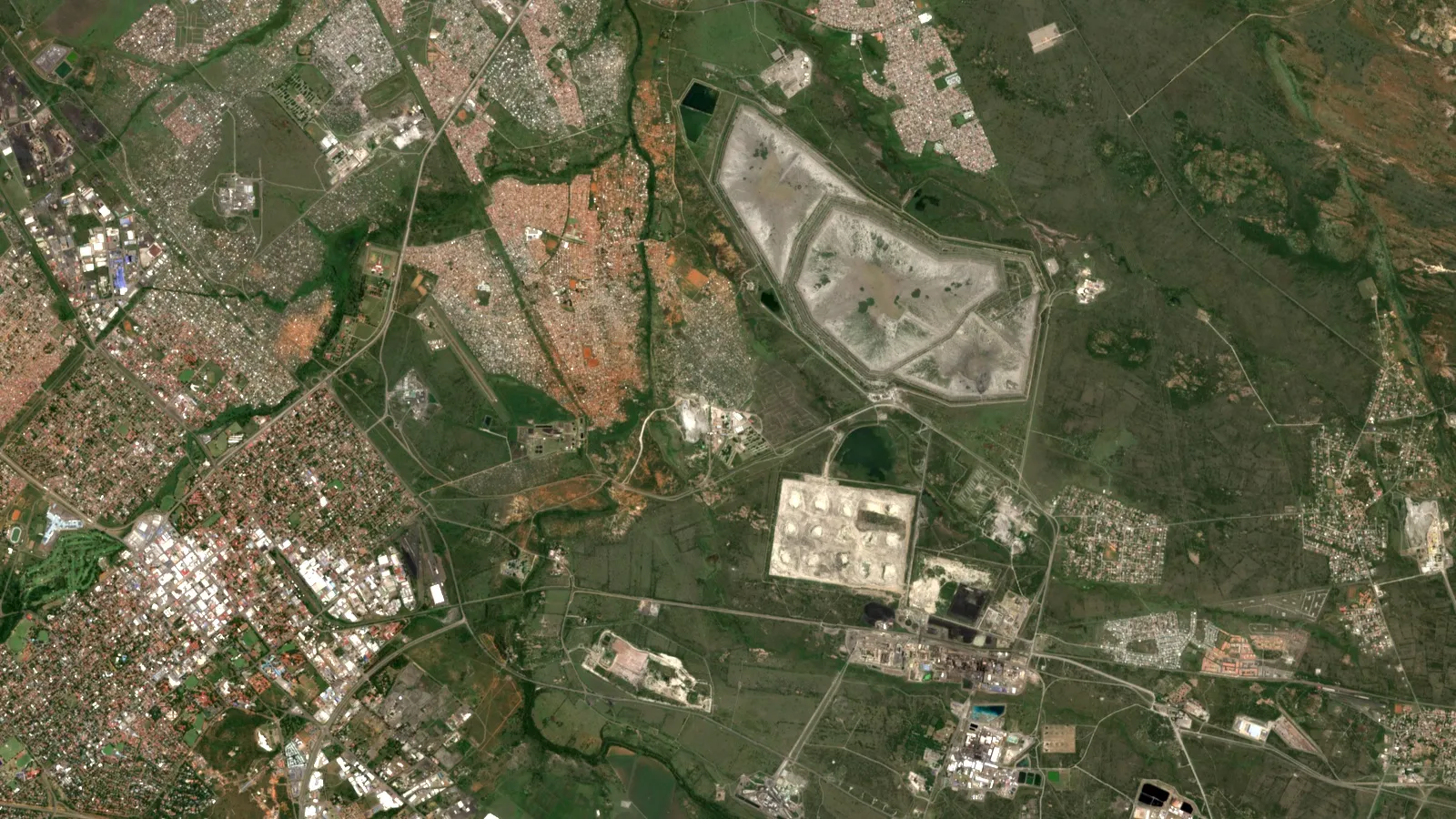
Rhodium is not mined alone. It comes as a trace metal in platinum-group ore, with more than 80% of primary supply from South Africa (IPA, May 2026). Finding it means finding the right layered rock, then proving rhodium by fire assay.
Key takeaways
- Primary rhodium output was about 22 tonnes in 2025, against demand of 33 tonnes (IPA, May 2026).
- South Africa supplies more than 80% of mined rhodium; the UG2 Reef has the highest concentration of any PGM ore (IPA).
- Main PGM deposits grade roughly 1 to 10 g/t for PGMs and gold combined, and rhodium is about 5% of the basket by mass (IPA).
- Rhodium cannot be identified by eye: the USGS names fire assay as the preferred method for PGMs.
- Recycling can recover around 95% of the PGM content of spent autocatalysts during refining (IPA, May 2026).
In this article
- What rhodium ore actually is
- Rhodium in Nature: Where to Find It
- How to Find Rhodium: 5 Ways to Mine and Recover It
- Comparison of rhodium mining and recovery routes
- How to estimate contained rhodium in a deposit
- Rhodium price and why it swings
- Where to find rhodium in electronics and everyday products
- How to source rhodium without a mine
- Checks before you act on a rhodium claim
- Frequently asked questions
Rhodium ore is not a separate rock you can pick out of a hillside. Rhodium is a trace part of platinum-group metal (PGM) ore, mined with platinum and palladium, and South Africa supplies more than 80% of primary output, from about 22 tonnes mined worldwide in 2025 (IPA, May 2026). To find rhodium, you look for the right layered igneous rock, then prove it by laboratory assay.
This guide is written for consultants, licence holders and investors who need a practical answer. It covers what the ore looks like, where it occurs, how the metal gets from rock to refined sponge, how much comes back through recycling, and how to run a first estimate of contained metal on a real deposit.
What rhodium ore actually is
In mining, ore means rock that can be mined and processed at a profit. There is no commercial ore mined for rhodium alone. The International Platinum Group Metals Association (IPA) says rhodium is always treated as a by-product of the PGM basket, which is led by platinum and palladium. Rhodium makes up about 5% of that basket by mass, although its share of value is generally much higher.
Grades are extremely low. The IPA puts the main commercial deposits at roughly 1 to 10 grams per tonne (g/t) for PGMs and gold combined. One g/t means one gram of metal in each tonne of rock. Rhodium is only a part of that total. Companies often report grade as 4E, which means platinum, palladium, rhodium and gold added together, so read the definition before you compare two projects.
Raw rhodium rock: what it looks like
People searching for a raw rhodium rock or a high-grade rhodium ore photo should expect to be disappointed. A rock sold as such needs a laboratory certificate, not a good appearance. PGM-bearing ore looks like ordinary dark igneous rock. In South Africa’s UG2 Chromitite, for instance, the host is a thin layer of the black mineral chromite, and at the Merensky Reef it is a coarse pyroxene-rich rock.
The metal itself is hidden. The US Geological Survey (USGS) reports that platinum-group minerals are usually under a micron to a few hundred microns across, too small to spot in a hand specimen. Its mineral table lists native rhodium and rhodium compounds such as hollingworthite (RhAsS), but these are specialist microscope targets and not field finds.
How to identify rhodium in a sample
You cannot identify rhodium by colour, weight or a magnet. The USGS says chemical analysis is required in most cases and that fire assay is the preferred method for PGMs, because the metals are refractory and very dilute. The USGS also published a manual on fire assaying for noble metals, a useful background read on the method.
When you order assays, ask the laboratory to report rhodium as its own value and to state the detection limit. A result that gives only platinum, palladium and gold tells you nothing about rhodium. Bravo Mining’s Luanga technical report for Brazil (August 2025) shows why: one metallurgical test sample in the report reads less than 0.1 g/t rhodium beside 1.02 g/t palladium and 0.66 g/t platinum.
Rhodium in Nature: Where to Find It
Almost all reported PGM production and identified resources sit in three geological features, according to the USGS critical minerals study (2017): the Bushveld Complex in South Africa, the Great Dyke in Zimbabwe, and the sill-like intrusions of the Noril’sk-Talnakh area in Russia. These are magmatic deposits, formed as metal-rich sulfide or chromite settled out of cooling magma. For a wider view of these families, see our guide to types of ore deposits.
Chart
Grade ranges for major PGM ore types
Grams per tonne, all metals in each basis combined, not rhodium alone
Chart
Rhodium mine output by country, 2024
Thousand troy ounces, preliminary estimates
The Royal Society of Chemistry adds two smaller settings: uncombined metal in river sands of North and South America, and the copper-nickel sulfide ores of Ontario. Commercial supply does not depend on river sands. The USGS says magmatic deposits are the source of almost all PGMs recovered by mining.
Where is rhodium mined: the producing countries
Natural Resources Canada’s 2024 estimates give the country split in the chart above. South Africa produced about 586,000 troy ounces of rhodium, Russia 57,000, Zimbabwe 45,000 and Canada 4,000. The IPA’s percentages are similar: more than 80% from South Africa, 9% from Russia, 6% from Zimbabwe and 3% from North America.
The reason is the rock itself. The IPA says the UG2 Reef has the highest rhodium concentration of any PGM ore in the world, and that Russian orebodies carry much lower concentrations than South African ones, which is why Russia is a large palladium producer but a small rhodium producer.
The main rhodium ore bodies compared
| Ore body | Country | Typical grade | What to note for rhodium |
|---|---|---|---|
| UG2 Chromitite, Bushveld | South Africa | 2.5 to 4 g/t 4E mined (IPA) | Highest rhodium concentration of any PGM ore (IPA); thin, continuous chromite layer |
| Merensky Reef, Bushveld | South Africa | 4 to 6 g/t 4E mill-head (IPA) | Less rhodium than UG2; thin layer traced along the eastern and western limbs (USGS) |
| Platreef, Bushveld | South Africa | 0.55 to 3.7 g/t PGE and gold (USGS) | Rhodium typically lower than Merensky and UG2 (IPA); copper and nickel by-products |
| Main Sulphide Zone, Great Dyke | Zimbabwe | See operator reports | Broadly comparable to Merensky as a deposit, on a smaller intrusion; about 6% of primary rhodium (IPA) |
| Noril’sk-Talnakh sills | Russia | See operator reports | Palladium-rich; about 9% of primary rhodium (IPA) |
| Stillwater Complex, Montana | United States | See operator reports | Reef-type layered intrusion (USGS). The USGS names one Montana company as the US PGM miner; palladium and platinum are the reported metals |
| Lac des Iles and nickel mines, Ontario | Canada | Varies by mine | Rhodium was 0.5% of Canadian PGM output in 2024 (NRCan); in November 2025 Impala Canada planned Lac des Iles production until summer 2027 |
The grade chart above uses the same ranges as this table. The figures use two reporting bases, so treat it as a sense of scale and not a like-for-like ranking. If you are assessing ground in North America, our Canada mineral deposits map and the Montana mineral rights guide give the local context.
New rhodium supply from the Platreef
The Platreef is mined by open pit in places, and the IPA says it appears to extend to at least 2 km depth. Underground development is also under way. Ivanhoe Mines reported that its Platreef concentrator made its first platinum-palladium-nickel-rhodium-gold-copper concentrate on 18 November 2025. New mines of this kind add rhodium, but only in proportion to their wider PGM output.
How to Find Rhodium: 5 Ways to Mine and Recover It
Nobody searches for rhodium alone. The five routes below run from early targeting to refined metal, and the fifth, recycling, skips the mine entirely. For anyone asking how to get rhodium as a user and not a miner, the practical answer is to buy refined metal or a finished product from an accredited chain, as covered further down.

▶ Farmonaut explainer: satellites map the rock around a metal, not the metal itself. The example is gold, and the logic carries over. · 4:25
Infographic
From rock to rhodium in 5 stages
- 1TargetMap layered intrusions, sample soil and streams, then drill.
- 2MineMine the PGM reef or zone underground or by open pit.
- 3ConcentrateCrush, grind and float the ore into a PGM concentrate.
- 4RefineSmelt, remove base metals, separate rhodium into sponge.
- 5RecycleReturn spent catalysts to refiners for recovery.
1. Target the right rocks and prove them
Start with geology maps and public records of layered mafic to ultramafic intrusions, which are dark igneous bodies rich in iron and magnesium. The USGS describes a practical first test: look for unusual copper, platinum and palladium in soil, stream sediment and talus fines, which sample a larger volume of rock. Follow up with mapping, then drilling, since reef-type mineralization can continue for a whole intrusion’s strike length while staying thin.
Satellites do not see rhodium, and no remote method can measure it. What imagery can do is help map host rocks, structure and access across a licence, so ground teams choose where to sample. Farmonaut’s satellite-based mineral detection gives ranked exploration targets of this kind, which sit ahead of a resource estimate and never replace assays.
2. Mine the ore with the wider PGM basket
Mining method follows geometry. Thin, continuous reefs such as UG2 and Merensky are mainly mined from underground, and the USGS reports mining at depths of 2 km in some Bushveld areas. The broader Platreef allows open-pit mining. Timelines are long: the IPA gives 8 to 18 months for brownfield restarts, 3 to 4 years for shallow mechanised new mines and 6 to 8 years for deep vertical shafts. A higher rhodium price alone rarely changes this picture, because the mine plan depends on the whole basket.
If you are looking at South African ground, licensing comes before any of this; see our South Africa mining licence guide. For the companies involved, see the leading platinum miners.
3. Crush, grind and float a concentrate
Ore goes through crushing and grinding, then froth flotation, in which air bubbles carry sulfide and PGM minerals to the surface. The IPA says magnetic or dense media separation is also used on some ores. Recovery at this stage can be far from complete for rhodium. The Luanga report assumed 51% rhodium recovery from sulphide material to a saleable concentrate, against 77% for palladium and 81% for platinum, in its resource assumptions. Those figures apply to that one project, but they show why you should never assume rhodium recovers as well as the main metals.
4. Smelt and refine into sponge
After concentration, rhodium travels with the other PGMs through smelting and base-metal refining. Then, the IPA says, specialised hydrometallurgical steps separate it, commonly using aggressive chloride or oxidative leaching followed by selective precipitation, solvent extraction or ion exchange. The result is high-purity rhodium sponge or salts. The IPA says the full journey can take up to six months from the first ore, and that companies usually keep their exact routes confidential.
This is industrial chemistry and not a home project. The IPA notes that soluble rhodium compounds can irritate skin and eyes and that sensitisation has been recorded among refinery workers. Our guide to how platinum is refined covers the shared early stages.
5. Recover rhodium from waste and scrap
Rhodium recovery from scrap is the only route that needs no mine. The IPA says spent autocatalysts are by far the largest secondary source, and that current recycling can recover around 95% of the PGM content during refining. Once refined, primary and secondary metal are indistinguishable. Metal concentrations in spent catalysts are often far higher than in mined ore, which is why this stream matters.
The balance is visible in the numbers. The IPA puts 2025 demand at 33 tonnes against about 22 tonnes of primary supply. The USGS describes recycled metal as enough to close the gap between mine output and use, with about 27% of rhodium supply from recycling in 2011, and says volumes rise with price. For the current year, Johnson Matthey’s 2026 PGM market report expects rhodium recoveries from automotive scrap to reach a four-year high.
Comparison of rhodium mining and recovery routes
| Route | What happens | Figure to know | Who does it |
|---|---|---|---|
| Targeting and proof | Mapping, soil and stream sampling, drilling, fire assay | Main deposits grade 1 to 10 g/t PGMs and gold (IPA) | Explorers, licence holders, consultants |
| Mining | Underground on thin reefs; open pit on broad zones | 6 to 8 years for deep shafts (IPA) | Integrated PGM miners |
| Concentrating | Crushing, grinding, flotation | 51% rhodium recovery assumed at Luanga (2025 report, one project) | Mine concentrators |
| Smelting and refining | Furnace, base-metal removal, chloride-based separation | Up to six months from first ore (IPA) | Integrated refiners |
| Recycling | Collecting and refining spent catalysts and scrap | About 95% recovery of PGM content in refining (IPA) | Collectors and refiners |
The refiners are few. The IPA names Valterra Platinum, Sibanye-Stillwater and Impala Platinum as running fully integrated mine-to-metal chains in South Africa, while Northam sends high-grade concentrate to Europe for final refining and Norilsk Nickel’s metal is refined by a third party in Russia.
▶ Farmonaut explainer: seven environmental impacts of mining, useful when reviewing a project’s permit file. · 2:31
How to estimate contained rhodium in a deposit
A consultant’s first question is usually how much rhodium a stated tonnage and grade could hold. Take the 4E grade from the technical report, apply the rhodium share from the assays, then apply a recovery. Use a measured rhodium assay wherever you have one. If you do not, the 5% basket share from the IPA is only a global average and may be wrong for your ground, in either direction.
The calculator below runs that sum. Its result is a gross metal value and not a project value, because it leaves out mining cost, processing cost, refining charges, royalties and tax. A real project also earns money from the other metals in the basket.
Calculator
How much rhodium could your deposit hold?
Enter tonnage and grade from your technical report, then your own rhodium share, recovery and price.
- Recoverable rhodium, troy ounces: 3,215
- Gross value in US$ at your price: $25,720,578
Example values only, not a benchmark or forecast. The 5% default is the IPA’s global basket share by mass (May 2026); replace it with your own assay. Price is an input: example, use today’s price. Costs, refining charges, royalties and tax are not included, so the value is gross and not a project value.
Rhodium price and why it swings
Kitco quoted rhodium at US$8,650 per troy ounce on 5 November 2026. That is a dealer bid, since rhodium has no exchange-traded futures market and quotes can jump between updates. USGS annual averages show the range: about US$20,254 in 2021, down to US$4,660 in 2024, then an estimated US$5,800 in 2025. African Rainbow Minerals reported an average of US$8,319 for its 2026 financial year, against US$4,767 the year before.
Chart
What rhodium is used for
Share of global demand, three largest uses, %
Chart
Average rhodium price
US$ per troy ounce, annual average; 2025 is an estimate
Supply cannot respond quickly because rhodium output follows platinum and palladium mining. Demand is concentrated too: the IPA reports that autocatalysts take about 85% of demand, followed by chemical catalysts at 9% and glass at 4%. High prices have pushed carmakers to reduce use where they can, within emissions limits. Johnson Matthey’s 2026 report expects a possible small rhodium surplus, with demand down 6% as lower gasoline car output reduces autocatalyst use.
For a project reader, the swing matters more than any single quote. Run your numbers at several prices, including a long-run average. The Luanga report, for example, used a 10-year trailing rhodium price of US$6,200 per ounce (2014 to 2023) to constrain its resource.
Where to find rhodium in electronics and everyday products
Outside the catalytic converter, most rhodium is used in small, specialised amounts. The IPA lists these uses:
- Electronics: rhodium or rhodium-ruthenium coatings on contacts and connectors, including charging contacts in harsh-use devices, where corrosion and abrasion resistance matter most.
- Temperature measurement: platinum-rhodium thermocouple wires for steel, glass and ceramics, suitable up to about 1,700°C.
- Glassmaking: platinum-rhodium stirrers, plungers and fibre nozzles, typically 5 to 20% rhodium.
- Chemicals: platinum-rhodium gauzes for nitric acid, typically 3 to 10% rhodium, and catalysts for making acetic acid and aldehydes.
Kitco also notes rhodium plating on white-gold and silver jewelry. These items are real sources of the metal, but the IPA identifies autocatalyst scrap as the main recycling stream, so a small lot of connectors or jewelry is unlikely to interest a refiner on rhodium alone. For vehicles and machinery, rhodium’s main role is in the exhaust catalyst.
How to source rhodium without a mine
Most users never touch ore. They buy refined metal, plating salts or finished catalysts. Check these points before signing a contract:
- Refiner status. The London Platinum and Palladium Market introduced a rhodium sponge accreditation framework in January 2023, with sample testing of eligible refiners (IPA).
- Price basis. Agree in writing which dealer quote sets the price and on what date, because quotes can jump.
- Form and purity. Sponge, ingot and salts are different products with different handling rules.
- Scrap paperwork. Buy catalytic converters only from licensed, documented sellers, and ask the refiner for its sampling method and assay results.
- Supply risk. A USGS modelling study for the 2025 critical minerals list estimated that a South African rhodium trade disruption would cut US GDP by over US$64 billion, at an estimated 3.9% probability. The United States imported about 14,000 kg in 2025, per the USGS.
Checks before you act on a rhodium claim
Claims for sale and small projects sometimes advertise rhodium in terms that sound better than they are. A sound review asks a short list of questions:
- Is the host rock a layered mafic to ultramafic intrusion, a nickel-copper sulfide body or another setting known for PGMs?
- Was rhodium assayed separately by fire assay at an independent laboratory, and what were the standards and blanks?
- Is the grade reported as 3E, 4E or 6E, and which metals does that include?
- Are the figures from a resource estimate by a qualified person, or from selected samples?
- Has any test work measured rhodium recovery, not just platinum and palladium recovery?
- Who would smelt and refine the concentrate, and on what terms?
A surface sample with a high value proves little about tonnage. Nothing on this page promises a discovery at any site. If you prospect, get the licence and the landowner’s permission first, stay off other people’s claims and protected land, and never use mercury. To discuss a specific licence area, use our mining query form or contact us.
▶ Farmonaut explainer: what remote sensing for mining measures, without jargon. · 2:01
Frequently asked questions
What is rhodium ore?
It is usually PGM ore in which rhodium is a very small part of the metal content. The IPA says rhodium is always treated as a by-product, mainly of platinum and palladium mining, and in some cases of nickel-copper operations.
Where is rhodium found in nature?
Mainly in layered igneous intrusions and related sulfide bodies. The Bushveld Complex in South Africa leads, followed by Noril’sk-Talnakh in Russia and the Great Dyke in Zimbabwe. Smaller amounts come from North American nickel and PGM mines.
Where is rhodium mined?
South Africa produces more than 80% of primary rhodium, Russia 9%, Zimbabwe 6% and North America 3%, according to the IPA’s May 2026 factsheet.
How is rhodium mined?
It is mined as part of PGM ore, underground on thin reefs and by open pit on broad zones. The ore then goes through a concentrator, a smelter and a refinery, where rhodium is separated from the other metals.
Can you mine rhodium on its own?
Not commercially. Grades are far too low and rhodium is mixed with other PGMs. The economics rest on the whole basket of metals.
How do you find rhodium when prospecting?
You look for the host rocks and the metals that travel with them. Sample soil and stream sediment for copper, platinum and palladium, then confirm rhodium by fire assay. You cannot pan or visually sort rhodium with any confidence.
How can you identify a rhodium rock?
Only by laboratory analysis. The minerals are usually microscopic. A dark, heavy or shiny rock is not evidence of rhodium.
How much rhodium is produced each year?
About 22 tonnes of primary metal in 2025, level for the past three years, per the IPA. Natural Resources Canada’s estimates total about 714,000 troy ounces for 2024, which is similar.
How is rhodium recovered from waste?
Collectors gather spent catalytic converters and pass them to refiners, who recover the PGM content by smelting and chemical separation. The IPA says about 95% of the PGM content can be recovered during refining. This is not safe as a home process.
Where do you get rhodium if you need to buy it?
From PGM refiners, their authorised dealers or makers of plating salts and catalysts. Ask whether the refiner is accredited for rhodium sponge under the London market framework.
Can satellites find rhodium?
No satellite measures rhodium directly. Imagery can help map rock types, structure and land access, and that helps decide where to sample. Assays and drilling provide the proof.
Why is rhodium so expensive?
It is scarce, output depends on other metals, and most demand comes from one use, autocatalysts. Kitco describes it as a small, dealer-traded market with sharp price moves.
This page is for information only. It is not investment or legal advice. Confirm licence rules with the regulator. Company names are facts, not recommendations. Satellite results are exploration targets that sit ahead of a resource estimate.
Farmonaut mining
Map your mining site from space
For consultants screening a licence area: map structure and access first, then decide where sampling and fire assays should go.

Mining Pro sample view, synthetic data
Keep reading
Sources
- International Platinum Group Metals Association, PGM Fact Sheet: Rhodium (May 2026): ipa-news.com
- USGS, Mineral Commodity Summaries 2026: Platinum-Group Metals: pubs.usgs.gov
- USGS, Professional Paper 1802-N: Platinum-Group Elements (2017): pubs.usgs.gov
- USGS, Bulletin 1445: Manual on fire assaying and determination of the noble metals: pubs.usgs.gov
- USGS, Open-File Report 2025-1047: Methodology for the 2025 US List of Critical Minerals: pubs.usgs.gov
- Natural Resources Canada, Platinum facts (2024 data): natural-resources.canada.ca
- Royal Society of Chemistry, Periodic Table: Rhodium: periodic-table.rsc.org
- Kitco, Rhodium price (5 November 2026): kitco.com
- Johnson Matthey, 2026 PGM market report announcement: matthey.com
- African Rainbow Minerals, 2026 annual results booklet: arm-ir-reports.co.za
- Bravo Mining, Luanga NI 43-101 Preliminary Economic Assessment (August 2025): bravomining.com
- Ivanhoe Mines, Platreef update (news release): newsfilecorp.com
Discussion
Questions, corrections or field experience? Share them below. First-time comments are reviewed before they appear, and your email is never published.
No comments yet. Be the first to add a question or your experience.

 NTS Group (Pty) Ltd
 Mine4Africa
 Lithspo Minerals Limited
 Tintina Mining Group
 Dalgety Minerals Pty Ltd
 Vortex Minerals Pty Ltd
 Faith At Work (Pty) Ltd
 Geotech Mining Solutions plc
 Vulcan International Limited
 Kidepo Associates
 GKY Mining
 Alkimy SARL
 Double A Trading
 GemSprout Metals Limited
 Qader Group
 Ileys General Trading
 SG Gold Mining LLC
 VRV Global Pte Ltd
 Omsri International FZE
 G.I.T.T.
 Jaunita Erss Ltd
 Almosi SARL
 SRK Consulting
 Berks Gold Limited
 Mwerezi Minerals Company Limited











